Search This Blog

Tuesday, February 24, 2015

PHOTOS: LEAMAN - The Place To Be

How much kit can a Temporary Block Station (TBS) have and still be considered temporary?  I'll admit that's a bit of a bun question as the "temporary" in TBS refers to the fraction of time that it is typically in service, but where TBS's are typically defined by a pair of hand crossovers and a shack at what point does one cross the line into "interlocking?"  Well leave it to one of the richest railroads in the world to test these boundaries for us as we travel back to 2007 in Leaman Place, PA to check out LEAMAN block station. 

 LEAMAN Block Station is located in the heart of Pennsylvania Dutch country midway between the regular interlockings of PARK and CORK.  Necessary to fill in a 20 mile gap between interlockings on the famous Main Line, LEAMAN has most of what one expects from a TBS with a pair of hand throw crossovers.  However LEAMAN is also equipped with a pair of optional extra semi-automatic signals, 4L and 2R, controlled from some sort of apparatus inside what is drawn on the diagram with the symbol of an interlocking station.


 Up close and personal LEAMAN is in fact little more than a shack, although it looks to be of slightly stiffer construction than most plywood TBS shelters.  The station sign is a Penn Central original, painted grey (blue?) to fit Amtrak's corporate identity.


Inside is a rather important looking cabinet and what looks like an intercom system.  As you might guess the cabinet is in fact the...block machine (?), which consists of a small unit lever type panel with two levers, one each for the 2R and 4L signals.  (I have seen a photo of the LEAMAN machine, but unfortunately I was unable to locate it for this article :-( ) Normally the signals are set to operate automatically, but when the TBS is in service they are set to Stop after the passage of train movements.  Said movements are coordinated with the dispatcher and nearby towers using the block phone (intercom thing).  The panel is not original as the interlocking sheet tells us the signals were originally controlled by a pair of  "Model 6" controllers...whatever those are.


The signals are nothing special, each consisting of a single head PRR position light with Stop and Proceed marker.  The main difference between these signals and automatic block signals is the lack of a number plate. If you are wondering why the right of way looks so wide that is because it was 4-track up until ~1948 before being reduced to two.


In this closer view of the signal it appears that it is composed of a mix of PL2 and PL3 lamp units with the PL3 being in the 9 o'clock position.  Because LEAMAN is closed the signals were working automatically and displaying Clear in absence of any trains.


The 2R signal mast is a much more tidy affair, the mast sporting a fresh coat of silver paint.  As the new white relay hut hints, fresh paint will not save this old equipment.


 This single head PL is composed entirely of PL3 units.  Trains diverging to run against the flow of traffic would get a Stop and Proceed signal when the points were set by hand and the lever thrown.  If you are wondering how trains already moving against the flow of traffic would handle the lack of wrong direction signals, the rulebook already covers hand crossovers and block stations.  The movement authority extends to the fouling point of the switches and trains are not to proceed until given a hand signal by the operator.


 If the 2R mast wasn't a like-for-like replacement, the C&S men certainly did a fine job repainting it.


Between 2005 and 2007 the Amtrak installed concrete ties on the old Main Line for 110mph operation.  This resulted in the replacement of the AWL and BWL switch locks with these standard US&S electrically locked units.  Note, I am not sure if these actually provide any locking function as seen here.  The original locks sat in the middle of the crossovers and would unlock both switches of the turnout at the same time.


Despite the concrete tie upgrade, the crossovers remained Slow (15mph) speed affairs. The one concession to modernity were a pair of spring frogs which eliminate the flangeway gap.


So when I say that LEAMAN was "the  place to be", I'm not just riffing on its name.  For the pool of block operators on Amtrak's Harrisburg Line, being qualified to operate LEAMAN was quite the feather in one's cap.  Working LEAMAN was almost always extra work, and its distance from other tower assignments in the Philly area meant that the operator would earn travel pay as well.  If that wasn't enough any time an operator came out to LEAMAN they were guarenteed a full 8 hours of pay, even if the service was only needed for a fraction of that time to say cross over one or two trains around a blockage.


To become qualified in a tower of block station, one must first train under the supervision of a qualified person.  Because LEAMAN was open so infrequently, opportunities for the normal cast of block operators to get qualified were few and far between.  Because only a small handful of individuals maintained a LEAMAN qualification, they were almost guarenteed to get the windfall, normal job duties and seniority rules aside. Usually a qualified operator would get called off his normal job (bonus), travel out to LEAMAN (another bonus), open it then only work 4 hours while getting paid for 8 (triple bonus!).


Before I sign off I should make it clear that this sort of glorified crossover was an anomaly even on the well to do PRR.  West of CORK the next two TBS's, E-Town and Florin, were simple hand crossovers without protecting signals.  LEAMAN was located nearby the junction with the now famous Strassburg railroad, but that probably didn't provide all the justification for it.  No matter what spawned its initial creation, today LEAMAN interlocking is just another point and click target on the CTEC Section B dispatching monitor, but the little shack remains, an echo from a previous time.

Tuesday, February 17, 2015

CSX Considers Closing F Tower?

Finally I get to report some news that isn't 6 months old.  Someone linked me an actual print media article about a CSX plan to study if F Tower, in Fostoria, Ohio, should be closed.  For those of you who don't know, F Tower is located at the three-way intersection between the former B&O main line to Chicago, the C&O Northern Branch to Toledo and Nickle Plate east-west main line to Fort Wayne.  F Tower was actually re-signaled about 15 years ago when the B&O Main was rebuilt in the wake of the Conrail merger.  Due to the complexity of the triple junction and its related wye tracks, CSX left the tower open and even gave it its own subdivision.  Operators used the same computer aided dispatch system as the dispatchers back in Jacksonville (or wherever).


Anyway now CSX is making waves about closing the tower and handing off the duties to one or more of the dispatching desks that control the B&O and C&O routes.  Does this mean the tower will close?  It's hard to say.  Just because the F-Tower Subdivision uses 5 Full Time Employees to control the rail traffic doesn't mean that 5 FTE's aren't actually needed.  Thinking that the work of F Tower could simply be transferred to one of the existing desks without causing problems sounds naive, especially since traffic has if anything gone up since 2000.  I'm wondering if this isn't the shot across the bow of NS, who has the most to lose if the F Tower operator job goes away and NKP trains are left to try and get the ear of an overworked CSX dispatcher for clearance through the Iron Triangle. I'm sure and offer to split the costs would not fall on deaf ears.

Tuesday, February 10, 2015

HN Tower - A Look Back

For those of you who have been here since the beginning, tower closing announcements have become a bit rarer.  This is less because fewer towers are being closed and more because there are simply fewer towers to close.  Anyway, call me unobservant, but it appears that I overlooked a rather significant tower closing that took place all the way back in August, 2014!  If you didn't read the title of this post I have the sad duty to announce the closure of HN Tower in East-ish St Louis, IL.  This was one of three towers that remained in the St. Louis area, WILLOWS and LENOX being the other two, and it had been on notice for some time as I had seen a few photos of new signals going up.  However because HN is in a relatively isolated area, photos providing evidence of its impending closure did not appear in my usual sources. It was only on a visit to rrsignalpix.com for some unrelated research that I noticed that it's status had changed.  Most of the following information comes from that site's page on HN tower so by all means go there if you prefer to skip my supplementary analysis.


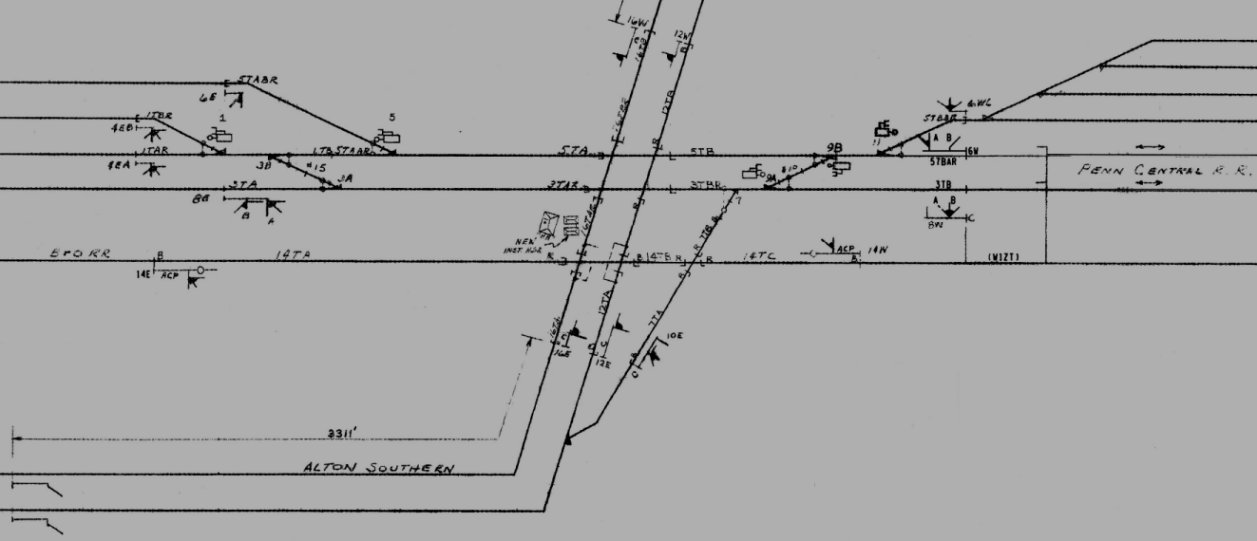
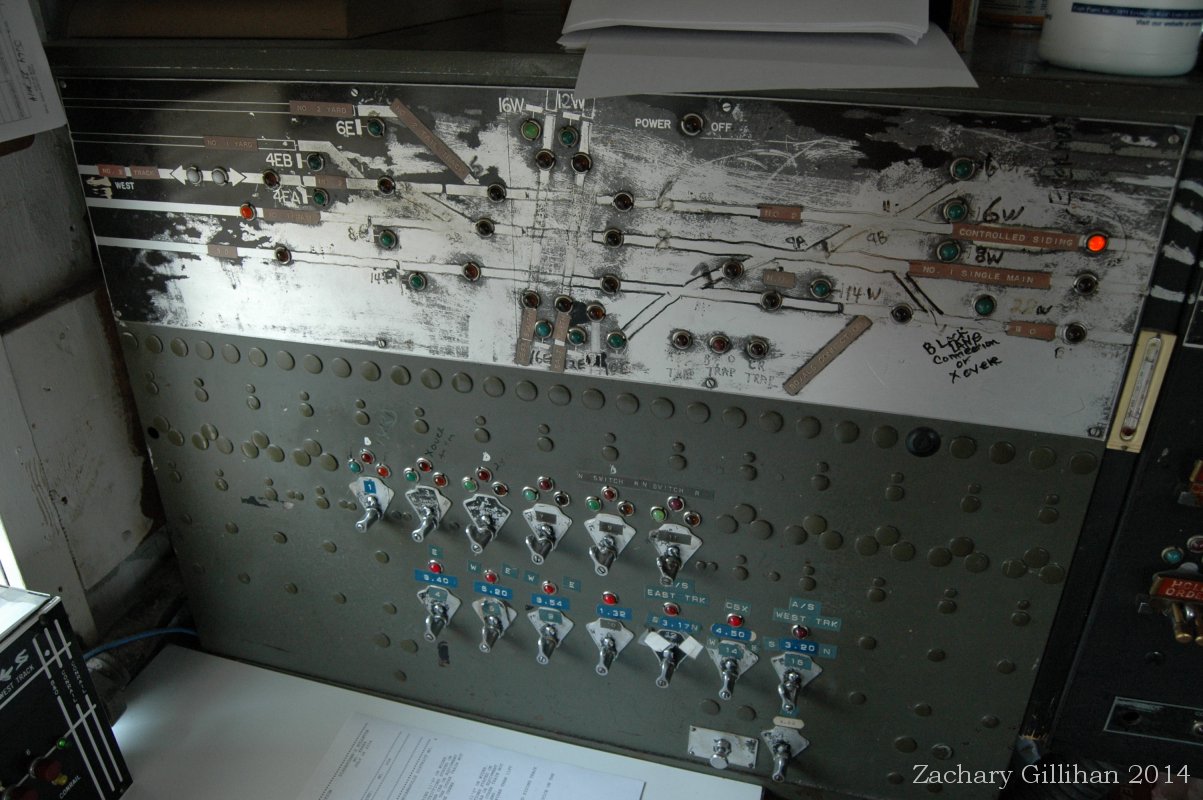
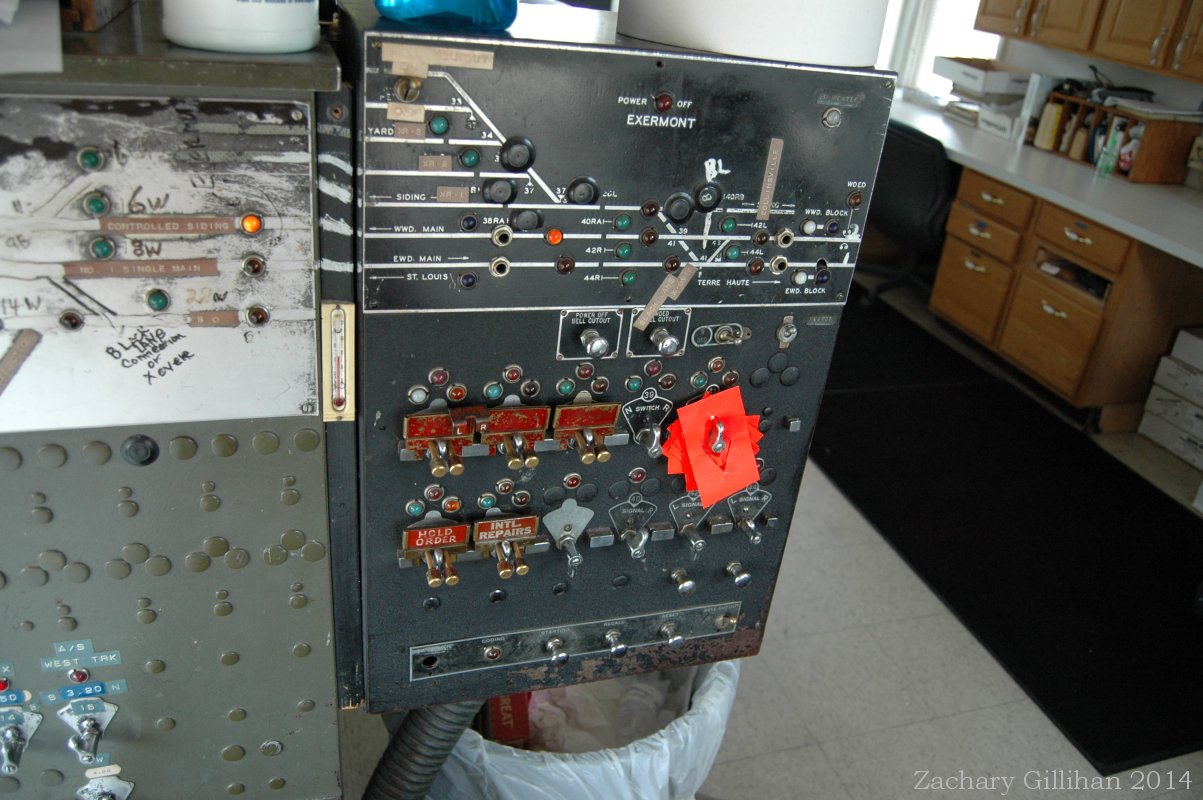
HN tower was built by the B&O in 1917 with a 48-lever S&F mechanical frame.  HN was located the the triple crossing between the B&O, PRR St Louis Line and the Alton line to Chicago via LENOX (or WR).  HN also controlled a connecting track from the PRR/Conrail line to the Alton giving it a total of 7 diamonds.  Now I had always figured this was a Conrail tower since it also had control of the nearby EXERMONT interlocking on the St Louis Line, and while I am sure that costs were shared rrsignalpix says it was a B&O/CSX tower.  The mechanical frame had long since been replaced by a pair of US&S unit lever panels.  Here are some photos of the interlocking machines in their final days of service.


CSX had planned to close the tower all the way back in 2006 and some new signals went up in 2007, but other priorities intervened and it was only in 2012 that EXERMONT was turned over to the dispatcher heaving HN to stand alone.  With a target closure date of July 1, 2014, new new signals went up and, after a bit of delay, the tower closed on Aug 12th, 2014. 


 The B&O style is similar in style to GLENMONT and the preserved UN in New Castle, PA.  There are some rumors of re-use, but wooden towers such as these are almost always torn town (or burn down).  It's a sad end after 93 years of service, but we should be thankful for the extra half-decade of service.  This is also a big loss for surviving position lights in the St Louis area with both PRR and B&O style masts falling victim.

One additional note is that it appears that Seaboard style signals were installed at the new CP-HN whereas Conrail style signals have been the norm at for re-signaling projects on the St Louis Line so take that as you will.

Tuesday, February 3, 2015

Garden Variety Bad News

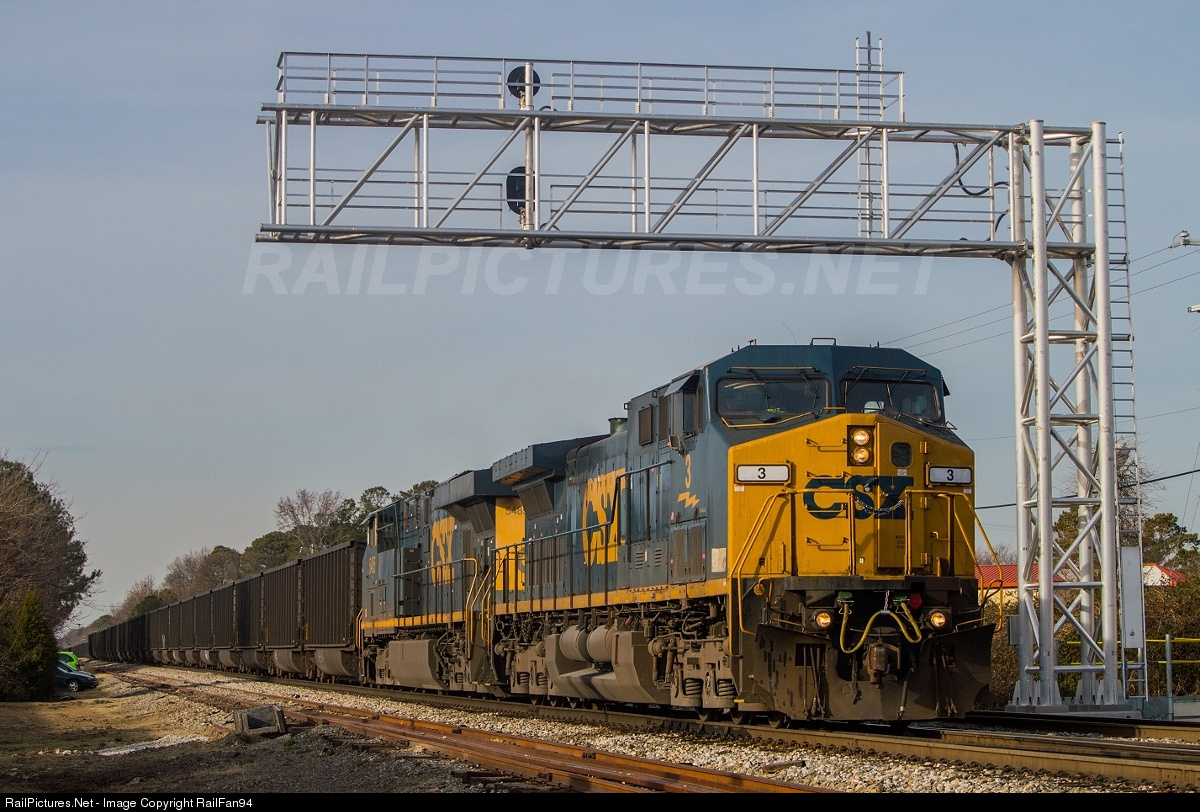
Very rare to see any good signaling news these days, but nothing really stands out as particularly bad.  We begin with a few bits left over from past news segments.  To begin with CSX has completed the re-signaling of the entire C&O Peninsula Sub as seen by this new Darth Vader cantilever mast at Hampton Roads.  Lovely how they spend the $ on a new cantilever for what could have been handled by a single two lamp dwarf signal.


NS has also completed the re-signaling at the famous WORTHINGTON interlocking on its Columbus District.  While the loss of both PRR and N&W position lights was tragic, the pneumatic movable point diamonds were the real gems. :-(


While partly ruined way back in 2012 when the Buckingham Branch installed its cheapo signals on the Washington Sub, the C&O signal gantry at ORANGE interlocking is finally facing the axe as NS's Southern Main Line re-signaling protect takes effect in Virginia. Looks like the signal will retain the C&O signal rules.


Way out in KSC territory, those Broken Rail Detector signals I profiled a few months ago have been decommissioned in favor of full on CTC.  Not often Darth Vader signals are an improvement over something.


Finally in another "push" UP is filling in the stretch of TWC on the Brownsville Sub north of Sinton, TX.  I guess even new signals are better than no signals.


Monday, January 26, 2015

Exactly What It Says on the Tin

Here is one resignaled interlocking I really can't complain about.  Truth in advertising.

Sunday, January 18, 2015

PHOTOS: Port Road Trips - MIDWAY to PILOT

 Well it's been a while since my last installment of Port Road Trips, but I was holding off in order to grab one last set of updated photos for the MIDWAY to PILOT section of the board road. We last left off at the end of the long signaled siding between CP-McCALLS and CP-MIDWAY and this time we will cover both CP-MIDWAY itself and the two intermediate signals between there and the west end of the Pilot siding. For a bit of reference check out the applicable 1997 Conrail interlocking chart.


Now the 2009/2010 NS re-signaling project had marched down to cover both the harbor and Holtwood sidings, but while both CP-McCALLS and CP-HOLTWOOD had been re-signaled, for some reason CP-MIDWAY at the extreme south end of the signaled siding was given a minor refurbishment with the PRR PL signals being left intact.

The interlocking is located in an extremely remote area with no road access.  It can only be reached via a hike from Susquehanna State park or by boat.  Here we see the eastbound signal gantry at CP-MIDWAY built out of a two track catenary support.  Both signals were controlled from Lever 234 in COLA tower.


The signals have both been repainted, although one can tell the underlying surface was not properly treated and the new paint is already starting to flake.  One interesting feature is the Stop and Proceed marker on the main track 234L signal, which NS had removed at a number of similar interlockings during the refurbishment drive.  The 234LA siding signal features an economy style lower head lacking a Restricting \, instead relying on the Stop and Proceed lamp in the center.

 
 The old power supply is located between the eastbound signal gantry and the relay hut.  As I have mentioned before the 6.6kv 100Hz signal power supply was replaced in favor of low voltage taps to the nearest utility pole.  Below the power supply platform (still holding its original transformer) are the decommissioned CTC/telecom pole line and the bundle of signal cables running to the eastbound gantry.


 The CP-MIDWAY relay hut has also gotten a nice new coat of cooling silver paint in addition to a satellite dish to replace the dying pole line.


The 504B code line that was replaced during the latest refurbishment was of the PVC wrapped telecom variety that has been in use since the 1960's.  The 2011 catenary pole removal process saw much of this cable get scrapped as well, but a segment survives between HOLDWOOD and MIDWAY, for slide fence and block state transmission.  In addition to CTC codes the line also carries telecom circuits for the signal post telephones that were common before the use of radio relay networks.  Here we can also see the still used cloth wrapped interlocking cable bundle originating from the relay hut for its run to the eastbound gantry.


The relay hut is directly adjacent to the lever 233 switch.


The M23 electric point machine and the switch itself was also refurbished.  Turnout speed is Medium (30mph).


Opposite side of the MIDWAY relay hut showing the service door, battery box and auxiliary relay cabinets.


Sunday, January 11, 2015

Bonus PHOTOS: Amtrak HARRISON ST Tower

So a few weeks ago I talked about Amtrak LAKE ST tower at Chicago Union Station and how it served as the control center for almost the entire CUS complex (excluding 21ST ST).  Well before the large US&S NX panel was moved in, control of the South Side was handled at HARRISON ST tower.  The tower was located on a pedestal above the terminal fan adjacent to the mail and express terminal just before the Post Office overbuild began. While located near the station end of the interlocking, the big Model 14 machine controlled everything from Roosevelt Ave to the bumper blocks.  In the mid-1990's the old Lumber Street hand operated switching plant near the CBQ wye was interlocked with control being placed at HARRISON ST.


Hemmed in by buildings, the best view of HARRISON ST could be obtained from the Polk Street bridge as seen below.


In the mid-1990's the old post office building was replaced by the new Cardiss Collins Processing & Distribution Center located one block to the south.  Here we can see the new USPS center seen from Roosevelt Ave.  It's the thing that looks like a parking deck.  The old post office can be seen behind it.


If you look at the first image you night notice the lower the tower is located adjacent to the terminal ladder tracks, but here that part of the interlocking has been covered over by the new post office.


Oh well, towers get demolished all the time when something needs to be built over.  After all, that is the same fate that befell LAKE ST after it had closed.  But wait, the new post office was opened around 1995 and the tower was closed in 1999.  Those dates don't seem to add up.

Actually, what happened was that the  Cardiss Collins Processing & Distribution Center was built arround HARRISON ST interlocking tower.  In fact even though it is trying hard not to be seen, HARRISON ST was right where it always has been and I have some photos taken inside of it!

First up we see the original model board, as seen above in the black and white photo.  It is painted in the same style as the model board in LAKE ST.  As you can see both the terminal fan and the quad ladders north of Roosevelt are controlled from the interlocking machine. Tracks are numbered zero through...whatever, from west to east.


Which is a sister to the machine in LAKE ST tower.  Evidence from the 1999 interlocking cutover can still be seen as the colored levers were spray painted white as they were taken out of service.  The final active levers appear to have been spared this treatment.  The whole setup is reminiscent of what happened with Tower A in New York Penn Station after it was closed in 1994.  Note how all the lever status lamps have been cannibalized for their bulbs.


In this final pic we see the interlocking machine and model board together. At this end of the machine some care was taken not to paint over the lever numbers and we can see that the machine contained at least 114.  I have never found an interlocking diagram of either this or LAKE ST in their "tower" days so you'll have to go by what can be gathered from the model board. Note one of the 1927 vintage lamp diffusers laying on the interlocking machine.


It is interesting to think that just outside those white painted windows on all four sides are the exterrior walls of the new Post Office building.  Because of its location tucked all away above busy CUS tracks and below the Post Office I expect the zombie remains of HARRISON ST to linger on for years to come.  It's a shame the same think couldn't have been done with LAKE ST.