Search This Blog

Showing posts with label Erie. Show all posts

Monday, June 30, 2025

MARION (AC) Tower's Missing CTC Machine

A couple years ago the folks at the Railroad Media Archive Youtube Channel posted a video covering the last months of Conrail's MARION (formerly AC) tower in Marion, OH.  Originally built by the Erie Railroad in 1902 and located at the parallel crossing of the CSX Toledo Sub and NS Sandusky Branch with the Conrail Indianapolis Line, the video shows off the tower's GRS/Taylor Model 2 interlocking machine with its proto-pistol grip type levers. At the time, MARION's operator only had control of the local interlocking, which seemed reasonable considering that they had to deal with train movements on separate railroads. However a new video from Railroad Media Archive shows a whole other side to operations at MARION. Sometime after the closure of the Eire main line around 1978, MARION gained CTC control of the Indianapolis Line between Belelfonte and Galleon (CP-BURT) with a 80's "Traffic Master"-style CTC panel and interface situated behind the operator's desk controlled by a compact interface of action keys and a numeric keypad.

In the posted video full attention is given to this CTC panel, with MARION's legendary lever frame barely making an appearance. We watch freight trains slowly cross MATION's territory while the operator discusses his duties and lines routes while text annotations appear in the video's side bars. It is mentioned that the tower would be losing its CTC territory by the end of the year (1989). 

The video captures that fleeting period between classic towers and train order offices, and modern point and click computer dispatch interfaces. By the time MARION was fully closed in 1995, all traces of its 1980's CTC territory had been removed. 

Saturday, December 7, 2024

Mind the Gap! - The case of "3rd Head Restricting"

There's a odd feature in current North American railroad signal practice dating back to the 19th century that hints at the practices of old like a vestigial organ. Lacking a former name, one might call the aspect "lowest head Restricting" or "3rd head Restricting", but its feature is a prominent gap between the top "full speed" or "normal route" head and the bottom lamp used to display Restricting indications. What would be a R/R/Y (or R/R/L) under normal circumstances, becomes R/ /Y, with the middle head omitted. So why does this exist and why is it still in use today.

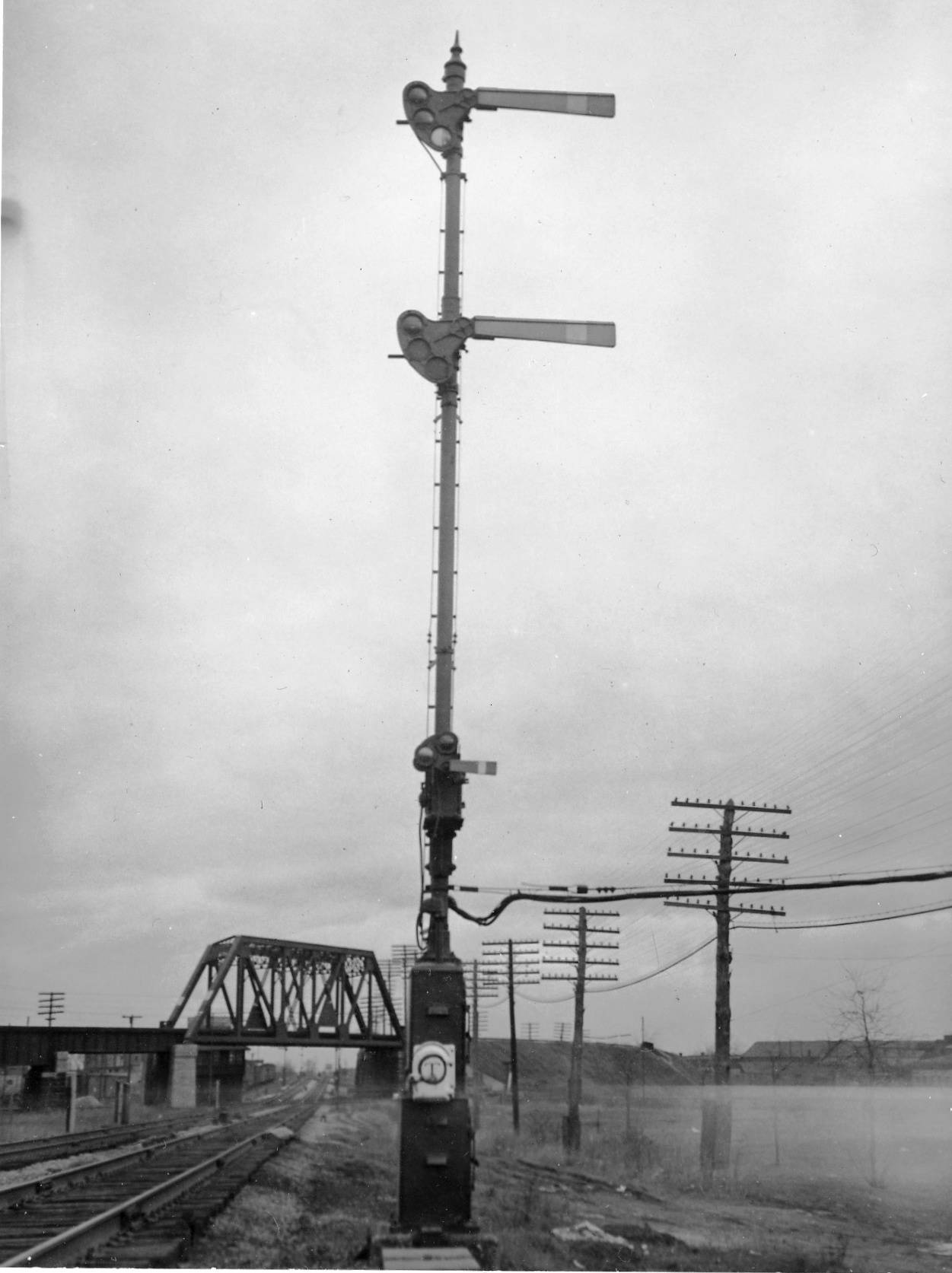
Low head restricting originates in the concept of the subsidiary signal. In the days of mechanical semaphores a subsidiary signal is a smaller semaphore arm mounted below the "main" arms to give Restricting type movement authority.


In North America, it was not uncommon for this subsidiary signal to be mounted on the ground at the base of the mast or under the signal if mounted on a gantry or cantilever. The New Haven railroad was a proponent of this ground mounting practice and continued it up until they were folded into Penn Central.

As North American signaling progressed into the electric era, signal aspect systems would have an upper head for straight routes, a lower head for diverging routes and then a "subsidiary signal", either on the mast or on the ground, for Restricting/call-on conditions. Interlocking setups like the Taylor system would even have a separate lever controlling each signal head. Although this "third head" position on signals would later see use with other slow speed and combination indications like Medium Approach Medium, the link between the third head and Restricting remained strong. Of course as an economizing measure, some railroads went the route of only using two heads with R/Y as Restricting and simply not having a Diverging Approach type indication (its not strictly necessary). However, one could also economize by eliminating the middle head if it was only serving as a marker, especially if the lower "head" was its own signal on the actual ground. The Erie, along with the Reading, were both good examples of the gap between the upper and third head were left exceptionally large to avoid confusion.


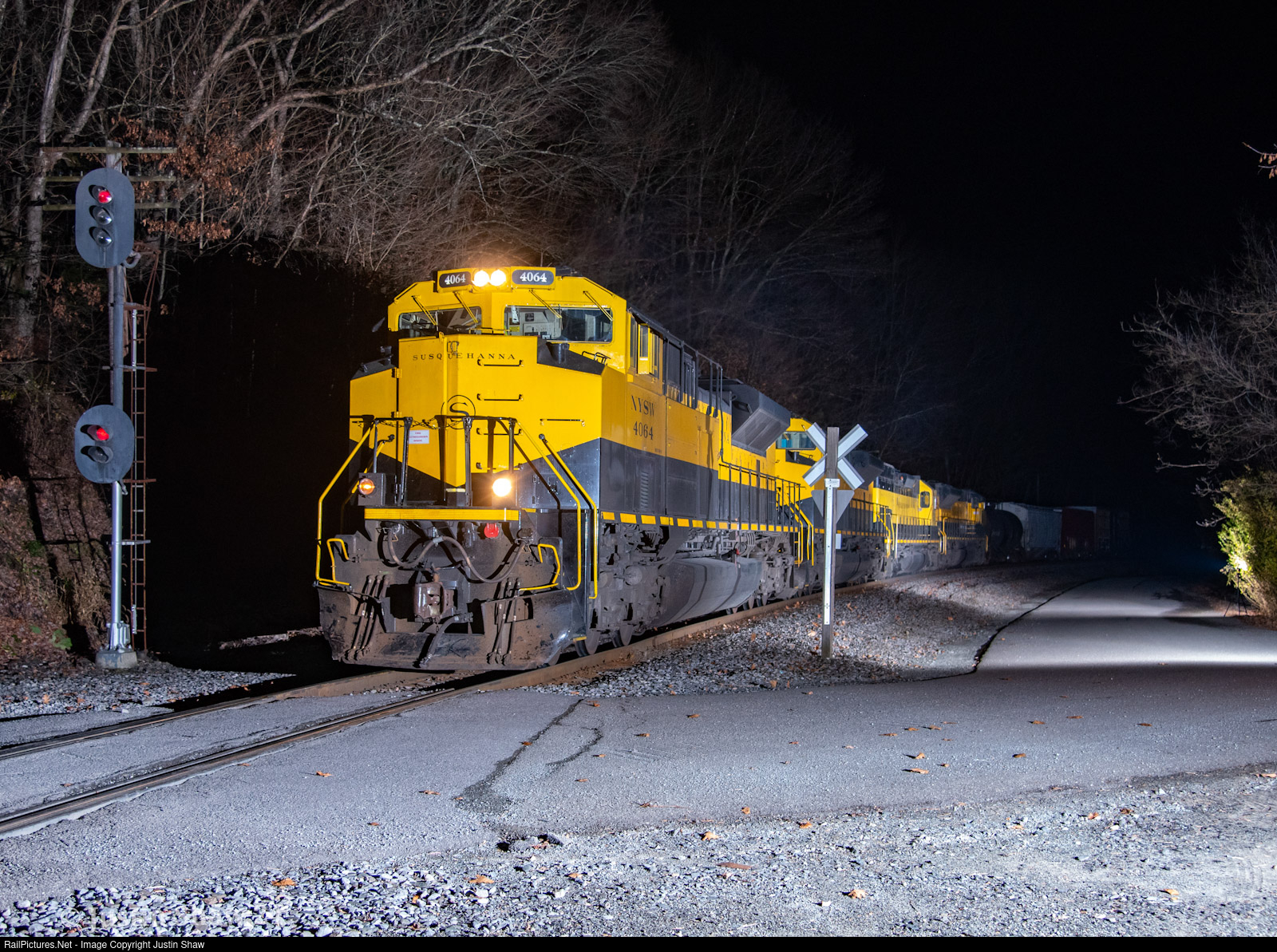
Of course as signal mounting distances became more standardized, this gap became less emphasized to the point where one could make the argument that there was a likelihood of confusion between R/Y Diverging Approach and R/ /Y Restricting. Here we see an example of two bracket mounted signals with R/ /Y restricting at Chicago's KEDZIE interlocking installed by the CNW in the 1990's.


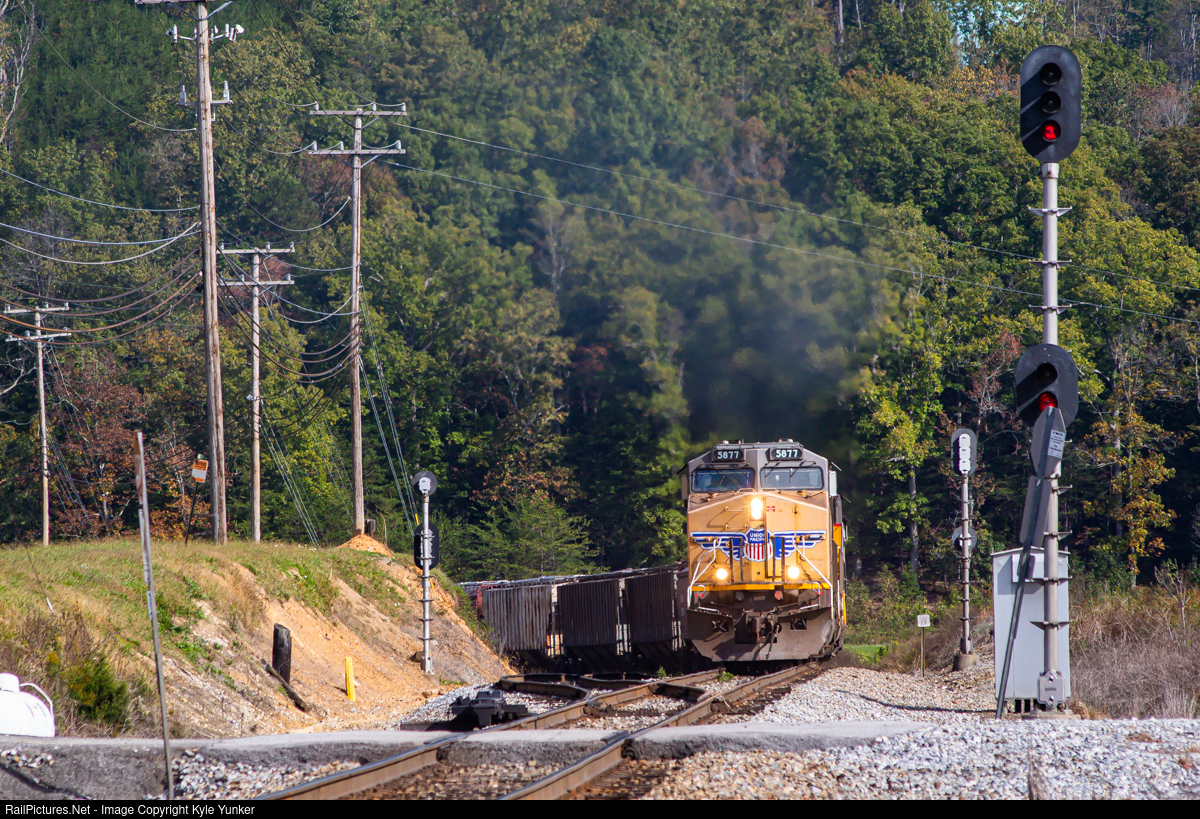
Today one can accommodate both R/Y Diverging Approach and a Restricting indication on a two headed mast through the use of lunar white or flashing red . At this time NS is the only major railroad to install new examples of R/ /Y Restricting and does so only on its former Southern RR signal territory. 


Of course quite a few railroads, including Canadian Pacific aligned Delaware and Hudson, never went with the economizing feature of the gap and instead went with a three head system with R/R/Y Restricting and R/Y/R Medium Approach. Under the Conrail associated NORAC system R/ /Y of predecessor roads like the Erie and Reading were considered to be a two head R/Y Restricting with three head R/R/Y Restricting as another option. The C&O on the other hand only had R/Y Restricting with any third head left dark because they just had to be different.

Sunday, April 21, 2024

NJT's Speed Enforcement System: A Thing That Existed

You might have heard me reference the Northeast's preferred transponder based PTC system ACSES, or the Advanced Civil Speed Enforcement System. In most cases when something called itself "Advanced" its usually a bit of marketing speak, but in this case the basic Speed Enforcement System was a thing that actually existed for a brief period of time on New Jersey Transit's Pascack Valley Line. However because of the rapid pivot to more "Advanced" systems and the 2008 PTC mandate, information on the SES pilot is remarkably hard to come by, however I have been able to piece together a few bits of information that can hopefully shed some light on the technology.

In 1996 NJT suffered its worst accident as of the time of this writing when two trains collated at WEST END interlocking where the diesel Bergen County and Main Lines diverge from the electrified Morris and Essex lines. The cause was a veteran engineer who had been hiding a medical condition that had severely impacted his visual acuity mistaking a Stop signal for a R/R/Y Restricting. In the aftermath NJT began an effort to implement what they called "Positive Train Stop" functionality across its system, which came on the heels of a near system-wide adoption of cab signals and automatic train control (ATC). At the same time Amtrak was completing implementation of its ACSES speed control and PTC system on parts of the NEC in conjunction with the new 150mph Acela rollout. This is where things get a bit murky, but going into the 2000's, both Amtrak and NJT had two different yet compatible transponder systems for "civil" (aka track) speed control, however Amtrak "Advanced" system was integrated with cab signals where as NJT left SES as an intermittent system.

The location for NJT's SES pilot was the Pascack Valley Line, a stepchild service that ran some 30 miles north from the old Erie Main Line to dip its toe into New York State. The single track line offered only weekday single direction peak service and, like the similar old Boonton Line, the PVL was essentially unre-signaled since the Erie days. This signaling came in the form of an Automatic Permissive Block-like bi-directional ABS with occasional non-number plated (ie absolute) automatic signals that would have once appeared at the ends of hand operated passing sidings. Without any actual interlockings and only a single block of cab signaling on approach to Pascack Jct, the limited service PVL was an ideal test bed. 


Reading through the SES special instructions in a 2004 NJT Employee Timetable (posted below) we can gain some insight into how the system worked. The evidence points towards SES was an intermittent transponder based system that would convey track speed information in a manner compatible with Amtrak's ACSES, but also fixed signal indications. A positive stop was enforced for Stop, Stop and Proceed and Restricting indications, with the positive stop zone extending 500 feet in advance of the signal. Stop and Proceed, and Restricting could then be passed after an acknowledgement, while Stop needed the dispatcher to provide a numerical override code in addition to the verbal Rule 241 instructions. This would have come into play at the non-plated automatics and the home signal at Pascack Jct. Special instructions about cab signal upgrades and other rules not applying in SES territory further strengthen the intermittent use case. 


This of course begs the question about how the system would account for signal upgrades after passing an Approach signal if the associated transponder flags a positive stop point like it does in ACSES. As easy solution would be to place additional active transponder at the start of the stop zone 500 feet from each signal, but I have nothing to confirm this theory. An additional feature of the PVL that made it attractive for the SES pilot and that was the presence of signal overlaps. From what I can tell from 2007 era photos, each set of ABS signals had several car lengths between them which would provide sufficient distance for a train running at reduced speed to get stopped before it might encounter an obstruction. This would explain why the SES stop zone is 500 feet vs 1500 for the ACES zone.

PVL automatic signal location with overlap in 2007 with what might be SES transponders (or grade crossing impedance bonds).

SES was always intended to be a temporary pilot and by 2002 NJT had let a contract for its own Advanced SES that integrated cab signals similar to Amtrak, but without the finicky data radio capability for temporary speed restrictions and stop release. Interestingly the $2 million contract with Union Switch and Signal would have outfitted the entire NJT system with PTS and track speed control by 2008! The wireless data free ASES vs off the shelf ACSES debate would extend into the post-2008 PTC era with the ASES plans eventually morphing into ACSES, but perhaps the original SES hints at what NJT's solution would have looked like. Version 1 ACSES also lacked data radios and needed temporary physical transponders for TSR's and use of the stop release procedure to pass certain signals with a proceed indication. Active SES-style transponder could have solved some of those issues without wireless data.

Unfortunately I have been unable to determine the exact timeline of the ABS SES system on the PVL. I know it was in service in 2004 with the CNJ vintage GP40PH locomotives operating in a dedicated pool. I know that SES was still in service as of Jan 1, 2006, however by the fall of 2007, the line had been re-signaled with Rule 562 cab signaling and upgraded with passing sidings to allow for all-day bi-directional service. Unfortunately, starting in August 2006, all PVL physical characteristics and rule changes were put into a separate supplementary bulletin order that I do not have any examples of. Interestingly, the 300 section of NJT special instructions covering SES were left in place with slight modifications likely to cover the upcoming ASES or ACSES installations due to the 2008 PTC mandate probably resulting in some savings in crew re-training. 

If anyone has any additional information on NJT's SES please let me know so I can update this post or make a new one. I've heard a bunch of other stories regarding issues with hair trigger penalty brake applications, but not much more than anecdotes and speculation.

Thursday, November 14, 2013

Southern Tier Line Signaling Resource

In my daily sweeps of the railfan photo scene for signaling information and news I rarely come upon others with a real appreciation of signaling.  Sure pictures will have signals in them or photographers will take a few opportunistic shots of signals, but rarely do i find anyone who systematically documents signals along a particular line.

Well today I would like to tip my hat to Bob Beaumont and his coverage of the Southern Tier Line from 2012 to 2013 and its slowly vanishing Erie and Conrail signaling.  Bob had gone out and covered both automatics and interlockings and both the east and west portion of the line from far western NY State to NJT/Metro North territory.

For example here is a rare Erie two track signal bridge shortly before its replacement.


And on the far eastern end of the line here is CP-DEPOSIT, one of the few segments of track on Conrail that used spring switches and single direction absolute signals.


For anyone interested in Southern Tier signaling this gallery is a must.