Search This Blog

Tuesday, June 30, 2015

Better Know a Signaling System: PRR

Not really sure what more I have to say about the Pennsylvania Railroad position light signaling system.  It is the name of the blog and what I haven't already covered in surveys and news items, it was technically incorporated into NORAC, a signaling system we have already better known.  So instead of just going down and describing all the PRR signal indications I am going to take a different approach and look at how the PRR position light signal indication evolved from the initial PRR semaphore indications on which they are ostensibly based.  Moreover I will also look at the prototype PRR PL system, known as tombstone signals, as well as later developments such as Limited Speed.

I should first mention that if you are looking for a great technical history on the PRR PL you can find one at railroadsignals.us and there you can learn all about the original 4-lamp position light system, sometimes known as "tombstone signals" due to one of the variations of backing plate.
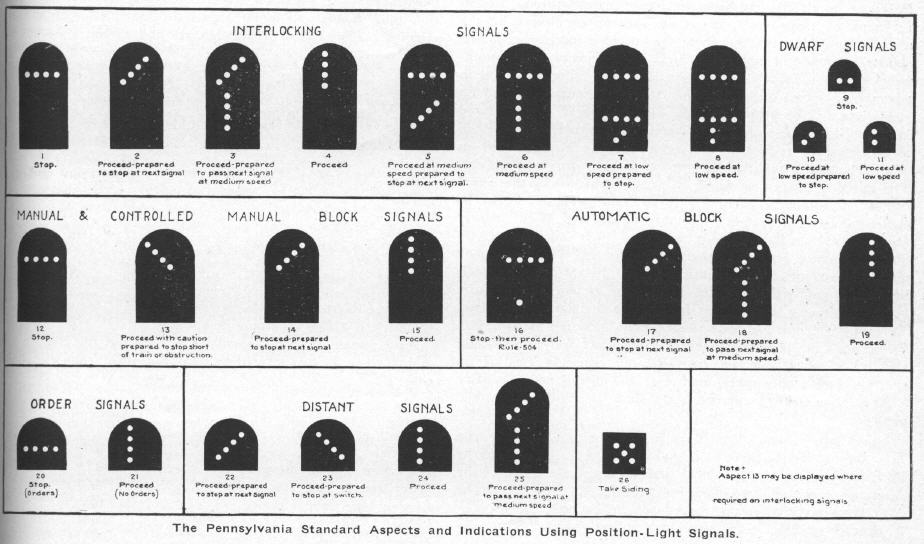

The 4-lamp PL's were an almost literal translation of the semaphore blade positions into lights.  If you are wondering why the PRR didn't just go with using the all color "night" indications, the reason is because reliable high intensity light sources (and mains power) were not yet available yet.  Searchlights and position lights could make use of low wattage bulbs that could run for long periods even on battery power.

Looking at the chart above we see all of our familiar favorites including / over | approach medium and --- over | Medium Clear, but we also see some interesting deviations from the later system, most significantly --- over / Medium Approach.  Also, "Slow speed" indications were handled by a little two lamp analogue of a subsidiary signal on a third head.  These consisted of a --- over --- over / indication, which I believe is Restricting and a --- over --- over |, which plays the role of a Slow Clear or Slow Approach.
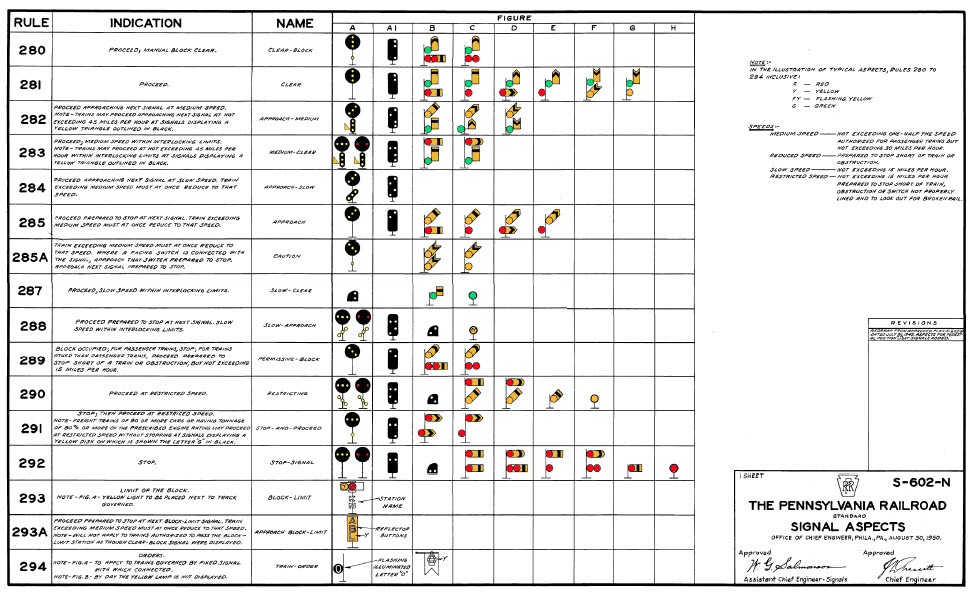

Sorry for the small chart there, but I wanted to show how the 1950 version of the PL system compares with the older semaphore system, still very much still in use at that time at various locations around the vast PRR.  One interesting thing is how indications that involved the shape of the semaphore blade (Caution and Permissive Block) had to make use of the upper head \ indication.  We can also see why the Semaphore system had no Approach Slow as Y/Y was the night indication for Caution. 
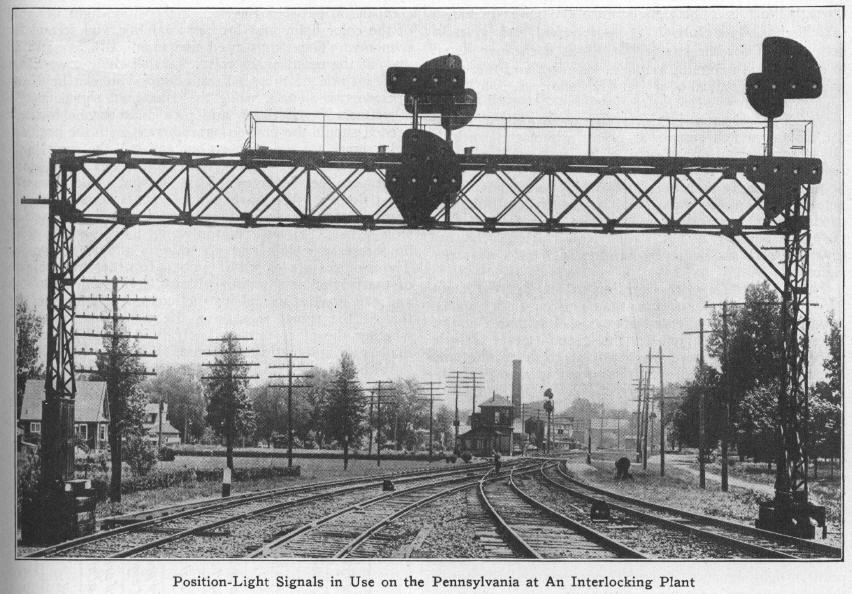
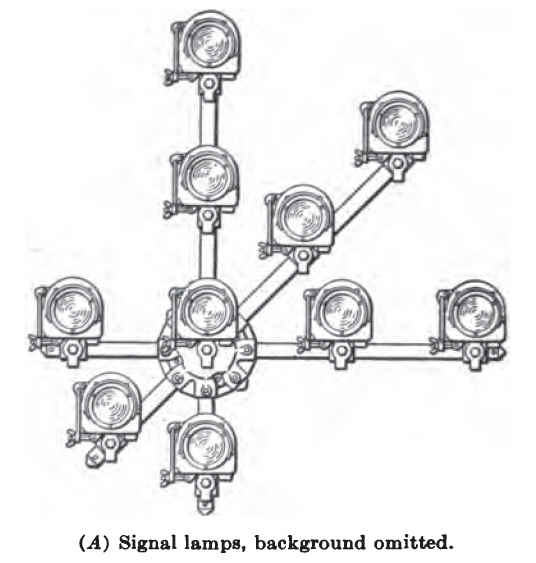
Prototype PL's, trying so hard for a third head.

From the 1950 chart we can see how  PRR used an exclusively 2 head Semaphore system, which in turn lead to the 2-head PL system.  The Standard Railroad of the World was not about to go around throwing money at unnecessary signal heads, but as the above picture shows, signal engineers were not unaware that the PRR's use of only two heads presented a few limitations.  With the subsidiary signal available for slow speed movements, --- over / Medium Approach was an obvious choice since it was not available as a semaphore since R/Y was reserved for Restricting. However when the PRR PL system was finalized with 3-lamps and 2 heads, Medium Approach had to go for a combination of Restricting and Slow Approach for slow speed movements. If you are wondering how one diverged to stop, spend some time on the LIRR as they still use the original PRR system where one diverges over Approach after first passing Approach Medium with the theory being Approach Medium gets you down to Medium Speed and Approach requires traveling at Medium Speed.


Also making its appearance in the 1950 version of the PRR PL system was the Limited Speed triangle, which allowed for higher speed turnouts (45mph vs 30mph) without having to spend more than 30 cents on a signaling upgrade.  Limited speed turnouts started seeing wider use in the 1930;s and 40's in the electrified region where the higher performance of electric locomotives and multi-track main lines made efficient crossing over more of a necessity. 

I should also note at this time that the ever stingy PRR applied a backing plate only to the | on the lower head because it was thought that any Engineer approaching a signal at Restricting or Slow Approach, would be going slow enough to see the indication even in bright sunlight.
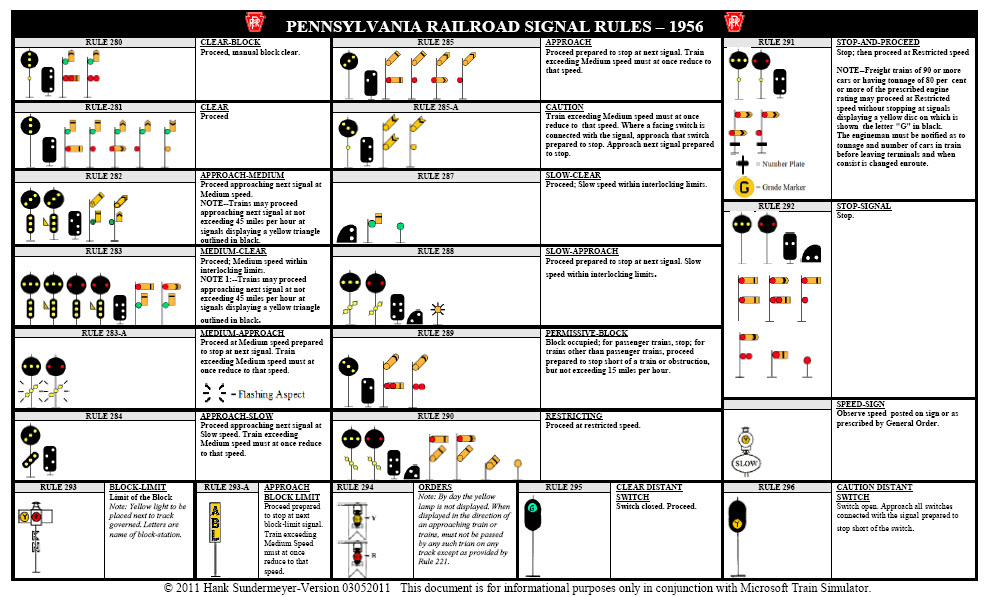

This finally brings us to the 1956 modification of the PRR signal rules to finally include Medium Approach, first cut from the lineup over 40 years earlier.  What changed was that flashing relays were finally considered reliable enough for use in safety critical signal applications.  This allowed the PRR to overload the lower head / so that the speed would be upgraded to Medium when flashing. This method of Medium Approach would be wholeheartedly adopted by Conrail in color light R/*Y* form as a way to, what else, save money over the three head R/Y/R Medium Approach used by the New York Central and Reading systems,


So the only thing left to go over are those funny signals with the extra marker light below them or \ indications on the upper head, which I will do...in another post that focuses specifically on manual block signaling in the United States.  Sorry :-P 

Thursday, June 25, 2015

Catch Them While You Can- SEPTA and LIRR Projects

Yeah it's another news related post since I don't have the time right now for anything longer.  Today I wanted to throw out a little alert that with the SEPTA West Trenton Line and LIRR East Side Access projects progressing, anyone in the area should get out and get some photos of what remains of the classic signaling while they can.

In SEPTA land the railroad is separating itself from CSX freight operations on the Trenton Line between TRENT and CP-WOOD.  This will wipe out a stretch of mile-spaced Conrail style block signals in a 4-block configuration.  SEPTA will be operating under Rule 562 with minimal aspects so if you are a fan of catching trains with colored lights in the background get those photos while you can. 

The Darth Vader on the right is now in service :-(
Over in LIRR land, the pathetic replacements for the 31 signal bridge just west of the Woodside platform are about to be replaced themselves by a new LIRR style gantry with SP style target color lights.  The popsicle pedestal are such a hoot that they really should be properly documented before they go.


I also want to give props to all the people who have been out chasing N&W 611 for also getting good shots of the N&W signals that are also slowly vanishing .  I definitely noticed the increase in N&W signal pics so kKeep up the good work.  Unlike both the LIRR and SEPTA projects, I wish I could get out there myself.


Saturday, June 13, 2015

What's Up with the Reading and Northern?

The Reading and Northern has been a rare bright spot in the world of signaling.  A commitment to its Reading heritage has resulted in numerous signaling structures being preserved along with attempts to install "classic" signaling where new signaling is being installed on its mostly unsignaled territory.  The R&N also controls the former Conrail Lehigh Line and for one reason or another has decided not to touch the surviving LVRR signaling along that route.  Still, I am still not completely clear on the full extent of the R&N's signal preservation efforts as hinted at in a number of photos I have come across.

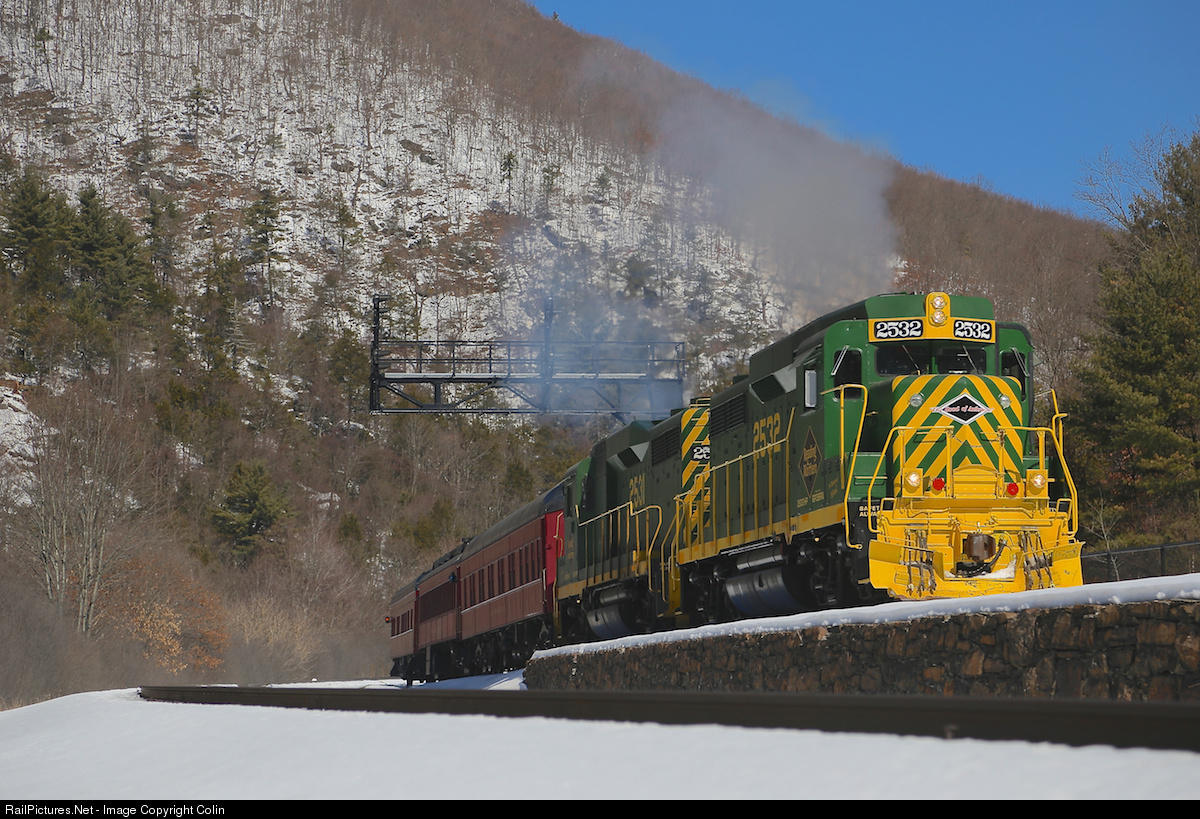
We begin near the town of Mach Chunk where the R&N runs a tourist operation in the Lehigh Gorge.  i have bicycles along the right of way a number of time and I never noticed this cantilever mast and its freshly painted (albeit turned) signals.  Is this a sign of a new interlocking or signaling project?


Pottsville is the location of some preserved Reading signal bridges and a tower.  Both have been out of service for decades, but then I find a photo showing what appears to be a lit Reading US&S three headed signal displaying a restricting indication.  Could be that the photographer is having some fun with Photoshoppe, or it could be another R&N instance of an "island" interlocking designed to eliminate the need for crews to hand throw switches.


Clearly I need to take another field trip to the area, but if anyone has any information (or photos) please let me know.

Tuesday, June 9, 2015

Sunset Limited Trip Report

Well I just returned from my annual cross-country Amtrak trip and this year's target was the Sunset Limited running eastbound between Los Angeles and New Orleans.  Unfortunately, I was unable to take most of my usual photos because Dan Akroyd parked his private car on the rear of my train and blocked most of the usable view.  Nevertheless I was able to still observe the state of signaling along this route and if there was a silver lining I really didn't miss much photo wise because almost all the classic signaling has already been removed.

Because the scheduled departure for Train 2 is 10pm (and sometimes brought forward to 8pm as was the case with my train) there really wasn't anything to photograph on that leg of the journey anyway.  The train used to depart at 3pm so if you want to see the state of the line this YouTube rear-end video before the schedule switch in 2011 will have to suffice.


Between LA and Pomona I did happen to spot a couple of surviving searchlight signals, but there were only about 2 or 3 locations.  Everything else, including the entirety of the Colton terminal has been re-signaled.  Moving east of Tuscon onto the Lordsburg Sub there are pockets of surviving Southern Pacific style target color light signals, but only in mountainous areas with low track speeds.  On the flat desert the route has been completely resignaled for higher speed 50mph turnouts.  You can see much of this re-signaled territory documented at redoveryellow.com.  The new train timing allows for photographs in the SP zone so that is a plus.

These searchlights are no more.

 While the large El Paso terminal featured two surviving interlocking towers and a number of SP style target signals, all of the searchlight signals have been removed.  Continuing onto the Sanderson Sub, UP has completed its work in scrubbing the hooded SP signals and searchlights over the entire route to San Antonio.

This...

Has become this.  No exceptions.

Moving onto the Glidden Sub, SP style targets still prevail, but many have been removed at any location that has been modified.  Preserved interlocking towers still stand at Flatonia (Tower 3) and Rosenburg (Tower 17) so keep an eye peeled for them.  In the Houston Terminal area a few searchlights can still be found, but those on the Glidden Sub will soon fall due to a double track project.  On the Terminal Sub, none appeared to be currently threatened, but re-signaling projects are ongoing at a number of junctions previously re-signaled with Darth Vaders so look forward to cheaper LED Darth Vaders in those instances along with multi-interlocking diamond crossing complexes replacing single interlocking complexes.

In the Lubbock area the major junctions in town sport a number of searchlight signals along with US&S transit style signals at some of the more complex junctions.  Many of those are controlled by the KCS so they might hold on a bit longer.  Moving into Louisiana the entire route through and past Lafayette has been re-signaled, however the BNSF trackage is still using TWC-ABS operation with the brand new Darth Vaders.  A smattering of searchlights are in service at some diamond crossings and movable bridges.

Entering New Orleans both East Bridge Junction and West Bridge Junction interlocking towers are doing strong with no signs of re-signaling or closure being apparent. The Amtrak terminal has of course been resignaled for years, however the old Clara St tower is still standing.

Well that's pretty much it.  Not much to report, but I would have still liked to get a good photo set of things.  I might try again next year since my subsequent day in NOLA was so fun ;-) Remember to check out Redoveryellow for 2008 photos taken before the route was completely sterilized.

Sunday, May 31, 2015

Two More Chicago Icons to Fall

I guess it serves me right for not checking through the interwebs for a couple of days because when I came back from a trip I found not one, but two pieces of devastating signal news.  The first is that the remarkably preserved CBQ and CNW signal bridges at the Rochelle, IL diamond crossing are all being replaced.  These appear often in railroad media due to the proximity of the Rochelle Railroad Park.  Once again we see both local government and railroad management being completely tone deaf when it comes to the preservation of a local tourist attraction.  Yes, I know new signals are somehow "cheaper", but couldn't an offer have been made to somehow preserve the look and feel of the old setup?  Especially devastating will be the loss of another set of CNW style oval target searchlights.


Across the metro area it appears that the venerable CP-506 is on its last legs.  Located just east of the General Hammond-Whiting Amtrak Station, CP-506 marked the Chicago Line's transition from the Central to the Pensy RoW and featured a position lit west end and color lit west end.  From the photo it appears that the long snaking interlocking limits are being shortened.  It also looks like a third track could be part of the project.


 In addition to CP-506, CP-507 at the opposite end of the General Hammond-Whiting station is also being re-signaled.  This is a bit of a surprise as the interlocking was installed new in the 80's or 90's along with a modern style PL cantilever support, but in this day and age it doesn't matter if the old signals are 5 years or 50 years of age.


 Elsewhere on the Chicago Line NS is continuing its rather haphazard replacement of NYC and Conrail era signaling.  Locations include Huron and Waterloo.


Resignaling is also spreading on the former N&W territory including the well known asymmetric cantilever featuring one CPL and one traffic light.


 Further east there is some work going on at CP-88/CP-BETHLEHEM.  The layout there was already strange so we'll have to see how much of the interlocking is changed.


 The SEPTA West Trenton separation project will mean the end of a great example of Conrail era 4-block signaling between CP-WOOD and CP-TRENT.  If you live nearby try to take advantage of the railfan window for some photos or video.


Out west it appears that the effort to remove the last semaphores from the Raton pass is a bit more extensive than it initially appeared with low cost traffic light signals popping up at multiple locations despite BNSF's capitol improvement freeze due to funding hangups.


Like usual lots and lots of bad news, however I am slowly collecting a few silver linings so stay tuned.

Wednesday, May 27, 2015

No Respect - The Safetran Unilens

While riding up the Caltrain Corridor I noticed a little something that once again reminded me that the Safetran Unilens signal, for all its seeming usefulness, is the ugly duckling of the signal world.  The Unilens series (now in its second generation) was created as a solid state replacement for the old fashioned electro-mecnahical searchlight signal.  Inside, instead of a moving colored filter, one will find four lamps each connected to a single (hence the name) lens via fiber optic cables. This seems like the perfect solution to the old problem of getting multiple colors out of a compact signal head, and in fact should have been a marked improvement seeing as each Unilens head could support 4 colors instead of three.

From the Greek, Uni meaning one and lens meaning lens.
 Not only could the Unilens play the role of a dwarf signal, it could also be used in mast mounts behind a circular target just like the older searchlight and in the case of close quarters transit applications the Unilens had an additional trick up its sleeve with a goose-neck attachment that allowed the lens  to be placed a foot or two away from the actual lamp housing.


Initially adoption was good with a number of traditional searchlit railroads, such as the Delaware and Hudson and Canadian Pacific, buying them as a simple replacement for the US&S H series and GRS SA's they had been buying for decades. The BART rapid transit system enthusiastically bought into the whole goose-neck configuration for its limited number of wayside signals


But then things took a turn for the worse.  Crews complained that the small internal lamps didn't provide a bright enough light and the lamps themselves were proprietary, expensive and prone to burning out.

You be the judge!
The Canadian roads that briefly used the Unilens in high signal applications switched over to Darth Vader style LED lamps, and the transportation authority that owns the Coaster route to San Diego actually took the step of replacing its high mounted Unilens signals with target configuration Safetran colorlights.


I am posting this because while passing by the BART Millbrae station I observed that the goose-neck Unilens signals, perhaps some of the only examples ever purchased for rapid transit, had been swapped out for bland and boring LED traffic light type signals.  No the Unilens isn't going the way of the position or searchlight signal.  CSX, SEPTA and BNSF still prefer them in close clearance signaling locations across their systems, but as a replacement for what was once the most common signal type in North America if not the world, the Safetran Unilens has fallen dismally short.

Saturday, May 16, 2015

PHOTOS: Port Road Trips - PILOT to WEST ROCK

Well it's time for another installment of Port Road Trips and like many budget re-signaling projects I am making slow yet steady progress working down the line.  This week we will be looking at the Pilot siding between CP-PILOT and CP-WEST PILOT and the intermediate signal between Pilot and CP-WEST ROCK. For reference here is the relevant sheet from the 1997 Conrail interlocking chart book.

Since the southern end of the Port Road is still traditionally signaled I was able to conduct more recent surveys instead of having to rely on the 2004 photos.  We will begin with CP-WEST PILOT at the upper end of the Restricted speed Pilot siding.  This siding was identical in function to the Harbor siding before it was upgraded to "signaled" with medium speed entrance and exit. This means that the signaling was fairly simple with Restricting lower heads and dwarf signal siding exits.  Looking towards CP-WEST PILOT from the west we find the 230L PRR PL mast signal guarding the single switch into the siding.


The 230L is a Conrail hybrid type with the full upper head replaced with a newer Safetran model while the lower head remains a US&S PL3.


As I said before the \ lower head governs movements into the unbonded siding.  We can also see that this signal was not included in the NS refurbishment program.  The paint dates from the Conrail era and the wiring is possibly original.  


 A new high voltage M23 replaced the non-dual powered M3 that was originally installed on the 229 switch.  The switch looks like it would be good for higher speeds so when this is eventually re-signaled look for the siding to become signaled.


The WEST PILOT relay hut has gotten a nice fresh coat of  silver paint along with a satellite dish fashion accessory.  Also present is the battery well and a number of cable penetrations.


As with the other locations in the south some elements of the code line appear to be in service while others appear to have been quite literally cut.


Here we see the two lever 230R signals.  The main track high signal is mounted on an old catenary pole stub and the siding signal is a PRR PL dwarf.