Search This Blog

Saturday, October 31, 2020

VIDEOS: US&S CTC Machine Operation in Amtrak's THORN Tower

The Union Switch and Signal CTC style unit lever interlocking machine was developed in the 1930's to serve as a user interface for relay based interlockings under remote or local operation.   Amtrak's THORN tower was built by the Pennsylvania Railroad in 1937 as part of its Philadelphia to Harrisburg electrification project and sought to consolidate a number of manned interlocking stations into a single tower.  83 years later THORN tower remains in operation, although with a significantly reduced territory and gradually approaching plans for retirement.  I was able to obtain some video clips of the THORN's CTC machine in order to preserve some degree of its live operation for posterity and this post will use those videos to expand upon my existing coverage of the tower interior and THORN interlocking.  If you are unfamiliar with THORN interlocking I would encourage you to visit those pages first.


This aborted take provides a static view of the CTC interface as a SEPTA local has come to a stop or near stop within interlocking limits as it crosses from track #4 to track #1 to finish its run and change directions at the eastbound station platform.  We see the upper row with switch levers 41, 47, 49, 53 and 57 set reverse as indicated by the unit levers pointed at the "R" position and the associated yellow illuminated indicator lamps.  A red lamp above all switches aside from 43 and 61 indicates that those switches are currently locked for this particular extreme crossover movement. The lower row contains the signal and switch heater unit levers.  Currently all signals are locked in Stop status due to the extreme crossover movement.  On the model board a yellow track occupancy light (TOL) is illuminated by the 57 switch, indicating the approximate location of the SEPTA local.

Here the Train Director at THORN tower sets the route for the above SEPTA local.  The operator toggles the 57, 53, 49, 47 and 41 in the order the train movement would encounter them, although this is not required. After each toggle the operator presses the "code" button on the bottom row below each unit lever.  This transmits the state of the unit lever to the interlocking logic or code system similar to an "Ok" or "Apply" button on a computer GUI.  THORN interlocking is under direct wire control from the CTC machine and I was told that this makes it necessary to press the code button for each unit lever movement as otherwise the actions would take place immediately after the switch toggle, which was not considered desirable.  I believe a remote plant just needs one code button press to send all commands, however a signal command is always selected after the switch commands to avoid race conditions which might result in a mis-routing.

US&S 504B Code relay equipment.

After the code button is pressed the relays in the basement send a command to the US&S Style CP air-valve that then throws the Model A-5 pneumatic point machines.  Note at time 0:05 the sound of 49 switch throwing. As each switch throws the red switch lock light illuminates which the points throw and when the throw is complete the green "Normal" lamp extinguishes and the yellow "Reverse lamp is lit.  As no routes are set. the red lock light goes out.  The Train Director waits for the points to line and lock into the desired position, at which point he requests the 58L signal to display over the established route.  The interlocking logic determined the route is valid and red lock lamps then illuminate over every switch locked out by the new route, which in this case is all of them aside from 43 and 61.  When the interlocking logic has confirmed all the proper conditions are met, the signal displays in the field and the yellow 58L "signal displayed" lamp illuminates. Note, the red lamps over the signal unit levers indicate neither the L or R signals are displayed, but they sometimes go out so they might also represent some sort of locking condition.


58L signal displaying Restricting

Here we see a rogue TOL on Track #1 in the vicinity of the Whitford station.  This was intermittently caused by the actions of a signal maintainer.  The TOL on track #2 was a known fault, but may have been in the process of being remedied, however because track #2 is currently used infrequently it is not uncommon for track circuit faults to be left in place.  The Train Director presses the code button under a catenary circuit controller to trigger the CTC machine to send a supercilious command that will trigger the remote logic to reply with an updated status. The sounds are from relays connected to the US&S 504 code system. While the unit levers for THORN interlocking are wired directly to the relay logic in the basement, the UI elements for remote interlockings are connected to telecom grade relays in the CTC machine that store, forward and receive state from the 504 code system.  This works via telephone style code pulses on a shared "code line".  Codes have a station ID and a command or a status.  In the attempt to verify the status of a intermittent TOL, you can hear the CTC remote coding system going back and forth with status updates.  Note how lamps in the process of being updated briefly extinguish.

 In this sequence an eastbound Amtrak Keystone Train on track #1 travels through the CALN remote interlocking, traverses the 1-2 miles between CALN and THORN and then enters and passes through THORN interlocking all on a straight route with clear signals.  Note the relay sounds as the TOL on the approach blocks, CALN interlocking and the intermediate block change state.  The multiple approach block TOL's are holdovers from obsolete configurations of the interlocking that had a signal protecting some industrial sidings that was removed decades ago.  At 0:32 the train passes into the cab signal cut block/  This is an extra block that supports locomotive cab signals changing to Restricting in advance of a stop signal.  From this point no lamp changes generate audible relay noise as the lamps are cirectly wired into the shelf relay interlocking logic in the basement of THORN.  

The twin blue lamps on track #2 west of thorn represent current of traffic (and thus the reason for the name Centralized Traffic Control).  Although designed for bi-directional operation, the PRR was not a proponent and when installed in 1937 this CTC panel had almost no bi-directional trackage, with some segments only getting it years later as the physical plant was consolidated. 


 As the Keystone train enters THORN interlocking at 1:10, the 44R unit lever status changes from displayed to stop at 1:13.  A few seconds later the train passes by outside the tower and then proceeds to pass through the interlocking.  A major challenge of traditional towers such as this one is keeping track of train movements as there is no automatic train identification or labeling.  Tower operators used to pass "next train" information from one to another.  As towers became isolated islands they would rely on the dispatcher or data feeds via computer from the dispatching system.

Thursday, October 22, 2020

Cab Signals Come to Boston's North Side

Well the mystery is over, it appears that at least some of the North Side MBTA lines (former Boston and Main) are not only getting the ACSES PTC system, but also the Rule 562 cab signaling arrangement that also comes with it.  Moreover it is triggering the replacement of searchlight signals that were considered safe only a year ago like those that used to be at WINCHESTER interlocking on the New Hampshire Route Main Line.  


At this point the cab signals are in service between some point north of North Station (likely SOMMERVILLE interlocking) and WINCHESTER interlocking in Winchester, MA.  While the MBTA has actually fitted some of its searchlights with 562 'C' boards, the ones in Winchester got the LED tri-light treatment. While this line segment had been recently re-signaled, the section between WINCHESTER and the Anderson Regional Transportation Center featured at least two locations with bi-directional, twin head searchlight masts that would display the rare Double Green Clear signal aspect. 

 The spread of Rule 562 across the MTBA North Side could mean the extinction of this once popular signal aspect.  The good news is that the joint Guilford freight trackage should preserve some populations of wayside intermediate signals and the MBTA has shown a willingness to preserve some legacy searchlights.  Fingers crossed.  I will hopefully be able to get up to the Boston area in the March 2021 time frame to document whatever remains.


Friday, October 16, 2020

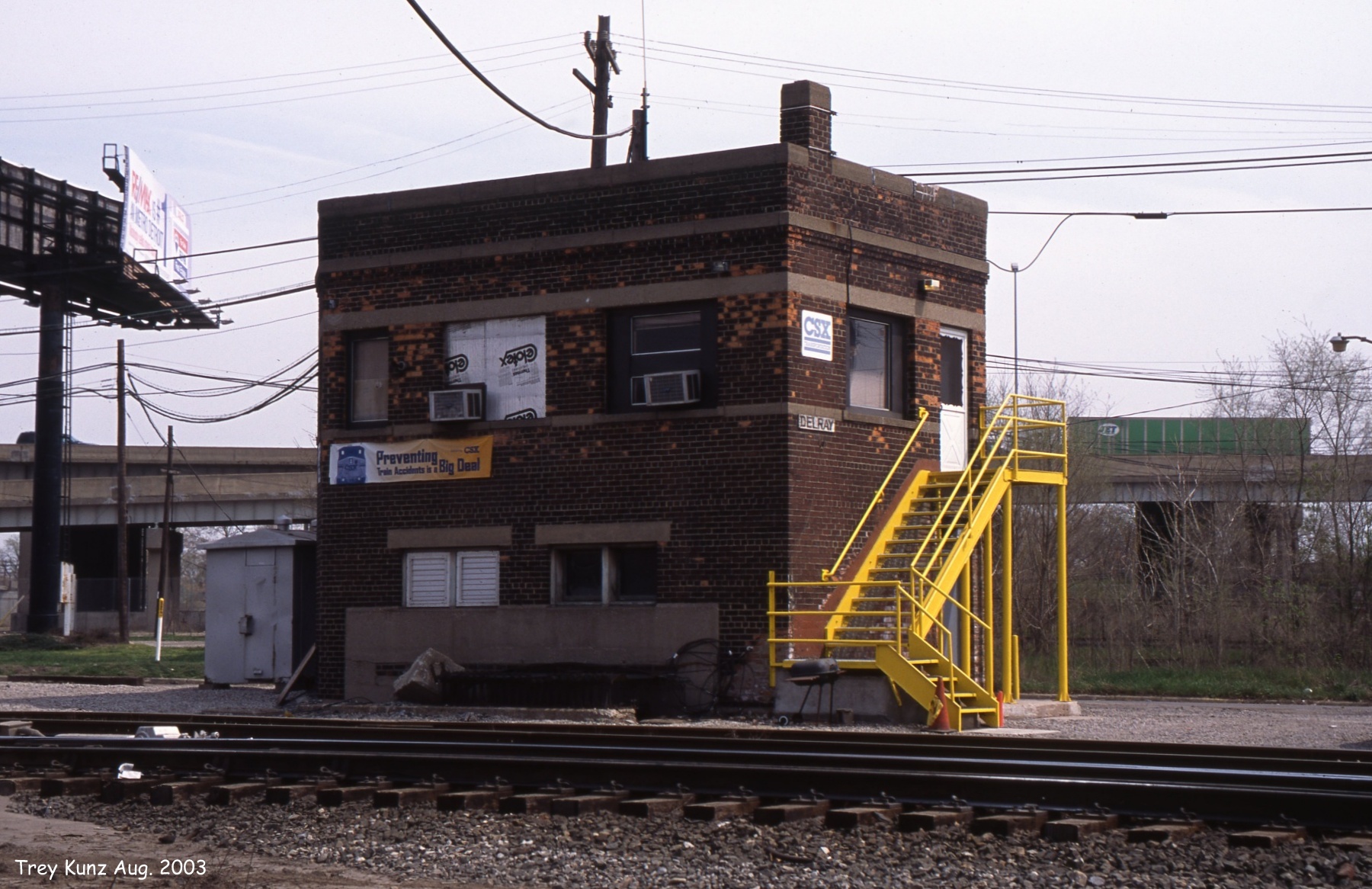
DELRAY Tower to Close - Last North American Lever Frame

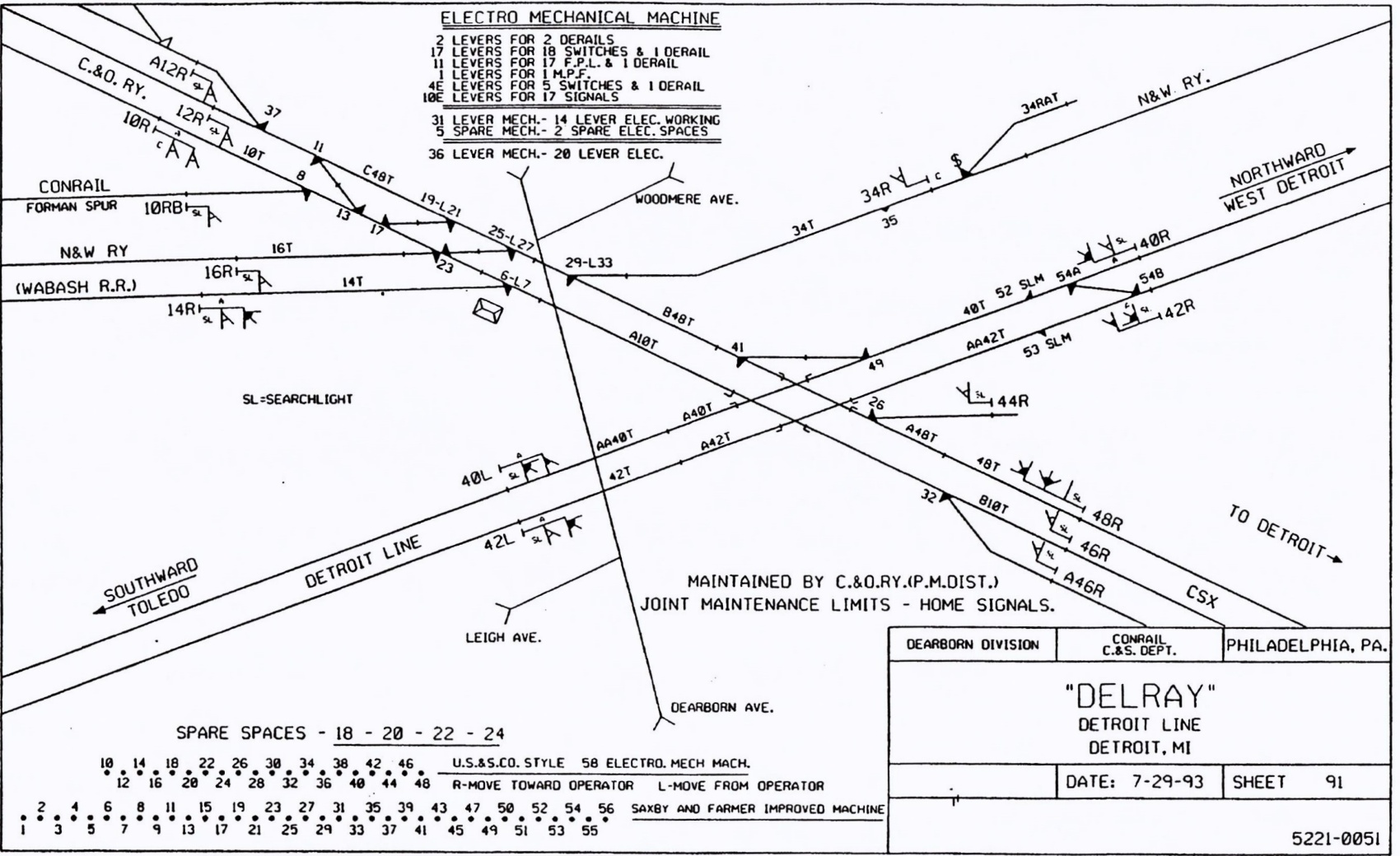
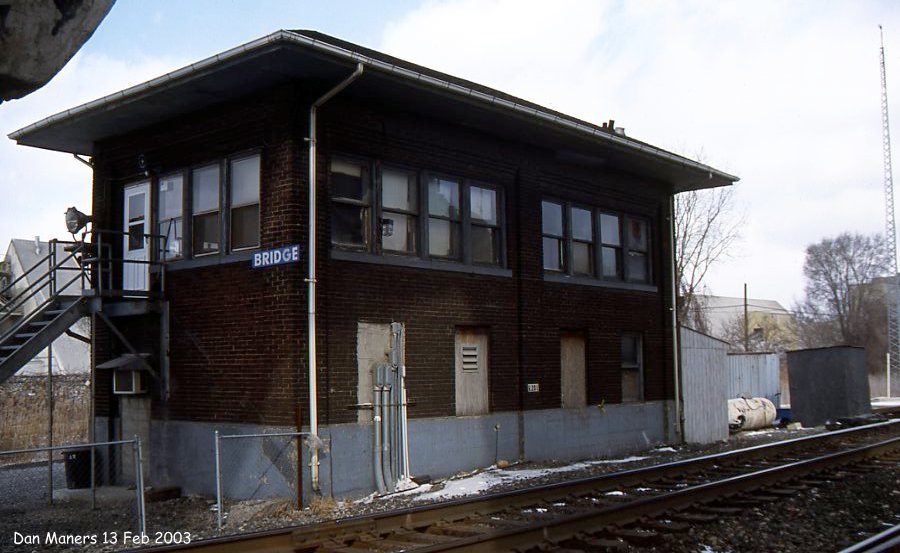
In the fading industrial mecca of Detroit the fickle hand of fate created an Iron Triangle of surviving manned interlocking towers.  Conrail BRIDGE, controlling the former NY Central drawbridge over the River Rogue as well as parts of the Detroit Line, NS ROUGE BRIDGE or Ecorse Jct, crossing of the former NY Central and Wabash and lastly DELRAY, crossing of the Conrail Detroit Line with the former C&O branch into the lakeside industrial zone. 

Named for the Delray section of Detroit, the tower eventually came under CSX ownership and would handle conflicting movements between Norfolk Southern, CSX and Conrail Shared assets.


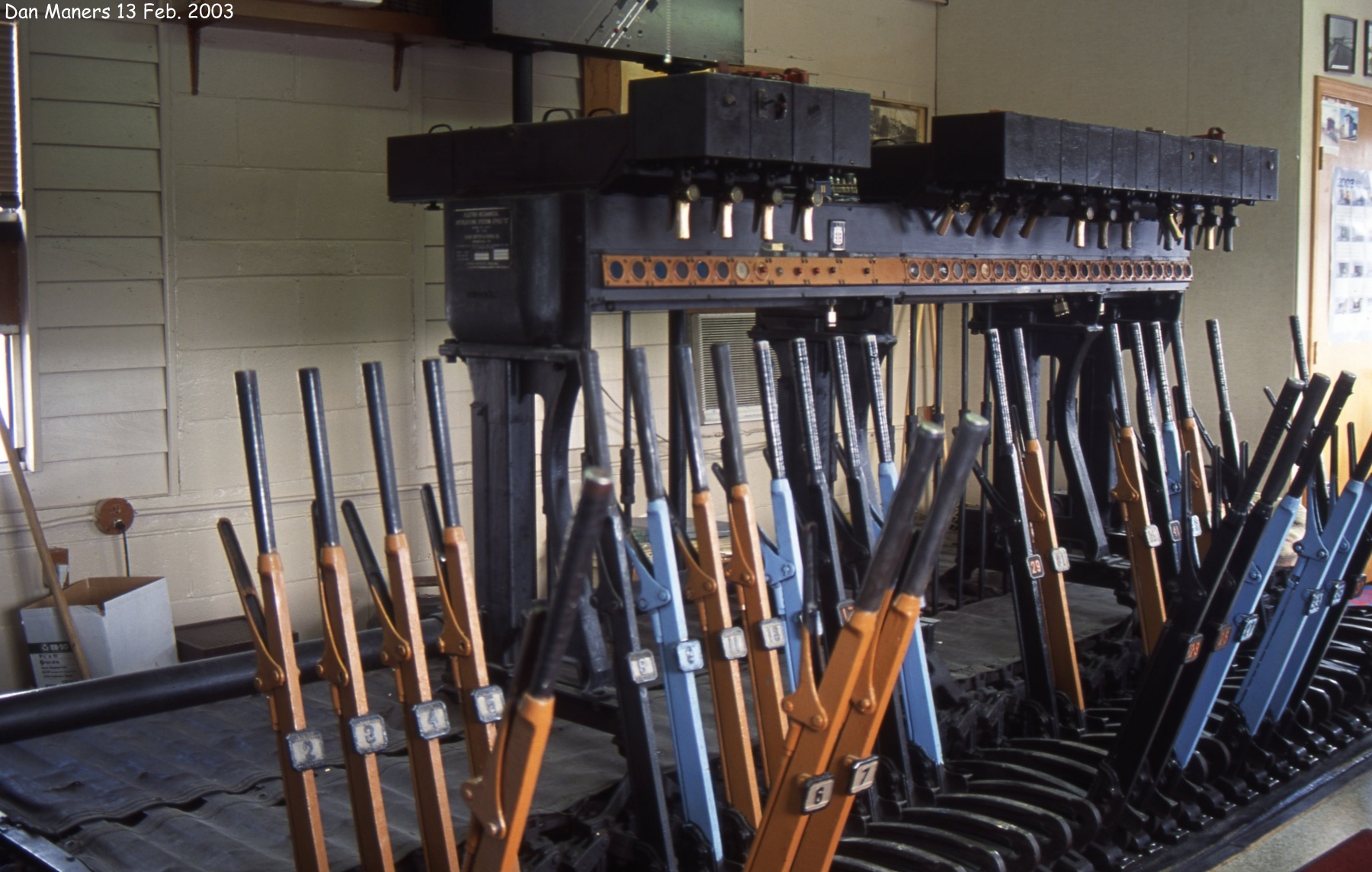
 DELRAY's crown jewel was a 56 lever US&S Model S-8 Electro-Mechanical machine with 36 mechanical levers and 20 miniature electric levers.  Due to what I am sure was a conflict over who would pay for upgrades, DELRAY outlasted almost ever other mechanically based interlocking on the main line North American freight network, becoming the last tower with traditional levers after the closure of DOLTON JCT in 2017 and the last US&S Style S machine in operation after the closure of HALLETT in April 2019. 

Note that the last mechanically operated points in North America were retired in 2010 as DELRAY's machine had been upgraded to electric point operation many decades ago.  The lever colors pictured don't seem to match up with standard practice, but in addition to points and facing point locks, the frame also had to handle derails and one set of movable point frogs.  DELRAY was also well situated for the enthusiast community being located directly adjacent to a road crossing (although it was not located in the best of neighborhoods).


On November 16th, 2020, DELRAY will close.  While I am somewhat surprised that it managed to claim title to so many "lasts", that is more a function of several towers closing before their time. Some have claimed that it is CSX's last interlocking tower full stop, however there are a number of bridge cabins that still support operator positions, including the B&OCT drawbridge in Chicago that happens to be permanently raised yet still in control of the adjacent St. Charles Air Line bridge.  There is also the saga of F TOWER in Fostoria, that, depending on its exact circumstances, could be active yet unmanned, able to be opened on an "as needed" basis similar to HAROLD's zombie state. DELRAY is also not the last mechanically based main line tower on the freight network as JB Tower in West Chicago has likely claim on that title.

For a more in depth look at DELRAY including more recent lever room and relay room interior photos, check out this post on the Towns and Nature blog. The wiring looks like an absolute nightmare! I would highly urge anyone in the area to get their photos while their can, even after the closure date.  DELRAY's location in a rough urban neighborhood will make the tower a likely target for homeless, vandals and scrappers and thus a major liability headache for CSX, so I fear that demolition is inevitable.


Thursday, October 8, 2020

Position Light Contributor Chris Meadows Killed in Hit and Run

Due to anonymity concerns I don't usually get to name the platoon of contributors who help me with my information gathering operations.  Other times they are simply friends or family I am able to browbeat into going on a photo mission for me.  One such friend was Chris Meadows and although he was not at all a railfan or rail industry professional, when IU tower in Indianapolis was faced with impending demolition, Chris went out of his way to get me some photos for no other reason than I asked.

This week Chris was killed by a hit and run driver in a fat tired Bro SUV  while biking around Indianapolis.  Although not a rail enthusiast Chris preferred public transport and bicycle transportation and was a consummate urbanist.  Chris' passion was reading and writing and had been a long time contributor to the e-Reading news website Teleread.org.  I made his acquaintance years ago in a fiction group and the work and enthusiasm he put into his interests was a positive force in the lives of those around him.   Chris and I have different hobbies, but we both engaged in non-market driven, hyper niche reporting because if we don't do it nobody else will as all the real money seems to be in promoting conspiracy theories 😢

Unfortunately I didn't get to use the photos Chris got for me back in May of 2019.  I figured I was going to do an "IU Tower Demolished" post, but the event happened without fanfare or demo photos and they just sat on my drive.  Nevertheless they are still an important part of the historical record so I am sharing them below.


The last days of IU, May 2019

2020 has been a very challenging year for a large number of reasons.  If there is one takeaway it's keep yourself safe.  If you're taking some risks getting some rail photos, keep your head on a swivel.  If you're following all the rules riding your bike downtown it's not going to stop some dude bro from rolling coal right over you.  Stay alert, be prepared, have a plan and let your friends and family know how much you care about them.


Wednesday, September 30, 2020

BART Going with CTBC

 You might have missed it due to COVID news coverage, but back in January 2020, whomever it is that runs BART decided to use some new taxpayer funding to replace the "50 year old" audio frequency cab signal system with CBTC.  While BART does indeed have some extreme capacity constraints funneling 4 lines down a two track trunk between Oakland and Southern San Francisco, as that very city has seen with its MUNI Metro Subway, CBTC is not all its tracked up to be.

This is being brought to you by the same team that sold a $400 million combination railcar and re-signaling package to the Baltimore Metro. Hitachi purchased the Italian railcar manufacturer Breda and the Italian signal provider Ansaldo, which itself was the parent of Union Switch and Signal.  I guess because Hitachi figured that Japanese engineering was better than that of Italy it has gone in with a full re-branding even though I doubt any of the actual work is being carried out in Japan. Like the DC Metro, BART has a core system that is approaching 50 years in age and likely was looking at a full signal equipment replacement similar to that which WMATA carried out after the 2009 signaling related collision.  Although BART has seen many expansions over the years, its core system was and likely still is based on GRS relays and Wee-Zee bond technology. 

 While BART may be hoping for those 30 trains per hour, the reality will likely be less as at a certain point trains become dwell time limited.  It's not that passengers can't all shuffle on and off in 30 seconds, its that they will likely not do it reliably and even a small disruption at peak capacity will result a standing wave traffic jam.  Hopefully, because Bay Area, there will be some sort of backup system as you know every wanna be hacker looking to make a name for themselves will be looking for ways to disrupt the system and anything that uses wireless is ripe for disruption.  If cab signal circuits will remain in service as a backup or on outer portions of the system where such equipment is not life expired, remains to be seen.  The BART system was already pretty useless to railfan with dull signals and rolling stock hostile to look ahead or behind views.  The new D type cars were posed to reverse this trend so get your photos and videos of the current signaling and train control before it vanishes.


Monday, September 21, 2020

Decision 2020

 With all the election talk going on there was one take noticeably absent from the public discourse.  That would be who should one vote for if their number one concern is railway signaling.  Of course this is probably an uncommon point of view, but thanks to the law of large numbers and the internet generally supporting long tail interests, I might as well take a crack at it because I am in need of some filler content. 

 In 2016 the major issue affecting the historical quality and interestingness in the United States was the PTC requirement.  The $15 billion unfunded mandate was signed into law by a Republican president in 2008 with a 2015 deadline and then kicked down the road when the initial date proved unworkable. The law doesn't ban old signals or even require their replacement, but it does require new hardware and testing and at that point it was suddenly cheaper just to replace the whole kit and caboodle. In 2016 Donald Trump was presented as the pro-business, anti-regulation candidate and therefore presented a chance that the PTC requirement would be eliminated.

Four years later Trump has gone on crusades against efficient light bulbs and non-toxic detergent, but not only has the PTC mandate been left untouched, the Trump controlled FRA was at various points threatening popular commuter rail systems with shutdown if they did not waste more money on it.  The truth of the matter is that in 2020 the PTC issue is pretty much dead because there is almost nothing left to save.  Historic signaling has been burned like a California wildfire and with nothing left to lose there is only someone to blame and that would be the Trump Administration.

While the coal industry is completely collapsing even with Trump's support, from a signaling perspective a complete coal collapse would actually be beneficial as past a certain point there would be no business case to upgrade the last patches of N&W/C&O signaling in the coal regions of the east.  As we have seen in Florida and Michigan, CSX short line spin-offs have preserved large amount of classic Seaboard and Chessie signaling.  It's a shame coal didn't collapse a decade ago as it would have likely saved much of the historic West Virginia signaling scene.

The last major signaling related issue I want to discuss is the ability to document signaling from passing passenger trains, which requires A) passenger services and B) traditional rolling stock.  In terms of A, Amtrak has been brought to its knees with Trump connected CEO's axing both private cars and rare millage excursions.  The failure of the recent stimulus talks has now cut Amtrak LD services to tri-weekly.  In term of B, nothing has been done to toe the line in terms of American style crash resistance requirements and more and more European style rolling stock is showing up on the American rail network.  I will give Trump credit for working with congress to ban the Chinese rolling stock company, CRRC, but the regulatory environment is not helping the case for front or rear facing windows on passenger rolling stock. 

In 2020 the choice is clear.  "Amtrak" Joe Biden literally cannot make things any worse in terms of PTC or crappy rolling stock, but he will most certainly increase passenger rail funding which means more trains on more lines and more kinds of signals.  They might not be the most interesting *cough*Denver RTD*cough*, but at least it's something and uses traditional cab signaling.   


Monday, September 14, 2020

Fall 2020 Signaling News

 After a long period of not much going on I recently uncovered a bunch of signaling new, little of it good.  First off, the last pure ATSF signal bridge on the BNSF 3-track raceway out of LA is being replaced by a traffic light cantilever.  The signal bridge, which supports 6, two head US&S H-2 searchlights, is located in Riverside and sees joint UP, BNSF operation.  Although the ATSF bridge was modernized with new concrete footings and the signal location was equipped for PTC, something still managed to upset the powers that be.  Other searchlit locations on the San Bernardino sub appear to be unaffected.

Moving over to the east, the ex.NKP KM interlocking in Vermillion, OH is in the midst of a slow motion re-signaling as its US&S elephant ears are being replaced a mix of current NS signals and an a non-Darth traffic light that appears to have been pulled from the parts bin.  The replacement mast was dropped off on or before mid-2019 and has been recently installed so if you live in the area document the old mast while you can.


Finally, after many many years and false starts, new signals are going up on the BNSF/ATSF/Southwest Chief Rtaon pass route to replace the elderly semaphores.  I guess this is good for the future of the Chief, but bad for the future of semaphores :-(  The photo I have is from Colmor, but I have to assume this is part of a general re-signaling effort.

The only bit of good news I have today is that at this point in time, the main PLs at ARSENAL interlocking have survived the major SEPTA track project of May 2020 that installed a new interlocking south of University City station.  So there's that. 🤷