Search This Blog

Wednesday, November 30, 2022

The LIRR's Puzzling ESA PTC Waiver

As the opening day of the Long Island Rail Road's decades long East Side Access mega project approached there appeared a new hiccup. Apparently the ESA tunnels were not built to support some of the LIRR's diesel rolling stock that routinely runs to New York Penn Station. Setting aside how the LIRR managed to make their brand new tunnel more restrictive that what it typically the gold standard in limited clearance, someone somewhere noticed that a mis-routing could do a can opened job on an oversize train and demanded that the LIRR perform some mitigation. 

Reverse switch to remove roof.

The typical way one would accomplish this would be to have a system of interlocked high car detectors. Tripping a detector would immediately cancel the route and the train would be stopped via both the Cab Signal ATC and ACSES PTC systems. What was so baffling about the LIRR's PTC waiver request was that they were trying to install a new "Tunnel Collision Avoidance" capability to ACSES that would allow for a positive stop at a non-absolute signal or signal indication point. The ACSES positive stop system functions via a transponder telling the on board system to enforce a positive stop in X feet if no cab signal code or radio release is received. This feature was expanded to also cover trains without functioning CSS getting a positive stop at an absolute signal not displaying Rule 280a "Clear to Next Interlocking". TCA would likely work in the same way with a transponder setting up a "positive stop unless" condition combined with a high car detector linked radio release or a cab signal code being present. In fact I think it is actually the latter because part of the aforementioned waiver notes that the ESA tunnels all use only the 250hz cab signal carrier frequency and overheight equipment (DE/.DM30's with C3 coaches) cannot detect the 250hz carrier at all. (See note below)

So my reaction to this is why the heck is the LIRR scrambling to modify ACSES when this was seemingly a solved problem. The fact a waiver is being applied for at all answers part of my question as this must have become an issue only after all of the HAROLD design and signaling work was specified and completed. My Spidey sense tells me that the LIRR's original solution was the use of the 250hz CSS carrier that would drop the cab signals of Amtrak, Metro-North and DE/DM stock to Restricting, at which point the engineer would stop the train short of the low tunnel. Regardless, the Powers That Be demanded a positive stop and instead of adding a new absolute signal at the tunnel mouths, the LIRR decided to do a software fix. I can see how trying to add an HCD system to HAROLD could result in a lot of costly testing given the number of potential routes involved. (After all, the cost of testing prevented NS from even changing the Conrail era HCD recording at CP-BANKS until the general re-signaling project in 2018!), but a couple of extra holdout signals seem pretty straightforward. Based on the general discourse of NYC project management, I suspect the cost of constructing even something "simple" in New York City made a signal-vendor supplied software fix the "better" option.

Before I wrap this up I want to complete the NYC-Region trifecta of poor public sector planning, high cost and political posturing by pointing out the letter that accompanies the FRA's granting of the rather short term PTC waiver. With everything the LIRR is doing to prevent mis-routes including route-indicating signals, rulebook rules, locked out routes, ATC enforced 15mph speeds and the 250hz fail safe cab signal code trick, I would have expected the FRA to issue a letter that states something on the order of "you have gone above and beyond to mitigate this problem".  Instead the letter goes on at length about how everything I mentioned is somehow deficient and they reluctantly approve of the waiver. Here's an example.

"The Board also shares Brotherhood of Railway Signalmen’s concerns about LIRR’s existing hazard detection system not protecting Amtrak trains operating in the Harold Interlocking from being misrouted to the GCM tunnel. FRA notes, however, that if an Amtrak train operating with oversized rolling stock is routed towards the GCM tunnel, a series of redundant protections exist to prevent that train from entering the tunnel. First, if a route into the tunnel is incorrectly lined so that an Amtrak train with oversized rolling stock is lined for movement into the tunnel, the train’s PTC system will enforce a positive stop at either signal 11W or 65W. To proceed past either of those stop signals, the train engineer would have to obtain dispatcher permission to by-pass the PTC enforcement and would be held to a PTC enforced 15 miles per hour (mph) speed limit. Second, as a train approaches the signals and diverging switch that controls the tunnel entry track, the train crew will see routing arrows on the mast of the relevant interlocking signals (up to three signals in advance), which will illuminate white when a route is lined from any of the tracks to the GCM tunnel (the arrows will not illuminate if the track is not lined for the tunnel entrance). This will provide Amtrak train crews the opportunity to stop their train, as required by Amtrak’s special instructions. Third, in the event an oversized train passes the 11W or 65W signals because of human error or a failure of the PTC system, and the train crew does not notice the illuminated arrows and take appropriate action if they are operating an oversized train, LIRR’s cab signaling and ATC systems will protect the Amtrak train, as it would any oversized LIRR train, through the 250 Hz cab signal code which will provide an audible alarm and enforce restricted speed."

  If you don't want to read all that I can summarize in a 14 second video clip.


What's even more telling is that its the railroad signaling union that is explicitly complaining about the lack of TCA capacity. Just remember, whenever a Union is applying political pressure there is likely overtime to be had. Now, the Railroad Safety Board is a political entity and they are going to do whatever they can to cover their asses to the max and/or avoid political problems with unions that might still provide a few Democratic votes, but the waiver also includes at least 6 safety theatre-esque action items that will add more time and cost to the entire ESA enterprise. Is a mis-route possible? Absolutely, they happen all the time.Even with all the protections could we actually get the can-opener effect? Well an Amtrak Keystone did go to Cynwyd 🤷. Still, the likelihood of all these Swiss cheese holes lining up is remote, especially as there are countless locations along busy passenger tracks where a bad route can take a train into a yard or an out of service track and they aren't causing major safety problems. If rail is every going to deliver nice things, we can't have this level of of CYA virtue signaling coming from the top.

PS: The entire docket of documents related to this waiver, including that super useful HAROLD interlocking diagram, can be found here.

*Note: The PRR legacy Cab Signal System as now deployed in North America makes use of code rates in pulses per minute and one or more AC carrier frequencies in cycles per second (hertz). These can be combined to increase the number of usable codes if so desired. Railroads on Amtrak's Northeast Corridor make use of a 100hz carrier for the basic CSS codes and a 250hz carrier for additional codes that were added ~1999. The LIRR uses an expanded set of pulse code rates and therefore does not need a secondary frequency. This means they could make the EMU stock (M3's, M7's and M9's) sensitive to both a 100hz and 250hz carrier with the same code rates. All other equipment including Amtrak, Metro-North and DE/DM stock will receive a Restricting cab signal in the abstinence of a 100hz code.


Sunday, November 20, 2022

NEW LIRR Front End Videos and News

The (temporary?) return of Budd M3 Metropolitans to LIRR service has resulted in a bevy of head end railfan window videos from Youtuber Mr Master 767 including the new Main Line third track arrangement between DIVIDE and QUEENS interlockings. I figured I would post some of the videos and then provide some quick commentary on the key points of interest.


On the Ronkonkoma to NY Penn segment above we can see the final result of both the Ronkonkoma double track and Main Line Third track projects. The good news is that BETH and both core and extended parts of DIVIDE interlocking remain position lit, however the new MNRR style reduced aspect signals have taken over all other portions of the route to QUEENS interlocking.  At this point QUEENS is scheduled for additional re-signaling and re-configuration with BETH and DIVIDE to follow in subsequent years unless the MTA's financial situation heads this off.


In the above Atlantic Branch video we can see that DUNTON interlocking is still largely position lit, but point machines are now electric.  VAN interlocking has also been converted to electric, but BROOK appears to be holding on with some remaining pneumatic. 


On the Long Branch Branch LEAD interlocking has been converted to non-reduced color light (probably several years ago), no word on the status of LEAD as a manned interlocking station however.


Finally on the Port Washington Branch a reconfiguration of NECK interlocking appears ready to see the replacement of multiple position light masts, gantries and pedestal signals including the practically brand new westbound signal bridge. This is accessible from the station and is definitely on my To Do list.

Sunday, November 13, 2022

New Amtrak CPL Just Dropped

As previously covered, Amtrak has been adding new high level platforms to Penn Station Baltimore in support of a redevelopment effort. While my initial focus was on the loss of pneumatic point machines at PAUL interlocking, another side effect is perhaps more interesting.  The new platform has resulted in the, at least temporary, removal of the southbound mid-platform PRR pedestal equipped cantilever signal at PAUL interlocking on track #7 where the former 'F' storage track merges in. The expected replacement would have been to move both pedestal signals to ground  mounted locations, but for whatever reason (lack of clearance?) Amtrak got creative and used a B&O Style CPL dwarf instead.

The B&O CPL dwarf is not only in the NORAC rulebook (largely due to DC Union Station), but also covers all the signal indications that Amtrak would need at this location. The previous cantilever signal was installed with the NECIP project that closed UNION and B&P JCT towers and upgraded the slow speed, doubleslip heavy PRR era mixed traffic terminal with a higher speed passenger oriented layout. Later a second pedestal cantilever would be installed at CHARLES for low level track #3.

CHARLES interlocking features an intermediate signal on track #7 (7SA) so the 7S signal on the cantilever could be observed displaying Approach Slow for a Slow Approach at 7SA for a Stop at CHARLES Baltimore tunnel exit signal 7SB. Although the capability for Approach Slow on the CPL was retained, I was only able to observe the signal moving from Stop and Proceed to Slow Approach to Clear, possibly due to how the other signals were being fleeted.


Slow Approach appears to have replaced straight Approach on the 7S. This seems logical given the short signaling distance, although it may have required also modifying the 1S signal a PAUL and/or 1S signal at BIDDLE.

I will make a point to return and make more observations to more accurately determine the changes.  It also remains to be seen if this is a permanent arrangement or if the cantilever or ground mounted 7S pedestal will return. The switch in the middle of the track 7 platform occasionally causes operational headaches, especially with a positive stop requirement and if money/space is available, extending track F several more car-lengths would likely present the best solution.  

Sunday, November 6, 2022

Fire at POND Tower

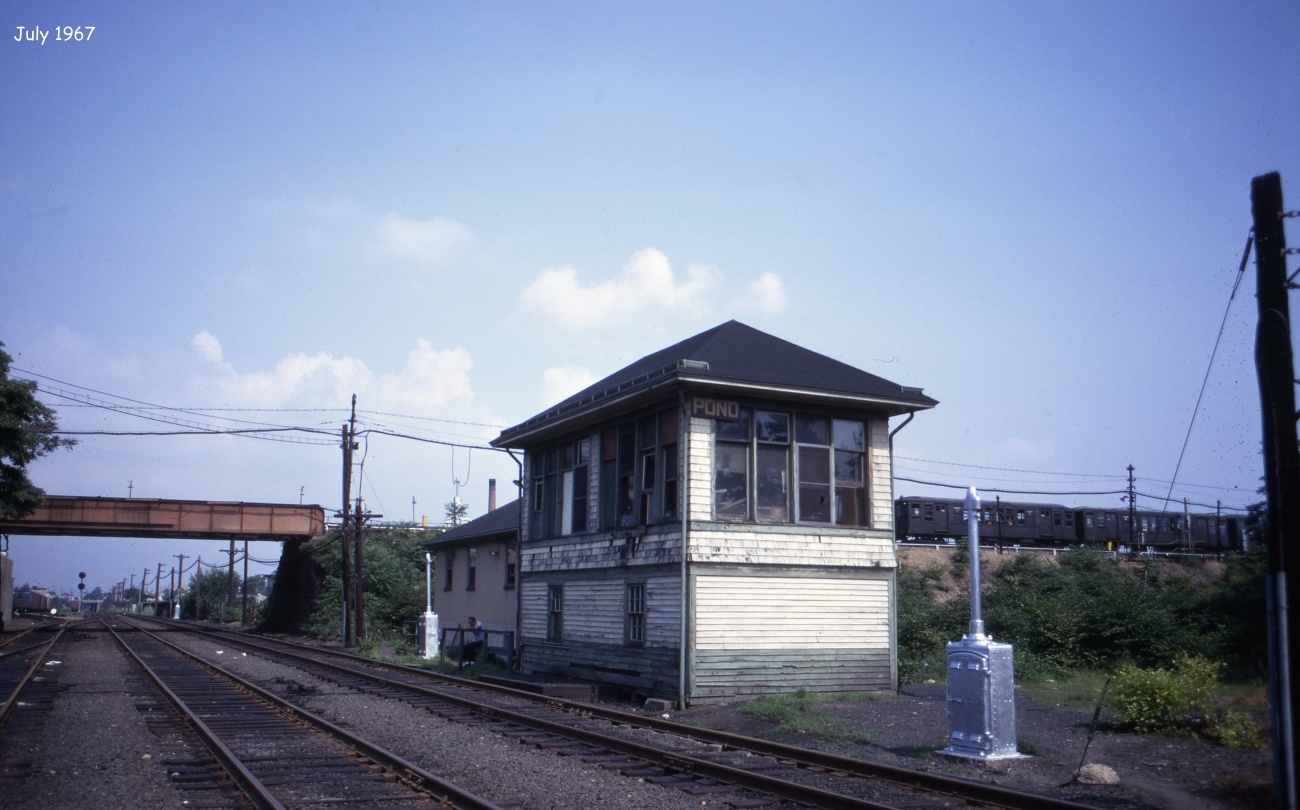
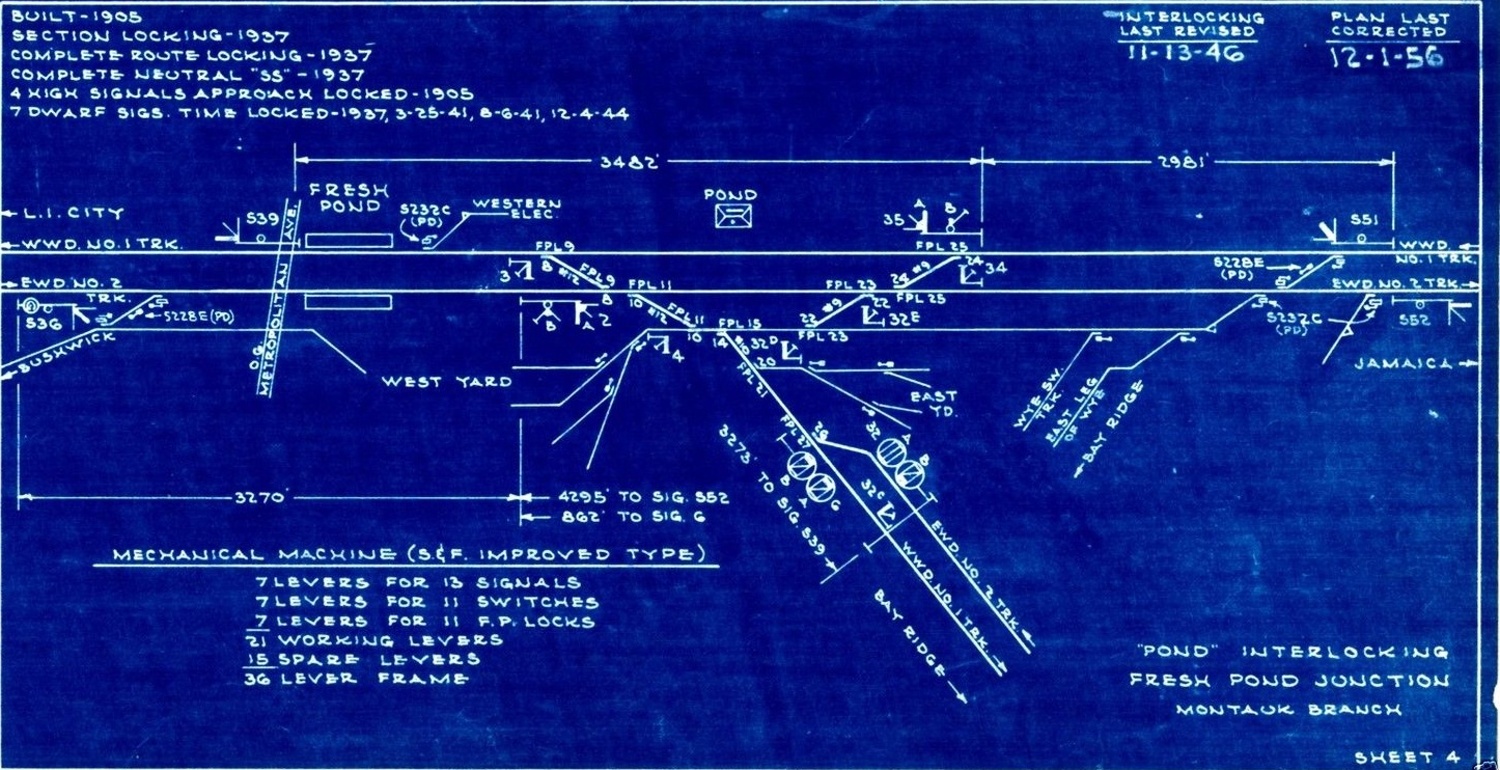
I have received reports that the former LIRR POND tower has suffered a fire related incident.  The extent of the damage is currently unknown, but the wooden structure would be highly vulnerable to flame.  POND is located on the LIRR Montauk Branch at the west end of Fresh Pond Yard, which now serves as the base of operations for the New York and Atlantic and, by extension, rail freight for the entirety of Long and Royal islands.

Built in 1905, POND was on the LIRR end of the junction with the New Haven / New York Connecting RR's freight extension to Bay Ridge via the Hell Gate Bridge. Closed as an active interlocking station at some point in the 70's or 80's, POND outlasted its newer and more robust sibling FREEMONT tower on the Bay Ridge Branch by being repurposed as the NY&A's freight/yard office. It's location in an isolated and wooded area probably meant that transient related vandalism was inevetable.  Hopefully the damage is such that repair, rather than demolition will be warranted, but I am not optimistic.  

Monday, October 31, 2022

The Has-Been Returns

About a decade ago a superb signaling related blog run by a retired US&S signal engineer came to my attention.Titled The Has Been, the site was self-hosted and used dynamic IP address services making it almost completely invisible to the wide world of Google searching. Unfortunately, after a few months it made a switch to a new dynamic DNS service and because I was not in "the loop" the site effectivly went poof.

Well thanks to some new friends I have been made aware that the site still exists, obtained a stable DNS entry and has been updating regularly over the past decade. The site is still not searchable on any public search service and has several other internal features to prevent automated scraping. However it does contain a keyword search and an archive that is served up by calendar month. I figure I am going to have my hands full catching up on all of the great signaling content I have missed. Anyway the current URL is thehasbeen.org:9090, enjoy!


Friday, October 21, 2022

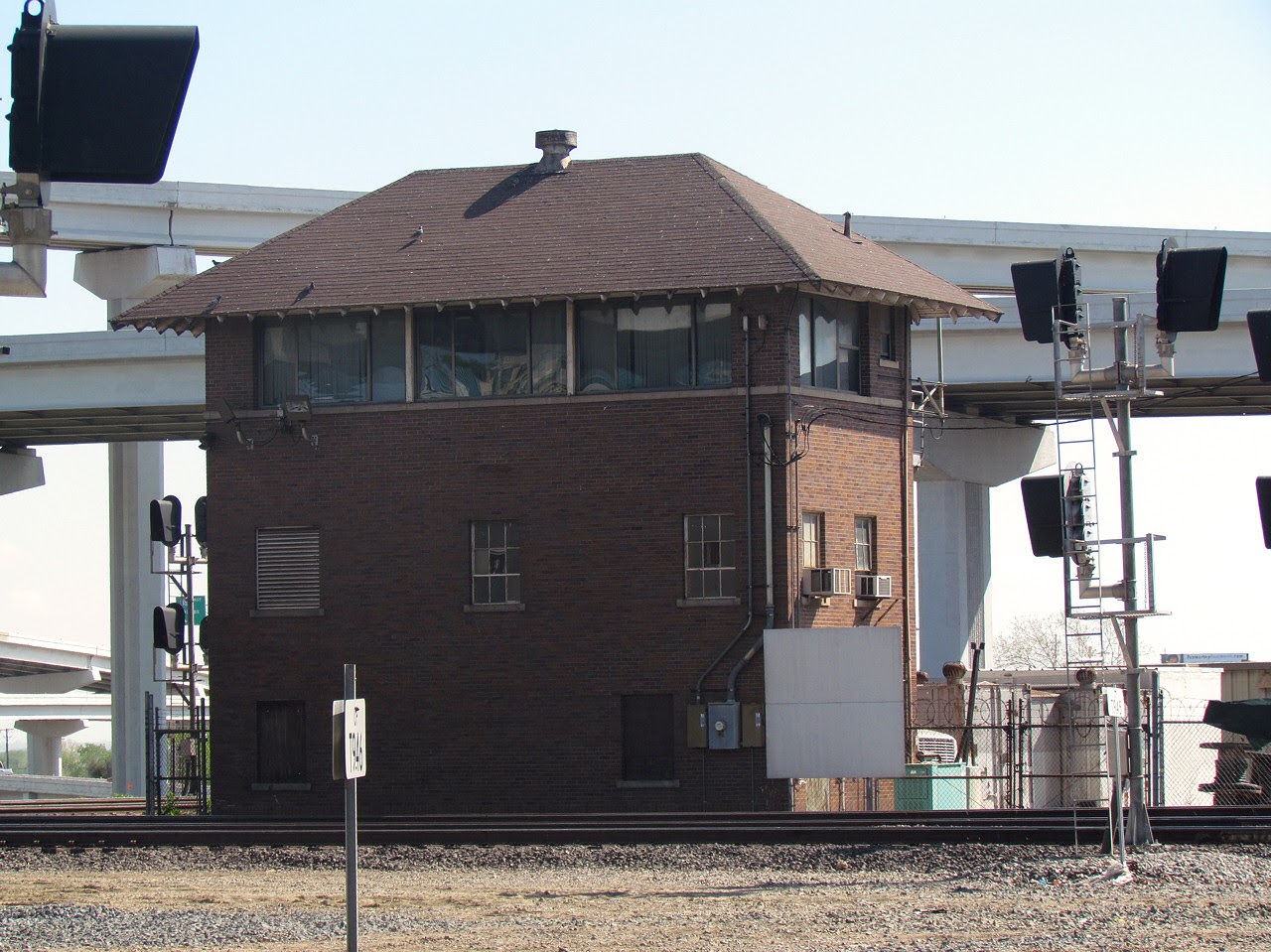
Fort Worth Tower 55 Facing Demolition

In a huge surprise it seems that Fort Worth's iconic TOWER 55 is under threat of immediate demolition with work to begin on Monday, November 14th. A report went out on Twitter, but the planned date was pushed back. 

As we have seen with demolition efforts with AR and MG towers near Altoona there are numerous factors that could yet scuttle the demolition plans, including detection of hazardous substances like lead or asbestos. It is also unknown if the tower will need to be gutted first or simply demolished as-is.


TOWER 55 is located in downtown Fort Worth and consists of a3x2 diamond crossing between two major Union Pacific main line with connecting tracks on all four quadrants. The junction is so complex that it has its own signal committee posting handy "you are here" signs. It is on the order of such towers as SANTA FE JCT in Kansas City or F TOWER in Fostoria.

The tower checks none of the boxes of demolition risk. It's made of brick, in very good condition with modern windows on the operator's level.  It is located in a quadrant of the jct behind a fence line and is used by local MoW or C&S crews. The most likely explanations are some sort of spite (aka "cost cutting") or a need to expand the east-west line from 2 tracks to 3, which could require running the new track through the tower's footprint.  If anyone knows anything more specific or has updates about TOWER 55 please leave them in the comments.

Friday, October 14, 2022

K TOWER "Relocated" w/ N-X Panel Retired

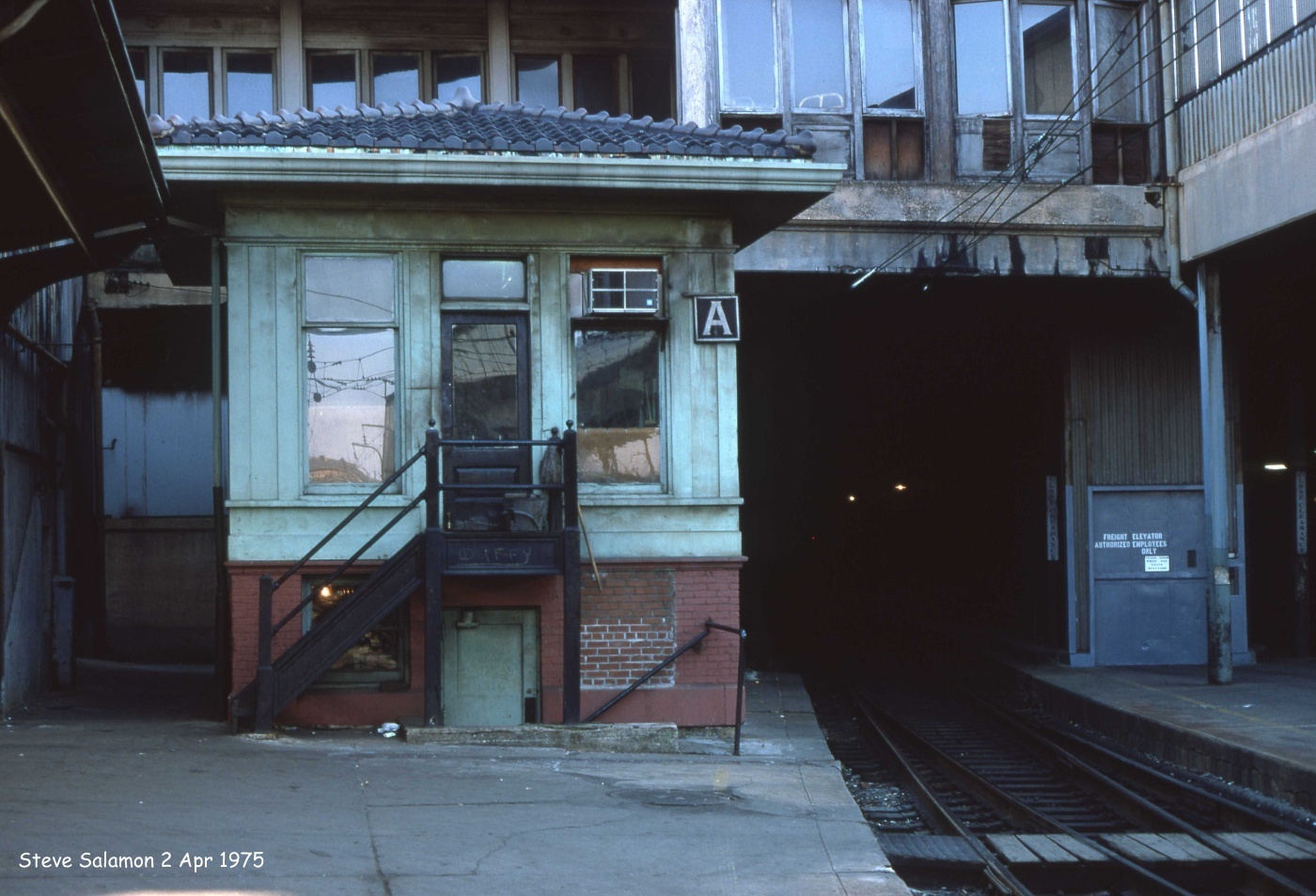
It has been confirmed that Amtrak has relocated the train director(s) working K TOWER at Washington Union Terminal from the historic 1908 structure and into a small office in the Railway Express building adjacent to Track 29 on Union Station's lower level.


Unlike R Tower in Sunnyside yard, where a similar relocation immediately preceded demolition to make way for an Acela maintenance facility, the historical significance of Washington's K TOWER is well understood.  In 2017 I reported on plans to cover over the entire union station approach with some mixed use development with K Tower specifically singled out for conversion into some sort of high end bar. The culprit here is some combination of Amtrak's desire to simplify "management" and also cut costs along with some technical upgrades that were evidently completed behind the scenes.

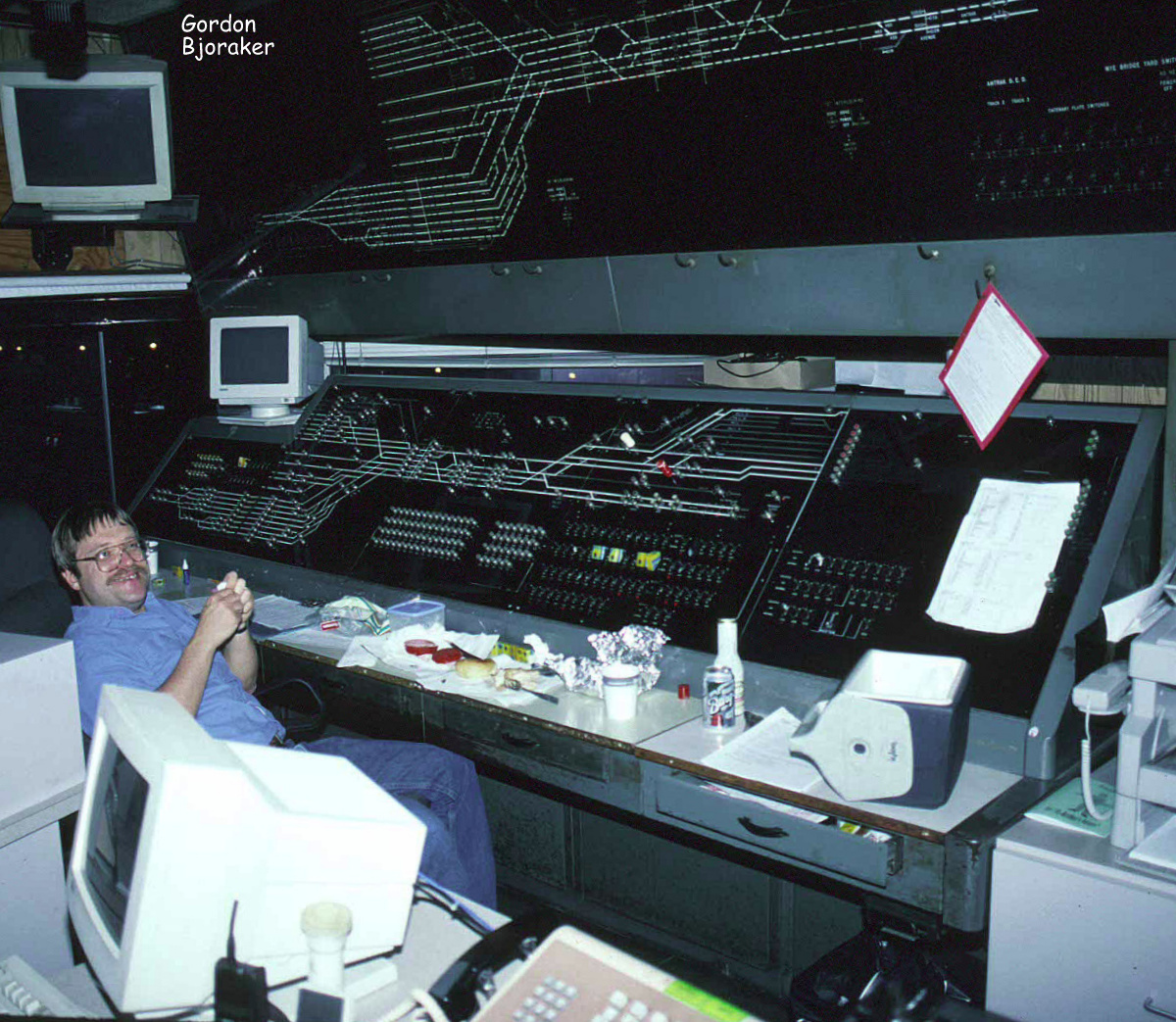
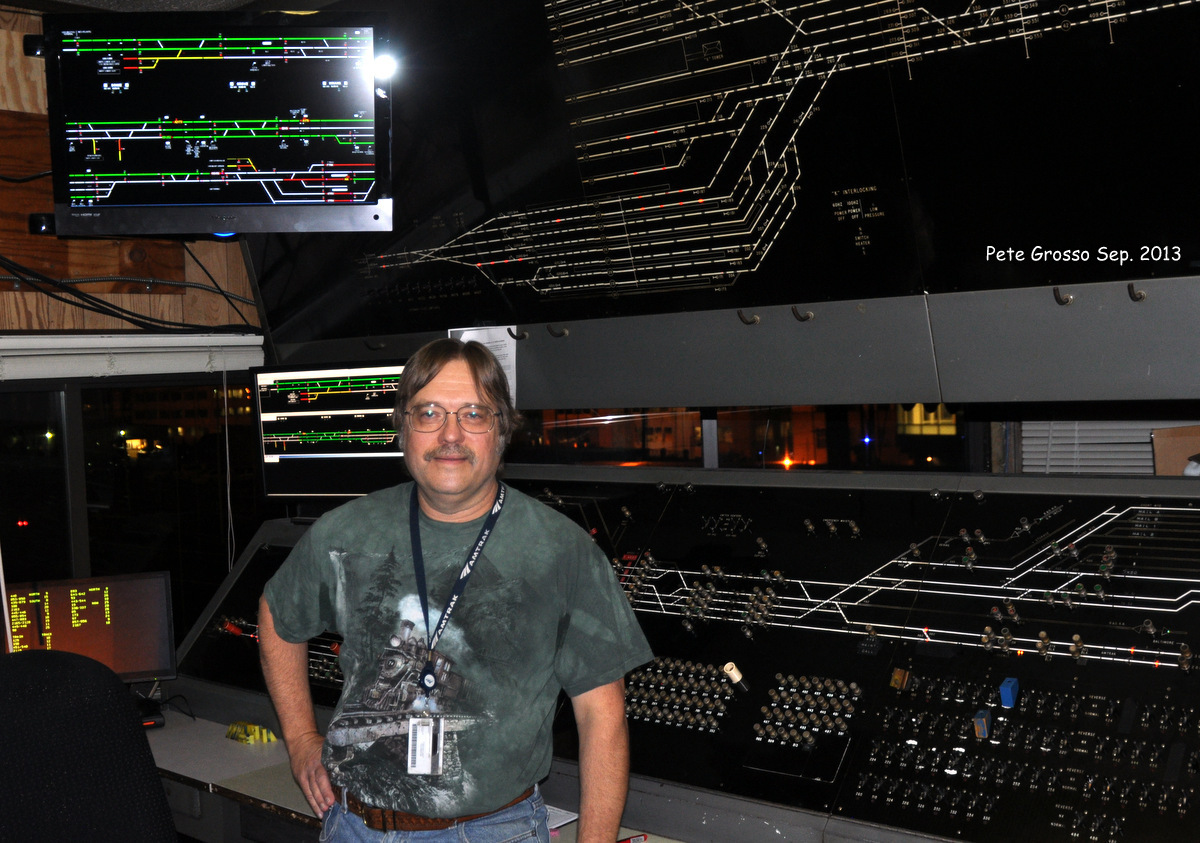
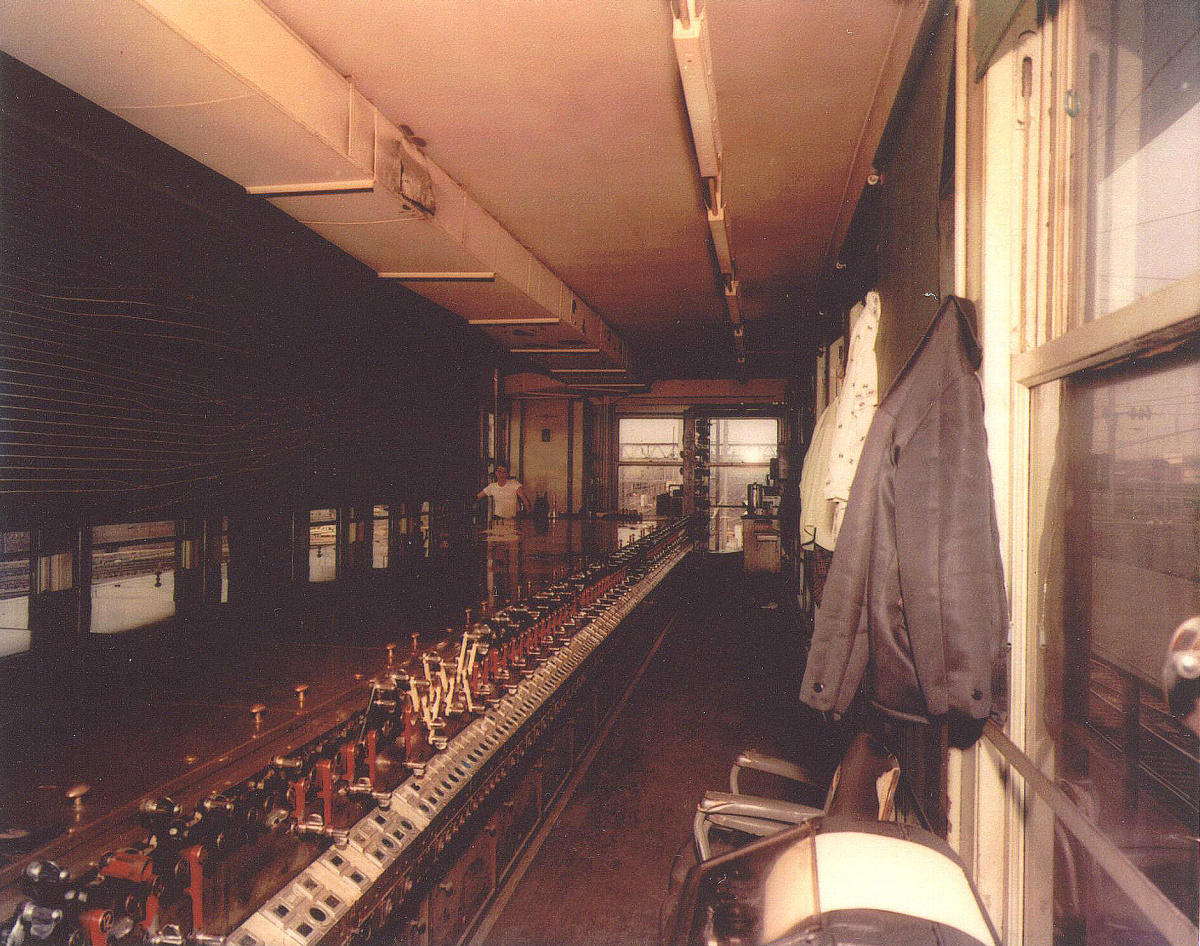
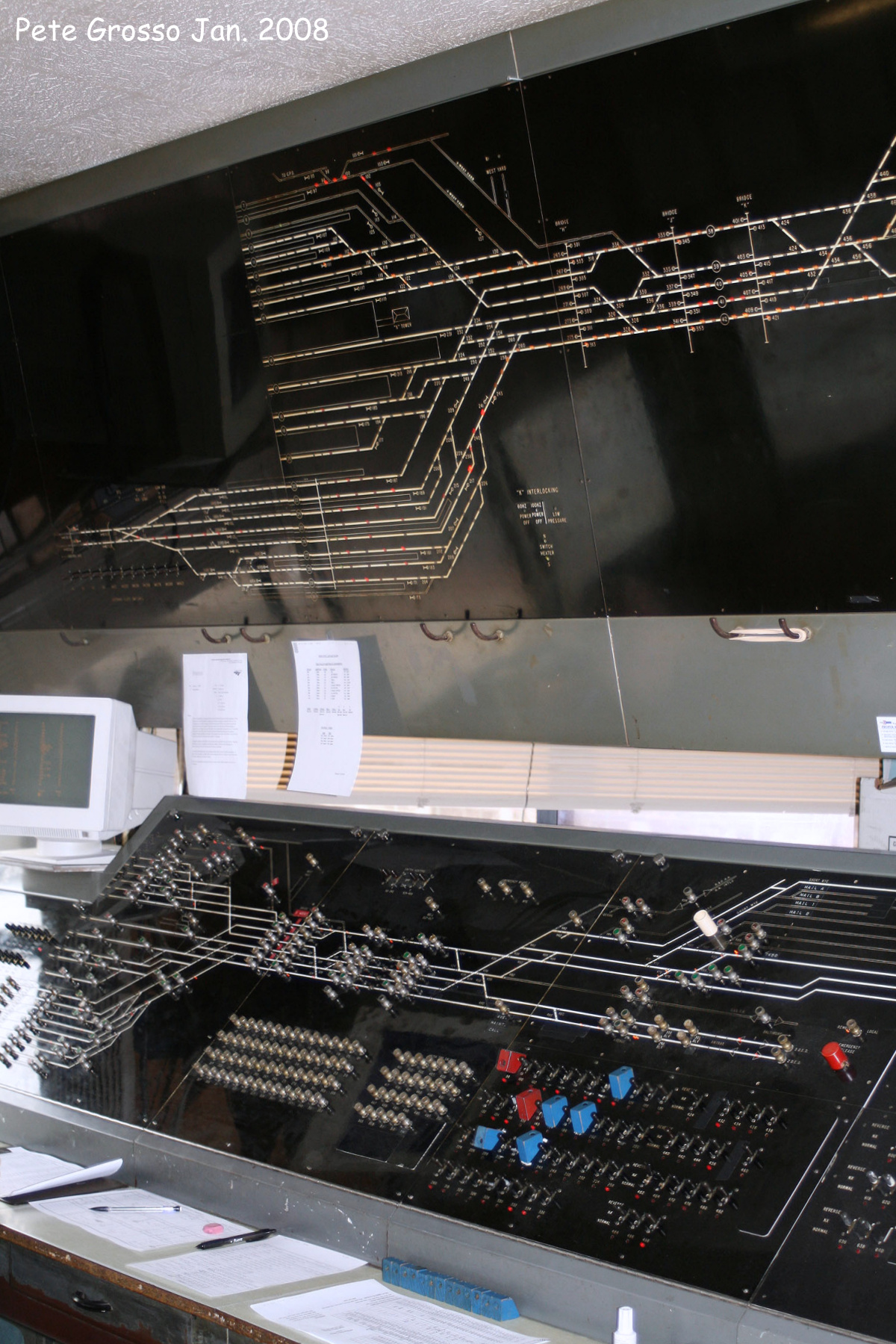
As constructed in 1908, Washington Terminal was controlled by at least three US&S Electro-Pneumatic equipped towers, A Cabin, C Tower and K Tower. In the 1970's, K Tower had its long Electro-Pneumatic machine replaced with a then cutting edge N-X type interface and model board that drastically cut the need for staffing (and floor space) and centralized control of the entire terminal into a single location. This change likely took place around 1975 as the construction of the DC Metro's Red Line required the demolition of C Tower. Although cutting edge for the 1970's, by the 2010's the N-X machine was becoming increasingly difficult to maintain as parts were long out of production and failures could become rather nail biting in terms of getting the machine working again.

Although decorated with some LCD screens, the big old N-X panel's days were numbered and as soon as the control was converted into a video display interface, the human train director was no longer limited to being in the tower itself, especially if CCTV feeds could be provided. Although I suspect the historic K TOWER will be maintained and serve a railroad function, while active as a work site the HVAC, restrooms, etc would all need to be maintained to a higher standard. Plus there is the added benefit of management being able to "pop in" to "supervise". It is quite possible that the N-X panel was actually replaced years ago and COVID simply delayed the inevitable. K Tower would therefore be a rather extreme example of a "return to the office" policy. Still, given that computers can be installed anywhere, there is always the chance that the K TOWER staff could find themselves back in the old tower in the future, baring some redevelopment effort.

K TOWER joins the fate of many other pre-video "panel" type interlocking setups that I discussed previously in the content of Hoboken's rather short lived TERMINAL TOWER. Given the ease at which an N-X panel can be converted to a video interface, it is entirely possible that, rapid transit systems not withstanding, we  might see electro-mechanical machines outlast hard wired N-X panels in staffed towers.