Search This Blog

Tuesday, January 30, 2024

Amtrak's Post Road Puzzle

The Albany Port Road Branch, now under long term lease to Amtrak, has an interesting history. One of the few stretches of non-commuter North American main line track dedicated solely to passenger operation, the Post Road Branch represents the original route of the Boston and Albany before the construction of the Selkirk Cutoff that allowed New York Contrail freight trains to bypass the Albany terminal area in the 1920's. In the 1970's, Penn Central completely ripped up the track on the 12 mile branch as a cost cutting measure before being ordered to restore it by the ICC. Since then it has hosted exactly two regular trains per day, the Boston section of the east and westbound Lake Shore Limited and with an 80mph track speeds, it currently represents the fastest portion of the Boston to Albany route. 

Listed as operating under Rule 261 bi-directional signaling in the timetables of both Conrail and CSX one might assume that the line would have something on the order of 4 or 5 intermediate signal locations based on the typical North American main line block length of 2-3 miles. Riding the line I recall having trouble spotting these signal locations, but I assumed they were there. More recently I noticed that Boston Line CP-187 had been re-signaled by CSX and then used Google Earth to carefully scan the Post Road to see if Amtrak had used the opportunity to convert it to Rule 562 cab signals without wayside intermediates. I couldn't find the intermediates or their associated ACSES beacons, but there was also no evidence of cab signaling. It was only then I realized what Conrail had done.

In 2021 I reported on the Boston and Maine's budget CTC signaling on the Connecticut Valley route. Each CTC "block" of 6-8 miles in length might have only one intermediate signal, the distant two miles from the next CTC siding interlocking. Well when I saw the  Milepost 188.8 intermediate above that governs only eastbound movements as they approach CP-187, it became clear that Conrail had done the same thing, just with a 10 mile long block.

Reviewing my archives I discovered a similar westbound only signal about 1-2 miles east of CP-141 at Albany confirming the use of a "superblock" type configuration. While this certainly matches the traffic levels of 2 trains per day and cuts down on some relay logic, it still means that a single faulty track circuit component can trigger up to 10 miles of Restricted speed operation, or possibly 10 miles of Approach.  

With the limited traffic it will be interesting if Amtrak extends the cab signaling to CP-187 and close the last remaining cab signal gap between Boston and Albany. It's not like there are not intermediate signaling hardware on the line since a block that long needs occasional repeaters for track circuit integrity.

Sunday, January 21, 2024

Hoosac to Hudson: The State of Western B&M Signaling

For years the western end of the old Boston and Maine main line between the Hoosac Tunnel and Mechanicville, NY has been subjected to a highly inconsistent re-signaling programme by the NS-Guilford joint venture "Pan Am Southern". After a recent visitation and Google Earth survey I believe I have determined the exact disposition of B&M signaling between those two locations. 

Starting at the Hoosac Tunnel, both CPF-414 and CPF-415 are retain their B&M signaling with tri-lamp searchlights and pulse-code based block state transmission. 


Inside the tunnel both ABS signal locations have had their signal heads replaced by modular square LED color lights, but appear to use the same mounting and relay infrastructure. 

At the west end of the tunnel CPF-421 is still searchlit and also features an old school intra-interlocking pole line cable bundle as CPF-421 appears to have been a larger pre-CTC interlocking plant. 

CPF-423 at the west end of the North Adams CTC siding was unfortunately re-signaled in 2022. This was part of a protracted re-signaling project that was probably cut short by the CSX purchase of the east end of Guilford and the uncertainty about the long term future of the west end. 

The split intermediate signals at mileposts 424 and 425 (numbered 144 and 145) were removed and replaced by a single bi-directional mast at the Ashton Ave crossing near MP 425.44. Signal hardware is branded as GE, which is associated with the Landsay company that seems to have taken over the lines of GE/Harmon. The new 425 intermediate may have been intended to replace the holdout signal at CPF-428 as the westbound direction has a fixed lower red lamp, however someone may have thought better of this between when the signal was installed c. 2017 and when it went into service some 5 years later. 

The MP 430 intermediate at the old Taconic racetrack along with the MP 432 intermediate were both replaced by a single new mast around MP 431.

This is where things get strange as the next 4 intermediate signal locations at mileposts 435, 438, 440 and 443, are are still B&M searchlit. 

At the CPF-445 junction with the Vermont Rail System, the interlocking has been re-signaled and B&M searchlights have been replaced with Unilens searchlights and a Safetran color light dwarf.

However at CPF-448 in Eagle Bridge, the B&M searchlights and signal bridge were decommissioned in favor of LED color lights around 2017. Because the Guilford rail system's particular tastes the project included a westbound bracket mast although the B&M signal bridge was abandoned in place.

Between Eagle Bridge and CPF-464, all the B&M searchlights were removed around 2017 including locations at mileposts 450, 452, 455, 458 and 462. However CPF-464 remains in a 2-head searchlit configuration. 

At the other end of the siding CPF-466 also remains searchlit in a 2-head configuration, however the new holdout signal at CPF-467 consists of LED color light masts. At this point the Guilford main line hits the CP searchlights at CPF-468.

I hope this makes things a little clearer for those looking to explore the area. I am kicking myself for not conducting additional expeditions between 2017 when the new masts appeared between MP 423 and 435. I assumed that by 2018 the route would have been re-signaled and rather than risk a wasted road trip I diverted my attention to the Amtrak Hudson Line. This just goes to show that one should verify signal removals instead of mentally writing them off. 


Sunday, January 14, 2024

Velcorp Gems - A New Signal Supplier Enters the Fray

While out riding the new MBTA Green Line Extension I noticed a new corporate brand stenciled onto the back of a cheap looking transit type LED signal head.

My original assessment that  Velcorp is the company and GEMS is the brand name of their rail signaling equipment turned out to be incorrect as Velcorp was actually Virginia Electronic & Lighting LLC and GEMS was their subsidiary General Electronics Mechanical Services, which I guess does all the rail stuff? Anyway, as you can see below the product looks to be on the low end of the build quality scale with exposed nuts on the front, lots of hard angles and what appears to be a non-locking access door on the rear.


The mounting equipment is branded as Harmon, which may be doing business under the Landsay brand now. Each signal also has a pair of mounting brackets on the top that look a bit like owl tufts. From Velcorp's website it looked like they had previously focused on LED modules before suddenly getting the contract for the GLX wayside signals. Velcorp isn't local so maybe its a Veteran owned small business or something.


Despite their appearance, the signals seemed to work well enough. Still, I have not encountered them on any other transit system. Velcorp is one of several entrants into the rail signal space to have offered up products competing against the legacy brands of US&S and GRS (Alstom) who have the capability to make larger cast aluminum and iron housings.


Saturday, January 6, 2024

1994 SUISUN BRIDGE Cabin Tour

 Movable bridge cabins are the invisible step children of the interlocking tower scene, but its easy to forget that they have all the same stuff that regular towers have including the full compliment of electro+mechanical interlocking machines. While poking around YouTube I found this video of someone's 1994 tour of the Souther Pacific's SUISUN BRIDGE movable bridge cabin. This vertical lift drawbridge is a crossing of the Carquinez Strait, which connects Suisun Bay with San Fransisco Bay and hosts Amtrak's Capitol Corridor, Coast Starlight and California Zephyr services.

As far as I am aware it is still a staffed interlocking station, although I am not sure if it retains the US&S Model 14 machine and panel seen throughout the video (specifically 10:30). In the video you can also hear the sound of a signature US&S pneumatic switch machine at 4:00 as it locks down the lift span under the control of a Model 14 lever.

Based on intro and outro clips of ABS searchlight signals on the south bank, I suspect this pre-dated the era of SP style tri-light signals that remain at the bridge today and therefore implies that the Mode 14 was replaced by a panel or VDU.

Westbound home signals SUISUN BRIDGE

The panel shown at various points in the video also lacks the VISTA crossover immediately west of the eastbound signals.

Westbound home signals VISTA interlocking with eastbound home signals SUISUN BAY

So it looks like the "Southern Pacific" style re-signaling was going on quite a bit later than I had figured what with the mid-90's Union Pacific merger.

Sunday, December 31, 2023

2023 Searchlight News

 For the last post of 2023 I'm going to go through my backlog of searchlight related news items. First up is the Florida East Coast where we are all aware of the re-signaling in the Brightline Zone, but it appears that the remaining searchlights on the north end are also on the way out. The Bayard siding, just south of Jacksonville, had no evidence of signal replacement in Feb 2023, but new masts were in place by September.

Up on the former B&M Main Line east of the CSX zone in Ayer, there was been a good deal of searchlight attrition, but this has been a piecemeal process and at milepost 425 near the VT/NY state line the MP 435 searchlight was still standing as of may 2023.

East of Ayer CSX hasn't quite had enough time to start re-signaling projects as they are still trying to rebuild the connector from Warcester to Ayer. Getting out to the two searchlit interlockings between the Lowell and Fitchburg MBTA zones are high on my list.

Up on the former Montana Rail Link the searchlight replacement is ongoing with new signals up around EAST BOZEMAN.

Unfortunately around 2019-2022 many remaining searchlights on the BNSF San Bernardino Sub lost its ATSF vintage searchlights except for a few around the Riverside Station.

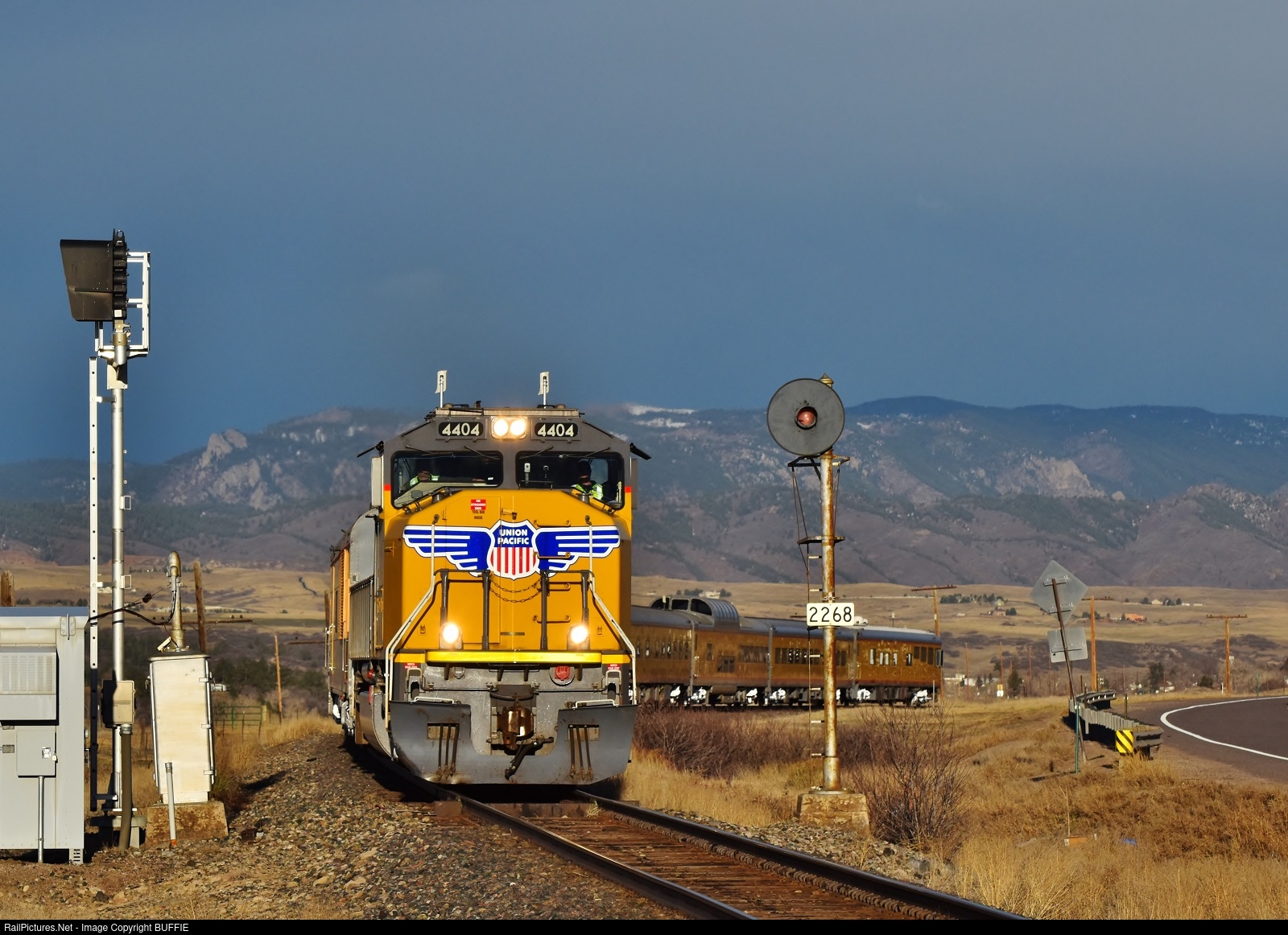
Finally on the UP/BNSF Joint Line south of Denver, an interesting situation has developed where CTC has been added to one of the two former single direction ABS tracks and the other has been left as ABS with no PTC due to a lack of need. This has at least temporarily saved a number of searchlights, including the mast at Milepost 226.8 just of US 85 north of Castle Rock, which has had a replacement hovering over it since 2018.

That's all for now. Remember there's no time like the present to get out and get your photos. I'll be doing a followup piece on re-signaling on the New England Central line in the CT River Valley in a few months.

Friday, December 22, 2023

The Last N&W CPL Dwarfs?

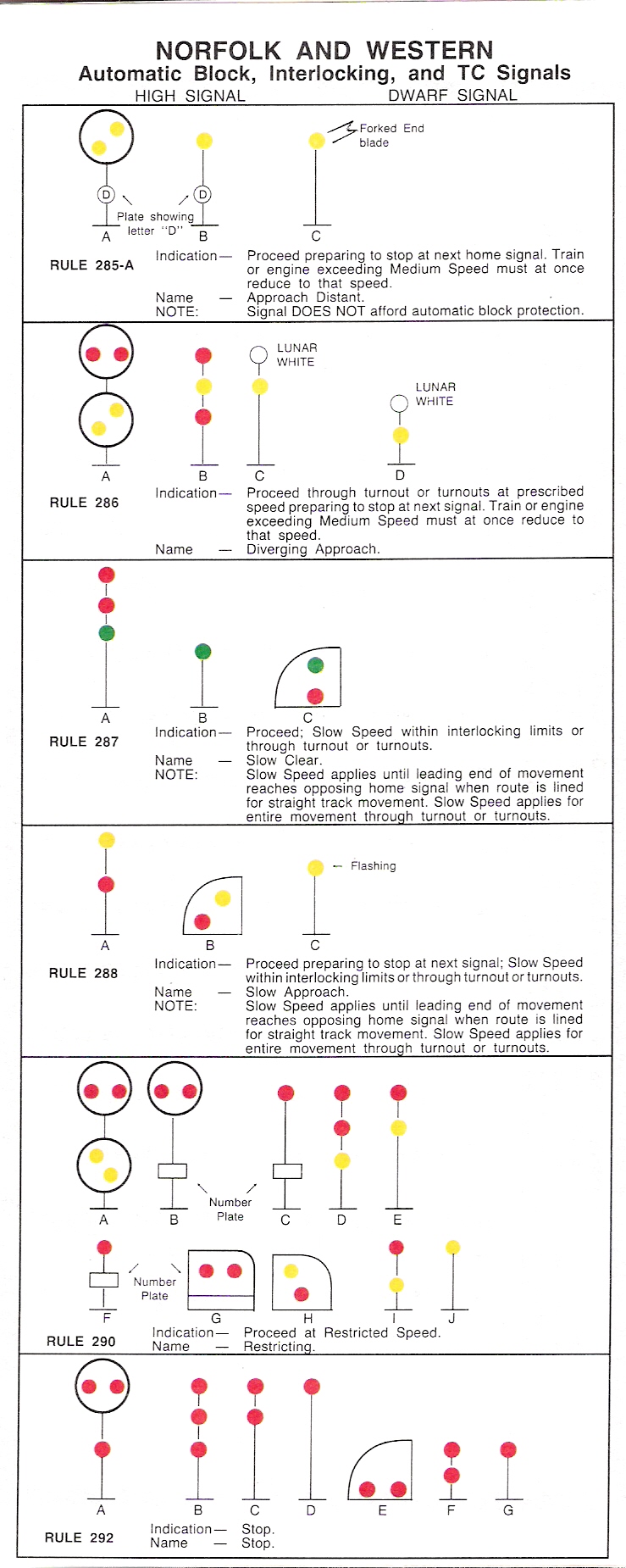
It's sometimes easy to forget that the PRR position light dwarf signal was also used by PRR ally Norfolk and Western Railway in addition to the regularly sized position lights. Their PL dwarf was even included in the 1959 N&W program to partly colorize their signals resulting in something that gave off definite UK "ground signal" vibes, albeit with the ability to display green.


Although the old N&W has been ravaged by re-signaling projects over the last decade, there are still a number of well preserved lines deep in the Appalachian coal country and Virginia. However the same cannot be said for the N&W CPL dwarf as the N&W had color light dwarf alternatives in its rulebook as early as 1961. Therefore the N&W had a multi-decade head start on replacing its PL dwarfs at the point where NS started to get involved. As of the time of this post, it has been reported that there are only 4 N&W PL dwarf signals remaining in active service at three locations. The first location is Iaeger, WV, the second Coeburn, VA and the third, with two CPL dwarfs, is Cloverdale, VA.


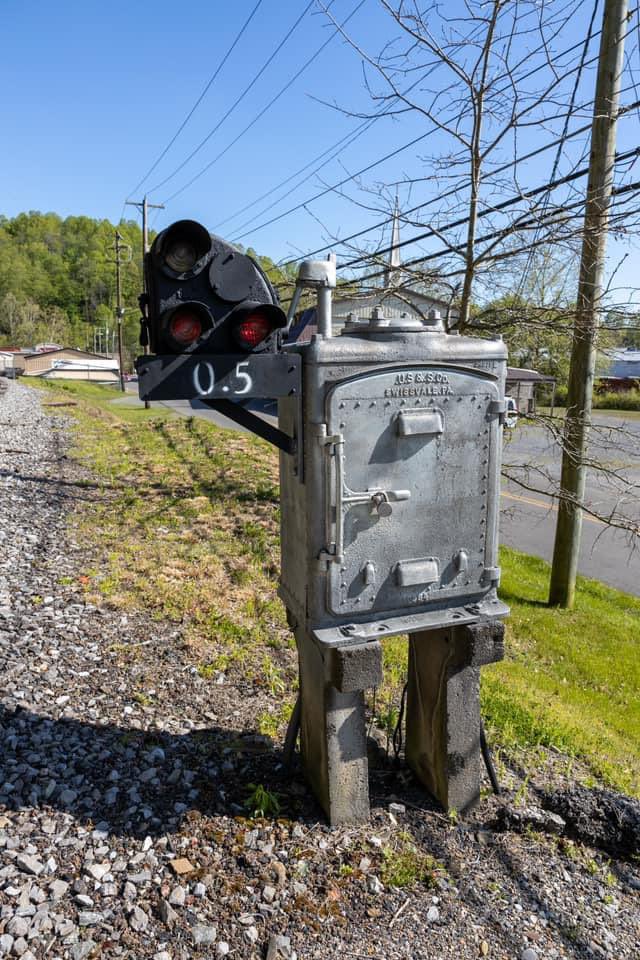
The Iaeger example is immediately adjacent to state route 80 just east of the Tug Fork bridge at IAEGER interlocking, just past the west end of Auville yard on the Pocahontas Division Dry Fork Branch near the village of Hull where the three track N&W position lit full crossover used to be.

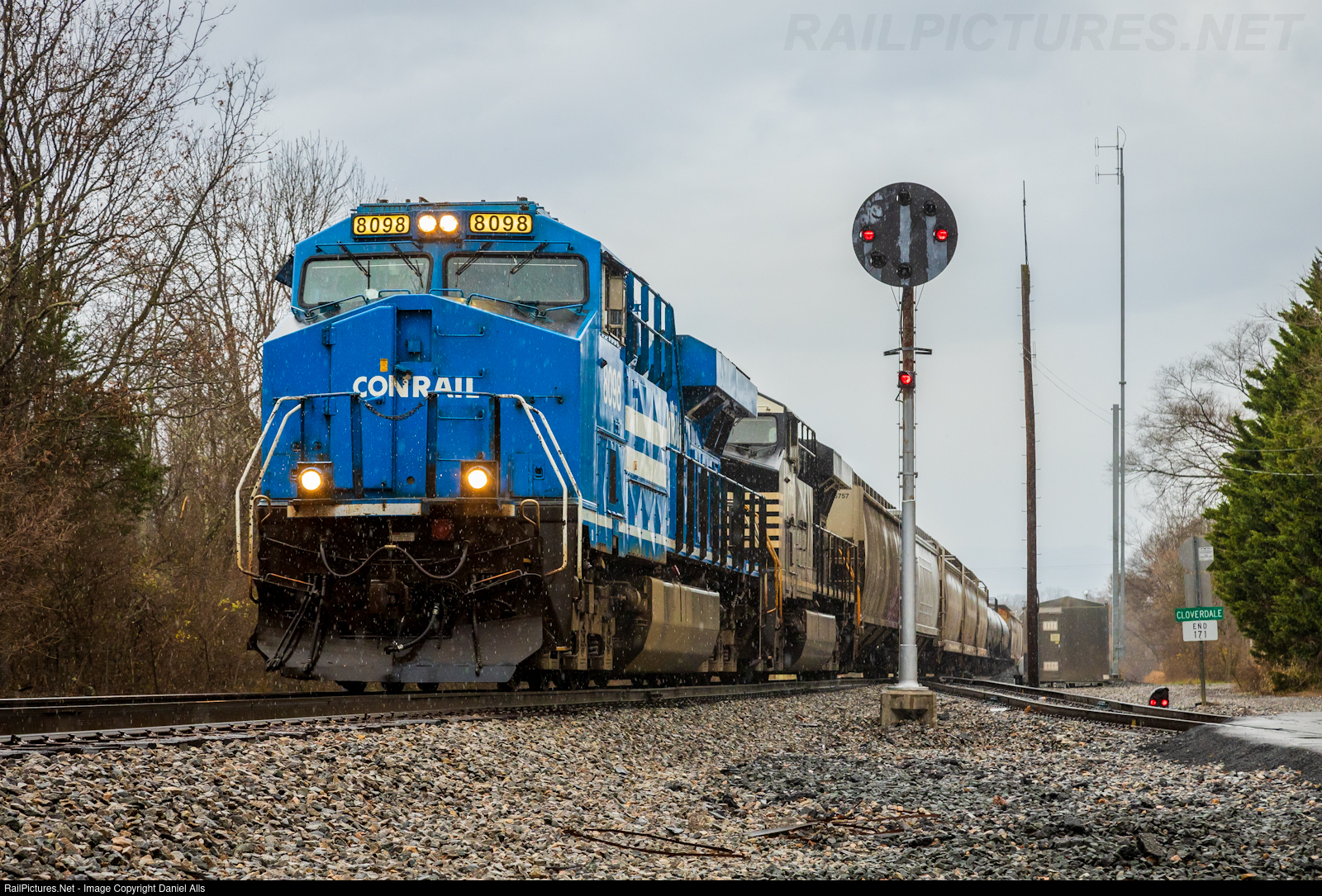
The Cloverdale pair are located at the east end of the Cloverdale Branch on the Roanoke District's CLOVERDALE interlocking about 8 miles north of the Roanoke Terminal in Roanoke, VA. The first governs the end of a long industrial track that serves a concrete plant and the second serves as the exit signal for the Cloverdale siding. 

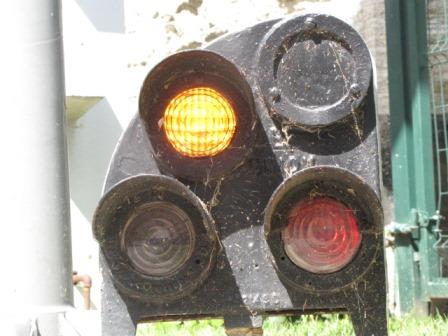
The final location is actually an automatic distant signal on the otherwise unsignaled Toms Creek Branch for COEBURN interlocking on the Pocahontas Division Clint Valley District. It is located just off Tate Ave, a few blocks from the VA state route 158 and the central business district. All three locations are in the vicinity of recent re-signaling efforts and can be considered highly endangered as a couple of other known examples, including another isolated automatic distant in North Carolina, were recently lost.

Of course rare signal types have always popped up before and I'm just reporting on the results of a forum discussion so if you are aware of an N&W CPL dwarf that has been missed please let me know in the comments! The first draft of this post actually missed the Coeburn dwarf so thank you Oakley for pointing it out.


Sunday, December 17, 2023

BNSF CTC Replacing Union Pacific Julesburg Sub ABS/TWC

Just a heads up that about 24 miles of ABS/TWS (aka Rule 271) on the Union Pacific Julesburg Sub in northern Colorado is being converted to CTC as BNSF takes over maintenance of the entire Bush Sub/Julesburg Sub corridor between Union and Sterling, CO. This line represents one of those dual operating arrangements where as traffic levels dropped, two competing railroads turned their parallel lines into a single joint. In the case of the Bush and Julesburg Subs, the division point was the small railroad location of UNION.

Over the last decade or so BNSF upgraded their side of the line and, as their traffic levels increase, they gained more control and have decided to apply CTC to the Union Pacific portion of bi-directional ABS. Although Union Pacific ABS signaling had eliminated use of the pole line and installed PTC, it also made use of short mile long signal blocks with US&S N type color lights at mileposts 77, 70, 69, 67, 66 and 65 in addition to fairly uncommon late model US&S modular color lights at mileposts 71, 72, For example the CTC interlocking replacing the ABS hand throw siding end at MP 58.8 in Sterling will have its distant at the MP 61 signal location. Union Pacific appears to have already been reducing the block length with 2 mile jump to a new Safetran signal at MP 63. The project will also include new interlockings and the currently hand throw searchlit ABS siding between WE and EE MESSEX and two new intermediate signals at mileposts 79 and 78 between MESSEX and UNION. 


It remains to be seen if BNSF will remove/replace all of the old UP intermediates or just those directly adjacent to one of the new interlockings, but for anyone in the area all of the existing signals are easily accessible from public highways including US 6 and County Rd 178.