Search This Blog

Showing posts with label CN. Show all posts

Sunday, February 2, 2025

METRA's 16TH ST Tower to Close, Following CY

I just got word that METRA's famed 16TH ST Interlocking tower at the triple crossing of the Alton (CNIC), Saint Charles Air Line and the Rock Island, is slated in close in early April. Built in 1901, the tower and its original Taylor Model 2 pistol grip type interlocking machine have been in continuous service since 1901 or 124 years! Unlike some other towers where the closure comes out of left field, this one has been telegraphed for some time. 16TH ST (and presumably its interlocking hardware) has been falling into increasing disrepair and I am honestly shocked it did not manage to catch fire or fall down on its own.

16TH ST in 2017, it looks worse now.

Cost cutting on the part of Canadian National, starting in 2019, have reduced the 12 diamond plant to just 4, as what had been a Y split of two double track main lines crossing another double track main line, was reduced to two single track lines crossing a double track line. It was clear for some time that once all the work was finished to rebuild the complex crossing to some sort of new standard, the tower would be closed.


Given the wooden tower's condition, its also pretty clear that the tower is beyond saving, even in situ, but I'd expect parts of the interlocking machine and model board to make their way into preservation similar to what we saw with CALUMET about a decade ago. Anyone looking to grab some photos during the final days in service can snag a view from the corner of 16th St and Clark.

In other bad news, the late model Chicago Northwestern CY tower has also been closed by Union Pacific as a downstream outcome of UP looking to transfer METRA commuter operations to METRA itself. The operator at CY had control of the local interlocking and much of the METRA UP-Northwest line, where Metra was the primary source of traffic. This was likely a way to better allocate the costs of dispatching the line. Run from a video display interface for years, control might end up in the METRA operation's center with staffing of the still open LAKE ST tower, also taken over by METRA.

Unlike 16TH ST, CY is of far more sturdy construction and will likely serve as an maintenance base for decades to come like its sibling KEDZIE tower on the UP-WEST line. With these two closures the Chicago area will be reduced to four traditional interlocking towers on main line railroads, LAKE ST (CNW), TOWER A-2 (Western Ave), TOWER B-17 and JB.  Three of these towers are on the METRA UP/CNW-West Line between the CNW Terminal and West Chicago with the fourth being on the Milwaukee West Line.


Saturday, April 6, 2024

Toronto Terminal Railway Update

The long running project by multiple parties to re-signal the Toronto Terminal Railway, aka Union Station Rail Corridor in Canada is showing progress in the form of new signal bridges going up between SCOTT ST and CHERRY ST interlocking towers. Those, along with JOHN ST comprised the signaling control infrastructure that went in with Toronto Union Station in 1927. The large GRS supplied plant made use of Model 5B pistol grip type interlocking machines in the style of Buffalo Central Station. 

SCOTT ST Tower
JOHN ST Tower

 While the 1927 dwarf searchlights are still in place it is unclear what exactly will replace them. The new signal gantries are equipped with LED searchlights so my assumption is that there will be some manner of LED dwarfs in the station, but there are still a number of possible configurations and vendors.


You can see in the photos below the new signal bridges. You can also see that the GRA Model 5A point machines have been replaced by a US&S M3 derivative.


We have seen examples of these new LED searchlights elsewhere on Canadian railroads.


Google Street View is also fairly useful here with the new giant signal bridges being equipped with 3-head high signals, which is on par with Canadian practice. If they will display anything better than slow speed indications is another question.

 Another interesting tidbit is that the CHERRY ST tower got a full rehab in 2021.

Anyway if you are Canadian it might be a good idea to get down to Union Station and get as many photos of the old interlocking plant as possible. 


Sunday, March 24, 2024

Vermonter Route Signal Update

About 3 years ago I wrote a fairly positive report on the state of signaling on Amtrak's Vermonter route between New Haven and White River Junction. Unfortunately the recent spike in infrastructure spending has had major negative impacts on the New England Central portion of the route within just the past six months. The only good news is that some of the vintage searchlit signaling might hang on for a little while longer, but much of it is already on the way out.


First a quick overview of the old NECR signaling. Originally part of the Canadian National family under the Central Vermont brand, the rail line up the Connecticut River Valley would have likely passed into unsignaled TWC territory if not for the presence of Amtrak's Montrealer/Vermonter on the route that made abandoning the signaling system impossible from a regulatory point of view. The solution to make the signaling more cost effective was what I termed "Centralized Manual Block", with typical single track CTC sidings, but only a single ABS block between them (although technically the distant signal in advance of the next CTC interlocking did a second ABS block in that direction). This resulted in block lengths as long as 14 miles. South of Brattleboro, there was a additional 10 mile segment of non-signaled TWC before a (formerly) isolated interlocked junction between the old CV and Boston & Maine lines. In the 90's the NECR got some money to install a section of new CTC north of Windsor, VT, however this only included block signaling without interlockings with a more sensible 3 mile block spacing.


The first major change was the elimination of the TWC island south of Brattleboro. A new signaled siding was installed in Brattleboro itself, eliminating the old WEST RIVER CTC entrance interlocking and the related northbound searchlight distant signal just north of the Brattleboro station platform. It is not clear if the project included south of the NECR's Brattleboro yard, but if not evidence also pointed to sensibly spaced automatic block signals. Unfortunately the project also included the re-signaling of the EAST NORTHFIELD junction where the former Boston and Maine CT River Main Line splits off with the typical Safetrain Vaders. It is unclear if an additional new interlocking was installed at the south end of the NECR Brattleboro yard.

New block signaling between EAST NORTHFIELD and SOUTH BRATTLEBORO

New NORTH BRATTLEBORO interlocking south of the Brattleboro, VT station.

At the Putney CTC siding, the south end was re-signaled some years back with the notable poor man's bracket mast, however the north end is still searchlit with no evidence of impending changes. The same goes for the diamond crossing at Bellows Falls with cabling that implies a more recent logic update which might fend off searchlight replacement. I did not visit the Walpole siding just north of Bellows Falls, but as of June 2023 there were no signs of reconstruction. the news CTC siding at Claremont is a different story with new signals on the ground at the south end and in place, but no new relay hut yet installed at the north end. Both of these locations will use Vader masts from Progress rail (aka EMD, aka Caterpillar). This siding is also being upgraded from restricted speed to signaled which will allow Amtrak to better use the station-side platform at Claremont at the cost of siding exit dwarf signals.

New signals up at NORTH CLAREMONT.

Between Claremont and Windsor it also appears that new ABS signals have been installed at more regular intervals. The controlled point at Windsor has work going on, but the replacement signal masts are not yet present. A station sign also indicates that the "CTC" between Windsor and White River Jct was at one time operated under Canadian style Occupation Conrail System (OCS) rules. As I understand it this is somewhat analogous to APB system.

Northern extent of the Central VT era CTC.

From a documentation perspective, while I just missed getting photos of EAST NORTHFIELD and WEST RIVER at Brattleboro, I was able to fully document interlockings near Putney, Bellows Falls, Claremont and Windsor. I hope to return shortly and get the remaining signal locations around Wapole.

Tuesday, April 6, 2021

What the KCS - CN/CP Merger Means for Signaling

 A few months ago I discussed the absolute signaling disaster the potential purchase of Pam Am by CSX would be.  Since rail mergers are suddenly in vogue again, Canadian National and Canadian Pacific are nowboth bidding for Kansas City Southern and I am sure at least someone out there is interested in what this will mean for the signaling on the KCS.

To make a long story short, not much.  Not only is KCS pretty much entirely Darth Vader masts or slightly older traffic lights, both CN and CP are good about preserving the unique signal rules of their subsidiaries.  For example the CN owned Grand Trunk Western route uses a very NORAC style speed signaling system.  That feeds into the CN owned Illinois Central that still uses a bland weak route signaling system, which is also distinct from the CN owned EJ&E's signaling system. So yeah, don't sweat this one, just sit back and enjoy the C40-8s or SD70ACUs.

Sunday, February 16, 2020

Stop vs Proceed - Telling the Difference

Where railroad signals are involved there are two schools of thought.  Should I stay or should I go?  Usually this is pretty clear cut, but where Red signals are involved sometimes one should kind of do both.  Back in the day in North America, there were long stretches of railroad that were literally out of all communication.  A minor failure of some kind could leave a train stranded with no means of proceeding for perhaps hours.  Therefore signals not protecting against a conflicting movement or other crash inducing hazard were defined as being permissive in that trains could pass them at slow speed and proceed until a more favorable signal indication was passed.  Of course with three standards colors (R,Y,G) and signal heads only capable of displaying 2 or 3 aspects, railroads needed to get creative in how they indicated which signals could be passed, and which could not.


The first solution was to use the color and shape of a semaphore blade to define the type of signal and the rules involved.  Absolute signals were painted red with a squared off end while distant signals were given a fishtail end and painted yellow.  When permissive automatics came on the scene the fishtail was inverted into a point with the yellow background and black band remaining.


Of course semaphore signals are only disable during conditions of daylight.  For the nighttime a marker light was applied below the main head.  Also popular on position light signals, marker lights were the common way to define an automatic in the position/semaphore systems. Although there were the occasional exception of using a marker to denote an absolute signal (I'm looking at you N&W), more often the markers were used to make absolute signals that could be switched to act like a permissive signal.


Alright, you have your marker, but what if you also have absolute signals with more than one head.  It's possible to mistake the marker for a lower absolute head in the darkness, even if the marker was smaller.  One solution would be to use a yellow or lunar marker, but back in the day railroads still wanted a distinction between Stop and Proceed and a rolling Restricting.  The solution was to offset the signal heads, using the relative position to convey the permissive meaning.


At this point someone realized that maybe they should just tell the crews that a signal was permissive.  In the United States a number of railroads, typically in the South, adopted the (P) board for "Permissive".


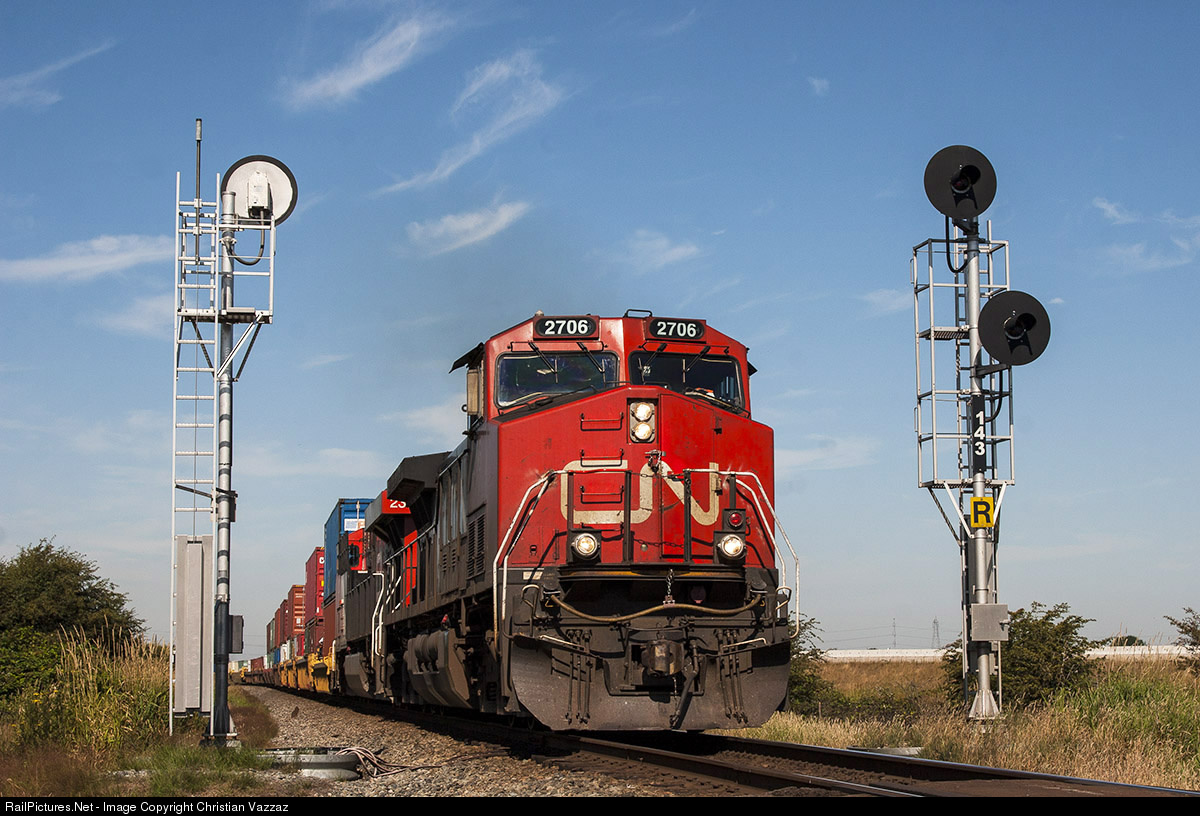
Canadian railroads, on the other hand, have gone with a [R] Board for Restricting.


Of course the easiest/cheapest solution was to simply use the milepost number plate, useful in defining the particular the signal location, to also indicate a permissive status.  Now milepost number plates have been around since the dawn of the automatic signal era with Hall Banjo,  so why the need for markers and offset heads?  Well reflector technology was pretty primitive up until the 1960's, either consisting of white paint with a bit of glass or glass cats eye jewels.  Film plastic reflectors was what gave the railroads assurance that the number plate would be distinguishable at sufficient distance at night (at least when they still cared about such things). 


 Of course one outlier from the whole number plate system is Canada where offset heads or [R] boards are used instead.  In fact, virtually all signals, absolute and permissive, come with a number plate denoting either the milepost or signal (lever) designation.


I'm sure for many of you this was pretty basic information, but these pages tend to come up in Google searches so its nice to have a comprehensive guide to the North American way of distinguishing permissive signals from absolute signals.  The same distinctions also apply overseas, but there most countries have more unified sets of signal rules.

Sunday, October 6, 2019

Signs! Signs! Everywhere a Sign! - Western Freight Roads

Well it's time to cross the Mississippi and get this series finished up.  Today I will be exploring the signs of the Western freight roads.  Today this would be UP, BNSF, KCS, CP (former SOO) and CN (former IC).

We'll begin with the BNSF and you can't spell BNSF without ATSF.  Spoiler, western railroads had a big thing for white signs and black lettering so most of this post is going to be discussing all the ways one can do a white sign with black lettering and in my opinion the ATSF did the best job with white signs on black letters by adding a black border to the signs and a somewhat distinctive font. In this photo below we can see an example on the BNSF Raton Sub showing a single interlocking with a free standing ATSF style sign (probably from late in the ATSF era in the 1990s, and then more plain black on white BNSF signage mounted on the relay hut.


Elsewhere on the Raton sub we see a non-black border sign with the same ATSF font.


And finally we have a BNSF standard font.


On the BN side of the house we see a similar style of free standing black on white sign using a two post support.  On certain single track territories, interlocking signs would sometimes be replaced by a station sign similar to the one seen below. 


Note the variety of fonts.


Wednesday, July 31, 2019

CN Cripples Chicago 16th St / 21st St Corridor

In a move that could only make sense as part of some nefarious plan to cripple Amtrak service, Canadian National has single tracked a critical portion of its connecting line between the former Illinois Central main line and it's Chicago area distributor that runs west to Joliet on the former Chicago and Alton alignment.  Specifically the mile or so long segment between the two major passenger crossings at 16th St and 21st St, the former controlled by a famous METRA interlocking tower and the second by Amtrak's Chicago terminal train directors. 


As you can see in the above diagram CN has cut Main Track 1 between a new 18TH ST interlocking and the existing CERMACK interlocking.  The method of the cut will create bottlenecks for Illini Service Amtrak trains on and off the St Charles Air Line from downstate and Lincoln Service trains entering and exiting the Heritage Corridor at CERMACK due to Conrail style interlockings that eliminate any sort of parallel operation.  Why would they do such a thing?


The answer is diamonds, and not the kind that makes one wealthy.  Elimination of Main Track #1 will also eliminate 5 diamonds between both interlockings.  For those of you who don't know, main line diamonds are expensive maintenance items that also require fairly periodic replacement.


As we can see from this photo at 21st St, the small signs seem to indicate that the diamonds are the maintenance responsibility of CN.  The bottleneck will be felt as freight white periods at both crossings cause CN traffic to back up along the line and this will now preclude Amtrak service from being able to sneak by.  Perhaps that is the ultimate point.  "Unavoidable" delays may force the State's hand in funding alternatives to the diamond crossings like an overpass at 16th St and the Grand Crossing connector on the NS Chicago Line south of the city. The real loser is the 16th St tower which will loose a substantial number of its remaining active levers :-(

Sunday, May 13, 2018

All Askew - Remaining Users of Offset Auto Signals

Back in the day, setting the heads of a multi-headed signal on opposite sides of the mast was an effective way as marking a signal as an automatic.  Although the presence of a number plate was an accepted and inexpensive way of doing the same thing, reflector technology wasn't as advanced as it is today.  Some railroads even went as far as placing markers on single headed automatics simply to make them more visually distinctive.


However as time went on this practice, like many, was seen as a luxury that did little for safety.  Since the 1980's most railroads have placed their signal head in line, regardless of automatic status.  However there are still a few that have stuck with the old ways.

Canadian National / Canadian Pacific

The CROR signal ruleset is perhaps the more strict when it comes to offset head placement as it is the only option to designate a signal as automatic as number plates can also appear on absolute signals (on absolute signals plates are used to denote the lever number).  On single head signals left hand placement is used to provide the distinction in addition to absolute signals always having two or more heads.


Unfortunately, as far as I can tell this policy does not apply to CN and CP's United States operations, although some vestiges exist like these somewhat modern unilens signals on the former D&H.


Flordia East Coast

Regional operators often become museums of signaling practice and in this regard the FEC has preserved the practice of offset head placement.  The FEC also uses a robust cab signaling system so this is even more interesting single they could probably eliminate waysides entirely if they wanted to.


Former Boston and Maine (Guilford Rail System / MBTA)

Public transport agencies are another place where traditional signaling practices can live on and combined with a regional freight operator we have the former Boston and Main system as our final holdout on the use of offset signal heads. Some of the newer heads are a bit less offset than others, but it's clearly still a thing.


Well that's all the ones I am aware of at this point.  There are probably others (I'm omitting the Reading and Northern cause that's somewhat of a special case). Please let me know if you know of any that I have missed.

Thursday, October 26, 2017

Toronto Scott Street GRS 5B Machine Video

A local Toronto newspaper posted a neat tour of SCOTT ST interlocking tower and its 1930's vintage GRS 5B Machine.  The 5B's were the last iteration of the GRS nee-Taylor "pistol grip" style interlocking machines and was typically used in only the largest layouts due to its extra beeft lever-slides and, as you can see from the video title card, the ability to enter the machine itself for maintenance.


The three towers of the Toronto Union Station complex, JOHN ST, SCOTT ST and CHERRY ST, are part of the too big to fail club along with TOWER A-2 and CNW LAKE ST.  However for the last decade or so even these largest, busiest towers have been falling due to the general allergy of employing human workers.  The video itself mentions that SCOTT ST is scheduled to close in 2019.


Fortunately I was able to get some photos of it back in 2002.  Unlike a lot of surviving towers, like METRA 16TH ST, the Toronto GRS plants have been kept in very good condition and you can see from the video that the interior doesn't look especially antiquated. Who knows, maybe they will get turned into some sort of living tourist attraction like HARRIS.

Saturday, December 31, 2016

Caught on Camera: Approach Restricting

The Approach Restricting signal indication has a bit of a bad reputation in the land of speed signaling east of the Mississippi.  Typically, the signal progression in both the NORAC and CSX codes are Approach -> Restricting with the idea being that since Restricting could be displayed with an obstruction 5 feet inside the signal, there is no benefit to preparing the engineer to do anything other than stop.  Yes, NORAC does have an "Approach Restricting" rule, but it's basically a re-branded distant Approach or PRR Caution signal that doesn't really capture the spirit of approaching a signal in block signaled territory and finding the next signal displaying a Restricting indication.

Calling this "Approach Restricting" is an insult to "Approach Restricting"
So the real Approach Restricting is found in route signaled territory both in the west and on the Southern.  Now I know that you are thinking that "Restricting" implies a speed, but the rationale behind Approach Restricting is much more apparent in a  route signaled context.  Below is the true meaning of Approach Restricting, caught on camera.

Y/L Approach Restricting leads yo...
R/Y Restricting for a route into a siding.
The traditional use of Approach Restricting was as a route indication to alert trains that they had been routed into a non-circuited (Restricted speed) siding.  This was popular out west because there Single Track with Passing Siding was the predominant form of rail line.  Once CTC started being installed it was logical to distinguish a movement into a signaled siding (Approach Diverging) from a non-signaled track (Approach Restricting) from some sort of regular Stop or Stop and Proceed signal (Approach).  However, as speed signaling has started to gain traction on western roads, signal engineers and consultants have started employing it a wider variety of situations.

Ok, tk1 has a route lined at the next interlocking and tk 2 does not. Is this distinction really going to make a different here?
For example on the CN Waukesha Sub (METRA North Central line), Approach Restricting was widely applied as a capacity improvement, although as eastern railroaders pointed out, it's unclear how much one actually gains from this unless one is bending the rules of being able to stop within 1/2 vision.  Approach Restricting (and Medium Approach Restricting) has also showed up on the hyper speed signaled Caltrain line, right along side Approach Slow.

Y/*R* Approach Restricting
This of course brings up the alternate Approach Restricting aspect, Y/*R*, which of course has become popular as *R* took over for Lunar for Restricting (since using 4-lamp monster heads is just wacky *cough*CSX*couch*).  Since many two headed distant signals use placeholder Reds, this has made all of them a potential location to employ Approach Restricting.  In fact, when the aforementioned CN Waukesha Sub was re-re-signaled, Y/*R* Approach Restricting came in to replace the lunars. You can see an example of  "speed" style Approach Restricting on the following video montage of flashing signals on the Waukesha Sub (cut to time code 00:23).


Well I hope this sheds some light into the past, present and future of the Approach Restricting indication.


Saturday, December 3, 2016

Well, There's a New One

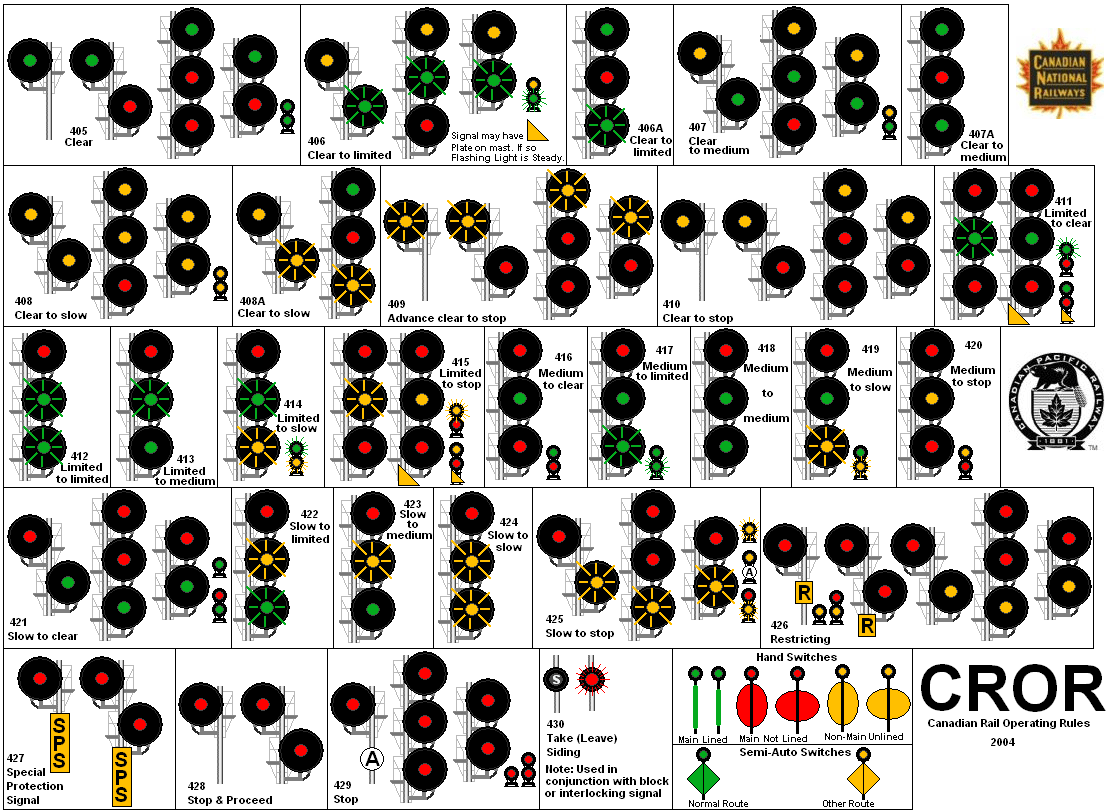
Last week, while on a field trip to Chicago, I encountered a new Class 1 railroad signal indication I was hitherto unaware of.  Approaching Tower B-12 interlocking on the former Soo/Wisconsin Central line (now owned by Canadian National) to Chicago on a METRA North Central Service train, I saw a signal flashing yellow over a steady green (*Y*/G)  This was nothing I had ever encountered before, however it was not difficult to surmise that it was Advance Approach Diverging.  At the next interlocking I was proven correct as a Y/G Approach Diverging was displayed for a R/G Diverging Clear at Tower B-12.  The Advance Approach Diverging was warranted for the short signal distance between the Approach Diverging at Junction 16 and Tower B-12.


Upon reviewing my CN documentation from 2010, both this and Diverging Clear Approach Diverging (R?*G*) were listed in the operating rulebook, so I should have been aware of it, but I usually refer to the late 90's rule card I have in a more accessible location.  I suspect that the signal was likely deployed for the first time for the re-signaling project on the NCS line and might even be a unique situation.  It's still an interesting developing for a route signaled line as most others begin to employ speed signaling to various degrees.  Of course I should save any more in depth analysis for my BKASS article on CN route signaling ;-)

Wednesday, May 6, 2015

Mixed Changes Up North

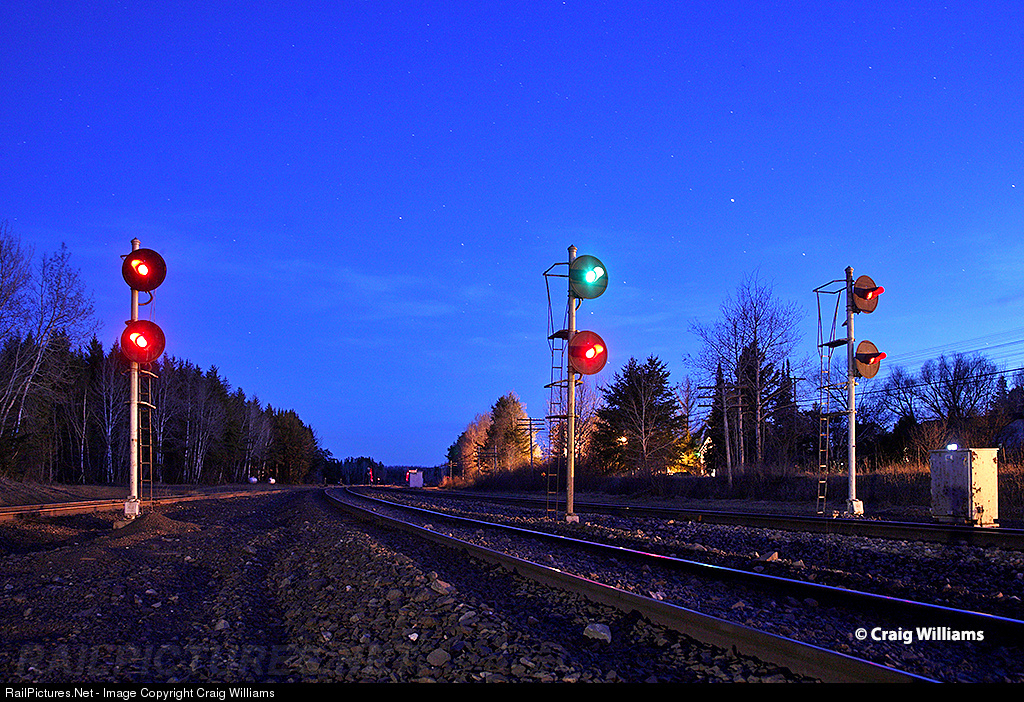
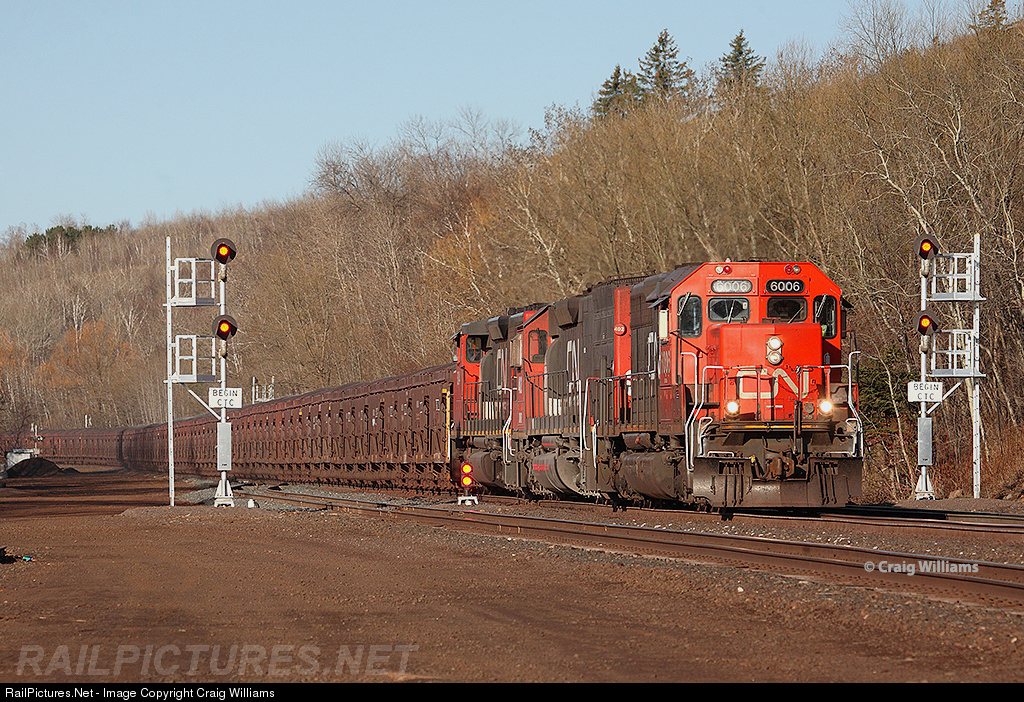
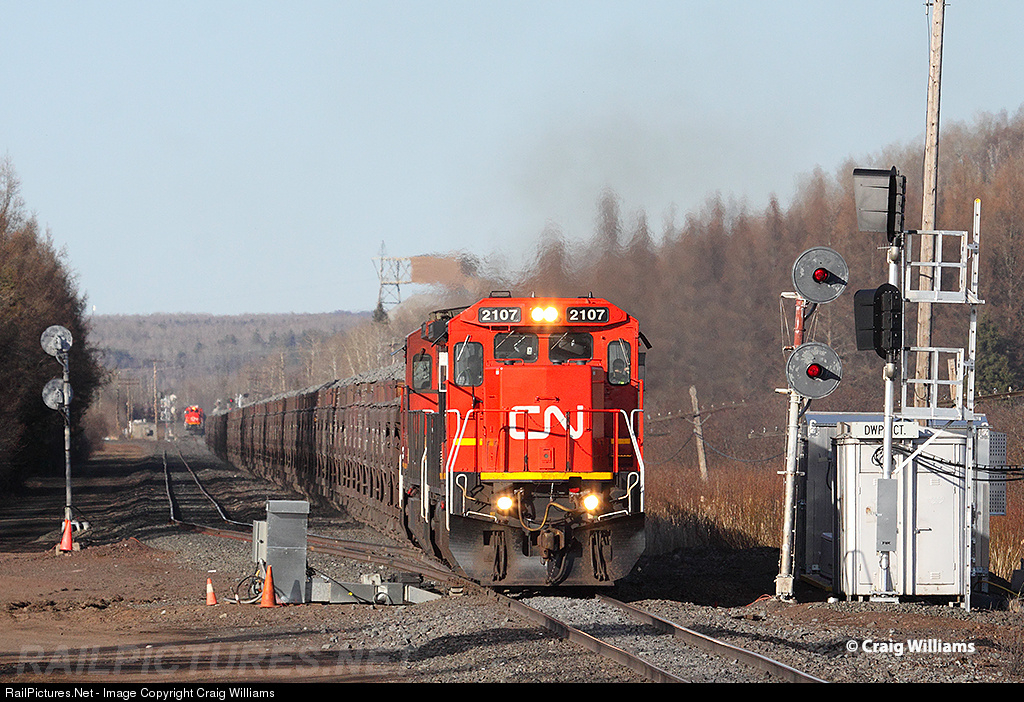
No, I don't mean Canada, but it's pretty close and operated by a Canadian railroad.  The previously independent railroads of the Iron range have for years operated a searchlight based CTC system similar to many others that have been replaced across the land. Unfortunately these too are coming under the ax as Canadian National imposes their new standards on subsiduaries.


Well, almost.  It seems that it is at least possible for a railroad to install a form of signaling that isn't a god damned Darth Vader.  What I am speaking of are the perfectly acceptable LED searchlights seen here.
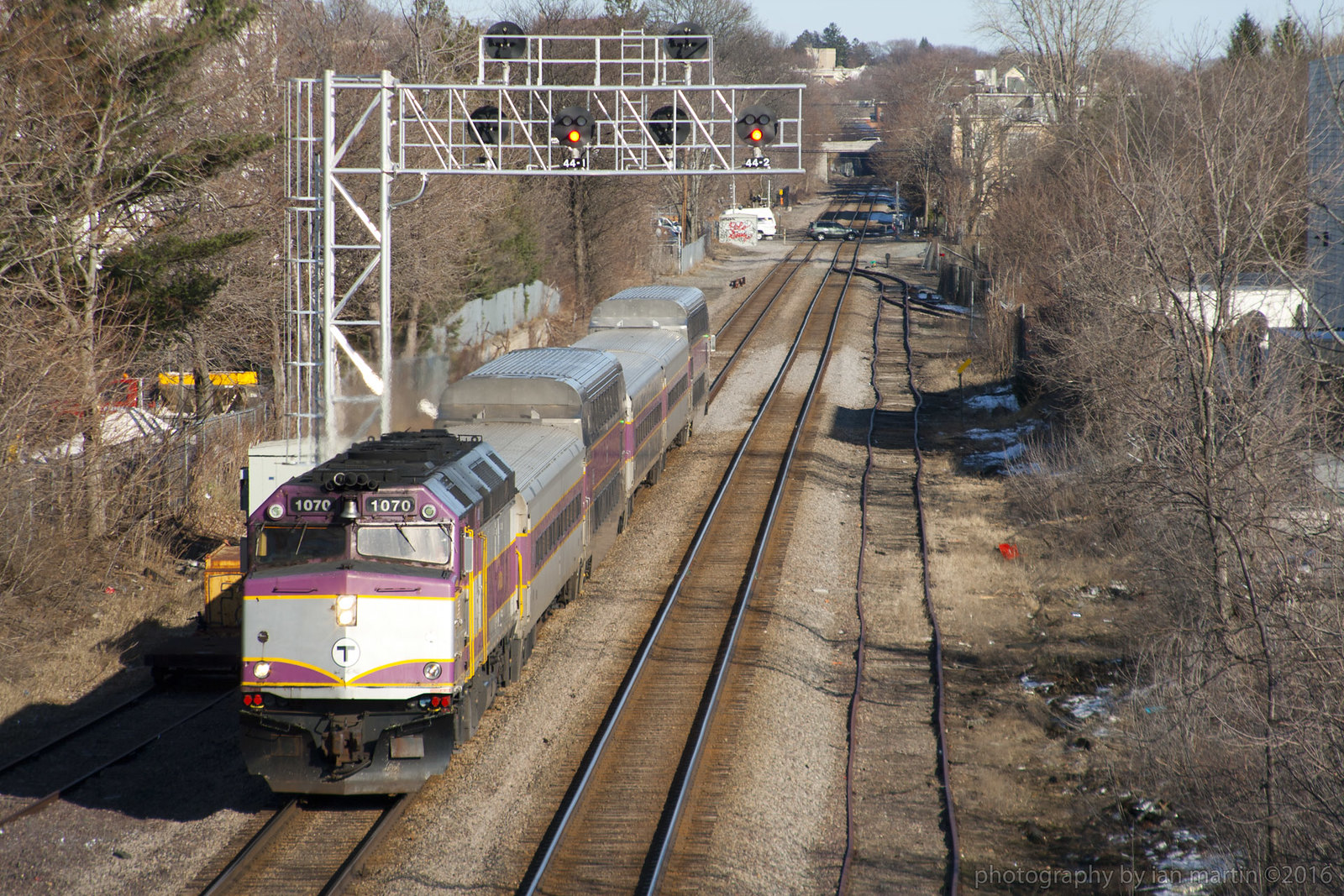

Unfortunately, it looks like that interlocking might be an isolated case as in other locations Darth Vaders are springing up. :-(


If anyone lives up there make sure you get out and catch the old signals while you can.