Search This Blog

Showing posts with label news. Show all posts

Sunday, June 21, 2026

Amtrak THORN Tower to Close Aug 8, 2026

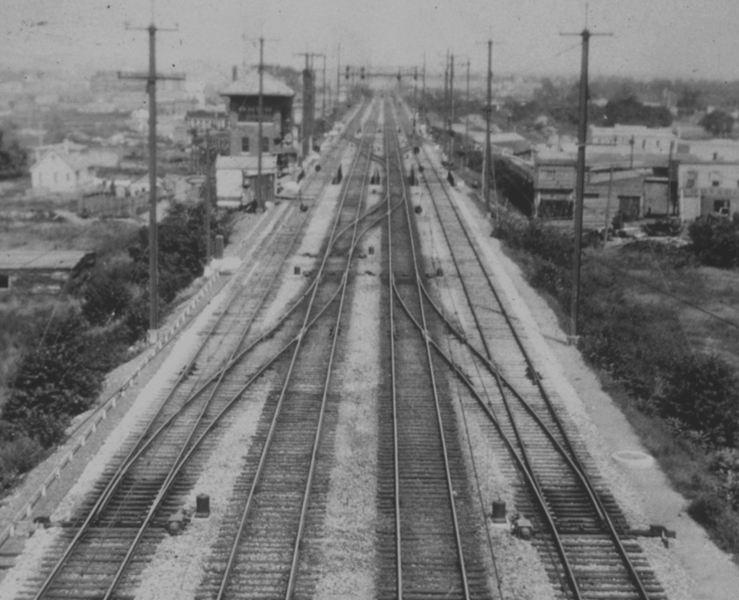
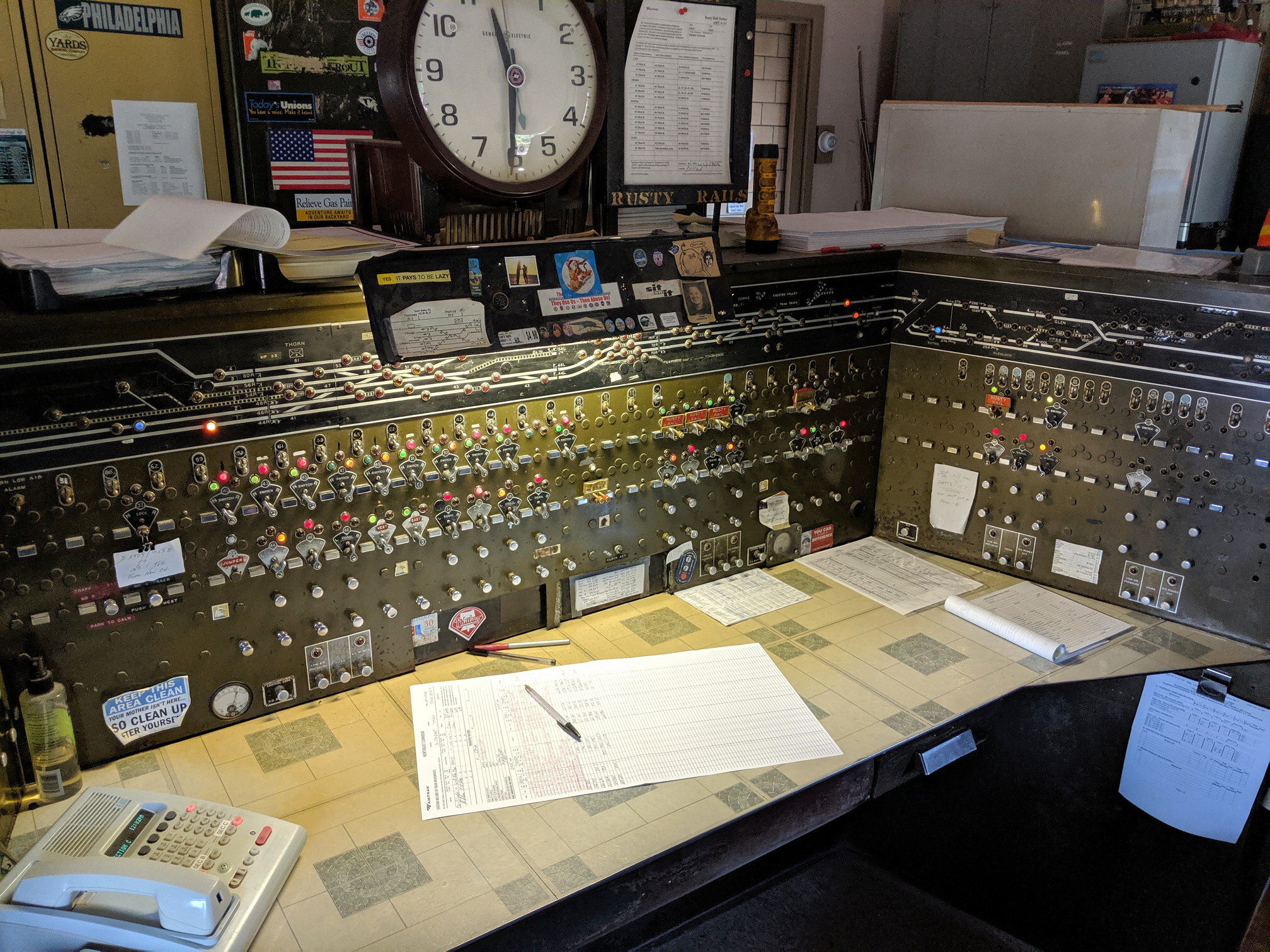
For over a year I have been tracking the slow motion closure of Amtrak's THORN interlocking tower. located on the old PRR Main Line in Thorndale, PA Opened in 1938 as part of the PRR's electrification project to Harrisburg, THORN was equipped with a state of the art CTC unit lever console controlling  4 remote interlockings in addition to the local 6(!) track full crossover. THORN's extended territory, including FRAZER interlocking which was commissioned in 1994, is what has allowed for the prolonged multi-year closure, which will take place just shy of the tower's 90th year in continuous operation.


Since the first part of THORN's territory, CALN interlocking, was chipped away back in 2020, the local 6-track crossover was rationalized and then turned over to CTEC control while the THORN operator continued to handle SEPTA movements in and out of Frazer yard as well as the daily NS freight entering the line at GLEN. More recently DOWNS interlocking was prepared for complete removal, its signals left standing as the change point between CTEC and THORN's control.  In the final act, kicking off in early 2026, GLEN and FRAZER interlockings were reconstructed with the goal of a Rule 562 cutover once all of the work had been completed. 

THORN interlocking as rationalized in 2023

The closure will bring full bi-directional operation between THORN and PAOLI, with the segment between FRAZER and PAOLI remaining outside the Rule 562 zone for now. The much diminished PAOLI tower is likely next on the list for closure before the heavy lift of installing Rule 562 on the core of the old 4-track "Main Line" begins. One loss that's easy to overlook is the now vestigial limited speed triangle at DOWNS interlocking with those at BRYN MAWR likely the only set remaining outside of Canada.

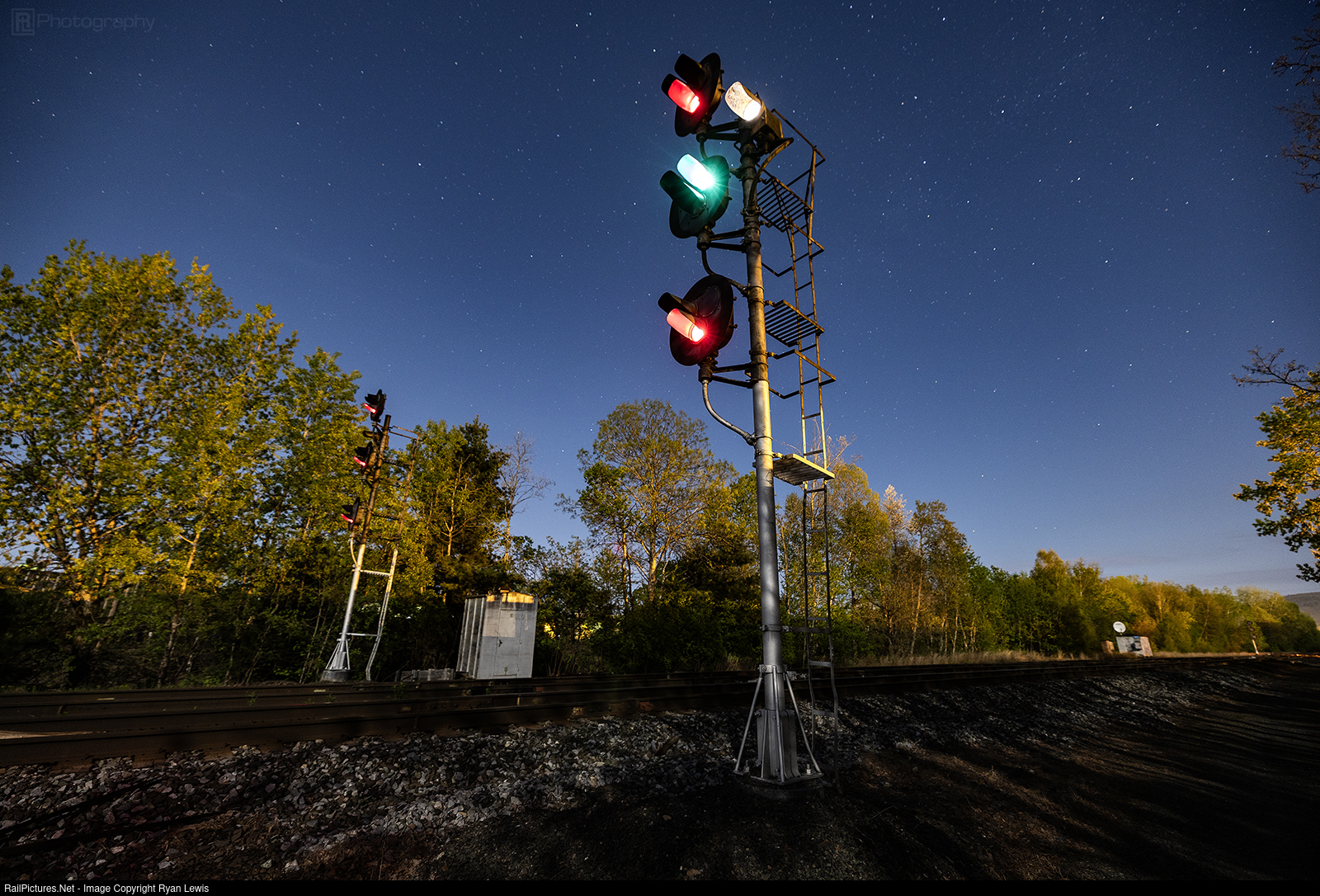
Another loss will be the intermediate signals at Exton, which were easily accessible from the SEPTA parking lot and well positioned for photography. 

For persons desiring photos of these, the Milepost 29 signals or what's left of DOWNS, you probably have until August 7th assuming transition operations will take place overnight. At 1:30pm on August 8th, THORN's final staffed shift will end. The tower is directly adjacent to the Happy Day's Diner for anyone looking to mark the event. 


Sunday, June 14, 2026

Art's LIRR Archives Online...For Now

 Word on the street is that the street is that the person behind Art's LIRR Archives, Art Huneke, has recently passed away. While not quite the #1 source on LIRR tower information, Art's wonderfully Web 1.0 Archive contains a huge amount of primary source material on the evolution of the LIRR in the 19th and early 20th centuries. While the tower and signaling information is scattered throughout the site, it does reward those who take the time to find it. Special attention is given to the older generation of LIRR towers and cabins that were closed in the mid-20th century modernization projects. The page has a wide collection of diagrams and bulletin order scans to track the life and death of these less well known LIRR towers as the rail road evolved into its present form. 

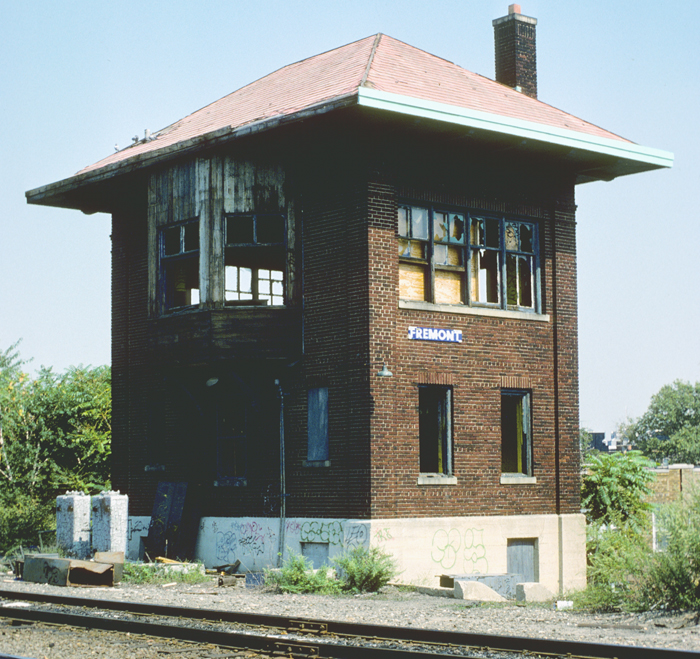
For example Art has extensive coverage of the LIRR's Bay Ridge Branch towers, like NO above, that were opened with the 1928 electrification only to be closed by 1932. In turn we see a photo of the tower that remained open, FN aka FREEMONT, with a Conrail era blue station sign. Other Bay Ridge towers include NU, KN, MJ and of course POND.

At this point there is no word on what will happen to the website so I urge all of you to check it out. Because its all Web 1.0, it is pretty easy to create local copies of the content via the "Save Webpage Complete" function in your browser. Other major signaling content includes:

Friday, May 22, 2026

MARC's Empty ACSES Bracket

In 2020 MARC moved to switch from Amtrak's ACSES transponder based PTC system to the ETMS system used by freight railroads that is more reliant on GPS and data radios. Using two different head units was likely more costly in both equipment and training and dual-equipping rail lines for both ETMA and ACSES has become fashionable over the past decade.  

When I first reported on this move, the ACSES transponder antenna was located in a fairly prominent location behind the fuel tank on MARC's MP36PH-3C locomotives. Since that time the bracket has remained, but the antenna has been stripped off with the cable left dangling.  

I guess MARC is happy with its decision as removing the antenna would make it harder to switch back.

Saturday, May 9, 2026

Twilight of ATS on the Raton Pass Route

It wasn't long after ETMS PTC systems had been commissioned that the railroads using the older IIATS system went on a tear to decommission the old upside-down canoes. Most notably affected were the CNW-North and Northwest commuter lines operated by METRA, large parts of the ATSF Transcon in Arizona and Missouri and the Amtrak Surfliner route between Fullerton and San Diego. Apart of the NJT RiverLINE, which uses the IIATS shoes as a magnetic trip stop, the last main line use of IIATS is on Amtrak's Southwest Chief route between Albuquerque, NM and La Junta, CO. 

Since BNSF yeeted IIATS off its main lines in 2021, the status of ATS on the Raton Pass route has been somewhat "indeterminate". IIATS had been in service on New Mexico Passenger Rail Authority owned track between Albuquerque and Lamy, NM and as of 2025 the shoes were still in place minus some contraction at the southern end of the territory. Fixed IIATS shoes were also present on the BNSF owned Glorieta Sub to protect specific curves with full ATS territory present on the Raton Sub between Trinidad and La Junta, CO. Imagery shows that the BNSF territory IIATS shoes were also still in place as of 2025.

One might recognize the Raton Pass route as hosting the dwindling number of main line semaphore signals as well as the last main line Wig Wag. That is because the only regular traffic on this stretch of track is Amtrak's daily Sunset passenger train. As a result the route is both PTC exempt and at the absolute bottom of BNSF's priority for capital improvements or even basic maintenance. So while the ATS inductors were still in place it was plausible that the requirement for its operation had been removed along with the rest of the Chief route. Fast forward to 2026 when I noticed this Amtrak delay report for May 12th's westbound Southwest Chief.

3(12) with engines 167 and 14 with 225 customers onboard was delayed departing Chicago Union Station account mechanical was working on loading issues with engine 14. 3 departed Chicago 17 minutes late at 14:42. 3 was further delayed account being stuck in penalty on M1 at CP Roosevelt just outside the station. Mechanical responded to the train, the train maintained HEP. Mechanical initially resolved the issue and the train departed but was soon stopped again in penalty. Mechanical then bad ordered engine 167 and instructed the train to shove back to Union Station. Mechanical responded to the station to replace the ATS shoe on engine 167. The train departed Chicago a 2nd time after an additional 1 hour and 57 minute delay. 

So yes, IIATS is still in service on the Raton Pass route and leading locomotives on Amtrak's Trains 3 and 4 are required to have ATS equipment. A quick check has shown that the new ALC-42 Chargers do not lead on the Chief for this very reason (they were not built with such an old school protection system). Unfortunately Amtrak has filed a petition with the FRA to discontinue the system at least on the BNSF Subdivisions. The reason cited is a lack of 90mph running as opposed to the more typical PTC replacement excuse.

Even when the petition is granted it is unclear if BNSF will bother removing the inductors or clipping wires in the signal cabinets since they don't really get in the way. It is also unclear if the NMPRA (RailRunner) will retire its ATS system at the same time or if that system is even used by anything other than Amtrak trains 3 and 4. 

One final mystery is what happened to the IIATS system on the Raton and La Junta subs in the mid 2000's. In that time speeds on both subdivisions dropped from 90mph to 79mph (the non-ATS equipped national rail speed limit). However all or part of that ATS territory was still in place up to and including the present day (2026). If the track class was downgraded from 5 to 4, it's plausible that use of 79mph instead of 80mph is just a reflexive tic for the BNSF rules department. However I had also been informed that ATS had been "taken out of service" on these line segments despite the fact the timetables had ATS in service. If anyone knows please leave a comment, but if I had to guess BNSF may have started skipping some testing requirement necessary for the speeds greater than 80.


Wednesday, April 29, 2026

Caught on Camera: New CSX Signal Rules in Action

A few months ago I posted about CSX's two new "Canadian" style signal rules, 281E Limited Approach Medium and 281F Limited Approach Limited, to augment its existing Rule 283A Medium Approach Medium and 283B Medium Approach Slow. Although established in 2024, I had not been expecting to catch one in the wild for some time as railroads tend to bend over backwards to avoid signal modifications if they can be avoided. Sightings of the new signal indications had mostly been in former Seaboard System territory in Georgia and Florida. Therefore you can imagine my surprise when, after stepping off Amtrak Empire Service Train 281, I saw a Rule 281D Limited Approach upgrade to Rule 281F, Limited Approach Limited at Chicago Line interlocking CP-292.

Now Rule 281D Limited Approach has been present on the Seaboard main lines for several decades, and although it is an odd duck, by seeming to authorize Limited speed up to a stop signal instead of Medium, this could have been present as part of the general Chicago Line re-signaling of the 2010's. The Rule 281F indication has to have been added since September 2024  so that is evidence of more system-wide changes on the part of CSX. 

As to why CSX is retrofitting existing interlockings as opposed to using 281E/F only in new projects my guess would be this is a downstream cost of PTC speed enforcement. Not so much in the sense that crews would "cheat" when 283A Medium Approach Medium was displayed for Limited Speed turnouts (although they probably did), but PTC's conservative braking curves could be raising the cost of signal indications that leave speed on the table. 


Sunday, April 12, 2026

CSX Removing Cab Signals Is Not an "Upgrade"

Ever since CSX turned against the cab signaling system on the RF&P, the "Rule 562" cab signaling without fixed wayside signals on the former Conrail Boston Line has looked increasingly out of place. The only part of Conrail's 1990's cab signal push that was taken over by CSX, the Boston Line east of CP-187 has technically required CSX to entire that the 4 or so daily road freights have CSS equipped leading locomotives that have also carried out the perfunctory cab signal test. Although Selkirk yard has to handle similar requirements for freight on Amtrak's Hudson Line, those can be handled by a dedicated pool of local power. Road freights, on the other hand, are likely to arrive with unequipped leaders requiring a potentually time consuming engine swap.

Although Boston Line cab signals were recently extended east of Framingham as part of the MBTA's ACSES PTC implementation, CSX has become increasingly vocal about removing the Conrail era system west of Worcester. This "demand" has made it into a state funded East-West rail corridor improvement program and if you think that using state funds to adjust a fully modern, privately owned signaling system is insulting, the state has the audacity to label the cab signal removal as a "capacity improvement".


For anyone not familiar with the technology, continuous cab signals provide real time block status updates when a train is within the typically 2-mile long fixed track circuit blocks. Through this mechanism cab signaling is what provides a capacity improvement over fixed wayside signaling. (Recall that as far as I am aware, ETMS PTC systems are not cab signaling as they currently do not meet the requirements for safety critical operation. IE they can be trusted to stop trains, but cannot make them go.)

So why is a state government website proclaiming this to be a capacity improvement? It's possible that they figure its best to frame every state funded change as an improvement and assume that only me and three other people will ever notice. However a recent photo I came across hints at what CSX might be doing to make this statement true. 

The photo shows a Conrail era signal in the Pittsfield area displaying a Rule 280a "Clear to Next Interlocking" 'C' lamp. This is supplied in Rule 562 territory to allow trains to proceed to the next interlocking at track speed in case of cab signal failure. Sometimes called "super clear" it is normally a hard signal to catch in the wild since cab signal failures aren't typically predictable. While it is certainly possible the photographer got lucky or caught wind of a special movement, I believe a more likely situation is that CSX is running non-cab signal equipped leading locomotives on its through freights and relying on Rule 280a as a standard operating procedure. This would create functional blocks over 10 miles long, thus seriously reducing capacity. So in theory, by jamming a broom handle in the spokes of the bike it is riding, CSX could have created the conditions where removing continuous cab signals would increase capacity. 🙄


Tuesday, March 31, 2026

'A' Box Demolished and Other Changes at Wellington, NZ Terminal

About a year ago I reported on the closure of Wellington A Box, the last operating main line signalbox in all of New Zealand. This week one of my correspondents is on vacation there and I was a bit surprised when he said that he had been unable to spot old A Box for a photo.  Well it turns out the signalbox was demolished just a few months after it was closed. KiwiRail even posted a video of its demolition as if this wasn't a major failure of historic preservation.


Anyway, my correspondent also sent me this video of his train coming off the Johnsonville Line and through A interlocking. In a bit of good news one can see that the "standard" New Zealand LED color light signals have been recently replaced by LED searchlights, bringing back a major design detail of the pre-2006 "rail modernization" drive. 


You can see the difference compared to this head end video taken in 2024. The US&S M23 point machines with the external controller relays are a nice touch. 


Saturday, March 21, 2026

Little Boxes, Little Boxes

If the age of the Safetran scallop shell is actually ending, what appears to be replacing it are little boxes and they all look just the same. Of course modular square box housing signals are nothing new with the GRS D Type seeing widespread use up through the 1980's along with offerings from Harmon and L&W (which I have touched on before). What's interesting is that the new era of "little boxes" appear a bit more homogenous than the last so if we are seeing an end to the scallop shell era, what comes next could be equally bland. 

Above are new signals from Lindsay recently installed on the DART Silver Line. Lindsay had previously gotten the adjacent Texrail account and at the time I noted that its single color modular offerings still featured the GE logo, which put them in the lineage of Harmon.  Well the new batch used on the Silver Line have swapped out the GE circle for the Lindsay swoosh (which itself is vaguely reminiscent of the original Harmon logo). 

Now look at the new signal from Progress Rail that is being deployed on new projects by CSX. Looks awfully familiar to what Lindsay is selling. Keep in mind that little of these box designs would be protected by intellectual property apart from the logo so new market entrants are effectively free to copy what is in essence a cast aluminum box with a hinged door.

Of course this warrants comparison with Union Switch and Signal's attempt to enter this market segment 30 some odd years ago. While also a box, the lines are crisper and the design far less cluttered, which probably indicates an elevated price point. DART famously used blank US&S modules to increase the height of its mast style signals, but away from the public transport sector, the US&S boxes saw limited adoption.

Anyway with the scallop shell monopoly now broken, it will be interesting to see if we get additional "little box" suppliers or perhaps something more paradigm changing like LED searchlights.

Friday, March 13, 2026

Amtrak Harrisburg Line Re-Signaling Hits FRAZER

I have previously discussed the drown out closure of Amtrak's THORN tower in Thorndale, PA. Recently the re-signaling efforts have hit FRAZER interlocking where new colorized position light masts have replaced the old amber style PLs. This is just another symptom of the eastern end of Thorn's territory being converted from its 1937 ABS 251 CTC to contemporary Rule 261 CTC. 


FRAZER is an interesting part of THORN's zone of responsibility. As covered in Part 2 of my old PRR Main Line signal survey, FRAZER was placed in service around 1994 when the old Paoli MU shoppe complex was closed due to massive PCB contamination stretching back to 1915. As a replacement a new yard and inspection shoppe was opened near Frazer, PA, extending basic SEPTA R5 service an additional stop to Malvern, PA. The only problem was that there was no interlocking infrastructure at the Frazer location to to support what is SEPTA's busiest commuter rail line. The solution was a new interlocking, FRAZER, that consisted of a yard lead, a turnback track and a center pocket track where eastbound R5 trains could wait for any conflicting movements to clear up.


There was some initial debate about whom would control the interlocking as in 1994 the entire Amtrak Harrisburg Line was still paper dispatched and FRAZER was located directly between the territories of THORN and PAOLI towers. A 1994 fire at BRYN MAWR tower forced the issue when PAOLI  took remote control of that interlocking leaving only THORN with the necessary spoons for more territory. However the increased workload did bump the operator's position at THORN to that of a higher paid Train Director. 


Because FRAZER was located in single direction Rule 251 territory about 4 miles from an existing interlocked crossover, it was not deemed necessary to give FRAZER universal crossovers of its own, so only a training point path was provided mainly for R5 trains heading east. Because this part of the Main Line was built with 4 tracks, there was ample room for a centrally placed pocket track. 


FRAZER is likely the last new Amtrak interlocking constructed with amber PRR position light signals. By 1994 the conversion of the NEC to colorized PRR position lights (a downstream outcome of the Chase, MD wreck) was well under way, but with no plans to convert the old PRR Main Line (Amtrak Harrisburg Line) FRAZER was designed with amber lamps for the sake of commonality. This view was incredibly short lived as PAXON and WOODBINE interlockings built to support the new Overbrook Maintenance Facility just a year or two later would have the position color lights.


It is unclear if FRAZER's conversion is part of a full re-signaling or just a modification to support both the colorized signals, bi-directional operation and Rule 562 cab signals without fixed wayside signals. Dwarf and pedestal signals unaffected by\the changes do not appear to be facing replacement along with the primary relay hut. New Rule 562 signal indication points between FRAZER and THORN are in place along with new signal equipment at GLEN and the planned decommissioning of DOWNS. If I am not mistaken, this will also be the first time SEPTA crews have to deal with Rule 280a "Clear to Next Interlocking" signals on their regular territory as their own Rule 562 territory lacks this feature, instead handling cab signal failures with dispatcher issued Form D's.

Friday, March 6, 2026

Former Dallas Terminal Railroad Re-signaling

 The Dallas Terminal Railroad can be considered to be in the midst of a slow-motion re-signaling, partly set off by Amtrak move from Union Pacific to TRE routing between Dallas and Fort Worth. This matters because the stretch of of 5 back-to-back interlockings, while "modern" in appearance, actually represents a vestige of late stage relay interlocking installed in the 80's or 90's with quirky signals of a non-Safetran nature.

The stretch in question used to be covered by the Dallas Terminal Railroad's Towers 106 and 107 that managed the west and east ends of Dallas Union Station. This has since become part of the Union Pacific Dallas Sub and from east to west consists of REUNION, DALLAS, JFK JCT, TRE JCT and INDUSTRIAL X-OVER interlockings. An additional interlocking, BN CONNECTION, makes up the third corner of the wye with TRE JCT and JFK JCT.

Around 2015 Amtrak shifted from the UP Dallas Sub to the ex-Rock Island Trinity Rail Express commuter route west of Union Station. Around 2023 the switch that connected the Amtrak platform at Union Station to the Dallas Sub was removed along with the west leg of the wye, turning both TRE JCT, BN CONNECTION and the TRE portion of JFK JCT into vestigial interlockings with signals guarding empty track. REUNION also saw the removal of the crossover to the east end of the Dallas MoW/passenger car storage track. 


In 2026 the other shoe dropped with the vestigial JFK JCT signals being removed and new signals going up at DALLAS. I don't know the exact plans, but there are two clear options. The first is that DALLAS loses its crossover and becomes an interlocked connection to the MoW stub with other interlockings staying unchanged. The second, and what I consider to be the more likely scenario, is that JFK JCT will be merged into DALLAS with INDUSTRIAL XOVER and the vestigial TRE JCT being eliminated along with BN CONNECTION. Currently trains on track #1 encounter 4 signals within 3000 feet, not a situation that is likely to play nice with PTC. Moreover, INDUSTRIAL XOVER duplicates the facing point crossover available at DALLAS. While its possible INDUSTRIAL XOVER might be kept something tells me that it is surplus to requirements.


So why does this all matter? Like I said the current setup uses late stage all or partial relay logic and non-Safetran signals consisting of L&W modular and GRS monobloc equipment. Second the close signal spacing introduced some very interesting signal progressions. In fact because of the sharp turn of the Dallas Sub at JFK JCT, the default progression for track #1 westbound is an Approach Restricting at DALLAS to a Diverging Clear (straight clear is onto the TRE) at JFK JCT. I suspect the new interlocking will display a Clear to UP train movements despite the curve. All together, what is an accessible place to observe interesting signal indications on interesting signals is about to get much less interesting, even if the exact amount of uninterestingness remains to be seen. 


Friday, February 20, 2026

Caught on Camera: PORTAL's new "Gantrylever" Under Test

Following up on the previous post regarding the new PORTAL bridge cutover, Amtrak I happened to catch a cab speed indication on the (New) PORTAL interlocking's westbound cantilever mast's 3W signal. With the new track #3 still very much under construction, crews were getting a jump on commissioning* the new interlockings associated with the project. Although this is a static image, the 3W was displaying a flashing green cab speed indication, which would be in line with the high density cab signaling in place between HUDSON and A interlocking at Penn Station. 

That alone is interesting, but if you review the track and signal diagram from Bulletin Order establishing OLD PORTAL and OLD SWIFT interlockings you might notice that future PORTAL is intended to be laid out similarly to OLD PORTAL with center Track A merging into tracks 2 and 3. Instead in the photo we see a two track cantilever mast, or do we?


Amtrak is splitting the commissioning of the new Portal fixed bridge into two month-long work sessions spaced 6 months apart. The primary reason for this is that activating the new eastbound track #2 will require the prior removal of overhead catenary supports required for both existing tracks. A secondary reason is that the new track 2 will require partly burying the old track 3 and removing the westbound cantilever as you can see below. 


If you look closely the end of the cantilever arm has some extra bits and the diagonal supports at the corner seem a bit flimsy. This is because that new signal structure is not a cantilever, but half of a three track signal gantry that will be completed once its southern foundation has something to sit on. I'd call this a "gantrylever", but that term is somewhat taken by gantry+cantilever combinations as seen at UNION and DUNTON. 


 In other news related to PORTAL's signaling  the lower heads on the westbound signals are conforming to the new pattern established at LEGGETT interlocking on the Hellgate Line, replacing the central lunar white Stop and Proceed dot with a a lunar white Restricting \. However the eastbound signal masts retain the Stop and Proceed dot. This might be a quirk needing the shorter signal blocks around Secaucas transfer than the SWIFT connection. 

Anyway. just though it was cool to catch the new temporary cantilever signal 3E under test, several weeks before the first revenue train would actually use the new bridge.

*Note: Amtrak would ultimately open track 3 for service two days ahead of schedule due to a problem that fouled track #2 during the morning rush. 


Saturday, February 14, 2026

Amtrak PORTAL Bridge Re-Labeling

The requirements of safety and signaling made railroads some of the first organizations to manage systems of unique identifiers and all their associated corner cases. Today we will explore how Amtrak is handling some of these corner cases as they replace the historic PORTAL swing bridge on the Pennsylvania Tunnel extension in the New Jersey Meadowlands.   

1910 vintage PORTAL swing bridge.

Let's first discuss names. Originally "W" cabin, PORTAL's current name emerged around the 1930's when increased use of voice-based telecommunications prompted the PRR to switch many of its interlocking identifiers from telegraph letter codes to names evocative of their local surroundings. At the time the swing bridge and its crossovers were the last interlocking station before the western portal of the North River Tunnels, thus PORTAL. In the mid-1990's Amtrak and New Jersey Transit implemented a connection between the DL&W main line and the Penn Station tunnel route immediately west of the PORTAL bridge. Branded Mid-Town Direct, this service would drastically decrease trip times compared to the 2-sear ride via Hoboken and someone came up with the name SWIFT for the new junction. 

"New" Eastbound PORTAL signal gantry over PRR era gantry.


Westbound gantry at SWIFT with route indicators.

The other important labeling system is for the universe of railroad tracks. It might seem straightforward to just start at 1 (or A) and advance upward, but on which side of the right of way does one start counting? What if you need to add a track on the "below" 1? I'll make a post about track numbering at some point, but in this case the PRR was forward looking and went with track #2 (eastbound) and #3 (westbound) since in 1910 it was foreseeable that traffic growth would require tracks #1 and #4 at some point in the future. When the Secaucus Transfer opened, the layout placed slower station tracks between main tracks #2 and #3. These were given letter designations with tracks A and B. PORTAL interlocking was even expanded to include switches into the western end of track A.  

1990's PORTAL extension to support new Track A with 80mph turnouts.

Fast forward to now and Amtrak is building a brand new PORTAL replacement bridge that will also replace most or all of the current PORTAL and SWIFT interlockings. However for the better part of a year both old and new bridges and tracks will be in service and keeping the names the same might result in safety critical confusion. As a result Amtrak proactively renamed the old tracks and interlockings in December, 2025 with PORTAL becoming OLD PORTAL, SWIFT becoming and OLD SWIFT, track #2 becoming track #22 and track #3 becoming #33.

It gets better because Amtrak employs a track number based labeling system for signals and interlocking appliances. This made signals like 2E and 3E into 22E and 33E. Likewise switches like #23 and #32 became #2233 and #3322. Note that lettered tracks are just assigned a number for the purposes of switch and signal labeling with 7 standing in for A, but because track A doesn't cross the bridge there was no need for it to participate in the renaming. 

The now renamed 2233 crossover and 227 turnout at SWIFT.

Like automatic signal number plates and interlocking station signs, track numbering is a fascinating topic that I will dive into at some point, but for now I'll leave things in the context of a topical news item. 

Saturday, February 7, 2026

Policy Capture Ruins SEPTA's Suburban Trolleys

One reason often overlooked reason CBTC is problematic is that it provides management, lawyers and politicians the ability to reach forward and jam a broom handle in the spokes of the bike they are riding. Policy capture is the concept where an automation system allows "the powers that be" to implement policies that were previously impossible with a non-automated system. The most common example is on board announcements. While it would be difficult to go through the trouble of getting train operators to announce more than the next stop and "stand clear of the doors", an automated system can be programmed costlessly announce whatever management can think up, turning a generally quiet ride into a barrage of PSA's and nags. Well we have a new example of policy capture that stands ready to ruin SEPTA's Route 101 and 102 suburban trolleys. 

As previously discussed, the new CBTC signaling is replacing a stop-go block system that first used two lamp ABS signals and later regularly placed interlockings to ensure train separation. Since the Routes 101 and 102 utilize interurban type equipment that can run in street traffic, there was no need for a complex ABS system as the trolley operators could see a stop signal ahead and then stop at it like they would a vehicular traffic signal. In this case CBTC should have allowed for more frequent operation as on the dedicated rights of way the trolleys would be able to run much closer together. Instead the technology allowed for policy capture. 

While largely separated from road traffic, the Route 101 and 102 rights of way include many road crossings which are protected by crossbucks and traffic signals. Needless to say these are prone to the occasional trolley-motor vehicle accident. Attempts to install crossing gates to improve safety caused so much traffic congestion that the resulting public backlash not only halted the project, but saw the installed gates removed. This is the point where SEPTA could throw up its hands, say they tried and accept the occasional collision as a cost of car dependency, however this is where the CTBC system provided a hitherto impractical solution of enforcing a 10mph trolley speed at all road crossings. 

Deactivated crossing gates.

Sure, this could have been a operating rule, but such an awful policy would quickly be ignored by operators making SEPTA potentially liable for the negligence of road users.  However CBTC enforcing the speeds at every single road crossing took operators out of the equation and reduced the implementation cost to nothing. The only problem was that a 34 minute trip become a 49 minute trip. It's not clear how this will affect the ridership, but the cost of an half hour per day is likely to push more people onto the roads. 

CBTC beacon.

It's hard to argue against appeals to safety and thinking of the children. That's why sometimes the only way to win is to not deploy technology that makes enforcement possible. SEPTA's Route 104 used to be a suburban streetcar like the current routes 101 and 102, but was converted to bus operation in 1958. Today that bus can now travel far more quickly than a limited stop rail line on a dedicated right of way because, for the time being, those buses have human operators that are allowed to use their judgement and skill. A similar situation has also been reported on Toronto's Fitch West light rail line with the new LRV's taking up to 20 minutes longer than the previous buses due to an enforced 15kph speed restriction at intersections.