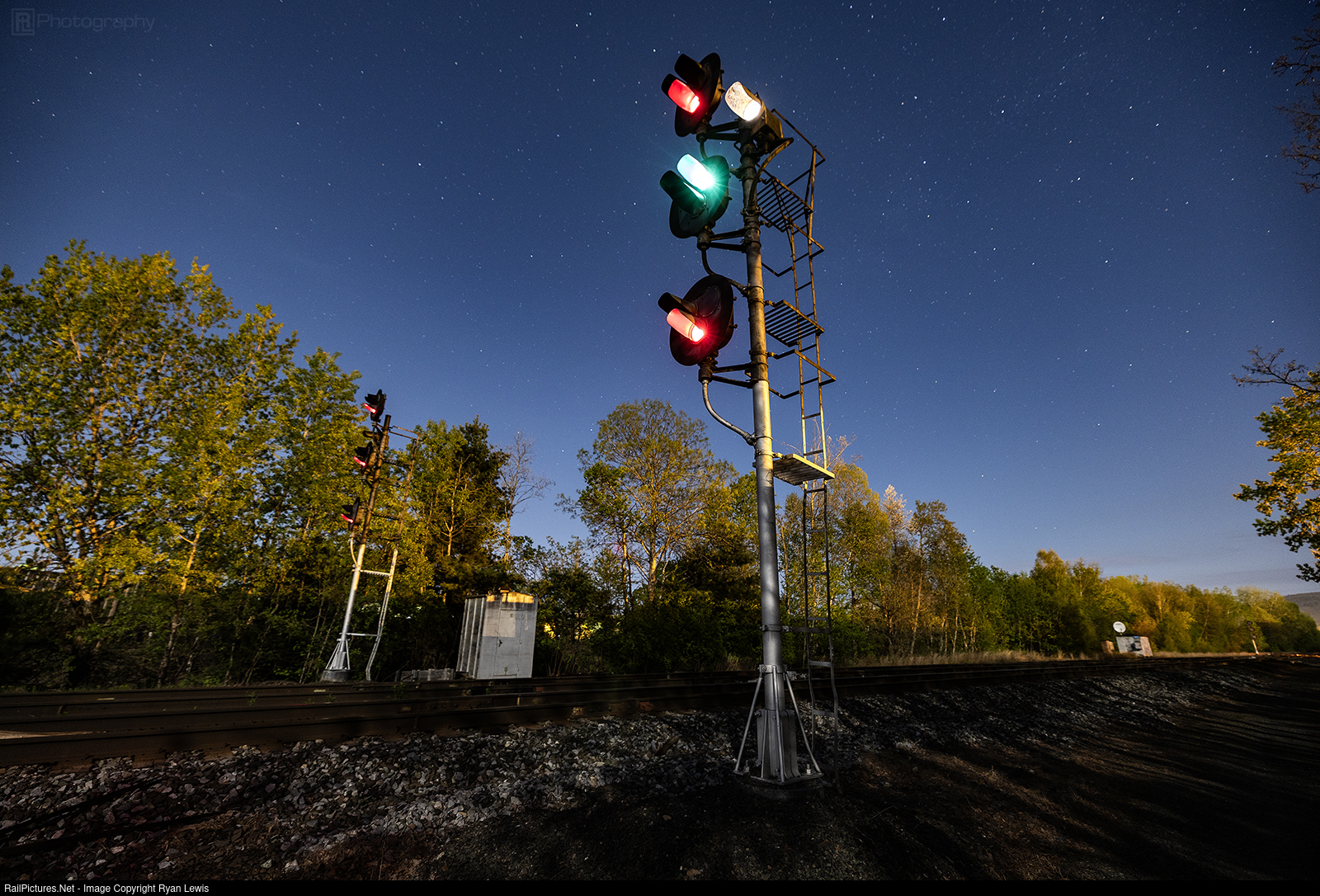
People talk a lot about disruption and an often overlooked disruption was the North American railroad signal industry's transition from cast iron to aluminum in the 1980's. Here I am talking about the railroad signals themselves, not the entire signaling product line, but the ability for new companies to enter the market selling new types of bulbs in a housing put a lot of pressure on the US&S / GRS duopoly. Both companies tried to respond to the new competition, but only one was successful over the long term.

Iron melts at around 2300o F while aluminum melts at around 1200o. The former requires a foundry and expensive sand molds, the latter can be done with an electric furnace and can get away with using permanent molds made of steel. By 1980 cast iron had been the material of choice for railway signals going back almost a century with GRS and US&S operating the necessary "smokestack" industrial infrastructure to make the components at scale. However, since World War 2 aluminum had become much more common in everyday products like cars and bicycles, and investors looked at the high margin railroad signaling duopoly and wondered if their might be a better way.
 |
| Safetran CLS-10 |
Safetran was the best known starting with the aluminum CLS-10 that directly competed with the cast iron GRS D Type modular color light signal. The aluminum (and solid state) Unilens was developed to go after the searchlight market and the NR went after GRS's famed G Type. About the same time both L&W and Harmon also entered the market with their own cast aluminum signal modules. The moat had been bridged and aluminum would eventually force cast iron signals out of the market entirely.


Of course both GRS and US&S were going to complete in the new aluminum signal market with US&S seeing some modest success with its clean cut modular box and CR-2 twilight. GRS on the other hand did not do so well. In 1989 GRS was purchased by the Sasib Railway Group of Italy and they came out with a product family of aluminum signals. The better known family member was a 3-lamp monolithic signal similar to a US&S style P or R. This had some high profile sales such as the LA Union Station and Dallas Terminal re-signaling projects.
After Sasib was acquired by Alstom in 1998 this type of signal was still being sold, just with the Sasib logo scratched off.
The second offering in this family is the much rarer tri-light type intended as a G-Head replacement. The only place I have noticed them was on the MBTA Dorchester Branch at Readville. Again, note the Sasib logo.


What I have yet to find is an aluminum D Type replacement to compete in the most popular part of the signal market, modular single lamp color lights. Of course maybe that's the point. GRS saw the market was saturated with lower cost competitors and decided not to bother. US&S did try to compete and was rewarded with lackluster sales. So why did the other two signal types fail? 1990 was a bit of an odd time in the railroad signals market. Traditional searchlights were still selling and it still made economic sense for railroads to refurbish old signals and reuse them in new signal projects. Used signals were in abundance as main line track was trimmed down from what they had been in the 1960's. It would be the better part of a decade before Safetran CLS-20 sales exploded as part of the Darth Vader boom of the 2000's.
 |
| Generic Canadian Pacific 3-stack. |
In hindsight the bare bones GRS 3-lamp monolith may have simply been ahead of its time as Canadian Pacific has more recently adopted a similar no frills box as its standard new signal.