Search This Blog

Tuesday, October 31, 2023

ALTO Tower Preservation Plans At Risk

It has been a decade since ALTO tower in Altoona, PA closed and after a conversation with persons directly involved in the process I have come to learn that the likelihood of its preservation seems increasingly remote. The good news is that there are currently no plans to demolish the tower by Norfolk Southern, however the previously touted move the tower in its entirety to the Railroaders Museum about a half mile to the east are unlikely to ever come to fruition due to the structural condition of ALTO tower itself. 
 

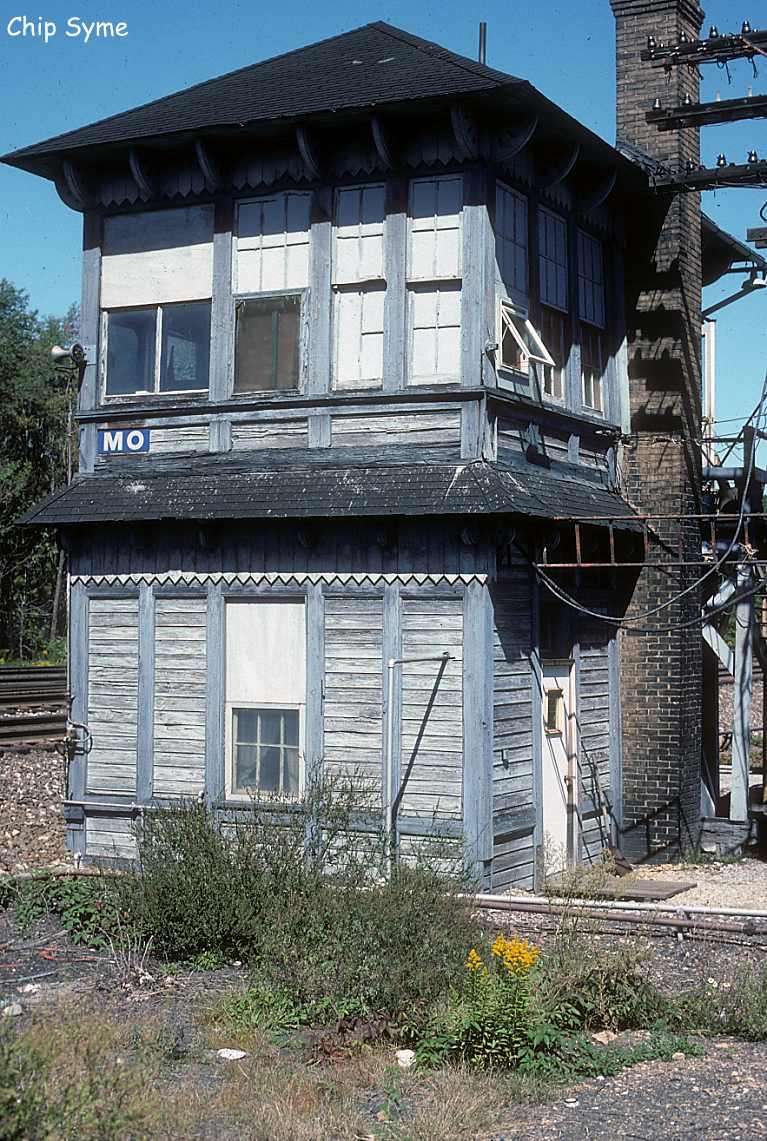
Immediately after the tower's closure there were two competing plans about how to preserve it. The first was to move the tower in its entirety in a similar process to the recent move of WB tower in Brunswick, MD. The second plan was to gut the tower of all internal components, strip off all of the architectural ornamentation and then reconstruct the tower from scratch. One of the advocates for the second plan expressed that his motivation to sacrifice the 1915 structure was due to it being fatally compromised by termites and requiring asbestos remediation. All up, full preservation and relocation of the 1915 structure would cost multiple times construction of a duplicate fitted out with the internal components and external ornamentation. It would also avoid the fate of MO tower about 10 miles down the Main Line in Cresson, PA that literally fell apart during a late 1990's effort to relocate the structure to a nearby railfan park due to compromise of the 100 year old wooden structure.

Nevertheless, higher-ups at the Altoona Railroadsers Museum decided on the full preservation plan and drew up a phone book sized document about the tower and the process (with more than a few of my photos included I might add). At this point the sizable cost of the preservation plan became a barrier to implementation along with whatever roadblocks NS would be inclined to throw up. In the following decade the tower has started to lose interior items to theft with the bank of glass timers being an early casualty. Although it is more secure than some of its peers, the wooden structure remains vulnerable to vandalism and fire. BTW I attempted to gain a PDF digital copy of the preservation document from the the individual I was speaking to, but he never followed up after I gave him my contact information. Hopefully he will become aware of my interest and reach out.


Let me be clear. I am not saying that ALTO tower is doomed to demolition or fire. It is immediately adjacent to a major roadway and could still be saved according to the 2012 plan. The point of this report is to provide the community with an update/explanation after the well known preservation plans seemed to go nowhere. I don't have independent verification of the claims expressed to me or independent analysis regarding the best course of action. The better option is absolutely relocation of the 1915 structure, but we should all be clear eyed about that not being possible. It's also unfortunate that the ideal option of preserving ALTO in situ appears to have never been on the table due to NS and liability paranoia.

Saturday, October 21, 2023

A New Source for Railfan Window Videos

While trying to gather information for my recent SEPTA Unilens post, I discovered a newish railfan video channel with a large amount of up to date of front facing video content that can help with signaling research. Retired  Railfan Horn Guy has been crisscrossing the country shooting a mix of front window and standard videos with special emphasis on SEPTA and, more recently, Caltrain. The latter is particularly useful given the impending demise of forward facing views on that line.

The guy is based on Long Island so naturally there is LIRR content, but he doesn't seem to have the same level of access as some of the other LIRR specific video channels that I suspect have insider access. Anyway, its a fantastic channel and good resource to bookmark.


Saturday, October 14, 2023

SEPTA Sours on Unilens Dwarfs

In yet another chapter of the rail industry's love-hate relationship with the Safetran Unilens signal, over the last few years SEPTA has been systemically replacing its Unilens signals with L&W LED searchlights similar to those being employed by Amtrak in the Chicago, New Orleans and Albany terminal areas. Although I am in the Philly area and perform various SEPTA excursions I only just noticed the change since they were limited to the former Reading Company lines I haven't ridden lately. Below is an example of a compact Unilens "high" mast at JENKIN interlocking since 2006 that was converted from Unilens to LED searchlight at some point over the last 2 years.

Track 2 LED searchlight high dwarf at JENKIN in 2003

Track 2 LED searchlight high dwarf at JENKIN in 2010

Combing through some SEPTA territory railfan window videos I can confirm that the majority of Unilens signals have now been replaced by LED searchlights. including those at NEWTOWN JCT, TABOR JCT, the Fox Chase sidings and Norristown Elm St. Because of SEPTA's use of reduced aspect signals, new searchlights won't get much opportunity to demonstrate their full rage of colors and the clipped flashing might be a little irritating while displaying "cab speed" indications.

LED Searchlights at Albany Union Station

For those of you who might be encountering the Unilens saga for the first time, the Unilens was created as a solid state replacement for the traditional electro-mechanical searchlight. It makes use of plastic light pipes (think big fiber optics) to deliver light from up to 4 lamps to a single lens assembly. While this might sound like a great solution, apparently the product suffers from expensive propritary incandescent bulbs and degradation of the light pipe that reduces output over time as well as giving green indications a yellow cast.  While some of SEPTA's Unilens dwarfs were approaching 20 years in service, some, like those at Norristown, had been installed less than 10 years ago. It's entirely possible that the long term costs of operating the type became just too much. It will be interesting to see if LED searchlight technology migrates to the Class 1's, which still seem wedded to the Unilens for restricted clearance applications.

Saturday, October 7, 2023

Steppin' Out - PRR Stepped PL Mountings

 The typical view of Pennsylvania Railroad position light signals mounted on a steel angle iron signal bridge is one where two heads are mounted on a short pole that is in turn attached to the signal bridge structure. 

But what if I were to turn this view...about its vertical axis.

Do you see it yet?  How about now...

As is now obvious, the original PRR concept for mounting the then new position light signals was to place the lower head on its own little mounting mast, forward of the upper head. In the above example at the late CP-PENN, this provides all around maintainer access to the both signal heads to replace bulbs or clean the lenses, although period signal bridges would have afforded this access only to the upper head. As time went on, the more common single pole mounting became standard. Still, the earlier step-mounted position lights were left in place.

Above we can see the eastbound signals at the late CP-GRAY with an original configuration step mounted PL in the center, a modified step mounted signal with a Safetran lower head on the right and a standard mount PL on the left.This reflects the PRR Main Line 2x2 Rule 251 configuration that was later altered by Conrail to double track Rule 261.

With most of the PRR position lights now removed from Class 1 service, the best place to catch stepped position lights is on Amtrak's Northeast Corridor between Philadelphia and Wilmington. The above example are the northbound signals at HOOK interlocking in Macrus Hook, PA. The stepped signals seen below are the southbound signals at BALDWIN interlocking in Eddystone, PA.

Like the previously discussed compact position light mounting, the stepped mounting is another one of those things you might never have noticed until it was pointed out.

Saturday, September 30, 2023

LIRR VALLEY Tower Closes and Other News

I just got an unfortunate report that the famed LIRR VALLEY tower was closed for good after surviving nearly 2 decades after it was re-signaled.

Although I did not get confirmation about where the control was passed to, I suspect that it will follow QUEENS, and NASSAU with the territories being remote to the dispatch center at the Jamaica offices. It is unknown if installed panel or VDU interface was removed or if they remain available for emergency restoration.  

In addition to the closure of VALLEY, I was informed that BABYLON and BROOK previously saw their operators relocated to nearby yard offices and DIVIDE was also closed in 2021 in conjunction with the opening of the Main Line Third Track. This means that VALLEY was the last full time, stand alone interlocking tower on the LIRR with LEAD technically being in the bridge cabin format. It seems that the LIRR has just witnesses the same collapse of interlocking stations that SEPTA saw in 2003.

In other news, L&W brand PRR pedestal signals have appeared at ROCKY interlocking on the Babylon Branch,  Rocky is the last remaining position lit crossover on the branch and the LIRR uses pedestals as a precursor to re-signaling events, however the move to reduced aspect signals have made this progression less necessary and the use of new peds could be permanent in order to decommission the aging signal gantries.

I also had the opportunity to visit M CABIN that controlled the Main Line Cutoff drawbridge over the Dutch Kills in Queens. Unfortunately the cabin has been gutted of any interlocking hardware by local scrappers.


The LIRR has a number of zombie towers such as this like BLISS and HAROLD and I'll try to get definitive answers on more of them.

Sunday, September 24, 2023

Suck It In! - PRR Compact Position Lights

 When the Pennsylvania Railroad needed a reduced clearance version of their brand new position light signal, they made a position light version of the semaphore dwarf signal. About a decade later when the PRR needed a compact signal that could also display the full range of signal indications they invented the pedestal. 

But what if you are worried that pedestals with their pairs of plain white lamps just weren't visible enough in fog or smoke at main line speeds? Well you might need a compact position light. 

If one looks at the back of a Union Switch and Signal position light setup, one will see the lamp modules are mounted on the ends of metal tubes extending out from a central tub. The backing plate, if present, is then affixed to the ends if the tubes. However you might realize that there is nothing in this setup that physically requires the lamp modules be mounted where they are mounted. They can be placed at any point along the tube. As long as there is a hole for the wire they could even be placed directly against eachother! Which is exactly what the PRR did when it needed a reduced clearance PL format.

Don't let the square targets fool you. These signals on the LIRR Main Line are completely ordinary US&S position lights, just shoved together. The compact format for the Milepost 7.6 automatics was chosen to be visible underneath an overbuild just south of the Kew Gardens station.

You can see the size difference in comparison with the full size signals on the opposite side of the signal gantry.

While these LIRR square backed compact PL's are now likely unique due to the HAROLD interlocking re-signaling project, compact PLs in general still exist in several others locations with the most accessible being DOCK interlocking in Newark, New Jersey, on Amtrak's NEC.

At the east end of the station on tracks 1 and A, the 90LA and 90LB signals were both in compact formats of varying degrees of compactness. The 90LA on track #1 even had different geometries for the upper and lower head given the unique clearance requirements.

Saturday, September 16, 2023

Go No Go: Cab Signaled Transit Wayside Dialects

In the late 1960's a new crop of "Space Aged" rapid transit systems began to take shape in North America making use of the new materials and electronics developed since the end of World War 2. In particular was a push to replace wayside signals and trip-stops with cab signals which would enable both automated operation and a reduction in wayside hardware. Of course this forced the question about contingency operations in case of cab signal or related failure. Railroad explorations of wayside elimination in the 1930's and 40's had retained wayside signals at interlockings and other controlled points and rapid transit followed suit with the further innovation of reduced aspect signals displaying Stop and Proceed aspects with the occasional Diverge and Absolute Block. Also like railroads, the rapid transit systems adopted a mix of "dialects" for their reduced aspect signals that I hope to categorize below.

Lunar White - The Granddaddy of them all, the Lunar White proceed indication can be considered the "default" rapid transit proceed signal aspect. First appearing on the PATCO Speedline in South Jersey (at least as far as I can tell), lunar proceed was later adopted by systems including DC Metro, SEPTA MFL and Route 100, HBLR, Cleveland Rapid Transit and Baltimore Metro (as built). The rationale was to be distinct from the existing ABS signal aspects using Green and Yellow and present as a railroad Restricting style aspect for non-cab signal equipped movements.

PATCO Lunar White Cab Speed

Steady Green - Considered the "obvious" solution since Green means Go, use of Green in place of Lunar White has been gaining in popularity with newer systems as any perceived need to be distinct from older ABS systems has faded. Notably appearing on DC Metro peer system BART in 1972 it was also adopted by Maimi MetroRail, St Louis Metrolink, Baltimore Light Rail and the Baltimore Subway as modified. Some systems will use flashing green to indicate a diverging route, others yellow. 

Baltimore Metro Steady Green Cab Speed

Flashing Green - Taking another page from the railroad playbook, flashing has made a few appearances to indicate a proceed indication on rapid transit systems. On the New York city subway flashing green straight up means Cab Speed for both straight and diverging movements under the control of the CBTC system. On Atlanta's MARTA, flashing green is the default proceed signal with steady green indicating a diverging route. 

Yellow - Similar to lunar white, this substitutes lunar for yellow similar to that dialect of railroad Restricting indications. This is most prominently used in Boston with Y/R for straight routes and R/Y for diverging.  

MBTA Y/R Cab Speed

Green Arrows - This most prominently appears on the cab signaled  portions of the Dallas DART system to differentiate from the ABS signals and avoid the use of flashing. 

DART arrow signals, not illuminated.


DART arrow signals, illuminated.

White Arrows - Like the green arrows above, but using either lunar or plain white. This is popular with airport people movers including the JFK AirTrain but also in use on the Sound Transit light rail with stylized direction indicators.

Sound Transit stylized arrow.

ABS - Currently used on Chicago, this method of go-no-go signaling takes a cue from the cab signal state to display a Green if the cab speed is "clear" (55/70mph) and a yellow if it is "restricted" (35/25/15mph). The cab signals can be from either block state or due to civil speed restrictions.

CTA Proceed Clear

 
CTA Proceed Restricted

This is my best shot at a taxonomy. I'm sure I've forgotten about a few systems or corner cases so if you, the reader, can think of any, please let me know in the comments. Please make sure that the line is actually cab signaled as there are quite a few ABS signaled light and heavy rail transit systems in North America.