I was hoping to get some more Port Road Trips out this week, but I've been swamped so I had to settle for some news updates, specifically NS updates.
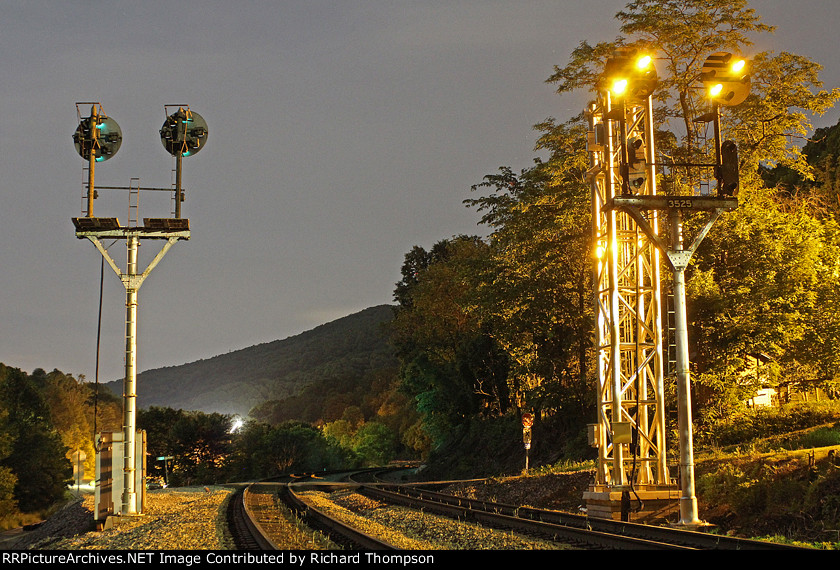
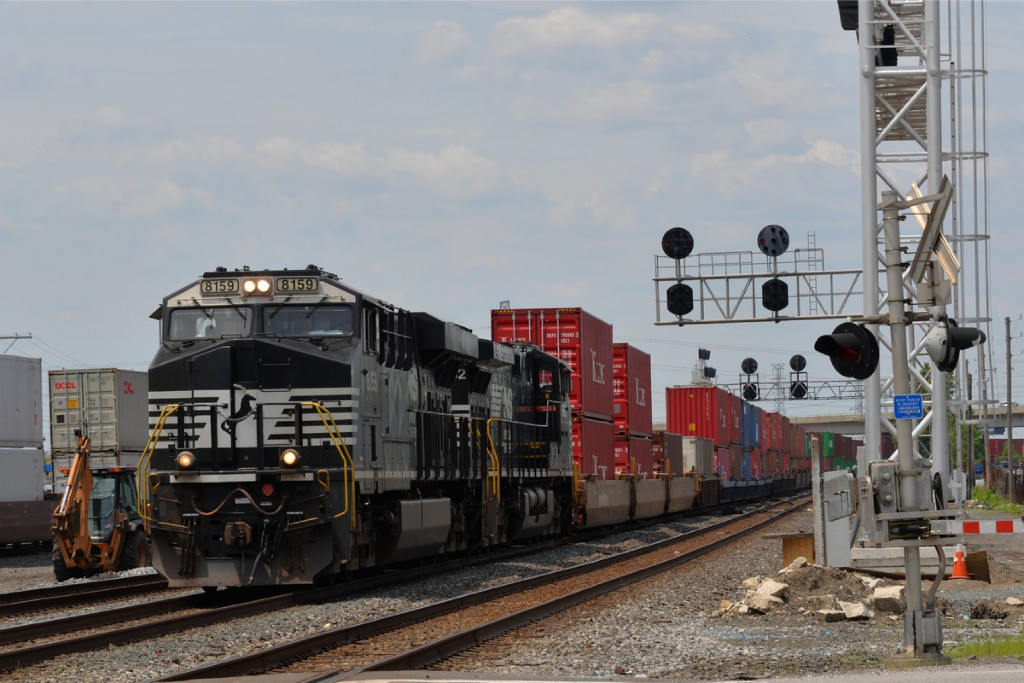
First up is the news regarding the twin Chicago Line interlockings of CP-506 and CP-507 in General Hammond-Whiting, IN. The last of the PRR Position Lights on the western end of the 4-track Broadway are now definitely facing the ax, but you still have a little time at CP-506. You see the new signals have only been partly cut in as the interlocking work is still ongoing and NS just needed to extend the interlocking limits a few feet. This means that the old eastbound PRR gantry has been retired and replaced by new NS signals on a new gantry, a new PRR PL mast signal (!) has temporarily popped up on one yard track and the original PRR PL dwarf has been left in place on the other. It really makes one wonder why they just don't keep the old signals...or at least the temporary replacement signals.
At CP-507 new cantilevers are up indicating the 1990's vintage westbound PRR PL cantilever will soon be replaced. The additional length being added to the interlocking could mean some additional switch work. Chicagoland signal fans you still have time to get your pictures so please do not hesitate.
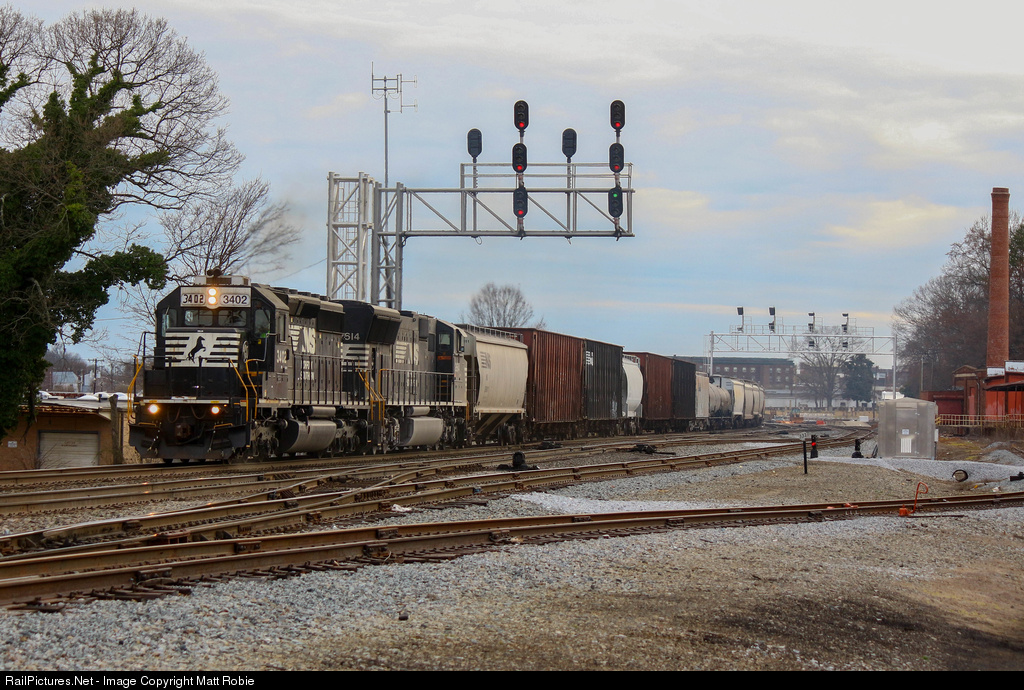
Meanwhile, further east, I just got word that NS just cut in the Rule 562 operation between STELL and SHOCKS on the Enola Branch. See the first few segments of Port Road trips for the history of this previously Rule 251 ABS line. What happened to WAGO is not yet know, but we can assume it was re-signaled like STELL. Here is a photo from a visit to STELL in March showing the new cantilever gantry with NS signals with 'C' boards for the Rule 562 operation.
A blog devoted to explaining the ins and outs of North American railroad signaling, past, present and future. This blog seeks to preserve through photo documentation the great diversity and technical ingenuity of 20th century signaling and interlocking hardware and technology. Related topics cover interlocking towers and railroad communications infrastructure.
Note, due to a web hosting failure some of the photos and links may be unavailable.
Search This Blog
Thursday, July 30, 2015
Wednesday, July 22, 2015
Zombie Apocalypse - HAROLD Tower Closes For Good (Or Not)
EDIT: My source was mistaken and HAROLD tower is NOT being demolished (at least not yet). It's still an interesting story of HAROLD living on as a zombie interlocking tower.
For over two decades now the Long Island Rail Road's HAROLD tower has held a special place in interlocking tower lore. The massive interlocking, across the East River in Sunnyside, Queens, is second only to the Jamaica complex in terms of traffic density and rivals the likes of DOCK and UNION on the other side of the HUDSON. The interlocking was so critical to the daily flow of commuters on North America's busiest commuter railroad that when the interlocking was re-signaled in 1990, the old 1910 vintage structure was actually replaced by a brand new manned interlocking tower, perhaps the last traditional type interlocking tower built on the continent.
Granted the new tower was rather austere, much like NJT Terminal Tower that predated it by a few years, but it was still a interlocking station, manned 24/7, on a railroad that still has a thing for manned interlocking stations. Clearly it's future would be meaningful.
No not... You see in 1994 the Penn Station Control Center opened with a brand new video display setup and computer aided dispatching. PSCC closed 4 towers in Penn Station, F Tower at the eastern mouths of the tunnels and also HAROLD tower as it's ole sorting out Amtrak Hellgate traffic from LIRR commuter trains was not something that could be split from the new dispatching center. However in 1994 computers were still a new and not always reliable tool in railroad dispatch. Amtrak was so concerned about computer failures completely shutting down the NEC that the PSCC was equipped with a giant NX board that could be operated manually. Since HAROLD was just as important for the efficient functioning of Penn Station it retained its own local control capacity as an active interlocking station
At this point HAROLD became a "zombie tower", operating "as needed", never open, but not officially closed. Now the following is all based on anecdotes I have heard over the years, so take them as you may, but as I understand it, in the early days HAROLD was actually opened infrequently as the bugs were worked out of the computerized system in PSCC. Like the old "Harold Protect Job" I heard stories of the tower being manned at peak time, but only operating if something went screwy. Others say that qualified operators were simply on standby at other locations with the ability to open HAROLD in a hurry. I heard it was opened for certain demanding situation like a shut down East River Tube or disabled trains. Whatever the truth was, by the mid-2000's it was clear that HAROLD was only open once in a blue moon, if at all.
While many people told me that HAROLD was closed, closed, closed, I always suspected that it was still in its state of living death. As long as the interlocking was not re-signaled (again), I doubted that anyone would go about ripping out the interlocking machine inside the tower. Even if it was only a glorified local control board, if HAROLD still looked like a tower and was still capable of the functions of a tower...well it was still an active tower.
Well, I finally got word that it was closed for good and if you are wondering what sort of evidence convinced me of that it is the fact that the tower is being demolished for the East Side Access project. HAROLD interlocking itself had been drastically altered and re-signaled to make way for the tunnels that will divert LIRR trains to Grand Central so I it figures that an old relic of the not too distant past...a plain brick box of limited usefulness, would not get much sympathy from planners and engineers. So, like the PRR position lights that populated the area like weeds, HAROLD is no more. Farewell HAROLD. You were bland and boring, but in an age of ever dwindling numbers of towers we took what we could get.
PS: If anyone has any actual information regarding HAROLD's operation in its later days, or better yet pictures taken inside, let me know and I'll update this post.
For over two decades now the Long Island Rail Road's HAROLD tower has held a special place in interlocking tower lore. The massive interlocking, across the East River in Sunnyside, Queens, is second only to the Jamaica complex in terms of traffic density and rivals the likes of DOCK and UNION on the other side of the HUDSON. The interlocking was so critical to the daily flow of commuters on North America's busiest commuter railroad that when the interlocking was re-signaled in 1990, the old 1910 vintage structure was actually replaced by a brand new manned interlocking tower, perhaps the last traditional type interlocking tower built on the continent.
Granted the new tower was rather austere, much like NJT Terminal Tower that predated it by a few years, but it was still a interlocking station, manned 24/7, on a railroad that still has a thing for manned interlocking stations. Clearly it's future would be meaningful.
No not... You see in 1994 the Penn Station Control Center opened with a brand new video display setup and computer aided dispatching. PSCC closed 4 towers in Penn Station, F Tower at the eastern mouths of the tunnels and also HAROLD tower as it's ole sorting out Amtrak Hellgate traffic from LIRR commuter trains was not something that could be split from the new dispatching center. However in 1994 computers were still a new and not always reliable tool in railroad dispatch. Amtrak was so concerned about computer failures completely shutting down the NEC that the PSCC was equipped with a giant NX board that could be operated manually. Since HAROLD was just as important for the efficient functioning of Penn Station it retained its own local control capacity as an active interlocking station
![]() |
| The real interlockig is across the tracks in the massive relay shed. |
Saturday, July 11, 2015
Full Up - Signals that Like to Show it All
Signal engineers and signal departments aren't stupid. If a signal doesn't need to display certain signal aspects then typically those lamps are omitted from the signal. With vital signaling hardware costing potentially thousands of dollars per lamp, all of that adds up and more often than not the casual viewer is presented with a watered down version of what they might see in the rulebook. Well today we will find examples across a variety of railroads of signals that don't leave anything behind in the locker room and come equipped to...show it all.
We'll kick off with an easy one in the form of a PRR/Amtrak position light. With only two heads it doesn't look like it would be hard to fill up a PRR PL, but both Amtrak and the PRR do make use of an economical lower head that omits the \ position when possible. Substituting Rule 290 Restricting for Rule 291 Stop and Proceed produces only a minimal decrease in efficiency so the \ is only included in situations where there are regular movements into unsignaled track leaving the SnP dot for movements into an occupied block.
NORAC color light signals are typically built around two head masts, but every so often the third head makes an appearance. This is either when there are slow speed routes or back to back interlockings requiring R/Y/G Medium Approach Medium.
Of course the more spectacular complete signal is the B&O CPL with a full central target and all six orbitals. These were especially rare due to the need to have a back to back interlocking with slow speed signals at the next interlocking down to allow for both Approach Slow and Medium Approach Slow. Due to a similar preference for Stop and Proceed over Restricting, one also tended to need routes into un-signaled track. As a result this signal went extinct in the wild twice. The first being after LAUGHLIN JCT and CURTIS were downgraded and/or resignaled and then again when CARROLL interlocking was first upgraded in 2007, only to be resignaled in 2012.
Sticking with the Chessie system, the C&O's example of a full signal was quite a bit more common than the B&O's. The use of R/Y/Y for Medium Approach made lower heads rather common. Add in R/Y/G for Medium Approach Slow (or Medium) and you'll get a complete 3-3-2 configuration as seen above.
The Seaboard system makes use of Lunar white for Restricting indications which results in the use of 4-lamp signal heads. Add slow speed indications into the max and you have 3-4-3 or 3-3-4 lamps combinations on a single mast.
Moving into route signaled systems the Southern Railway most commonly saw 3 x 2 masts with no capacity for Restricting or 3-3-2 when their R/R/Y Restricting indication was required. While technically speed signaled, every so often a second, possibly slower speed, route at an interlocking would demand use of a fully equipped third head as seen above displaying Diverging (slow) Clear.
The N&W PL system has it even easier than it's PRR cousin to force a full signal. Without the central market option for a Stop and Proceed, any need to enter an occupied or unsignaled track triggers the need for a lower head \. Standard use of Diverging Approach covers the / position as well.
Chicagoland commuter system METRA uses a "lunar only" restricting setup similar to CSX, but with route signaling full signals are very rare. Here is an interesting example at KENSINGTON interlocking on the METRA ELECTRIC.
Western roads UP and BNSF both use similar systems that have long used *R* for Restricting allowing 3 by 3 lamp heads to display all necessary indications. As usual the lowest head is most difficult to populate needing a lower speed route to trigger the R/R/G aspect that provides the only use for G on the lowest head.
However there is one signal that we've left out. This is the Y/L "Approach Restricting" typically used to signal an upcoming route into a siding on a single track main line. With no Y/*R* option, Approach Restricting requires a lunar lamp and combined with the need for a second slower speed route one would see a 3-4-3 or 3-3-4 signal, just like on METRA or CSX. These however are incredibly rare. So rare that I do not have a photo of one in my collection (although I am sure one exists somewhere). As UP has a new policy of using Approach Restricting at places with common routes into unsignaled track, UP is the more likely road to have a full signal of this type. The best I could find was this 9-lampbeast in a 3-4-2 configuration at SWANSTON interlocking near Roseville, CA.
If you have or know of a photo of a UP 10 lamper let me know and I'll update the page :-)
![]() |
| 2 x Clear at HOLMES |
![]() | |
| CP-437 in South Bend, IN |
NORAC color light signals are typically built around two head masts, but every so often the third head makes an appearance. This is either when there are slow speed routes or back to back interlockings requiring R/Y/G Medium Approach Medium.
![]() |
| Medium Clear at CARROLL |
Of course the more spectacular complete signal is the B&O CPL with a full central target and all six orbitals. These were especially rare due to the need to have a back to back interlocking with slow speed signals at the next interlocking down to allow for both Approach Slow and Medium Approach Slow. Due to a similar preference for Stop and Proceed over Restricting, one also tended to need routes into un-signaled track. As a result this signal went extinct in the wild twice. The first being after LAUGHLIN JCT and CURTIS were downgraded and/or resignaled and then again when CARROLL interlocking was first upgraded in 2007, only to be resignaled in 2012.
![]() |
| ALDERSON crossovers. |
Sticking with the Chessie system, the C&O's example of a full signal was quite a bit more common than the B&O's. The use of R/Y/Y for Medium Approach made lower heads rather common. Add in R/Y/G for Medium Approach Slow (or Medium) and you'll get a complete 3-3-2 configuration as seen above.
![]() |
| CSX SATERWHITE interlocking at the Point of Rocks wye complex. |
| 3 by 3 in Salisbury, NC. |
| The late great HULL interlocking. |
![]() |
| Southern Pacific's HOWARD Interlocking |
However there is one signal that we've left out. This is the Y/L "Approach Restricting" typically used to signal an upcoming route into a siding on a single track main line. With no Y/*R* option, Approach Restricting requires a lunar lamp and combined with the need for a second slower speed route one would see a 3-4-3 or 3-3-4 signal, just like on METRA or CSX. These however are incredibly rare. So rare that I do not have a photo of one in my collection (although I am sure one exists somewhere). As UP has a new policy of using Approach Restricting at places with common routes into unsignaled track, UP is the more likely road to have a full signal of this type. The best I could find was this 9-lampbeast in a 3-4-2 configuration at SWANSTON interlocking near Roseville, CA.
If you have or know of a photo of a UP 10 lamper let me know and I'll update the page :-)
Sunday, July 5, 2015
ATSF Amarillo Dispatch Office 1985
I recently found this wonderful little video on Youtube that offers a rare glimpse of a CTC office in the brief period between the advent of wide area CTC and before computer interfaces. Before computers not every railroad was "paper" dispatched like the PRR with its frequent block stations. As far back as the early 1940's dispatchers had been given direct control of inderlockings through super sized versions of the same unit lever style CTC machine that had also shown up in towers. This was also the advent of radio communications allowing for direct interactions with the trains, but just before the complete phase out train orders..
Forgive the rather amateur production values and just take in how these clunky old offices worked with fully wrap around CTC machines and the microphones pointed on pantograph arms. If you watch the video all the way through you can see a first generation video display office c. 1992
Tuesday, June 30, 2015
Better Know a Signaling System: PRR
Not really sure what more I have to say about the Pennsylvania Railroad position light signaling system. It is the name of the blog and what I haven't already covered in surveys and news items, it was technically incorporated into NORAC, a signaling system we have already better known. So instead of just going down and describing all the PRR signal indications I am going to take a different approach and look at how the PRR position light signal indication evolved from the initial PRR semaphore indications on which they are ostensibly based. Moreover I will also look at the prototype PRR PL system, known as tombstone signals, as well as later developments such as Limited Speed.
I should first mention that if you are looking for a great technical history on the PRR PL you can find one at railroadsignals.us and there you can learn all about the original 4-lamp position light system, sometimes known as "tombstone signals" due to one of the variations of backing plate.
The 4-lamp PL's were an almost literal translation of the semaphore blade positions into lights. If you are wondering why the PRR didn't just go with using the all color "night" indications, the reason is because reliable high intensity light sources (and mains power) were not yet available yet. Searchlights and position lights could make use of low wattage bulbs that could run for long periods even on battery power.
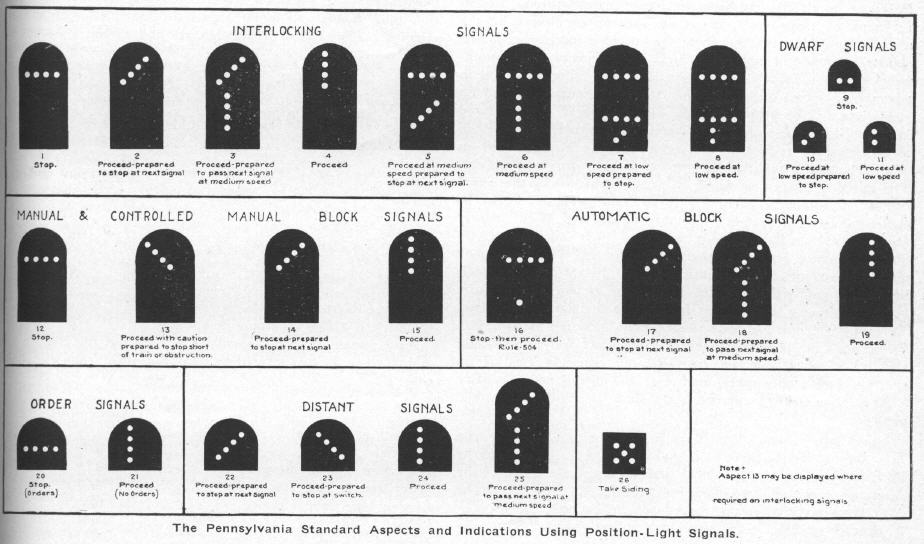
Looking at the chart above we see all of our familiar favorites including / over | approach medium and --- over | Medium Clear, but we also see some interesting deviations from the later system, most significantly --- over / Medium Approach. Also, "Slow speed" indications were handled by a little two lamp analogue of a subsidiary signal on a third head. These consisted of a --- over --- over / indication, which I believe is Restricting and a --- over --- over |, which plays the role of a Slow Clear or Slow Approach.
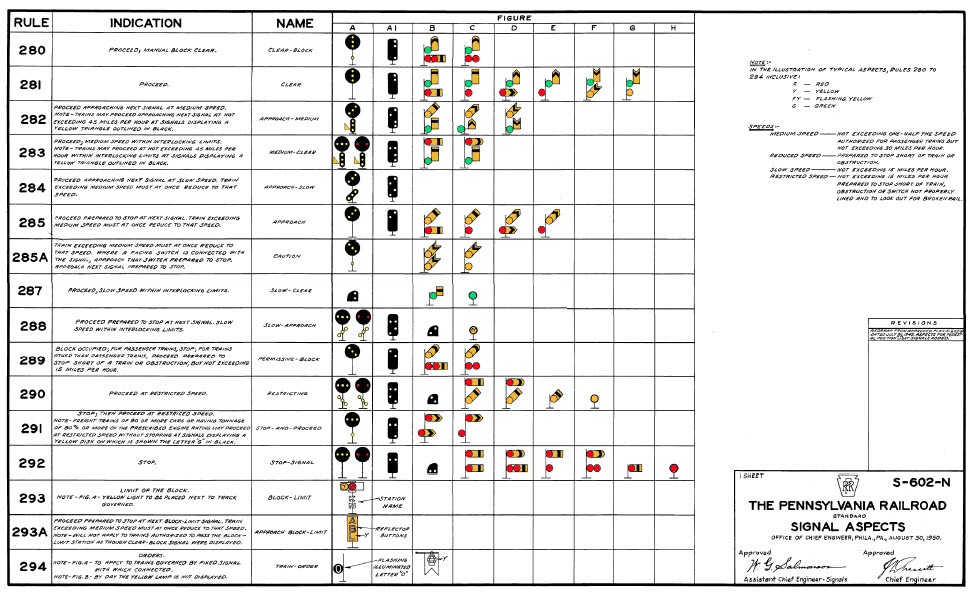
Sorry for the small chart there, but I wanted to show how the 1950 version of the PL system compares with the older semaphore system, still very much still in use at that time at various locations around the vast PRR. One interesting thing is how indications that involved the shape of the semaphore blade (Caution and Permissive Block) had to make use of the upper head \ indication. We can also see why the Semaphore system had no Approach Slow as Y/Y was the night indication for Caution.
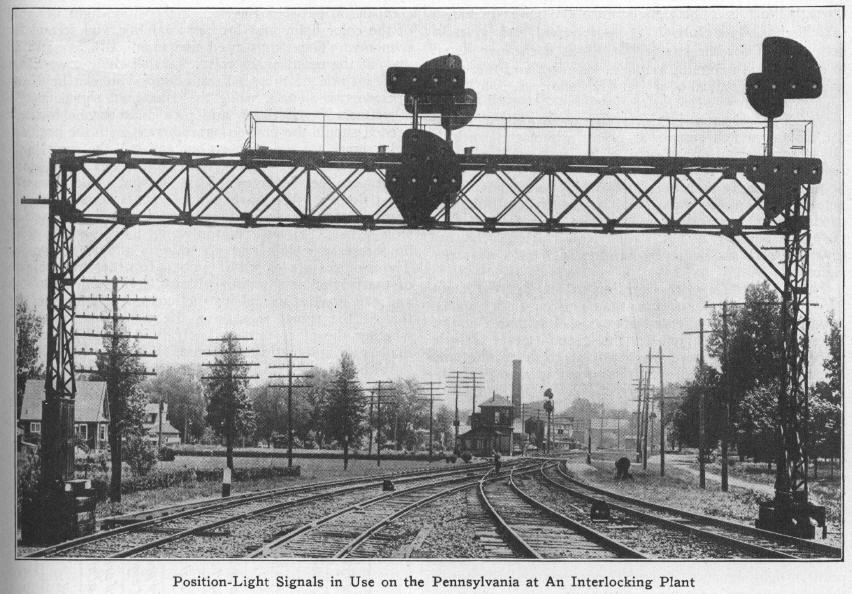
From the 1950 chart we can see how PRR used an exclusively 2 head Semaphore system, which in turn lead to the 2-head PL system. The Standard Railroad of the World was not about to go around throwing money at unnecessary signal heads, but as the above picture shows, signal engineers were not unaware that the PRR's use of only two heads presented a few limitations. With the subsidiary signal available for slow speed movements, --- over / Medium Approach was an obvious choice since it was not available as a semaphore since R/Y was reserved for Restricting. However when the PRR PL system was finalized with 3-lamps and 2 heads, Medium Approach had to go for a combination of Restricting and Slow Approach for slow speed movements. If you are wondering how one diverged to stop, spend some time on the LIRR as they still use the original PRR system where one diverges over Approach after first passing Approach Medium with the theory being Approach Medium gets you down to Medium Speed and Approach requires traveling at Medium Speed.
Also making its appearance in the 1950 version of the PRR PL system was the Limited Speed triangle, which allowed for higher speed turnouts (45mph vs 30mph) without having to spend more than 30 cents on a signaling upgrade. Limited speed turnouts started seeing wider use in the 1930;s and 40's in the electrified region where the higher performance of electric locomotives and multi-track main lines made efficient crossing over more of a necessity.
I should also note at this time that the ever stingy PRR applied a backing plate only to the | on the lower head because it was thought that any Engineer approaching a signal at Restricting or Slow Approach, would be going slow enough to see the indication even in bright sunlight.
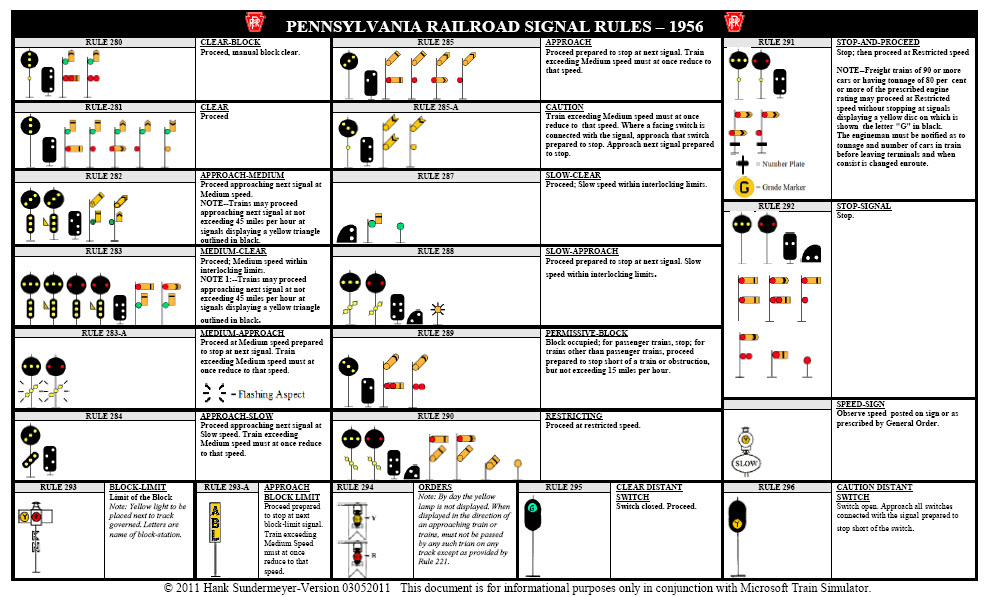
This finally brings us to the 1956 modification of the PRR signal rules to finally include Medium Approach, first cut from the lineup over 40 years earlier. What changed was that flashing relays were finally considered reliable enough for use in safety critical signal applications. This allowed the PRR to overload the lower head / so that the speed would be upgraded to Medium when flashing. This method of Medium Approach would be wholeheartedly adopted by Conrail in color light R/*Y* form as a way to, what else, save money over the three head R/Y/R Medium Approach used by the New York Central and Reading systems,
So the only thing left to go over are those funny signals with the extra marker light below them or \ indications on the upper head, which I will do...in another post that focuses specifically on manual block signaling in the United States. Sorry :-P
I should first mention that if you are looking for a great technical history on the PRR PL you can find one at railroadsignals.us and there you can learn all about the original 4-lamp position light system, sometimes known as "tombstone signals" due to one of the variations of backing plate.
The 4-lamp PL's were an almost literal translation of the semaphore blade positions into lights. If you are wondering why the PRR didn't just go with using the all color "night" indications, the reason is because reliable high intensity light sources (and mains power) were not yet available yet. Searchlights and position lights could make use of low wattage bulbs that could run for long periods even on battery power.
Looking at the chart above we see all of our familiar favorites including / over | approach medium and --- over | Medium Clear, but we also see some interesting deviations from the later system, most significantly --- over / Medium Approach. Also, "Slow speed" indications were handled by a little two lamp analogue of a subsidiary signal on a third head. These consisted of a --- over --- over / indication, which I believe is Restricting and a --- over --- over |, which plays the role of a Slow Clear or Slow Approach.
Sorry for the small chart there, but I wanted to show how the 1950 version of the PL system compares with the older semaphore system, still very much still in use at that time at various locations around the vast PRR. One interesting thing is how indications that involved the shape of the semaphore blade (Caution and Permissive Block) had to make use of the upper head \ indication. We can also see why the Semaphore system had no Approach Slow as Y/Y was the night indication for Caution.
| Prototype PL's, trying so hard for a third head. |
From the 1950 chart we can see how PRR used an exclusively 2 head Semaphore system, which in turn lead to the 2-head PL system. The Standard Railroad of the World was not about to go around throwing money at unnecessary signal heads, but as the above picture shows, signal engineers were not unaware that the PRR's use of only two heads presented a few limitations. With the subsidiary signal available for slow speed movements, --- over / Medium Approach was an obvious choice since it was not available as a semaphore since R/Y was reserved for Restricting. However when the PRR PL system was finalized with 3-lamps and 2 heads, Medium Approach had to go for a combination of Restricting and Slow Approach for slow speed movements. If you are wondering how one diverged to stop, spend some time on the LIRR as they still use the original PRR system where one diverges over Approach after first passing Approach Medium with the theory being Approach Medium gets you down to Medium Speed and Approach requires traveling at Medium Speed.
Also making its appearance in the 1950 version of the PRR PL system was the Limited Speed triangle, which allowed for higher speed turnouts (45mph vs 30mph) without having to spend more than 30 cents on a signaling upgrade. Limited speed turnouts started seeing wider use in the 1930;s and 40's in the electrified region where the higher performance of electric locomotives and multi-track main lines made efficient crossing over more of a necessity.
I should also note at this time that the ever stingy PRR applied a backing plate only to the | on the lower head because it was thought that any Engineer approaching a signal at Restricting or Slow Approach, would be going slow enough to see the indication even in bright sunlight.
This finally brings us to the 1956 modification of the PRR signal rules to finally include Medium Approach, first cut from the lineup over 40 years earlier. What changed was that flashing relays were finally considered reliable enough for use in safety critical signal applications. This allowed the PRR to overload the lower head / so that the speed would be upgraded to Medium when flashing. This method of Medium Approach would be wholeheartedly adopted by Conrail in color light R/*Y* form as a way to, what else, save money over the three head R/Y/R Medium Approach used by the New York Central and Reading systems,
So the only thing left to go over are those funny signals with the extra marker light below them or \ indications on the upper head, which I will do...in another post that focuses specifically on manual block signaling in the United States. Sorry :-P
Thursday, June 25, 2015
Catch Them While You Can- SEPTA and LIRR Projects
Yeah it's another news related post since I don't have the time right now for anything longer. Today I wanted to throw out a little alert that with the SEPTA West Trenton Line and LIRR East Side Access projects progressing, anyone in the area should get out and get some photos of what remains of the classic signaling while they can.
In SEPTA land the railroad is separating itself from CSX freight operations on the Trenton Line between TRENT and CP-WOOD. This will wipe out a stretch of mile-spaced Conrail style block signals in a 4-block configuration. SEPTA will be operating under Rule 562 with minimal aspects so if you are a fan of catching trains with colored lights in the background get those photos while you can.
Over in LIRR land, the pathetic replacements for the 31 signal bridge just west of the Woodside platform are about to be replaced themselves by a new LIRR style gantry with SP style target color lights. The popsicle pedestal are such a hoot that they really should be properly documented before they go.
I also want to give props to all the people who have been out chasing N&W 611 for also getting good shots of the N&W signals that are also slowly vanishing . I definitely noticed the increase in N&W signal pics so kKeep up the good work. Unlike both the LIRR and SEPTA projects, I wish I could get out there myself.
In SEPTA land the railroad is separating itself from CSX freight operations on the Trenton Line between TRENT and CP-WOOD. This will wipe out a stretch of mile-spaced Conrail style block signals in a 4-block configuration. SEPTA will be operating under Rule 562 with minimal aspects so if you are a fan of catching trains with colored lights in the background get those photos while you can.
| The Darth Vader on the right is now in service :-( |
I also want to give props to all the people who have been out chasing N&W 611 for also getting good shots of the N&W signals that are also slowly vanishing . I definitely noticed the increase in N&W signal pics so kKeep up the good work. Unlike both the LIRR and SEPTA projects, I wish I could get out there myself.
Saturday, June 13, 2015
What's Up with the Reading and Northern?
The Reading and Northern has been a rare bright spot in the world of signaling. A commitment to its Reading heritage has resulted in numerous signaling structures being preserved along with attempts to install "classic" signaling where new signaling is being installed on its mostly unsignaled territory. The R&N also controls the former Conrail Lehigh Line and for one reason or another has decided not to touch the surviving LVRR signaling along that route. Still, I am still not completely clear on the full extent of the R&N's signal preservation efforts as hinted at in a number of photos I have come across.
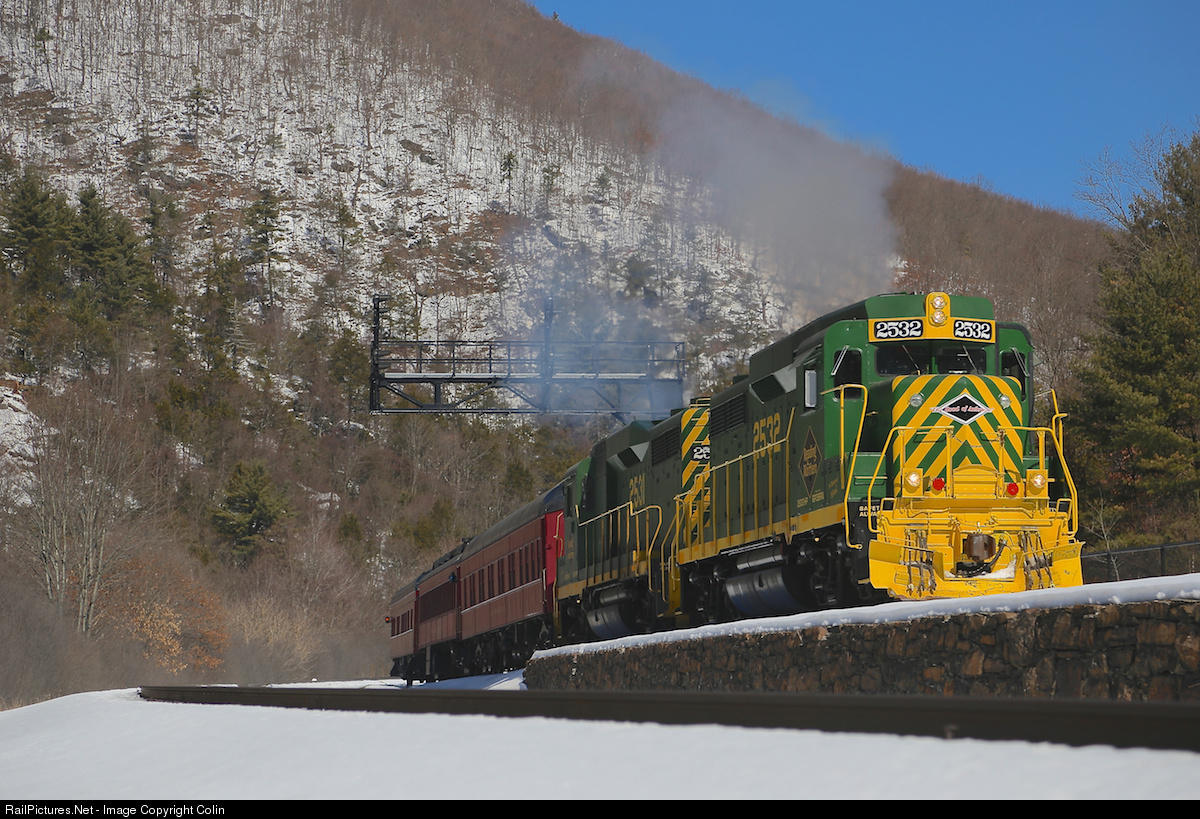
We begin near the town of Mach Chunk where the R&N runs a tourist operation in the Lehigh Gorge. i have bicycles along the right of way a number of time and I never noticed this cantilever mast and its freshly painted (albeit turned) signals. Is this a sign of a new interlocking or signaling project?
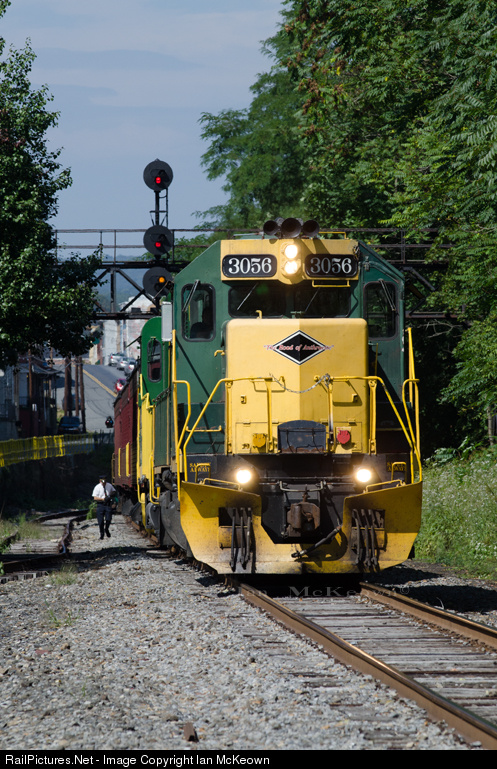
Pottsville is the location of some preserved Reading signal bridges and a tower. Both have been out of service for decades, but then I find a photo showing what appears to be a lit Reading US&S three headed signal displaying a restricting indication. Could be that the photographer is having some fun with Photoshoppe, or it could be another R&N instance of an "island" interlocking designed to eliminate the need for crews to hand throw switches.
Clearly I need to take another field trip to the area, but if anyone has any information (or photos) please let me know.
We begin near the town of Mach Chunk where the R&N runs a tourist operation in the Lehigh Gorge. i have bicycles along the right of way a number of time and I never noticed this cantilever mast and its freshly painted (albeit turned) signals. Is this a sign of a new interlocking or signaling project?
Pottsville is the location of some preserved Reading signal bridges and a tower. Both have been out of service for decades, but then I find a photo showing what appears to be a lit Reading US&S three headed signal displaying a restricting indication. Could be that the photographer is having some fun with Photoshoppe, or it could be another R&N instance of an "island" interlocking designed to eliminate the need for crews to hand throw switches.
Clearly I need to take another field trip to the area, but if anyone has any information (or photos) please let me know.
Subscribe to:
Posts (Atom)