Search This Blog

Sunday, May 27, 2018

A Few Bits of News

I haven't had much to report on lately, but I did save up a few random news items, some good, some bad.  On the good side of things I finally discovered why the former DRG&W route has not seen its new signaling cut over between Helper, UT and Grand Junction, CO since it I first spotted it in 2012.  Well, Union Pacific has decided not to PTC equip the line due to low traffic volumes, so that's cool.


The former ATSF transcon in Illinois is seeing increasing amounts of re-signaling so if you live in the area get out soon to document the searchlights and signal bridges.

Edelstein, IL
While no stranger to re-signaling efforts, the last searchlight signals on the freight level of Blue Island Jct are now on tap for replacement.


I had also reported on the NS Harrisburg Line re-signaling between Philadelphia and Reading.  At first glance it appears that CP-TITUS, at the junction of the old southern Belt Line and the Main Line into downtown, was going to be spared, but as I have learned many times before, looks can be deceiving and the new double crossover between here and CP-BIRD will replace CP-TITUS in its function as a junction.  Ultimately that is all CP-TITUS is, a double crossover, just with a lot more complexity and it's otherwise isolated location, accessible only through the locked gate of a private power facility, made NS relocate the track split a mile to the east.


Sunday, May 20, 2018

LIRR Reduced Aspect Signals

Well it looks like the LIRR has decided to jump into the same pool as Metro-North and SEPTA by adopting a Go, No-Go signal system in conjunction with cab signals.  However, instead of following the practice of either MNRR or SEPTA, the LIRR has decided to do things their own way.

No Restricting
For a bit of context, the LIRR adopted a Rule 562 (no waysides except at interlockings) type system way back in the 1970's, a decade or more before MNRR went with it's no famous Go, No-Go signals.  The LIRR simply used full signals at interlockings, seeing no need to differentiate wayside ABS territory from non-wayside ABS territory.

No Cab Speed
 In designing a reduced aspect system, the LIRR faces a few challenges that do not apply to either SEPTA or Metro North.  First, the LIRR is not a NORAC member, but runs on NORAC territory between HAROLD and Penn Station, so new signals should try to avoid confusion with NORAC.  Metro North does not run on foreign territory so it had more freedom in it's design.  Second, the LIRR already deployed a new color light system so a new, new system should also not conflict with that.  Thirdly, the LIRR employs a Manual Block system that must have some compatibility with the new indications.

No Absolute Block


The result is a series of 6 signal indications, instead of the more typical 3 (Stop, Cab Speed, Absolute Block or Restricting).  The LIRR not only uses both Restricting and Absolute Block, but also two additional ones Exclusive to the LIRR.  These are Slow Cab Speed and Restricting Cab Speed.  The difference is that the first relieves the engineer from having to stop within one half the range of vision etc.  "Restricted Proceed" even explicitly handles the not uncommon situation where something in the interlocking creates the need for a call on, but beyond that everything is ok.


LIRR is also leaning heavily on the lunar white lams in order to differentiate all of the new signals from their current crop of color light signals.  The only aspects not using lunar are Stop and Restricting, both of which already exist in classrooms. 

Something for everyone
The expectation is that these will be used on dwarf signals placed at rebuilt interlockings away from major terminals and other congestion zones.  If these can spreads to the entire system remains to be seen, but both the HAROLD and JAMAICA terminal interlockings are getting new standard color lights. The first interlockings to get the new signals will be those on the outer Ronkonkoma Branch where a double track project is under way.

Sunday, May 13, 2018

All Askew - Remaining Users of Offset Auto Signals

Back in the day, setting the heads of a multi-headed signal on opposite sides of the mast was an effective way as marking a signal as an automatic.  Although the presence of a number plate was an accepted and inexpensive way of doing the same thing, reflector technology wasn't as advanced as it is today.  Some railroads even went as far as placing markers on single headed automatics simply to make them more visually distinctive.


However as time went on this practice, like many, was seen as a luxury that did little for safety.  Since the 1980's most railroads have placed their signal head in line, regardless of automatic status.  However there are still a few that have stuck with the old ways.

Canadian National / Canadian Pacific

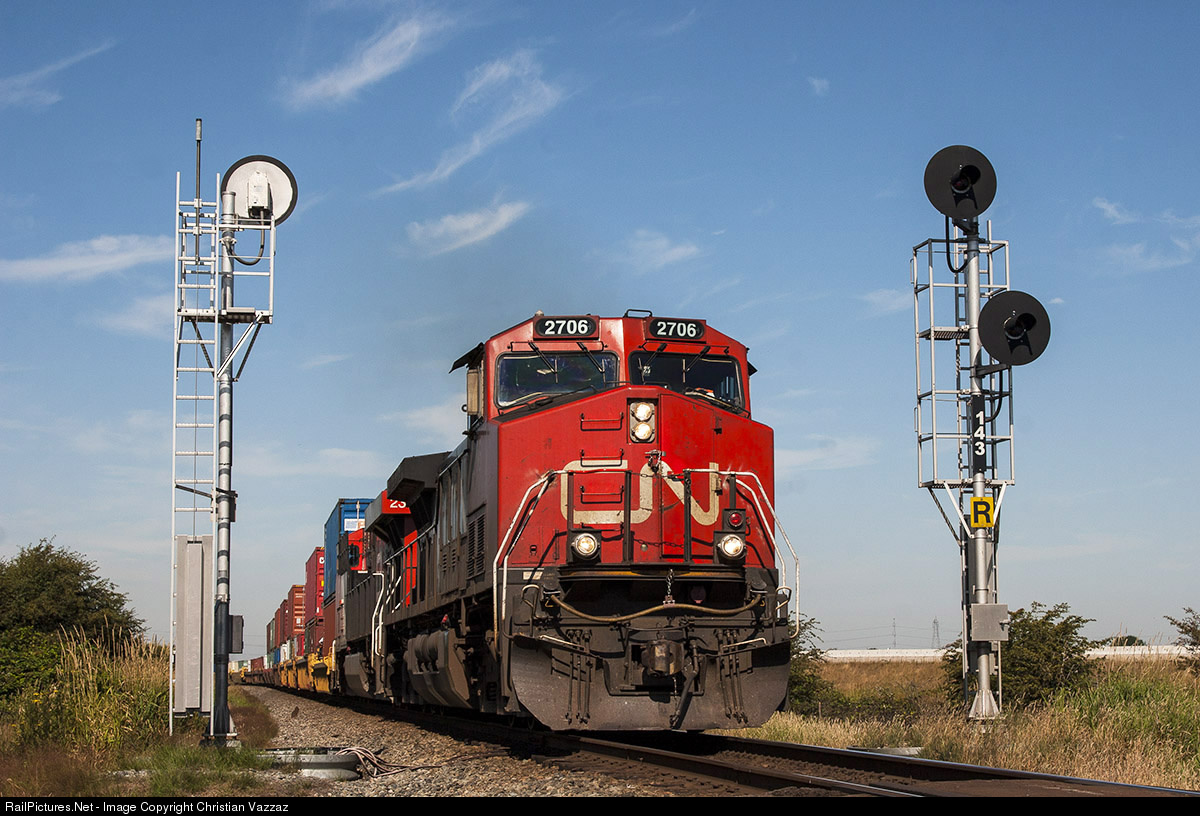
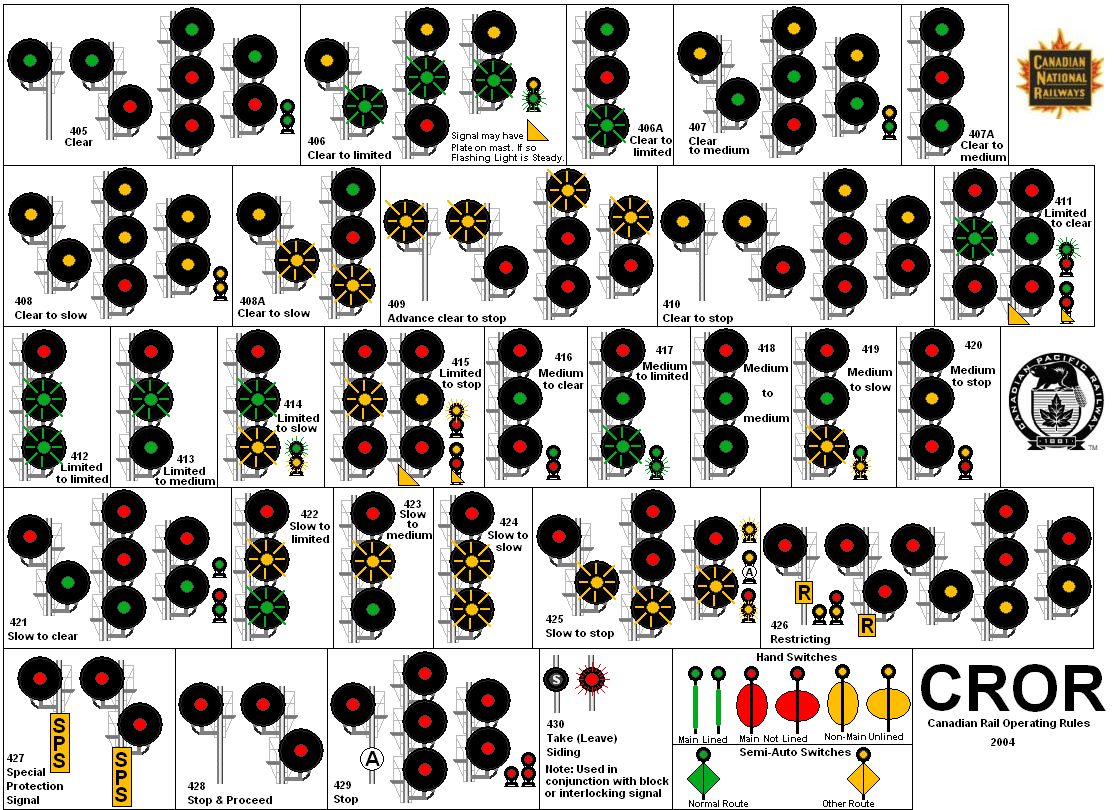
The CROR signal ruleset is perhaps the more strict when it comes to offset head placement as it is the only option to designate a signal as automatic as number plates can also appear on absolute signals (on absolute signals plates are used to denote the lever number).  On single head signals left hand placement is used to provide the distinction in addition to absolute signals always having two or more heads.


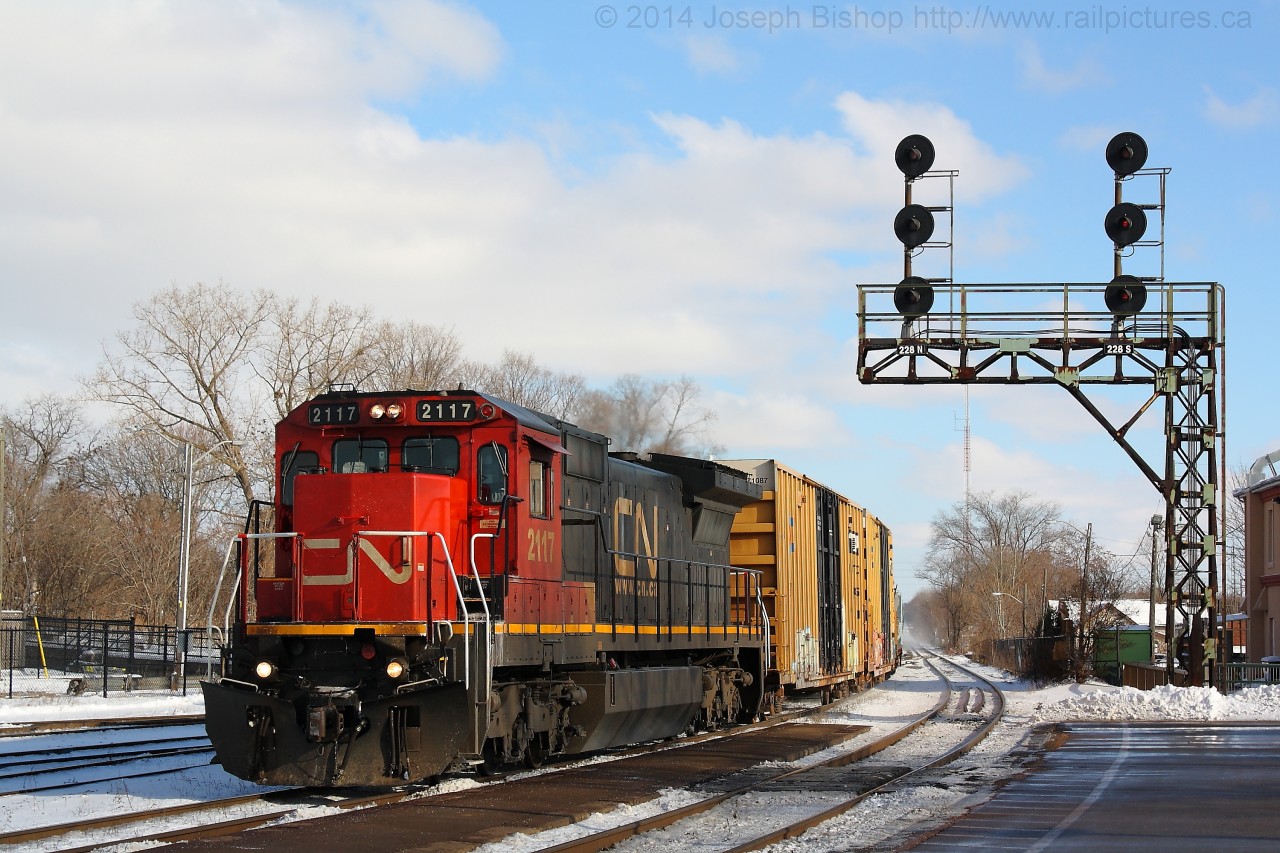
Unfortunately, as far as I can tell this policy does not apply to CN and CP's United States operations, although some vestiges exist like these somewhat modern unilens signals on the former D&H.


Flordia East Coast

Regional operators often become museums of signaling practice and in this regard the FEC has preserved the practice of offset head placement.  The FEC also uses a robust cab signaling system so this is even more interesting single they could probably eliminate waysides entirely if they wanted to.


Former Boston and Maine (Guilford Rail System / MBTA)

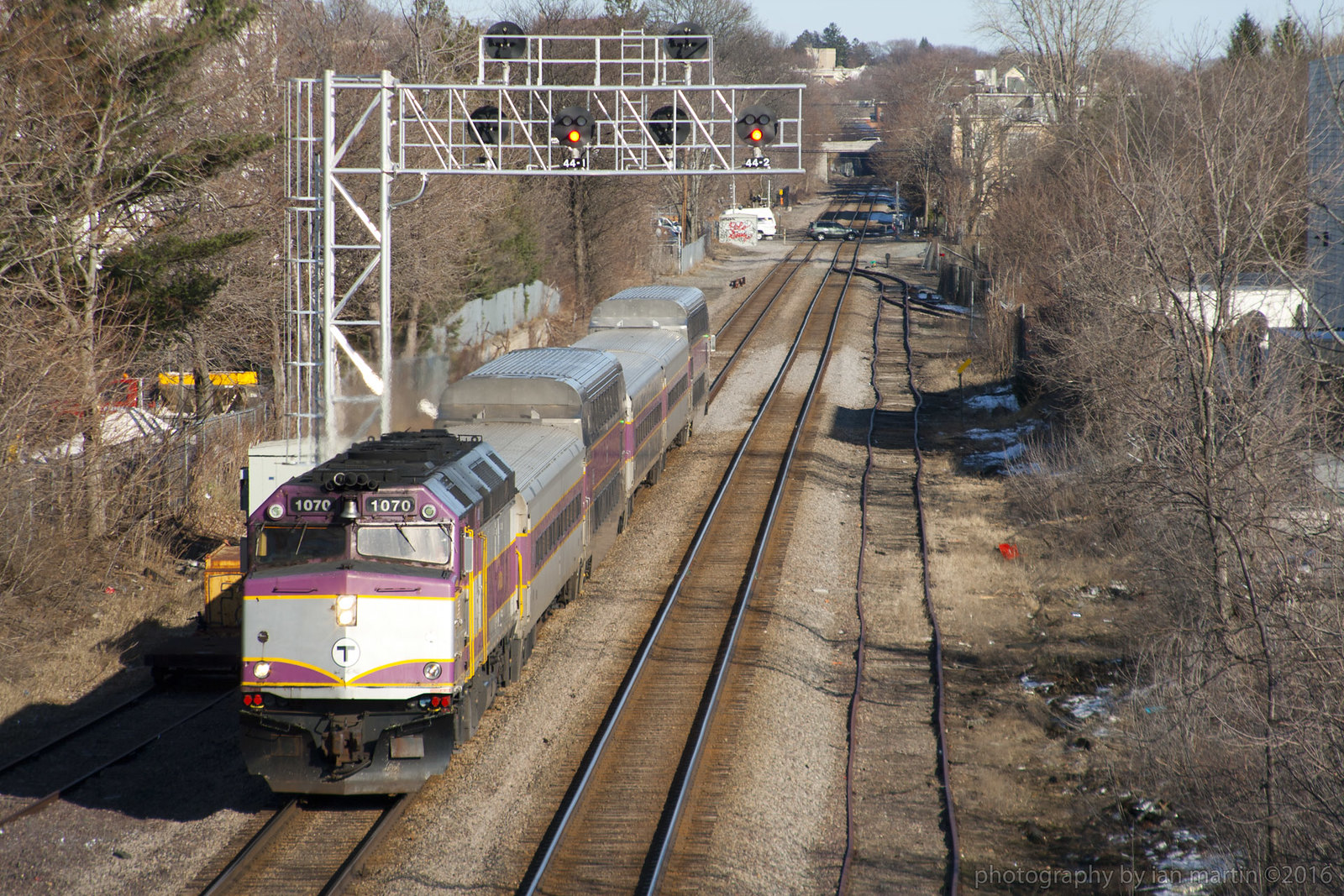
Public transport agencies are another place where traditional signaling practices can live on and combined with a regional freight operator we have the former Boston and Main system as our final holdout on the use of offset signal heads. Some of the newer heads are a bit less offset than others, but it's clearly still a thing.


Well that's all the ones I am aware of at this point.  There are probably others (I'm omitting the Reading and Northern cause that's somewhat of a special case). Please let me know if you know of any that I have missed.

Saturday, May 5, 2018

New York Media Picks Up On True Cause of Subway Meltdown

I wanted to give a shout out to someone at the New York Times for reporting on the real cost of "safety" improvements.  For those of you who aren't aware, the NYC Subway is currently experiencing a meltdown due to high ridership and delays that quickly propagate through an at-capacity system.  The NYCTA/MTA are quick to blame the high ridershi or generic "aging infrastructure", however a Times reporter correctly put the blame squarely on two decisions the MTA made under the guise of improving safety.
One of these was a decision to drastically expand the number of speed control signals throughout the system.  Once only used in the locations most at risk of a speed related derailment, they have been placed all over the system in an effort to remove operator skill from the equation of train operation.  What the MTA didn't forsee (and what anyone familiar with this topic easily could) was that the speed control signals induced operators to reducing speed far below what should have been allowed.  This is because operators are not only punished for getting tripped by the Automatic Train Stop, but also because the speed control signals are not well maintained or calibrated and will often release 5-10 mph below the speeds they should.  This results in highly conservative train operation.  The net result was that all of the slack time in the system was used up dealing with speed control signals so now even the smallest delay will persist for hours, affecting both the initially delayed train and every train behind it.

4 one shot timer signals at Canal St replacing what had once been left to the operator's skill.

We can see PTC having the same effect with SEPTA, Amtrak and Metro North all having to increase their running times to account for the slower speeds.  Speed control thresholds don't take existing safety margins into account and calculated braking curves are also highly conservative making all trains run like they have a grandmother at the controls. All of this will reduce capacity and make making up time a concept of the past.

Some insiders have stated that the true reason behind the slow down of trains using speed control signals is to gain leverage over the unionized workforce in contract negotiations.  Not only does removing skill from the position allow for the recruitment of younger or less skilled workers, it also prevents rulebook slowdowns, the Transit Worker's union only weapon since strikes are banned by state law.  The idea was to slow the system down proactively so that work actions would lose their power (think of the frog in the boiling pot of water). However now the scuttlebutt is that management simply doesn't know what it's doing and there is no real strategy behind the slowdowns aside from doing what the safety consultants recommend. 

An interesting point of comparison is The PATH railroad that runs between New York and Newark.  It uses pretty much the same equipment and signaling system, but the timers are timed properly so that the operators can run right at them at the prescribed speed and not get tripped. In fact, before 2010 the PATH equipment didn't even come with speedometers, requiring the engineers to know how fast they were going on instinct.


Anyway it will be interesting to see if the MTA is forced to back down from its position of slowing down the system in the name of "safety" or if they will stay the course and try to extract billions from the government for such Wunderwaffen as CBTC. Which, I should mention, is only expected to deliver an additional 2 tph on the 7 line, resulting in a frequency that is still below historic levels when operators were given the freedom to use their skills to maintain the schedule.. 

https://www.nytimes.com/interactive/2018/05/09/nyregion/subway-crisis-mta-decisions-signals-rules.html

Monday, April 30, 2018

Racine PLs Removed! A Chicago Icon is No More

Well the famous "Racine" position light signals inbound towards the north end of Chicago Union Station were suddenly replaced last week.  If anyone was ever wondering why there were PRR position lights in Milwaukee Road territory, since taken over by METRA, it is because the former PRR Panhandle Route to Chicago came up the west side of the city, took a right turn and entered Union Station from the north. (This was discussed in my article on Tower A-2).


This was not part of a re-signaling effort, the signals were cut into the existing interlocking logic one by one over the course of  several nights.  The replacements were METRA standard non-Darth LED traffic lights.  Fortunately the bomb-proof PRR signal gantry was re-used and will probably live on until the end of time.

Photo courtesy Robert Jordan
While located at the Racine St grade crossing, the signals are officially part of CP-MORGAN, a remote interlocking controlled from TOWER A-2. There are two facing point crossovers with movements made at Restricting speed.  Under Metra signal rules the lower LED heads will display R and L.

Photo courtesy Robert Jordan
The signals at the other end of CP-MORGAN were converted to searchlights sometime in the 1980's.  Word is that this will be replaced in the near future.


Saturday, April 28, 2018

Last C&O Main Line Signal Bridge and Covington CPLs Fall

Well a major holdout of classic signals is now gone.  Just south of the Ohio River on the route of Amtrak's Cardinal, the juncton of the former C&O and L&N main lines had featured both B&O and C&O signals until just a few weeks ago.  One of these, at NX Cabin, was the last C&O signal bridge left on the old C&O Main Line between Newport News and Cincinatti.


This island of signaling had survived because it was involved in a re-signaling programme in the 80's or early 90's and was lower down on the priority list.  The main attraction was KC junction, which feature a number of 5 orbital CPL's and some strange hybrid C&O signal bridges that were refitted with B&O CPLs during the re-signaling process.  The ones coming off the former C&O main line were notable for their comically large sun shade.
 

KC junction also featured a massive 3 story L&N interlocking tower, but it was demolished sometime within the last 10 years.  I do not know the state of the CPLs at the adjacent OB Cabin (Ohio Bridge) or A interlocking in Cincinatti, but the smart money is that they have also been removed.


Saturday, April 14, 2018

Denver Light Rail Signaling - Checking All the Boxes

From time to time I have brought up some of the quirks inherent to North American light rail signaling systems.  Because they exist in a regulatory and cost grey area (not really railroads, not really subways, able to stop on sight in traffic, etc) the signaling systems they employ tend to be very economical.  Well this past summer I traveled to Denver and rode around on its extensive light rail network.  There I noticed that the RTD light rail had methodically checked off every box on the light rail signaling checklist and I figured I should share it here.

1.) Missing Wrong Direction Signals 


See that little red circle?  Yeah, that's plated as a signal because the RTD's commitment to single direction ABS is so complete that all wrong direction movements need to get talked past the stop disc at the next interlocking.

2.) No Distinction Between Auto and Interlocking Signals.


See any difference between the ID plate on the interlocking signals in the first picture and the ABS signal in the second?  No?  Well that's par for the course on a light rail system.

3.) ATS


Light rail systems don't uniformly lack speed and signal enforcement.  They just opt for the budget versions.  RTD Light Rail has some sort of loop based ATS on its main line sections, but the operators weren't too helpful in providing the details on how it worked.  Of course where ATS proves impractical one gets a nice little sign.

4.)  Single Headed Signals.


Light rail systems hate confusing drivers with multiple signal heads, so flashing aspects warn of diverging movements.

5.) Vehicle, Signal Thyself


Dispatchers cost money, so LRVs simply set their destination and let track mounted sensors do the rest.

6.) New Lines, New Rules


How can consultants bill those hours if they just say to stick with the same old thing?  Of course the line that just opened in 2017 would have some new signal rules requiring a second head!

7.) US&S N-3's


You look hard enough around a large light rail system and you'll find a US&S style N-3 signal head 😏

Did I miss any?  Throw something in the comments and I'll see if I can find an RTD example ;-)