I am on a trip to Texas and I'll have a more detailed trip report shortly, but I wanted to first report on some additional bits of signaling news. First the giant CP-16 wye junction in Duquesne, PA that sat at the junction of the Port Perry Branch and the Mon Line and featured PRR position light signals and pneumatic point machines has been re-signaled with the typical combo. I was hoping to get out there this summer, but just like the Conemaugh Line to the north it seems that NS attacked the branch lines before going after the Main Line :-(
Next up the popular railfanning location of Palmer, MA, where the New Englande Central crosses the former CSX Boston Line has lost it's Conrail era (~1992) signals. The Boston Line re-signaling is still somewhat haphazard given that the signaling is so new and uses a Rule 562 setup with NORAC signal rules. I am not sure what the ultimate plan is so get out there and get your photos ASAP.
For example a year ago the searchlights at CP-187 showed no signals of replacement and CP-45 in Worcester has undergone some isolated signal replacements, but nothing wholesale.
A blog devoted to explaining the ins and outs of North American railroad signaling, past, present and future. This blog seeks to preserve through photo documentation the great diversity and technical ingenuity of 20th century signaling and interlocking hardware and technology. Related topics cover interlocking towers and railroad communications infrastructure.
Note, due to a web hosting failure some of the photos and links may be unavailable.
Search This Blog
Sunday, March 31, 2019
Saturday, March 23, 2019
The ABC's of GRS Model 5 Switch Machines
Today in North America railroads pretty much have two choices with it comes to power operated switch machines. They can get a Union Switch and Signal M3 derivative or a General Railway Signal Model 5 derivative. These aren't new models either as both designs have been around since the 1930's with only minor modifications. For the M3 family there are a few basic sub-types, dual control, low profile, that rare one that can run a movable point diamond, but unless you find yourself face-to-face with an M2, the US&S offerings are pretty uniform.
The GRS Model 5 on the other hand, comes in 8 distinct offerings labeled A through G. The first four, A, B, C and D, were available upon introduction of the family and they were eventually superseded by sub-models E, F, G and H, which are still available today. Today I am going to take you through the identifying characteristics of each model, but first some quick notes on the common design elements. All Model 5 switch machines consist of three sections. A motor sticking out of one end in a conformal casing, a drive and locking section that moves the points and locks them in place, and finally a point detection section that houses contacts and other control elements. Power only models have a flat top with a port for an emergency winding crank. Dual control models have a hump on the top with the manual throw lever on one side.
The Models 5A and 5B were required to be operated from a GRS pistol grip style of interlocking machine as those have motor control functions built in. Power for the switch motor would be wired through the lever itself and upon the completion of throw the 5A or 5B machines would send a reverse current back to the tower that would allow the lever to be fully thrown in a process termed "dynamic indication". During the throw the operator would actually need to monitor an amp meter in case the points became stuck and the motor started to overload.
The 5A's and 5B's are easily identified by their motor housing which features an angled access door. The only difference between and A and B is that the B's are equipped for both manual and power control.
The models 5C and 5D are intended to be operated from an all-relay or other non-pistol grip style interlocking system, although they could still be attached to the latter. Unlike the 5A and 5B, these incorporate a motor controller into unit resulting in longer overall dimensions.
The distinctive feature of the 5C is a large box on the end of the motor which houses a brake to slow the motor as it reaches the end of travel. The 5D is shown in the catalogue to have the same housing as the 5A/B, but I cannot confirm that layout from observations in the wild.
The Models 5E and 5F are the conceptual replacements for the 5A and 5B in that these also lack an internal motor controller, but there is no requirement to have a manually operated interlocking machine. As some sort of motor control is still necessary, a 5E or 5F simply requires the control elements to be external switch machine itself.
The 5E/F are distinguishable by their noticeably reduced length compared to the internal controller models and with the other models the 5E is power operation only and the 5F is dual control.

5F model machines seem to be popular in New England, especially on the former Guilford Rail System, and also at some former B&O interlockings that had manned towers up through the 80's or 90's.
The 5G is pretty much an updated 5C without the large box for the motor brake on the end.
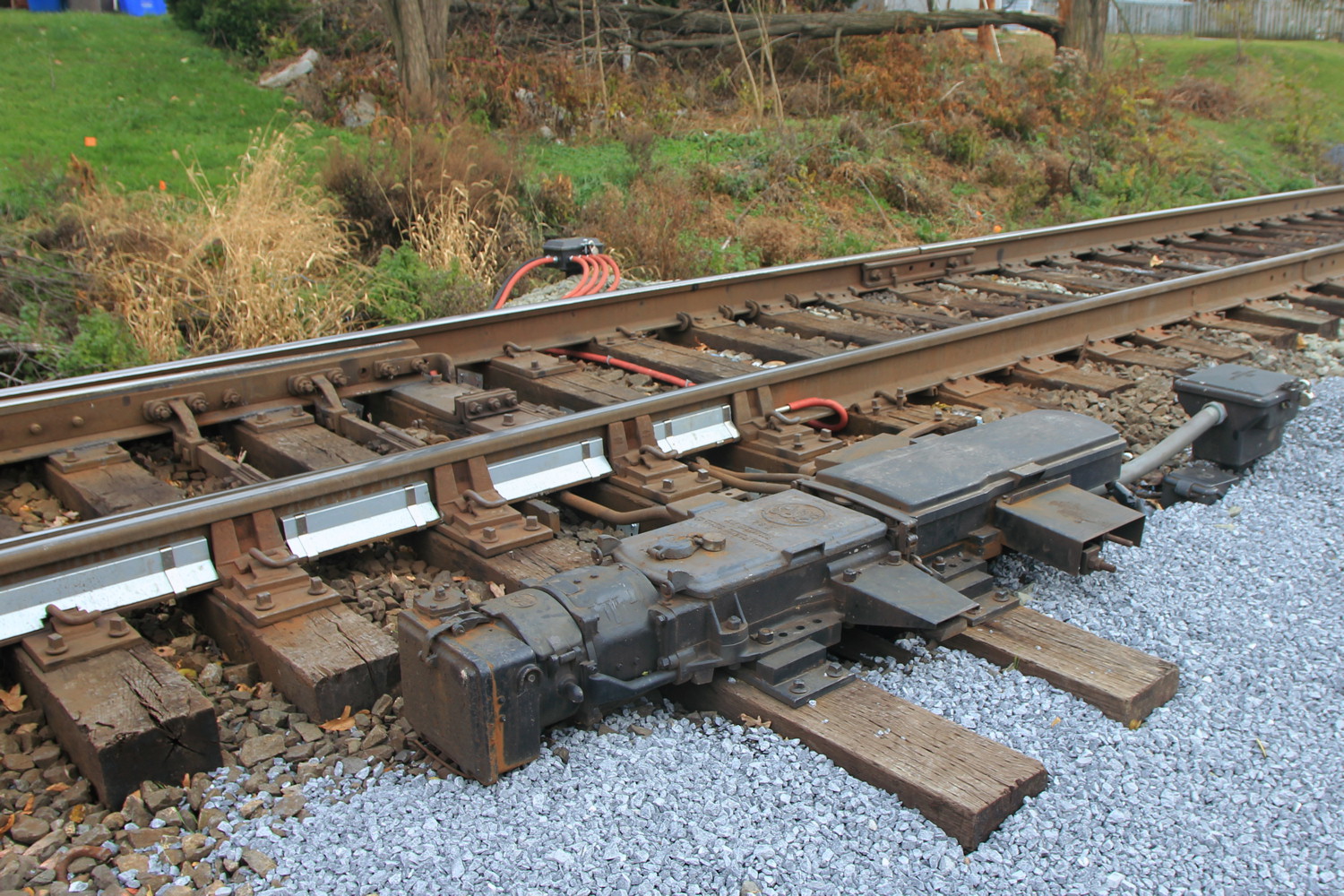
The built in motor controller can be seen where the cover bulges between the point detector and the drive mechanism.
Of course the king of the GRS model line is the 5H, which is a dual control 5G. Basically unless you want to buy a US&S style machine or you have a passenger or mass transit line that doesn't need dual control, you are going to be buying a GRS (now Alstom) Model 5H point machine. Still, while these things are about as common and appealing as Darth Vader signals, if you keep your eyes peeled, you might just spot something a bit more unique ;-)
The GRS Model 5 on the other hand, comes in 8 distinct offerings labeled A through G. The first four, A, B, C and D, were available upon introduction of the family and they were eventually superseded by sub-models E, F, G and H, which are still available today. Today I am going to take you through the identifying characteristics of each model, but first some quick notes on the common design elements. All Model 5 switch machines consist of three sections. A motor sticking out of one end in a conformal casing, a drive and locking section that moves the points and locks them in place, and finally a point detection section that houses contacts and other control elements. Power only models have a flat top with a port for an emergency winding crank. Dual control models have a hump on the top with the manual throw lever on one side.
![]() |
| Replacement GRS Model 5A point machine at JOHN ST interlocking in Toronto. |
The 5A's and 5B's are easily identified by their motor housing which features an angled access door. The only difference between and A and B is that the B's are equipped for both manual and power control.
![]() |
| Surviving GRS 5C at CP-LAUREL |
![]() |
| Surviving GRS 5C at CP-TITUS |
![]() |
| Uncommon GRS Model 5F at CPO-5 on the former D&H Colonie Sub. |
The Models 5E and 5F are the conceptual replacements for the 5A and 5B in that these also lack an internal motor controller, but there is no requirement to have a manually operated interlocking machine. As some sort of motor control is still necessary, a 5E or 5F simply requires the control elements to be external switch machine itself.
![]() |
| GRS Model 5E conveniently installed as switch 5E on a SEPTA Market Frankford Line interlocking. |

5F model machines seem to be popular in New England, especially on the former Guilford Rail System, and also at some former B&O interlockings that had manned towers up through the 80's or 90's.
![]() |
| GRS 5G at CP-TITUS |
The built in motor controller can be seen where the cover bulges between the point detector and the drive mechanism.
![]() |
| GRS 5H at CP-BURN |
Sunday, March 17, 2019
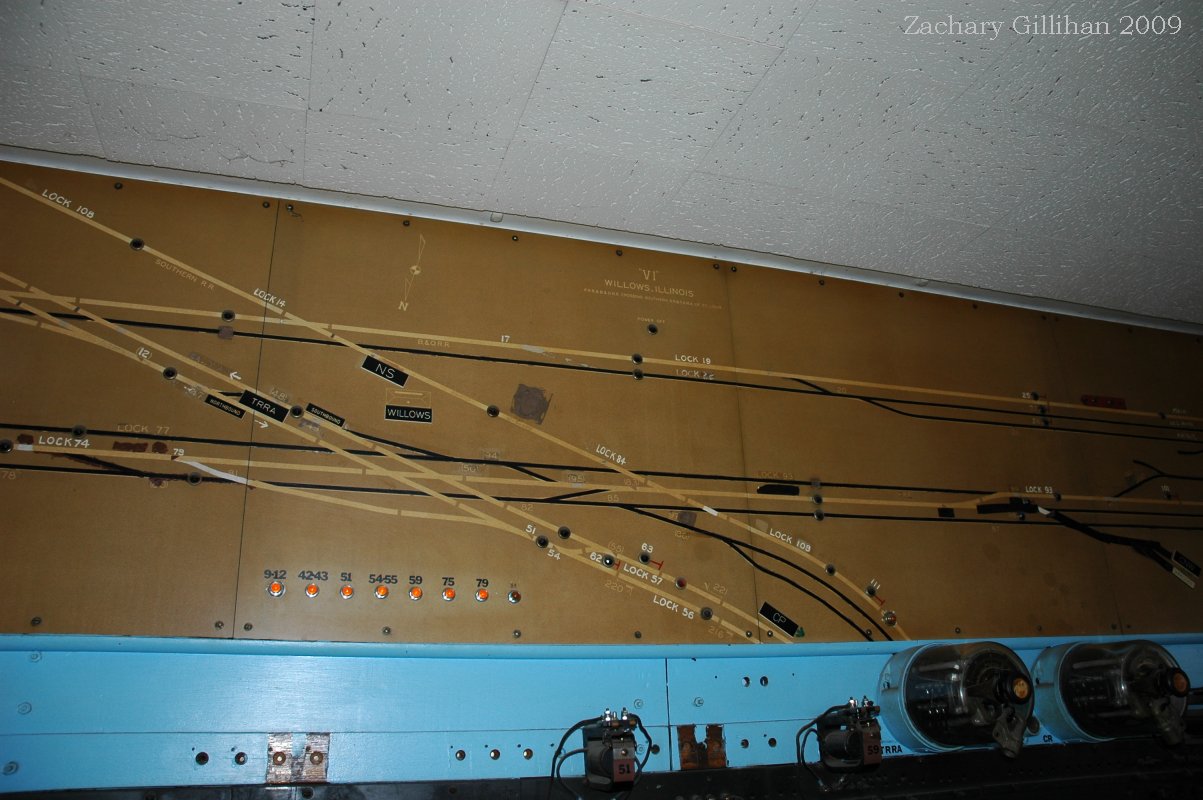
LENOX and WILLOWS Towers Close
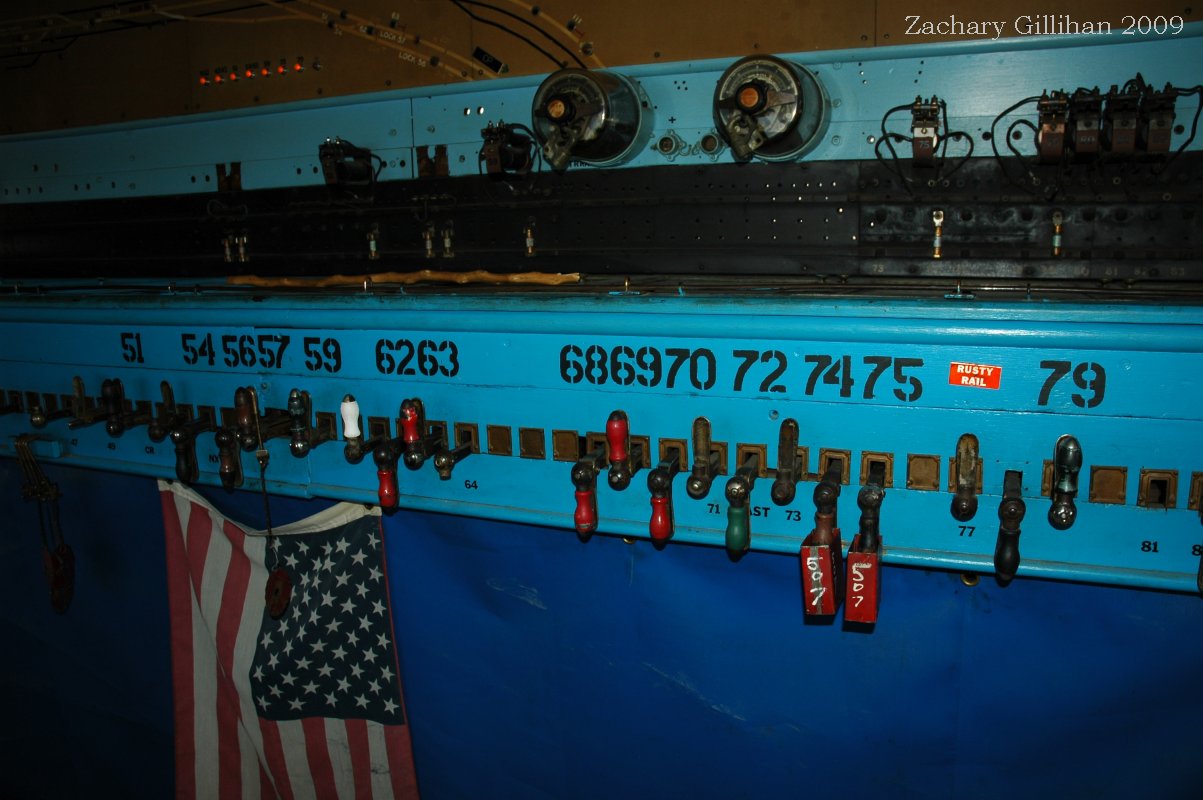
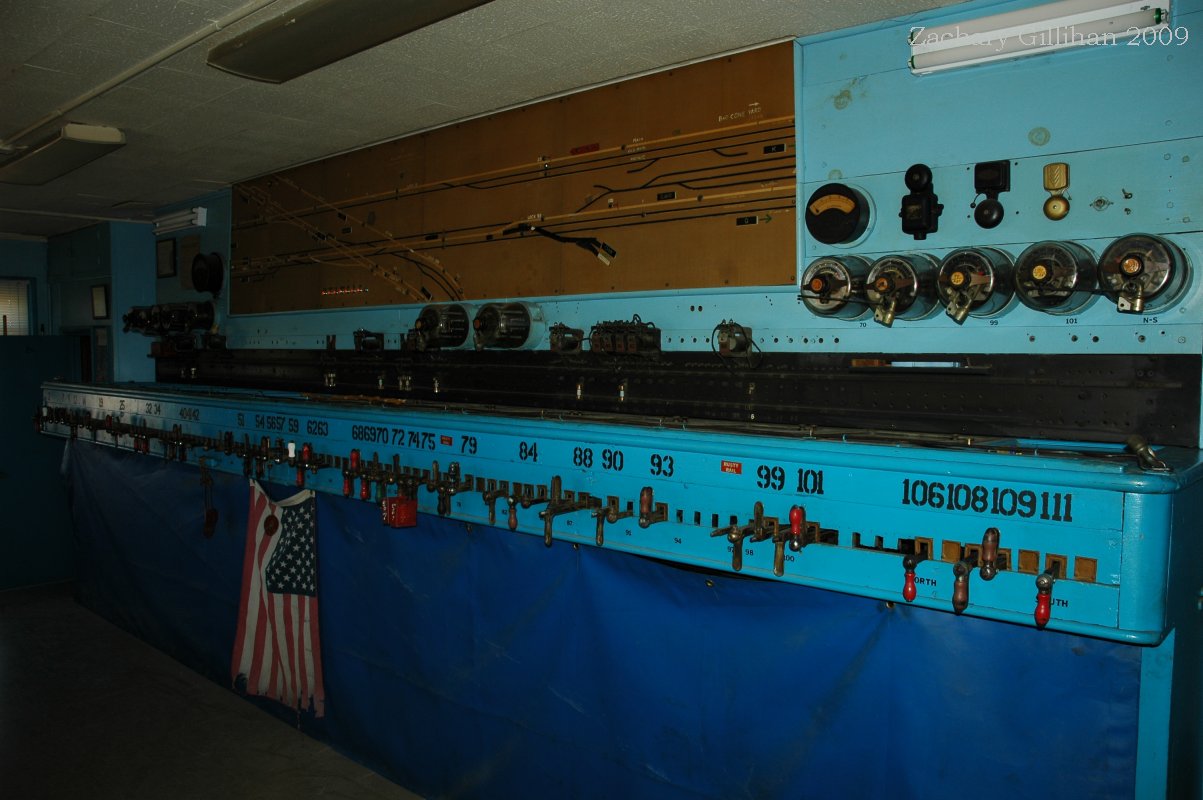
In a devastating blow to St Louis area rail history and living examples of General Railway Signal Co technology, I just learned that both LENOX and WILLOWS towers closed in the later part of 2018. LENOX was a former Big Four tower operated by Union Pacific between Granite City and Alton and WILLOWS was operated by Kansas City Southern.
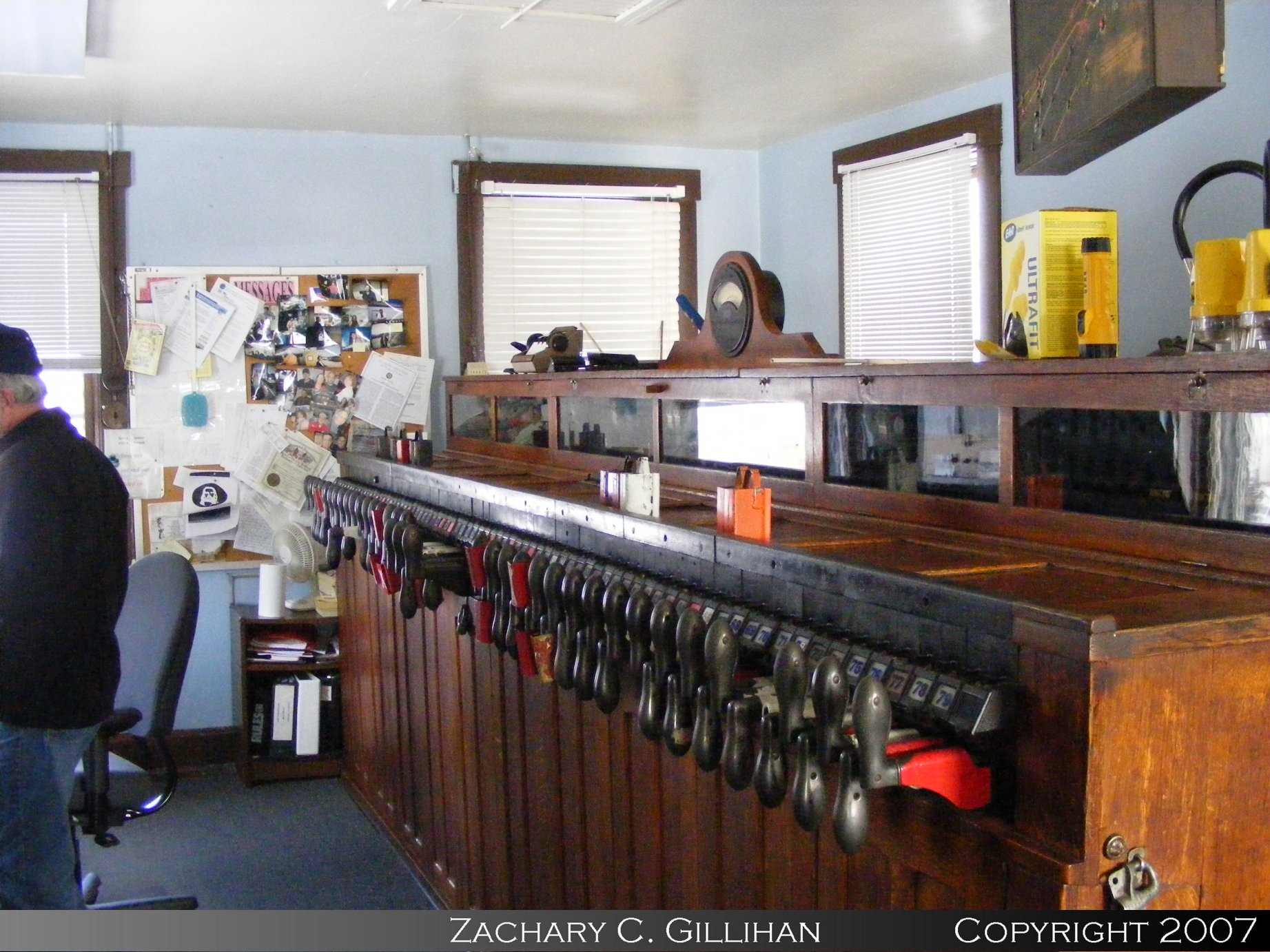
LENOX tower was built in 1924 with an 80 lever GRS Model 2 interlocking machine. It eventually passed from the former New York Central to the Chicago and Alton (owned by a succession of other railroads) to finally the Union Pacific in 1996. As late as 2016 the future of the lower looked bright as no funding was available to rebuild the plant as part of the Illinois High Speed Rail Lincoln Corridor. However it appeared that Union Pacific had grown tired of looking for a state financed rebuild and settled for a simple CTC automation.
The real bummer is that I am scheduled to travel the Texas Eagle route for the first time in early 15 years at the end of this month and was really looking forward to get some reasonable photos of LENOX's other features such as the single slip switch and old B&O style CPL signals. Latest report is that the tower is still standing and the lights are still on, but nobody is home :-(
WILLOWS tower, built in 1903 and equipped with a 112-lever, pre-GRS Taylor Signal Co Model 2 interlocking machine, was one of those I thought would be around for some time to cone due to the intersection of 4 lines with 6 diamonds and 5 competing railroads (NS, TRRA, CP, KCS and CSX). Well I guess I was wrong :-( Word is that Kansas City Southern is looking to donate the vintage interlocking machine to the science museum co-located with the Kansas City Union Station.
These latest closures leave only one or two examples of either the GRS or Taylor Model 2 interlocking machines left in the North American rail network. My cursory count gives me three in Chicago (JB, LAKE ST, 16TH ST) and two more in New Orleans (East and West BRIDGE JCT).
LENOX tower was built in 1924 with an 80 lever GRS Model 2 interlocking machine. It eventually passed from the former New York Central to the Chicago and Alton (owned by a succession of other railroads) to finally the Union Pacific in 1996. As late as 2016 the future of the lower looked bright as no funding was available to rebuild the plant as part of the Illinois High Speed Rail Lincoln Corridor. However it appeared that Union Pacific had grown tired of looking for a state financed rebuild and settled for a simple CTC automation.
The real bummer is that I am scheduled to travel the Texas Eagle route for the first time in early 15 years at the end of this month and was really looking forward to get some reasonable photos of LENOX's other features such as the single slip switch and old B&O style CPL signals. Latest report is that the tower is still standing and the lights are still on, but nobody is home :-(
These latest closures leave only one or two examples of either the GRS or Taylor Model 2 interlocking machines left in the North American rail network. My cursory count gives me three in Chicago (JB, LAKE ST, 16TH ST) and two more in New Orleans (East and West BRIDGE JCT).
Monday, March 4, 2019
NYCTA Speed Increases - Q1 2019 Update
Back in December I reported on how the NYC Subway was finally being forced to move away from their "safety at all costs" mentality because they had pretty much melted the whole system down. Well I am happy to report that the effort has continued on at pretty much the same pace into 2019 with about another 27 speed improvements taking effect since January 21th, 2019.
And these aren't all just trivial increases of 5 mph. If you look at the above chart you'll see an instance of a 25mph restriction being removed entirely (basically raising the speed to whatever the motorman can get) and if you like something a little bit more definite you can see another instance of a 25mph restriction being raised to 45mph. You can see the MTA's official list of speed improvements right here and also catch some legitimate reporting on the project at Railway Age.
Hopefully this will inspire other transit systems that have seen similar slowdowns, like PATCO and SEPTA, to disregard Cover Their Ass consultants and get back their lost capacity. You never know when you might need it.
And these aren't all just trivial increases of 5 mph. If you look at the above chart you'll see an instance of a 25mph restriction being removed entirely (basically raising the speed to whatever the motorman can get) and if you like something a little bit more definite you can see another instance of a 25mph restriction being raised to 45mph. You can see the MTA's official list of speed improvements right here and also catch some legitimate reporting on the project at Railway Age.
![]() |
| PATCO just recently had their 40mph tunnel stretches knocked back to 30mph because it made the consultants nervous despite there being not a single issue over 50 years over operation. |
Thursday, February 28, 2019
LIRRs Insane Absolute Block Signals
Back in May I wrote a post covering the LIRR's new Reduced Aspect system. Similar to Metro North's, the system uses some additional indications involving slow speeds as well as the color Lunar White to distinguish it from existing color light signals. I was somewhat puzzled why, after adopting a new color light system to replace the older position light system, the LIRR would create a brand new system from scratch as opposed to just expanding, or using its color light system. After all, NORAC has had this down for years with the "Clear to Next Interlocking" modifier or the use of a Cab Speed signal with a Restricting option for failures.
In fact, I had heard that the LIRR had been using the "Flashing Green" aspect to indicate Absolute Block Clear. It had never seen it, but it made sense. Not to mention they had Manual Block Clear as an existing option as well. A quick google search actually found a previously unknown LIRR signal rule reference.
Huh? *G*/*R*? That's a bit...odd. I guess they really want to make it different from anything that might appear in the Amtrak zone? Wait a minute...what's that in the text of Rule 298B?
Absolute Medium Clear? Absolute Slow Clear? Oh no..
Are you kidding me? This is the sort of think a child would come up with for their imagination railroad. Oh wait, it gets crazier.
Yup, that is a flashing three headed signal. I mean I guess I see the logic. The LIRR doesn't use flashing signals outside of the Amtrak zone so this associates flashing with an absolute block while not duplicating any existing signal aspects.
Ok, I guess that brakes the pattern. Wait, on the PRR Slow Approach can stand in for Slow Clear on high signals. What does the LIRR do there?
They named a signal indication "Flashing Slow Approach". I guess the other three signal rules used up all their creativity juice. The fact that I only became aware of all this now just shows the extent to which the LIRR keeps its operating practices under wraps. To be fair, this isn't as crazy as it appears. Like I said, when this was developed in the 1970's the LIRR had avoided flashing signal aspects and also wanted to avoid conflicts with Amtrak zone signals (although there was and is no wayside-free operation in the Amtrak zone). In the relay hut logic could use a single flashing circuit applied to the entire output of a signal when an Absolute Block signal was called for AND the system avoids the odd case of a "Clear to Next Interlocking" displayed along side an Approach signal, which can happen under NORAC despite being redundant.
Ultimately it doesn't matter if the system makes sense when viewed at the right angle on a sunny day. In a recent Newsday article, LIRR operating personnel were complaining that the new reduced aspect signals don't give the engineer enough warning, that train handling and/or the ability to maintain a schedule will suffer. The Pennsylvania Railroad, the Long Island Rail Road's corporate parent
until 1968, SOLVED this issue in the 1940's with the 'C' marker which simply modifies an existing signal aspect. The root of today's limited aspect problem is that in the 1970's, instead of adding one extra marker light and one extra signal rule, the LIRR decided to add 4 signal rules and 13(!) different indications to implement a cab signal system without fixed wayside signals and now trying to change it over to something like the NORAC method with color lights likely would lead to confusion. 😵
The rank and file of the LIRR have always prized a complex rulebook that is shrouded in secrecy in order to increase job security and overtime. 40 years later the management is now having to take drastic measures, beyond a simple
color light conversion, to bring order to the chaos and unfortunately I suspect that all
the old vestiges of the train order and manual block systems are likely
to be next.
In fact, I had heard that the LIRR had been using the "Flashing Green" aspect to indicate Absolute Block Clear. It had never seen it, but it made sense. Not to mention they had Manual Block Clear as an existing option as well. A quick google search actually found a previously unknown LIRR signal rule reference.
NAME: Absolute-Clear.Yeah, there you go. If you want to go to color light, just use *G*/R. A nice uniform difference from NORAC Cab Speed.
INDICATION: Proceed; Track clear to next interlocking signal. Approach next interlocking signal prepared to stop.
Huh? *G*/*R*? That's a bit...odd. I guess they really want to make it different from anything that might appear in the Amtrak zone? Wait a minute...what's that in the text of Rule 298B?
Absolute Medium Clear? Absolute Slow Clear? Oh no..
NAME: Absolute-Medium-clear.
INDICATION: Proceed; Medium Speed within interlocking limits. Track clear to next interlocking signal. Approach next interlocking signal prepared to stop.
Are you kidding me? This is the sort of think a child would come up with for their imagination railroad. Oh wait, it gets crazier.
NAME: Absolute Slow-clear.
INDICATION: Proceed; Slow speed within interlocking limits. Track clear to next interlocking signal. Approach next interlocking signal prepared to stop.
Yup, that is a flashing three headed signal. I mean I guess I see the logic. The LIRR doesn't use flashing signals outside of the Amtrak zone so this associates flashing with an absolute block while not duplicating any existing signal aspects.
NAME: Slow-approach
INDICATION: Proceed approaching next signal prepared to stop. Slow speed within interlocking limits
Ok, I guess that brakes the pattern. Wait, on the PRR Slow Approach can stand in for Slow Clear on high signals. What does the LIRR do there?
NAME: Flashing Slow-approach.
INDICATION: Train will proceed in accordance with signal indication within interlocking limits and after clearing the interlocking, proceed under absolute clear indication to the next interlocking.
They named a signal indication "Flashing Slow Approach". I guess the other three signal rules used up all their creativity juice. The fact that I only became aware of all this now just shows the extent to which the LIRR keeps its operating practices under wraps. To be fair, this isn't as crazy as it appears. Like I said, when this was developed in the 1970's the LIRR had avoided flashing signal aspects and also wanted to avoid conflicts with Amtrak zone signals (although there was and is no wayside-free operation in the Amtrak zone). In the relay hut logic could use a single flashing circuit applied to the entire output of a signal when an Absolute Block signal was called for AND the system avoids the odd case of a "Clear to Next Interlocking" displayed along side an Approach signal, which can happen under NORAC despite being redundant.
| This here is how you do absolute block. End of discussion. |
![]() |
| Metro-North started fresh in 1983 and first choose the PRR solution. |
Thursday, February 21, 2019
Pneumatic Points Plan B - Engine Taps
I love pneumatic point machines. They are simple, powerful and they make cool noises. Created in a time when electricity and electric motors were complicated and expensive, the technology has not aged well as the cost of labour has skyrocketed past the cost of technology. Case in point is the old conundrum of what what one does if the air all runs out. While electric point machines have the equivalent disadvantage of not being able to function without electricity, they have been able to make up for this limitation through the widespread adoption of the dual control point machine. Downed power lines got you down? No problem! Just throw that big old lever by hand and watch the switch points move.
You see the rotational gear train of an electric drive is able to mesh with the rotation of a hand throw lever. Pneumatic points on the other hand use a linear piston and crank system. While there are certainly ways to incorporate a hand control, it would probably require a major redesign and add a significant amount of complexity.
So what does one do if your pneumatic interlocking plant literally runs out of gas? Well a little hint can be found on old PRR interlocking sheets. At various points on the diagram there are notes indicating the presence of an "engine tap". Once common, this device seems to have been mostly eliminated at surviving pneumatic interlockings and it took me until 2018 to actually encounter one in the wild at the Brilliant Branch wye switch at CP-HOME.
An engine tap is a valve on the interlocking air line with a standard railroad air brake coupling on the other end. In case air pressure drops below minimum operating levels, perhaps due to a compressor failure or power loss, locomotives were expected to connect their own air supply to the engine tap and pump up the plant's air reservoir using the locomotive's own air system. In fact, while reading an old PRR book I remember a story about how during the Northeast blackout of 1965, the first engine movement authorized in the Philadelphia area was for a pair of diesel road freights to run lite to ZOO interlocking in order to connect to the air system and keep the interlocking plant operational.
Why were these useful devices removed? Well I have to assume that electric power and automatic air compressor became more reliable. There is also the risk of vandalism/sabotage if random people are able to simply vent an interlocking's air system to the atmosphere (recall that engine taps were usually included at manned interlockings with vigilant operators). Without the engine tap railroads reverted to a Plan C, which boiled down to having maintainers remove the cover, hand crank the points to the desired position (if necessary) and then spike and wedge the points until air power could be restored. Evidence of spike and wedge operation was in evidence at the Pensy high point CP-AR where each pneumatic point machine was provided with a brightly painted wooden wedge and matching railroad spikes.
With pneumatic point machines rapidly vanishing it won't be long until the only place this sort of thing applies is Penn Station New York and Washington Union Terminal, and those places probably already have all sorts of more conventional redundancies.
You see the rotational gear train of an electric drive is able to mesh with the rotation of a hand throw lever. Pneumatic points on the other hand use a linear piston and crank system. While there are certainly ways to incorporate a hand control, it would probably require a major redesign and add a significant amount of complexity.
So what does one do if your pneumatic interlocking plant literally runs out of gas? Well a little hint can be found on old PRR interlocking sheets. At various points on the diagram there are notes indicating the presence of an "engine tap". Once common, this device seems to have been mostly eliminated at surviving pneumatic interlockings and it took me until 2018 to actually encounter one in the wild at the Brilliant Branch wye switch at CP-HOME.
An engine tap is a valve on the interlocking air line with a standard railroad air brake coupling on the other end. In case air pressure drops below minimum operating levels, perhaps due to a compressor failure or power loss, locomotives were expected to connect their own air supply to the engine tap and pump up the plant's air reservoir using the locomotive's own air system. In fact, while reading an old PRR book I remember a story about how during the Northeast blackout of 1965, the first engine movement authorized in the Philadelphia area was for a pair of diesel road freights to run lite to ZOO interlocking in order to connect to the air system and keep the interlocking plant operational.
Why were these useful devices removed? Well I have to assume that electric power and automatic air compressor became more reliable. There is also the risk of vandalism/sabotage if random people are able to simply vent an interlocking's air system to the atmosphere (recall that engine taps were usually included at manned interlockings with vigilant operators). Without the engine tap railroads reverted to a Plan C, which boiled down to having maintainers remove the cover, hand crank the points to the desired position (if necessary) and then spike and wedge the points until air power could be restored. Evidence of spike and wedge operation was in evidence at the Pensy high point CP-AR where each pneumatic point machine was provided with a brightly painted wooden wedge and matching railroad spikes.
With pneumatic point machines rapidly vanishing it won't be long until the only place this sort of thing applies is Penn Station New York and Washington Union Terminal, and those places probably already have all sorts of more conventional redundancies.
Tuesday, February 12, 2019
Last Call At Tipton and Fostoria
Some railfan locations need no more description than a single word. For decades the 3-track PRR signal bridges at Tipton, PA and Fostoria, PA had provided such an exciting backdrop that one is pretty much guarenteed to find a railfan at one of those locations "on duty" from sun up until about midnight because hey, night photos :-) Anyway the creeping re-signaling effort is getting closer to these iconic locations, so close that the new blue SIP signs have been placed on the relay huts with a bit of the black plastic on top. Therefore it is probably your last chance to get out and get some photos at these locations before they are rendered completely worthless. Remember, there won't just be some new modern type of signal, there won't be any at all.
Subscribe to:
Posts (Atom)