Search This Blog

Sunday, February 23, 2014

Conrail's Virtual Headed Dwarfs

The concept of a signal "head" is pretty basic to the understanding of signal aspects.  Each head is capable of displaying some chunk of information and in conjunction with other heads on the same signal the entire story is told.  In the vast majority of signaling instances the signal heads are easy to identify and are distinct from one another.  From the round searchlight targets to the hooded Darth Vaders to the massive position light  assemblies, the signal head makes the "X over Y over Z" type North American signal unambiguous in its display.  The signal head concept also applies to dwarf signals and "dwarf stacks" are a well known signaling type allowing each dwarf head its own compliment of colors to display.


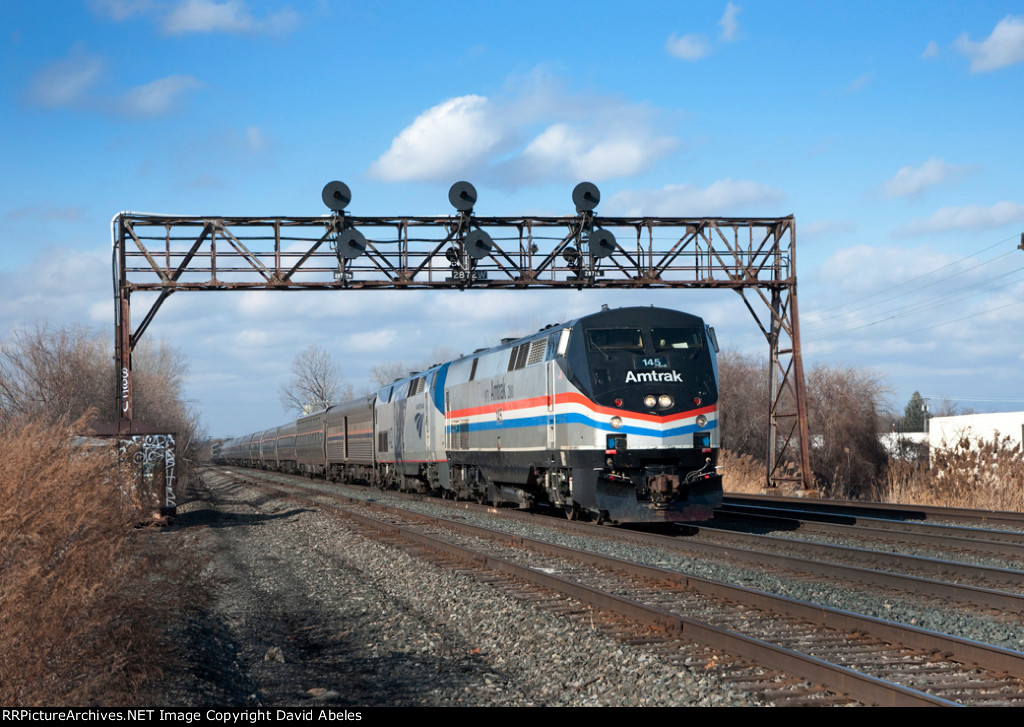
 Even where unit lamps are employed stacks of up to 6 units are not uncommon to create two 3 lamp heads  such as those seen here at Amtrak's COVE interlocking.


The thing is...what if you didn't feel like spending that much money on all those pesky signal heads?  A virtual signal head is where what would normally act as a single signal head instead serves as 2 or more using the relative placement of lights without the associated spacial placement.  This is generally seen as being a rather severe form of cost cutting and is rare even in North America where signaling hardware is already fairly austere.  One of the more prominent main line examples is on the former Milwaukee Road main line between  Milwaukee and St. Paul, now operated by CP and uses 4-lamp masts to display the full range of weak route signal indications like Y/Y, R/G and R/Y.


Or a 5-lamp mast at interlockings where both Y/Y and L aspects are required.

http://www.railpictures.net/viewphoto.php?id=496982&nseq=455

 However the cost effective signaling award might just belong to Conrail for its use of virtual headed 2, 3 and 4 lamp dwarf signals.  Now this might be more widespread and I'm probably being a bit unfair picking on Conrail, but on the other hand the NORAC signal aspect system was tweaked specifically for just this sort of low cost signaling so I suspect that Conrail was one of the more aggressive users of the practice.  How does NORAC cater to the use of Virtual Heads in dwarf signals you ask?  G/*R* for Medium Clear and Y/*R* for Medium Approach avoids having aspects like R/G or R/*Y* create conflicts with a virtual head system.  All NORAC dwarf indications can be displayed on a signal with Red on the bottom.

Y/*R* Medium Clear at CP-TRENT  Yes, its flashing.
Why would Conrail care so much when it didn't seem to bother other railroads?  First of all there was a lot of Rule 251 double track in the Conrail territory and chronically short on cash the road had to cut itself into profitability.  This meant that when making new interlockings for single track or even double track CTC a dwarf was a better deal than a mast.  While route signaled roads out west could get by with having a single lamp dwarf display full blown Clear off a signingor reverse signaled route, Conrail's speed signaling system really couldn't.  Single searchlight or position light dwarfs limited turnouts to slow speeds so virtual head dwarfs could eliminate the problem for the same price.


Conrail went crazy with the concept.  A 2-lamp dwarf displaying only Stop, Restricting or Slow Approach could now display Medium Approach.  Adding a green lamp gave them Medium Clear, Approach Medium and Approach Limited.  Limited Clear was given the coveted *G* dwarf slot so that doesn't really count as a gain, but the C&O was forced to use *G* for Medium Clear on their non-virtual US&S N-3 signals so the extra flexibility is still there.  The only two dwarf indications not covered were Y/Y Approach Slow and G/G Clear, with both requiring a 4th lamp (Clear AND Approach Slow would require 5 lamps).  Again, while one might assume the signal engineers would want to put a gap between the greens such as G-Y-G-R that would be an incorrect assumption, especially where a 3-lamp is getting an upgrade to 4-lamp, such as a Rule 251 route going 261.


For comparison New Jersey Transit, which prefers to use non-virtual head dwarfs, must use 6-lamp dwarfs to get the same aspects that Conrail could squeeze from 4.  Here is a 6-lamp dwarf stack at the new DIVIDE interlocking displaying Medium Clear.


On the NJT RiverLINE NJT was responsible for the initial signaling design which resulted things like this 7-lamp monster at the Trenton Station.


But from the new signaling designs it appears that Conrail SAA has had a hand in subsequent modifications like the conversion of a mast signal to a dwarf south of Burlington which uses 4-lamp virtual headed dwarf.


Which even maintains a virtual R/R as seen below.


There are other instances on the RiverLINE of huge 5 and 6 lamp signals being converted into more compact varieties such as a Y-R-Y-R unit designed to give Approach Slow.

Let's take a quick look at some other popular speed signaled railroad.  In this rather unique Canadian example we see a US&S N-2 dwarf attached to an H-2 searchlight to create a 3-lamp dwarf signal capable of displaying Restricting and all the other slow speed indications.

http://www.railpictures.net/viewphoto.php?id=507860&nseq=964


 Because of its Lunar White fetish, the use of 4-lamp dwarves on CSX is common, but unfortunately its use of R/Y and R/G for the "Medium" indications means it is harder to employ virtual heads.   Of course it does make it easier to tell if turnouts are signaled for slow or medium speed such as this example on the re-signaled former Conrail Selkirk branch at CP-SK.  Had CSX stuck with NORAC an upgrade would have not needed any hardware changes.

Typical slow speed CSX 4-banger dwarf. 
 Even thought CSX could get away with using single light indications for it's slow speed signals, they also have a preference for virtual heads.  Using L/R for Restricting would have the benefit of a limited cost free bulb out protection

Slow Approach without all the flashing.
 More often than not CSX is going to spend the money on a twin stack of Unilens searchlight signals like these displaying Clear the old fashioned way at Huntington Ave in Baltimore.


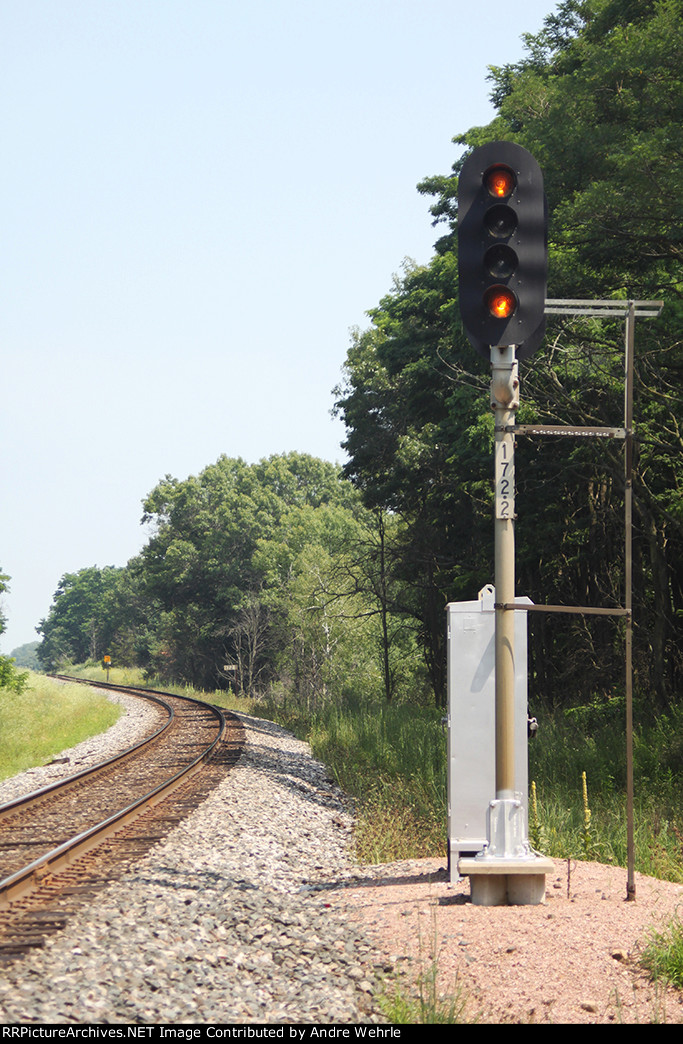
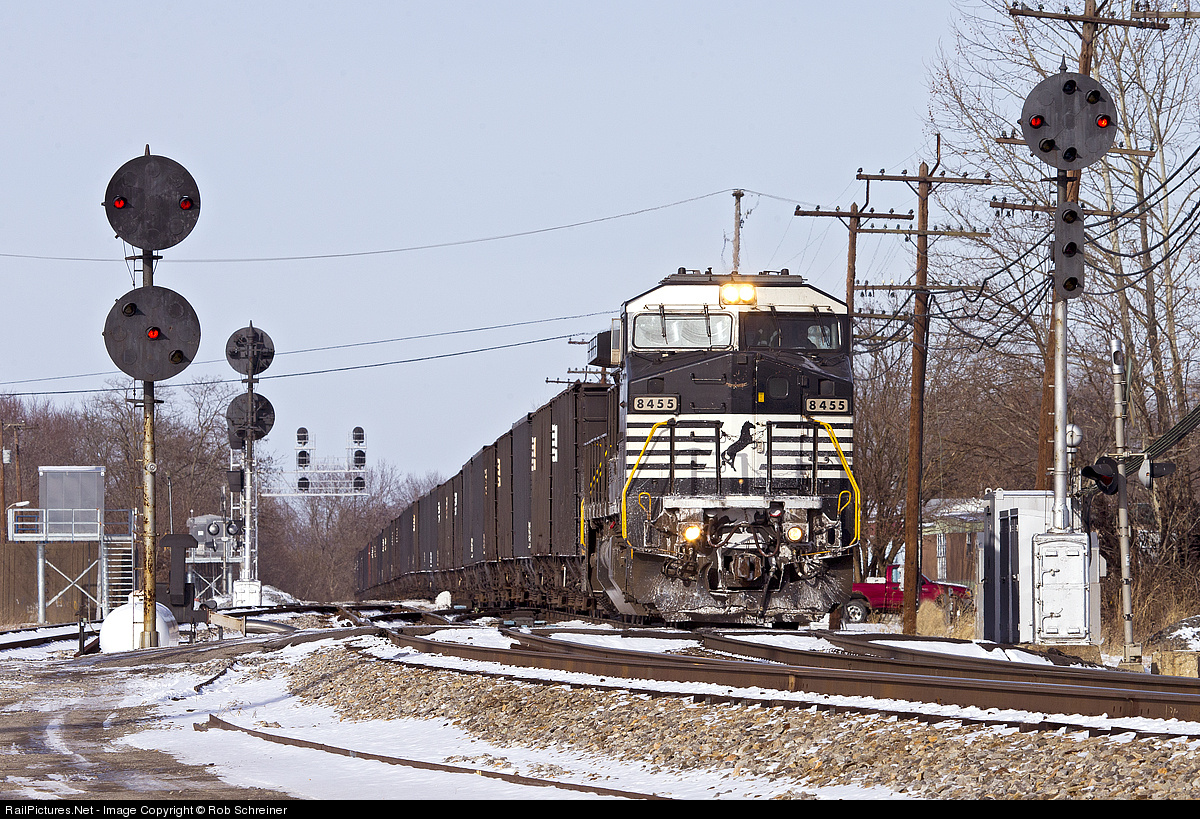
As for the former Conrail parts of NS, I am sure that the virtual head system is still in use, but I also know that NS seems to be much more committed to using signal masts, even in instances where a simple 3 indication dwarf would do such as here at CP-WORKS.


What's the takeaway?  What is implied by a signal aspect chart can always be ignored or tweaked by a clever railroad just like a clever railroad can play fast and lose with signal progression or play cab signal tricks...but more on those later.

Friday, February 14, 2014

Better Know a Signaling System - Delaware and Hudson

Here in the inaugural episode of Better Know a Signaling System I am starting with something small to just sort of see how things go.  Actually brevity that is one of the interesting features of the old D&H signal set with only 10 total signal rules in their 1948 rulebook or 9 if you go by this undated chart that appears on railroadsignals.us

http://www.railroadsignals.us/rulebooks/dh/index.htm

While 9 or 10 signal rules might sound like a lot compared to the 21 or seen in under NORAC or CSX, the D&H finds itself in good company with many other railroads not operating multi track main lines in and around busy urban terminals, especially those making use of route signaling.  The D&H is a very conventional speed signaling system designed for single main track operation with passing sidings.  If you remember back to my signaling dialects post you'll see that the D&H uses Y/Y for advance approach, R/Y/G for Medium Approach Medium, R/Y/R for Medium Approach and R/Y or R/R/Y for Restricting.  The R/Y/G Medium Approach Medium was made possible because the D&H made a point to use high signals at siding exits and R/Y/R Medium Approach was enabled by using only three headed signals at interlockings.  Here is an example of the three head policy that was still in effect up through about 2011 with brand new Unilens tri-heads installed on the former D&H Colonie Branch at CPO-5.


Unfortunately since CP went all Darth Crazy, two head signals are now being allowed to slip through as seen here at CPF-478.  Hmmm, looks like they are dumping right handed placement as well.


Contrast with the Boston and Maine's CPF-464 right across the Hudson River which has no problem making use of two headed signals and R/*Y* Medium Approach.


Another interesting practice that comes across on the 1948 signal chart is the use of offset heads for automatic signals.  A common practice back in the day, but one that is still followed in Canada to mark automatics instead of number plates.  It is not surprising that under CP ownership this practice was not challenged.  Although not a new CP install here is the MP 8.2 automatic on the Colonie Branch with the offset heads.


Staying with the 1948 chart we find a few interesting tidbits when it comes to dwarves.  Without slow speed indications the D&H could use G/R for clear and Y/R for Approach.  R/*Y* was used for Medium Approach to make room for R/Y Restricting.  The most interesting dwarf was Y/G for Medium Approach Medium, which I guess came up more than Approach Medium.  Single head dwarfs were limited to Y and R/Y Restricting and R Stop.  So kudos to the D&H for not installing Slow Speed turnouts I guess.


Aside from its dwarfs the only non-NORACy indication the D&H adopted was the Y/Y Advance Approach.  Of course with no slow speed signals it makes perfect sense.  There was also a R/Y/Y Medium Advance Approach, which was left off the Railroadsignals.us chart.  The thing is that when the Guildford Rail System (ex-B&M) purchased the D&H in the 1980's it did more than re-mile the main line from Binghamton to Maine.  In the 2007 CP Northeast US Timetable (towards the end) we can see that the signaling has gotten a lot more...conventional.  There is suddenly a R/R/G and dwarf G Slow Clear along with dwarf *Y* Slow App.  To compliment those Y/Y is now Approach Slow and *Y* picks up Advance Approach.  All the other old dwarfs are just plain gone except for Y/G, which is now Approach Medium.

So that's the story of the D&H signaling system.  It started out pretty conventional and then got even more-so after several new owners put their hand in the pie.

Monday, February 10, 2014

What's Old is Old Again

Yup, its time for another news post and this time I will be showing some examples of old things that are being discarded and old things that are being kept around.  In what is probably a first CSX is getting a pass from the news as for once i don't have any new examples of their bull headed signal desecration.  Anyway we begin with the former N&W NS Columbus District where the southern end of a Rule 251 segment at Portsmouth, Ohio is being sterilized with CTC and Darth Vaders.


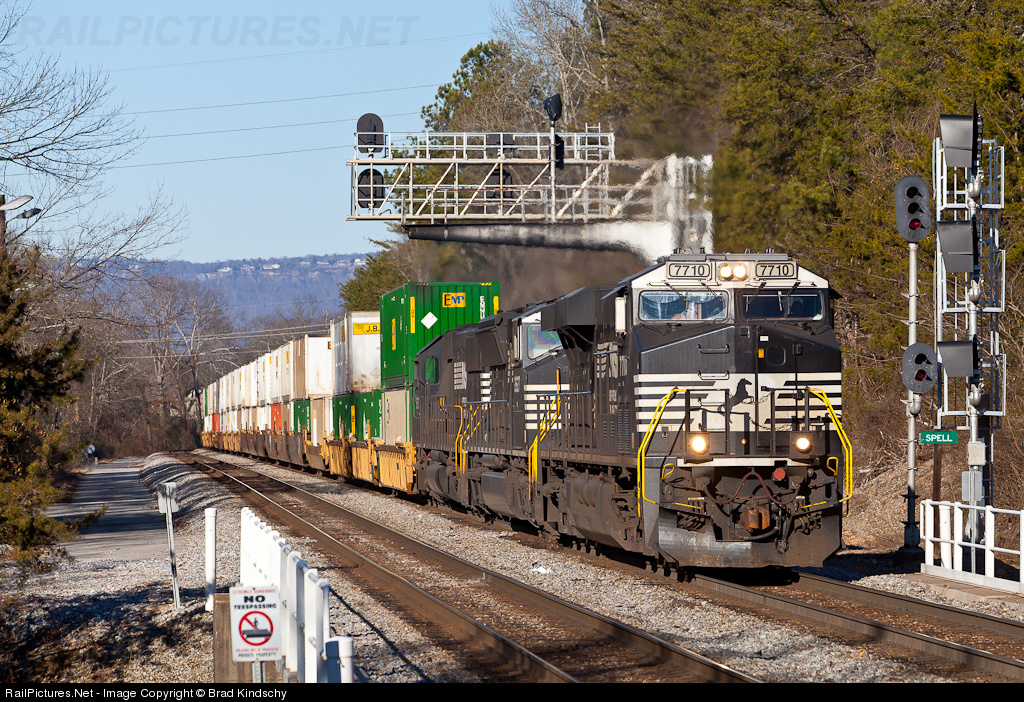
Here we see NS wasting an absolute tank of a cantilever gantry being squandered by NS at SPELL interlocking in the Chattanooga area.  Come on, that wouldn't rust away in a century of Sundays.


More updates from the slow motion re-signaling project in the Birmingham 17th St Junction area.  Looks like this one isn't just about the signals, but also involves new switches and track layouts.


Now onto the news of old signals being left in place.  A lot of people have pointed out that the famous "Vickers" Interlocking east of Toledo, OH is on track to be re-signaled.  Now that part is true with the signals on the crossing CSX line and the eastbound NS signals being replaced due to a siding capacity increasing mod, but the most important and most famous part of Vickers, the three track westbound NYC signal bridge, appears to be safe for now.  Here is the view along the CSX line.


And the classic NYC signal bridge.  The eastbound signals and replacements are visible in the background.  The replacements are going up because of new intermediate signals being installed on what used to be a one block (or no block) siding.


Here is an odd signaling arrangement at a CSX interlocking in Georgia.  Far signals are original SCL elephant ears. Close signals are a standard Darth Vadar and a non-Darth LED traffic light.  Could this be a portent of the future?


While CSX is ripping and tearing all sorts of stuff on the former Chicago Line here is a 3x3 NYC signal bridge in Syracuse with small target searchlights in one direction and large target Unilens searchlights in the other.  Not sure what caused that, but I'll take it.


Friday, January 31, 2014

PHOTOS: Port Road Trips - WAGO To SHOCKS

This installment of Port Road Trips is going to be a short one between it includes only the two intermediate signal locations between WAGO interlocking, discussed in the last installment, and SHOCKS interlocking located at the junction of the Enola Branch and Royalton Branch.  Unlike the automatic signals between WAGO and STELL which had been almost entirely replaced with NS type Darth Vader masts, the section between WAGO and SHOCKS exists as an island of PRR signaling with both locations getting a bit of a refresh when everything else was getting the color light treatment.

I will be showing off the signals with two sets of photos.  The first are part of the larger Port Road tour collected in 2004 by a friend of the blog and shows what things looked like before the catenary poles were removed.  The second group of photos were taken just recently in 2013.  Unlike the signals north of WAGO these were not recently renumbered by NS as they were never seen as part of the Northern Central milepost system and reflect the distance to Parkesburg, PA.

The first of the two locations is the Milepost 45 automatics.  Here in this 2004 view you can see the typical layout PRR PL automatics where there is a single catenary mast.  One signal is mast mounted to the cat pole in the typical electric territory style.  The other signal is mounted on a standard PRR ABS mast.  Back in 2004 this section of the line still played host to an out of service 138kV 25Hz power circuit and an active 6000V 100Hz signal power circuit.  Note the old school mast base/relay case next to the larger PRR relay box with the attached block phone. 


The 495W ABS signal typically displays Approach for the Stop signal at WAGO, but back in 2004 it seemed that a train was en route as WAGO was pulled up enabling the 495W to display Clear.  There is no lower head since WAGO does not provide for any non-Restricted speed diverging routes. 


 Somewhat backlit view of the 496E automatic displaying Clear with the catenary poles stretching off into the distance.


Getting to the MP 49 automatic did not require any sort of off road hiking as not only are they located adjacent to a small park road running along the Susquehanna River, but the Conrail C&S forces  took the time to build this handy dandy little stairway up to them.  Note the 6000V signal power supply.  Each place the signal power was tapped the PRR provided a isolation switch in case there was some sort of line fault.  Far above the PRR's 25Hz power supply is a modern day 3-phase 60Hz high voltage transmission line.


Sunday, January 26, 2014

Samsung Model 14

When dealing with 80-year old technology sometimes it might not be practical to make alterations using the same methods great grandfather would have.  After technology is allowed to match on for decades or centuries the need for changee may result in strange mashups or hybrids. Thanks to its highly regulated nature railroad signaling is certainly no stranger to this phenomina where the best solution is often to touch as little as possible least you suddenly find yourself staring at millions of dollars in costs and extended downtime.  Examples of this include use of LED lighting on mechanical semaphores or the remote servo-manipulation of mechanical levers, but today's example is a bit more audio-visual.

Recently CHURCH AVE interlocking on the New York City Subway's Prospect Park Line was re-signaled resulting in the retirement of the resident US&S Model 14 interlocking machine that was installed by the IND Subway System way back in 1933.  The NYC Subway is home to a good number of surviving US&S and GRS electri-mechanical power interlocking machines and even when they are replaced the NYCTA has stuck by the use of all relay logic because why fool with what works and you can fix in house.  In addition to the operators in the tower, platform dispatchers need to maintain a view of the line in order to manage headways and make platform announcements.  In some cases the tower and dispatch office are co-located.  Other times they are not.  In those cases the dispatcher is provided with a mimic model board giving the same view as the towermen.Well for whatever reason the dispatch office at the west end of the outbound platform was never fitted with such a model board.  In the years before CHURCH AVE tower (located at the east end of the outbound platform) was replaced, the Transit Authority came up with this novel solution to avoid having to graft a new model board on to the 1933 electronics.


Having trouble seeing what they did?  Here is a closer look.


They pointed a CCTV camera at the 1933 vintage model board and then piped that into a Samsung flat screen monitor in the dispatch office.  What can I say, it is certainly effective even if it is a bit of a kludge.  If you went back in time and asked one of the original signal engineers if they thought this casual use of television would be more or less likely than let say...flying cars, I wonder what their answer would be.  I mean even if such a thing were technically possible how could it ever cost less than just stringing several thousand feet of wire.  I mean aren't workers cheap?  Of course I also got some video of the model board in action.


If you are wondering why the model board doesn't seem to show all the trains properly it is because some of the track circuits (specifically those on the express tracks) have already been cut over.

Anyway if you would like some more examples of technological mashups here are a few more from the Syrian Civil War courtesy of Forgotten Weapons.

Monday, January 20, 2014

Call it the "Ohio CPL" and Petone Update

I believe I have mentioned this before but CSX is taking the "Baltimore" out of B&O CPL in its latest re-signaling project that will remove the last CPL signals from Baltimore City.  These are located in the Bailey's Wye area and comprise CAMDEN, HB TOWER, BAILEY and LEADENTHALL ST interlockings.  BAILEY is notable for its 3-track B&O CPL signal bridge and all of them were upgraded in the early 1990's in conjunction with the Camden Yards Sports Complex project. What a waste both in terms of hardware and cultural heritage.

Yes, that signal on the left is displaying Medium Approach Slow.


The cutover is scheduled for President's Weekend so if you haven't gotten your photos already this is your last chance.


In other news BNSF dumping all the classic Northern Pacific searchlight signaling on the Cascades route between Seattle and Portland.  This includes the popular cantilever masts in the Vancouver, WA area.  Get your photos quickly.  The Coast Starlight is probably the best option.


Finally, a friend of the blog in New Zealand went out and took some photos of the now closed Petone signalbox before it closed its doors for good.  I have thus updated my short post about Petone with her work so thanks so much Sophisa.


Sunday, January 12, 2014

North American Signaling Dialects

Signal aspect systems are a lot like languages.  Many times they basically saying the same thing, but as you move around from place to place you might find those things spoken or pronounced in slightly different ways.  In North America there is a fairly common language with single Green, Yellow and Red indicating Clear, Approach and Stop.  There are common concepts like approach the next signal at some speed, or proceed at some speed through turnouts or proceed prepared to stop within half vision.  In the coming year I will be taking a close look a all of the major signal aspect systems, noting their various strengths, weaknesses, quirks and similarities, but I wanted to start out highlighting some of the common patterns that separate one system from another.

Y/Y vs *Y* Advance Approach 

Y/Y Adopted By: Seaboard, CSX, New York Central, New Haven, Southern, N&W, Reading
*Y* Adopted By: NORAC (Conrail), CN, CP, IC, UP, UP, Caltrain

This is one of the more common distinctions in the Eastern half of the United States. Advance Approach informs the engineer to be prepared to stop at the second signal.  It is used in short block situations (ie less than 2 miles at normal speeds) where a 3-block system using only Approach would not provide sufficient stopping distance. I'm sure I could look up the real history of how this dichotomy developed between using Y/Y and Flashing Yellow for Advance Approach, but I'm just going to turn this into a story between the New York Central, which was a Y/Y road and the PRR, which ultimately became a *Y* road, or at least its successors did.

You really needed a second head for that?  This ain't semaphores.
 The story wasn't originally between Y/Y and *Y* because flashing indications did not become popular until the 1950's.  The real story is that Speed Signaled railroads always had the option to overload the Approach Medium indication for 4-block signaling.  Instead of allowing the engineer the discretion to stop by the second signal the speed signaling method would enforce a 30mph restriction at the first signal.  The Y/Y method, on the other hand, informed the engineer of congestion instead of making him guess if the problem was a diverging movement OR congestion (one reason that route signaled roads went for Y/Y if it was free).  When flashing indications became available all the roads that had never bothered to deal with 4-block signaling or had just overloaded their Approach Medium signals adopted *Y* because it was both free and allowed blocks to be shortened without having to modify the wayside signal units.

Y/Y Advance Approach is one of those old-timey things that have somehow survived into the modern era.  It was used back in the days of the semaphore by a few high density railroads that didn't want to overload Approach Medium and didn't want to constrain their engineers.  Conrail had the oppurtunity to put it to bed with the formation of  NORAC, but unfortunately CSX is a bit more hidebound and has been turning back the clock when re-signaling former Conrail territories.

Y/Y vs Y/G Approach "Diverging"

Y/G Adopted By: East of Mississippi and Canada
Y/Y Adopted By:West of Mississippi

Approach "Diverging' signals, either speed or route, are those that instruct the engineer to approach the next signal at a proscribed speed in order to safely take a diverging route. This is an interesting East vs West thing I don't really know where it came from, although I suspect lower quadrant semaphores had a role to play.   The east almost universally uses Y/G to instruct engineers that they are about to diverge, while out West Y/Y is the standard.  Canada beaks the tie with Y/G, but it still makes me wonder why the western roads wanted to be different. Like I said I suspect it has something to do with lower quadrant semaphores as Y./G is actually severely under utilized in the west, having only been recently resurrected for Approach Limited type indications.

Route signaling, but Yellow over Green still means diverge.

Y/Y vs Y/R/G Approach Slow

Y/R/G Adopted By: New York Central, Seaboard, Reading, NJT,
Y/Y Adopted By: PRR, Caltrain, Amtrak, B&M (Guilford), Conrail, Canada

Here is a Speed Signaling special that certainly doesn't apply anywhere out west as all those guys use Y/Y for Approach Diverging.  Another interesting point here is that sensible signal aspect systems like NORAC allow bot BOTH versions of Approach Slow, yet member railroads show distinct preferences for which they tend to adopt.  Approach Slow is exactly what it says on the tin.  Y/Y is an obvious choice because if Y/G is Approach Medium, downgrading the lower head to Y reduces the speed to Approach Slow.  Of course Y/R/G is also an obvious choice since Y/G/R is Approach medium and moving the Green to the lower head downgrades it to slow.  Y/R/G is the position theory version and Y/Y the color theory version.  For roads that already adopted Y/Y for Advance Approach Y/R/G is what you are left with.  Unfortunately this requires the use of so called "three headed monsters" and also precludes Approach Slow from being displayed on dwarfs.


Whole lot of slashes going on.
Looking back at NORAC which employs both methods it is interesting to see which member roads choose to use which signal.  Conrail generally went with Y/Y once it standardized system wide in the 1990's.  Amtrak has also been a big user of Y/Y.  On the other hand NJT has made frequent use of Y/R/G as has SEPTA.

R/Y/G vs R/Y/*G* Medium/Approach Medium

Y/R/G Adopted By: NORAC, D&H, NS,Caltrain, B&M
Y/R/*G* Adopted By: Seaboard, CSX, NYC, Reading,C&O

Typically trains run on the model of prepare to diverge, diverge, proceed.  However when where finf a situation where one needs to diverge, then immediately diverge again you need a special "combination" signal that provides explicit speed/route instruction for the first action and then the next.  Now, the majority of railroads have tended to eschew these sorts of signals, either providing interlocking exit signals or allowing trains to diverge over a signal where the immediate action is implied from the preceding signal or over restricts the train for the next signal (think Medium Approach instead of Medium Approach Medium).

I like to call this one "The Christmas Tree"
 Anyway, one of the strangest splits in signaling practice is the use of R/Y/G for Medium Approach Medium vs Medium Approach Slow.  With CSX and the former New York Central on board with the Medium Approach Slow it would seem that that is the standard, however it is somewhat baffling why those railroads would have so many situations where one encounters a medium speed route right before a slow speed route.  Slow speed switches are actually pretty rare so why were those roads installing them enough to make Medium Approach Slow so necessary? Well the answer is that sidings would have single dwarf signals at their exit points.  While the turnout might be Medium Speed, they would be signaled at Slow Speed, hence the need for Medium Approach Slow.  In fact the New York Central didn't even have a Medium Clear dwarf indication. As time passed and better siding exit signals were provided Medium Approach Medium was created by using the flashing indication.

When Conrail and the other Northeast roads created NORAC this anachronism was thrown out and R/Y/G was given over to the now more common Medium Approach Medium.  In fact Conrail didn't even bother to adopt any Medium Approach Slow indication.  Where sidings were equipped with slow speed exit signals they were upgraded to show Medium Clear using G/*R* from G/R Slow Clear. Again, the reversion of R/Y/G M-A-M to R/Y/*G* on former Conrail territory being changed to Seaboard signaling can be considered a step backwards on CSX's part.

R/Y/Y vs R/*Y*/(R) Diverging Approach Diverging

R/Y/Y Adopted By: UP, BNSF
R/*Y*/R Adopted By: Southern, N&W, DRG&W, BNSF

This is the same issue as above only as seen in route signaled systems.  One would assume that R/Y/Y would be the default seeing as how Y/Y is the standard Approach Diverging indication.  However R/Y/Y requires three heads and when one is upgrading a Restricted Speed siding into a signaled siding it would be nice to not have to modify the two headed searchlight with a lower head that can display Y, R or L.  The easy solution for signal engineers in the 1950's with newly reliable flashing relays was to use R/Y for Diverging Approach and R/*Y* for Diverging Approach Diverging.


 This has resulted in R/*Y* (or R/*Y*/R) becoming more popular than R/Y/Y.  In the east the N&W adopted it with the Southern adopting a variation for use with slow speed entry and exit signals.  Out west the R/Y/Y is the official indication for UP system wide, but most of the former DRG&W territory uses R/*Y* via special instruction.  BNSF actually uses both although they are given different names with R/Y/Y being Diverging Approach Diverging and R/*Y* Diverging Approach Medium.  R/*Y* is more popular due to the needs for only two signal heads

R/Y/R Medium Approach

R/Y/R Only Adopted By: NYC, Reading, D&H, N&W, Canada, B&M

One expects rare signal indications to require three heads.  Approach Slow, Medium Approach Medium and the like aren't the sorts of signals one will see displayed every day.  However quite a large number of railroads adopted systems that only allowed Medium Approach to be displayed on three headed masts.  to be fair there was a time when almost all home signals were expected to have three places, if for no other reason than to allow for the use of a subsidiary semaphore in the bottom position to display R/R/Y Restricting, but quite a few railroads allowed this practice to persist well into the modern era.

No flashing needed on three headed signals.
 The PRR had a unique situation wherein it completely lacked a Medium Approach, preferring trains to diverge over Approach, but adopted one in the 1950's when flashing relays became more available. This was carried over into Conrail and NORAC with the R/*Y* indication for use on two headed masts.  Still, NORAC is the only system to adopt R/*Y* Medium Approach with others sticking with three headed masts or R/Y if that is not otherwise occupied by Restricting.  Interestingly enough CSX uses R/Y/R in territories slated for conversion to Seaboard signaling in the future, but needing NORAC signaling in the present as it is common to both systems.

R/Y vs R/R/Y Restricting

R/Y Adopted By: NYC, NORAC, C&O, N&W, EJE, RF&P, Canada
R/R/Y Adopted By: Southern, Reading, FEC
For concept so common in North American signaling I don't know of anything else with more options to be expressed.  From number plates to marker lights to flashing read and lunar white it seems that every railroad had a different way of telling trains to move slowly and not crash into stuff.  One of the most interesting distinctions is between railroads that allow R/Y Restricting and Railroads that only allow R/R/Y Restricting.  I term these two 'lower yellow Restricting" and "bottom yellow Restricting".

R/R/Y restricting originally came about from very early interlocking technology where the Restricting indication would be controlled via its own lever or would utilize some different system to display since a Restricting was what one would pull up when the signal would not display normally.  The early R/R/Y often involved a smaller semaphore flag or ground mounted semaphore called a subsidiary or call-on signal that would only be pulled up when the train was standing at the Stop. If the  subsidiary signal was not needed at a particular location the railroad would have the choice of just providing a red marker or just assuming the crew could tell a main signal from a subsidiary signal and then allow R/Y to be used for something else.  

That oddly shaped lower head is the last vestige of the "subsidiary" signal.

If the second head wasn't present you would have one main signal with one subsidiary far down on the post.This ultimately resulted in the bottom yellow form of Restricting where two headed signals need a gap between the heads to change a Diverging Approach into Restricting.

Mind the gap.
 Railroad not using subsidiary signals or not using them exclusively would then have the choice of using R/Y for Restricting, but that would then limit Medium Approach to a signal with three heads (see above) or simply not employing that particular indication. Until NORAC and its option of R/*Y* this was the choice that railroads faced, two head Medium Approach and three head Restricting or three head Medium Approach and two head Restricting.

Y vs L or *R* Restricting

R/Y or R/R/Y Adopted By: Most Eastern Roads, C&O, Canada
L or *R* Adopted By: Most Western Roads, Seaboard, B&O, PRR

The final piece of signaling dialect I plan to tackle today is the age old argument between making Restricting the old man out with a strange color or having to flash or by making something else the odd man out by giving Restricting a yellow slot on the lowest head.  Incidentally all of the position light systems, ie the PRR, B&O and N&W, all count as being in the second camp as their forward slash would count as lunar in a color light system.  This is of course clear on B&O and Amtrak where that slash is also colorized lunar.

Thanks Seaboard Coast Line, you just had to be different.
  Not counting position lit systems non-yellow Restricting is most popular out west with Lunar being the previous standard that has now been supplanted with *R* as they avoids the need for second or third heads at absolute signals.  The only exception is CSX whose Seaboard system made exclusive use of Lunar.  The Seaboard made use of Lunar very sparingly, usually only where trains would need to enter a yard, but with CSX's expanded use we are seeing quite a few 4-lamped signal heads.  Again with all its recent re-signaling CSX seems to have passed up an opportunity to adopt *R* and eliminate yet another of its signaling kludges. 

Anyway, I could go on and on with this sort of thing, but these are the major ones and I will be referring to them as i explore the various signal indication systems used in North American in my upcoming series Better Know a Signaling System.