Search This Blog

Thursday, October 30, 2025

The Last N&W CPL Intermediates Fall

 For many years a lightly used NS line in southern Virginia has been been carrying the torch for N&W position light signaling. Well it appears that the torch has gone out not just for its own N&W colorized position lights, but, in all likelihood, the last example of N&W intermediate signals anywhere on the NS system. The NS Altavista district had become an island of classic signaling due to the typical reason of decline. Like the former Conrail Buffalo Line, C&O Virginia Central route and the B&O Mountain Sub, the Altavista district was involved with moving coal from the Appalachian interior to various ports. 

Comprised of the Virginian Railway's main line that was absorbed into the N&W in 1959, the gentler alignment makes it the preferred route for loaded eastbound coal trains in a form of directional running. Converted by the N&W to bi-directional CTC signaling with N&W style position lights between 1960 and 1963, the relatively young age of the signaling combined traffic that made the route PTC exempt put the Altavista District low down on the capital improvement totem pole.  Unfortunately with the great PTC push of the 2010's now in the rearview mirror, NS started to pick away at the Altavista district PLs in the early 2020's.
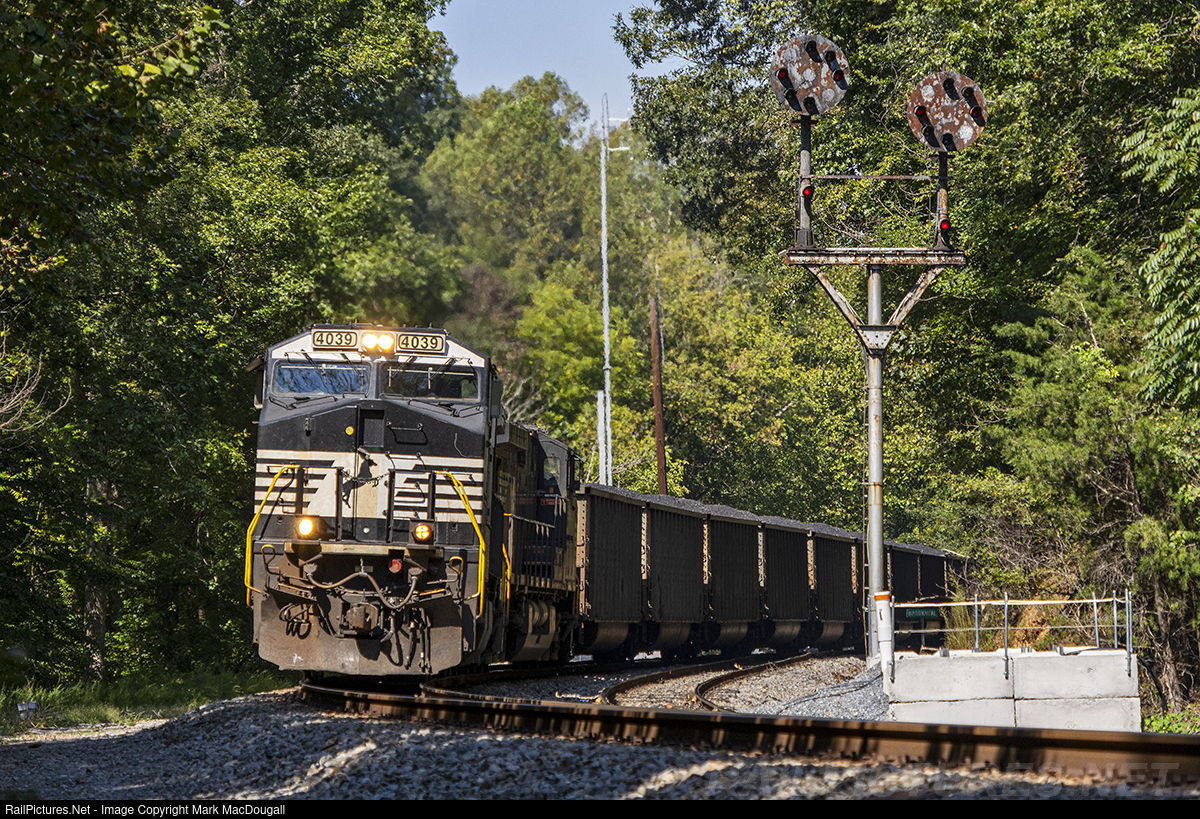
In the particular case of automatic N&W Pl locations, the N&W switched to installing new color lights before the end of the "right hand rule" in 1985. This made "split" automatics ripe for replacement during signal logic refreshes in the 90's and 2000's, even if PL signals at interlockings were left in place. If the assessment of the community is accurate, the Altavista district was the last place one could find active N&W PL signals with an automatic number plate, although like with the dwarf signals, its entirely possible that one or two might be hanging on deep in the forests of coal country. 
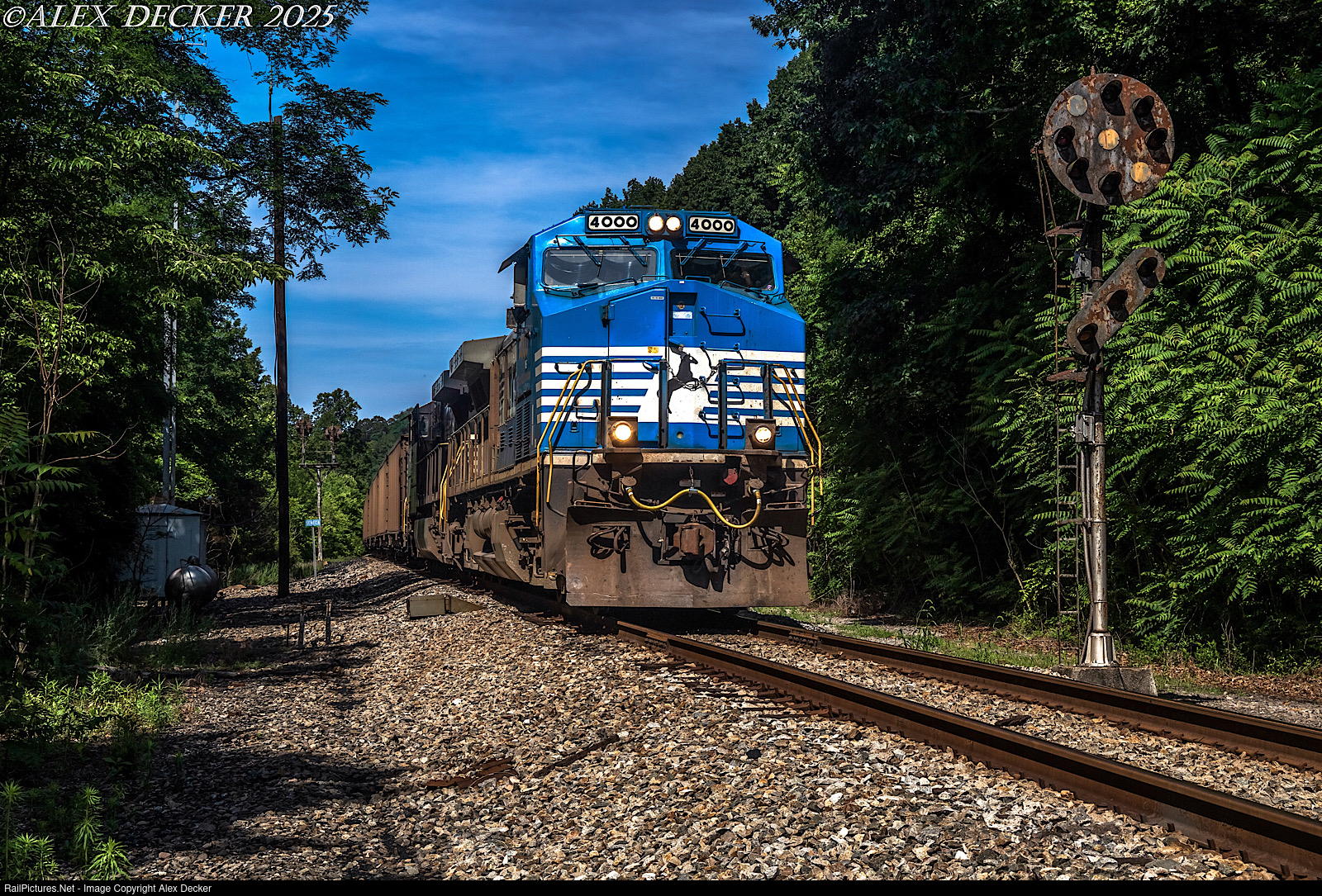
H-Line CPL's, not Altavista, but you get the point.

Note the qualification of "active" as the former N&W route eastward out of Cincinnati had its N&W CTC signaling, including automatic locations, taken out of service, but not removed. Now leased to a shortline it is the most practical place to get photos of automatic N&W PLs.


Sunday, October 19, 2025

Amtrak's Q and R Towers Close For Good

 Signaling control for the Pennsylvania Railroad's massive 1910 Penn Station project consisted of 10 block and interlocking stations. Towers N and S (later HUDSON) managed traffic at Manhattan Transfer, W (later PORTAL) handled the Hackensack River swing bridge, A, KN (B?), C and JO (D?) controlled Penn Station proper, F managed the eastern approaches and, R and Q controlled either end of Sunnyside Yard. N went first as Manhattan Transfer was consolidated into HUDSON interlocking in the early 1930's. PORTAL went next in 1988 followed by the four Penn Station towers and F being  replaced by the Penn Station Control Center in 1994. When HUDSON closed in 2003 it brought an end to the era of main line towers on the Pennsylvania Tunnel and Terminal railroad, but R and Q soldiered on at either end of Sunnyside Yard. 


In the early 2000's the 1910 R was re-signaled and the 1910 tower was demolished to make room for an Acela maintenance facility. Still, the complexity of the Sunnyside Yard operations still required the use of local operators, who were relocated into the yardmasters office in the Acela building to run the interlocking through a video interface. Around this time both Q and R were reclassified as "switching centers" to alleviate Amtrak of various regulatory requirements associated with main line interlockings. 


While the operator at R was playing video games in an office, Q kept going with its original US&S Electro-Pneumatic interlocking machine from 1910. Similar to the machine in ALTO and NORTH PHILADELPHIA, the Q machine was likely to be the last pre-Model 14 in active service in North America. Unfortunately, as early as 2015 one began to see the replacement of pneumatic A-5 point machines with electric M3's and by the early 2020's new relay cabinets were popping up all over. In 2024 I got word that the 1910 Q machine had been retired, the operator switched over to a video display like R, and just now I was sent these this Amtrak bulletin order taking both R and Q out of service and replacing them with the new Section S dispatcher in the PSCC.
 

Why this is happening now when long term closures of each of the four East River Tunnels are likely to complicate Sunnyside Yard operations is unknown. It could be that the Q re-signaling project was completed and found to be in working order and moving to PSCC was always part of the plan. Or it could be that Amtrak was having issues managing the two remote yard towers when everyone else except said towers were in the same room. If new productivity tools allow a single dispatcher to do the work of two or more operators (especially if they lack a clear view of the yard) remains to be seen.


Sunday, October 12, 2025

A Quick Look at WALBRIDGE Tower

WALBRIDGE was one of several active towers that ringed Toledo into the first decade of the 21st Century. Technically a PRR tower, WALBRIDGE stood at the triangular junction of the C&O Northern Branch, PRR Toledo Branch and the Toledo Terminal ring railroad. Like many PRR towers west of Pittsburgh, it lacked the fancy architecture and bay windows, and was instead a pretty basic brick box with a US&S Model 14 interlocking machine controlling a pneumatic interlocking plant with position lights in all the typical places. 


Like many of the survivor towers, it stayed in service due to the personal service needed to manage the trains of conflicting railroads, namely CSX and Conrail. After Conrail was broken up, it was pretty straightforward to rationalize the lines around Toledo, eliminate a lot of diamonds and close the towers. Anyway, Railroad Media Archives has posted another fantastic video from 1993 showing operations around WALBRIDGE including interior video as trains moved through the plant. You can cut to the exact time of the interior video or watch the whole thing. 

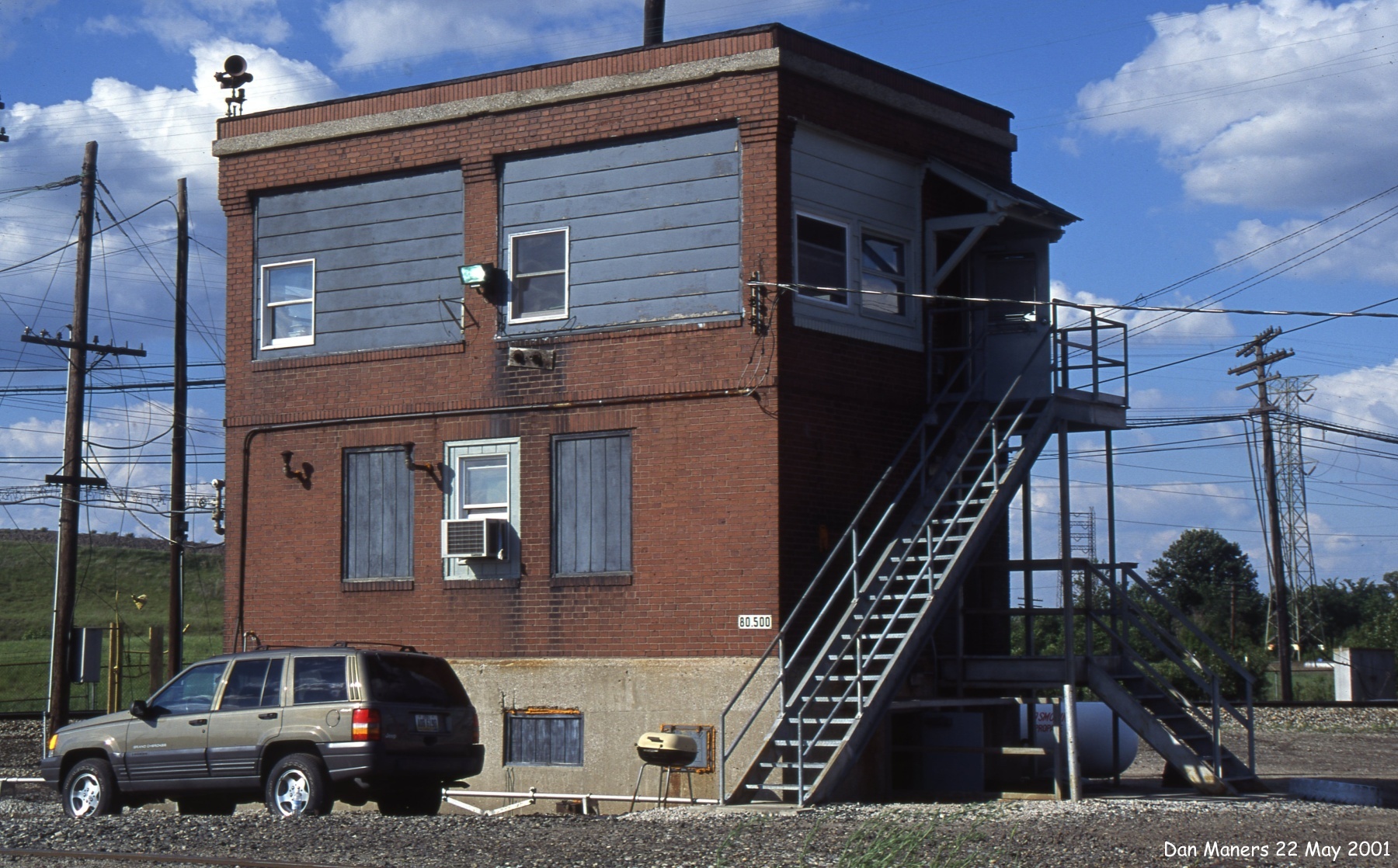
For some additional reference here is how the interlocking machine and model board looked in 2001.


Unfortunately the tower was demolished in 2015. If I ever find more than the handful of interior photos I'll write up a longer piece on it, but today just sit back and enjoy the video.  

Sunday, October 5, 2025

Dispatcher Signal Stacking

The story of railway signaling, like many others, has been one of technology increasing human productivity. Power operation allowed "levers" to be thrown faster, N-X machines allowed routes to be set with fewer button presses and remote operation combined with CTC allowed one person to control many miles of track. However remote control and ease of operation were not the only types of automation added to towers and dispatch offices. Fleeting allowed infrequently manipulated interlockings to do the same thing over and over and in cases where routing decisions needed to be made, automatic route setting combined with train labeling could keep track of train movements and automatically request routes as they approached junction points.

Recently another method of automation has crept into dispatch software, route stacking. While similar to automatic route setting, it is different in a significant way. Consider the following pair of photos showing an Amtrak Springfield shuttle train departing SPRING interlocking at Springfield Union Station.  


Within seconds of clearing the interlocking the 2N dwarf signal (upper right of the photo) changes from Stop to Restricting for an opposing movement. In the past this would signify a very attentive dispatcher, hovering over their CTC panel or video display, ready to line the new route as soon as possible. If this was an auto-routing system we would have had to wait for the opposing movement  to enter the track segment to trigger the route request.  With stacking the dispatcher simply uses their computerized dispatching interface to queue up a sequence of routes which will be executed as soon as the last established route is taken. Then they can do and pay attention to something else.  


This works well at places like Springfield where reverse movements are common. For a northbound train the dispatcher could set up a route from the 2S at SWEENEY, 12 switch reverse. Then immediately have a second route set for the 1N 13 switch reverse to the CT River Main Line.  It's not super complicated, but it is something that, due to the time penalties associated with bad routes, took a little while to catch on.