Search This Blog

Showing posts with label NnW. Show all posts

Thursday, October 30, 2025

The Last N&W CPL Intermediates Fall

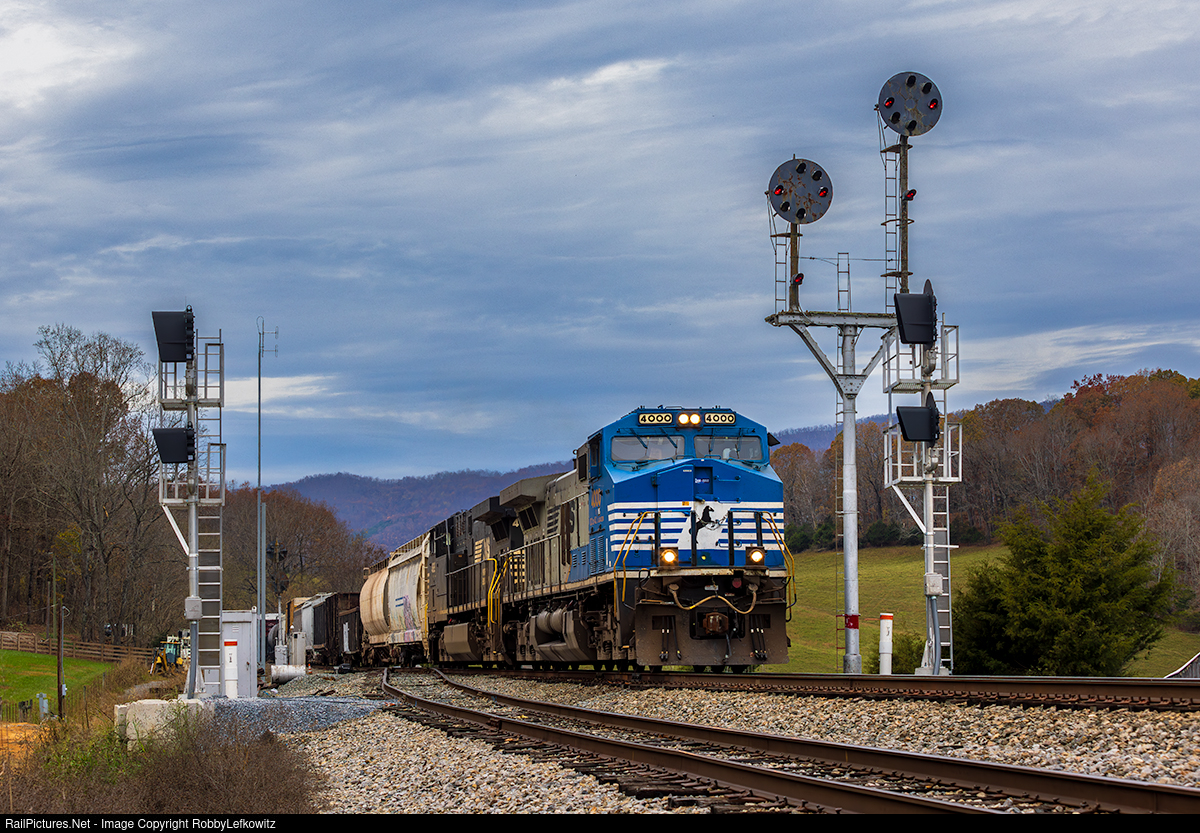
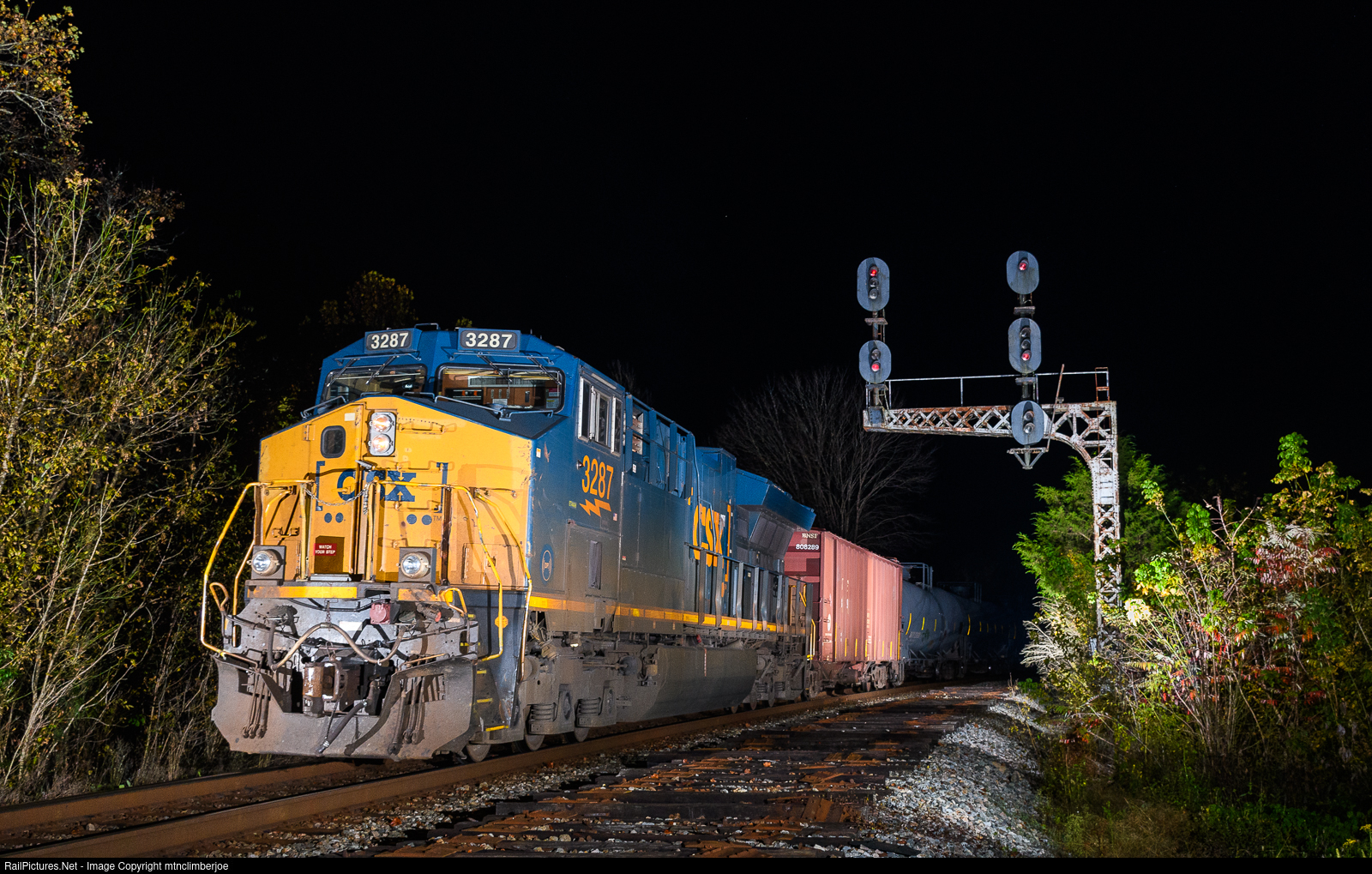
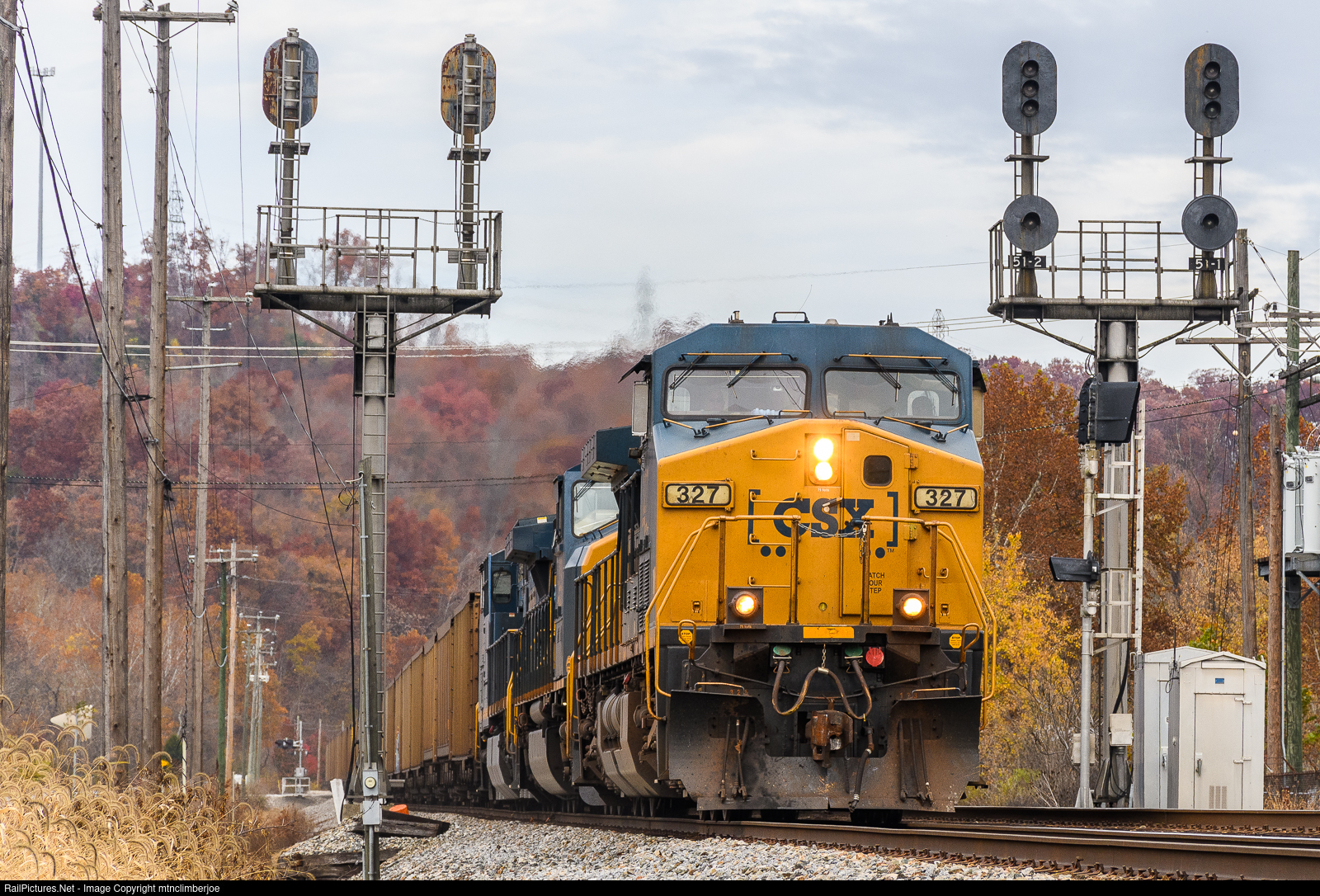
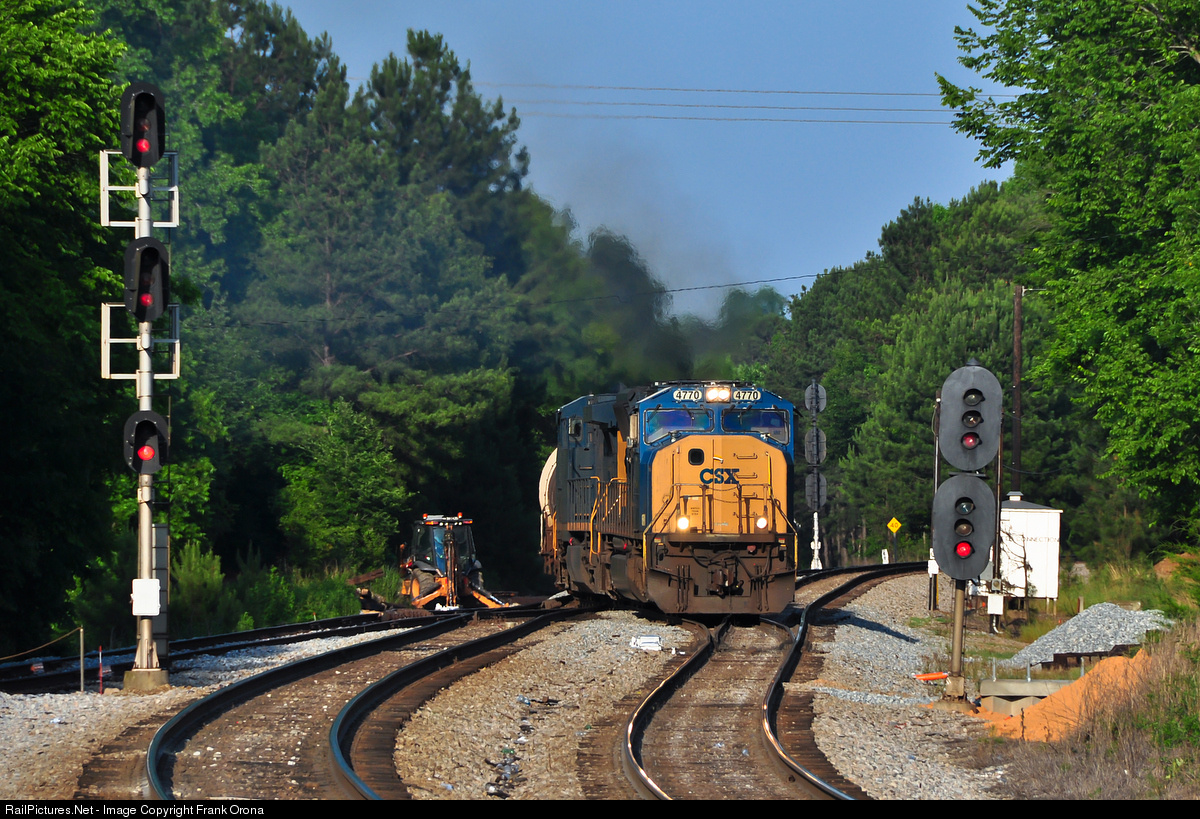
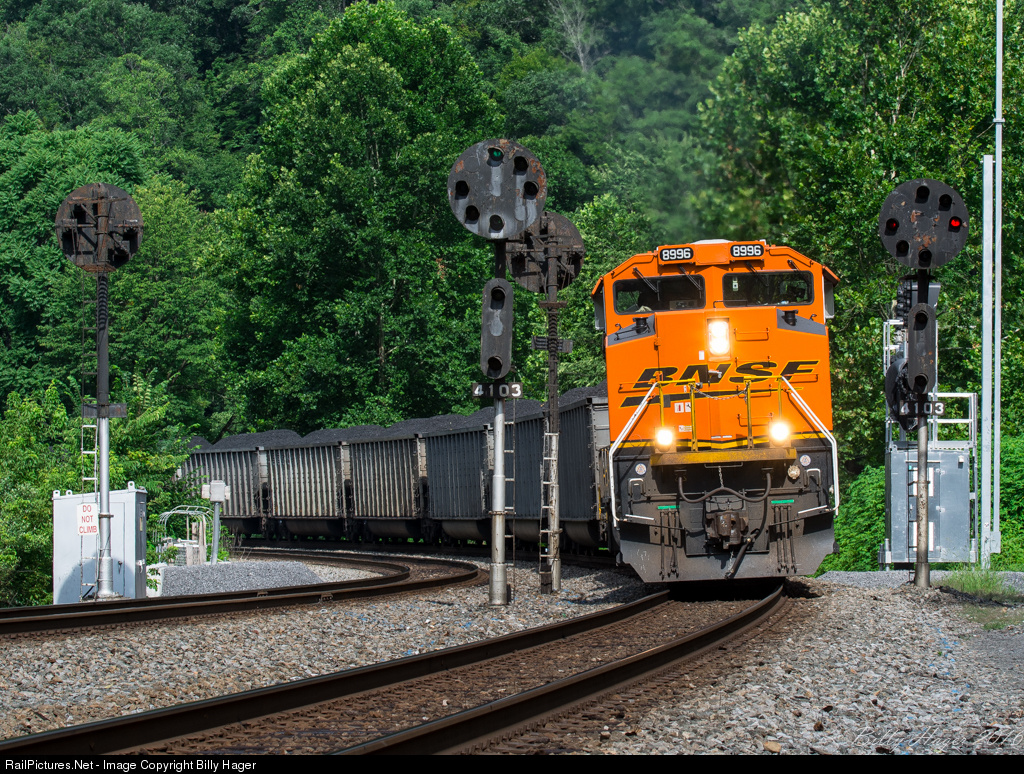
 For many years a lightly used NS line in southern Virginia has been been carrying the torch for N&W position light signaling. Well it appears that the torch has gone out not just for its own N&W colorized position lights, but, in all likelihood, the last example of N&W intermediate signals anywhere on the NS system. The NS Altavista district had become an island of classic signaling due to the typical reason of decline. Like the former Conrail Buffalo Line, C&O Virginia Central route and the B&O Mountain Sub, the Altavista district was involved with moving coal from the Appalachian interior to various ports. 

Comprised of the Virginian Railway's main line that was absorbed into the N&W in 1959, the gentler alignment makes it the preferred route for loaded eastbound coal trains in a form of directional running. Converted by the N&W to bi-directional CTC signaling with N&W style position lights between 1960 and 1963, the relatively young age of the signaling combined traffic that made the route PTC exempt put the Altavista District low down on the capital improvement totem pole.  Unfortunately with the great PTC push of the 2010's now in the rearview mirror, NS started to pick away at the Altavista district PLs in the early 2020's.
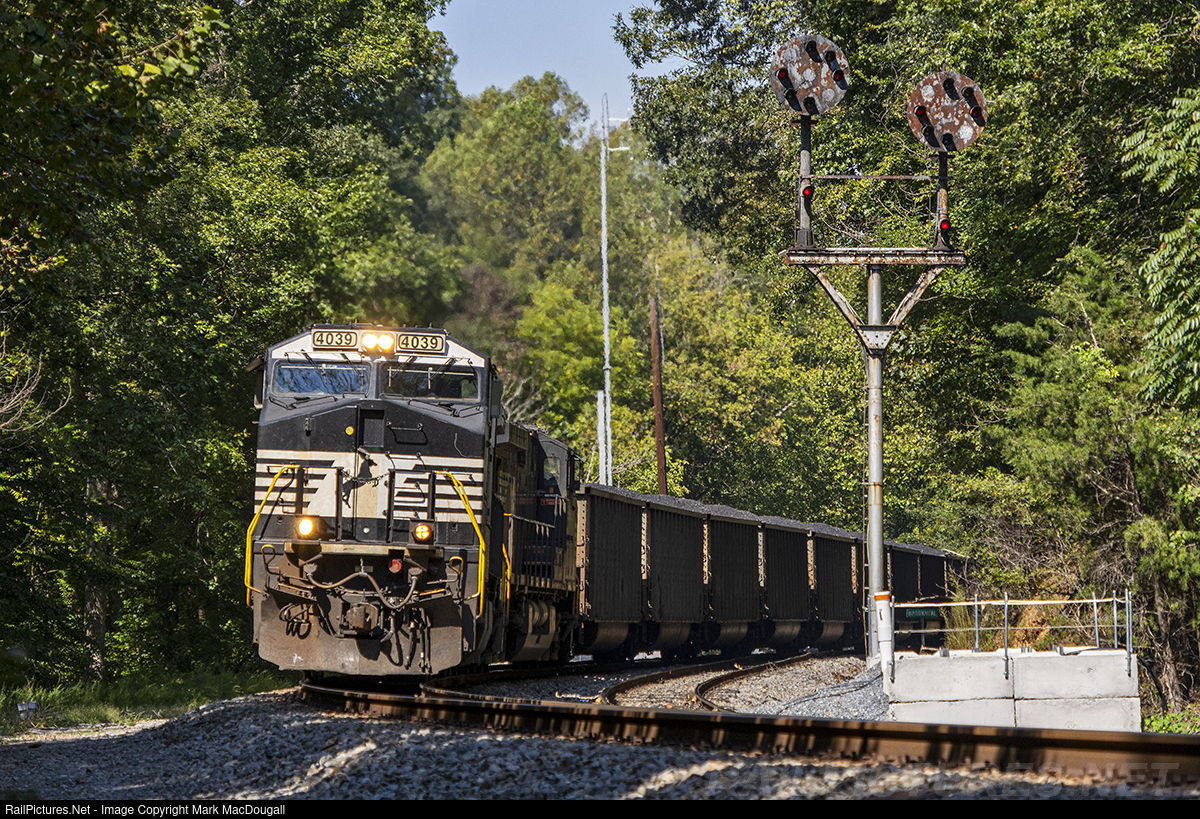
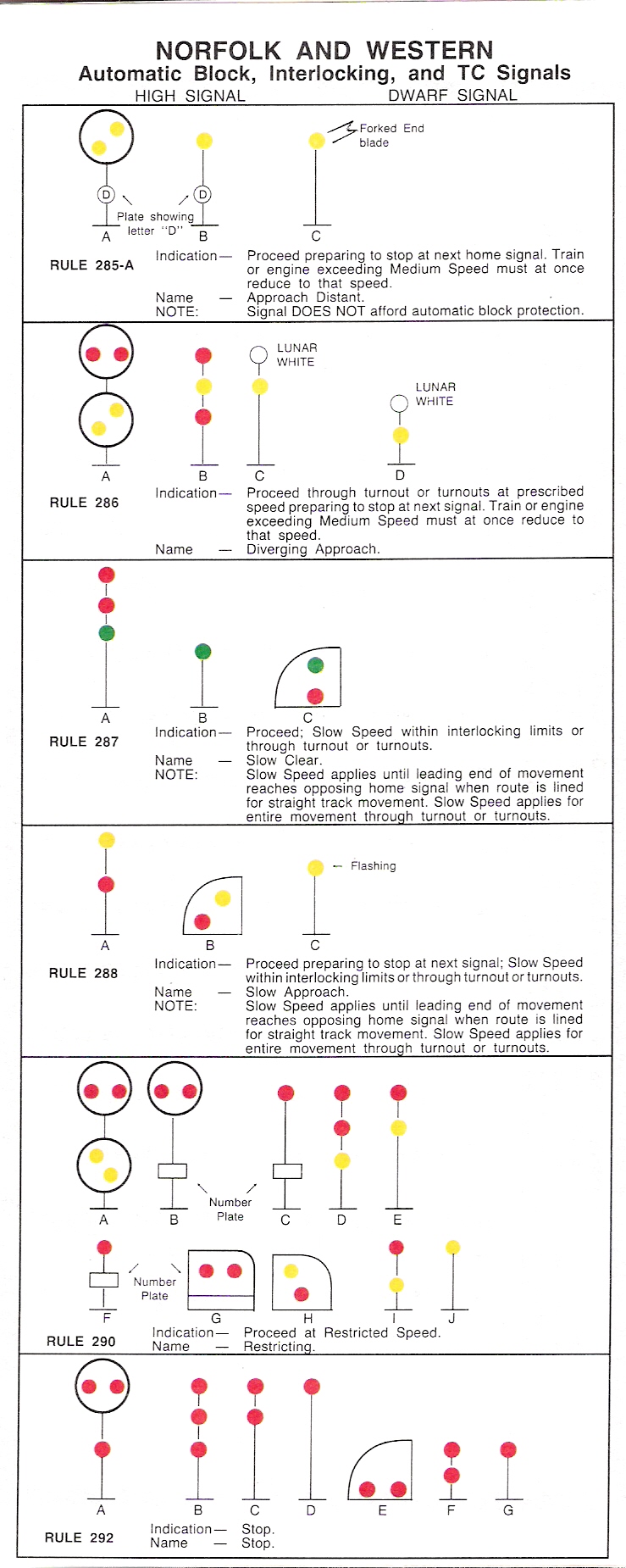
In the particular case of automatic N&W Pl locations, the N&W switched to installing new color lights before the end of the "right hand rule" in 1985. This made "split" automatics ripe for replacement during signal logic refreshes in the 90's and 2000's, even if PL signals at interlockings were left in place. If the assessment of the community is accurate, the Altavista district was the last place one could find active N&W PL signals with an automatic number plate, although like with the dwarf signals, its entirely possible that one or two might be hanging on deep in the forests of coal country. 
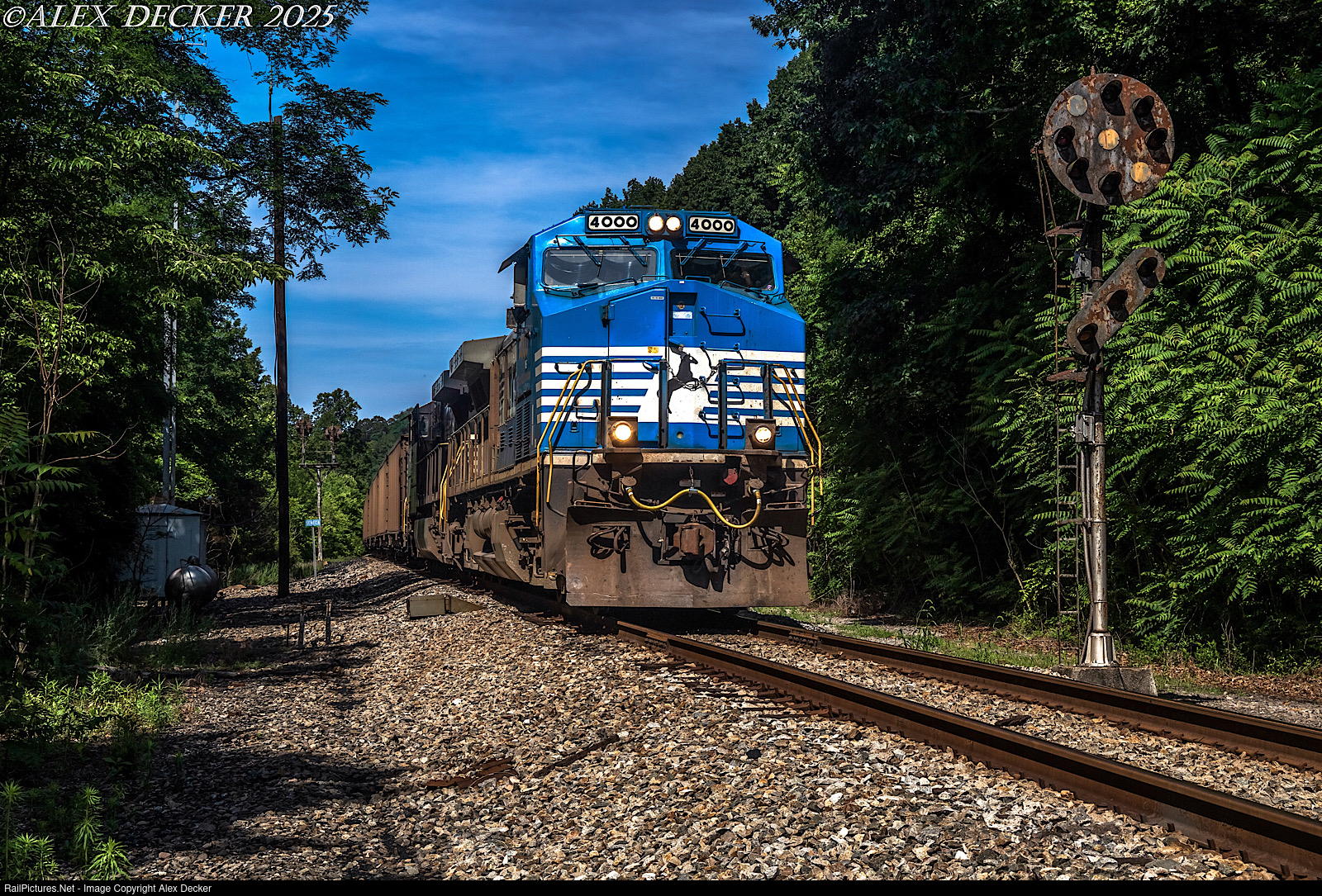
2025 Photos of Atlavista CPLs without replacements can be deceptive as the siding at SENECA was removed entirely.
 

Note the qualification of "active" as the former N&W route eastward out of Cincinnati had its N&W CTC signaling, including automatic locations, taken out of service, but not removed. Now leased to a shortline it is the most practical place to get photos of automatic N&W PLs.


Friday, November 15, 2024

Some Apalachian Signal News

We first head to the N&W H-Line where ARCADIA interlocking is the next to get hit by the replacement ax. See my previous report for a more detailed status of H-Line signals. This location seems to be pretty accessible for anyone traveling the I-81 corridor this holiday season.

Next comes news from the CSX Big Sandy Sub in eastern Kentucky, known for its surviving C&O signaling. Due to declines in coal traffic, CSX has been removing or shortening passing sidings in a bid to save costs (and sometimes having to restore the sidings in a bid to set money on fire). Anyway while this didn't matter much on the re-signaled main line, its now affecting the classic signaled Big Sandy so expect interlocking removal/automatic downgrade to follow track removal at locations like SK Cabin in Thelma Kentucky

Most worrisome is the fate of the milepost 55.7 two track intermediate signal gantry on the other side of town. Although the situation has persisted for the better part of a year, this absolutely constitutes a railfan emergency.

 Finally in another "whoops I missed it" moment, the often photographed "modern" style C&O bracket masts adjacent to US 23 south of Catlettsburg, KY were replaced sometime in 2023. Likely installed in the CSX era, the replacements are typical color light masts displaying the same C&O signal aspects.


Wish I had some better news, but the wins are few and far between.

Friday, December 22, 2023

The Last N&W CPL Dwarfs?

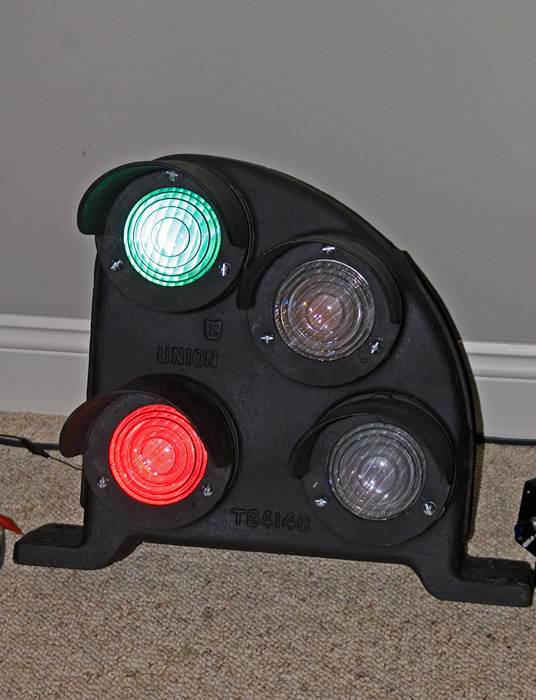
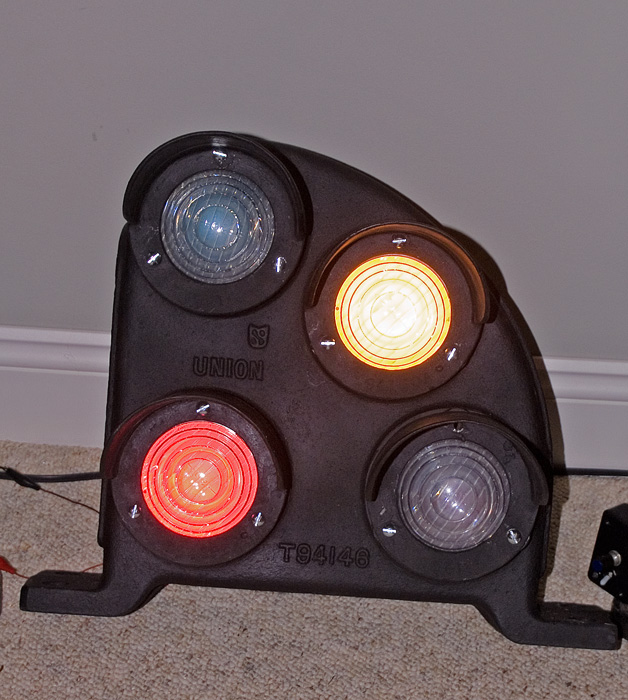
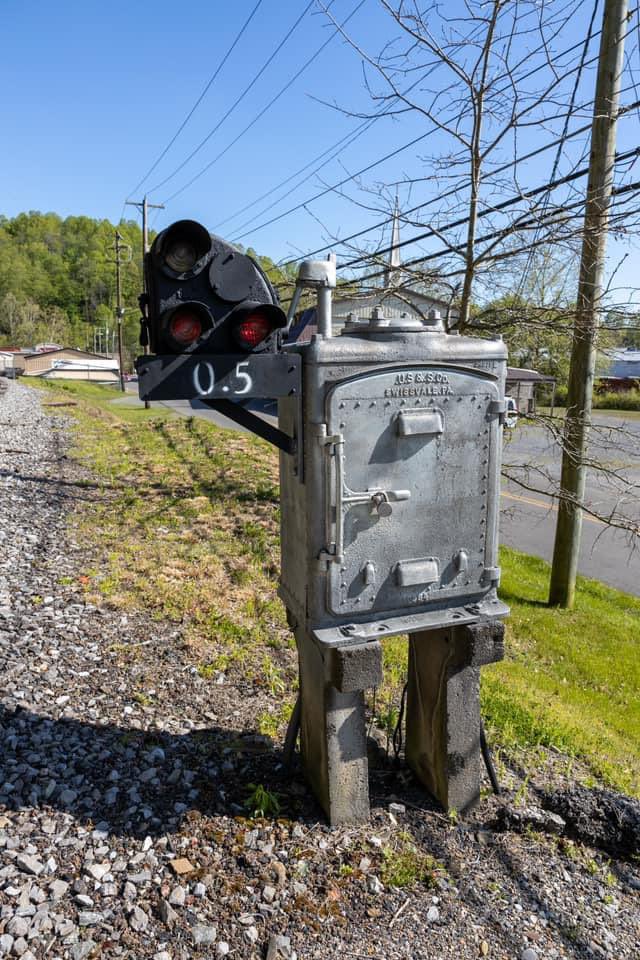
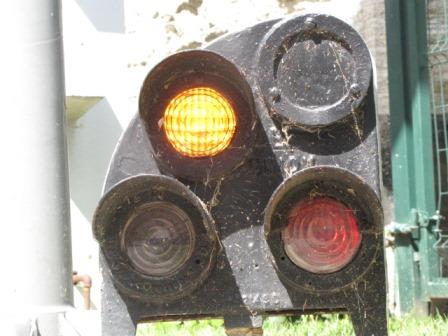
It's sometimes easy to forget that the PRR position light dwarf signal was also used by PRR ally Norfolk and Western Railway in addition to the regularly sized position lights. Their PL dwarf was even included in the 1959 N&W program to partly colorize their signals resulting in something that gave off definite UK "ground signal" vibes, albeit with the ability to display green.


Although the old N&W has been ravaged by re-signaling projects over the last decade, there are still a number of well preserved lines deep in the Appalachian coal country and Virginia. However the same cannot be said for the N&W CPL dwarf as the N&W had color light dwarf alternatives in its rulebook as early as 1961. Therefore the N&W had a multi-decade head start on replacing its PL dwarfs at the point where NS started to get involved. As of the time of this post, it has been reported that there are only 4 N&W PL dwarf signals remaining in active service at three locations. The first location is Iaeger, WV, the second Coeburn, VA and the third, with two CPL dwarfs, is Cloverdale, VA.


The Iaeger example is immediately adjacent to state route 80 just east of the Tug Fork bridge at IAEGER interlocking, just past the west end of Auville yard on the Pocahontas Division Dry Fork Branch near the village of Hull where the three track N&W position lit full crossover used to be.

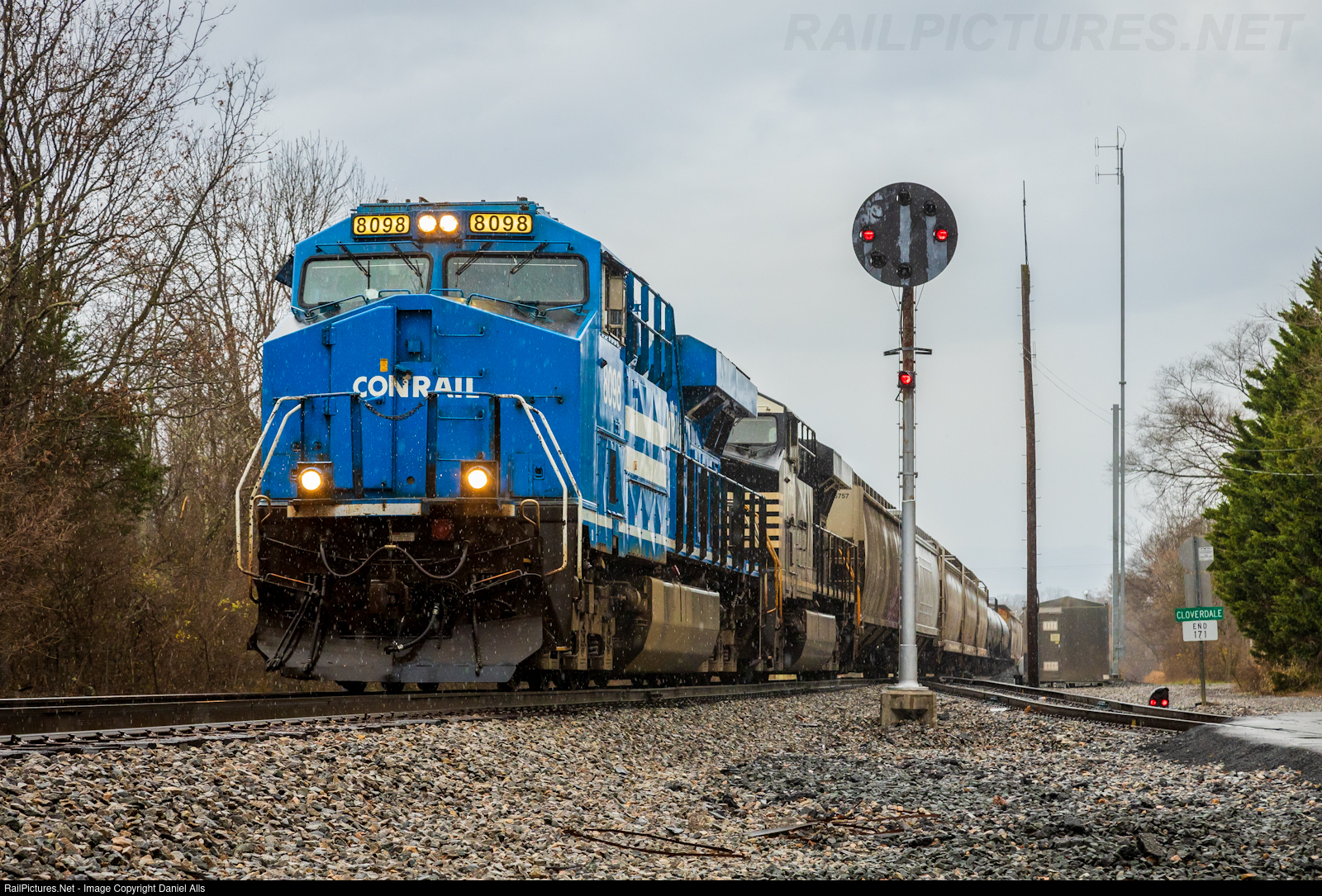
The Cloverdale pair are located at the east end of the Cloverdale Branch on the Roanoke District's CLOVERDALE interlocking about 8 miles north of the Roanoke Terminal in Roanoke, VA. The first governs the end of a long industrial track that serves a concrete plant and the second serves as the exit signal for the Cloverdale siding. 

The final location is actually an automatic distant signal on the otherwise unsignaled Toms Creek Branch for COEBURN interlocking on the Pocahontas Division Clint Valley District. It is located just off Tate Ave, a few blocks from the VA state route 158 and the central business district. All three locations are in the vicinity of recent re-signaling efforts and can be considered highly endangered as a couple of other known examples, including another isolated automatic distant in North Carolina, were recently lost.

Of course rare signal types have always popped up before and I'm just reporting on the results of a forum discussion so if you are aware of an N&W CPL dwarf that has been missed please let me know in the comments! The first draft of this post actually missed the Coeburn dwarf so thank you Oakley for pointing it out.


Sunday, August 6, 2023

The Final Months at AC Tower

Looks like the Railroad Media Archive has done it again with a video covering the last few months of operation at the former Erie AC tower in Marion, Ohio from November 1994 to just before its closing on January 18, 1995. AC tower was located at the crossing of the compass east-west Erie and Big Four (NYC) with the compass north-south N&W and C&O.The Erie and Big Four alignments would be merged into Conrail and eventually became the Indianapolis Line on a largely Big Four routing with the Erie RR main being largely abandoned. By the mid-90's it was finally time to retire the old Taylor Model 2 machine.

In the video the things of note are the various communications duties of a tower operator and the lever manipulation sequences, specifically the use of crossing lock levers to set the direction of travel through a diamond. 

AC Tower model board and manipulation charts as preserved.

Although the tower was closed in 1995, it was moved to the nearby station grounds and preserved as a semi-restored museum. Hopefully they will get the expertise to restore it in a similar fashion to HARRIS. Because of the "lateness" of the conversion, the N&W and C&O signals were retained on the two non-Conrail routes until about 2012.

Saturday, July 8, 2023

Signal Replacements at DOSWELL and DOGWOOD

The famous DOSWELL bracket mast is probably on the top-10 list of vintage signal survivors and 20 years after the re-signaling project that probably should have doomed it, it appears that time has run out. Located at the RF&P's HN interlocking in Doswell, VA, the Doswell bracket governed southbound movements on main track #3 and the adjacent controlled siding across the former C&O diamond crossing and associated crossovers. Forcibly merged into CSX in 1991, the Richmond, Fredericksburg and Potomac Railroad was one of CSX's odd ducks with cab signals and more northeastern oriented aspects. In the early 2000's, CSX embarked on a realignment campaign to eliminate the non-seaboard signal aspects and replace signal logic where necessary.

In the ~2003 program of signal alignment DOSWELL (HN) also got a full signal logic replacement. However because of the southbound bracket mast's location in the middle of the Buckingham Branch's yard and transloading facility, CSX was content to swap out the bottom yellow Restricting lamp with lunar white and call things a day. In 2012 CSX implemented a second round of re-signaling to eliminate the remaining RF&P era relay interlocking logic, however since DOSWELL had been re-signaled in 2003, no changes were necessary and the bracket stood. 

DOSWELL bracket in 2012

The DOSWELL bracket consists of a Y type mast with two US&S N-type signals with elephant ear targets. There may have been some paint applied back in the 2000's.

Meanwhile, down on the NS Altavista District, new color light signals have been dropped at DOGWOOD interlocking, continuing with gradual re-signaling efforts on the old Virginian main line, similar to those on the Hagerstown District.


Since both of these projects will likely involve only signals and not the interlocking logic, they are likely to move faster than one might expect. If you are within driving distance of either, consider scheduling a summer road trip. 

Friday, March 17, 2023

Signal Replacement on the N&W H-Line

 One of the few remaining holdouts of classic signaling in the northeast has been the former Norfolk and Western H-Line between Roanoke and Front Royal. Although the northern end between Front Royal and Hagerstown was re-signaled nearly a decade ago for NS's north-south corridor, the southern end became a bit of a backwater and due to a fairly recent signal logic update ~2000, there was little incentive to replace the N&W color position lights at interlockings.

Thanks to a Position Light correspondent, I have reports of a gradual signal replacement project by NS that is hitting select locations on the H-Line, most notably centered on the city of Waynesboro. It does not appear to be a comprehensive project with Darth Vaders going up at every interlocking and a cutover date, but more individual projects going one interlocking at a time.  At the type of writing the next interlocking on the list appears to be STANLEY. The full March 2023 H-Line position light status appears below.


The new signals are the typical NS garbage, but because this is likely not replacing the fairly modern signal logic, the signal-ing is staying the same with western style route signals displaying N&W signal aspects.

As seen about at BUNEA VISTA both tracks approaching the end of a siding will see the same signal configuration with "straight" route Clear and Approach indications since there is only one route for each line. A second fixed red marker is provided since Eastern roads tend to prefer R/R for absolute signals. The single track mast signal would have G/Y/R over Y/R over Y/R to display R/Y/R Diverging Approach, R/*Y*/R Diverging Approach Diverging and R/R/Y Restricting. The one silver linking is the use of Conrail style blue station signs on the relay hits complete with the "CP" prefix.  It remains to be seen if the Southern green station signs will be retained.


Sunday, August 21, 2022

Roanoke and Lynchburg Trip Report

 I recently had to the privilege of riding Amtrak's second daily round trip to Roanoke, VA, allowing for single day excursions to the Star City.  A similar second round trip was added to Amtrak's Norfolk, VA service and together these two trains represent the only scheduled Amtrak service on former Norfolk and Western trackage and therefore the only way for one to experience N&W signaling in person. An added benefit is that the reverse peak Roanoke train uses the shorter NEC morning/overnight trainsets with 2+1 seating Business Class section on the rear of the train which provides a railfan view. This would also be my first opportunity to survey the former Southern main line with a unobstructed rear view since Amtrak reversed their LD trainsets in 2015.  

The first observation is that NS did not restricting signal capabilities to most of their interlocking signals during their most recent re-signaling protect in the mid-2010s. This allows a train to follow closely behind another in the same direction. Instead following movements need to wait for the leader to clear the block or get permission past the stop signal. Providing for Restricting likely adds a bit more signaling logic to establish direction of traffic. Another change from the former Southern arrangement was that equilateral turnouts have now been given an explicit straight and diverging routes even though both routes have the same speed. On the N&W there remained examples where both routes at the end of a double track segment could get a "straight" clear.

Equilateral turnout with "diverging" route and no restricting at RIVERMONT

South of Lynchburg where the Regionals change between the former Southern and N&W Main Lines, there is an uncommon "full complete" Southern aspect system signal with three lamps with three lights each. The presence of a bottom head is due to the slow speed route to the double wye N&W connection in addition to a medium speed crossover route.  It is unclear how approaching movements are informed of the difference between the two routes, but it is likely that *Y*, Approach Restricting, is employed. Although the next signal will not display a Restricting, the former Southern RR rule book listed *Y* as Approach Slow.  In theory Approach could also be used. Regardless, this would be a good location to observe the scheduled Amtrak Roanoke movements.

Full complete Southern type signals on both tracks at MONTVILLE interlocking.

 In downtown Roanoke there was quite the amazing track and signal complex.  Although all of the N&W Position Lights and pneumatic point machines have been removed, the sheer quantity of appliances all visible from the Amtrak Station or public streets makes the location a must visit. Oh, there are also two N&W interlocking towers standing at either end of the corridor.

PARK ST tower visible past a variety of N&W pattern color light signals in downtown Roanoke.

 The N&W signal system has a few speed indications, specially in the area of dwarf signals due to the use of PRR type position light dwarfs. Slow Approach (*Y*), shown below for the departing Amtrak trainset, is only able to be displayed on a dwarf signal and also happens to match the NORAC version. Placement of the yellow lamp in the center of a R/Y/G arrangement also allows for Y/G Approach Diverging and R/G Diverging Clear.

On the former N&W Blue Ridge Sub, we had to do a pull-in pass due to long PSR specials hanging out on the main tracks.  At WEBSTER interlocking we pulled forward into an occupied block, waited for an opposing train of empty hoppers to pass by over a Diverging Clear, then reversed with a permission past the stop making it likely that the lower head Y on track #1 was for Y/Y Advance Approach and not R/Y Restricting as per the previous commend about lack of Restricting indications.


I'm sure I could go on, but those are the most relevant points from my first passenger train journey over signaled N&W trackage.

Sunday, February 23, 2020

NS Altavista District: A PL Haven...For Now

The NS Altavista district is a low grad coal route between Roanoke and Abiline, VA and I just saw some current photos showing that it has somehow avoided the mass re-signaling efforts that hit the N&W main line via Lynchburg.  I'm not sure how similar it is to the Shenandoah District, which had its classic signaling refreshed (but not replaced) around the year 2000, but from what I can see most of the interlockings are still equipped with N&W style color PL's.


Still, nothing lasts forever and ALTAVISTA interlocking in Altavista, VA has the Darth Vaders up and ready to take over.  Other interlockings seem to be OK, but if you live anywhere nearby, put this whole route on your must see list.  The Altavista district is somewhat isolated and low traffic so it doesn't attract a lot of photography.  It definitely needs some attention from the railfan community seeing the general lack of good signaling options.

Wednesday, July 26, 2017

Signal Transformers: More than Meets the Eye

In the beginning, before local power utilities were a thing, signals were powered by storage batteries placed in concrete wells at the base of the signal (or perhaps the basement of the interlocking tower).  Every so often some workers would have to come around to replace the batteries, taking the old ones to be recharged. This is why searchlights and semaphores were so popular.  Low wattage bulbs and track circuits could last for months on a charge, but it was still a labor intensive operation.  Railroads and their newfangled electric signals needed a reliable source of power and rural electric light plants that only ran from 6-9pm simple weren't going to cut it.


The solution was for railroads to become their own utilities and to string AC power lines on the pole line that was already carrying the telegraph and signal wires.  The simplest (and most popular) form of this was a 440-480v twin wire setup running on the outer position of the lowest group of wires (where it was least likely to drop into low voltage DC C&S lines).


Of course one can't just plug medium voltage AC into low voltage DC relays and expect it to work.  For this one needs a transformer and at every signal location along the line one was usually supplied on the pole to avoid bringing the 440 into the sensitive relay cabinets.  The transformers aren't very big, and its easy to not even notice they are there.  This example, on the B&O main line, likely dates from the 1950's or earlier. The 440v supply passes through two ceramic fuses so that the specific signal location can be isolated. 


On the opposite end of the spectrum, here is a modern style signal power transformer supplied by the Olsun corporation in 2003.  The AC-DC rectifiers are located in the relay cabinet or hut.  


The next level of signal power supply involved a single or three AC feed in the kilovolt range.  These were typically employed by wealthier eastern railroads with multi-track main lines and interlockings that could draw a lot of power.  Of course higher voltages required larger transformers.  Basically something on the order of what would be seen on residential utility poles.  This retired three phase example was found on the N&W H-line running north out of Roanoke.


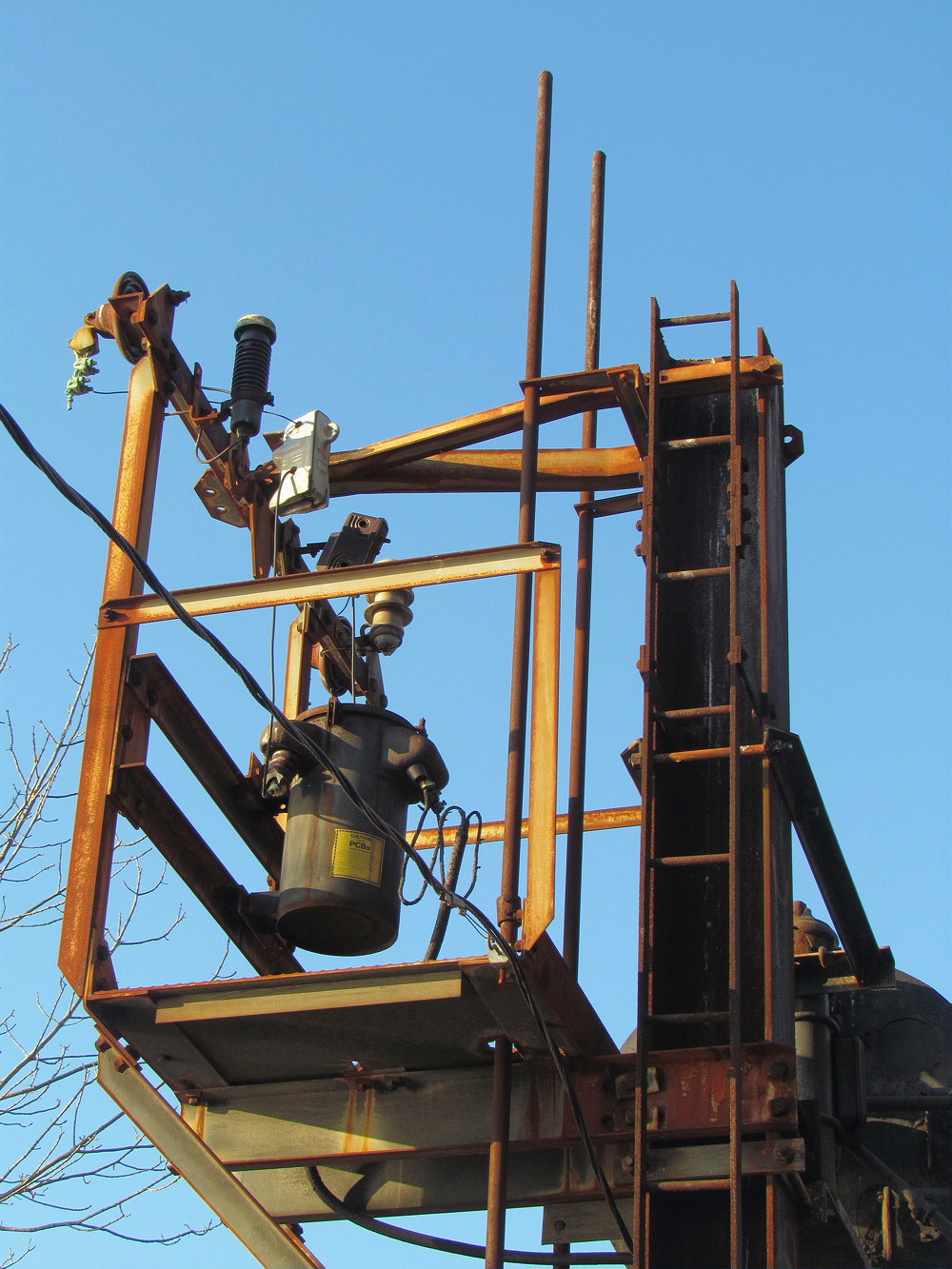
This active example was encountered at CP-SLOPE on the former PRR main line back in 2012.  It had been installed before PCB's were banned in the 70's and has a big yellow sticker to that effect.


With transformers, frequency matters.  The higher the frequency, the lower the inductive losses and the higher the equipment one can use.  (This is why aircraft use 400hz power buses because they can use lighter transformers.)  Mains power in North America is 60hz, however the Pennsylvania Railroad employed a 100hz cab signal carrier frequency to eliminate the risk of cross talk from 60Hz mains.  This lead the PRR to actually adopt a 100Hz power supply in its electrified zone to eliminate the need for motor-generator frequency converters at every signal location.  Here we can see a retired 6.9 kv transformer on the former PRR Port Road branch.  You can see how the size compares with the 60hz transformers pictured above.


Here is a more contemporary example on Amtrak's NEC.


Today railroads are rapidly exiting from the utility business.  It's a classic case of outsourcing.  Now that public power utilities can be contracted to supply the power (even in rural locations), there is little reason for railroads to employ linemen and power engineers.  Let the power company power and the railroad rail. 

Tuesday, February 7, 2017

NS Windup Signals Winding Down

So I was out this weekend documenting some locations on the former N&W H-Line in West Virginia and I saw an intermediate signal being replaced and it prompted me to devote a whole post to the interesting experiment of NS installing what I like to call "windup signals" in Virginia and Pennsylvania around the turn of the century.

Old windup at JC cabin
Windup signals are a type of signal mast that avoids the need for a ladder to service the heads and change the bulbs.  Instead, an internal cable mechanism allows a maintainer to crank the entire head assembly up and down so that all the work that used to be done from a ladder of bucket truck, can be performed from the safety of the ground.  they were typically employed as stand alone replacements, although they were used in a few re-signaling schemes (typically automatic only).

Windup at ORANGE interlocking
The idea is that working from the ground would not only be faster, but also avoid a large number of injury claims that can result from workers climbing signal ladders in the dark or inclement weather. This concept is increasingly found in Europe, although they tend to prefer tip over signals that can be unlatched at the base and then tipped over for servicing.   However the reason it never caught on in the United States was because instead of just being able to work on a signal and have trains pass as if it were dark, the entire signal has to be taken out of service.  This meant a train order had to be passed to any train in the area that such and such a signal simply didn't exist until further notice.  I don't know if this safety issue came up after the windup signals started to be installed or if NS felt the hassle was justified, but whatever the case, NS soon switched to 'tombstone" style Darth Vaders and never looked back.

Windup intermediate just south of Culpepper, VA
Personally I've always detested windup signals because they just reek of cheapness.  They look like toys instead of signals and also lack the always positive feature of user serviceability.  Still, they are different and in this increasingly bland signaling environment that is something I can appreciate.  The good news is that a number of windups went in on the former Conrail Harrisburg Line when that was re-signaled in the early 2000's and it appears that the PTC menace will not involve many signal replacements, so any fans out there will still have a place to get some photos.

Monday, January 16, 2017

New Year's News

Things have been pretty quiet as of late, but I did manage to tease out a few news items of note over the holiday season. 

Starting off with Amtrak, it appears that the new CP-143 at Albany-Rensselaer had been  cut over with LED searchlights replacing the classic ones and new double slip switches reducing the bottlenecks that would frequently occur when Empire trains mixed it up with late running long distance trains requiring a power change.  With the new second track nearing completion between Albany and Schenectady, my trip to the area in February will hopefully not be too late.


Is a shocking turn of events, NS has stepped up its assault on the former N&W H-Line in Virginia with new signals appearing at the famous Shepherdstown, WV location as well as others.  This is truly disappointing because the line was last re-signaled ~2000 with new logic cut into the old signal hardware, as was the style at the time.  This is definitely a must visit for anyone in the area.


New signaling continues to appear in the Akron area as the last CPLs on the old B&O Main Line brave the assault.


In political news, it will be interesting to see if the PTC horseshit is rolled back under the Trump administration.  That is the exact type of costly, useless regulation that should be targeted for elimination, but it is so far off anyone's radar that it is unlikely that anything will be done, especially due to the bizzare support it has in congress.  My theory is that the mandate is simply a ploy by the truck lobby to hobble rail transportation.

Monday, November 7, 2016

Election Night Coverage!

Ha, fooled you!  I didn't say exactly what I was going to cover on this night before the election and as you may not have guessed (for once), it's going to be railroad signaling.  Thanks to all the tower closures I haven't had time to wedge in one of these news segments over the last bundle of weeks, but have no fear, that's what browser tabs are for. 

First a bit of rare good news up on Amtrak's Springfield Line double track project.  The old H-5 searchlights were removed over a decade ago, so there's no much downside to this 4-track signal bridge of modular target signals that is going up near Berlin, CT, complete with Rule 562 'C' boards.


Meanwhile, over in N&W territory, the slimy tendrils of NS's resignaling project is slowly wrapping their way around the iconic Bluefield area.  It's a shame the collapse of coal hasn't preserved the old N&W region in amber as happened on similar main lines around the lower midwest.


 It's not even the N&W signals that are going.  These modern era NS/N&W signals are also on the way out. Note the new 'Y' lamp on the bottom head as NS uses the importunity to include a Restricting capability, omitted from the previous CTC scheme.


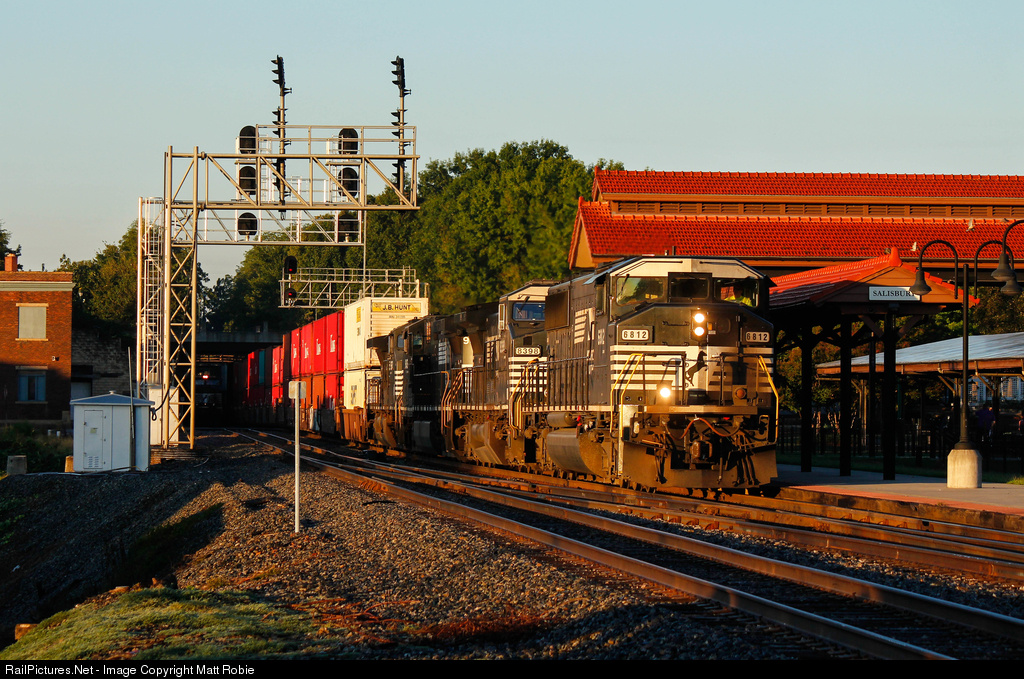
Moving on the Southern part of Norfolk Southern, the new signals are in service on the main line at Salisbury, but old new ones are still standing...for now.


Moving on to CSX, any readers in Georgia should hop on over to the A&WP/WofA Sub to document this adorable little elephant ear mast near LaGrange before its gone forever.


Well that's it.  Apart from the tower closings this was a pretty slow news month...at least signaling wise.

Sunday, July 31, 2016

Hot Summer News

It's been a pretty slow summer for new, but I have a few items built up I should probably get around to sharing.

First up , the famous Rochelle diamonds in Illinois seem to have entered some sort of Schrodinger's Box because they are both re-signaled and not-resignaled.  This is because the former CBQ searchlights on the BNSF line have been replaced while the former CNW signals on the UP line continue to hold on.


If you remember my early 2016 news reports from upstate New York, the Albany-Rensselaer terminal had been partly re-signaled.  Well the new CP-143 has been cut over and work has moved on to CP-145.  Not sure when LAB tower will close.

New CP-145 with double slips and LED searchlights.

New signal masts going up at CP-145.

We are also starting to see more and more B&O CPL signal replacements on the previously immune CSX Toledo Sub, so again, try to get out there and take some photos.  In related news, thanks to a crash in traffic resulting in partial abandonment, some of the Indiana Sub B&O CPLs might survive a bit longer.


 Down south the re-signaling is also progressing in Seaboard land as seen in Douglassville, FL where a restricted speed siding looks to be getting full signaling protection, albeit still over a slow speed turnout.


 The NS Pocahontas District re-signaling is continuing.  It's not just the CPL bracket masts ad gantries that are at risk.  These double split masts are perhaps rarer than either and are slated to be replaced by cookie cutter side masts.  Imagine if the ICC had never repealed the right hand signal placement rule...


 Via Google Earth I just learned that the surviving PRR CTC huts on the Enola Branch have finally all been demolished by NS.  These include the structures at the former CP-PORT, CP-MANOR and current CP-LAKE.  One can also see the new signals at WAGO.


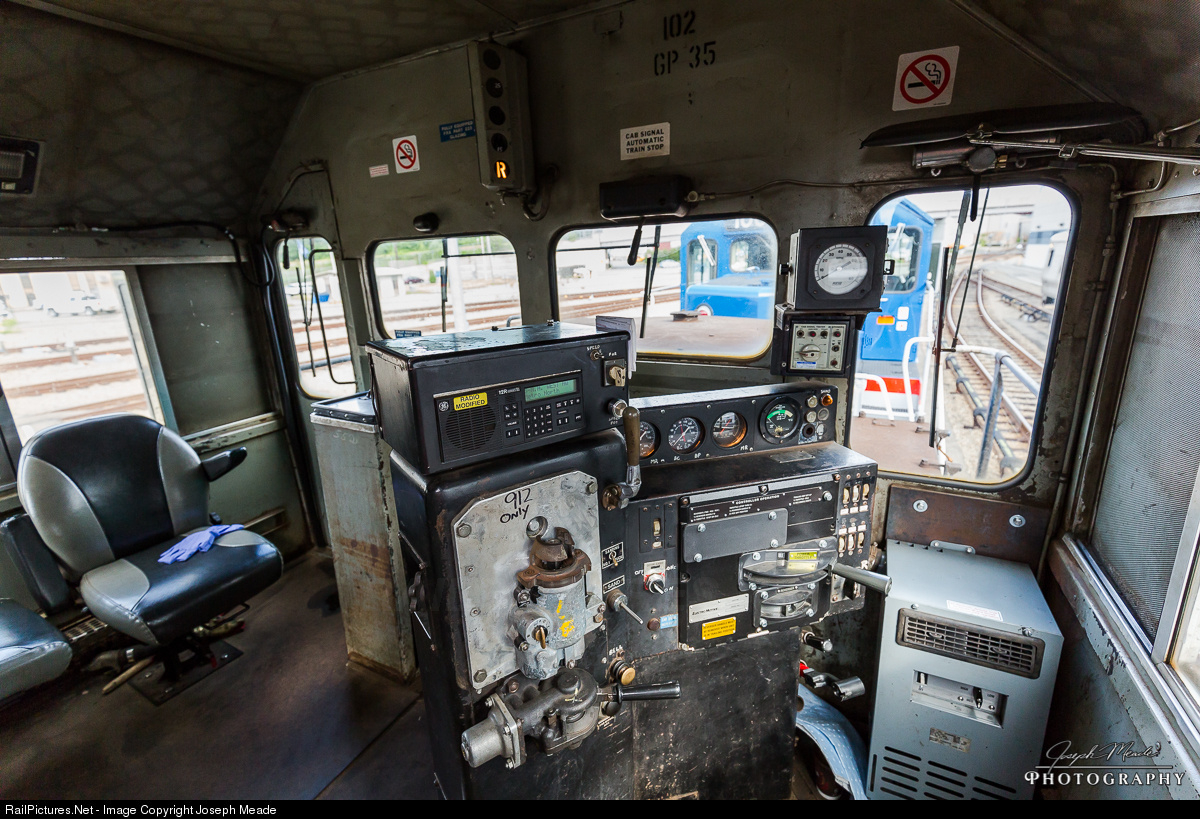
 Finally, the spectre of re-signaling doesn't just apply to the wayside equipment and dispatching offices.  Here we see the cab of the last unrebuilt Metro-North GP35R, #102.  Note the old school center mounted, bulb lit cab signal display.  It will soon be sterilized in a rebuilding process.