Search This Blog

Showing posts with label BnO. Show all posts

Saturday, May 31, 2025

Adios B&O MEXICO Tower

The reason I tend to miss a lot of closures and demolitions is because I don't tend to seek out news that will leave me bummed and depressed. In another example of bad news I missed the B&O's "M" aka MEXICO tower, near Cumberland, MD, was apparently demolished in September of 2023. The three story 1950's brick tower was similar to many across the B&O and, with its CPL bracket masts, had served as a backdrop to the local railfanning scene for decades.

CSX has been engaged in a long term project to convert the former hump classification yard to flat switching and a large obstacle to this was the physical hump and related structures.  MEXICO, built at the same time as the classification infrastructure, was located some 2 miles away at the eastern end of the yard leads and was in good structural condition.  Although its possible that CSX plans to alter the track configuration at MEXICO interlocking at some future date, I suspect that since they had already contracted for the asbestos remediation guys to come out for the yard hump tower, also getting rid of MEXICO could have come with little additional cost. 

Former Cumberland Yard hump infrastructure

Closed as an interlocking station in the mid-1990s, the relay based GRS plant was not re-signaled until the mid-2010's. Unless similar B&O towers at GREENE JCT (boarded up) and PATERSON CREEK (derelict), MEXICO saw use as an active railroad structure, either for maintenance crews or a rest facility for departing road freights.  The implementation of new service plans that generally sidelined the old system of classification yards may have played a role as Cumberland would see less originating eastbound trains and therefore less need for a standing structure to support the crews.

I personally only get to visit the location once on the ground, getting my photos from the road bridge like everyone else, although I had many opportunities for photos from the Capitol Limited with the last occurring in 2019.  Of those B&O towers that still survive, PATTERSON CREEK, only about 4 miles away from MEXICO as the crow flies, would be the most similar example.

Sunday, December 15, 2024

GLENWOOD Tower Demolished

It has been reported, and confirmed on street view, that the former B&O tower in the Glenwood section of Pittsburgh has been demolished. As covered in my 2022 post, the tower was built in 1908 and closed by CSX in 2003 with the adjacent yard and line leased to the Allegheny Valley Railroad. These lease arrangements can often freeze infrastructure in place as user doesn't own the tower and the owner doesn't want to invest in a potentially asbestos impacted demolition. In 2019 the AVR took full ownership of the former CSX P&W Sub and adjacent Glenwood Yard and at the time of my report I suspected that the change in ownership would unfreeze the situation.  


Turns out I was right and AVR made the expected choice of demolition, as opposed to finding some alternative use for the decayed wooden structure. Unfortunately no trace of the structure remains. 

Sunday, October 13, 2024

There Unitl it Wasn't: Nova's VN Tower

In the early years of my "keep track of towers" hobby, one Class 1 tower stood out for the sheer improbability of its survival. For well over a decade, a wooden tower in absolutely deplorable condition, standing along side a main line in an accessible area with no discernable railroad use managed to not only avoid demolition, but also the all too common risk of fire. I am talking about VN tower in Nova, Ohio on the CSX New Castle Sub. When it was finally demolished in 2013, VN Tower had outlived Amtrak's Three Rivers passenger service that operated on the same line by 8 years.


The story of VN and its longevity is wrapped up in the story of CSX's somewhat neglected B&O Main Line between Washington and Chicago. VN tower was the first significant town east of the Big Four junction in Greenwich, OH and served as an ABS crossover point with control over some adjacent sidings. Similar in style to other wooden B&O towers and painted in B&O beige, VN tower itself closed in the 1980's with the crossovers also being retired leaving just the tower and a pair of B&P CPL ABS signals. (The lack of crossover capacity on the New Castle Sub would in part doom Amtrak's Three Rivers as it frequently wound up stuck behind slow moving freight trains).


Until 1999, the CSX east-west route to Chicago had played a distant second to Conrail's Chicago and Fort Wayne Lines. While the Conrail split turbocharged the western end of this service lane with new signals and a second track, the eastern end of the route had significant numbers of staffed interlocking towers and single direction Rule D-251 track. The line segment between New Castle, PA and Greenwich, OH was no different with a few CTC islands and a staffed tower in Newton Falls. With investment and eyeballs fixed elsewhere for most of this period VN tower just managed to avoid the wreckers ball.


Through 2000's, the decaying tower with its intact lever frame became a local railfan landmark with photos frequently appearing on the major photo archives. VN stayed in this state for so long that people began to speculate that it still had some use, the tower was privately owned or that some local manager was protecting it. In 2011 CSX finished re-signaling the New Castle Sub, banishing the CPL signals and pole line, still VN hung om, now exhibiting a pronounced lean. With other towers, such as HN, being demolished, VN's popularity increased as a photo location due to the well lit east-west orientation of the track.


VN was demolished on November 22, 2013 and the Nova, OH crossing where it had been located went from a must-see for area railfans to a complete afterthought. With all traces of the tower removed and without anything else of note nearby, there weren't many "here's the pile of rubble that used to be VN" photos. VN's demolition over Thanksgiving also made it less salient than other tower demolitions that year so it escaped my notice and coverage. Today I hope to rectify that situation, although the Akron Railroad Club has had a memorial page for VN tower up for the better part of a decade. That site reports that the lever frame and related components were sent to a museum in Utah for some sort of tower related exhibit.

Friday, May 31, 2024

Washington Union Station CPLs go LED

It appears that the next step in Amtrak's surprising B&O CPL renaissance is the upgrade of those in the Washington Union Terminal area to use LED lamps. Since the terminal area was last re-signaled, the US&S built dwarf CPL's have suffered from low output, possibly lower than the more typical GRS counterparts (US&S was awarded the contract and had to make its own copycat B&O style CPL's as a result). Combined with the overhead catenary, it has made capturing signaling indications on camera rather challenging.

Well now things are on easy mode as you can see here with the incandescent pole pointed 315 signal compared with the gantry mounted 311 and 351 signals displaying Clear and Approach respectively.

For another point of comparison here is the incandescent 189 signal displaying Slow Clear at the end of Track #23.

In addition to the LED's we can see that the orbitals on the gantry mounted signals have received new extra wide backing plates, even if the additional orbital lamps aren't installed. Hopefully the LED conversion won't be limited to just the overhead signals, which do suffer from the extra visibility problems caused by the overhead wires..


Saturday, July 22, 2023

A Second B&O CPL For Baltimore Penn

A year ago I reported on Amtrak replacing the NECIP era cantilever mast covering tracks 7 and 8 at CHARLES interlocking with a pedestal and ground mounted B&O style CPL dwarf. Well at some point over the winter of 2023, CHARLES' ad-hoc cantilever governing track #3 was also replaced by a CPL dwarf. Baltimore Penn Station has always been a land of close clearances, so is this part of a trend that will result in even more new B&O CPL dwarfs? Probably not, but its fun to take a look at the new one on track #3 since there's a bit more history than meets the eye.

Pulling up the 1992 track chart we can see that after the NEC Improvement Project (NECIP) and before the late 1990's expansion of MARC service that restored Track #5 as a stub terminal, tracks 3 and 4 converged past southbound PRR pedestal signals over the 34 switch before passing a second PRR pedestal, 3SA, guarding the convergence with track #1 and ultimate connection into through track #6.

With the MARC expansion, track #4 was extended to its own switch with through track #6 with the 34 switch and 3SA signal being removed.

Photo courtesy B&O Photo Tours

The improvements also left track #3 as the only remaining low level track at Baltimore Penn Station as track #1 was being used as a freight bypass stood off from the platform and protected by a low fence. At this time it was also decided to replace the 3S pedestal with a cantilever mast to raise the pedestal up off the trackbed for some reason. The low level platform would eventually fall into ever more disrepair before being completely taken out of passenger service in the 2010's Track #3 would be used for storage of MARC trains, but the 3S signal was still positioned in relation to the long removed 34 switch resulting in the waste of several carlengths of storage space and extended train movement transit times through the interlocking.

Above we can see the placement of the new temporary(?) 3S CPL dwarf in relation to the 1S pedestal and the insulated joints for the 64 switch. (The 4S pedestal is located under the bridge to the upper left.)


The CPL dwarf has a R-Y-G face and orbitals in the 12 and 6 o'clock position. This is slightly confusing as the 3S lacks any straight routes for Clear or Approach that would utilize the 12 o'clock orbital, but it might be used for a Stop and Proceed marker light in a way that made the wiring easier.

The 3S now joins the 7S as the second B&O CPL in the Baltimore Penn Station terminal area. A fitting turn of events as Baltimore has very few of its namesake CPL signals in service on home rails.

Saturday, April 8, 2023

Interlocking Tower Audio Recordings

I've featured the work of the Youtube channel Railroad Media Archives before, but in the last few weeks they have taken a page from Evan Doobell's playbook with interlocking tower audio recordings from the 1960's and 70's. As you might be aware, the ability to capture long duration video information lagged the ability to capture long duration audio information by something like 5 decades. This means that recordings of interlocking tower operations in an audio/video format wasn't really feasible until the late 1970's, at which point everyone's favorite flags had fallen and conglomerates like Conrail and Amtrak were large and in charge.  While a great deal of vintage signaling technology was in use up through the 80's, 90's and Today, radio was well established along with its attendant operating practices such as track warrant control. 

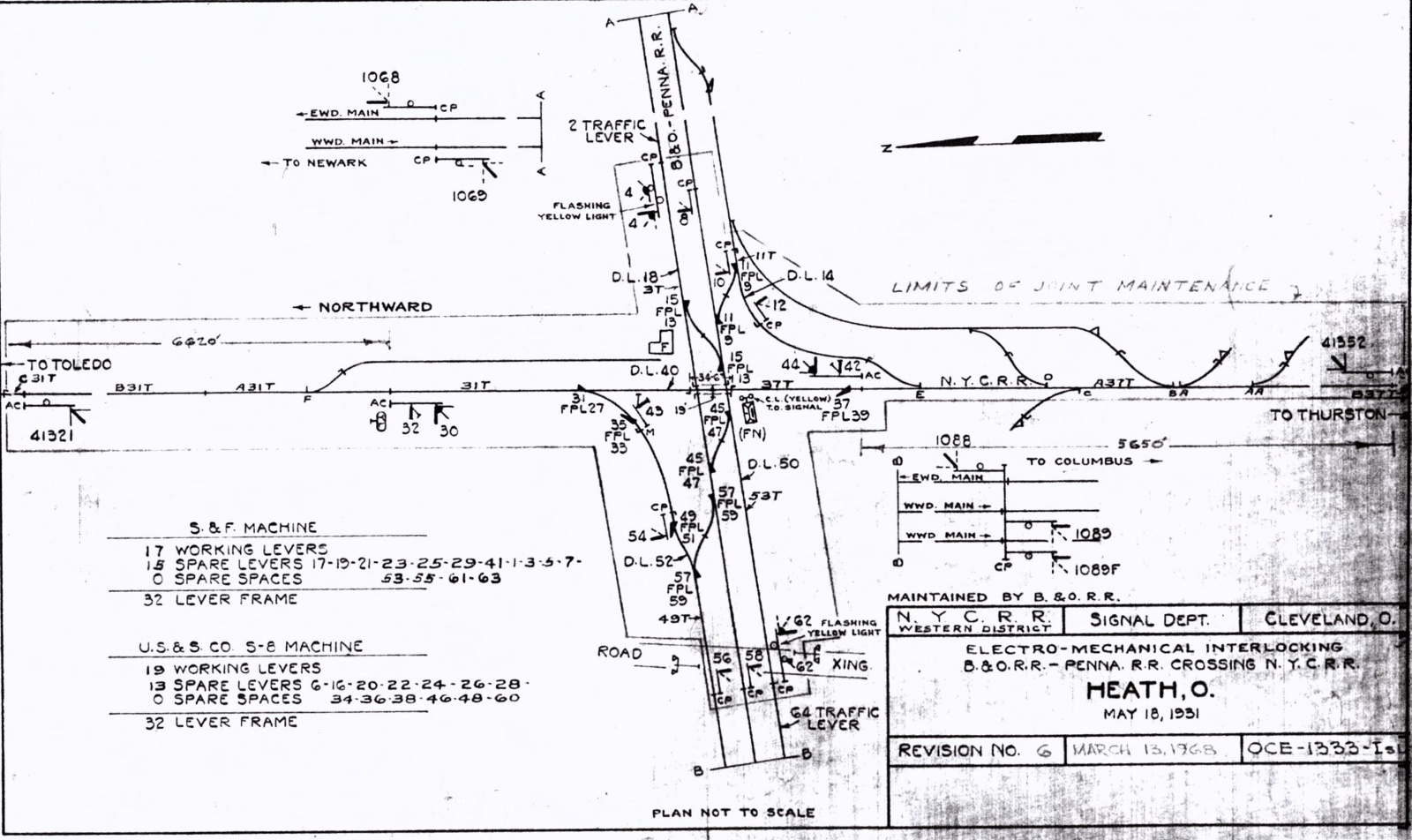
Anyway,  Railroad Media Archives has so far posted three of these tower audio recordings covering HEATH and SUMMIT towers on the joint PRR-B&O C&N (Columbus & Newark) Railroad in Central Ohio as well as HIGH ST and MOUNDS towers in Columbus, OH. 

Hopefully we'll get to hear more of these sorts of recordings. They can certainly come in handy for any time one might be otherwise inclined to listen to radio.


Saturday, December 31, 2022

Limited Triangles!

 A little while ago I mentioned NORAC Rule 280b Approach Normal, a signal indication that has been effectively extinct in the wild for over two decades. However we will look at another marker type signal indication that used to be fairly widespread, but as far as I can tell, has now been reduced in the United States to just a pair of locations on the former PRR Main Line. Of course I am referring to the limited speed triangle.


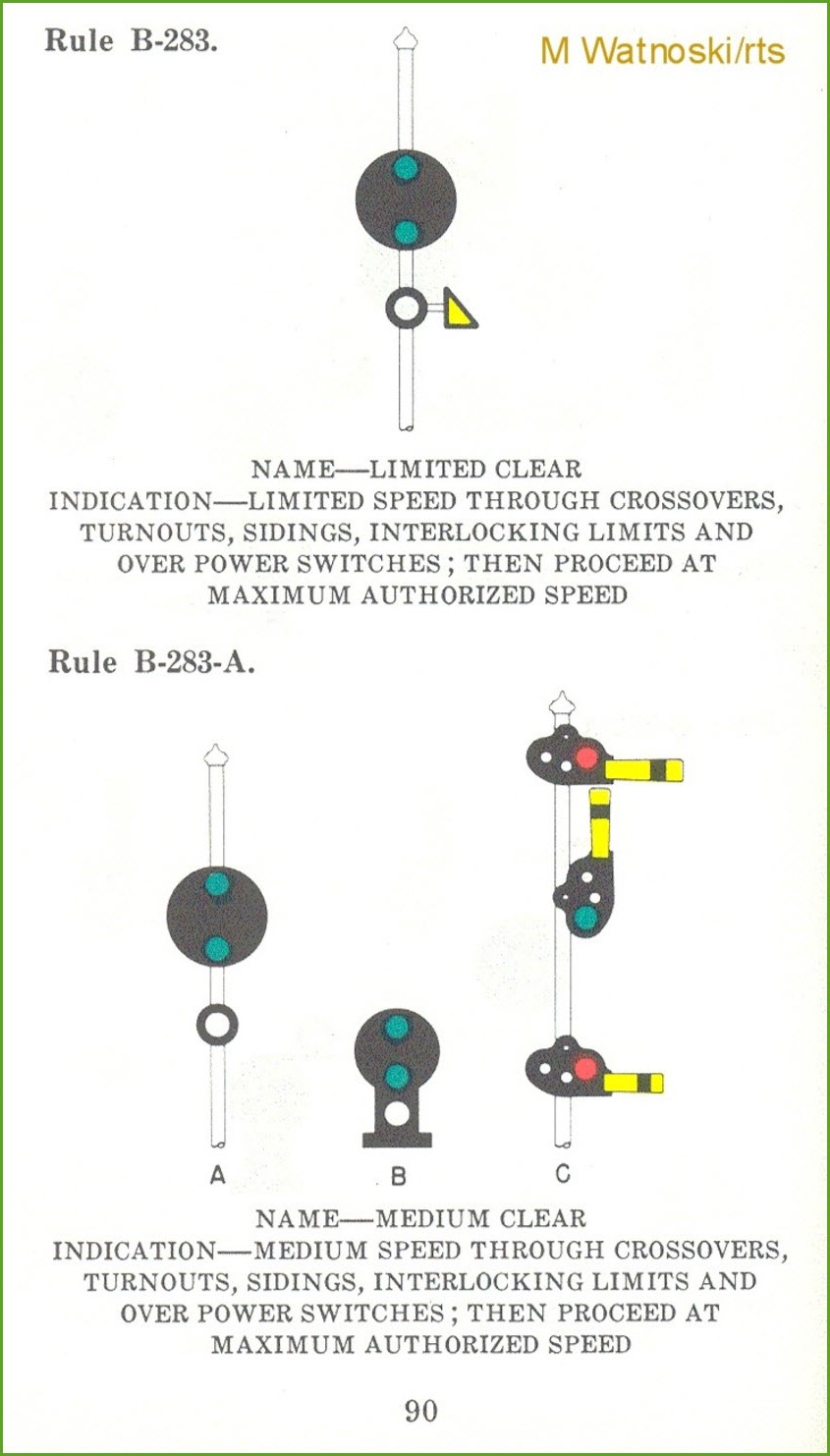
Introduced sometime around the 1940's, the bright yellow Limited Speed Triangle was deployed on speed signaled railroads in conjunction with the introduction of the #20, Limited Speed turnout. For the uninitiated this translates to speeds of about 40-45mph. Prior to this speed signaled railroads tended to have a main line Normal (Maximum Authorized) speed of  50-70mph, a Medium (aka Reduced) speed of 30mph and a Slow speed of 15mph. The system worked from both a track engineering standpoint given the speeds involved and logical standpoint in terms of full speed, half speed and quarter speed. As equipment improved throughout the 1920's and 30's, the gap between the maximum speed trains could regularly achieve and the 30mph Medium Speed began to grow. Because its easier to decrease running time by not going slow as opposed to just going fast, a number of Eastern railroads invented both faster turnouts and the concept of Limited speed. 

#20 Limited Speed turnout at BRYN MAWR interlocking.

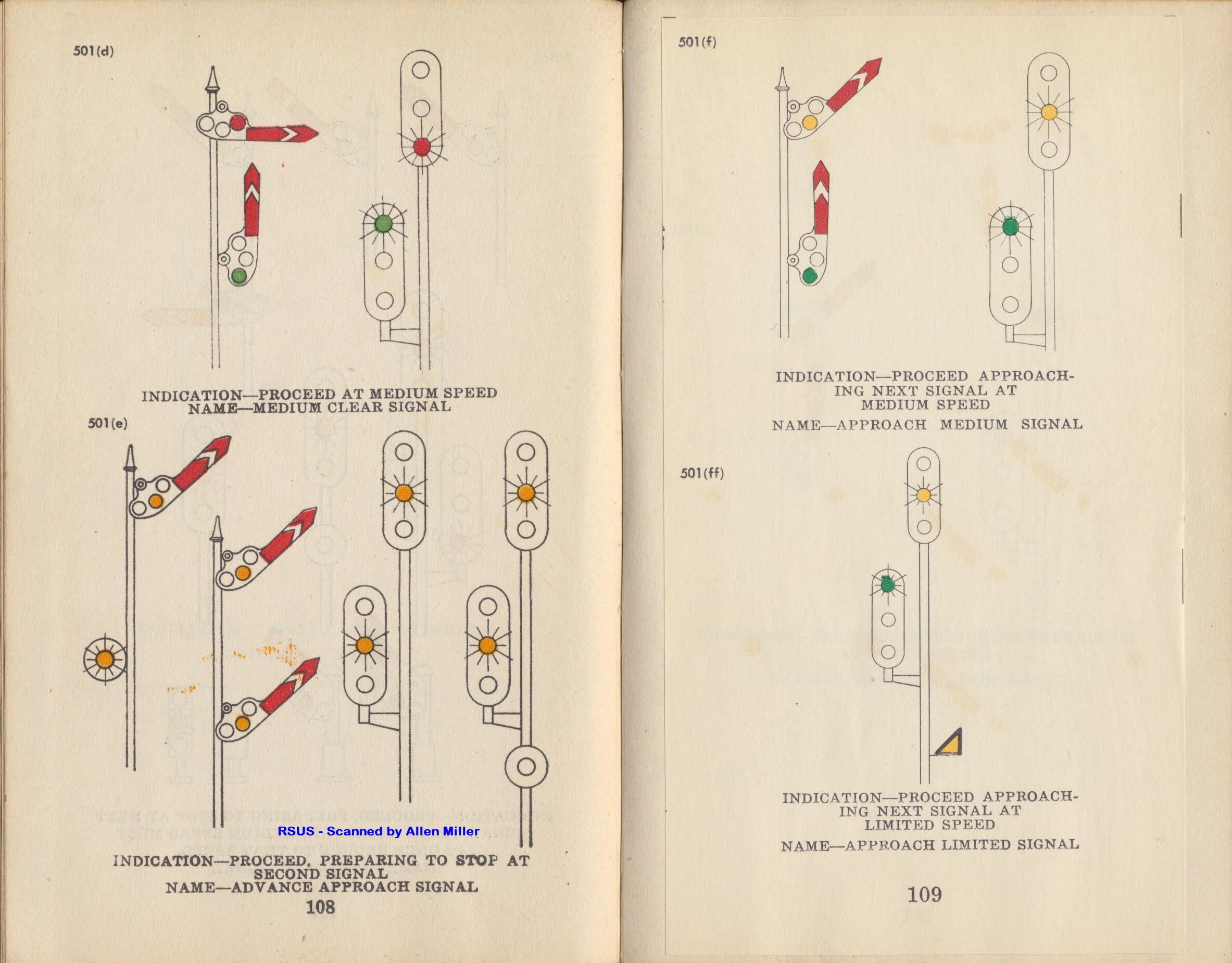
Just like in the 1980's when High Speed 60 and 80mph turnouts were invented, railroads suddenly had to fit the round peg of a new speed into the square hole of their existing signaling system. In a time when flashing signal relays were generally shunned as unreliable the solution was the Limited Speed Triangle. The black bordered yellow triangle would upgrade Approach Medium and Medium Clear indications to Approach Limited and Limited Clear. In cases where a #15 turnout was being replaced by a #20, the signaling change would involve change to interlocking wiring or logic. 


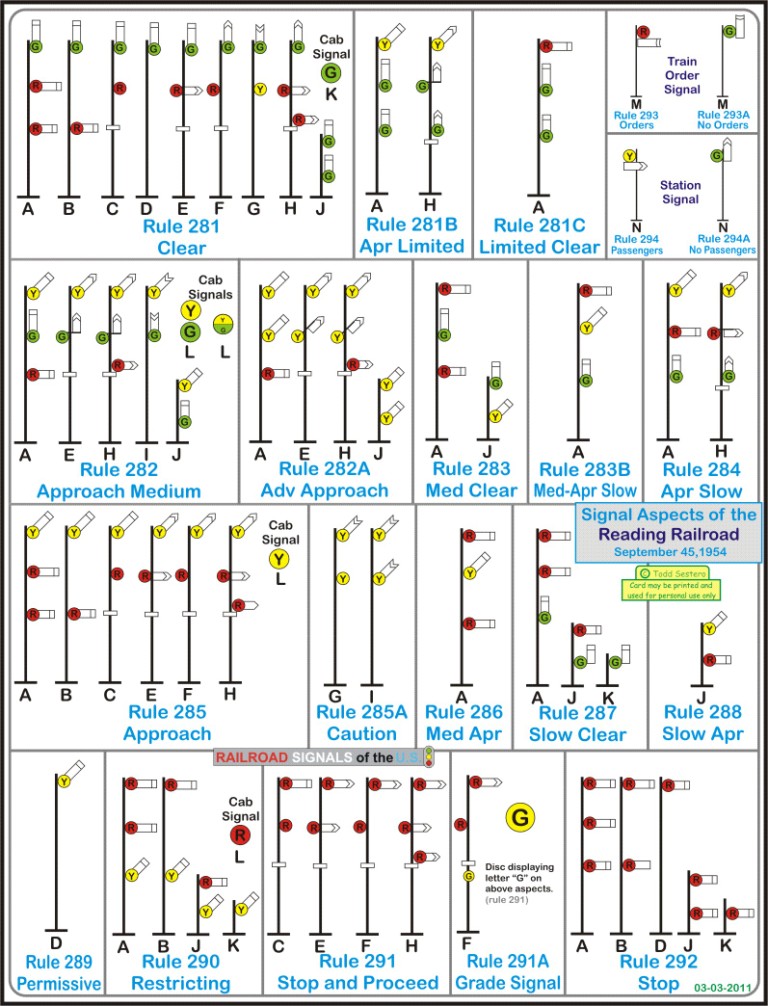
Although some railroads including the Reading, did invent new non-flashing limited speed color light signal like Y/G/G or R/G/G, limited speed triangles were embraced by the PRR, B&O, L&N, ACL/SAL and Southern. They also appeared in Canada with the addition of the letter L inside the triangle. Of course one of the biggest users of the triangles was the PRR, which would employ them at select junctions and along its 4 track main lines that features frequent non-reverse running crossover movements.  More specifically the PRR deployed limited speed upgrades (and triangles) to places where its 4-track lines would shift orientation from ⏬⏬⏫⏫ to ⏬⏫⏬⏫ and also as part of its general World War 2 era NEC re-signaling effort.

DV Interlocking with a mix of Limited and Slow speed diverging routes.

Starting in the 1950s flashing signals became more accepted and the Limited Speed Triangle began its slow decline. The main downsides was the inability to mix Limited and Medium speed routes, the issue of Approach Limited indications proceeding Medium Approach and the reduced visibility of the triangle vs a color light, especially at night. By the dawn of 21st century I was only aware of two remaining installations of limited speed triangles. The first was at COUNTY interlocking on Amtrak's NEC in New Brunswick, NJ with a full set of four triangles at the interlocking itself and the milepost 31 and 34 automatic locations adjacent to it. These were unfortunately replaced in the early 2010's as part of the larger 562 re-signaling effort between COUNTY and FAIR near Trenton.


The other use of limited speed triangles, and the only one still in service today, were the milepost 8 and 11 automatic signal locations adjacent to BRWN MAWR interlocking on the name brand "Main Line" portion of the Amtrak Harrisburg Line. These two signal locations are adjacent to the Ardmore and Villanova stations respectively and easily photographed. The reason BRWN MAWR itself lacks the triangles is because the tower caught fire in 1994 and the interlocking redone with modern hardware including flashing relays. The two distant locations will certainly keep their triangles until the Main Line between ZOO and PAOLI is slowly re-signaled over the next 10-20 years.


Note I have been invoking the United States instead of North America in terms of the endangered nature of these signals.  That is because Canada still retains quite a few of its Limited triangles generally on its western transcontinental routes at the ends of single track passing sidings. Highly ironic that the land that hasn't seen a flashing signal indication it doesn't love, has become the final refuge for a hack intended to avoid flashing signals.


Friday, October 14, 2022

K TOWER "Relocated" w/ N-X Panel Retired

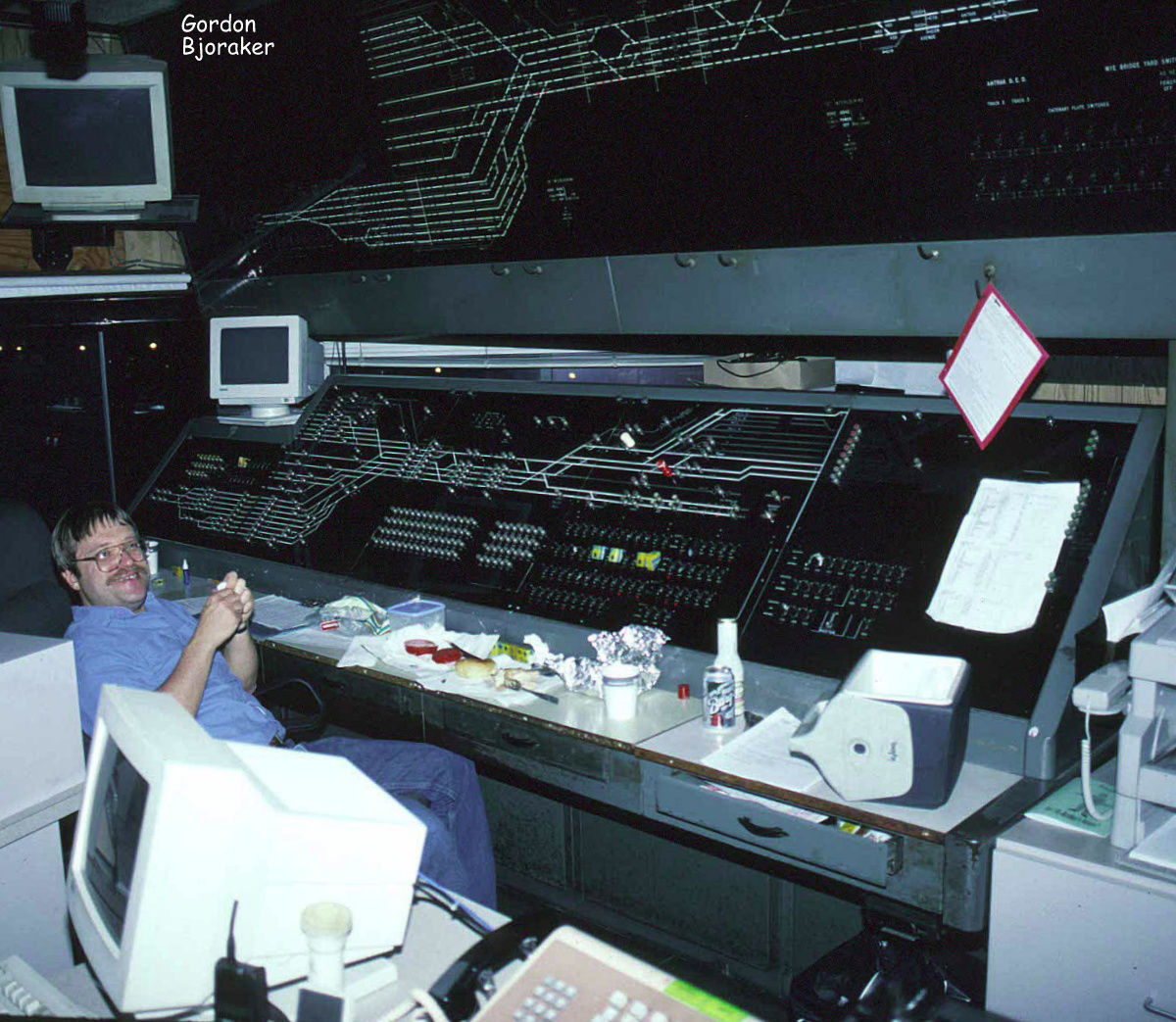
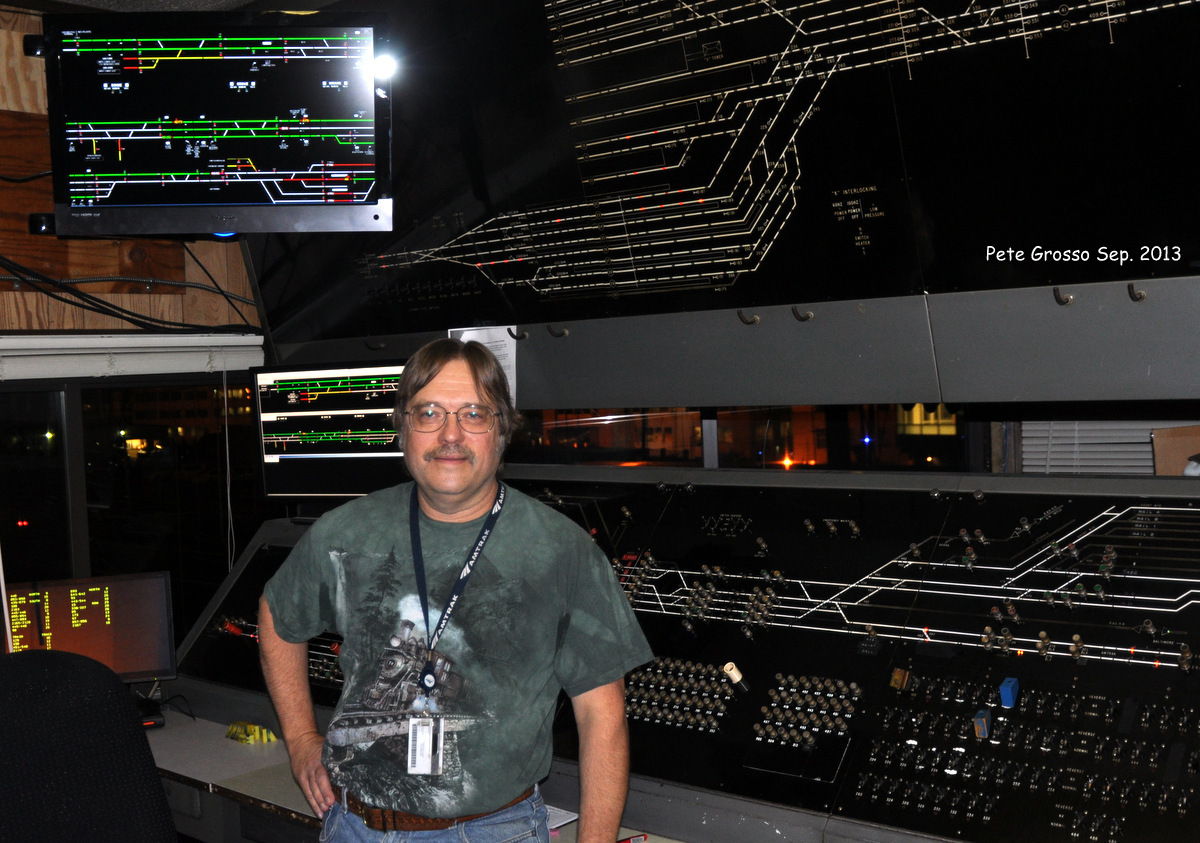
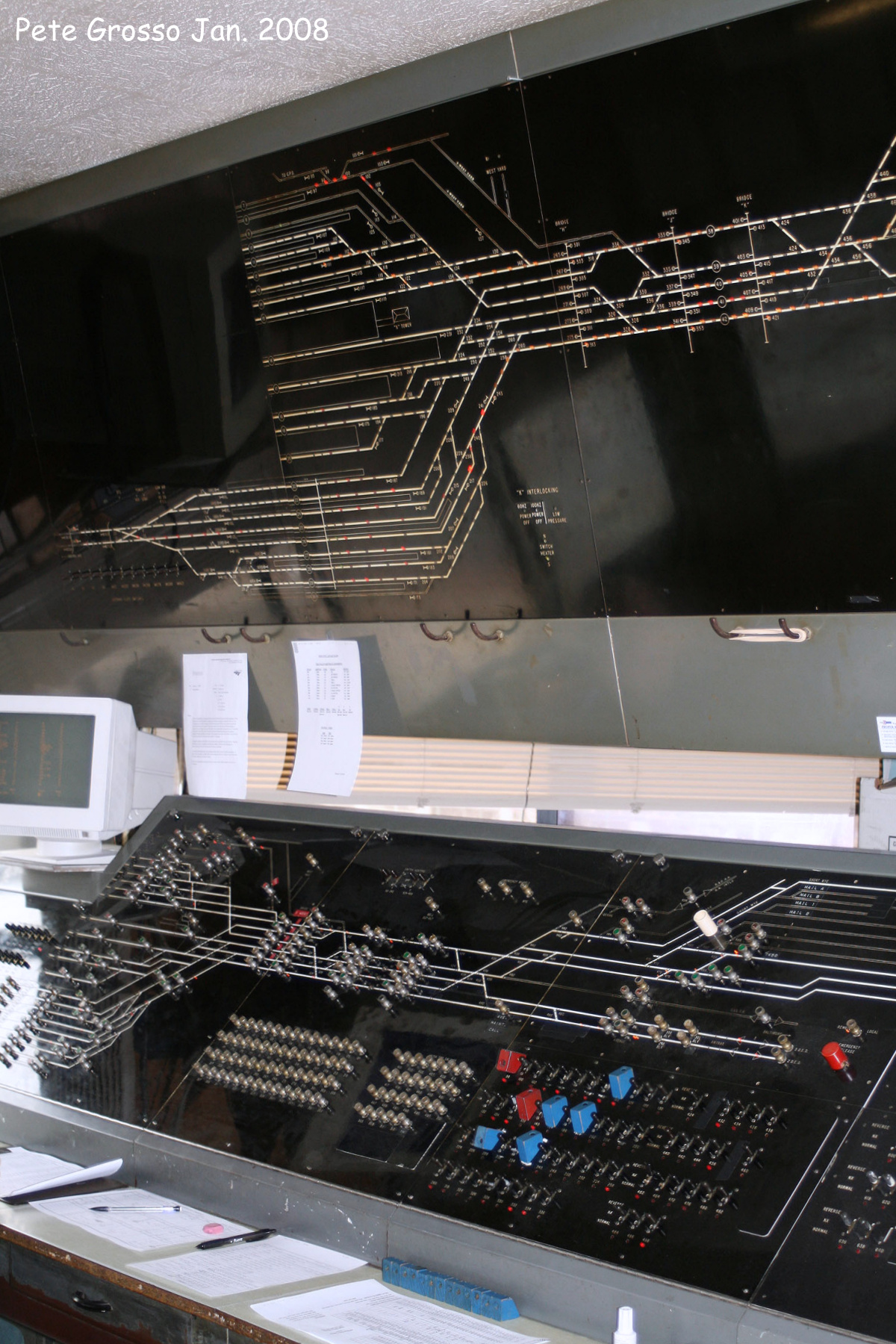
It has been confirmed that Amtrak has relocated the train director(s) working K TOWER at Washington Union Terminal from the historic 1908 structure and into a small office in the Railway Express building adjacent to Track 29 on Union Station's lower level.


Unlike R Tower in Sunnyside yard, where a similar relocation immediately preceded demolition to make way for an Acela maintenance facility, the historical significance of Washington's K TOWER is well understood.  In 2017 I reported on plans to cover over the entire union station approach with some mixed use development with K Tower specifically singled out for conversion into some sort of high end bar. The culprit here is some combination of Amtrak's desire to simplify "management" and also cut costs along with some technical upgrades that were evidently completed behind the scenes.

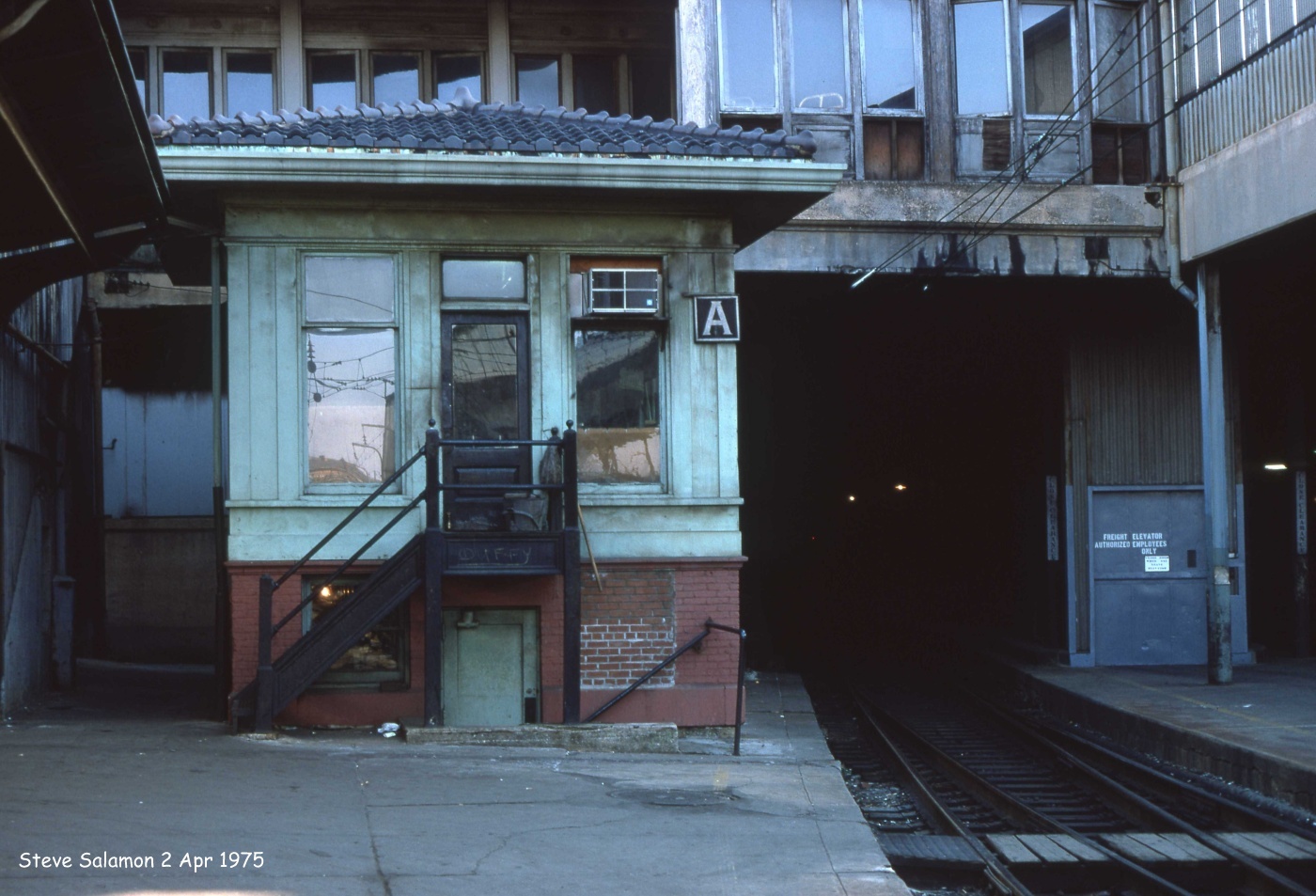
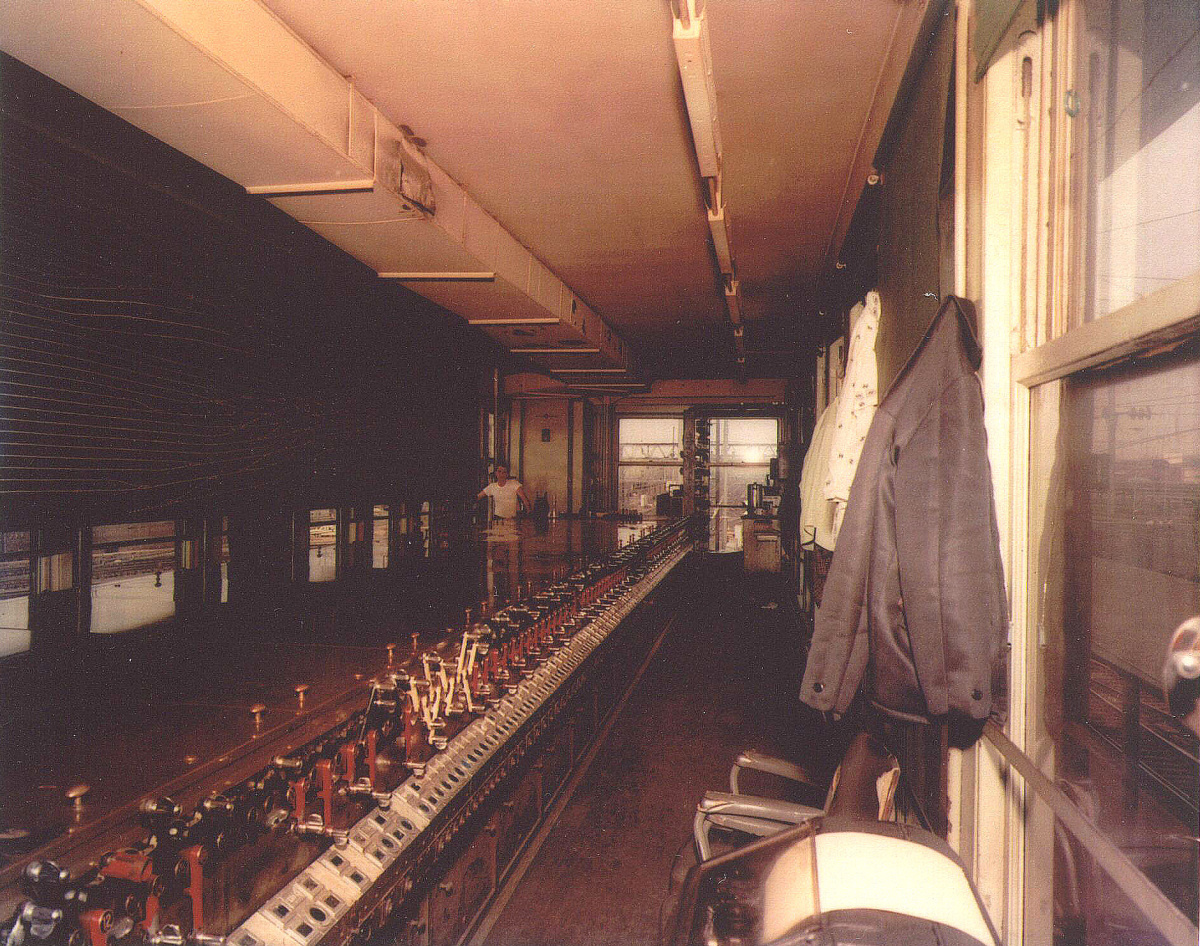
As constructed in 1908, Washington Terminal was controlled by at least three US&S Electro-Pneumatic equipped towers, A Cabin, C Tower and K Tower. In the 1970's, K Tower had its long Electro-Pneumatic machine replaced with a then cutting edge N-X type interface and model board that drastically cut the need for staffing (and floor space) and centralized control of the entire terminal into a single location. This change likely took place around 1975 as the construction of the DC Metro's Red Line required the demolition of C Tower. Although cutting edge for the 1970's, by the 2010's the N-X machine was becoming increasingly difficult to maintain as parts were long out of production and failures could become rather nail biting in terms of getting the machine working again.

Although decorated with some LCD screens, the big old N-X panel's days were numbered and as soon as the control was converted into a video display interface, the human train director was no longer limited to being in the tower itself, especially if CCTV feeds could be provided. Although I suspect the historic K TOWER will be maintained and serve a railroad function, while active as a work site the HVAC, restrooms, etc would all need to be maintained to a higher standard. Plus there is the added benefit of management being able to "pop in" to "supervise". It is quite possible that the N-X panel was actually replaced years ago and COVID simply delayed the inevitable. K Tower would therefore be a rather extreme example of a "return to the office" policy. Still, given that computers can be installed anywhere, there is always the chance that the K TOWER staff could find themselves back in the old tower in the future, baring some redevelopment effort.

K TOWER joins the fate of many other pre-video "panel" type interlocking setups that I discussed previously in the content of Hoboken's rather short lived TERMINAL TOWER. Given the ease at which an N-X panel can be converted to a video interface, it is entirely possible that, rapid transit systems not withstanding, we  might see electro-mechanical machines outlast hard wired N-X panels in staffed towers.


Thursday, June 30, 2022

PHOTOS: Inside GLENWOOD JCT

GLENNWOOD JCT, aka WJ, is located in Pittsburgh's Glenwood neighborhood on the banks of the Monongahela River. Built in 1908 by the Baltimore and Ohio railroad, the tower remained in service for almost a century at the eastern end of Glenwood yard before closing in 2003. Like many towers, GLENWOOD JCT was first protected by the massive changes in the industrial economy in the 1980's and 90's before being ultimately ultimately done in by them. Shortly before its closure, one of my foreign correspondents asked for my assistance in visiting the tower while on a North American trip and they sent me the resulting photos after successfully charming their way inside. Twenty years later I was able to visit GLENWOOD JCT myself and combined with the interior photos I hope to cover the tower and its history before its increasingly likely demise.

GLENWOOD JCT In Service in 2003
 

GLENWOOD JCT out of service in 2021

GLENNWOOD JCT is frequently photographed due to its proximity to Pittsburgh's Glenwood Bridge that provides an overhead view of Glenwood Yard. The tower is located on what was known as the CSX P&W Subdivision, a line running to the north and west of Pittsburgh that was incorporated into the B&O in 1884, forming part of their westward main line to Chicago via Youngstown and Akron. The P&W is a slow, curvy route with access to downtown Pittsburgh via a several mile long stub end track that terminated at the Grant Street Station. In 1934 the B&O negotiated trackage rights on the Pittsburgh and Lake Erie between Braddock and New Castle, PA with the vast majority of B&O traffic eventually shifting to that route. This shift is what likely kept GLENWOOD JCT active into the 21st century as both the P&W route and passenger services into Pittsburgh became subject to disinvestment. This combined with CSX's general use of manned interlocking towers on its Main Line between Washington and Pittsburgh up into the early 2000's (with 2, WB in Brunswick and VI in Connelsville, lasting into the 2010's) to keep the tower open since there was a sufficient pool of operators.

GLENWOOD JCT closure came at the hands of the 1999 Conrail merger that shook up CSX's operations between the Northeast and Chicago. Renewed investment in the corridor closed many of aforementioned B&O main line towers and 20 years of Pittsburgh area deindustrialization rendered both the P&W Sub and the once prominent Glenwood Yard that it served, largely obsolete. A wholesale P&W abandonment north of the city was averted by a lease to the Allegheny Valley Railroad. The one hiccup was the use of the P&W between Braddock and downtown Pittsburgh by Amtrak's Capitol Limited which pretty much required signaling on this part of the route. The solution was a complete removal of the interlocking plant and reduction of the line to a single CTC track, which showed exactly how little value GLENWOOD JCT had been providing to rail operations in the area. The AVR lease likely played a role in the tower's survival beyond its closure. AVR didn't own it so they couldn't demolish it, but it wasn't CSX's problem so no need to spend money to remove an asbestos trap. In 2019 AVR purchased the P&W sub outright so we will see if they find a use for the structure at Glenwood yard, demolish it or allow it to burn down "on its own".


GLENWOOD JCT is a 2.5 story wooden interlocking tower built in the B&O style with a variety of updates over its life. The tower consists of an upper operator's floor, a lower floor relay room and a concrete basement level that is only dug about halfway into the ground. This extra half story gives GLENWOOD JCT a noticeable bit of extra height. As the lower floors show no evidence of any mechanical lever frame or pipelines, it is likely that the tower was built was a state of the art power interlocking machine, most likely one from Union Switch and Signal as GLENWOOD JCT was located only a couple miles from US&S's manufacturing plane in Swissvale, PA.


At some point the original interlocking machine was replaced by a familiar US&S Model 14. The tower is also the quintessential example of Tower Window Syndrome as it was built with a fully windowed upper level that by 1983 had seen most of those covered over by solid walls and siding. By the 1990s the remaining full height drop-sash windows were replaced by half height replacement windows. This coincided with the tower being clad in CSX standard beige vinyl siding and the slate roof being replaced by asphalt shingles.
   
Original windows

Many full height windows boarded up


Cheap replacement windows fitted.

Despite all of the modifications, the neglect of the past 20 years is allowing some of the original wooden features to shine through.


GLENWOOD JCT was built on a double track main line that was converted to bi-directional operation around 1980's, likely in conjunction with the expanded PATrain commuter rail service. (See my article on LAUGHLIN JCT for more information about the notable interlocking two miles to the west.) On the main line (P&W Sub) GLENWOOD JCT had both an east and west end, each covering a crossover and a yard access track. The west end was surrounded by a pair of B&O CPL bracket masts while the east end had a single signal bridge with the westbound home signals and eastbound exit signals that supported the bi-directional operation to the P&LE junction BRADDOCK. The inner and outer controlled signals at GLENWOOD JCT created the short signal block in turn motivated the 6 orbital complete B&O CPL at LAUGHLIN JCT as trains approaching GLENWOOD JCT from the west could get a Slow Approach at the 36L or 40L signals for a stop at the 44L or 42L signals which necessitated the use of Approach Slow and Medium Approach Slow (the 11 and 7 o'clock orbitals) at LAUGHLIN JCT.
 

Sunday, March 6, 2022

WB Tower Relocated!

A little over a year ago I reported on the fate of WB Tower in Brunswick, Maryland.  The wooden B&O railroad tower was constructed in 1910 and closed in late 2011.  Despite plans to preserve the structure it sat empty on CSX property near the Brunswick MARC Train station for over a decade, becoming increasingly insecure and at risk of being set alight by vandals or transients.  


Well for once I have some good news to report.  A $15,000 state grant has allowed for the tower's relocation about 100 feet northward on city-owned property where proper restoration can take place.  It will likely be associated with the Brunswick History Museum that already hosts a number of artifacts from the tower as well as a model railroad display. While the relocation will disrupt the tower's historical context, it is a better alternative to fire or demolition.

Friday, April 16, 2021

PHOTOS: GREENBELT - The Last CPLs

In the fall of 2014 CSX completed multi-year re-signaling efforts in the heart of its former Baltimore and Ohio territory that included the Philly, Capitol, Metropolitan and Cumberland Subdivisions. B&O style Color Position Lights, some installed as late as the 1990's, were replaced by the typical hooded traffic lights. Beyond the odd siding exit, drawbridge, diamond crossing or distant on non-signaled track, the main line CPL era east of the Ohio River was over. There was however one notable exception on CSX in the form of GREENBELT interlocking in Greenbelt, Maryland. Located just inside the Beltway adjacent to the DC Metrorail-MARC transfer station of the same name, GREENBELT was distinctive in being an interlocking that only really served the MARC commuter train service. These CPL signals would stand for an additional 6 years until their replacement in late 2020. In May of 2020 I went out to GREENBELT for a documentation run so I could present to you photos of The Last CPLs.


GREENBELT interlocking was installed in 1992 as part of a general re-signaling of the Capitol Sub to better support the MARC Camden Line. This saw the elimination of any residual Rule 251 ABS territory, a new Camden terminal complex in Baltimore and the closure of any remaining manned towers such as JD TOWER in Hyattsville. Both the Capitol Sub project and a similar one on the Metropolitan Sub turned out to be some of the last where B&O CPLs were installed new. Like several of the new Capitol Sub interlockings, GREENBELT was commissioned solely for the benefit of MARC commuter trains and consisted of two side pocket tracks that would provide an ADA compliant high level platform connection to DC Metro's new Green Line terminus (The The Americans with Disabilities Act having recently come into force). Pocket tracks were necessary as high level platforms conflict with the clearance envelope of main line North American freight trains. The interlocking consists of two switch pairs, #1 and #2 and 4 signal pairs, 1E/1W. 2E/2W, 3E/3W and 4E/4W.


The signals were in turn broken down into 4 high mast CPLs for the main tracks and 4 dwarf CPLs for the pocket exits. The dwarf signals were placed following the old "right hand" style, while the high masts were not.


In addition to the 12 o'clock orbital for normal routes, eastbound main track signals sported 6 o'clock orbitals for Medium speed diverging movements into the pocket tracks as well as 10 o'clock orbitals for Approach Medium indications for crossover routes at AMMENDALE interlocking, one full signal block beyond GREENBELT.


Eastbound pocket track signals featured a 6 o'clock orbital for diverging routes back onto the main line as well as an 8 o'clock orbital for Medium Approach Medium indications when trains needed to immediately diverge again at AMMENDALE.


The westbound signals have a slightly more complicated history. As originally configured westbound main track signals featured both 10 o'clock and 2 o'clock orbitals for Approach Medium and Approach Slow indications respectively. This is because GREENBELT was also one signal block away from the former JD TOWER complex in Hyattsville. Trains approaching from the east would get an Approach Medium for track 1 to 2 crossovers or routes onto the Alexandria Extension at RIVERDALE PARK interlocking. However if a Stop signal was displayed at JD TOWER interlocking, a Slow Approach indication would be displayed (at least for diverging routes) at RIVERDALE PARK due to the short block distance between RIVERDALE PARK and JD TOWER. This then necessitated an Approach Slow capability at GREENBELT.


The westbound dwarf signals operated in a similar manner, just with a full row of lower orbitals including an 8 o'clock orbital for Medium Approach Medium and the somewhat rarer 4 o'clock orbital for Medium Approach Slow.