Search This Blog

Showing posts with label bracket. Show all posts

Sunday, May 17, 2020

Reading and Northern Kicks a Field Goal

It's been over a year since my last Reading and Northern signaling project report.  Since that time Rule 261 CTC is in effect from just north of the North Reading yard at RICK to Port Clinton and then again from north of the Port Clinton yard complex at CP-CLINT possibly all the way to the Lehigh Junction at COAL.  A lot of this was indicated in the Winter 2018/2019 report, but one new development is a new interlocking at the MP 78.5 West Hamburg location has been named "MULLER" after Reading and Northern owner Andy Muller.


Although there has been some modern style hardware used in the overall project, at MULLER the R&N signal department managed to source some period correct GRS Model G tri-light heads for the northbound mast, possibly from the recent Reading area signal replacements. 


The R&N also dug up another US&S H-style bracket mast that was popular with the Reading.  This would be their second bracket mast with the first being erected at Tamaqua in 2017.  Although neither use Reading style signal heads (specifically US&S style TRs), I was told that this was original Reading hardware unearthed on R&N property or obtained from NS. 

However the second H bracket appears to have been in a less complete state than the Tamaqua bracket as more of the structure appeared to be modern replacements including all of the base.  Hats off to the R&N staff for rebuilding this rare style of mast when a replacement could have probably been purchased for less money. 


You can see how the restored bracket compares with an abandoned example out of service example on the defunct Reading Newtown Branch.


Sunday, January 19, 2020

God Bless the Guilford - Part 2

Back in Part 1 I used the example of the new Wachusett MBTA station to highlight how the Guilford Rail System was bucking the trend of sterile Darth Vader signals with not only a commitment to target style tri-lights, but also oddities like bracket masts and doll arms.  Well, a few additional examples from their Freight Main Line have tumbled my way.


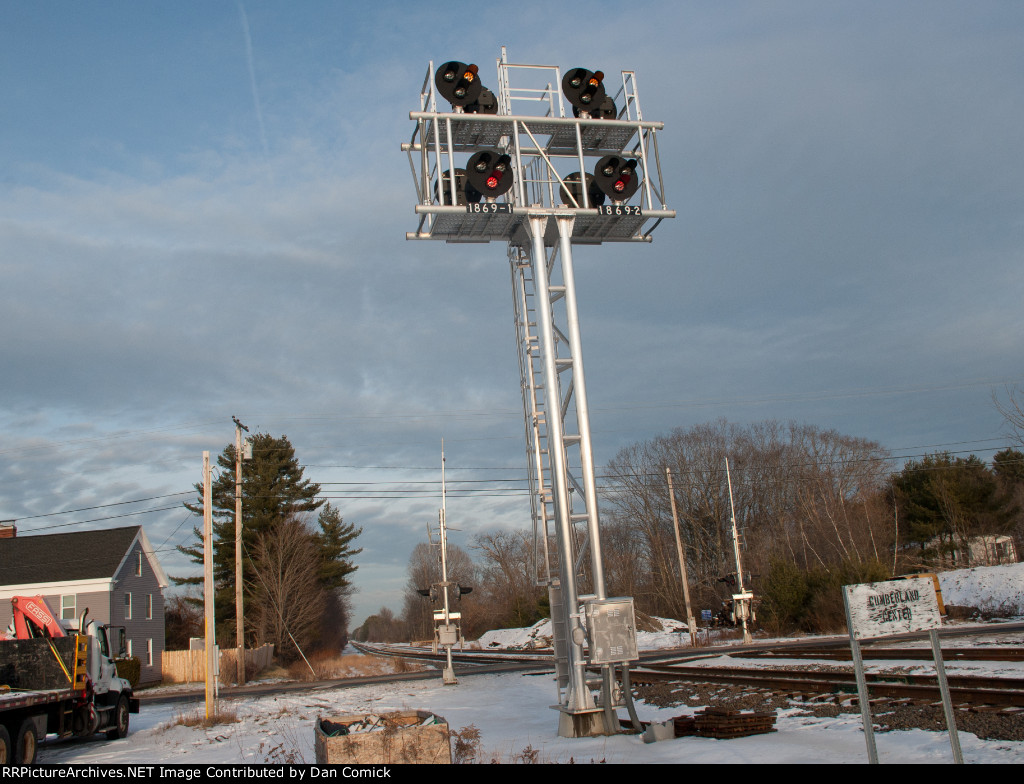
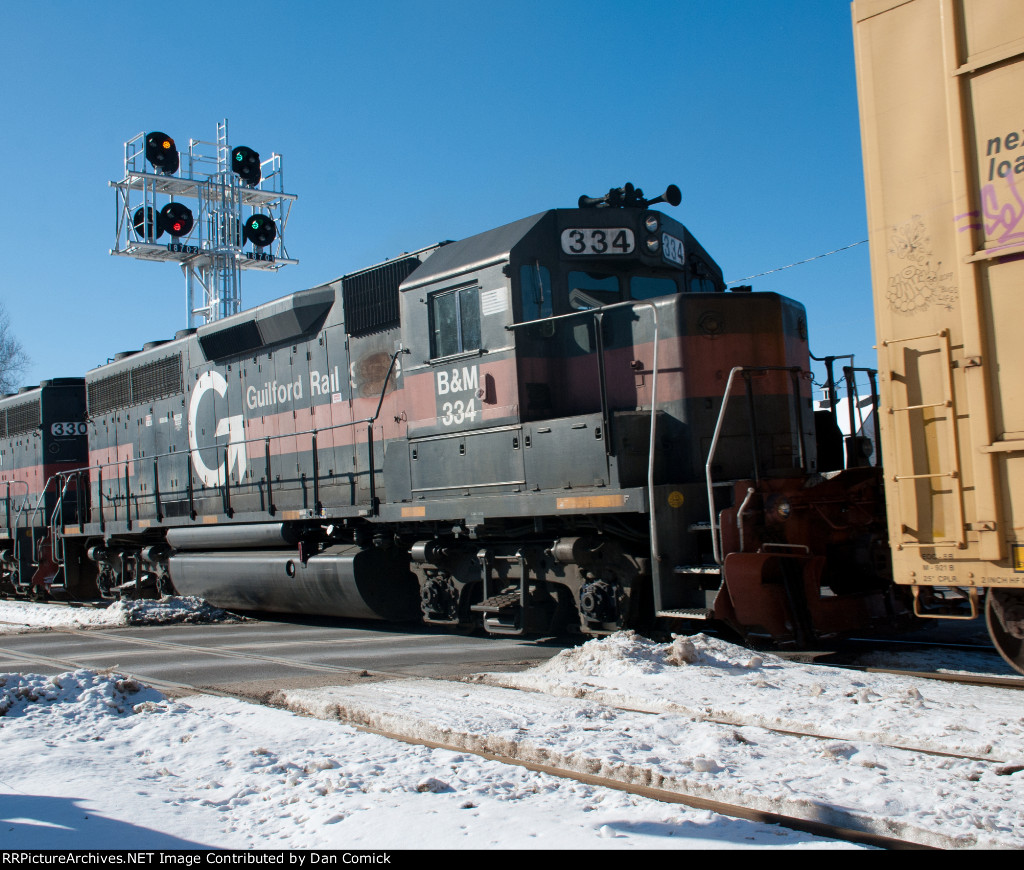
First we have this new bracket mast near Cumbermand Center, Maine and not only is it a bracket mast, but it also shows us that the Guilford is still employing the antiquated Double Green Clear signal aspect from the old Boston and Main days!


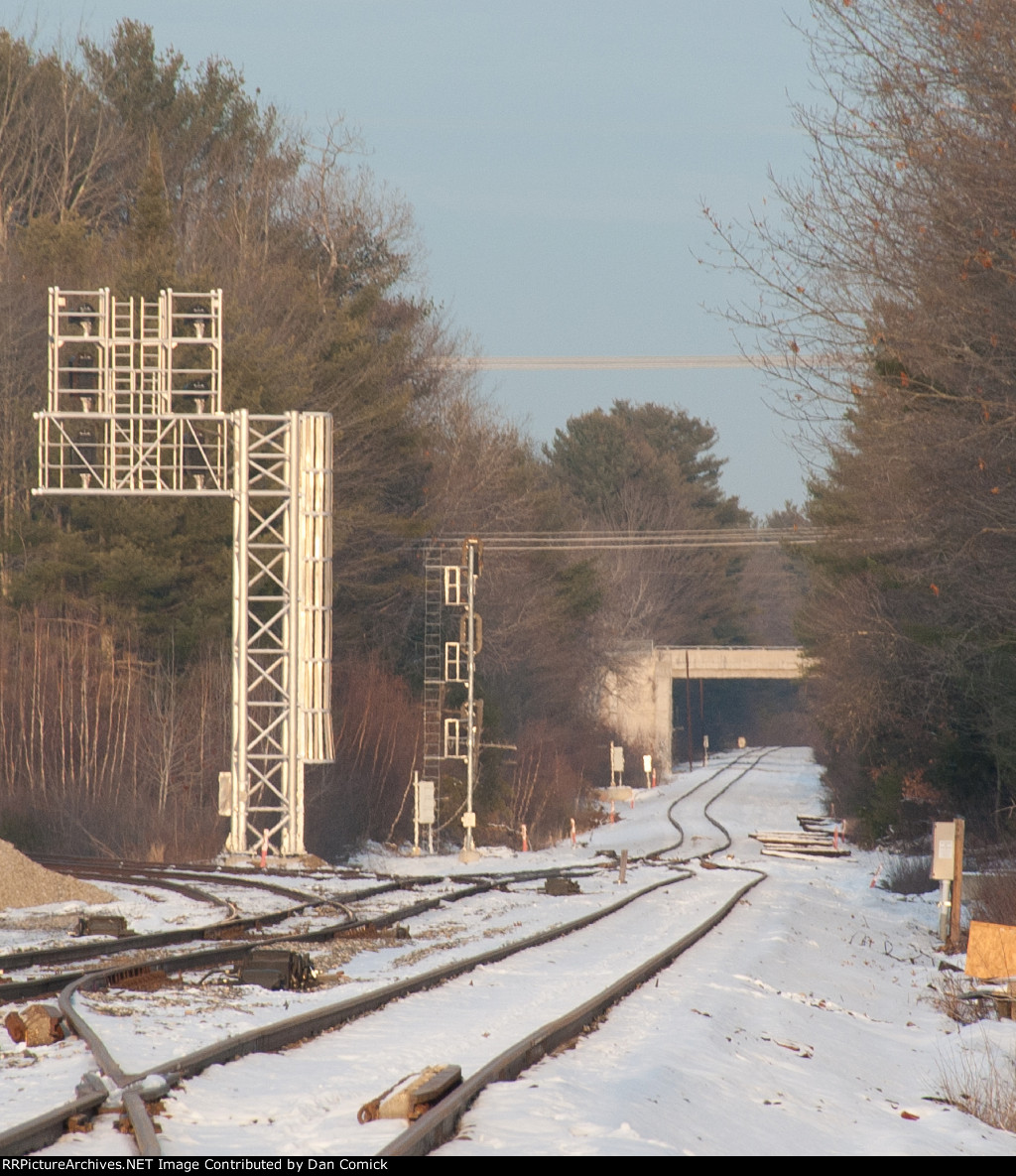
Although unfortunately not target signals, the nearby CPF-185 is also sporting a new cantilever/bracket hybrid for movements off the Brunswick Branch (now used by Downeaster trains).


Speaking of the Downeaster, check out this new doll arm equipped bracket mast protecting a crossover just east of the Lawrence Station on the MBTA Haverhill line.  Not exactly a Guilford  purchase, but don't think that they probably don't have at least a little input.


Well that's it for now.  Hopefully we will see more wacky stuff like this in the future, as opposed to NS style Darths and cantilevers.

Sunday, June 30, 2019

God Bless the Guilford

In this age of Darth Vader signals and shiny metal structures, it's nice to find a railroad that isn't afraid to stick with tradition, especially if tradition means thinking outside the box.  It wasn't long ago that signal departments would customize their hardware based on local circumstances or what they had sitting around the shop, as opposed to whatever some subcontractor is influenced to buy.  

Take the new interlocking at the west end of the new Wachusett MBTA station on the Guilford's Freight Main Line.  The eastbound mast signal has been installed across the opposite main line track requiring a doll arm.  If this isn't rare enough the Guilford decided to use a blue marker light instead of a blue reflector and even then they went with a GRS marker searchlight instead of something current.


If that wasn't odd enough look at the Westbound signal.  Instead of a cantilever or signal bridge the Guilford went with a three track bracket mast. I'm not sure I am aware of a similar structure in North America.  The rightmost signal is an automatic for the opposite main, the center the adjacent main and the leftmost, the station track.


Of course it doesn't stop with signals as one can see with the second hand standard cab GE's. :-)

Thursday, May 19, 2016

Bracketology

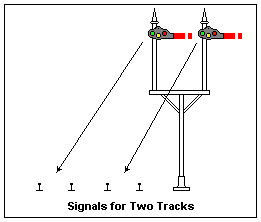
The bracket mast is another one of those signaling items that appear in North America, but few other places.  While similar to the British style junction signal with multiple signals applying to a single track to indicate route, the multiple signals on a North American bracket mast each refer to a different track.


What drove the use of bracket signals in North America was the combination of needing right handed placement due to the limited view ahead from steam locomotives, the need to accommodate multiple tracks in the same direction and the desire to save money.  To put it more simply, when the PRR needed to install new signals on a 4-track main line back in the 1870's it could either build costly signal bridges or put up one single bracket signal that could apply to both tracks.  It would have another resurgence with the advent of CTC where once again adjacent tracks could have traffic moving in the same direction.


The bracket mast's downfall was due to a number of reasons,  The ICC relaxed the rule on left mounted signals, railroads reduced the number of 3+ track main lines and double stack trains required bracket type signals to be mounted even higher so that they could still be sighted over 20 feet of containers.   I  just wanted to take the time to go over some of the basic types of bracket mast and the context in which they appear.


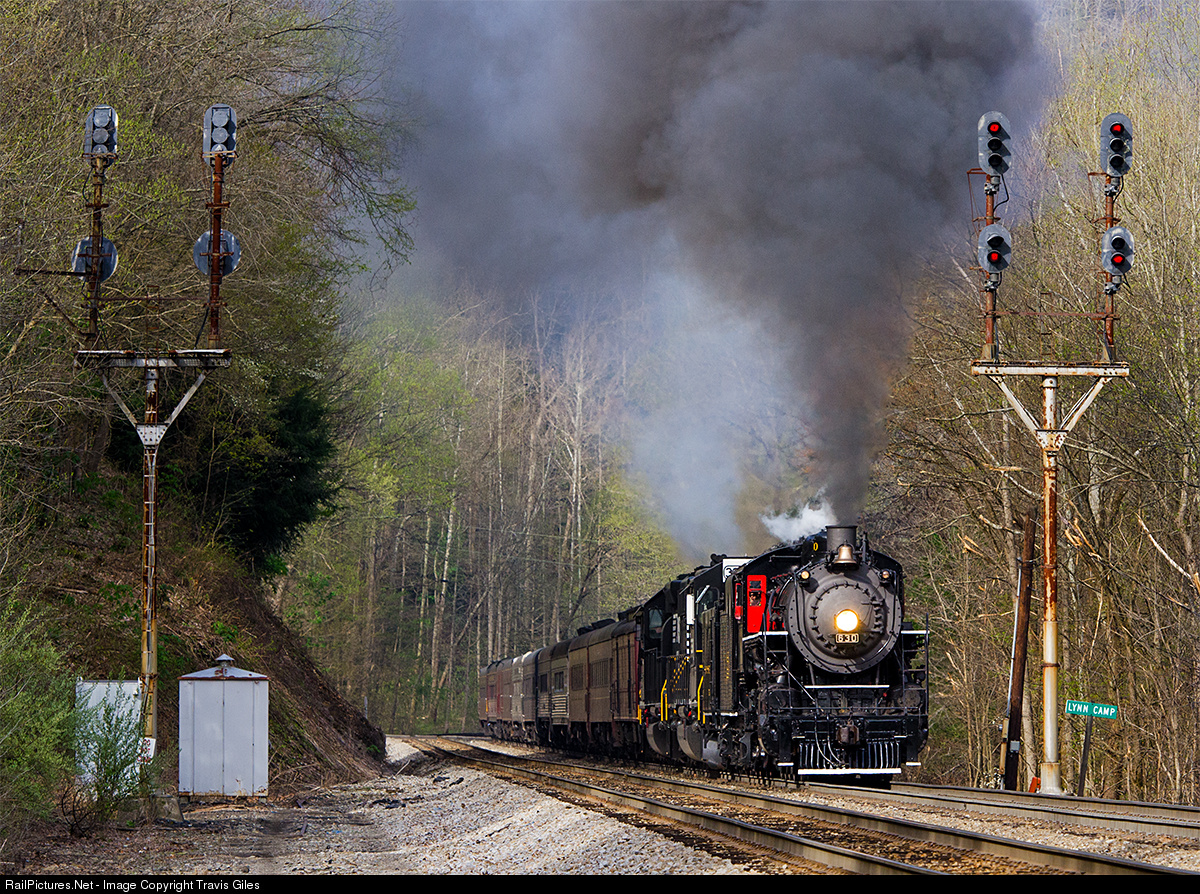
The earliest (steel) bracket masts used lattice steel uprights like this one seen at BRYN MAWR interlocking on the PRR Main Line.  It is worth pointing out that brackets are often utilized as glorified masts when only one signal is fitted.


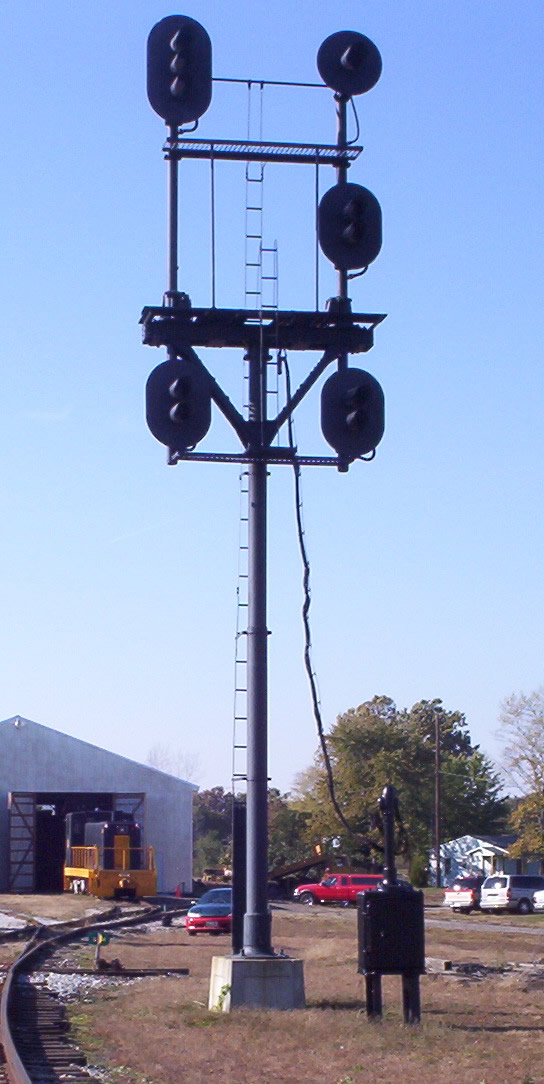
The most common type of bracket mast is what I like to call the Y style due to the large central support and twin arms that hold up the individual signal masts.


Brackets are known for their generous platforms that support the C&S workers below each signal head.


Y brackets can be upgraded with new signals such as these 1980's vintage US&S modular traffic lights.


The square bracket was made by US&S and was only seen on a few railroads such as the Reading.  It featured signal supports with two horizontal connections to the central mast.  Above we see an older lattice version and a newer steel pipe version.


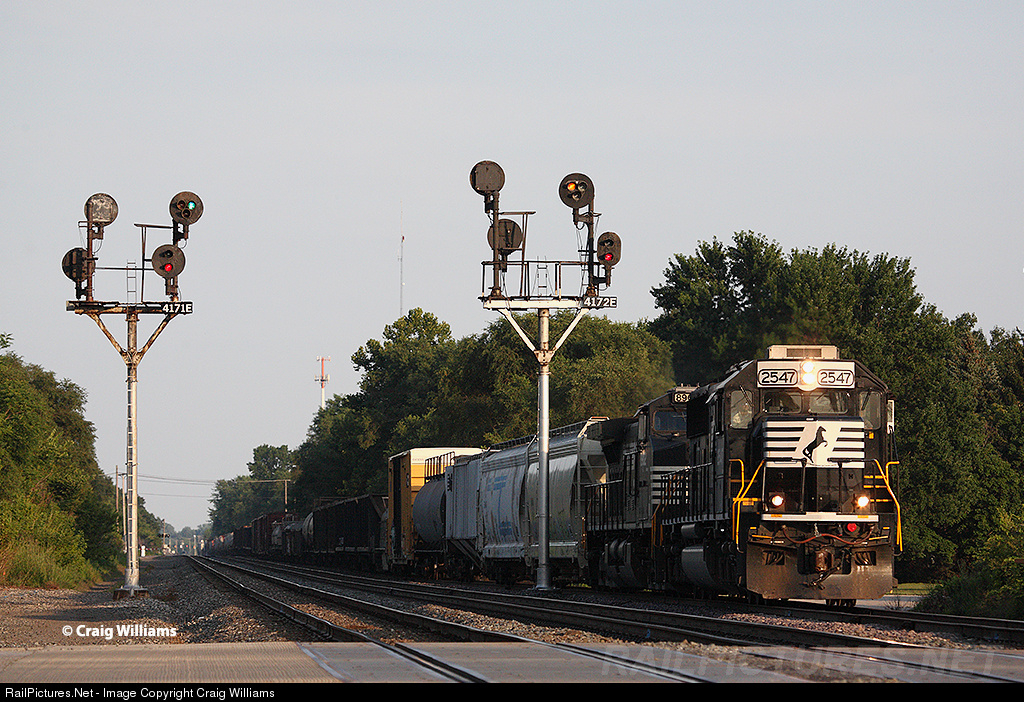
The Nickel Plate used a variation of the square bracket that featured square signal supports that extended below the platform, however as you can see it is still a modified Y bracket.


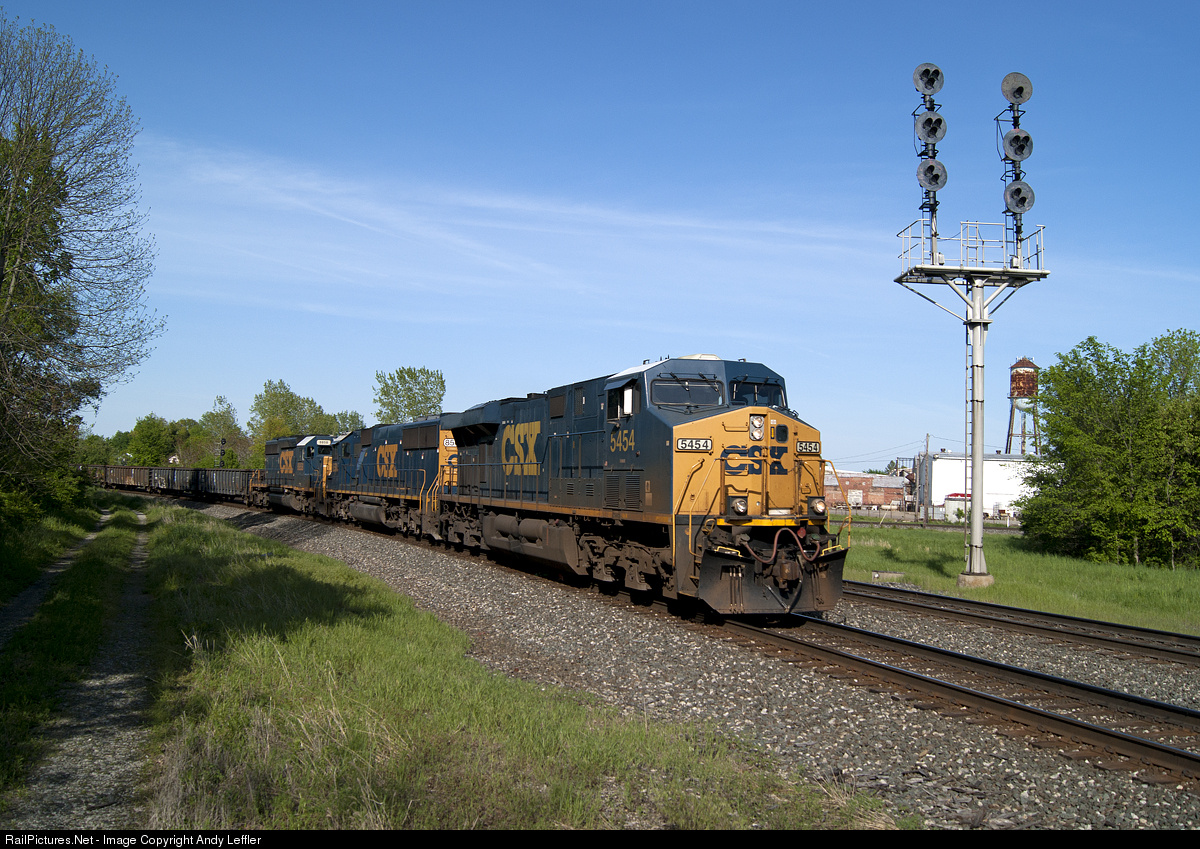
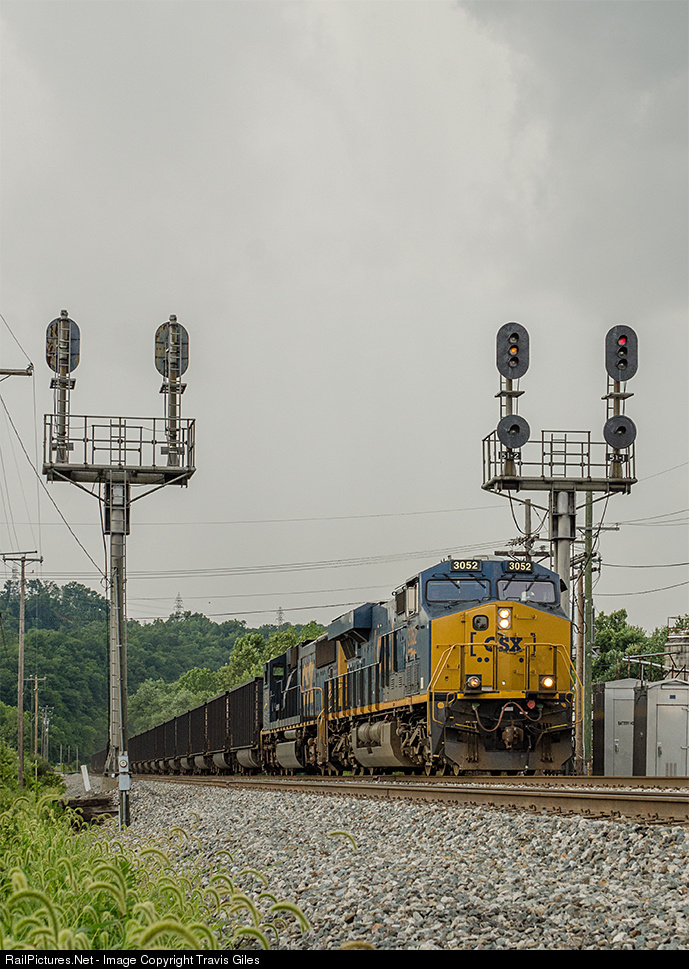
Y brackets eventually evolved into this modern aluminum design popular on the former NY Central parts of Conrail.  These three headed signals illustrate the extreme heights that bracket masts could reach which may not have been popular with maintainers.


Of course bracket masts can come in all levels of complexity.  This modern Nickel Plate example (same as the Conrail one above) sports only a single searchlight head per signal.


Bracket masts can also be combined with virtual headed signals as seen here on the former MILW route in Wisconsin displaying Diverging Clear.


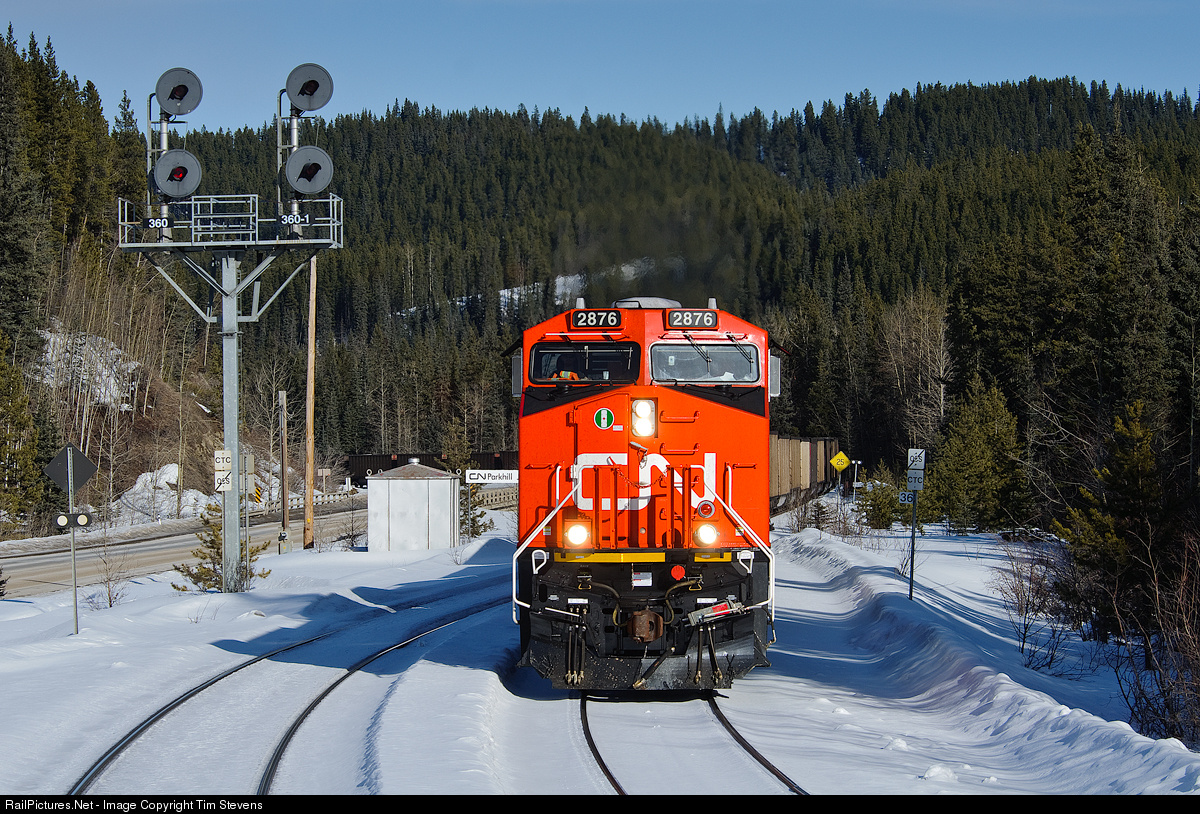
Here we see perhaps the ultimate Y bracket design up in Canada with a box steel support.


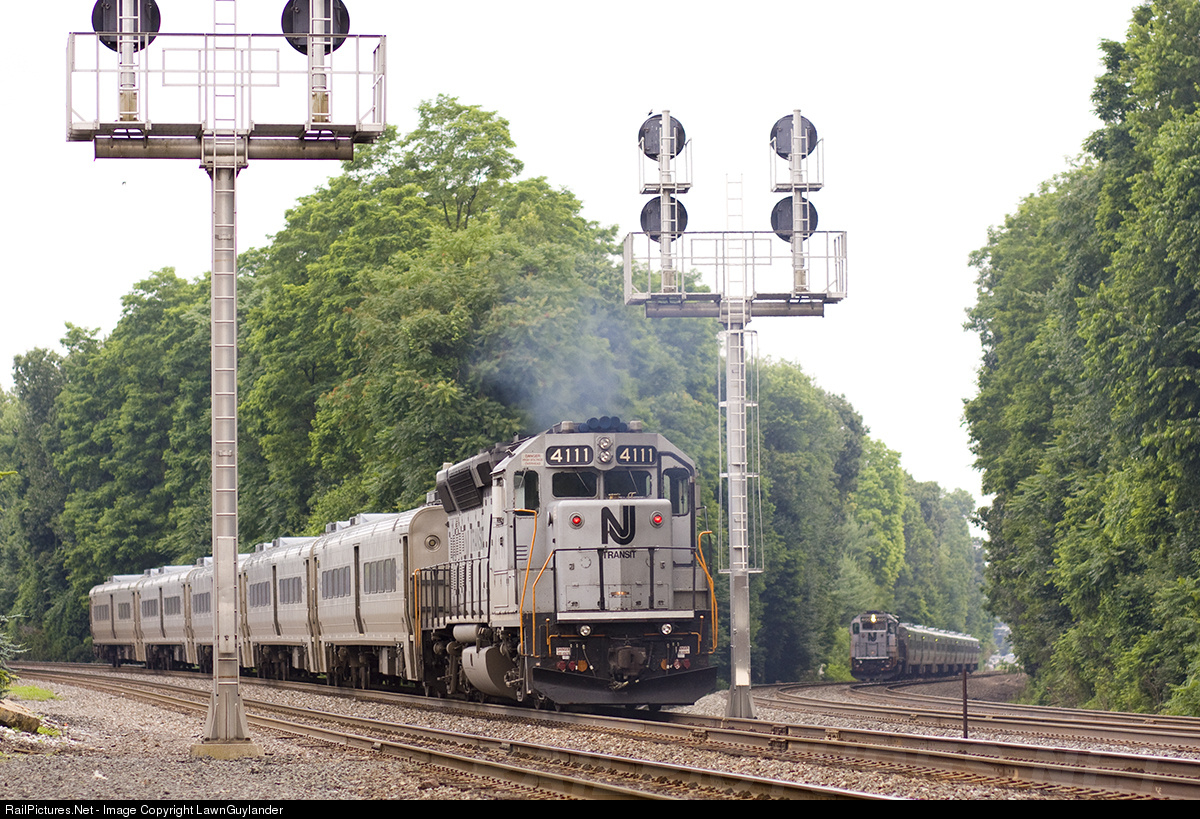
 Don't think we're done saving money yet because the bracket underwent another letter revolution with the T type bracket seen here in service with NJ Transit.  These consisted of one aluminum tube resting perpendicular across a vertical support tube.


This type of  T bracket, seen here on a former C&O line, but also popular with Conrail, featured a slightly more elaborate attachment.  Note the contrast between the "old" elephant ear signals and the modern tubular masts.


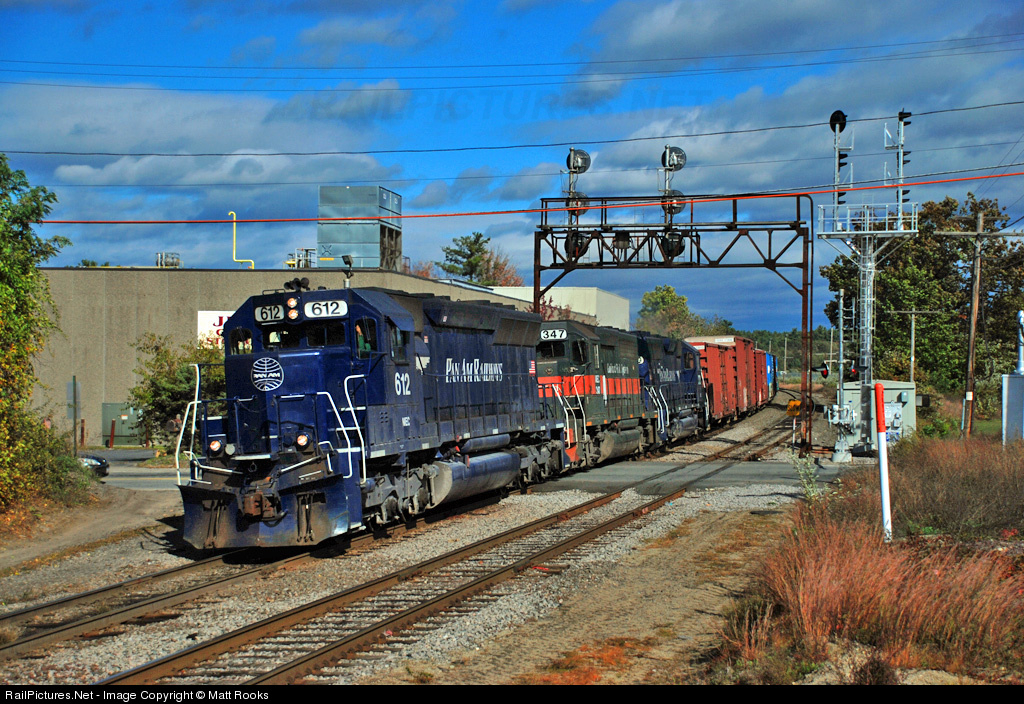
Today the only railroads to still regularly install bracket masts are the MBTA and the former Guilford Rail System in New Englande.  Seen above is a brand new Y type with Darth Vader LED signals.  The MBTA still installs target type color light signals.


When Conrail implemented double stacks on its Chicago Line in the early 90's, it hit upon the clever idea of turning one of the two signals on each bracket to convert them into glorified masts.  This eliminated the need to either install new mast signals or raise the height of the bracket signals above the level of the double stacked containers.


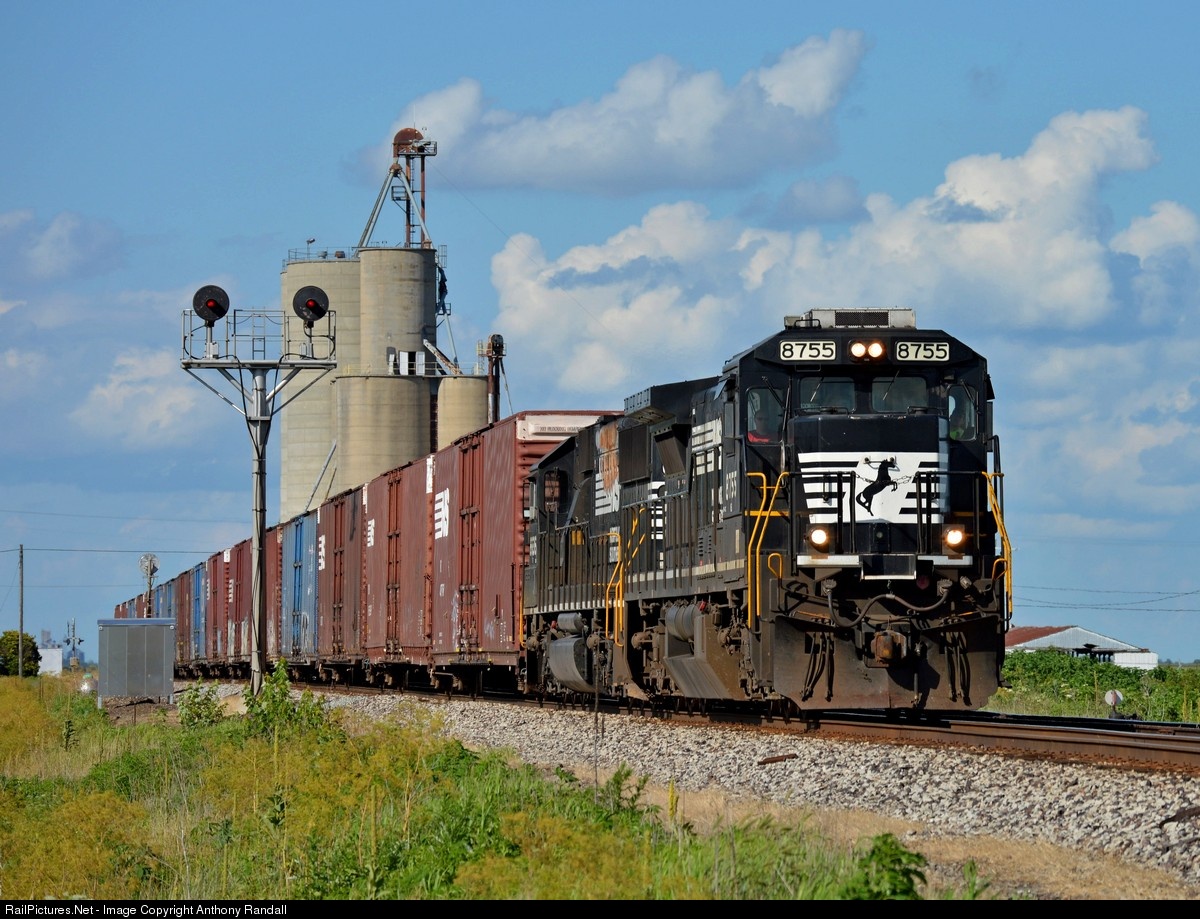
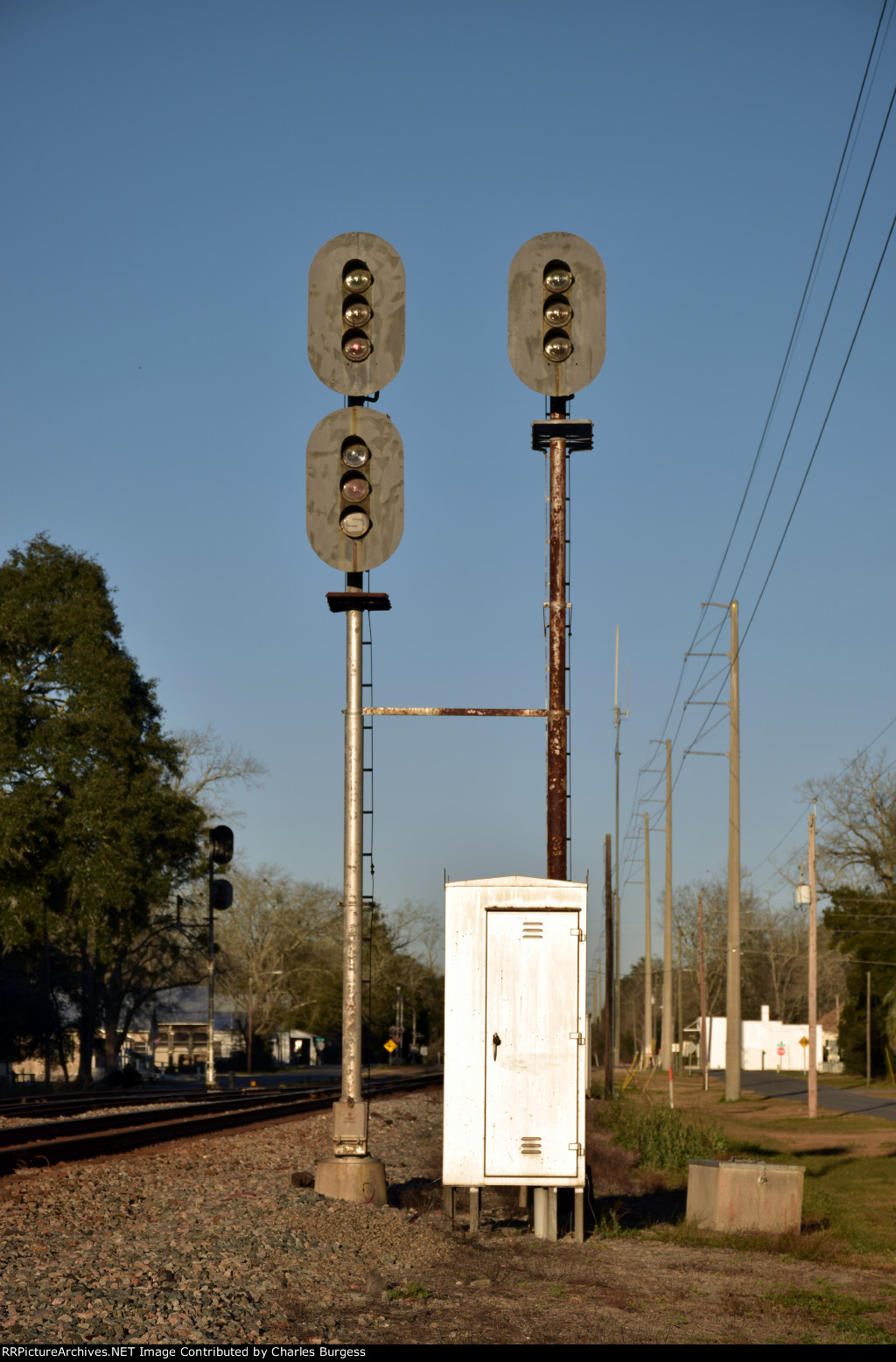
Of course no discussion of brackets would be complete without the poor man's bracket, which consists of two masts set side by side.  This was mostly a Seaboard innovation in the southern part of its territory.

Saturday, October 6, 2012

Trading the Uncommon for the Rare

The MTBA owned portion of the Fitchburg Line is being re-signaled and while this will ultimately lead to the closure of Waltham Tower and its increasingly rare US&S Model 14 machine, it has created a rather interesting conundrum for the committed signal fan.  The junction of the Fitchburg Line with the Guilford Rail System's freight main line is being reconstructed to accommodate the second track being added to the MTBA portion of the line and of course the relay based interlocking plant with its Boston and Maine era signaling hardware is going to be replaced because what good is Federal money if it can't be used to help out a private for profit corporation.  The silver lining is that a pair of rather spartan B&M two track signal bridges equipped with three head US&S searchlight signal masts are being replaced by brand new target type bracket signals, similar to ones installed previously on the Haverhill Line resignaling project.

While the loss of searchlights, especially US&S H-2 units is always tragic, the truth is that the bracket mast is far more endangered on the North American rail network than the searchlight signal is, especially if Unilens and new LED searchlights are included.  Today the MBTA is the only outfit that still regularly installed bracket masts after NJT generally dumped them in favor of standard signal bridges.  So I guess I'm have to be contented with the silver lining of getting a brand new instance of something that has become increasingly rare.


Monday, April 9, 2012

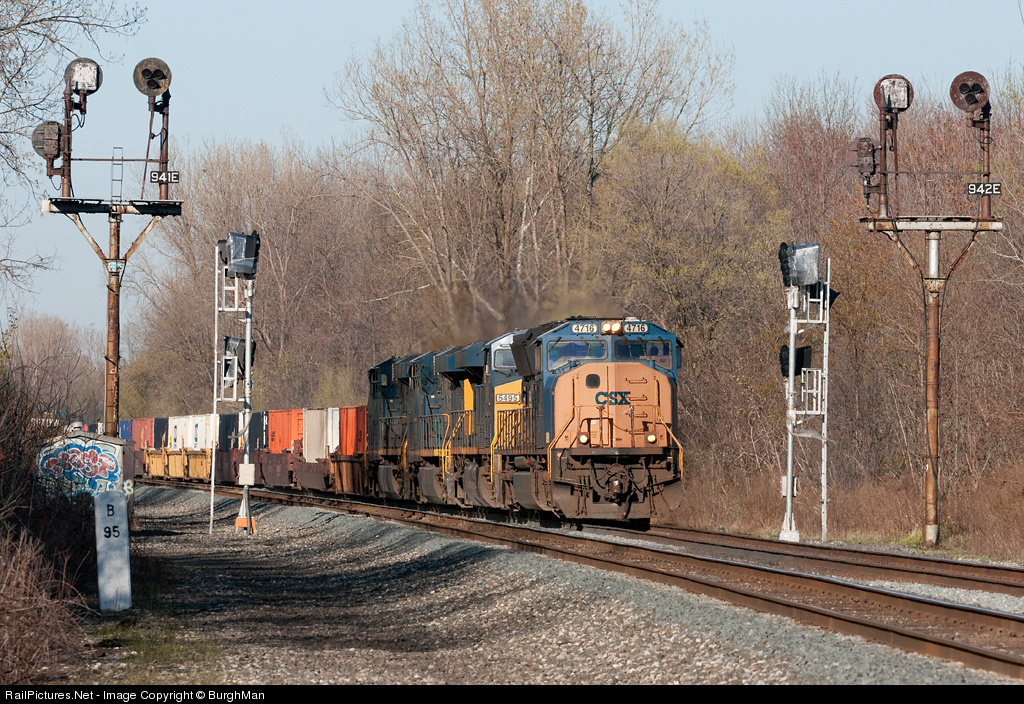
CSX Bracket Buster

In today's news we find CSX getting ready to tear down the former New York Central bracket masts at MP 94 (West) on the Chicago Line.  This is not part of a re-signaling, which was performed by Conrail in the 80's or 90's, but just a replacement of the rusting bracket masts and signals.