Search This Blog

Showing posts with label CSX. Show all posts

Wednesday, April 29, 2026

Caught on Camera: New CSX Signal Rules in Action

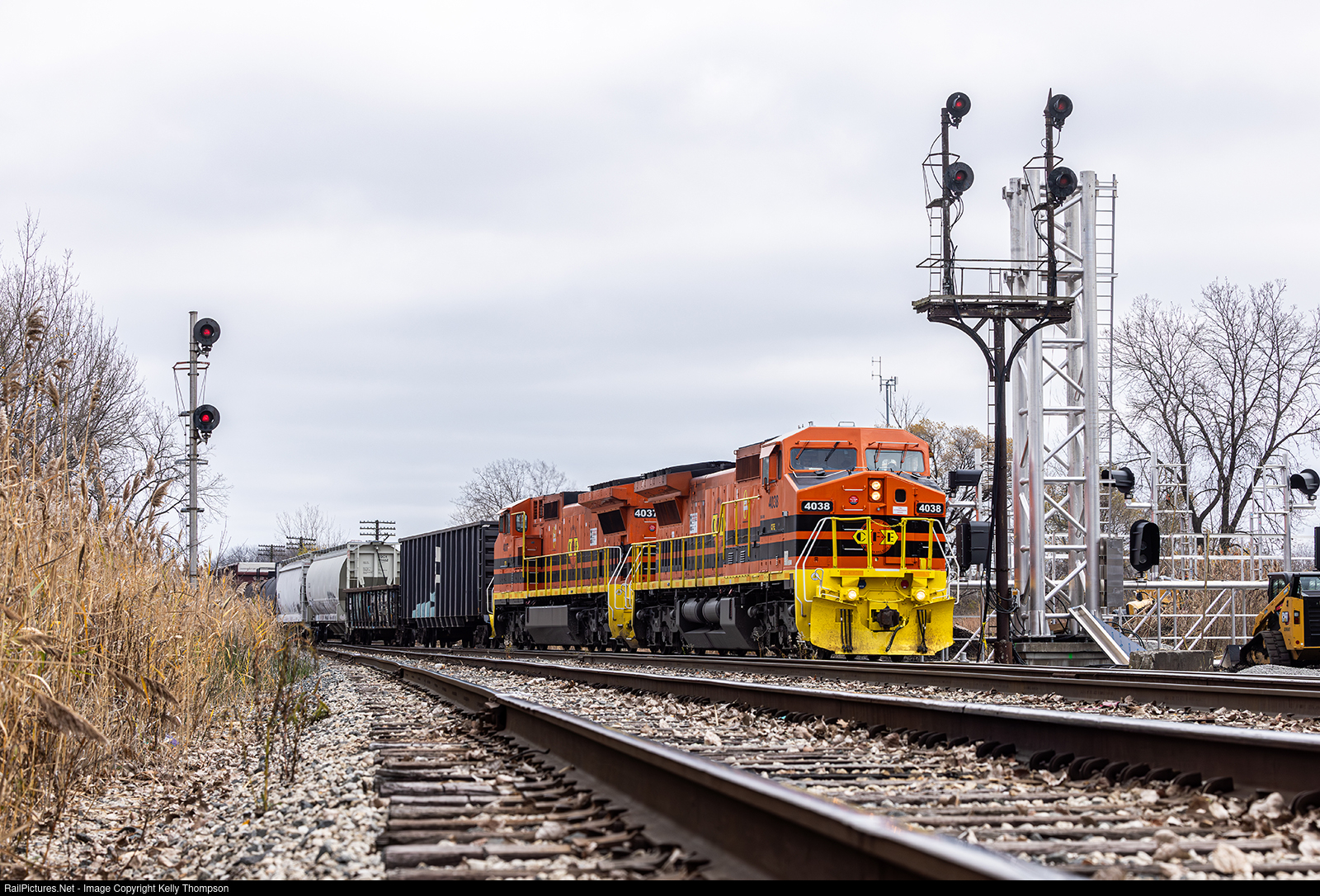
A few months ago I posted about CSX's two new "Canadian" style signal rules, 281E Limited Approach Medium and 281F Limited Approach Limited, to augment its existing Rule 283A Medium Approach Medium and 283B Medium Approach Slow. Although established in 2024, I had not been expecting to catch one in the wild for some time as railroads tend to bend over backwards to avoid signal modifications if they can be avoided. Sightings of the new signal indications had mostly been in former Seaboard System territory in Georgia and Florida. Therefore you can imagine my surprise when, after stepping off Amtrak Empire Service Train 281, I saw a Rule 281D Limited Approach upgrade to Rule 281F, Limited Approach Limited at Chicago Line interlocking CP-292.

Now Rule 281D Limited Approach has been present on the Seaboard main lines for several decades, and although it is an odd duck, by seeming to authorize Limited speed up to a stop signal instead of Medium, this could have been present as part of the general Chicago Line re-signaling of the 2010's. The Rule 281F indication has to have been added since September 2024  so that is evidence of more system-wide changes on the part of CSX. 

As to why CSX is retrofitting existing interlockings as opposed to using 281E/F only in new projects my guess would be this is a downstream cost of PTC speed enforcement. Not so much in the sense that crews would "cheat" when 283A Medium Approach Medium was displayed for Limited Speed turnouts (although they probably did), but PTC's conservative braking curves could be raising the cost of signal indications that leave speed on the table. 


Sunday, April 12, 2026

CSX Removing Cab Signals Is Not an "Upgrade"

Ever since CSX turned against the cab signaling system on the RF&P, the "Rule 562" cab signaling without fixed wayside signals on the former Conrail Boston Line has looked increasingly out of place. The only part of Conrail's 1990's cab signal push that was taken over by CSX, the Boston Line east of CP-187 has technically required CSX to entire that the 4 or so daily road freights have CSS equipped leading locomotives that have also carried out the perfunctory cab signal test. Although Selkirk yard has to handle similar requirements for freight on Amtrak's Hudson Line, those can be handled by a dedicated pool of local power. Road freights, on the other hand, are likely to arrive with unequipped leaders requiring a potentually time consuming engine swap.

Although Boston Line cab signals were recently extended east of Framingham as part of the MBTA's ACSES PTC implementation, CSX has become increasingly vocal about removing the Conrail era system west of Worcester. This "demand" has made it into a state funded East-West rail corridor improvement program and if you think that using state funds to adjust a fully modern, privately owned signaling system is insulting, the state has the audacity to label the cab signal removal as a "capacity improvement".


For anyone not familiar with the technology, continuous cab signals provide real time block status updates when a train is within the typically 2-mile long fixed track circuit blocks. Through this mechanism cab signaling is what provides a capacity improvement over fixed wayside signaling. (Recall that as far as I am aware, ETMS PTC systems are not cab signaling as they currently do not meet the requirements for safety critical operation. IE they can be trusted to stop trains, but cannot make them go.)

So why is a state government website proclaiming this to be a capacity improvement? It's possible that they figure its best to frame every state funded change as an improvement and assume that only me and three other people will ever notice. However a recent photo I came across hints at what CSX might be doing to make this statement true. 

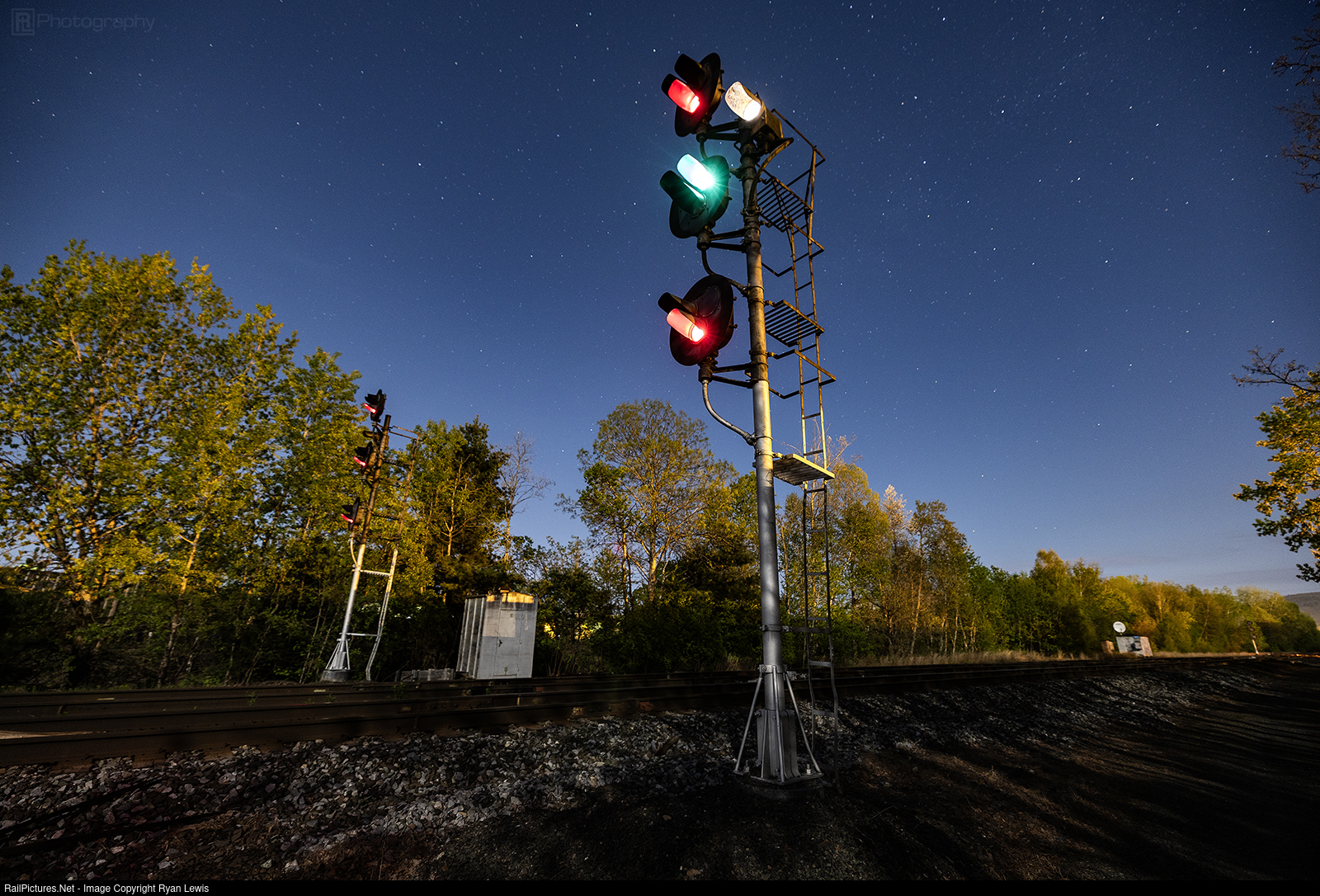
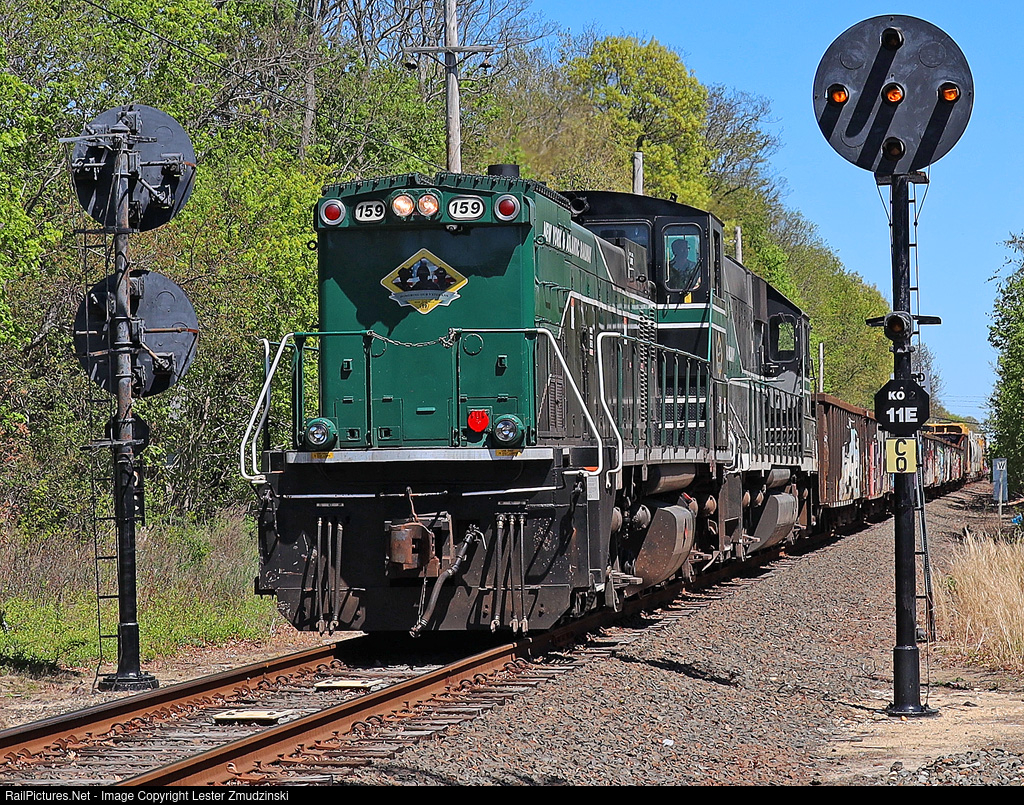
The photo shows a Conrail era signal in the Pittsfield area displaying a Rule 280a "Clear to Next Interlocking" 'C' lamp. This is supplied in Rule 562 territory to allow trains to proceed to the next interlocking at track speed in case of cab signal failure. Sometimes called "super clear" it is normally a hard signal to catch in the wild since cab signal failures aren't typically predictable. While it is certainly possible the photographer got lucky or caught wind of a special movement, I believe a more likely situation is that CSX is running non-cab signal equipped leading locomotives on its through freights and relying on Rule 280a as a standard operating procedure. This would create functional blocks over 10 miles long, thus seriously reducing capacity. So in theory, by jamming a broom handle in the spokes of the bike it is riding, CSX could have created the conditions where removing continuous cab signals would increase capacity. 🙄


Saturday, March 21, 2026

Little Boxes, Little Boxes

If the age of the Safetran scallop shell is actually ending, what appears to be replacing it are little boxes and they all look just the same. Of course modular square box housing signals are nothing new with the GRS D Type seeing widespread use up through the 1980's along with offerings from Harmon and L&W (which I have touched on before). What's interesting is that the new era of "little boxes" appear a bit more homogenous than the last so if we are seeing an end to the scallop shell era, what comes next could be equally bland. 

Above are new signals from Lindsay recently installed on the DART Silver Line. Lindsay had previously gotten the adjacent Texrail account and at the time I noted that its single color modular offerings still featured the GE logo, which put them in the lineage of Harmon.  Well the new batch used on the Silver Line have swapped out the GE circle for the Lindsay swoosh (which itself is vaguely reminiscent of the original Harmon logo). 

Now look at the new signal from Progress Rail that is being deployed on new projects by CSX. Looks awfully familiar to what Lindsay is selling. Keep in mind that little of these box designs would be protected by intellectual property apart from the logo so new market entrants are effectively free to copy what is in essence a cast aluminum box with a hinged door.

Of course this warrants comparison with Union Switch and Signal's attempt to enter this market segment 30 some odd years ago. While also a box, the lines are crisper and the design far less cluttered, which probably indicates an elevated price point. DART famously used blank US&S modules to increase the height of its mast style signals, but away from the public transport sector, the US&S boxes saw limited adoption.

Anyway with the scallop shell monopoly now broken, it will be interesting to see if we get additional "little box" suppliers or perhaps something more paradigm changing like LED searchlights.

Monday, December 1, 2025

CSX Signal Rules Go Canadian

In September of 2024 CSX added two new signal rules to its rulebooks, Limited Approach Limited and Limited Approach Medium, and examples of both are just starting to appear in the field. In fact I believe this is the first use of a non-cab signal related multiple lamp flashing signal in the United States. If these rules and multi-flash aspects sound both strange and familiar at the same time its because these sort of "combination" signal rules are a standard thing north of the border in Canada. 


Since the steam era our friends up north have taken the concept of speed signaling to a bit of an extreme with every possible combination of one speed going to another speed given an explicit signal rule. You want to go Slow Speed to Limited and Limited to Slow, Canada has you covered. 


Everywhere else in North America has realized that this extreme amount of signal rules is dumb and will lead to confusion and higher training costs. While some combination indications like Medium Approach Medium or Medium Approach Slow occur frequently enough to be worth including, the remainder are unlikely to see much use and are better off being substituted for (for example downgrading Limited speed combinations to Medium) or covered by special rulebook instructions like NORAC famously allowing trains to diverge over an Approach X type signal indication if the previous signal was not Clear. Anyway it looks like CSX has thrown its lot in with the Canadians and started to care that trains keep that extra bit of Limited Speed when diverging back to back. 


Limited Approach Medium was spotted at on A-Line at SOUTH MICRO where southbound Amtrak Carolinian Train 79 will make an early divergence to its eventual turn off at SELMA with the NORTH SELMA crossovers in between. While the NORTH SELMA crossovers are Medium Speed, T79 would be taking a straight route there so many they just wanted to get it slowed down early for the tight turn onto the H-Line an additional mile beyond. Youtuber Danny Harmon managed to catch a Limited Approach Limited at 10TH ST interlocking on the Vitis Sub. He was also puzzled as to the purpose as the next two signals in the northbound direction were intermediates at standard 2 mile intervals. 


Anyway if you would like my opinion of these new signal rules, necessity aside CSX did a good job picking from those signal aspects that were available to them. Despite CSX's major screw up picking R/Y/G as Medium Approach Slow, which forced Medium Approach Medium to use R/Y/*G*, that mainly presents a problem for a potential Medium Approach Limited. Using R/*Y* for these Limited Approach X signals jives with CSX choice of R/*Y* for Limited Approach. Thus we have Rule 1281-D R/*Y* Limited Approach, 1281-E(?) R/*Y*/G Limited Approach Medium and Rule 1281-F(?) R/*Y*/*G* Limited Approach Limited. (Note I could not determine the actual CSX signal rule numbers at this time so those are my best guesses).

Saturday, May 31, 2025

Adios B&O MEXICO Tower

The reason I tend to miss a lot of closures and demolitions is because I don't tend to seek out news that will leave me bummed and depressed. In another example of bad news I missed the B&O's "M" aka MEXICO tower, near Cumberland, MD, was apparently demolished in September of 2023. The three story 1950's brick tower was similar to many across the B&O and, with its CPL bracket masts, had served as a backdrop to the local railfanning scene for decades.

CSX has been engaged in a long term project to convert the former hump classification yard to flat switching and a large obstacle to this was the physical hump and related structures.  MEXICO, built at the same time as the classification infrastructure, was located some 2 miles away at the eastern end of the yard leads and was in good structural condition.  Although its possible that CSX plans to alter the track configuration at MEXICO interlocking at some future date, I suspect that since they had already contracted for the asbestos remediation guys to come out for the yard hump tower, also getting rid of MEXICO could have come with little additional cost. 

Former Cumberland Yard hump infrastructure

Closed as an interlocking station in the mid-1990s, the relay based GRS plant was not re-signaled until the mid-2010's. Unless similar B&O towers at GREENE JCT (boarded up) and PATERSON CREEK (derelict), MEXICO saw use as an active railroad structure, either for maintenance crews or a rest facility for departing road freights.  The implementation of new service plans that generally sidelined the old system of classification yards may have played a role as Cumberland would see less originating eastbound trains and therefore less need for a standing structure to support the crews.

I personally only get to visit the location once on the ground, getting my photos from the road bridge like everyone else, although I had many opportunities for photos from the Capitol Limited with the last occurring in 2019.  Of those B&O towers that still survive, PATTERSON CREEK, only about 4 miles away from MEXICO as the crow flies, would be the most similar example.

Friday, May 16, 2025

No Approach! The Duality of Uncommon Signals

We all learn about traffic lights in elementary school.  Red means stop, green means go and yellow means slow or caution. These are the basics of automatic block signaling that also tend to get taught in entry level railroading books. Now its pretty logical that a signal might lack the ability to display a clear indication. A permanent stop condition or the end of automatic block territory are both situations where a Clear signal would not ever apply. However there are a few situations where signals in North America can display Stop or Clear, but not Approach on the full speed head. 


The first is at interlockings outside of automatic block territory like a diamond crossing or drawbridge. The signal provides movement authority through the interlocking and without track circuits outside of the interlocking limits there is no "prepare to stop" points an Approach type signal would apply to. Trains will have their own movement authority like a track warrant so a clear signal is basically the interlocking telling the train "you do you". One might expect signals in this case to display a Restricting indication, instead of a clear, and sometimes they do, but that is going to come with a 20mph speed restriction, or less, which can be a time hit on unsignaled lines with higher track speeds. 


The next situation, Manual Block territory, would be very familiar to those in other parts of the world. Although almost extinct in the US, there remains a bit of manual block still in service on the LIRR and the way to identify a manual block signal is the lack of an approach indication. (This also applies in general to historic PRR signaling charts.) Signals will display Stop or Clear Block with any Approach functionality handled by a separate distant signal towards the end of the manual block. The PRR even went one further sometimes substituting the \ "Caution" indication in place of / Approach. 

Sometimes its really not good to have locomotives stopped and waiting at a specific signal,  Maybe there's an issue with a grade crossing, or noise, or diesel exhaust. In this case it would not be desirable for trains to approach that signal prepared to stop, so a preceding signal will either hold trains short or allow them to approach a signal with some sort of proceed indication. The most notable of these is at the entrance to Washington Union Stations 1st St tunnel that the currently diesel hauled northbound trains cannot enter without having a signal displayed further on that allows them to leave said tunnel. Another nearby signal location at CSX's LENFANT interlocking might lack southbound approach signals for a similar reason due to an overbuild.

One somewhat PRR-specific situation is where interlockings are provided with exit signals and because of the short distance between the interlocking's entrance signal and exit signal, Slow Approach is used instead of Approach. This creates an upper head that can only display --- Stop or | Clear. The C&O also made frequent use of exit signals, but seemed to keep their upper head Approach indication, although Medium Clear to exit Approach allowed the C&O to minimize the use of R/Y/Y/ Medium Clear.

A fairly new situation where Approach has been "omitted" involves high speed turnouts. At certain points on the NEC, Amtrak has decided to combine a flashing green "Cab Speed" signal indication with R/*Y* Medium Approach. At the end of a main track that converges into another via a high speed turnout, the result will be an upper head with green and red lamps/positions and no yellow lamp/position.
 

Saturday, April 12, 2025

CSX Continues to Attack the Big Four

Turns out that the River Line isn't the only part of Conrail territory currently under attack by CSX signaling crews as I just saw that CSX had replaced the 1990's Conrail vintage signals at CP-37 on the former Indianapolis Line in Wellington, Ohio. This portion of the line had been re-signaled late in the Conrail era and could otherwise be considered "modern" instead of a NY Central legacy holdover. The three track eastbound signal bridge could be considered a local railfan landmark.


The westbound cantilever was likewise replaced. The portion of the Indy Line between Berea and Greenwich is notable for carrying bulk of CSX traffic from the former Conrail territory in NY State before it switches onto the old B&O route to Chicago via Willard. 


To be determined if this is a wide area project or more hen pecking. The signal aspects being Conrail or Seaboard will be a hint. Other signals south of Greenwitch, like these NYC-looking tri lights at CP-189 in Ansonia, OH, are also being replaced.

Unfortunately this is not a part of the country that I have good access to so hopefully some locals are getting all the necessary pictures.

Monday, March 31, 2025

Guilford Country Resignaling Updates

With the re-signaling of the former Guilford Rail System/Boston & Maine Western Route Main Line accelerating rapidly, I managed to carry out a multi-day road trip to gauge the situation and take what photos I could. With the re-signaling already complete between the Mass border an the Exeter, NH area I started at Dover, NH and worked my way north to Saco, ME.

My first discovery was that CSX was doing more than just swapping out the signaling and the signal rules. Outside of the MBTA zone the interlockings have all been renamed from the Guilford era CPF-Milepost format to location based names, some of which call back to B&M telegraph cores and others more modern things like road names. Overall this marks an improvement as the CPF names were a result of the crazy Guilford owner kitbashing a 715 mile long main line between Mattawamkeag, ME and Sunbury, PA in 1981. Changing the interlocking names was actually in support of moving away from the Guilford's "Freight Main Line" 0 to 715 mileposts. Unfortunately CSX did not restore the original B&M mileposts from Boston and instead established an MP 0 in Portland Maine that increases as one travels west. Although the chaining was not changed, stone "Boston" mileposts defaced with spray paint instead of reused.

Main track Clear at CPF-243

New signal bridge at Rollingsford Jct

In the Dover area the B&M signaling, including classic signal gantries, is very much on its way out. The holdout signals at CPF-244 in downtown Dover are also going to be removed without replacement due to the reduced need for switching movements that need to occupy the main line. Dover actually represents a bit of a B&M signaling island right now as just over the Main border, double tracking improvements have already ushered in Seaboard signaling all the way through Wells, ME.


Part of these improvements include a new full crossover designated WILLIE west of the Wells, ME Downeaster station. The only details of note is that standard CSX switch procurement is now from Apex and the color light signal modules are now from Progress Rail instead of Safetran.

Milepost 211 searchlight automatic. Note the new CSX milepost number.

The section between Wells and Saco was re-signaled by Guilford in the 1990's with brand new SA searchlights, however new signal mast footings are in place at all of the locations as CSX can't let us have nice things.  CSX has also replaced all of the former Guilford defect detectors with brand new units, which runs counter to their practice after the Conrail merger where CR readouts lingered for over a decade.

Turned signal mast at Saco.

At Saco a turned target type signal awaits an unknown fate. The sale to CSX caught some of the Guilford's own re-signaling projects in mid-stride. If any Federal funds were used as part of Downeaster service improvements, it might be difficult for CSX to scrap this work so we will have to see what they choose to do. 

CPF-LO w/b dwarfs

The corridor between Lowell and Ayer has seen no recent activity on the part of CSX. This might be due to the state of Mass owning all of part of the infrastructure or just the lack of passenger operations bumping down the priority. I am pretty sure the state owns the Northern Route Main Line to the wye junction north of town and possibly to the New Hampshire border and plans for Nashua commuter rail will likely dissuade CSX from making changes the government might ultimately pay for. While I already reported on the re-signaling of Lowell's BY interlocking by MBTA, CPF-LO west of the station is intact, although all connections to MBTA tracks have been cut. 

CPF-307 eb-B&M signal bridge


CPF-307 new w/b searchlight mast.

The ABS signals and CTC siding on the Guilford track between Lowell and Ayer are also intact with each end of the siding featuring an intact B&M signal bridge. CPF-307 even has what appears to be a fairly new 3-head searchlight mast, although it is unclear if this was carried out under CSX or Guilford.

Saturday, March 22, 2025

CSX Finds a New Old Off Brand M23

I few years ago I posted an article covering changes to the US&S logo over time as seen on its M3/M23 line of electric point machines. This article also covered off brand copies of the M3 from companies such as Patco Rail Services and Vossloh. CSX in particular had gone all in on the Vossloh "VSM-24" product.

Well it appears that CSX has found a new supplier, kinda.  Apex Rail Automation appears to have taken over Vossloh's VSM-24 production line as the only thing that has changes is the stenciling and the lack of a cast company name on the circuit controller housing.

Of course the other news headline is that CSX is replacing its B&O era GRS Model 5F and 5H machines in B&O territory.  Maybe Vossloh made CSX a offer they couldn't refuse and then realized they then couldn't make a profit. We'll see if Apex has any better luck.

Thursday, January 30, 2025

The River Line's Last Conrail Signals - Part 1

Over the years I have reported on the CSX re-signaling efforts on the former Conrail River Line along the west side of the Hudson River. These efforts go back to the early 2000's as CSX looked to increase capacity on the route after its takeover and culminated in the recent re-signaling of CP-SK in Selkirk, NY.  CP-SK was able to hold out as long as it did because it was itself completely re-signaled by Conrail immediately before the CSX/NS split, dropping the need for capital improvement way down on the list. However for those Hudson Valley Conrail fans looking to get signaling fix, two small islands of Conrail era signaling remains. 

Back in the 1960's, the old West Shore route was given a healthy dose of efficiency by the innovators at the  New York Central, changing a double track line into a single track with passing sidings spaced every 10 miles. This budget CTC system featured single block, restricted speed passing sidings about every 10 miles and fit in with the decline in northeast freight traffic, especially after the Penn Central and Conrail was able to divert traffic away from the former NY Central main line and the West Shore Route. However, as intermodal traffic picked up in the 1990s, Conrail found its River Line under capacity as every pass would require a painfully slow restricted speed pull-in.  Therefore it began to signal the sidings and modify the old New York Central small target searchlight signals to support Medium speed diverging routes, generally working south to north.


Just prior to the CSX takeover in 1999, Conrail was largely finished with this project, however for whatever reason the old passing siding between CP-104 and CP-106 was found to be lacking and the siding was expended a little over a mile to the south to a new CP-102 with CP-106 also being completely rebuilt. In the same project,  the siding at the southern end of the line from CP-22 to CP-24 was extended to a new CP-26. In a manner similar to CP-SK, CSX put replacing both these patches of late model Conrail signaling low down on the priority list and today these two sidings and some adjacent intermediate signals are the only remaining Conrail signals on the River Line. Here in Part 1 I will cover the northern island with CP-104, CP-106 and the intermediate at milepost 100.

With CP-106 directly adjacent to US 9W just south of Catskill, NY and CP-102 behind the quaint West Camp, NY post office, both locations are generally accessible and equipped with two Conrail target type color light masts, a 3-lamp Safetran dwarf stack, CorTen weathering steel relay huts and those iconic blue station signs.


The the 1008/1009 automatic signal, distant to CP-102, is just south of the Malden Turnpike grade crossing at River Line milepost 102 and also pretty easily accessible. This one makes use of premium US&S target type color light signals as opposed to the Safetran signals at the two interlockings.

In a future Part 2 I'll throw up some photos of CP-22 and CP-26 the next time I find myself driving to Upstate NY or New England. It's highly likely that CSX will also replace all these signals whenever some manager happens to notice the non-conformity. Moreover, without their presence there would not be much stopping CSX from a wholesale change in signal rules on the River Line from Conrail to Seaboard, so get out there and get your photos of R/*Y* Medium Approach while you still can. 

Tuesday, December 31, 2024

New Signals at IVANHOE

Just saw this pic of new signals going up at IVANHOE crossing on the former Conrail Porter Branch. Built as the Michigan Central's main line into Chicago, these are likely the mast Michigan Central style small target searchlights on the route along with an equally rare bracket mast so if you happen to be in the area get your but in gear and get out there to get some photos.

 IVANHOE is where the Porter Branch crosses the EJE belt line, now owned by CN. It once supported a well known interlocking tower that was closed and demolished in the 1990's.


Owned by CSX, but previously used as a back door into Chicago from the Conrail Chicago Line, now owned by NS, the Porter Branch has been in a bit of a limbo since the Conrail split of 1999 with a lot of the traffic being from other railroads.  Many of its interlockings are diamond crossings and have already been re-signaled, but the Branch still retained NYC vintage GRS style G block and interlocking signals on the eastern end of the line including CP-243 as of fall 2024.

I had the privilege of riding this line in the fall of 2006 on an Amtrak detouring around a serious Chicago Line derailment where I also got to see the since closed CALUMET tower. 


Anyway, I guess we'll have to wait and see if this is the beginning of end of interesting signaling on the porter Branch or just another chapter in a long slow decline.