Search This Blog

Showing posts with label distant. Show all posts

Saturday, December 2, 2023

Caught on Camera: CSX's Gonzo Distant Signals

Distant signals, as defined as those that appear in otherwise unsignaled territory to warn train movements of an upcoming absolute signal (ie an interlocking), are seen in two flavors in the North American scene, fixed and dynamic. Many year's ago I discussed the use of dynamic distant signals on some Conrail Shared Assets lines in Southern New Jersey and although fixed distant signals are far more common, dynamic distants aren't remarkably rare. Today, most signaling systems make use of two possible distant signal rules. Approach the next signal prepared to stop and approach the next signal expecting a proceed indication of a type defined by route knowledge. As these appear in unsignaled territory neither of these conveys track occupancy information between itself and the absolute signal. CSX on the other hand defined its distant signals by a marker plate that, like the vomiting emoji, can be applied to any signal.

In practice the CSX App Marker would only be applied to Clear, Approach, Approach Limited, Approach Medium, Approach Slow and Restricted Proceed/Restricting. Basically anything that would normally appear on an automatic signal before an interlocking. Now of course this wouldn't be a "Caught on Camera" post if I didn't find an exceptional example of this system. In Cartersville, GA the unsignaled Cartersville Sub approaches the W&A sub at a wye interlocking designed BOWEN. At some point after 2012 CSX re-signaled the W&A sub and installed a new App marked distant signal right off Sugar Valley Road, seen below.


Unlike the typical dynamic distant with two lamps, yellow and green, this example has 5 lamps including a fixed yellow in the uppermost head. This was because the west apex of the wye was interlocked and could give a slow speed route and a medium speed route. Therefore the Sugar Valley Road distant can display Y/R/R Approach for a stop or restricting, Y/G/R Approach Medium for the medium speed route and Y/R/G Approach Slow for the slow speed route. Of course because it doesn't reflect track occupancy the most restrictive indication is Y/R/R Approach as seen here next to an approaching train movement. Ironically, the approach lit distant signal is indirectly reflecting the occupied nature of the block by being lit so at some level, the App Marker lies 😅.

Tuesday, January 10, 2017

Conrail's Dynamic Distants

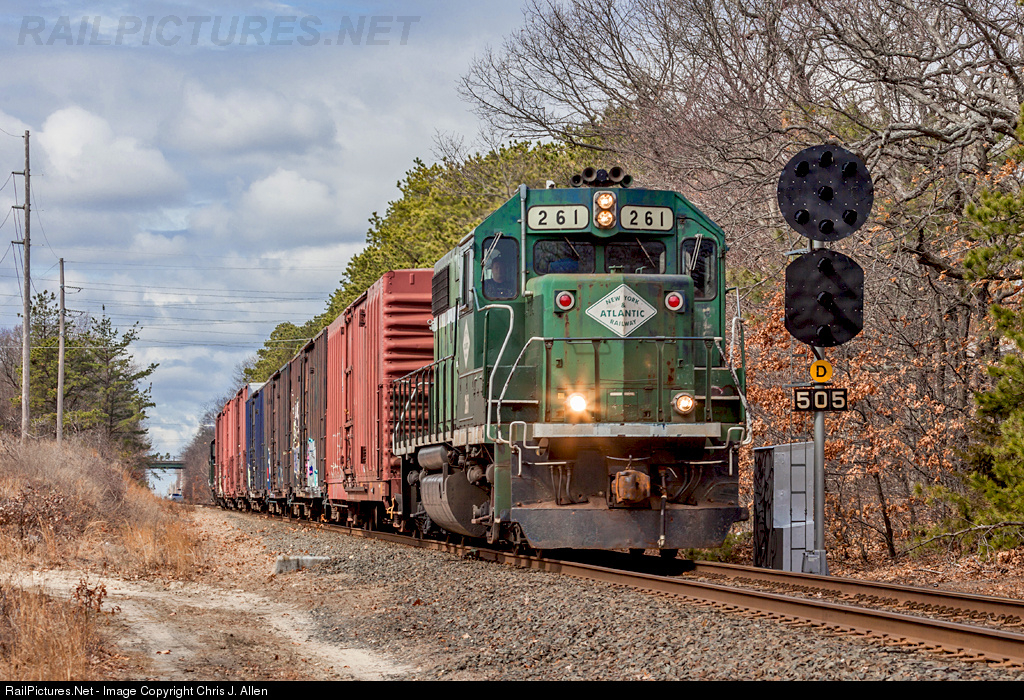
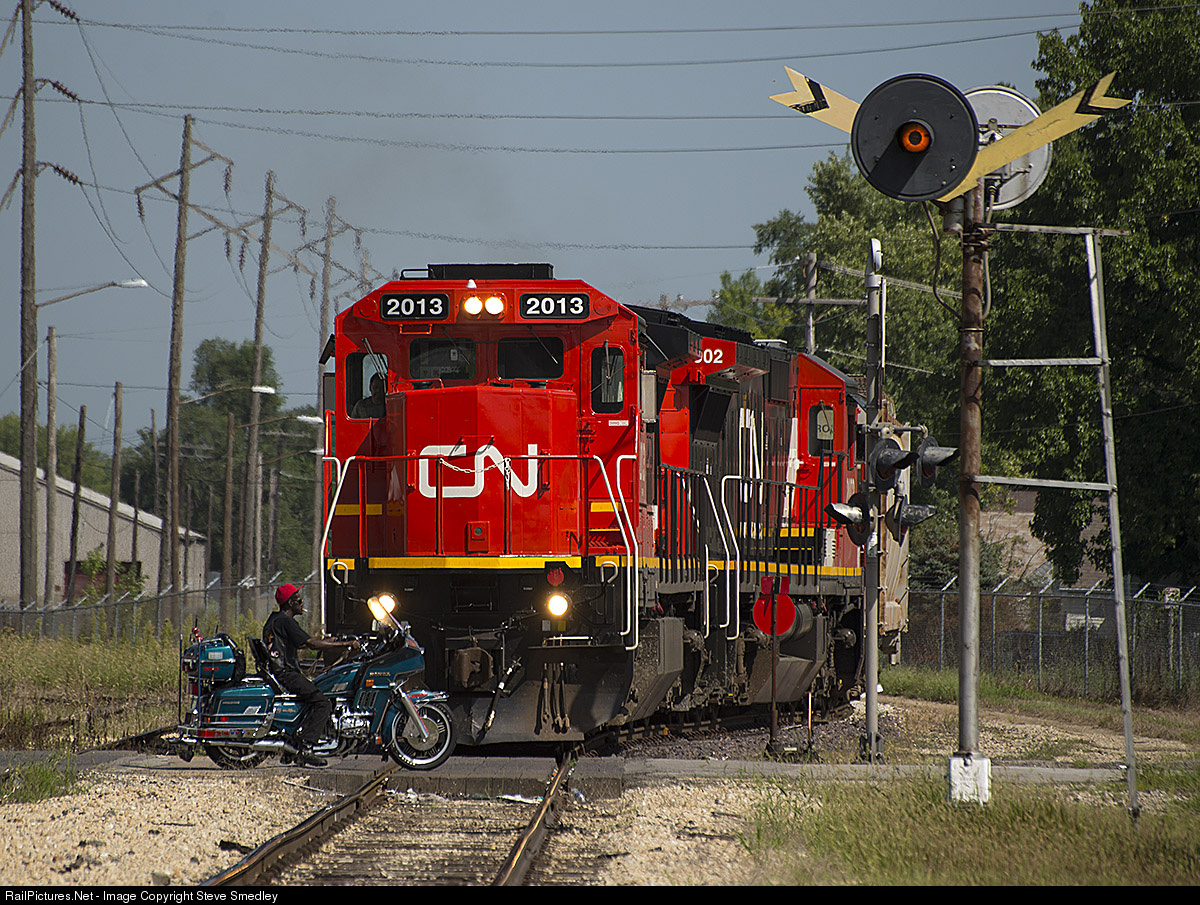
Ah the humble distant signal.  A fixed light or blade that warns the inattentive that they are approaching the civilizing influence of an interlocking.  In most places the fixed distant is an unimportant footnote that occasionally serves as the last refuge of the semaphore.  Now one of these days I'll probably do a whole post about the many types and rules relating to fixed distants, but today I am going to feature the fixed distant's much less common cousin...the dynamic distant.

This one picture pretty much captures the full gamut of fixed distants

 Sometimes a railroad is in the mood to inform trains approaching a absolute signal on otherwise unsignaled tracks about the condition of said signal  Now I know some people might assume that if you want a train to approach an interlocking under signal control, just bang in an automatic block signal and Bob's your uncle.  Well, they'd be right and this method remains a popular way for protecting interlocked junctions. Just stat your signaled a couple miles sooner with no need for any additional rules.


 Of course the PRR had to be different and because they were one of the largest users of the Manual Block System, they incorporated that into their design of dynamic distant signals.  Here we see a surviving example on the LIRR that supports a Clear, Approach Medium, Approach and "Caution" (upper head \ ).  PRR's Caution signal is basically Manual Block Approach with the distinction being that trains also have to approach any switch protected by the signal prepared to stop.  Because the Manual Block protection would negate the risk of another train on the line, there is no need for a Stop and Proceed aspect.  However if a switch has been opened to break the track circuit then Caution provides the necessary warning.

Kinda looks like a flower on a stick
Of course in the NORAC era position lights were out and color lights were in.  However vestiges of the old manual block system live on in the form of two aspect dynamic distants displaying Approach Clear and Approach Restricting (different than the one we discussed last week if you recall).  Southern New Jersey, home of the Pennsylvania-Reading Seashore Lines, is one place where Manual Block hung around into the 1980's and as a result it retained a few dynamic distants.  

Distant to CP-WOODBURY on the Vineland Secondary
They are of course the color light variety, having replaced former PRR position lights similar to the LIRR ones sometime in the 2000's.  Unlike the PL's, they do not convey block information and signal state is transmitted via a microwave link instead of through track circuits.  The older PRR era signals, seen in this signal diagram, did convey block information in the same manner as the LIRR signal.


The one on the Penns Grove Secondary, seen above, is actually being replaced by a CTC project of all things so I guess what's old (the track circuit block) is new again. 

Anyway,this sequence of photos have been designed to lead you on a visual journey from the fixed and ABS distants of "other" railroads, to the PRR style of fully featured Manual Block distants and finally to their Conrail color light replacement.  The point of the journey is to show how the PRR's Manual Block heritage has lived on into the modern era and if these photos don't convince you, compare the Conrail distants to this little example.


As you can see, they are quite clearly a vestige of Manual Block in a CTC world.