Search This Blog

Showing posts with label PTC. Show all posts

Monday, June 29, 2026

LIRR Greenport PTC - Much Ado About Nothing

We have another data point regarding the FRA's PTC paranoia, this time regarding the Long Island Rail Road's Greenport Branch waiver. Although I missed it at the time, in 2021 LIRR Today published a comprehensive article about the LIRR's efforts to get a PTC waiver for the lightly used Greenport Branch (aka North Fork Branch). Previously one of two regularly served lines to still be operating under a form of the PRR's Manual Block System, in late 2017 the LIRR activated CTC and cab signaling over the entire length of the Montauk Branch, leaving the 46-mile long Greenport Branch as the only US commuter rail service running on "dark" main track territory. What followed next was a lengthy pas de deux between the MTA, which really doesn't want to operate the Greenport service and the FRA, which really doesn't want commuter rail services operating under non-signaled (TWC/DCS/Manual Block, etc) rules.

Until fairly recently non-signaled main track operation could be found on Metro-North, the LIRR and METRA. Although the PTC mandate does not require block signaling and CTC, all three quickly caved in and carried out signaling projects (one might also include South Shore which eliminated its APB territory). The only holdout appears to be the Greenport Branch where, for reasons best explained by The LIRR Today, the MTA is highly reluctant to invest capital resources. No matter, although the ACSES PTC system is intended to work with continuous cab signaling, it does not require functional CSS except for following movements between controlled points.

Let's review how ACESS works.

  1. Cab signals codes provide movement authority.
  2. Fixed beacons between the rails inform trains of permanent speed restrictions.
  3. A data radio system informs trains of temporary speed restrictions and track posessions.
  4. The data radio can also provide movement authority when cab signal codes are not present.
With these ingredients you can build a dark territory PTC system. ACSES beacons provide the same civil speed enforcement and the data radio provides movement authority between block limits either using the "Clear To Next Interlocking" functionality or by manipulating track possessions (aka 0mph Temporary Speed Restrictions). Remember ACSES does not replace the LIRR Manual Block Rules, it just stops trains if they exceed their movement authority.
 

This is not the solution that was decided upon. The MTA wanted to install the ACSES track speed beacons and keep sing MBS, after all 4 daily round trips are on par with Amtrak's PTC exempt Valley flyer and Downeaster routes. The FRA wanted temporal separation with 1 passenger train on the entire 46 mile branch. Eventually a compromise was reached with 1 train per MBS block with empty buffer blocks between different passenger trains and passenger trans and freight. To be clear the normal mode of Greenport Branch operation is 1 passenger train on the 46 mile  line, but there are edge cases where this would cause problems.


So why did both parties seem to pass on the opportunity to innovate with the technical capabilities of ACSES? A generous answer could be the chance it would have required software changes on the dispatcher's end to give trains dark territory movement authorities as opposed to the dispatcher setting up and releasing possessions. A more cynical take is that the FRA  wants all regularly scheduled commuter/transit services to be operating under automatic block signaling. The deeper issue is that the FRA considers legacy operating methods as unsafe as opposed to PTC being a nice-to-have overlay on an already safe system. The LIRR has safely operated trains under Manual Block rules for decades, just like Metro North and Metra, but apparently they were all jut lucky that tens or hundreds of passengers weren't horribly killed. 🙄 This catastrophizing is what leads to an inflexibility that cancels service, raises costs and pushes more people onto the highways. 
 
BTW, please check out The LIRR Today blog. It has a major discoverability problem on Google so I want to raise some awareness.  

Friday, May 22, 2026

MARC's Empty ACSES Bracket

In 2020 MARC moved to switch from Amtrak's ACSES transponder based PTC system to the ETMS system used by freight railroads that is more reliant on GPS and data radios. Using two different head units was likely more costly in both equipment and training and dual-equipping rail lines for both ETMA and ACSES has become fashionable over the past decade.  

When I first reported on this move, the ACSES transponder antenna was located in a fairly prominent location behind the fuel tank on MARC's MP36PH-3C locomotives. Since that time the bracket has remained, but the antenna has been stripped off with the cable left dangling.  

I guess MARC is happy with its decision as removing the antenna would make it harder to switch back.

Sunday, April 21, 2024

NJT's Speed Enforcement System: A Thing That Existed

You might have heard me reference the Northeast's preferred transponder based PTC system ACSES, or the Advanced Civil Speed Enforcement System. In most cases when something called itself "Advanced" its usually a bit of marketing speak, but in this case the basic Speed Enforcement System was a thing that actually existed for a brief period of time on New Jersey Transit's Pascack Valley Line. However because of the rapid pivot to more "Advanced" systems and the 2008 PTC mandate, information on the SES pilot is remarkably hard to come by, however I have been able to piece together a few bits of information that can hopefully shed some light on the technology.

In 1996 NJT suffered its worst accident as of the time of this writing when two trains collated at WEST END interlocking where the diesel Bergen County and Main Lines diverge from the electrified Morris and Essex lines. The cause was a veteran engineer who had been hiding a medical condition that had severely impacted his visual acuity mistaking a Stop signal for a R/R/Y Restricting. In the aftermath NJT began an effort to implement what they called "Positive Train Stop" functionality across its system, which came on the heels of a near system-wide adoption of cab signals and automatic train control (ATC). At the same time Amtrak was completing implementation of its ACSES speed control and PTC system on parts of the NEC in conjunction with the new 150mph Acela rollout. This is where things get a bit murky, but going into the 2000's, both Amtrak and NJT had two different yet compatible transponder systems for "civil" (aka track) speed control, however Amtrak "Advanced" system was integrated with cab signals where as NJT left SES as an intermittent system.

The location for NJT's SES pilot was the Pascack Valley Line, a stepchild service that ran some 30 miles north from the old Erie Main Line to dip its toe into New York State. The single track line offered only weekday single direction peak service and, like the similar old Boonton Line, the PVL was essentially unre-signaled since the Erie days. This signaling came in the form of an Automatic Permissive Block-like bi-directional ABS with occasional non-number plated (ie absolute) automatic signals that would have once appeared at the ends of hand operated passing sidings. Without any actual interlockings and only a single block of cab signaling on approach to Pascack Jct, the limited service PVL was an ideal test bed. 


Reading through the SES special instructions in a 2004 NJT Employee Timetable (posted below) we can gain some insight into how the system worked. The evidence points towards SES was an intermittent transponder based system that would convey track speed information in a manner compatible with Amtrak's ACSES, but also fixed signal indications. A positive stop was enforced for Stop, Stop and Proceed and Restricting indications, with the positive stop zone extending 500 feet in advance of the signal. Stop and Proceed, and Restricting could then be passed after an acknowledgement, while Stop needed the dispatcher to provide a numerical override code in addition to the verbal Rule 241 instructions. This would have come into play at the non-plated automatics and the home signal at Pascack Jct. Special instructions about cab signal upgrades and other rules not applying in SES territory further strengthen the intermittent use case. 


This of course begs the question about how the system would account for signal upgrades after passing an Approach signal if the associated transponder flags a positive stop point like it does in ACSES. As easy solution would be to place additional active transponder at the start of the stop zone 500 feet from each signal, but I have nothing to confirm this theory. An additional feature of the PVL that made it attractive for the SES pilot and that was the presence of signal overlaps. From what I can tell from 2007 era photos, each set of ABS signals had several car lengths between them which would provide sufficient distance for a train running at reduced speed to get stopped before it might encounter an obstruction. This would explain why the SES stop zone is 500 feet vs 1500 for the ACES zone.

PVL automatic signal location with overlap in 2007 with what might be SES transponders (or grade crossing impedance bonds).

SES was always intended to be a temporary pilot and by 2002 NJT had let a contract for its own Advanced SES that integrated cab signals similar to Amtrak, but without the finicky data radio capability for temporary speed restrictions and stop release. Interestingly the $2 million contract with Union Switch and Signal would have outfitted the entire NJT system with PTS and track speed control by 2008! The wireless data free ASES vs off the shelf ACSES debate would extend into the post-2008 PTC era with the ASES plans eventually morphing into ACSES, but perhaps the original SES hints at what NJT's solution would have looked like. Version 1 ACSES also lacked data radios and needed temporary physical transponders for TSR's and use of the stop release procedure to pass certain signals with a proceed indication. Active SES-style transponder could have solved some of those issues without wireless data.

Unfortunately I have been unable to determine the exact timeline of the ABS SES system on the PVL. I know it was in service in 2004 with the CNJ vintage GP40PH locomotives operating in a dedicated pool. I know that SES was still in service as of Jan 1, 2006, however by the fall of 2007, the line had been re-signaled with Rule 562 cab signaling and upgraded with passing sidings to allow for all-day bi-directional service. Unfortunately, starting in August 2006, all PVL physical characteristics and rule changes were put into a separate supplementary bulletin order that I do not have any examples of. Interestingly, the 300 section of NJT special instructions covering SES were left in place with slight modifications likely to cover the upcoming ASES or ACSES installations due to the 2008 PTC mandate probably resulting in some savings in crew re-training. 

If anyone has any additional information on NJT's SES please let me know so I can update this post or make a new one. I've heard a bunch of other stories regarding issues with hair trigger penalty brake applications, but not much more than anecdotes and speculation.

Wednesday, February 28, 2024

The NS Bridge Line PTC Adventure

For years concerns of PTC interoperability drove all manner of decision making at freight and passenger railroads. For example's CSX decision to isolate itself from SEPTA's Regional Rail network, NICTD choosing not using the cab signal codes present on its line because Metra Electric wanted to use the freight-centric ETMS and MARC dumping ACSES for reasons. However one common thread is that when push comes to shove, equipping locomotives with multiple PTC systems is not a big deal (although it certainly isn't free).

Case in point are the SD60E locomotives that are always leading certain Norfolk Southern intermodal and manifest trains traveling on its New England Bridge Route between Harrisburg and Ayer, Mass. Between Harrisburg and Sunbury its on ETMS, then its off PTC entirely all the way to Binghamton. Then it on CP's ETMS all the way to Mechanicville, NY. From there it hits the former Boston and Main which is again PTC-less, but at Wachussetts it enters MBTA territory which uses Rule 562 cab signals and ACSES the last few miles to Ayer. These SD60E's are dual equipped for PTC and ACSES and although less needed on the NEC due to Amtrak dual-installing ETMS, they found a new home on this run. If I ever get close to one I'll see if I can get a photo of the antenna. 

Anyway, I heard that due to the shift of NS New Englande route internodal trains to the former Conrail Boston Line, this unique PTC situation will soon be obsolete as manifest freight might terminate at East Deerfield or something. If you're a fan of oddball leading equipment quirks, get your photos while you can.

Saturday, December 9, 2023

Results of FRA PTC Braking Algorithm Study

I recently discovered the results of the FRA's Positive Train Control Passenger Braking Algorithm Enhancement project dated September 2023. As regular readers are aware I have been a frequent critic of the overly conservative braking algorithms used by various PTC systems and vastly under perform the performance capabilities of the rail vehicles. While this FRA study was confined to the entirely wireless ETMS system used outside the northeast, it might still offer meaningful improvements to these systems in general. Long story short don't get your hopes up. In fact the results of this study might make things even worse.

So I encourage everyone to try and work their way through the linked paper (mirror here), but in my quest to add value I will provide a summary of the key points. The study examined four potential algorithm enhancements, Target Approach Management (TAM), specified consist length trains, tuned train types, and adaptive braking. TAM is for low speed (5-10mph) approach to stop signals while the other three are general purpose braking algorithms that better take into consideration various quirks of passenger train and EMU/DMU operation. The study was almost entirely carried out via computer simulation where real world variables like train consist, rail adhesion and brake pipe latency were tested in tens of thousands of combinations to estimate real world performance. There also appeared to be real world tests carried out on a test track.

The first important takeaway is that the performance baseline for defining an "undershoot", as in PTC stops the train too quickly is 500 feet for speeds under 30mph and 1200 feet for speed over 30mph. Under the baseline scenario these limits were exceeded 20-25% of the time. The PTC braking algorithms calculate a stop point probability distribution and then add a safety factor. Higher speeds mean more uncertainty so the typical stop point for 25mph might be a couple hundred feet short of the signal, the stop point for 90mph could be multiple thousands of feet short. This is why PTC forces so much aggressive braking at line speed.

As for the results of the study the good news was that the new TAM algorithm improved low speed undershoots (defined as more than 100 feet) from nearly 50% under the current proprietary EMTS implementation to a fraction of a %. Unfortunately that's all the good news you are going to get as the other "improved" general purpose algorithms blew up undershoots in the simulated runs. Specified Consist undershoots increased between 9 and 17% with some passenger train consists undershooting up to 40% of the time. Tuned Train Type saw mixed results with some equipment having less undershoots and some more. Adaptive showed no change for the commuter type equipment while undershoots for passenger type equipment went up from 20 to 30%. The gain for this drop in performance was an improvement in meeting the stop target from 98 to 99%. The real life tests resulted in a mixed bag of performance gains and losses, however unlike the costless simulations far fewer real life tests could be carried out and under much more limited conditions.

The problem with the study is that it ultimately treats a safety overlay system like autonomous operation. PTC isn't what has to stop a train before it hits something. That's the job of a skilled locomotive engineer. PTC is what should step in when the Engineer is clearly going to be doing something unsafe. Even unsafe conditions rarely lead to physical impacts at which point the crash safety system prevent potential injury or death. PTC preventable accidents of all types were already rare and PTC should eliminate at least 98% of those. Meanwhile poor train performance is pushing riders onto the roads where they'll die in car accidents. Celebrating a 1% improvement in PTC effectiveness at the cost of yet more performance isn't the win the FRA thinks it is. The infuriating part is that over on those highways self-professed self driving cars are blowing throw stop signs left and right and Federal regulators do nothing.

Wednesday, November 29, 2023

Mazda Cab Signals are the PTC Solution We Needed

While driving in a brand new rental Mazda sport wagon in Colorado I noticed something interesting on the instrument cluster.

There was a dynamic speed limit indication accompanied by a red tick on the speedometer indicating the currently detected speed limit. Now this sort of information has been available in Waze for some time, accurately using smart phone grade GPS to pull a road segments speed limit from a crowd sourced database and displaying it on the interface. Using something like Android Auto this could be displayed to he driver in any number of ways.


The cybersecurity implications of this aside, I noticed an interesting Mazda party trick that Waze could not perform and that was the seeming ability to detect temporary speed restrictions, aka work zone speed limits. Waze explicitly rejects trying to track TSR's, even for long term work zones. Although achievable through traditional data collection methods, I was aware that the vehicle was equipped with forward facing cameras for its lane-assist feature (or MCAS) and if on-board systems could keep track of lanes, they could also recognize wayside speed limit signs and display them on cab signal, possibly augmented by a Waze style database.

The current national Class 1 PTC standard, ETMS, relies on wireless data and GPS to track a trains position and compare is, Waze style, to a database of authorized speed limits. The problem this creates are clunky data networks that result in slow setup time and en-route loss of connectivity as well as occasional mass outages that can halt traffic across a railroad's entire network. The preferable solution has been evident in the field of vehicle automation for over a decade now. Computer vision systems just look at wayside signs (and/or signals) the same way the human engineer does. To the extent that wayside signs are vulnerable to impairment computer vision doesn't have to replace the current "Waze" type system, but in case ETMS suffers a failure, the backup solution isn't halt all traffic (or god forbid just let the crews do their job), but fall back to wayside sinage detected by computer vision and enforced by the on board apparatus 

Saturday, May 27, 2023

PTC Capacity Impact Visualized

 I've frequently pointed out the impacts of Positive Train Control on train performance in general. While not technically inherent to the requirement, they are an inevitable consequence of policy and implementation choices. These include things such as stacked safety margins, overly conservative performance assumptions and locations tracking uncertainty. While the ACSES system used by cab signal equipped railroads in the northeast is generally superior to the wireless data based ETMS used by the class 1 freight railroads, certain ACSES implementations have continued to demonstrate the performance problems I identified almost a decade ago. Recently I was able to capture a concrete example of one on video.


Here we see an NJT Morris and Essex train led by ALD-45 #4510 entering Newark Broad St station on Track #2. The 4E signal for BROAD interlocking is immediately east of the platform end and the eastbound train gets hit by a positive stop about 700 feet (6-8) carlengths short of the signal location. Instead of being able to complete its station work as the signal system was designed to allow, the train sits off the platform for over 2 minutes, adding to the delay.

ACSES implements its positive stop feature using a two step process.  First a fixed track mounted beacon that transmits other permanent speed and positioning data will inform the onboard system that the train is approaching a positive stop. Next, if no cab signal code is detected , the onboard system will enforce a positive stop by calculating a 0mph stop point based on its super conservative assumptions of ice covered rails and a train with cheese in place of brake pads. The train stops up to 1500 feet from the signal and, well, the current policy is to wait there. The initial concept was for crews to use a stop release procedure to creep up on the signal, a feature implemented by specific freight railroads using ETMS, however most most if not all northeast commuter railroads have taken the CYA approach and just let the trains sit several hundred feet in advance of the signal, even if that means being unable to platform.

Supplementary ACSES transponders at Valley Stream

Apart from stop release, one alternative mitigation is to add additional ACSES transponders that can reduce the location uncertainty. The LIRR has installed two additional sets at Valley Stream that sees the same problem with platform-end signals, although I have heard this can still stop trains 1 or 2 carengths short of the stop point. A quick look at the overhead shows that NJT has not implemented this mitigation at Newark Broad Street. Another mitigation is to set the stop point to the legal requirement of the fouling point of the first trailing point switch or diamond. At NJT's BROAD interlocking this point is about 1 carlength beyond the 4E signal. Finally, they can be more realistic about the performance of the equipment. 

Just like the New York City Subway a decade ago, its always safer to cover ones ass than to fight for performance in a post-pandemic transit landscape were trains are running half empty anyway. If NJT feels like it is looking at service cuts, investing in capacity makes no sense.


Sunday, May 14, 2023

ATCS Caught in Frequency Realignment

I know I'm a couple years late on this news, but ATCS (Advanced Train Control System) radio relay that replaced pole based code lines for Centralized Traffic Control schemes is in the process of changing frequencies (or just being completely phased out) due to an FCC directive that will reallocate its 900Mhz spectrum for wireless broadband in 2025. For the last 20+ years ATCS has been super useful for enthusiasts to monitor railroad dispatching in real time as data packets are relayed from station to station, just like with an old CTC code line, only now they can be sniffed and displayed.

Although some railroads like CSX shifted away from ATCS in favor of satellite links years ago and hard links like fiber optics were popular for a window in the 80's and 90's, ATCS has been a massively useful took for those looking to take photos of trains or just gather data that can be used for all manner of public policy. Word is that for those railroads wanting to keep the ATCS system, the data will piggyback on the frequencies allocated for PTC communications. However because the PTC communications specifications have to be purchased for a sizable amount of money (who'd have thunk it), the ATCS monitoring community is facing a reverse engineering challenge. 

The silver lining could be that after some amount of outage, the community will be able to monitor not only lineups, but also PTC signaling and authority information.

Sunday, April 30, 2023

SEPTA's PTC Implementation Is Still Terrible

Unlike previous generations of automatic train control, the on board PTC software has as much if not more to do with the operational impact of the safety system than fixed infrastructure like code rates and block length. In the case of ACSES, Amtrak's PTC implementation, track mounted transponders conveys data about upcoming civil speed limits, grades and positive stop points and it is up to the on board system to develop a braking curve. In theory this curve should represent the maximum braking effort the rail vehicle is capable of if tripped by the PTC system to prevent an unsafe level of overspeed. The concept of a penalty brake application exists for thus purpose as a full on emergency application requires some additional inspections. (Although I have been present when the "freight" ETMS PTC system threw my Amtrak train into emergency.) 

Four years ago I benefited from a SEPTA training run to capture two videos of how their PTC implementation functions and the braking curve was ridiculously bad. Granted I lack similar curve information for other operators, but the SEPTA engineer could stay under the curve with a very mild brake application. I got some comments on the order of "PTC is new and SEPTA will inevitably made modifications to improve the performance."  Well on my most recent winter SEPTA fan trip I lucked into another training run on the Airport Line and I can report that the system has not been changed and it still causing significant delays.

Unfortunately I was only able to capture video of the cab display unit returning from the Airport to Eastwick which had no PTC speed downgrades and therefore no demonstration of the braking curve (although I did capture a missed transponder reading). In fact my inability to get a video angle was doubly unfortunate because the braking curve is so conservative that it caused the engineer to trigger a penalty brake application just north of PHIL interlocking's southbound home signal. This is where the line speed of 45mph transitions to 30mph for the Airport Line curve just south of PHIL interlocking. (Even before ACSES this curve was protected by a 45mph Approach Medium cab signal) This meant that the on board system calculated a braking distance of about 4500 feet to slow from 45mph to 30mph.

Time for some math. The starting velocity is 66 fps and final velocity is 44fps.  From my observations the braking "curve" is linear which gives us an average speed of 55fps and thus a deceleration time of 81 seconds. This lets us solve for acceleration with a solution of 1.38fps^2 or 0.9 mphps, which is an absolutely pathetic braking rate. Even if I assume I was wrong about where the speed curve kicked in and the penalty took place just after the limits of PHIL interlocking, 2800 feet from the restriction, the resulting deceleration rate is still 1.4 mphps, less than half of the design acceleration rate of 3 mphps.

In this example we have the two bugaboos of PTC working together to sap performance on what should be a speedy trip to the airport. The first is a stacked safety margin. The older ATC system enforced a 45mph limit on approach to and around the 30mph curve. That would have been a rough ride and close to the overturn speed, but would likely be enough to prevent a derailment without getting in the way of the engineer. Today the ACSES takes the 30mph as gospel even though that figure already accounts for human error. Next, the conservative braking curve compels a speed reduction about three times farther away than would be necessary with the full braking force available. The end result is net gain of 10 seconds to traverse the same 4500 foot distance and you can see why this is a problem. 10 seconds isn't much.  It's certainly not enough for anyone to fight for or risk being blamed for if something goes wrong. unfortunately this 10 second loss happens again and again and again over the course of a run with the end result of SEPTA having to lengthen scheduled running times by an average of 4 minutes across all of its lines. Add in more small delays like low maximum speeds, long dwell times, slow terminal operations and voila, rail transport is uncompetitive with private road transport.

As you can see in the above video SEPTA cares very little about speed in general. As seen in the video about, the R1's 4-station airport terminal complex has blanked Restricted speed limit, even when approaching CP-AIRPORT JCT after passing a wayside automatic distant displaying Approach Limited. Why even bother with the wayside at that point! Prior to ACSES, SEPTA had plans to use the 4-speed cab signaling system to implement rapid transit style signaling when Rule 562 operation was installed on its Reading territory. Maybe we'll see a realization similar to NYCTA's that speed improvements, even small ones do matter. Or maybe we'll see the response to poor post-COVID ridership to be service cuts.


Saturday, March 25, 2023

FRA Approves RFP Sub Cab Signal Removal

The FRA has granted CSX's December 2021 request to discontinue use of cab signals on the former Richmond, Fredericksburg and Potomac route between Washington, DC and Richmond, VA. Several months into a full blown rail safety panic it seems a bit tone deaf for the FRA to approve the removal of a well proven, reliable and completely failsafe signaling mechanism for good old fashioned waysides with a PTC safety overlay, but what do I know. Although we have seen similar cab signal removals by Union Pacific and BNSF, the RF&P cab signals had actually been integrated with the ETMS PTC system in a similar fashion to Norfolk Southern's Conrail territory. This makes CSX's post facto decision to ditch them an unfortunate surprise especially since the railroad choose to extend the northern limits of its RF&P CSS territory to CP-ANACOSTIA within the last decade. 

The motivation for the move is two fold. First, CSX doesn't have to worry about maintaining a large pool of CSS equipped locomotives to run over a single subdivision as well as performing a required CSS test before locomotives run over said subdivision. Likewise Virginia Railway Express no longer has to worry about CSS equipment or tests for its fleet and Amtrak can likely get away with neglecting the CSS on its Washington based diesel fleets. 

Cab Signal pickup on a VRE MP36

The second motivation is that despite the RF&P being "like" the successful PRR/Conrail system, it did have a major shortcoming wherein Medium Clear and Medium Approach signals would draw a Restricting (20mph) cab signal within interlocking limits instead of Approach Medium (45mph) or Approach (30mph) respectively.  This relay era cost saving measure that was never rectified and is likely the basis for some of the claims that the RF&P CSS does not play well with the ETMS PTC system that attempts to rely on the presence of cab signal codes for movement authority..

Like many FRA applications it may be a number of years for CSX to follow through on its plans. Unlike Union Pacific and BNSF that could literally wave away their ATS ATC and ACS systems at the stroke of midnight, CSX actually integrated the RF&P Sub CSS into its PTC solution with ETMS wayside interface units located only at interlockings to enforce the positive stop. Between interlockings the presence or absence of CSS codes would inform ETMS as to the enforcement of restricted speed situations such as an occupied block or open switch. CSX will need to install additional ETMS wayside interfaces at every automatic block signal location and every hand operated switch. Unless this work had already started it is likely to take a year or more before the CSS can be completely decommissioned.

As I have stated numerous times before, use of coded track circuits are both more reliable and provide a greater level of safety than wireless systems. Since the start of 2023 there have been at least two serious ETMS PTC outages to affect both Amtrak and MARC resulting in the cancellation of one or more days of scheduled service. CSS with ATC provides redundant speed control functionality that is completely independent of ETMS that can allow for (in a CYA sense) continued operation during a PTC outage. from an operations point of view CSS allows for mid-block signal upgrades and also provides for an easy path to 110mph service on the RF&P via the eventual extension of Rule 562+ACSES south from the NEC. Removal of the intermediate CSS code change points will significantly raise the costs of restoring CSS or just expanding the number of signal blocks to increase capacity.

For all we know CSX might still change its mind as the current rail safety panic continues to unfold and increases the political liability of removing safety systems to save a buck. Amtrak's plans to extend Rule 562 into the First Street tunnels further questions the cost savings if VRE and Amtrak diesels retain the need to be cab signal equipped for operation into Washington Union Station. In a further bit of irony CSX's purchase of Guilford Rail Service saddled it with additional Rule 562/ACSES territory that it will be unable to shake due to the MBTA. 

It will be interesting to see what happens to the remaining stub of CSS territory on the Philly Sub between CP-BELMONT and CP-PENROSE that was part of the old PRR West Philadelphia Elevated line to the South Philly freight yards. Leading locomotives do not need to be CSS equipped, but the system is still in service with all of the associated "costs".

Sunday, February 5, 2023

Don't Regulate Defect Detectors Like Signals

It looks like the derailment in East Palistine, Ohio is causing another full blown safety panic of the type that brought us Positive Train Control. Some of the more benign proposals are calling for increased regulation of equipment defect detectors such as those that scan for overheated axle bearings. Like everything the devil is in the details and treating detectors exactly like other FRA regulated safety devices such as signaling systems and grade crossing protection would be a mistake that would take an automation technology that railroads don't really have a problem with, into a high cost headache that would become an actual target for cost reductions.

Let's be absolutely clear. Hotbox detectors (HBD) and the response to their alarms have not been impacted by investor demands or Precision Scheduled Railroading (PSR). The frequency, placement and procedures associated with defect detection have not substantially changed for the past 40 years. Conrail spaced HBD's every 20 miles with supplementary dragging equipment detectors every 10. NS kept those exact same detector locations since Conrail was taken over in 1999. The Southern Railway preferred a 10 mile detector spacing and on former Southern parts of NS that detector spacing has also remained unchanged since its operations were merged with the N&W in the late 80's.  Speaking of the N&W, their detector spacing was every 15 miles and has also remained unchanged. Long story short the derailment was not caused by corporate cost cutting.


The risk of strict regulation, similar to that applied to signals, is that ay change to a detector would require costly certification processes and/or regulatory approval. For example Amtrak and other railroads must go through a full regulatory process, including public hearings to, apply a software update to their PTC system. Detectors on the other hand display a far greater range of context specific innovation with secondary features like train speed, axle counts and time/temperate enouncements. Regulating all of these features like signals would create a race to the minimum standard as regulated features would have to be rigorously maintained and certified. Don't think this is fanciful prediction either as believe it or not there do exist FRA regulated detectors in situations where they form part of the signaling system. 

Some examples like the CP-BANKS, shown above near the Rockville Bridge on the former Conrail Pittsburgh Line, have interlocked high car detection. As part of the interlocking, even changing the readout recording would have required costly re-certification and as a result the CP-BANKS detector retained its Conrail readout some 20 years after Conrail's absorption by NS. Other examples might include the propensity for all automatic signal locations on some western roads to have an breakaway style dragging equipment detector stick. If those are linked to the signal system (instead of radio readout) it would explain why this type of protection has persisted on select western lines and no others.

Regulated standards are important, but requiring a public heating to adjust alarm thresholds or change a broadcast recording (no matter how much I would love to hear KCS and Guilford over the air in 40 years) is liable to trigger loophole abuse in an area was uncontroversial.

Wednesday, November 30, 2022

The LIRR's Puzzling ESA PTC Waiver

As the opening day of the Long Island Rail Road's decades long East Side Access mega project approached there appeared a new hiccup. Apparently the ESA tunnels were not built to support some of the LIRR's diesel rolling stock that routinely runs to New York Penn Station. Setting aside how the LIRR managed to make their brand new tunnel more restrictive that what it typically the gold standard in limited clearance, someone somewhere noticed that a mis-routing could do a can opened job on an oversize train and demanded that the LIRR perform some mitigation. 

Reverse switch to remove roof.

The typical way one would accomplish this would be to have a system of interlocked high car detectors. Tripping a detector would immediately cancel the route and the train would be stopped via both the Cab Signal ATC and ACSES PTC systems. What was so baffling about the LIRR's PTC waiver request was that they were trying to install a new "Tunnel Collision Avoidance" capability to ACSES that would allow for a positive stop at a non-absolute signal or signal indication point. The ACSES positive stop system functions via a transponder telling the on board system to enforce a positive stop in X feet if no cab signal code or radio release is received. This feature was expanded to also cover trains without functioning CSS getting a positive stop at an absolute signal not displaying Rule 280a "Clear to Next Interlocking". TCA would likely work in the same way with a transponder setting up a "positive stop unless" condition combined with a high car detector linked radio release or a cab signal code being present. In fact I think it is actually the latter because part of the aforementioned waiver notes that the ESA tunnels all use only the 250hz cab signal carrier frequency and overheight equipment (DE/.DM30's with C3 coaches) cannot detect the 250hz carrier at all. (See note below)

So my reaction to this is why the heck is the LIRR scrambling to modify ACSES when this was seemingly a solved problem. The fact a waiver is being applied for at all answers part of my question as this must have become an issue only after all of the HAROLD design and signaling work was specified and completed. My Spidey sense tells me that the LIRR's original solution was the use of the 250hz CSS carrier that would drop the cab signals of Amtrak, Metro-North and DE/DM stock to Restricting, at which point the engineer would stop the train short of the low tunnel. Regardless, the Powers That Be demanded a positive stop and instead of adding a new absolute signal at the tunnel mouths, the LIRR decided to do a software fix. I can see how trying to add an HCD system to HAROLD could result in a lot of costly testing given the number of potential routes involved. (After all, the cost of testing prevented NS from even changing the Conrail era HCD recording at CP-BANKS until the general re-signaling project in 2018!), but a couple of extra holdout signals seem pretty straightforward. Based on the general discourse of NYC project management, I suspect the cost of constructing even something "simple" in New York City made a signal-vendor supplied software fix the "better" option.

Before I wrap this up I want to complete the NYC-Region trifecta of poor public sector planning, high cost and political posturing by pointing out the letter that accompanies the FRA's granting of the rather short term PTC waiver. With everything the LIRR is doing to prevent mis-routes including route-indicating signals, rulebook rules, locked out routes, ATC enforced 15mph speeds and the 250hz fail safe cab signal code trick, I would have expected the FRA to issue a letter that states something on the order of "you have gone above and beyond to mitigate this problem".  Instead the letter goes on at length about how everything I mentioned is somehow deficient and they reluctantly approve of the waiver. Here's an example.

"The Board also shares Brotherhood of Railway Signalmen’s concerns about LIRR’s existing hazard detection system not protecting Amtrak trains operating in the Harold Interlocking from being misrouted to the GCM tunnel. FRA notes, however, that if an Amtrak train operating with oversized rolling stock is routed towards the GCM tunnel, a series of redundant protections exist to prevent that train from entering the tunnel. First, if a route into the tunnel is incorrectly lined so that an Amtrak train with oversized rolling stock is lined for movement into the tunnel, the train’s PTC system will enforce a positive stop at either signal 11W or 65W. To proceed past either of those stop signals, the train engineer would have to obtain dispatcher permission to by-pass the PTC enforcement and would be held to a PTC enforced 15 miles per hour (mph) speed limit. Second, as a train approaches the signals and diverging switch that controls the tunnel entry track, the train crew will see routing arrows on the mast of the relevant interlocking signals (up to three signals in advance), which will illuminate white when a route is lined from any of the tracks to the GCM tunnel (the arrows will not illuminate if the track is not lined for the tunnel entrance). This will provide Amtrak train crews the opportunity to stop their train, as required by Amtrak’s special instructions. Third, in the event an oversized train passes the 11W or 65W signals because of human error or a failure of the PTC system, and the train crew does not notice the illuminated arrows and take appropriate action if they are operating an oversized train, LIRR’s cab signaling and ATC systems will protect the Amtrak train, as it would any oversized LIRR train, through the 250 Hz cab signal code which will provide an audible alarm and enforce restricted speed."

  If you don't want to read all that I can summarize in a 14 second video clip.


What's even more telling is that its the railroad signaling union that is explicitly complaining about the lack of TCA capacity. Just remember, whenever a Union is applying political pressure there is likely overtime to be had. Now, the Railroad Safety Board is a political entity and they are going to do whatever they can to cover their asses to the max and/or avoid political problems with unions that might still provide a few Democratic votes, but the waiver also includes at least 6 safety theatre-esque action items that will add more time and cost to the entire ESA enterprise. Is a mis-route possible? Absolutely, they happen all the time.Even with all the protections could we actually get the can-opener effect? Well an Amtrak Keystone did go to Cynwyd 🤷. Still, the likelihood of all these Swiss cheese holes lining up is remote, especially as there are countless locations along busy passenger tracks where a bad route can take a train into a yard or an out of service track and they aren't causing major safety problems. If rail is every going to deliver nice things, we can't have this level of of CYA virtue signaling coming from the top.

PS: The entire docket of documents related to this waiver, including that super useful HAROLD interlocking diagram, can be found here.

*Note: The PRR legacy Cab Signal System as now deployed in North America makes use of code rates in pulses per minute and one or more AC carrier frequencies in cycles per second (hertz). These can be combined to increase the number of usable codes if so desired. Railroads on Amtrak's Northeast Corridor make use of a 100hz carrier for the basic CSS codes and a 250hz carrier for additional codes that were added ~1999. The LIRR uses an expanded set of pulse code rates and therefore does not need a secondary frequency. This means they could make the EMU stock (M3's, M7's and M9's) sensitive to both a 100hz and 250hz carrier with the same code rates. All other equipment including Amtrak, Metro-North and DE/DM stock will receive a Restricting cab signal in the abstinence of a 100hz code.


Saturday, August 13, 2022

Failure of PTC Escaping Railroad and Railfan Circles

 The problem with PTC and railroad safety regulation in general is that, despite having a lot of interest from transportation planners, advocates and enthusiasts, rail is still a pretty niche industry so when a "Think of the Children" type moment occurs there's not much in the way of interest groups to push back on ill conceived regulation or legislation. The Positive Train Control law is the poster child for this sort of bad lawmaking, but because rail has made itself so less salient than air or road transport, the complaints were falling on no ears. Well, it appears that this may be changing as some more main stream publications are picking up on the massive waste of resources PTC has been. 

A recent article from the right leaning pro free market publication Reason actually puts the annual cost of maintaining the PTC system at a staggering $850 million per year to maintain.  To put that in context, that is the cost of a starter light rail system that is pretty much being set on fire instead of being used to perhaps build a light rail system. The article is quoted below, but just keep the $14 billion install cost and ~1 billion annual costs in the back of your pocket when someone trots out the old "safety is worth any cost" argument.

Railroads spent a decade and billions of dollars fulfilling a costly federal mandate, at the expense of addressing less eye-catching causes of rail-related deaths.

Reason.com
by Christian Britschki
June 28, 2022

The latest Amtrak crash near Mendon, Missouri, that left four dead and many more injured contains a tragic lesson about Congress' misaligned rail safety priorities.

The accident occurred yesterday when an eight-car passenger train traveling from Los Angeles to Chicago derailed at a grade crossing after striking a truck that was obstructing the tracks. Three passengers and the driver of the truck died, and 150 were taken to nearby hospitals.

The grade crossing was "uncontrolled," meaning that it had no crossing guard arms, warning lights, or other safety features that are typically employed to prevent accidents at road-rail intersections. Accidents at grade crossings are a large portion of rail-related deaths.

According to safety data from the Federal Railroad Administration (FRA), 236 of the 896 rail-related fatalities in 2021 happened at highway grade crossings. Of those, 33 involved Amtrak trains. The vast bulk of the other deaths involved trespassers on railroad property getting struck by trains. There were also 168 suicides by rail in 2021, which the FRA reports separately.

This particular grade crossing has apparently been on the radar of both state officials (who had a plan to install safety improvements) and neighbors. In the wake of yesterday's accident, one farmer who lives close to the crossing complained to local media about the lack of safety features and the steep climbs that made it hard to see down the tracks.

Despite the frequency of fatal grade-crossing incidents, the major rail safety push over the past decade has been to prevent train-on-train collisions, high-speed derailments, and other exceedingly rare high-casualty events.

In September 2008, a passenger train in California collided with a Union Pacific freight train, killing 25 people and injuring 135.

A month later, Congress passed the Rail Safety Improvement Act that mandated railroads adopt Positive Train Control (PTC), an expensive suite of automation and communications technology that can automatically slow speeding trains down.

A common feature of federal safety legislation is that it adopts a very expensive solution to solving the last, most media-salient incident while ignoring more modest safety improvements that could prevent the more ordinary tragedies that capture less attention.

The PTC mandate was no exception.

It cost railroads an estimated $14 billion (about $2 billion of which was covered by federal grants and loans) over a decade [OK?] to comply with the PTC mandate, which was eventually fulfilled in 2020. The cost-benefit analysis of positive train control has never looked favorable.

The FRA estimated that the technology would provide about $90 million in safety benefits each year while costing $850 million to maintain. An earlier estimate by the agency found that it would have prevented seven fatalities over the course of a decade. (The infrastructure law passed by Congress last year does, to its credit, create a grant program to help pay for much-needed grade crossing removals, which probably should have been prioritized sooner.)

That the money spent on PTC provided little return in terms of safety improvements is only one problem with the mandate. Each dollar that went to the technology was one that couldn't have been spent on more efficacious safety improvements.

According to local ABC affiliate KMBC, Missouri officials estimated the costs of improving the Mendon crossing at $400,000. So it's possible it could have been improved long ago but for an expensive PTC mandate.
Just remember that Safetyism is a bi-partisan affair. The PTC law was signed by GW Bush from a Democratic congress and subsequent Republican administrations did nothing to attempt to get rid of it.  Some might say PTC has been most successful policy to kneecap passenger rail that nobody has ever heard of.


Sunday, June 12, 2022

PTC In Practice - A Passengers Perspective

 It was once again time for my annual round trip to Georgia via Amtrak Trains 79, 19 and 20 and I was actually able to experience some PTC related issues, one on CSX and one on NS, which can perhaps shed a bit of light on how PTC has been impacting passenger trains on the national network.  

SOUTH MILFORD, exact site of the positive stop event.

The first incident took place at SOUTH MILFORD interlocking on the CSX RF&P sub, which is equipped with both cab signals and ETMS PTC (for now). As my southbound Train 79 rounded the curve on Clear signals, the southbound track 3 signal dropped to Stop which tripped the PTC system and put the train into emergency. The train actually got stopped before passing the Stop signal, but the emergency brake application resulted in the crew having to stop and inspect the train. Total delay was about five minutes, but the interesting PTC takeaways were that it was able to trigger an emergency brake application instead of a full service penalty type application typically used with these types of safety system. Penalty applications don't require an inspection and, in the case of freight trains, are unlikely to cause a derailment.  Not sure if this is a passenger or Amtrak specific configuration. 

The other point of note was that the PTC was able to get a notification as to the change of block state after the train already had effective movement authority through the interlocking. This isn't surprising, but it is worth noting.  Not sure how long it took to get the update or if the concurrent cab signal system was involved. Under ACSES and potentially NS's implementation, approaching an absolute signal under restricting cab signals is what triggers the positive stop functionality. Without cabs the update would require wireless data reception. 

Approach Diverging on the Southern Main Line

The second event happened on the Norfolk Southern, Southern Main Line at the Milepost 564.8 automatic signal as it displayed an Approach Diverging (Y/G) signal indication for a diverging movement at BALDWIN interlocking.  For whatever reason the PTC system detected the block as occupied and enforced Restricting speed throughout its entire length. Because this took place at night, this meant a 10mph crawl for nearly 3 miles. The restriction lifted upon taking the Diverging Clear signal at BALDWIN. Engineer notified both the PTC trouble desk and the dispatcher. Total delay for this one issue was a whopping 19 minutes. My takeaway was perhaps a rules modification that allows for a train passing a proceed wayside indication to be relieved of the 1/2 vision stop requirement of Restricted speed being imposed by an erroneous PTC indication upon the permission of the dispatcher and/or PTC trouble desk.

Friday, December 31, 2021

CSX Files to Discontinue Cab Signaling on RF&P

Virginia has become somewhat of a purple state both in its politics and its approach to higher speed passenger rail. Recently the state spent billions to purchase a number of key rail lines from CSX to grow service on the DC to Richmond to Raleigh corridor that already sees a significant amount of Amtrak service. From the outset it appeared that Virginia would begin to resemble New York or Pennsylvania with their own NEC adjacent 110mph intercity services and allied commuter rail. Unfortunately CSX's filing on December 23rd to abandon the RF&P cab signaling system (CSS) is threatening to upend these higher speed plans and, unfortunately, the State of Virginia appears to be on board.


As the wireless ETMS PTC system has come online across the country, the Class 1 carriers first moved to abandon their legacy safety systems such as the ex-Santa Fe IIATS and the CNW's legacy 2-aspect cab signaling. This was neither surprising nor controversial due to each system's rather limited capabilities and general lack of industry support. However Union Pacific then filed to discontinue its substantial coded track circuit based Automatic Cab Signaling system claiming that ETMS was a preferable substitute. Saving the accuracy of that assertion for later, UP-ASC did have a number of limitations that made it more difficult to integrate with ETMS the way NS had during its 2016-2018 PRR territory re-signaling project.


Union Pacific Cab with ATC / ASC Display

Left out of these moves was CSX, which was generally free of legacy systems except for former Conrail cab signals on the rather isolated Boston and Hudson Lines and the RF&P cab signals (changed to the Conrail/PRR standard) between Washington and Richmond. Although CSX filed to discontinue the in-cab ATC function in 2020, this was superfluous due to ETMS PTC. Then in late 2021 the other shoe dropped with CSX filing a petition with the FRA to completely discontinue and remove CSS using PTC as an excuse and the real shocker is that Amtrak, VRE Commuter Rail and the State of Virginia have signed onto the application as well.

Cab signal antenna behind the pilot of VRE MP36PH-3C #V50

The RF&P CSS forces CSX to cab signal equip a large portion of its locomotive speed so CSX wanting to rid itself of this headache is no surprise. Fear of cab signals is why CSX chose to force a SEPTA-ration of the Trenton Line with the SEPTA Fox Chase and West Trenton services. However getting VRE and Amtrak to sign on is a bit more of a puzzle because of the long term implications, however in the short term VRE would get out of the cab signal business and Amtrak would get to avoid a possible failure and inspection point on every diesel powered train heading out of DC except the Capitol Limited. The filing also mentions that having both CSS/ATC and ETMS active causes some issues for the crews as they have to pay attention to both systems as the CSS/ATC tends to be a bit more restrictive and, at as late as 2011, that would include dropping the cab to Restricting for Medium speed movements within interlocking limits.


Another point in the filing was CSX having to maintain mid-block CSS repeaters and code change points. Although when used for the purposes of CTC, pulse coded track circuits appear to be fine for block lengths of 2 or 3 miles, on CSS equipped lines, the cab signals appear to need repeaters spaced about every mile. I suspect the reason is due to the need for lower power pulse codes that prevent code energy burning through the circuit shunting action of the train axles . In addition to the repeaters it was common practice to put code change points in advance of absolute signals to drop an Approach cab to Restricting about 1500 to 3000 feet in advance of a stop signal. In the 1980's Conrail started using the repeaters to drop cabs in front automatic signals as well and SEPTA picked up that practice for use on the short blocks on the reading viaduct.   The diagrams provided in the appendix of the the regulatory filing show cut points between intermediate signals that are only 1 mile apart and also refer to them exclusively as cab signal cuts, so it is safe to assume that when the RF&P re-signaled in the 1980's they adopted the practice of dropping cabs in advance of Stop and Proceed intermediate signals as well.

RF&P CSS code change point at Milepost 24.1

So what's the problem? Why should one care beyond some sort of cab signal nostalgia?

  1. ETMS is not a cab signaling system and it is unclear if it ever will be or if that is even desirable.

  2. CSS increases capacity and provides concrete safety benefits that ETMS does not.

  3. CSS powered ACSES PTC provides a clearer path to 110 and 125mph operation.

  4. CSS is more resilient. 
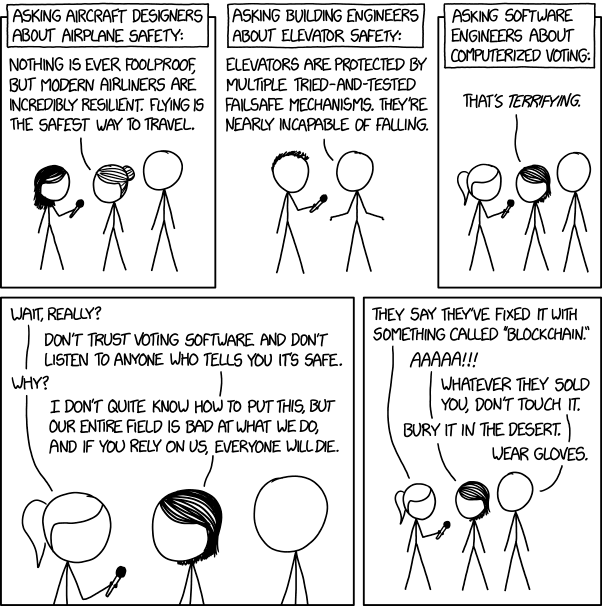
Let's go over these point by point. First, ETMS with all of its wireless communications, track profile databases and complicated computing power avoided a lot of hard technological and security issues by acting as a safety overlay instead of a signal system. This means it slows trains down, but doesn't speed them up. By rule ETMS fails safe because crews continue to follow the legacy rulebook and signals. Doesn't matter if the out of state PTC server gets hacked because by rule cannot rely on it to provide speed or signal information. It's the difference between adaptive emergency braking and Tesla autopilot. Of course people are making waves about using ETMS as a cab signal system or as a full on CBTC system and it might even get approved (like the 737 MAX got approved), but just remember it is going to have the same problems as voting software.

Second, CSS provides partial moving block functionality that allows for mid-block upgrades as block state is continuously fed to the train via the secure communications channel of the rails. Moreover, those extra cab signal repeaters CSX wants to get rid of can be instead used to provide DOUBLE the number of signal blocks! This is effectively what NS did on its former Conrail territory eliminating automatic wayside signals and creating code change points every mile. The RF&P on he other hand will be left with half the number of fixed signal locations that will need to be physically re-positioned to respond to capacity constraints or higher speeds. In terms of safety, CSS codes are transmitted through the rails. If a rail brakes or anything else suddenly disrupts the track circuit, an approaching train will see a signal drop immediately. ETMS only sees what the signal system sees, a block occupied by...something.


Third, ACSES is Amtrak's transponder and CSS based PTC system that is available off the shelf for speeds up to 150mph. Right now Amtrak is trying to get ETMS certified for 110 in a "couple of years". ACSES is far simpler to set up with no need to download track databases and both CSS and ACSES operate and expanding Rule 562-ACSES south to Richmond and Manassas would unify Virginia passenger rail with those of the entire northeast. 

Rule 562-A Signal Bridge at BERLIN at 100mph.


Fourth, CSS just works. The technology was developed in the 1920's and can be run with a couple of relays. There is no wireless data link that can be disrupted or hacked. Although NS uses ETMS on its former PRR territory, it does not need to maintain a constant wireless link with trains between blocks because cab signal codes are proof of movement authority (as evidences by the presence of PTC antennas only at interlockings). When deployed with ACSES, CSS and ACSES are independent systems that can each function if the other fails. Currently FRA regulations require a 60mph speed restriction for trains operating with failed PTC, however the limit is 80mph if ATC is present. These 60mph PTC failure restrictions are not a rare occurrence and on the 110mph Michigan Line this will impart 30 to 60 minutes of delay. The freight railroads don't care about a 60mph limit because that's as fast as their trains go. 

Cab Signal equipment box on a Geep

In summary, discontinuing the RF&P CSS is a massive failure of imagination that will lock the Virginia services into a second tier, freight centric method of operation for decades. It will reduce capacity, and increase service disruptions just to save a little money and hassle in the short term. I've linked the regulatory motion. If there's a way to leave a public comment try to do so and if you know of any advocacy groups that might be in a position to do something, please bring this to their attention. The ultimate shame is that the proper response to accidents such as Chatworth would have been a nation-wide cab signaling requirement.  Cheap, simple, effective.  Instead the only winners are signal vendors and those that stand to gain from a hobbled rail sector.