Search This Blog

Friday, January 30, 2026

PATCO CENTER Tower Moves To The Pherphery

 As the prototype for the "modern" heavy rail rapid transit system, Philadelphia's PATCO (Port Authority Transit Corporation) Hi-Speed Line was naturally designed with state of the art signaling. However as a prototype it had a few features rooted firmly in the past. For example it had cab signals without wayside block signals, but it used PRR style 100hz pulse codes as opposed to the audio-frequency track circuits that would appear on the DC Metro and BART. One of PATCO's most visible links to traditional railroad operation was its signaling control where the full-line CTC was placed not in a command center or dispatch office, but a "tower" built and named for the PRR interlocking tower that had occupied the same location for the previous 40+ years. 

As built by the Pennsylvania Railroad, CENTER tower sat at the 3-way junction where trains from the Federal Street Terminal would fan out en-route to various points along the South Jersey shore from Long Beach Island to Cape May. Older than the wave of towers that accompanied with 1934 PRSL merger, CENTER featured a 66-lever EP machine and despite the drop in passenger traffic throughout the 1950's, still saw plenty of action from freight trains and lite engine moves to the PRSL's primary service facility at the old Federal Street complex.  


This would change in 1966 when construction on the PATCO Hi-Speed line commenced. The project would replace the PRSL's Broadway station and the associated trackwork controlled by the old CENTER. The resulting real estate was repurposed for Interstate 676 and all traces of the old CENTER tower was erased, however the spirit of CENTER would live on in the new PATCO Hi Speed Line. 


When completed, the PATCO Speedline consisted of the existing 1936 vintage Delaware River Joint Commission "Bridge Line" between Camden and downtown Philadelphia along with a brand new grade separated rapid transit line to the New Jersey suburb of Lindenwold.  The new and old parts of the line joined just east of the old PRSL Broadway station in a space that would have been physically within the territory of CENTER tower. As PATCO tried to re-use as much existing infrastructure as possible it was decided to build the CTC office at this junction point as it could directly interface with the existing signaling and telecom links from the Bridge Line and not have to somehow forward those signals all the way to Lindenwold. Because PATCO's design team were generally rail enthusiasts, they named their CTC office after the old PRR CENTER tower. 

Technically the structure did count as a traditional tower as the operating floor was located above a typical PATCO substation. In addition to the unit lever CTC machine, CENTER also supported traction power direction and remote customer service via "call for aid" telephones and CCTV. CENTER would serve PATCO well for over 50 years, however as the systems were upgraded over the decades, the rationale for its existence, supporting direct wire control cabling, would no longer apply. Instead CENTER would be physically isolated from the main PATCO offices and shoppes in Lindenwold and also located in what had become one of the most dangerous cities in America. With the building starting to age and the work-site unpopular with employees, PATCO eventually found the money to build a brand new state of the art control facility at Lindenwold.   


Although the original CENTER tower will be retained as a backup facility, much of the spirit of classic railroading that CENTER represented is likely to be lost.

Saturday, January 17, 2026

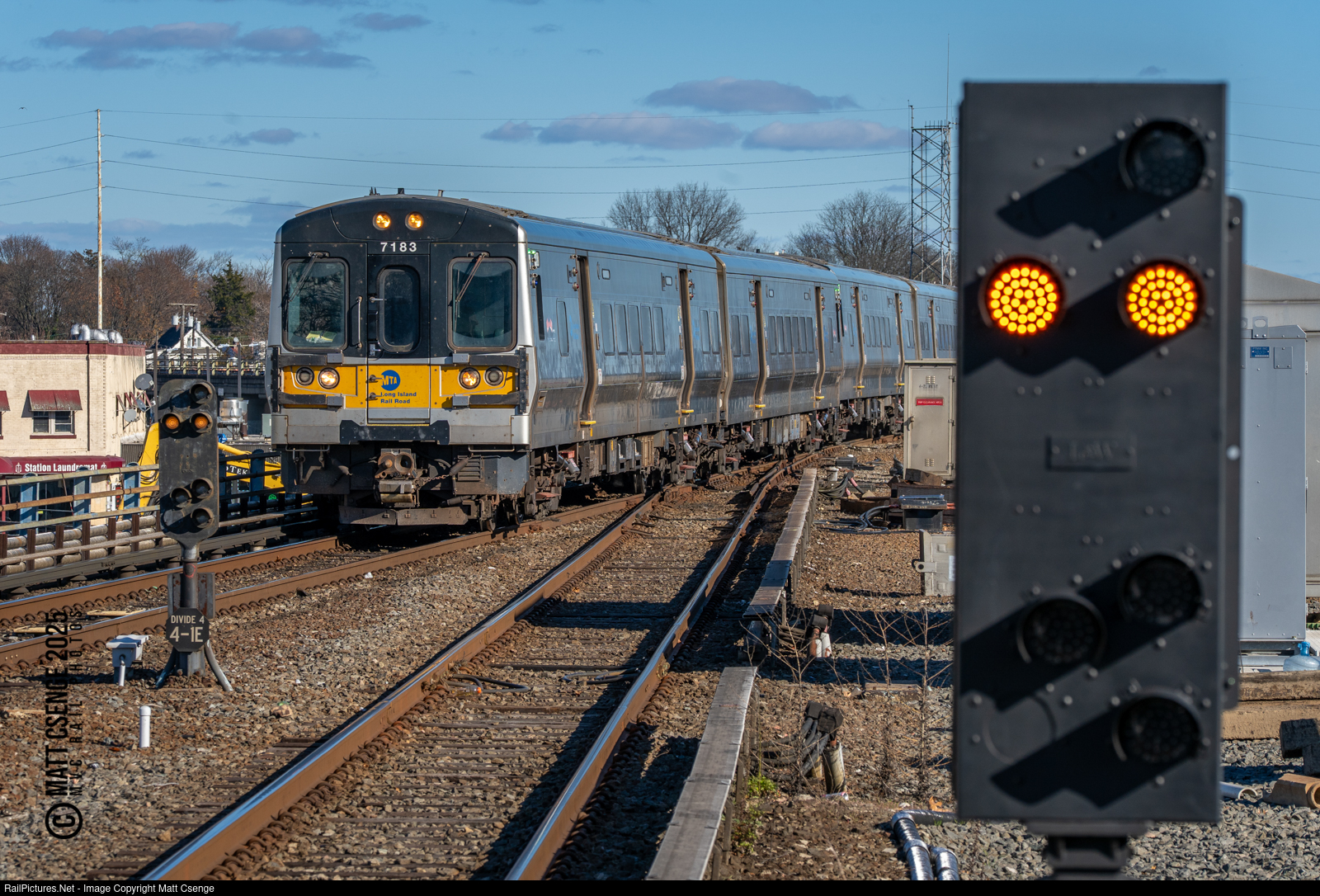
L&W PRR Pedestal Signals Appear on the LIRR.

With cast iron PRR type "pedestal" position light signals from US&S long out of production, SEPTA appeared to be the first to purchase ersatz pedestal signals from independent signal manufacturer L&W back in 2019. These boxy LED equipped replacements have subsequently appeared on Amtrak around Philadelphia's PENN interlocking. Well it seems that despite their move towards reduced aspect signaling, the LIRR has purchased some as well with a prominent example now at DIVIDE interlocking.


 While not completely unexpected the LIRR is known to have a sizable stock of pedestal signals that it uses during re-signaling projects to take the place of gantry-mounted PLs until the cutover process. However the number of concurrent signal projects may have exhausted the supply necessitating the purchase of new L&W stock. 

Saturday, January 10, 2026

Conrail Signs on the D&H

One of the few interesting things NS still does from a signal perspective is show respect for its former Southern and Conrail territories through the use of those railroads' traditional "station" signs. For the Southern that is a sea green with white lettering and on Conrail that is blue with block white lettering in the Conrail font. In fact NS is so supportive of these heritage signs that they have been spreading beyond their traditional territories with the Southern green signs now seen on the old N&W and more recently Conrail signs on the former D&H


The specific instance I am making note of today is CP-597 in Afton, NY, an interlocking I previously discussed when it was under attack by a re-signaling project. If you really like your ancestry trivia we now have a former D&H interlocking location, that was amalgamated into Guilford's Main to Pennsylvania "Freight Main Line" with the new milepost 597, and today features NS color light signals with a Conrail station sign and CP designation (CP-597 vs Guilford's CPF-597). Wow, talk about a mixed bag, 

Saturday, January 3, 2026

Fire at VALLEY JCT Tower

The Reading Company's late LEBANON VALLEY JCT interlocking tower was built in 1951 with CTC and direct wire control over most of the Reading Belt Line and eventually closed as a staffed interlocking station around 1987. It was used as a glorified relay hut for the next 15 or so years until its complete retirement from railroad use.  When I was able to profile the tower in late 2020 it had become unsecured at the hands of local vagrants and while this was a boon for documentation, I mentioned at the time that the structure was at grave risk of a downward spiral.  A year later the spiral had begun with evidence of both fire and vandalism inside. My prediction was demolition as an attractive nuisance due to the tower's robust brick and concrete construction, but apparently the roof and interior fittings of the operator's floor were made of wood and on Christmas eve 2025 the structure was gutted by fire. 

Photo courtesy Exeter Township Volunteer Fire Company

Demolition is likely inevitable, although the timeline is unclear due to the challenging location. (Amtrak's wooden SHORE tower suffered a fire about 5 years ago and still stands as of this post.) Regardless, anything of historic value that was not already removed was likely destroyed in the blaze.


VALLEY JCT joins a growing list of "robust" towers that have been demolished in recent years, many in far better condition. Just another reminder to not wait when it comes to documentary efforts.