Picking back up at CP-LONG just west of Lewistown you can follow along
on the track diagram here

Also if anyone is interested in the official interlocking diagrams you
can download them here.
http://www.multimodalways.org/docs/rail ... %20Charts/
You'll want the 1998 Pittsburgh Division one.
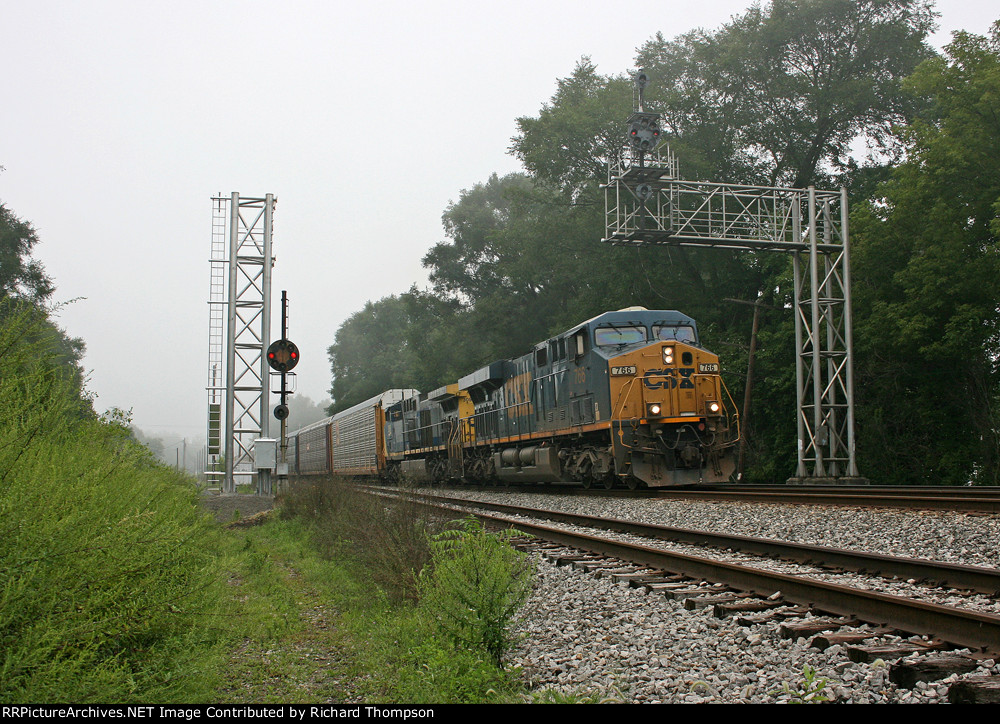
Next up is the 172 automatic which uses position lights and distant to
CP-LONG. A mixed freight train is seen having just passed the signal
on the opposite track.

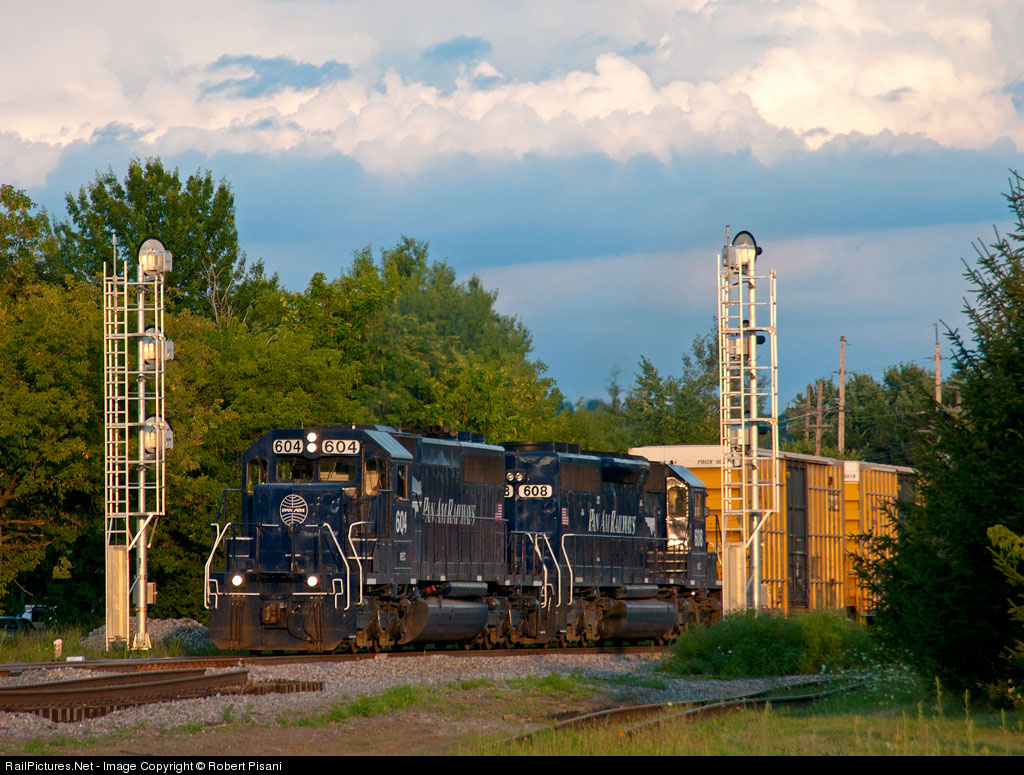
174 automatic is also position light masts and the 1tk signal is still
displaying Approach due to the freight train.

The 176 automatic and its position light masts is another distant, this time for CP-McVEY. On CTC territory interlockings are spaced ever 8-10 miles to allow efficient single-tracking / wrong railing
operations. This has the effect of making signals that aren't distants or home signals the rule rather than the exception as in times past when interlockings were installed much more sparingly.

Like CP-THOMPSON, CP-McVEY was an infill crossover installed in the late 80's CTC project. Here are the westbound position light mast signals set to the engineer's side of the track, which was still the style at the time. CP-THOMPSON and CP-McVEY are actually named after locations (Thompsonville and McVeytown), not people. An advantage to early settlement in the New World was being able to have whatever patch you set you farm up on after yourself which was later incorporated into more interesting things such as railroad interlockings.

The generous space between the two tracks belies the right of way's 4-track pedigree. As I mentioned before, most of the turnouts on the Conrail upgraded PRR main line are #20 and are good for Limited Speed (45mph).

The 2E signal at CP-McVEY was replaced sometime after 2000 with a
grand new position light. Unfortunately I pulled the trigger a bit
too early and got a close up of the original 4E signal.

But I managed to pull in a long shot that included the new signal. Thank god for steep regulatory requirements regarding alterations to interlocking logic. Of course recently that means when an interlocking is re-signaled old signals are just replaced instead of being wired into the new plant. Oh, note the new health and safety enhanced maintainer ladder.

Replacement ties have been dropped along 2tk at the 182 position light
automatic and distant to CP-McVEY.

Color lights at the 184 automatic. The left handed placement on 1tk
is a bit odd for an automatic signal.

186 automatic position lights. Note the Hot Box-Dragging Equipment Detector which used to announce itself as Newton-Hamilton. To replace the human eyes of tower operators, automated defect detectors are spaced about every 10 miles.

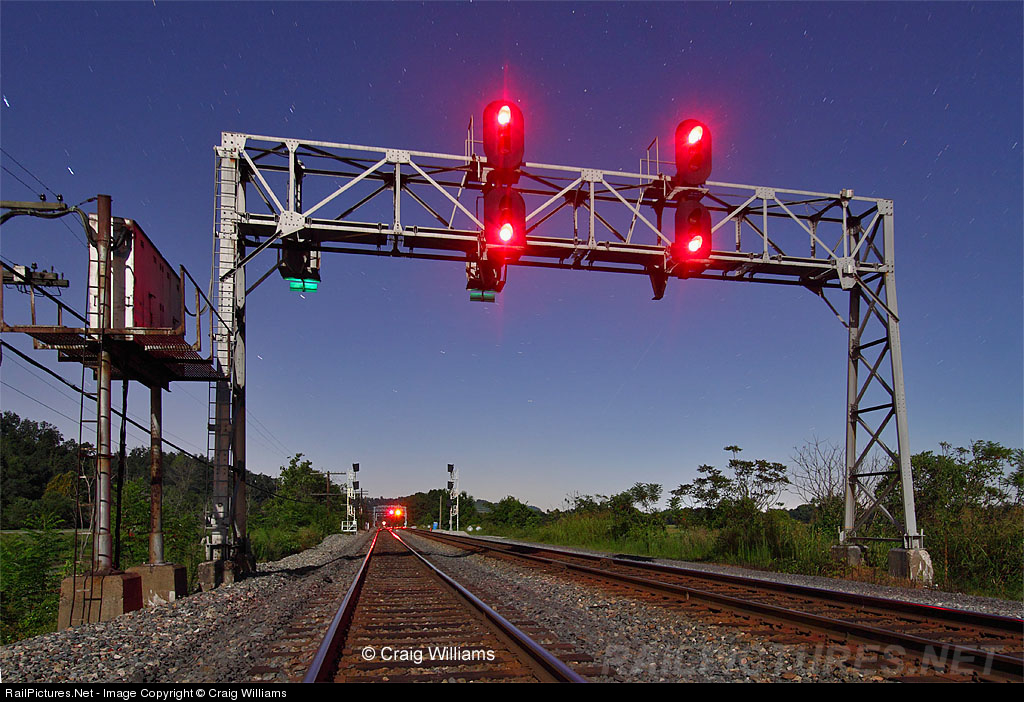
182 automatic is the distant to CP-JACKS and is mounted on a classic PRR gantry. The wb tk2 signal has a full lower head backing.

CP-JACKS is named for Jacks Narrows and includes a connection to the Mt Union yard. Mt. Union was the interchange between the PRR and the narrow gauge East Broad Top railroad, which now operates as a well known steam preservation line. Although currently out of service, Mt. Union has some of the last dual gauge trackage left in North America and it is slowly being restored.
The westbound PRR signal gantry is about 6 tracks wide to accommodate the old interchange tracks. The Mt Union connection uses a dwarf signal.

The interlocking used pneumatic points until about 2003 when they were replaced with US&S M23s.

Uh oh, it looks like the eastbound PRR signal gantry has reached the end of the line. The foundation is in place for another NS cantilever mast. While the amount of rust on the signals and gantry certainly belie some structural defect, the replacement of this particular signal is a real loss because the alignment of the two main modern tracks matched the alignment of the two old westbound tracks so the signals on the gantry did not have to be altered during either of the two major re-signaling projects. They are accessed via a short maintainer catwalk and the lower heads use the original PRR economic backing on the | array only. I was lucky to get such a good photo of it as CP-JACKS is isolated and does not have many ground railfans to document changes like CP-MIFFLIN did. Also note the now disused air tank to the left of the gantry.