Search This Blog

Sunday, June 29, 2014

California Zephyr: Then and Now

Two weeks ago I took Amtrak's California Zephyr from San Francisco to Chicago, IL recreating a trip I had taken in 2012.  Then as now I spent a lot of time in the rear of the train taking photos of the signaling along the line and while it will be months before I am able to post the 2014 photos I can at least report on what is changing signaling wise using images from the 2012 set.

First up is the former Southern Pacific Capitol Corridor between Oakland and Sacramento.  This is home to many former S&P target type color light signals and in what counts as good news none were removed since 2012.


DAVIS interlocking, which has the relay logic and unit lever emergency control panel inside the former interlocking tower, is still a searchlight and pole line plant with no new signals in evidence.

Hangin in there.
Of course Sacramento lost its searchlights with the station improvement project.


Moving on over the Donner Pass UP is in the process of converting the double track ABS segment on the western slope into CTC.


On the pass itself past SWITCH 9 the three searchlight signal bridges at MP 172, 174 and 176 are being replaced by a pair of Darth gantries.

Going, going...
The searchlights at SHED are safe for now as are the SP color lights between there and the next Searchlit interlocking at WEST NORDEN.  However between there and TRUCKEE all the searchlights have been removed, including several two track gantries on the horseshoe curve.  A few have been left in place with signals turned or removed. :-(

Zombified.
Beyond Truckee all the "reverse" ABS signaling is also being prepared to CTC conversion.

Catch it while you can.
Out on the Reno sub the entire western half that is still searchlit and pole lines is currently undergoing replacement.  This includes recently resignaled interlockings with new searchlights.

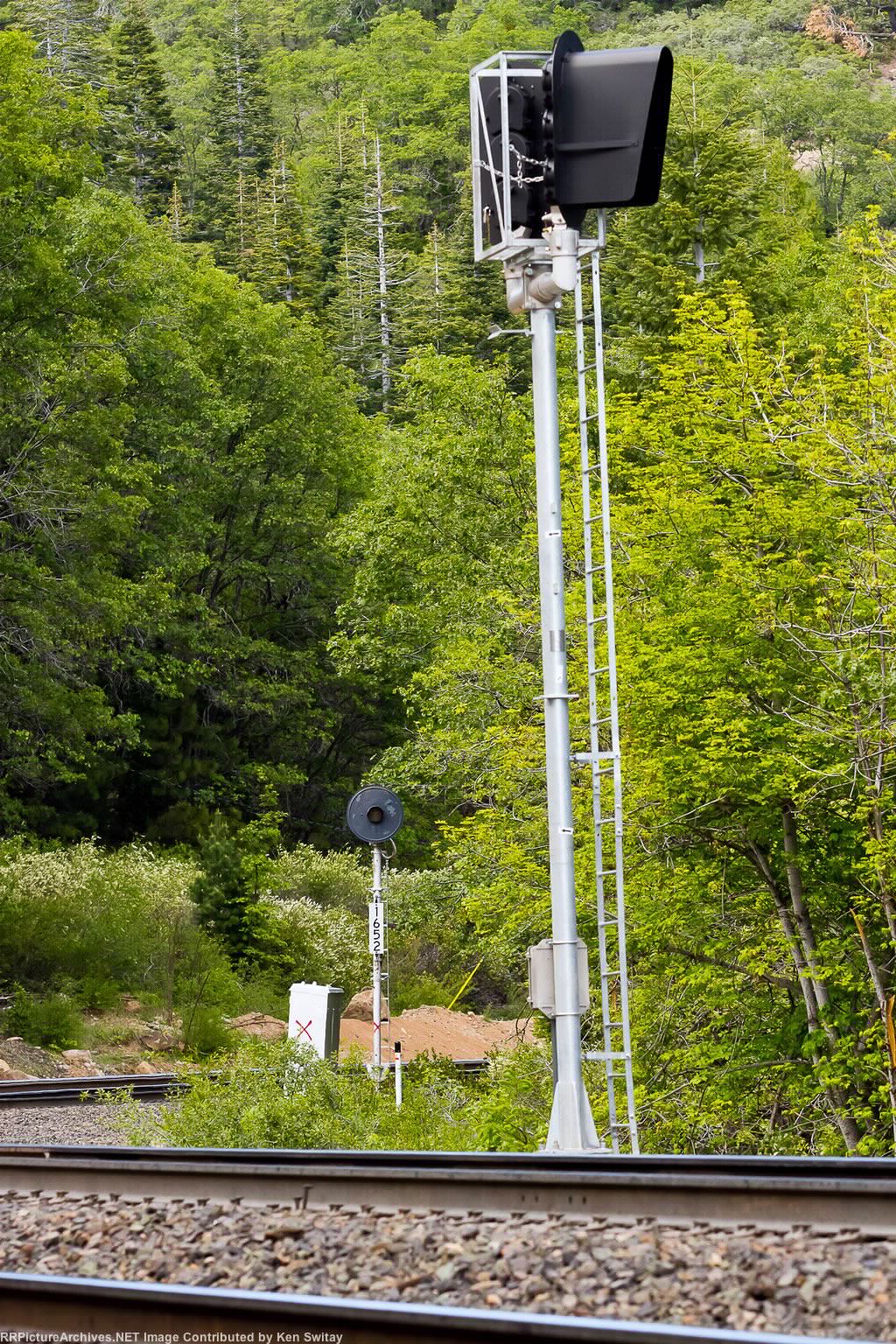
New signals to be replaced.
The western section with SP signals is completely untouched, but the area around Winnemucca had also lost its searchlights and new signals were going in at WESO and presumably the DT ABS Elko sub as well.
Gone.


Kinda good news in Utah where the two track DRG&W main east of Helper has not had the resignaling project begin and the new signals installed between Helper and Grand Junction have only been cut in on the far western end.

Two years and still not in service.
The searchlights in the Grand Junction terminal have also been replaced including the repeaters on the passenger siding.

Now Amtrak trains can be delayed in block.
The DRG&W signals between Grand Junction and Glennwood have also been replaced.


On the Moffat Tunnel sub many of the signals have already been replaced, but a clump of surviving searchlights hang on in the Byers Canyon and Granby area.

Still there!

Tuesday, June 24, 2014

Non-Trip Related News

Well I am back from my 4th annual Amtrak Cross Country trip and while I was planning on a trip report to detail all the great signaling that is being destroyed across this great country I will instead save that for next week to clear the decks of some news items that had been building up. 

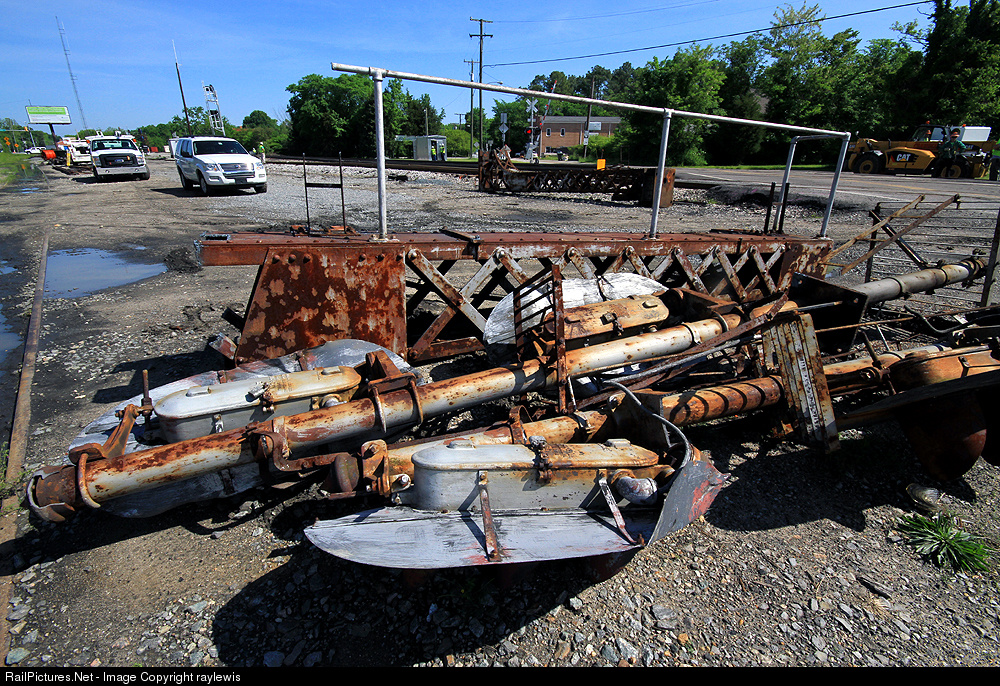
I am going to start off with two more NS examples of wasteful re-signaling practices.  Generally when a structure is made out of modern corrosion free materials you don't need to ever replace them, but of course why pay less.  Of course NS also seems to have a fetish for cantilevers so all bridges must go!!  The galling part is that these signals were supposed to be safe, having been installed just recently enough to last into the 2030's or 2040's. 

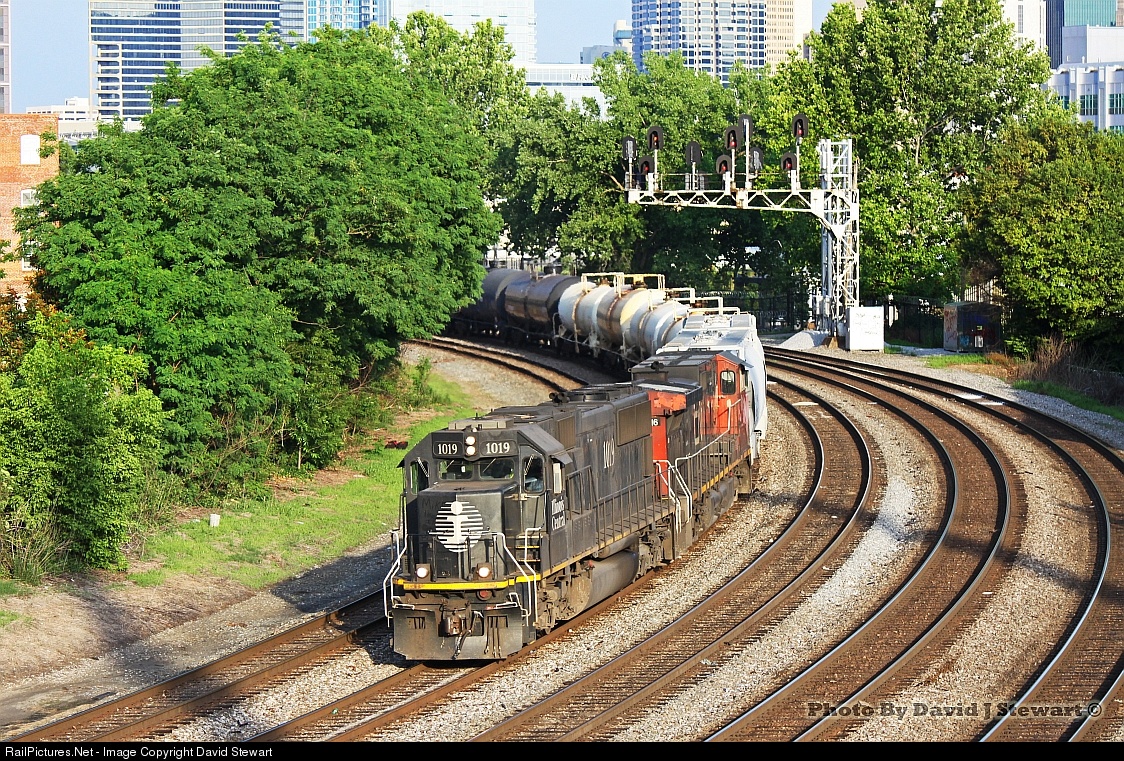
Southern Main Line, Linwood, North Carolina


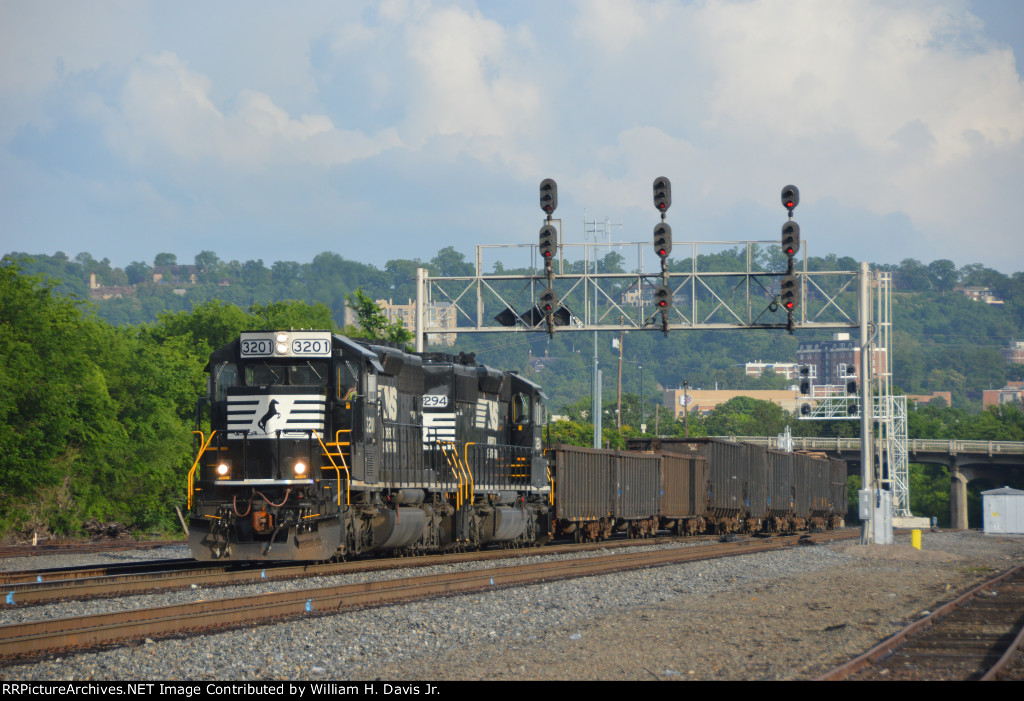
Not sure what the plan is for the Birmingham re-signaling project, but this 3x3 headed beast might just be worth saving.


 Not sure how I missed this, but it looks like the heart of the N&W has been relieved of its N&W CPLs, including a brand new signal bridge installed right at the railfan overpass.  What a shame.  NS will repaint 20 locomotives, but not keep one interlocking at the spiritual heart of its system position lit.  To think just a few years ago this interlocking featured pneumatic point machines too.


 Here we see a piece of good news, a 3-track Southern Cantilever re-done with modern NS Darth Vader heads, Indian gifted as a new cantilever tower is in place to re-re-signal this piece of history.  How many times does someone do something right just to come back and do it over just wrong.  Give me a break.


 As I reported earlier JD tower in interlocking in Hyattsville, MD is being re-signaled.  These CPLs date from 1992 and again, should have lasted until 2032 or longer, but again CSX things signals with higher levels of visibility and less use of extraneous red is a bad thing.


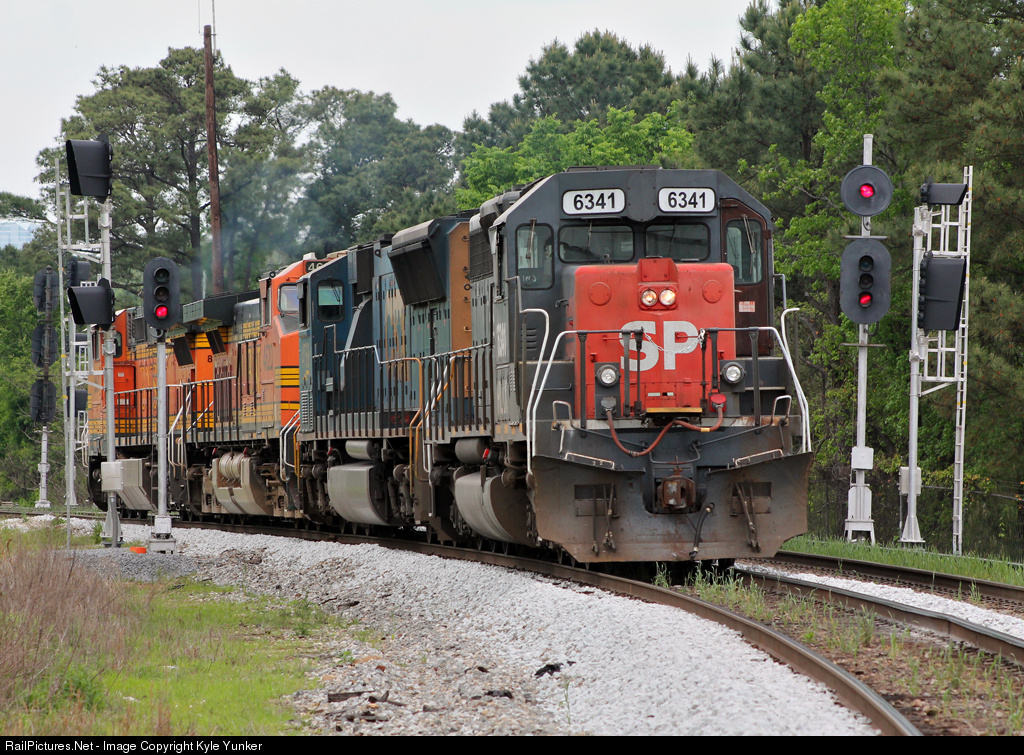
CSX is of course also ripping out SCL searchlights in the Carolinas.


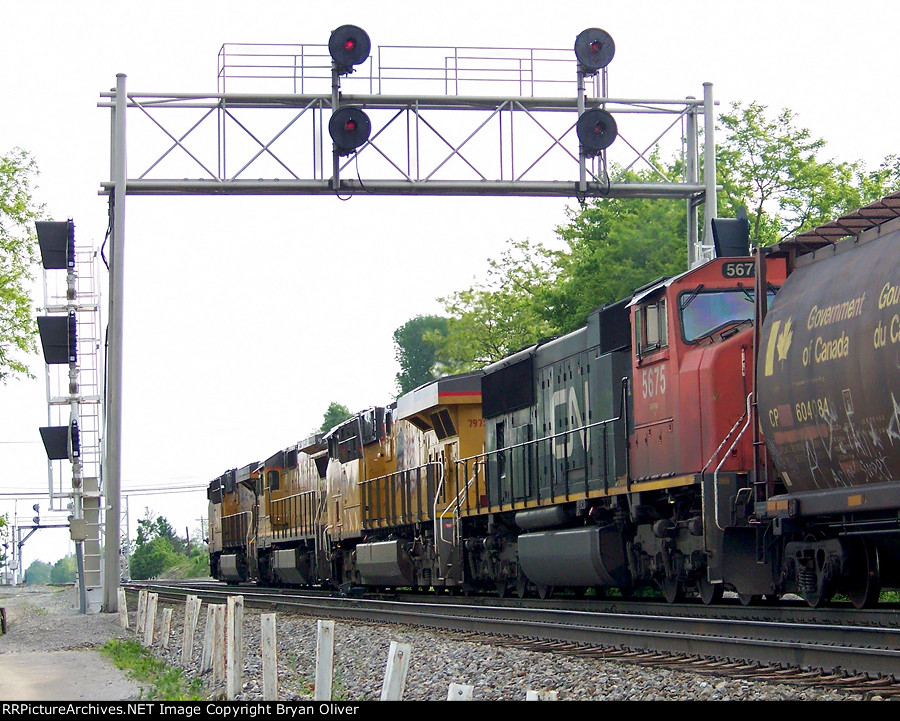
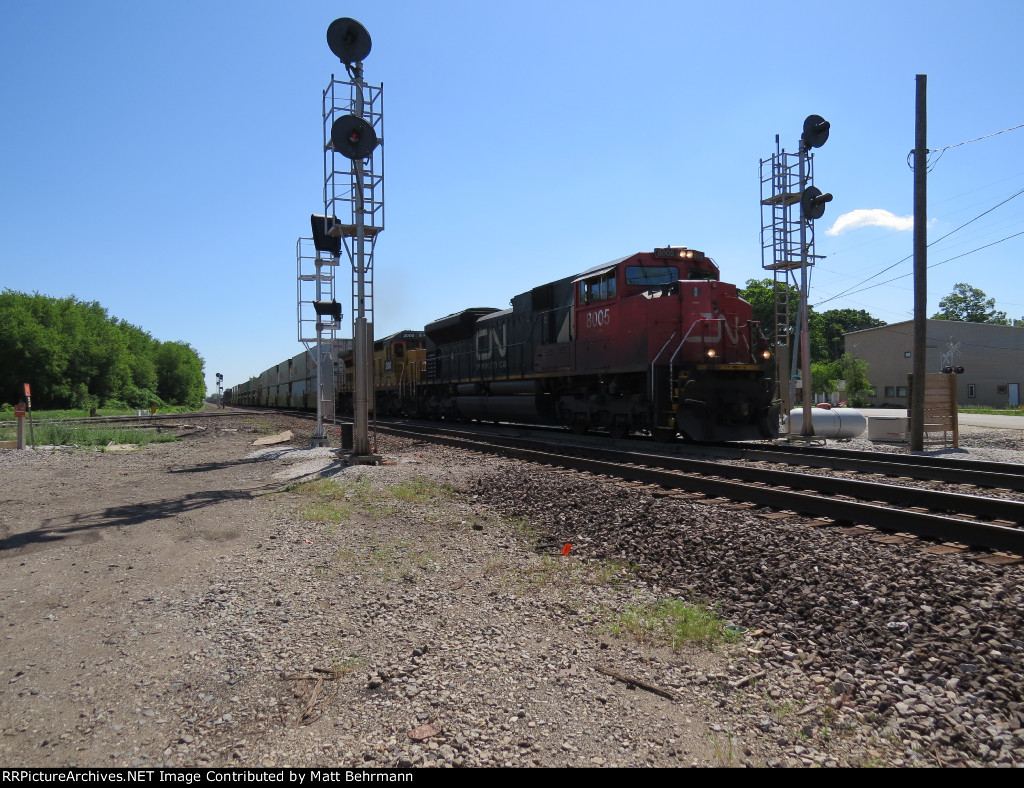
CN is now removing searchlights on its former Grand Trunk route such as the famous crossing in Wellsboro.  To think that the Canadian roads were one of the last big searchlight holdouts. 


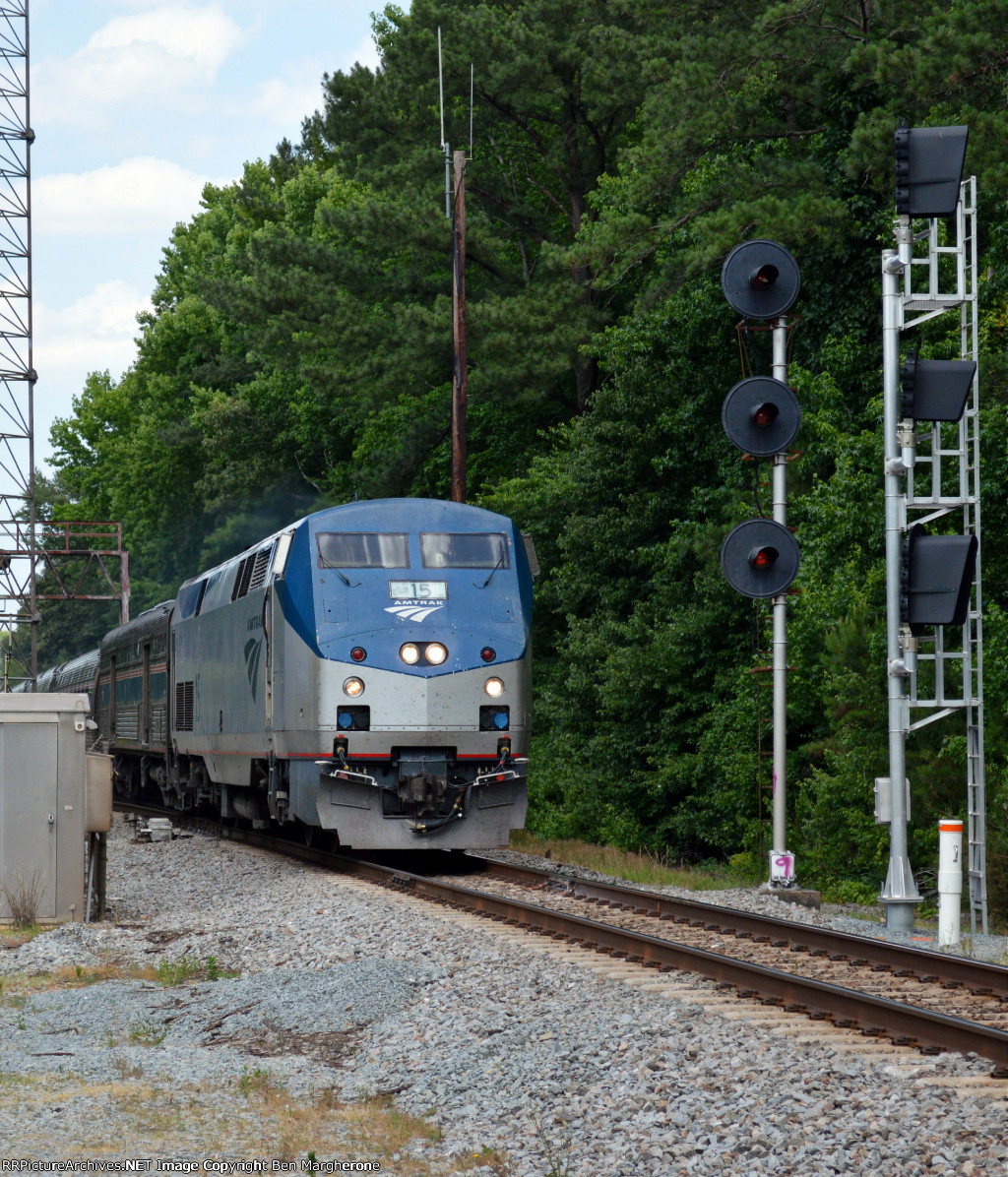
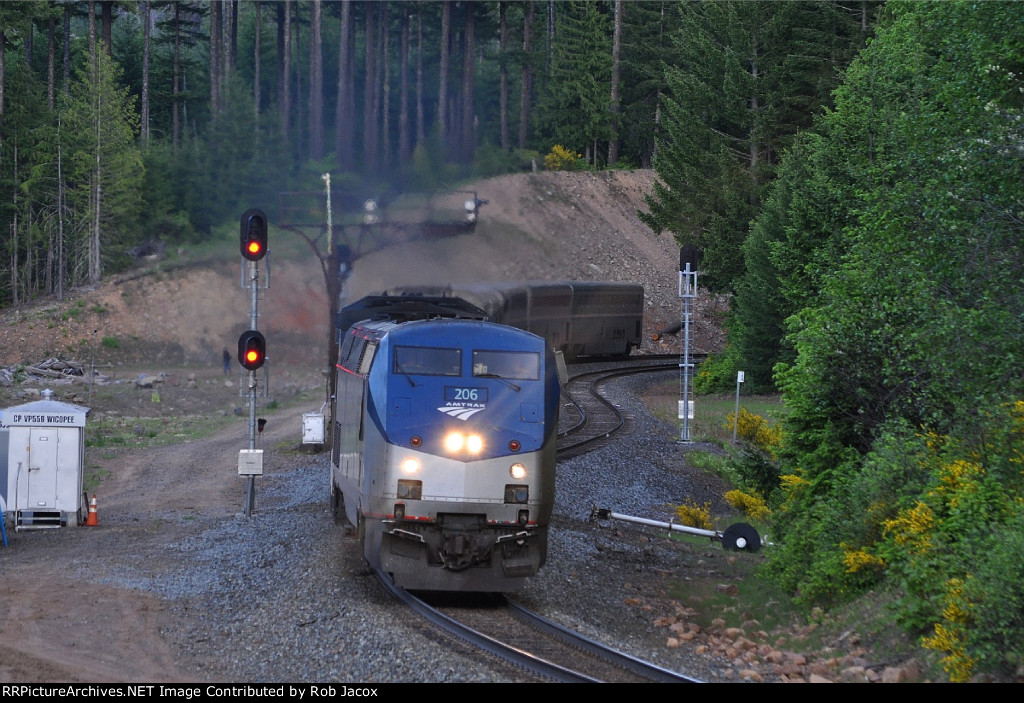
If you are in a position to ride the Coast Starlight do it quick because that whole route is also losing its classic searchlights.


Sunday, June 8, 2014

Lightweight Cab Signaling Resiliency

The more we seek to use "high tech" signaling methods like coded track circuits or communications based train control, the more we run the risk of creating fragile systems that can't handle failures well.  When a signaling system is not resilient it means that service must be canceled and substituted with buses, if at all.  This is commonplace in certain parts of Europe like the UK where overly restrictive rules require tokens and pilotmen to work against the flow of traffic or where signaling rules have been suspended.

The Port Authority Transit Corporation or PATCO operating across the Delaware River from Philadelphia was one the world's most advanced transit system in 1968 pioneering such innovations as one person operation, automated fare control and collection, automatic train operation and, of course, automatic cab signaling without fixed waysides (except at interlockings).  While based on the proven pulse code cab signaling system adopted by the Pennsylvania Railroad, cab signals can fail from time to time and this requires some sort of contingency operation.  On sections of the PRR that attempted the same type of operation they employed the  now well known 'C' lamp (C for Clear to Next Interlocking), which could be displayed by the dispatcher in case of a failure of the carborne equipment.


However there are limitations to the 'C' lamp as in it won't display if there is a track occupancy light in the line segment so without that trains typically need some sort of track warrant plus another dispatcher interaction to get permission past the stop signal.

So anyway I have always admired PATCO for being one of the most flexible and resilient rail transportation systems around.   Once when a train was stuck on the river crossing they used one from the opposite headway to head out and rescue it.  Once when there was a switch problem my train load of people literally swapped places with another train across the platform and then continued on towards our destination with cab signals and automatic train control cut out.  PATCO once didn't raise fares for 15 years, got 35 years out of its first set of ties and has 46 years on its original rolling stock. 

About a month ago on National Train Day PATCO was again hit with a minor operating problem, but in typical PATCO style they soldiered on like it was no big deal.  A signaling problem on the Ben Franklin Bridge rendered rendered it impossible for the dispatcher to reverse "traffic" on the bridge so eastbound trains could neither get a signal at the 8th and Market interlocking, but would also be stopped by cab signals the whole way across.  To deal with this problem the dispatcher simply authorized the operator to cut out all the safety system and operate past a stop signal and then without signal protection across the bridge.  Luckily I was filming as the operation transpired. 


At 00:53 the train gets a diverging proceed signal to cross over at the 12th St interlocking.  At 03:40 the train gets stopped by the PTC system to stop the train in the overlap before the stop signal, but a simple verbal instruction from the dispatcher and the operator can cut out the safety system and platform properly.  At 05:00 the operator get permission to operate under Home Signal Block rules (aka clear to next interlocking) and past the 8R signal at Stop.  After a quick readback we are on our way at 05:40.  We then operate at normal speed until 10:20 where normal operation resumed.


In this followup video there is a second segment of single tracking for an unrelated issue and at 00:50 we are stopped again by the PTC system, but before we even come to a stop the dispatcher is on the horn authorizing another bypass.  With basic procedures the service is not disrupted, costs are saved, passengers are happy and nothing collided, derailed or exploded.  This represents the gold standard for flexibility and resiliency in the face of a cab signaling failure.

Saturday, May 31, 2014

PHOTOS: Port Road Trips - COLA Interlocking and Tower

Seeing as how COLA Tower and its interlocking, located in Columbia, PA, was the focal point of a wide area CTC project running from the previously covered SHOCKS and JEB interlockings down to the yet to be covered CRESS interlocking a lot about the history of COLA and its creation has already been touched upon in the Port Road series.  The tower was built in 1938 and was a virtual clone of the 1937 (and still going strong) THORN interlocking tower. Both were built as part of the late 30's electrification that would stretch from Paoli to Harrisburg on the Main Line and also cover all the related freight routes in the area including the Port Road.


Both towers' design also reflected an evolving trend in PRR interlocking tower design away from the trademark bay window types to the new "corridor" type tower that would appear in the 1940's.  Still, the PRR spared little expense with brick construction, a slate roof and all the luxury amenities such as indoor plumbing and central heat.


Like THORN, COLA was an all relay interlocking plant wit a US&S CTC console interface (although as I explained before there was very little Rule 261 "CTC" involved in the project).   One advantage of the PRR's foresight was that in the 1980's when the tower was ultimately closed the windows could simply be bricked up and a remote unit installed to replace the human operator flipping toggles on the unit lever machine.  This means that COLA essentially was un-resignaled from 1938 through ~2011.  Anyone who says that modern solid state ICs and printed circuit boards are more reliable let's see how many modern electronic devices are still functioning after 70 years in service and if replacement parts are still available. 


From 1938 until its re-signaling in 2011 COLA used pneumatic switch machines with the compressor plant being located in the basement of the tower.  The air reservoirs and dryer was located to the rear of the tower's exterior.   Note the cables running into the tower from the CTC code line that ran from SHOCKS to CRESS.


It's status as a functioning relay room also meant that COLA tower had the privilege of wearing the Conrail blue reflective nameplates in addition to the high security brick job over almost every single exterior opening.  I would not be surprised if the CTC console was active for local control right up until the end. Also note the tower's door and slate shingled canopy. Classy.


Thanks to the internet I managed to track down an a photo of the COLA operator sitting at the CTC console around 1980.  If you visited the THORN page you can see that everything is essentially the same, only this console is a little larger.  Note the HBD-DED readouts in the background.  For those of you who like their facts and figures COLA had a 150 unit lever CTC console broken out into the following categories.
  • 23 levers for 53 signals
  • 27 levers for 40 switches
  • 4 levers for 6 electric locks
  • 1 traffic lever
  • 2 levers for overhead wire sectionalizin
COLA was split between the Maryland and Philadelphia divisions which always made for a good time for the operator having to report to two dispatchers and handle multiple sets of paperwork. 


I am not 100% sure what the exact function of this supplementary relay room was, but it matches a similar one at LAKE as well as a number of structures on the Buffalo Line.  My guess is that it is the location of the CTC code line equipment that was possibly turned into a maintainers workshop.


Saturday, May 17, 2014

CSX Ripping it up All Over

I haven't had a news post in a while and when I went to check that I had saved up I noticed that almost all of it was CSX related because after all CSX really hates classic signaling.  So let's get started.

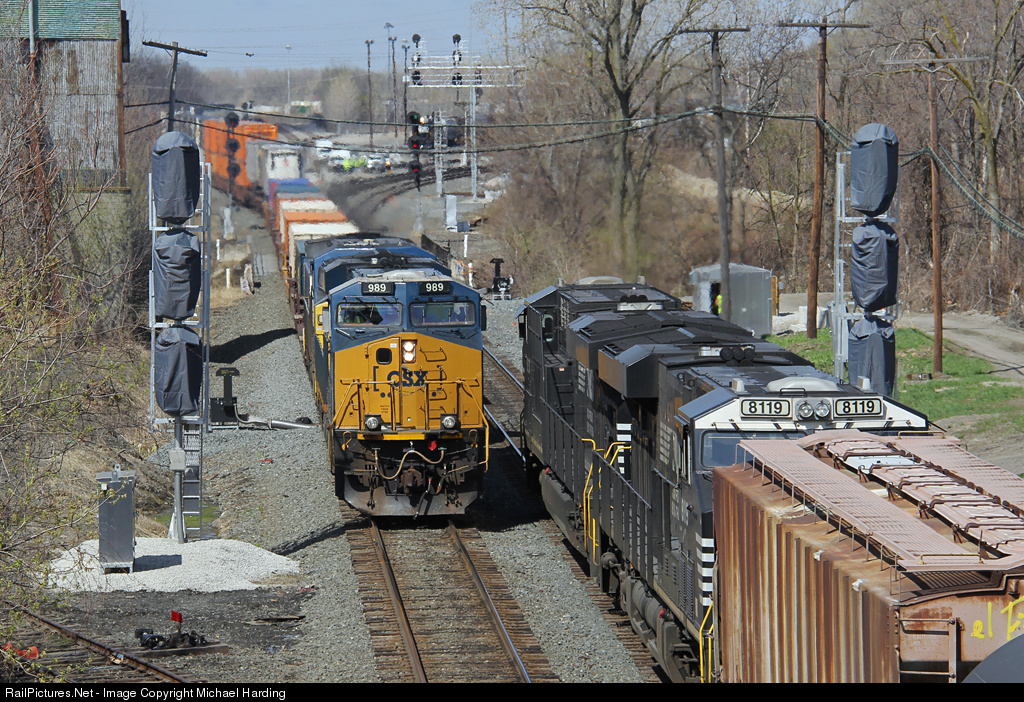
First bit comes from CP-33 on the River Line.  CSX had been upgrading the restricted speed sidings on the line to signaled sidings.  Despite their quest to save money the replacement for the Conrail small target searchlight two-head mast will be a three head Darth Vader that could have been played by a 4-malp single head signal.


More Seaboard signals falling on the W&A near Atlanta.  CSX does know the hoods are to keep SNOW from piling up right??


CSX finally wrapped up its re-signaling project on the Peninsular Sub near Williamsburg, VA.  I was there last summer documenting the old C&O units before they were cut down.  LEE HALL interlocking was going to be upgraded to a complete crossover to eliminate the partial crossover at WEST LEE HALL.


The Philly sub re-signaling has reached the outskirts of Wilmington with new Darths up at Landenburg Jct...an interlocking I have previously covered on this blog.  Remember, this interlocking was itself re-signaled only 10 years ago.


Alright, I do have one non-CSX related story.  NS is re-configuring one of the better examples of former NY Central signaling at CP-289 on the Chicago Line in Toledo. It looks like the interlocking layout is being reconfigured for higher speed or parallel movements as the new westbound signals have been moved east a few hundred feet. 


Wednesday, May 14, 2014

Fire! Fire! Help Me! SS28, New Haven Line

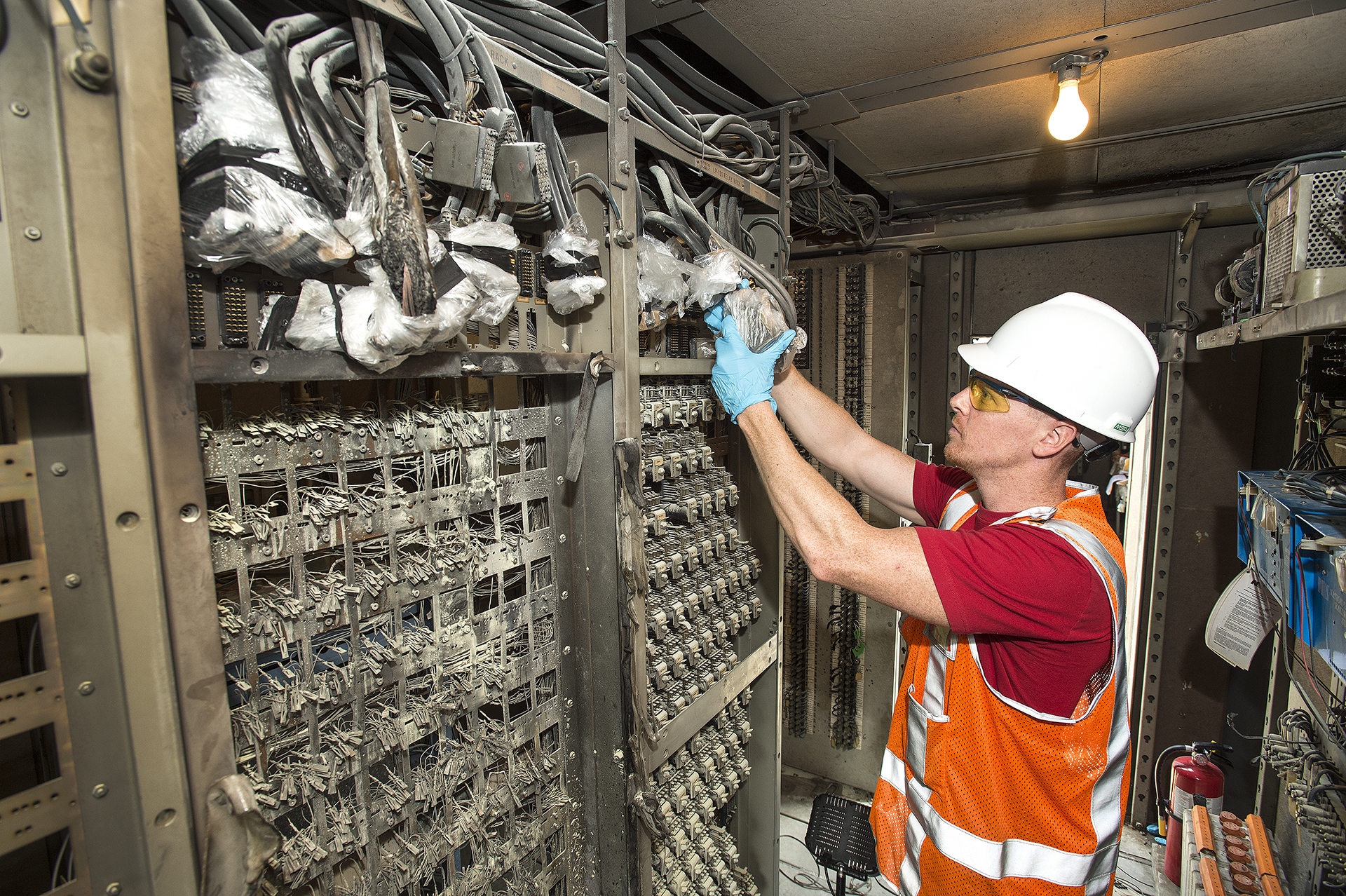
Usually when fire comes up in the context of railroad signaling it;s usually some old wooden interlocking tower or relay plant making use of lots of cotton wrapped wires, but more often than one would think modern metal relay huts catch fire and cause all sorts of headaches for the railroad that owns it.  Well a few days ago a fire broke out in one of the instrument houses serving a complete 4-track crossover on the Metro-North New Haven Line (it's really not their year is it).  The interlocking in question is technically known as CP-219, but the proper designation is SS28 GREEN and for those of your who don't know your New Haven Line interlocking here is a photo of what control the interlocking up into the 1980's.


Fortunately the tower was spared as all the relay logic was moved across the RoW to a series of huts connected by cableways.  Now in some of its interlockings MNRR has installed Halon fire suppression, but Connecticut has not opted to pay for such features, however the extreme cheapness did have some benefits as the use of multiple, small relay huts kept the fire contained to a section of non-vital relays used for CTC code line communications.  Now the only reason I am talking about this is because Metro-North was nice enough to post up a whole set of photos on Flickr in the interest of transparency.


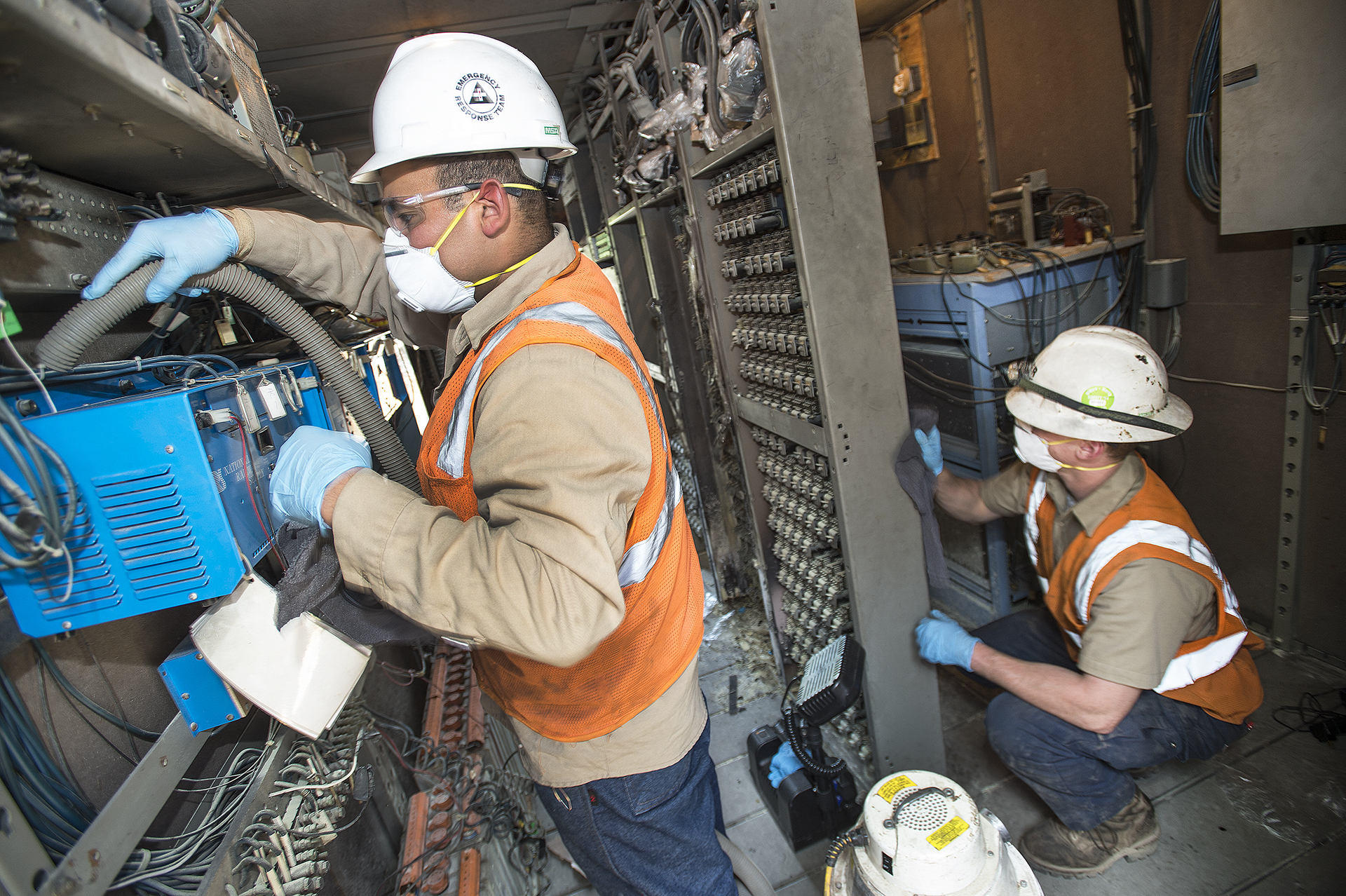
As you can see these aren't the familiar glass cased vital relays that would be both costly and time consuming to replace.  Instead these are non-vital elevator/telephone type relays used in the CTC control elements.  Without any damage to the real interlocking local control can be used if necessary and from the service advisory delays of only 5-10 minutes were encountered at the time of the incident.


Not sure if MNRR is going to try to restore the same functionality or just use some infinitely more simple form of modern technology.  The latter would seem obvious, but since it would probably require a brand new custom interface between the non-vital and vital elements I suspect they'll just bring it back exactly as it was.  Note the worker with the old wet dry vac already putting a "restore" plan back into place.

MNRR didn't stop at photos, they also produced a video outlining their little whoopsie.


Anyway, fires happen all the time, but few are so well documented in a way that can shine a light on the inner workings of modern(ish) interlockings. Which reminds me...if you travel the New Haven line late at night instead of looking to the south side of the tracks where the fire was, look to the north because inside the tower a single bulb still burns illuminating the original interlocking machine which fortunately did not burst into flame during its 60 years of operation.


Thursday, May 8, 2014

PHOTOS: NA "TOWER"

In the Year 2000 there were still two great railroad main lines controlled in the traditional method with regularly spaced interlocking towers manned by block operators. The first was the Amtrak Harrisburg Line between Philly and Harrisburg, PA.  The second was the B&O Main Line between Brunswick, MD and McKeesport, PA.   While not as well known as the Amtrak line and also featuring a few sections of dispatcher controlled CTC, the B&O main line features a total of 8 towers which from east to west were WB (US&S Model 14, pneumatic plant with relay machines for remote interlockings), NA Cabin in Martinsburg, WV (GRS panel relay machines), W tower at West Cumbo (GRS Model 2 pistol grip), R Tower at Miller, WV (mechanical), HO tower at Hancock, WV (mechanical), Hyndman tower (mechanical, simple crossover), SA Tower at Sand Patch, PA (GRS Model 2 pistol Grip) and VI Tower at Connelsville (Relay CTC machine in yard office).

NA "Tower" looking east in 2004
  The last of these, WB, closed in late 2012, but in 2003 CSX was only just finishing up its first assault on the B&O towers having just closed all but three of them .  In the west SA and Hyndman got the ax.  In the east it was NA, W and R (Miller).  Unfortunately I managed to visit NA in January, 2004, only after it had closed.  However a friend had managed to get out there shortly before the new signaling was cut over and managed to get some inside shots.  NA was a tower in name only, with many people and official documents referring to it as a cabin due to its small single story construction.  What was ultimately important was its status as a block and interlocking station filling the gap between HARPERS FERRY interlocking, remote WB, and W tower at West Cumbo.  The operator was on hand to not only throw switches and set signals, but also hand out train orders when wrong-railing was necessary on the D-251 ABS trackage.

Plywood, fresh in 2004, would still be in place in 2014.
 It is probably easiest to explain NA by starting off inside as I don't have any other documentation to show first.  NA is best described as cozy with an operator's room containing a desk and other communications equipment.  NA's local interlocking, controlled by the panel above the desk, was not very complicated and I suspect that at one point it was probably operated by a table type interlocking machine which allowed for a small single story structure.  Behind the operator was a unit lever CTC-type console controlling the remote pair of crossovers at Shenandoah Junction. All main track was single direction ABS.


By 2003 NA interlocking proper consisted of one facing point crossover, #18, one turnout to a station track, #16, paired signals on both main tracks protecting the switches, 17L/R and 19L/R, and a pair controlled approach signals, 15R and 21L, for the direction of travel on both main tracks.  NA was used as a terminus of the DC area commuter rail services and therefore a station track and holdout were provided to facilitate these movements.  You can see on the model board that the plant has at some point been altered.


The remote plant at Shenandoah Junction was controlled by a more traditional black GRS unit lever machine.  The layout is similar with two crossovers and a side track that lead to the N&W connection.  Signal levers were 7R/L and 9R/L, crossovers were #10 and #14 and the connecting track #8. Also panel blocking was fitted to this panel to prevent accidental wrong railing.


Back at NA interlocking we can see one of the original CPL signals mounted on a bracket mast while a Darth cantilever hovers ovehead.


In this view of the still open NA tower we see the CPL dwarf has already been replaced by a the dwarf still in use to this day as well as the crossover that was since removed with BYRD interlocking constructed as a replacement about 2 miles to the east.


Similar shot a few months later showing the other room in the tower used for relays or maintainers.