Search This Blog

Wednesday, September 23, 2015

Going Both Ways

Typically when one is setting routes through an interlocking you align switches, set traffic and then display a signal.  The logic checks to make sure that there are no conflicting or opposing movements.  In fact the US&S system of L and R levers (evolving into the often copied E-W/N-S) system works on the presumption that opposing train movements will never exist under any circumstance.  Well...never say never.

Now I first noticed this exception on the NJT RiverLINE in Burlington, NJ, but since I don't have a good photo of that example I will throw to the former Seaboard Rocky Mount Yard in Rocky Mount. NC.  For those of you who might frequently pass through DI interlocking adjacent to the yard, you may have noticed that the signals governing movement on an interlocked yard track were always lit to display a Restricting indication...even after the interlocking was re-signaled.

Before

After
Either the dispatcher is always expecting a northbound yard movement or the interlocking can do something special.  As you might guess it is the latter.  Because the yard track has a straight movement from a yard track and to a yard track, the signaling logic is set up to permanently display Restricting on the two opposing yard track signals until the special bi-directional route is canceled.  To avoid needing to get the dispatcher involved with every little yard move, he/she can fleet the signals in both directions at the same time.  It is almost like the interlocking ceased to be there until it was needed.

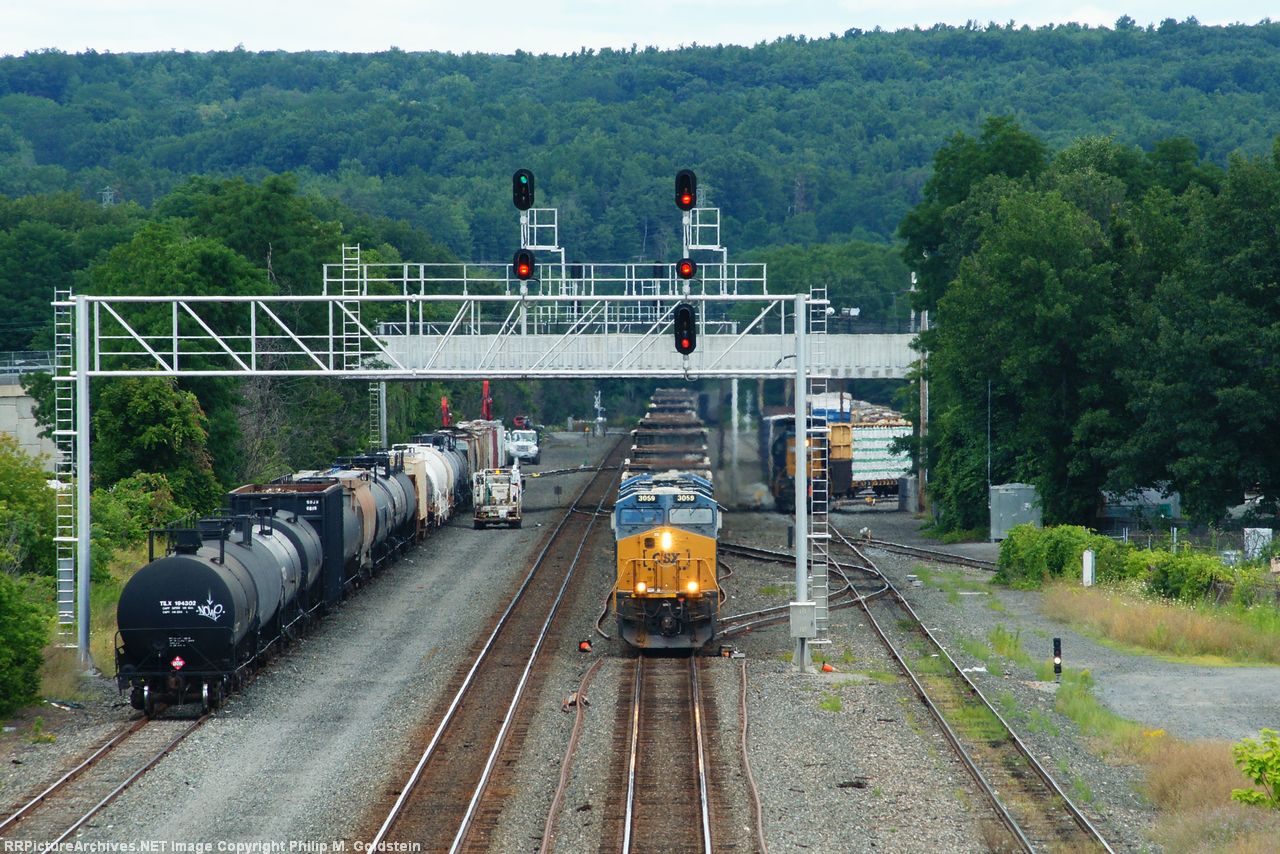
I spotted a similar setup at the new interlocking installed for fruit trains near Schenectady on the CSX Selkirk Branch.  Once again there was a through yard track with interlocked crossovers onto the main.  Sure enough the interlocking can fleet in both directions when only yard moves are called for.


I'm not 100% sure if these signal will drop to Stop when a train actually inters the interlocking.  The old PARK interlocking would do that in automatic mode, flipping up t Restricting when the train passed, however this situation was one of the last uses for mechanically operated semaphores that could be set to Resreicting and then just left there, regardless of track occupancy.


There is a practice similar to this in the UK involving the use of yellow disc or position light signal where a signal at Stop can be passed if the driver determines the points are set for the tail track instead of the main.   Not exactly the safest practice, but the spirit is the same.

Wednesday, September 16, 2015

News Far and Wide

Somehow I haven't really done a news post in a little while so here you all go.  We'll start with NS on its former N&W territory now seeing increased signal replacements on the Pulaski and Christiansburg districts.  A lot of this is quite sad seeing as how many of these signaling locations had the logic replaced not long ago.


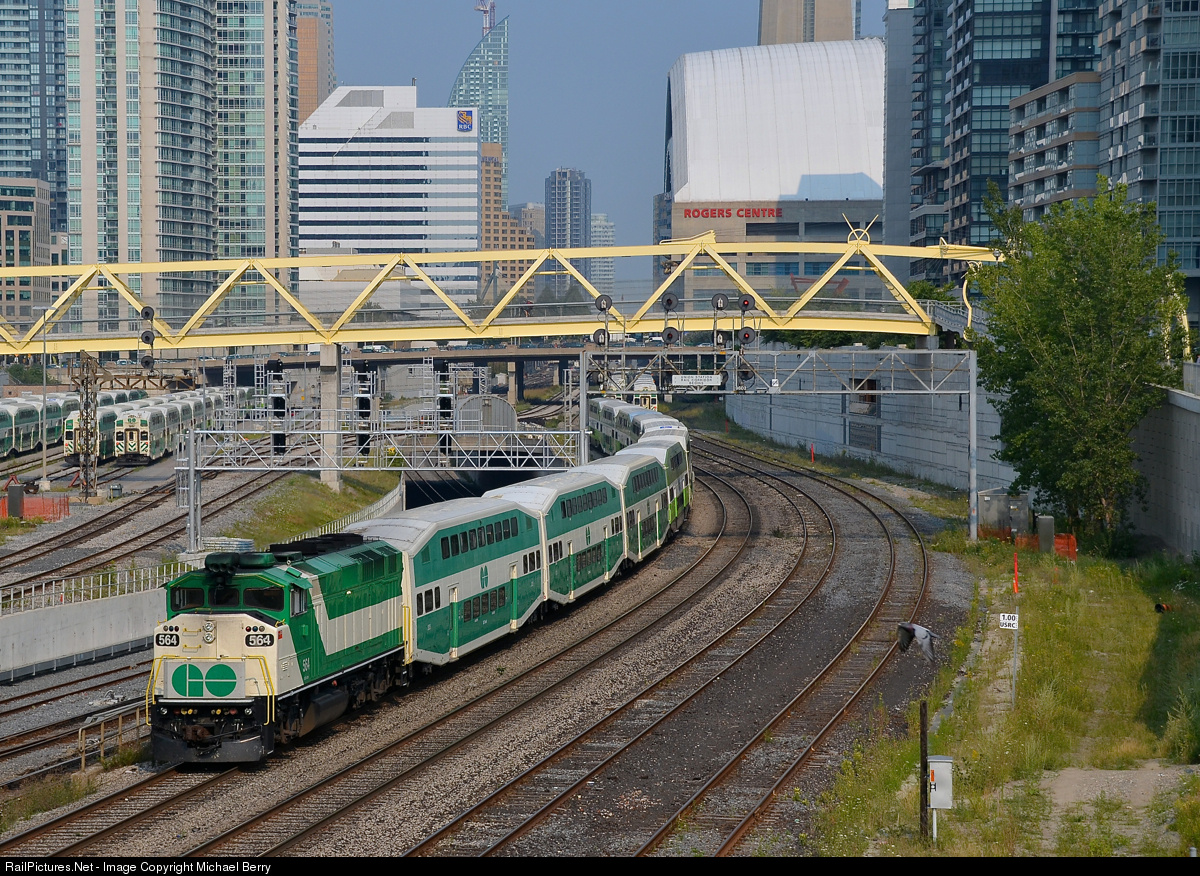
North of the border, Darth Vader signals continue to close in on the Toronto Union Station complex.


Out in Chicago Line the modern searchlights on the C&M don't look very safe as more and more signal masts sprout up.


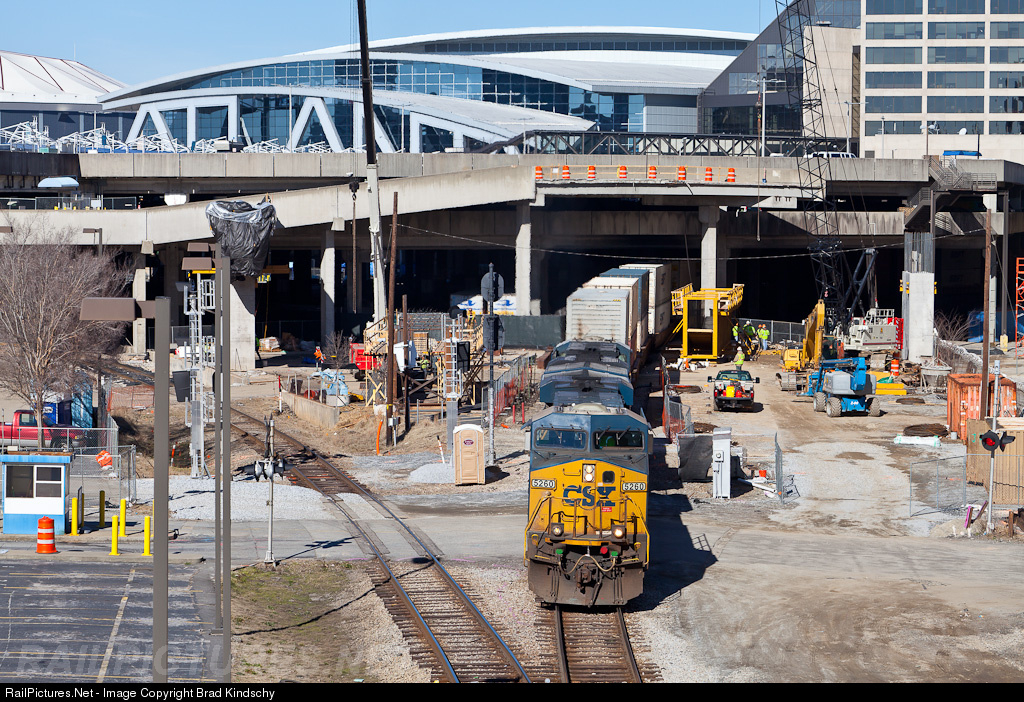
Seems like everybody has some bad news to report this week.  Here we see CSX replacing some of the swindling number of SCL elephant ear color lights in the downtown Atlanta Area.


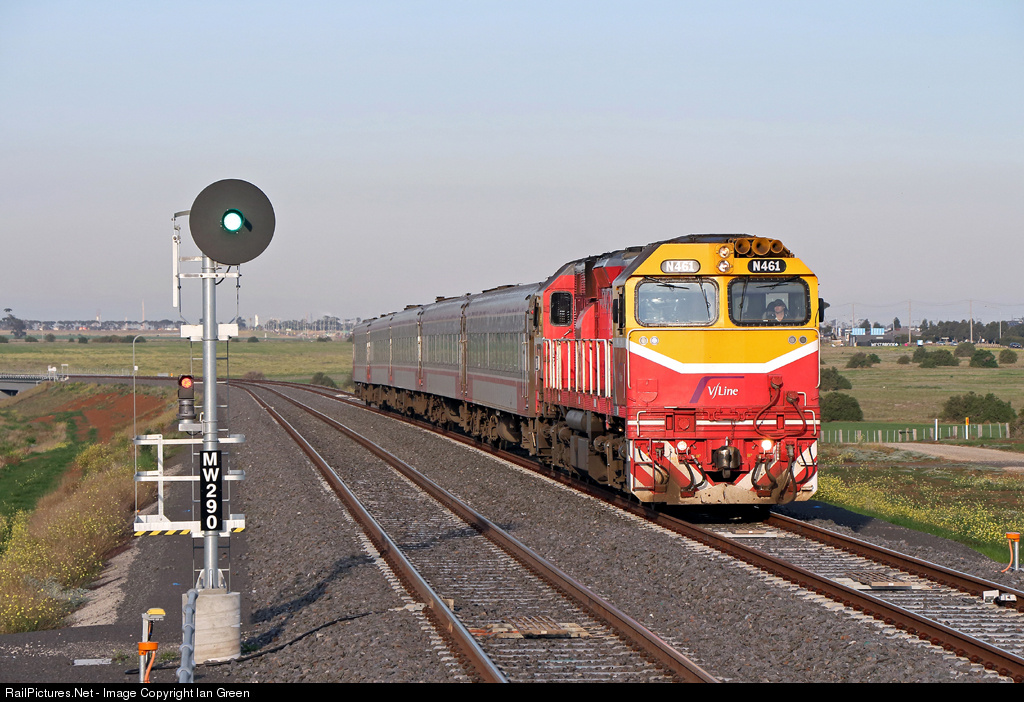
I do have a bit of good news.  If you are worried about the future of searchlight signals you will continue to find them, in LED form, in parts of Australia.  They even kept the large backing target!


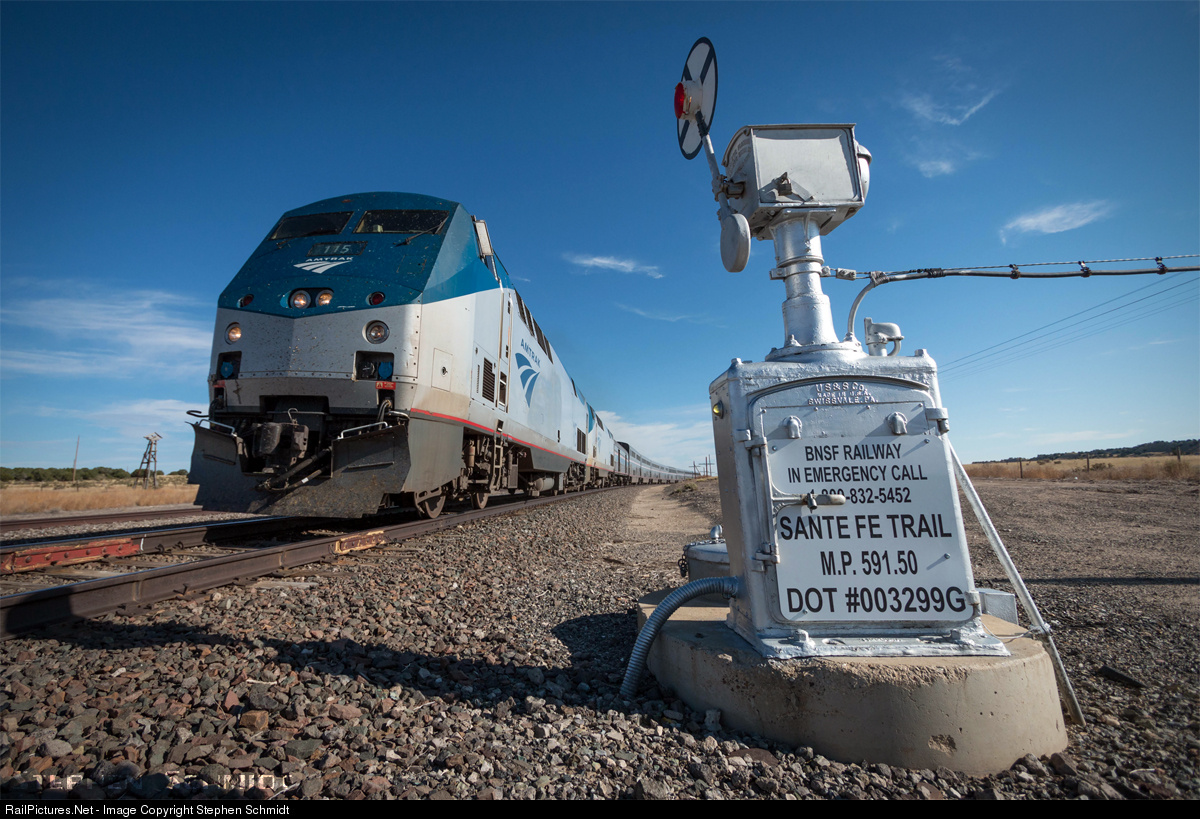
Finally in a bit of a lost connection I belatedly realized that I passed by the last remaining Wig Wag signal on the BNSF system during my Southwest Chief trip back in 2013.  It is located at MP 591 and protects the crossing of the Santa Fe foot trail.  Because it is so unobtrusive I went right past them without getting a shot off.


Oooo, so close.

Monday, September 7, 2015

Better Know a Signaling System: Amtrak "CPLs"

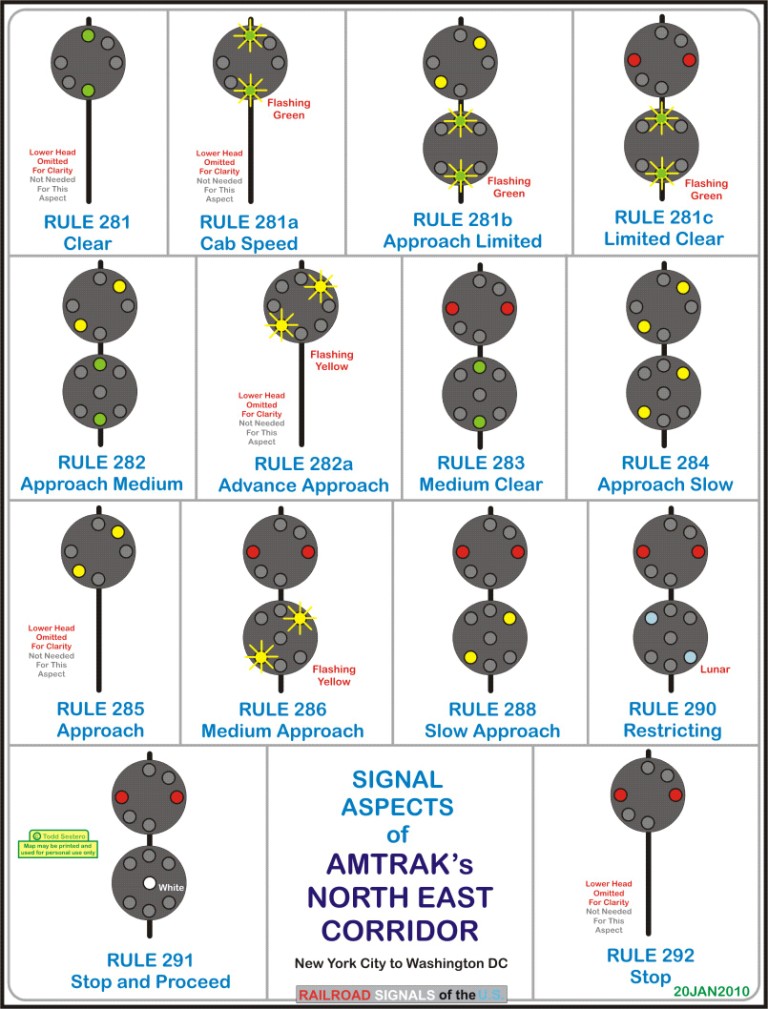
I know what some of you are thinking.  Isn't Amtrak part of NORAC and aren't those colorized position lights part of their signaling system and not Amtrak's?  Technically that is true, but the colorized position light was always Amtrak's baby and aside from a single Conrail trial automatic block location near Columbus Ohio, colorized PRR position lights haven't been adopted by any other railroad.  Another misconception is the entire Color Position Light or CPL label for Amtrak's system.  CPLs are what the B&O came up with as each signal relied on both color and position (of the orbital) to derive its meaning.  Amtrak was aware of this distinction and after slapping a bunch of color filters on amber PRR signals and eliminating the center lamp they christened their invention "Position Color Lights" or PCLs.  I call them Colorized Position Lights (CzPL?) because I find the term Position Color Light to be rather pretentious.

More info here.

Found on Amtrak's electrified system from New Rochelle to Washington, DC and all the way out to Harrisburg, the CzPL is either a long overdue update of the former PRR system or a short sighted overreaction to a problem that never existed.  Position Light colorization began as a response to the Chase, MD wreck based on a finding that the all-amber position lights were not salient enough.  Considering the crew of the Conrail train that missed the signal were all high on pot, I'm not sure color would have done much to rectify the situation. In fact many charged the colorization made the signals far less visible, especially in the poor light conditions the amber PLs were designed to excel in.

Can you see me now?
However use of LED light sources have completely eliminated the visibility problems and now the CzPLs are as good as anything that existed in the amber era.  If you are wondering why Amtrak never just cast its lot with color light signals I have heard it is a combination of wanting to re-use old hardware, to avoid needing crews to get used to a new normal and finally, PLs work better in electrified territory with overhead lines and support structures that can momentarily block out single lamp signals.  From my personal observations this is indeed an issue on the Shore Line with color lights winking in and out of visibility.

LED CzPLs certainly pass the snow test.


The last amber PLs were installed by Amtrak in the mid-1980's on the Hellgate line, at the new PHIL interlocking and at FRAZER interlocking on the Harrisburg Line ~1994.  Apart from those locations amber PLs only survived on the Harrisburg Line and un-resignaled portions of the corridor.

Two masts separated by 50 feet and 50 years

In terms of interesting features the only two anomalies are the use of a central lunar white lamp on the lower head for Stop and Proceed indications, which under NORAC are still distinct from Restricting indications.  This allows the lower head to avoid the gaping blank spot the upper head has to contend with.  Also the flashing green | for Cab Speed was not replicated on amber PLs since I guess the NORAC committee no new interlockings would ever revert back to the amber system, especially not ones with high speed turnouts.

New signals, new RGY colors.
So that's the history of Amtrak's colorized position lights.  At some point I'll  do a "gotta chatm 'em all" post, but I believe I am missing videos of both the flashing green | Cab Speed and the flashing / Advance Approach.  Advance Approach is likely the hardest signal to find seeing as how the PRR preferred using Approach Medium for short signal distances.  However they do show up on the 6-track raceway between UNION and ELMORE on the outside local tracks.

Tuesday, August 25, 2015

More Canadian Pacific Signal Recycling

You might remember a few years ago where I posted about the strange mystery searchlights being installed by Canadian Pacific.  They appeared to be recycled searchlight internals encased in a brand new housing.  Regrettably CP has retreated from its searchlight policy, opting instead for more Safetran Darth Vader signals just like every other railroad in North America.  Or at least that's what I thought until I saw this photo.

http://www.railpictures.net/viewphoto.php?id=541244&nseq=2001

The upper heads of those new Vader masts looks normal enough with the scallop shaped modular lamps, but the lower heads look...different.  Could those be refurbished US&S N2 and N3 units?  Sure looks appears that way.  I'll have to keep an eye out for more evidence, but this isn't the first time old N heads have been used on new signaling.  Out on the old DRG&W main a couple of the new automatic signals being put in by UP are employing the same tactic.


Tuesday, August 18, 2015

Random News

It's been pretty quiet lately so here are the few bits and pieces of signaling news that came to my attention.

First, I think I covered this before, but it is worth repeating that some of the Raton pass semaphores are finally being replaced by color light signals.  The change would have happened years ago had BNSF not completely pulled its traffic off the line leaving only the daily round trip of the Southwest Chief.

http://www.railpictures.net/viewphoto.php?id=530120&nseq=788

 On the CSX Pere Marquette route through Michigan, the well known C&O searchlight signals in Romulus, MI are being replaced.  C&O searchlights are especially uncommon with most being found on their former Michigan subsidiary.


As if it hasn't been resignaled enough, Berea interlocking outside of Cleveland is getting some new signals in on the CSX portion of the plant.


Is a Darth Vader hood enough to save Seaboard signals in Georgia?  Nope.

http://www.rrpicturearchives.net/showPicture.aspx?id=4209055


In a rare bit of good news, the old N&W 3-track signal bridges at HUNT interlocking are still standing, over a year after the plant was re-signaled.


And the signaling for Denver's new electrified commuter system is becoming clearer.  It looks like it will be Metro-North style low information dwarfs with cab signaling.  I guess the Cephry won't get to enjoy a nice high speed run in/out of the city on the new elevated viaduct. :-(


 Well that's it.  Tune in next time for hopefully more information on railroad signaling.

Thursday, August 13, 2015

Addington Signalbox Closes

More news from the land down below down under.  On August 1, 2015 the last manned signal box (aka interlocking tower) on the southern island of New Zealand closed.  Addington signalbox is located in Christchurch, NZ and over the years it had come to control much of the Christchurch terminal area.  Centerpiece of the tower was a 1930's vintage McKenzie and Holland Style A electro-mechanical interlocking machine with the extended territory being controlled from unit lever CTC panels. The tower is also responsible for gate operation at a number of nearby level crossings.  Here is the diagram of the Addington area with the original territory located at the lower right.


Since it was built Addington interlocking has changed dramatically leaving only a handful of active levers on the old interlocking machine. There is comprehensive gallery of interior photos located on Facebook, but for those of you without FB accounts you'll need to settle for this 2008 video posted on Youtube as I was unable to find any other photos.  According to my count there are 11 active levers, 8 signal, 3 switch and 1 lock. The frame looks similar to GRS Model 5 just with miniature levers replacing the pistol grip slides.  The model board covers the territory from Linwood through Middletown South including intervening interlockings at Middleton North and Christchurch.


The New Zealand signaling methodology is more similar to North American practice than to UK practice with speed signaling, permissive signals, CTC and atomic interlockings.  Unfortunately NZ is also like North America in its general abandonment of manned interlocking towers.  Today all signaling on the south island is now remote controlled from Wellington on the North Island.  Remaining north island towers like Petone are also closing at a steady clip.  I urge anyone who may be traveling to New Zealand to check out some of its fading railway heritage in addition to its natural beauty.

Sunday, August 2, 2015

PHOTOS: Port Road Trips - WEST ROCK to TOME

 Sorry for the delay in getting the last few segments of Port Road Trips out.  I figured since I was so closed to the end there was no real need to rush as I was still planning my next big project.  As one might have surmised from the general pattern of Port Road Trips, this week I will be covering another three signaling locations starting at CP-WEST ROCK, continuing on to the intermediate signals at MP 6.4 and finishing up with CP-TOME.  To help you get oriented here is the 1997 Conrail interlocking chart for the area covered in today's post.

CP-WEST ROCK marks the western end of the second of three original signaled sidings on the Port Road.  Like the Holtwood siding, this "siding" is more of a second main track as it has a two track intermediate signal smack in the middle of it.   Located only 4 miles south of the Pilot siding, it is the preferred option for trains to pass in the overnight hours as traffic flows on and off Amtrak's Northeast Corridor.  Like the other interlockings south of Holtwood, CP-WEST ROCK has been lightly rehabilitated by NS and features re-painted PRR equipment.  Like most of the other interlockings we have covered, CP-WEST ROCK is a simple "end of siding" affair with a single turnout (#217) and three signals.  All designations are as they appeared on the CTC machine at COLA tower.


The 218R signal is mounted on a surviving full height catenary support, instead of the chopped down poles seen at CP-WEST PILOT and CP-MIDWAY..  As this siding is fully signaled, the 218L is equipped with a lower head able to display Medium Clear and Medium Approach.  Stop and Proceed takes the place of Restricting so no lower head \ position is provided.


In this rear quarter view of 218 L one can see where the fresh new paint has and has not been applied. From the condition of the signal cable that does not appear to have been replaced.  These photos were taken in 2011.


Like the MIDWAY and the PILOTs, the relay hut at CP-WEST ROCK is the original PRR equipment and spots a fresh coat of temperature reducing silver paint. Behind the hut is an auxiliary cabinet for relays and other equipment.  The Conrail blue interlocking signs have also been retained.  The official milepost of the interlocking, 7.5 from Perryville, is stenciled on the hut door. If you are wondering where the "pole line" satellite dish  is, it is mounted across the tracks on an old catenary post.


The Medium Speed #217 turnout is powered by a new USUS M23 point machine, installed as part of the refurbishment.  Point heating is provided by a propane fired direct burner system as indicated by the telltale shrouds favored by Conrail.  The 217 switch was left in the reverse position when I came upon it.  Since CP-WEST ROCK is closer to civilization then many of the other interlockings, the propane supply had been surrounded by a barbed wire fence to deter theft.


The westbound signals are mounted on a typical two-track catenary gantry modified to support signals.  The signals were controlled by a single lever (218) on the old COLA machine with 218RA on the main track and 218RB on the siding.


The 218RA is a single upper PRR PL head that has had the lower Stop and Proceed marker removed in the refurbishment. You can also see the fabric insulated signal cables that were not changed in the refurb. The shiny screws on the freshly painted face of the PL however, were replaced.


The 218LB signal is typical for what one sees when exiting siding tracks with a Stop only upper head and a lower head supporting Medium Clear and Medium Approach. The lamps are bright and well focused, a problem with US&S pattern PRR PLs, which use a complex lens and parabolic mirror system to focus the output from the low power bulbs.

The intermediate signal between CP-WEST ROCK and CP-TOME is located around MP 6.5 with the eastbound signals bearing the plate C64 and the westbound signals C65.  According to the interlocking chart this signal location is known as "Rock" (explaining why CP-WEST ROCK is CP-WEST ROCK), but I have no additional information about the history of the name.  The signals are mounted on a modified catenary gantry with the eastbound siding signal mounted on a mast position to the right of its track.  Here in this Feburary 2011 photo we see both C64 signals displaying an Approach indication for a Stop at CP-TOME.


 As the siding is only two blocks long the best indication available on the C64-1 signal governing eastbound traffic on the siding is Approach Medium.  The "Rock" siding is popular for NS to store high and wide trains before they are admitted to the NEC due to a a length of track between here and CP-TOME with larger than normal track centers.


Here in this 2012 view we can see that the refurbishment painting applied to the entire signal structure, unlike the job performed at CP-WEST ROCK.


 Without a diverging movement at CP-TOME the main track signal is a typical 3-aspect PRR PL head, shown here displaying Approach.  The "cage" for a lower head is nevertheless provided, which implied that the electric territory mountings were prefabricated without regard to context.


The westbound C65 signals located on the same structure and mirror the eastbound signals.  One reason the PRR not have "combination" indications such as Medium Approach Medium was that they made an effort to not to have single block signaled sidings.  The C6x signals are located midway along a 3-mile sidings creating two shorter than normal signal blocks.  Today a modern railroad would have most likely made the siding a single block. Note the end of a empty autorack train heading westbound on the siding track after delivering its cargo to the Port of Baltimore.  The photo was taken early on a Saturday morning as the last of the freight traffic was being hustled off the NEC.