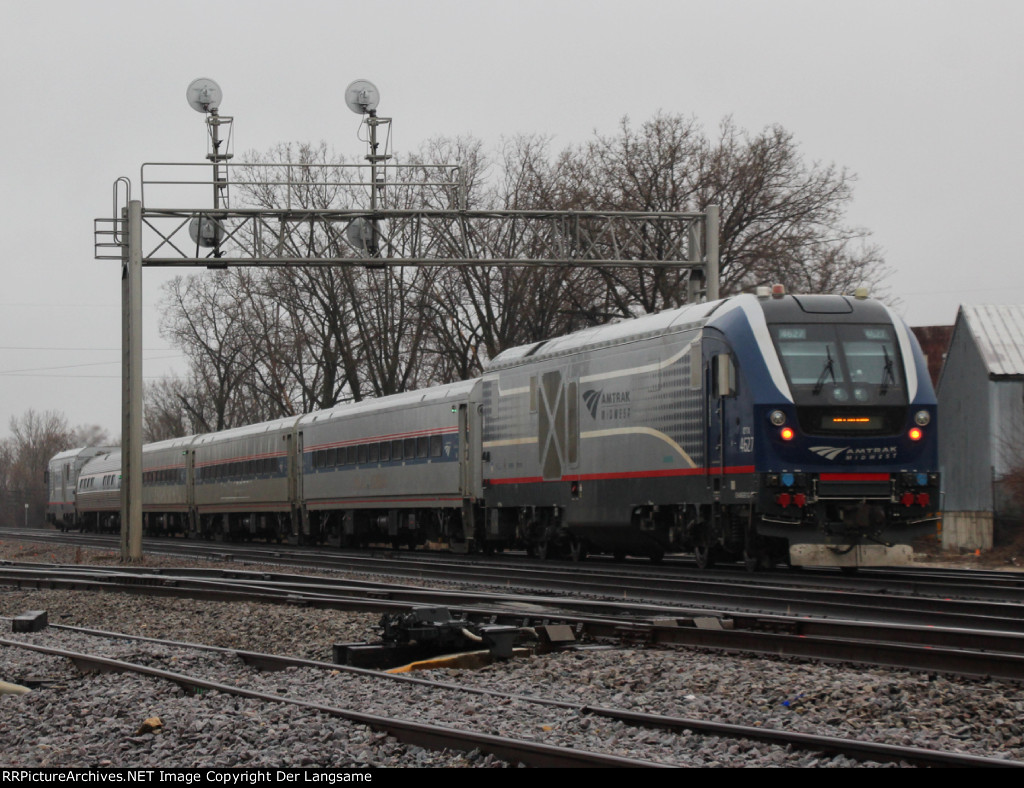
Search This Blog

Friday, April 21, 2023

Remembering South Jersey's Insulator Ranch

For years, if one were driving near Atlantic City, New Jersey, perhaps taking a shortcut between the Atlantic City Expressway exit 12 and the Garden State Parkway exit 41 due to summertime congestion, one might pass something on the side of the road that might cause a momentary feeling of disbelief where one might question what they just saw.  Located at the edge of the famous New Jersey Pine Barrens in Galloway Township, the slightly less famous Insulator Ranch was chronicled in all the typical quirky attraction websites like Weird NJ and Roadside America as it sat there provoking thousands of double takes over the years. Insulator Ranch was exactly that, a ranch house with a circumferential fence-line  constructed entirely of railroad pole-line poles fully stocked with green glass insulators. 

I first stumbled upon the site in the summer of 1998 and likely passed it once or twice in the years that followed.  In the age of Google Maps I would check in periodically, confirming that it was both still there and that my mind had not been playing tricks on me in ages past. Then, just recently, a check of the updated Street View showed that while the home and property were still there, all the magic of the green glass insulators had gone. According to the reports, the creator of the insulator art piece, a one Stanley E. Hammell, had passed away at age 89 in 2012 and was followed by his wife in 2018. I am sure one could probably dig deep enough to find out what the family did with the over 10,000 green glass insulators, but surprisingly, their fate has eluded the reach of Google. 
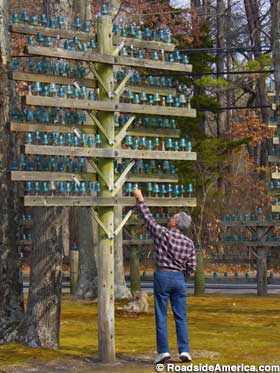

Mr. Hammell said that he began his collection in 1985 and continued through to the early 1990's. He talks about train shows and walking various rail lines, all things I am sure he did, but none of the articles provide insight into where I am confident he obtained the bulk of his collection because its the same place that my family came away with bushel baskets of our own. The former Camden and Atlantic, aka PRSL Main Line from Lindenwold to Atlantic City.
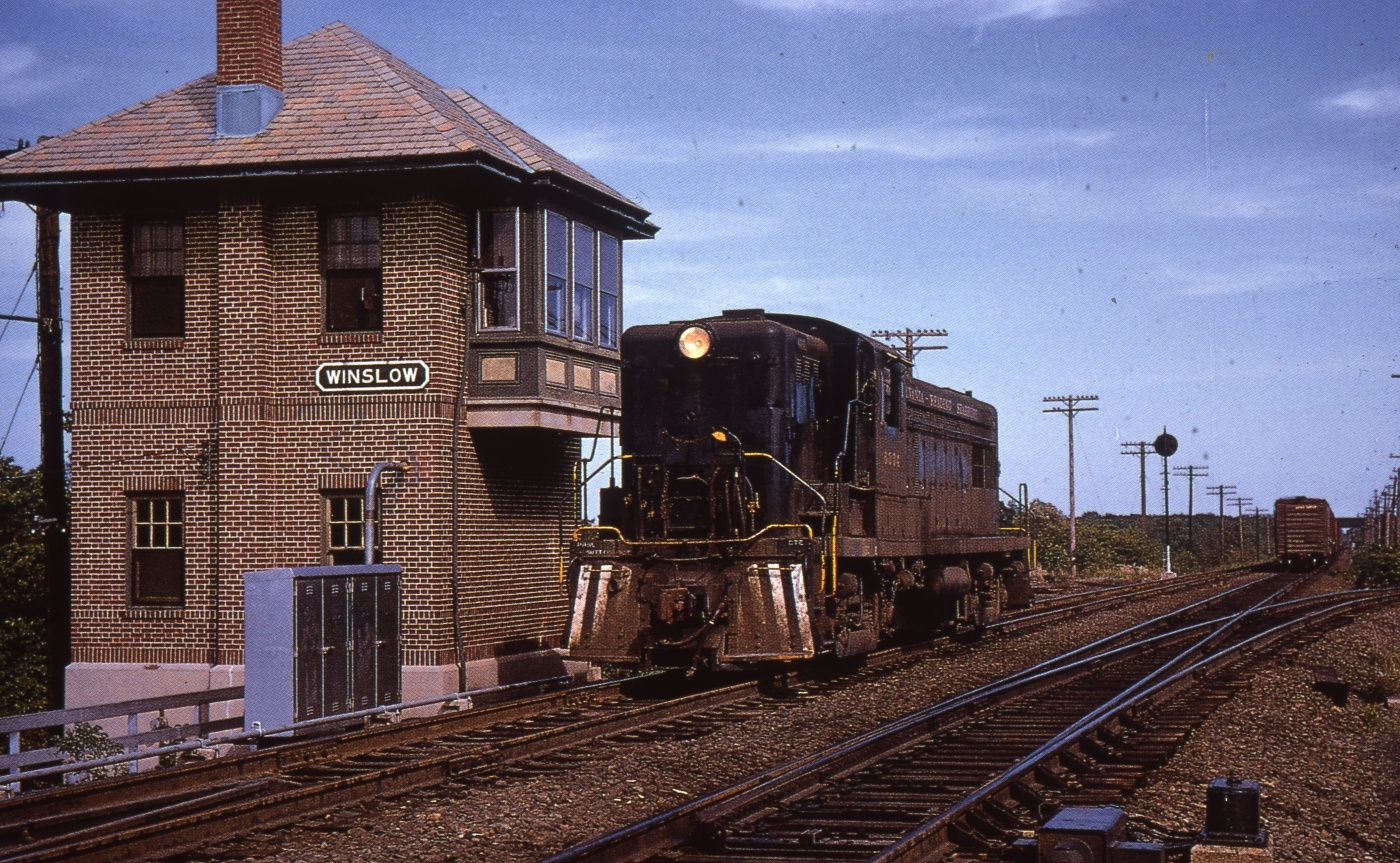
Having once hosted the fastest scheduled trains in the world, by the 1970's the PRSL Main Line to Atlantic City was a shadow of its former self, seeing a paltry peak direction service of ~3 daily round trips. By the late 1960's, the a double tracked, cab signaled main line constructed to PRR standards had been reduced to a single track with manual block operation south of Winslow Jct. In 1983 NJ DoT threw in the towel when Conrail stopped providing commuter rail contract services and all remaining signal infrastructure on the line was switched off and abandoned in place. This created a bit of a collector's gold rush with my then future shop teacher making away with an entire PRR position light mast signal and a single fallen pole providing my own family with decades' worth of giftable insulator paperweights. 


In 1985 Mr. Hammell would find this semi-abandoned rail line with 40 odd miles of green glass insulated pole line just a few miles from his front door. I am not sure what his early collecting methods would have involved, but about 5 years later the route would see a complete reconstruction with modern signaling that had no need for lineside poles. As you can see in the photo above not a single pole line pole remains. This means they were cut down in mass by a scrapper looking to recover the copper telegraph wire. This is a fairly common practice and I am convinced that a certain retiree happened to find himself at the right place at the right time to capture large numbers of the otherwise "worthless"  insulators that he would go on to assemble into a monumental yet underappreciated work of roadside art. 

Insulator Ranch was one of those local institutions that seemed destined to last forever until suddenly it was gone. I never got any of my own high quality photos of the installation or spoke to Mr. Hammell or even had whichever car I was in slow down or stop. I am assuming that the collection found some sort of home as a lot of 10k+ green glass insulators would be certainly worth money, but it still goes to show that institutions are run by people and people get old and die. The next time you see some unique railfan house, don't be so sure that another member of the community will step up to purchase it when the time comes.

Friday, April 14, 2023

Signals by EMD?


So I happened to be watching one of Distant Signal's recent videos on Youtube about CSX's project to signal the Brunswick Sub into a second main line track north of Waycross yard and at the 10:25 mark I noticed a new trademark logo on a square modular signal head.

In case you can't see it's the mark of Progress Rail, the division of Caterpillar that owns EMD. It turns out that Progress Rail does manufacture a limited set of railroad and grade crossing related signal equipment including a modular signal system that feels like something you'd get if a GRE D type married an L&W. 

Speaking of L&W, I'm not sure what Progress' angle is seeing that whatever scraps Safetran is leaving behind is currently gobbled up by L&W or Lindsay (formerly GE Harmon). In fact the video only shows the Progress signals on the ground with the new erected signal masts having, what else, Safetran CLS-20's. 🙄

Saturday, April 8, 2023

Interlocking Tower Audio Recordings

I've featured the work of the Youtube channel Railroad Media Archives before, but in the last few weeks they have taken a page from Evan Doobell's playbook with interlocking tower audio recordings from the 1960's and 70's. As you might be aware, the ability to capture long duration video information lagged the ability to capture long duration audio information by something like 5 decades. This means that recordings of interlocking tower operations in an audio/video format wasn't really feasible until the late 1970's, at which point everyone's favorite flags had fallen and conglomerates like Conrail and Amtrak were large and in charge.  While a great deal of vintage signaling technology was in use up through the 80's, 90's and Today, radio was well established along with its attendant operating practices such as track warrant control. 

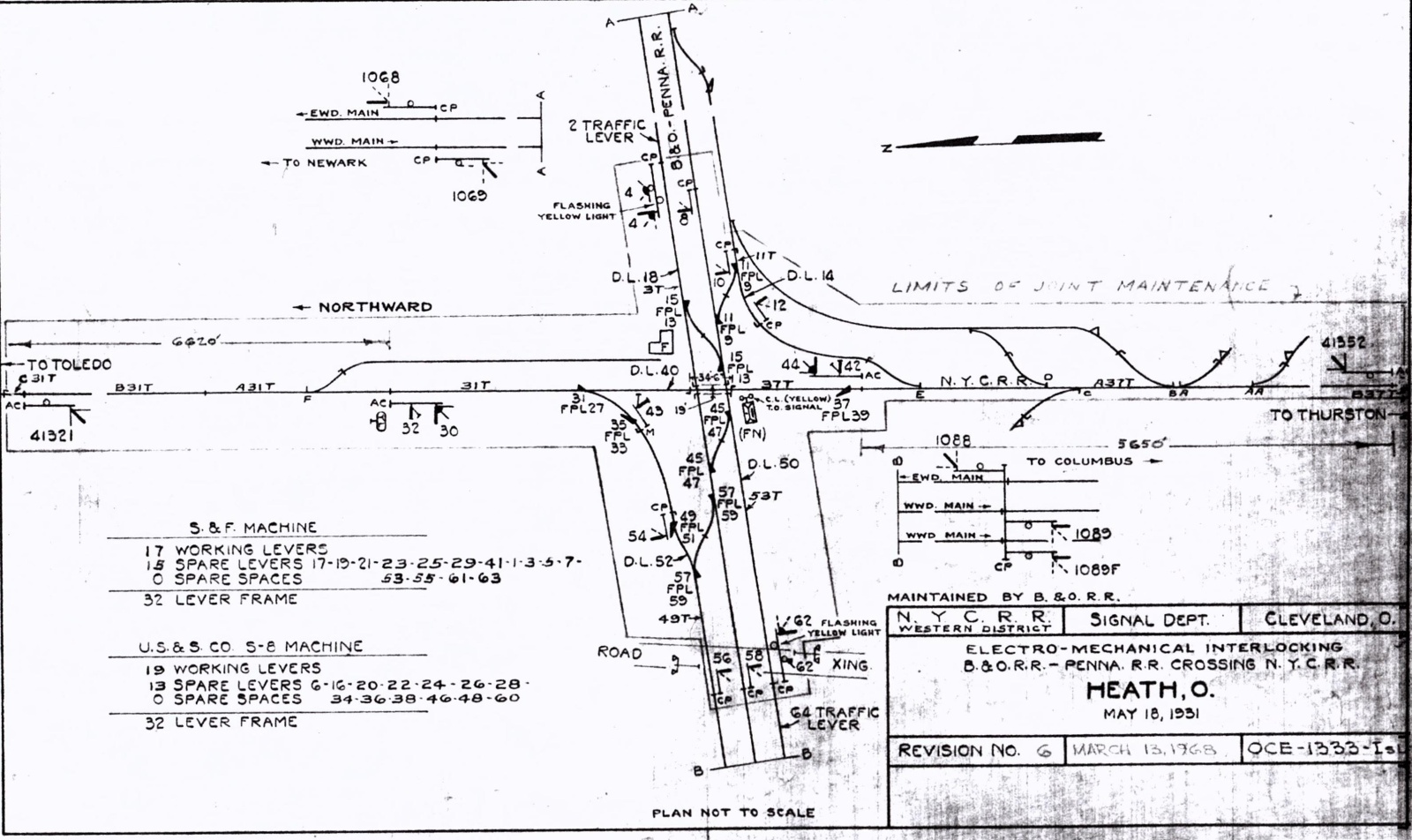
Anyway,  Railroad Media Archives has so far posted three of these tower audio recordings covering HEATH and SUMMIT towers on the joint PRR-B&O C&N (Columbus & Newark) Railroad in Central Ohio as well as HIGH ST and MOUNDS towers in Columbus, OH. 

Hopefully we'll get to hear more of these sorts of recordings. They can certainly come in handy for any time one might be otherwise inclined to listen to radio.


Thursday, March 30, 2023

New Signals at RONDOUT Tower

Way back in 2005 METRA's RONDOUT Tower was closed, however because it was a relay plant with a US&S unit lever machine, RONDOUT interlocking was not actually re-signaled, just placed under the remote control of the Canadian Pacific dispatcher. This left the fairly new US&S H-2 searchlight signals in place to the delight of rail photographers everywhere. Well since about 2020 RONDOUT interlocking has been undergoing a slow motion reconfiguration to improve throughput to the plant and recent photos have shown LED traffic light style signals arriving on site along with tubular gantry hardware.

You can this work already underway (or completed) on the overhead with the Fox Lake branch running down as a third track, crossing the EJE on a new diamond and then merging in at the southern end of the plant. The whole former MILW C&M Sub has been undergoing a slow motion re-signal for the better part of a decade now, having gone from majority searchlit to having only a few searchlight locations near the Milwaukee end of the line. 

New Standard C&M Sub signals and station sign.

With the new signals on site replacement operations could take place at any time. If you are looking to get out to RONDOUT for photos be aware it is not only a work site, but also a very active maintenance base. However the northbound searchlight gantry is fairly accessible from local roads and the southbound gantry is visible from a grade crossing,

At least the tower has found good use to support all the various local operations...for now.


Saturday, March 25, 2023

FRA Approves RFP Sub Cab Signal Removal

The FRA has granted CSX's December 2021 request to discontinue use of cab signals on the former Richmond, Fredericksburg and Potomac route between Washington, DC and Richmond, VA. Several months into a full blown rail safety panic it seems a bit tone deaf for the FRA to approve the removal of a well proven, reliable and completely failsafe signaling mechanism for good old fashioned waysides with a PTC safety overlay, but what do I know. Although we have seen similar cab signal removals by Union Pacific and BNSF, the RF&P cab signals had actually been integrated with the ETMS PTC system in a similar fashion to Norfolk Southern's Conrail territory. This makes CSX's post facto decision to ditch them an unfortunate surprise especially since the railroad choose to extend the northern limits of its RF&P CSS territory to CP-ANACOSTIA within the last decade. 

The motivation for the move is two fold. First, CSX doesn't have to worry about maintaining a large pool of CSS equipped locomotives to run over a single subdivision as well as performing a required CSS test before locomotives run over said subdivision. Likewise Virginia Railway Express no longer has to worry about CSS equipment or tests for its fleet and Amtrak can likely get away with neglecting the CSS on its Washington based diesel fleets. 

Cab Signal pickup on a VRE MP36

The second motivation is that despite the RF&P being "like" the successful PRR/Conrail system, it did have a major shortcoming wherein Medium Clear and Medium Approach signals would draw a Restricting (20mph) cab signal within interlocking limits instead of Approach Medium (45mph) or Approach (30mph) respectively.  This relay era cost saving measure that was never rectified and is likely the basis for some of the claims that the RF&P CSS does not play well with the ETMS PTC system that attempts to rely on the presence of cab signal codes for movement authority..

Like many FRA applications it may be a number of years for CSX to follow through on its plans. Unlike Union Pacific and BNSF that could literally wave away their ATS ATC and ACS systems at the stroke of midnight, CSX actually integrated the RF&P Sub CSS into its PTC solution with ETMS wayside interface units located only at interlockings to enforce the positive stop. Between interlockings the presence or absence of CSS codes would inform ETMS as to the enforcement of restricted speed situations such as an occupied block or open switch. CSX will need to install additional ETMS wayside interfaces at every automatic block signal location and every hand operated switch. Unless this work had already started it is likely to take a year or more before the CSS can be completely decommissioned.

As I have stated numerous times before, use of coded track circuits are both more reliable and provide a greater level of safety than wireless systems. Since the start of 2023 there have been at least two serious ETMS PTC outages to affect both Amtrak and MARC resulting in the cancellation of one or more days of scheduled service. CSS with ATC provides redundant speed control functionality that is completely independent of ETMS that can allow for (in a CYA sense) continued operation during a PTC outage. from an operations point of view CSS allows for mid-block signal upgrades and also provides for an easy path to 110mph service on the RF&P via the eventual extension of Rule 562+ACSES south from the NEC. Removal of the intermediate CSS code change points will significantly raise the costs of restoring CSS or just expanding the number of signal blocks to increase capacity.

For all we know CSX might still change its mind as the current rail safety panic continues to unfold and increases the political liability of removing safety systems to save a buck. Amtrak's plans to extend Rule 562 into the First Street tunnels further questions the cost savings if VRE and Amtrak diesels retain the need to be cab signal equipped for operation into Washington Union Station. In a further bit of irony CSX's purchase of Guilford Rail Service saddled it with additional Rule 562/ACSES territory that it will be unable to shake due to the MBTA. 

It will be interesting to see what happens to the remaining stub of CSS territory on the Philly Sub between CP-BELMONT and CP-PENROSE that was part of the old PRR West Philadelphia Elevated line to the South Philly freight yards. Leading locomotives do not need to be CSS equipped, but the system is still in service with all of the associated "costs".

Friday, March 17, 2023

Signal Replacement on the N&W H-Line

 One of the few remaining holdouts of classic signaling in the northeast has been the former Norfolk and Western H-Line between Roanoke and Front Royal. Although the northern end between Front Royal and Hagerstown was re-signaled nearly a decade ago for NS's north-south corridor, the southern end became a bit of a backwater and due to a fairly recent signal logic update ~2000, there was little incentive to replace the N&W color position lights at interlockings.

Thanks to a Position Light correspondent, I have reports of a gradual signal replacement project by NS that is hitting select locations on the H-Line, most notably centered on the city of Waynesboro. It does not appear to be a comprehensive project with Darth Vaders going up at every interlocking and a cutover date, but more individual projects going one interlocking at a time.  At the type of writing the next interlocking on the list appears to be STANLEY. The full March 2023 H-Line position light status appears below.


The new signals are the typical NS garbage, but because this is likely not replacing the fairly modern signal logic, the signal-ing is staying the same with western style route signals displaying N&W signal aspects.

As seen about at BUNEA VISTA both tracks approaching the end of a siding will see the same signal configuration with "straight" route Clear and Approach indications since there is only one route for each line. A second fixed red marker is provided since Eastern roads tend to prefer R/R for absolute signals. The single track mast signal would have G/Y/R over Y/R over Y/R to display R/Y/R Diverging Approach, R/*Y*/R Diverging Approach Diverging and R/R/Y Restricting. The one silver linking is the use of Conrail style blue station signs on the relay hits complete with the "CP" prefix.  It remains to be seen if the Southern green station signs will be retained.


Friday, March 10, 2023

Look For The Union Label

The Union Switch and Signal M3 family of electric point machines set the standard for performance and reliability, however entering into the catalogue around 1953, the M3's design and technology have long since gone off patent and are free for fly by night competitors to copy. Today we will take a quick look at the US&S trademarks as applied to their M3 family as well as the marks of imitators so you can avoid getting scammed. 


Before I begin I would like to state that the following is not an exhaustive list as I am sure there will be countless variations within the broad categories I will outline below. I have photos of hundreds of M3 family switch machines and I am just going to take the average and find the best examples.

First off is what I will call the small verbose branding.  We have a small USS trademark followed by three lines of text consisting of "US&S Co", "Made in USA" and what appears to be parent information cast into the lid of the circuit contact portion of the switch machine. I suspect this is the earliest design as it looks most similar to the few surviving M2 machines and would likely be within the 17 year patent period starting around 1950.

The next version sees the third line dropped reducing the text to just "US&S Co" "Made in USA".

This is followed by the large logo variant that keeps the 2 lines of text, but has a larger US&S logo cast into the detector box cover.

Next we have the boxed variant that features the late model boxed US&S logo followed by "US&S Co" and "Made in USA" on earlier 1990's vintage machines and then just "US&S Co" in the later ones that are being sold up to the current day.


Now that you've seen the real stuff, let's check out some of the fakes. At the top of the skeezy list is this M23 I found on the UP Moffat Tunnel sub without any branding at all! 😬

Our next imitator is made by Vossloh and sold as the VSM-24.

Some of these are branded JMI, which is a machining and casting outfit. I am not sure if JMI was making complete switch machines and had that business bought out by Vossloh or if JMI was just a subcontractor.

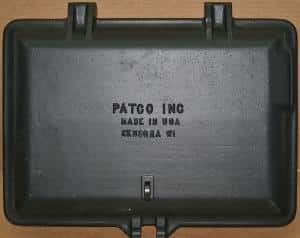
Here is one I unfortunately neglected to get a good photo of, a Patco Industries branded M23B. Patco industries is known for their rebuilding work and sells pretty much every part of an M3 for spares so I am not sure if this was built from scratch or just has a lot of Patco parts.  It's worth mentioning that the branded contact case cover is made from aluminum, not cast iron.

I have heard mention of a few other companies selling M3 family switch machines and of course there are the international variants like Westinghouse Brake and Saxby Signal Company, but these are all the photo examples I have. If you know of any others please let me know in the comments and if you have some photos you wouldn't mind sharing I can add them to the list! Just remember, if you are looking for a quality electric switch machine, just look for the Union label.