Search This Blog

Sunday, September 28, 2014

No Joy in Signalville

This month's news post is going to be another of the all bad variety.  It seems that the worst effect of the Midwestern oil boom is that railroads are flush with re-signaling money.  We start out at the western end of the CBQ Chicago raceway in Eola, IL where the boom is falling on the massive searchlight interlocking complex there.  Although I would hardly call this a surprising development with the concrete relay huts and above ground cable runs,  Luckily this interlocking is able to be photographed from both METRA and Amtrak trains,


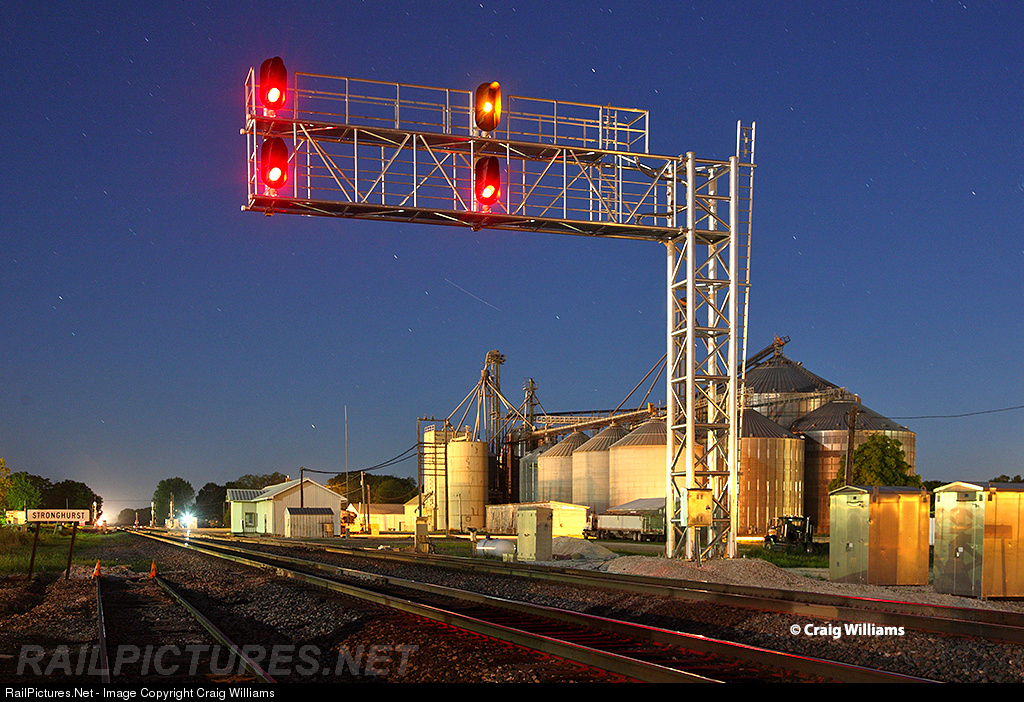
 Further west I had previously had hope for the BNSF Chillicothe sub due to what were clearly 2000's re-signaled searchlit interlocking plants.  However it appears that STRONGHURST was not among these (again note the above ground cable runs) and it was recently saw the Darths turned on.


Going about as far west as is possible, the new signals on the Donner Pass route between SWITCH 9 and SHED 10 were cut in.  Good thing I took an encore trip on the Zephyr back in June.  See my trip report for information on other parts of the line.


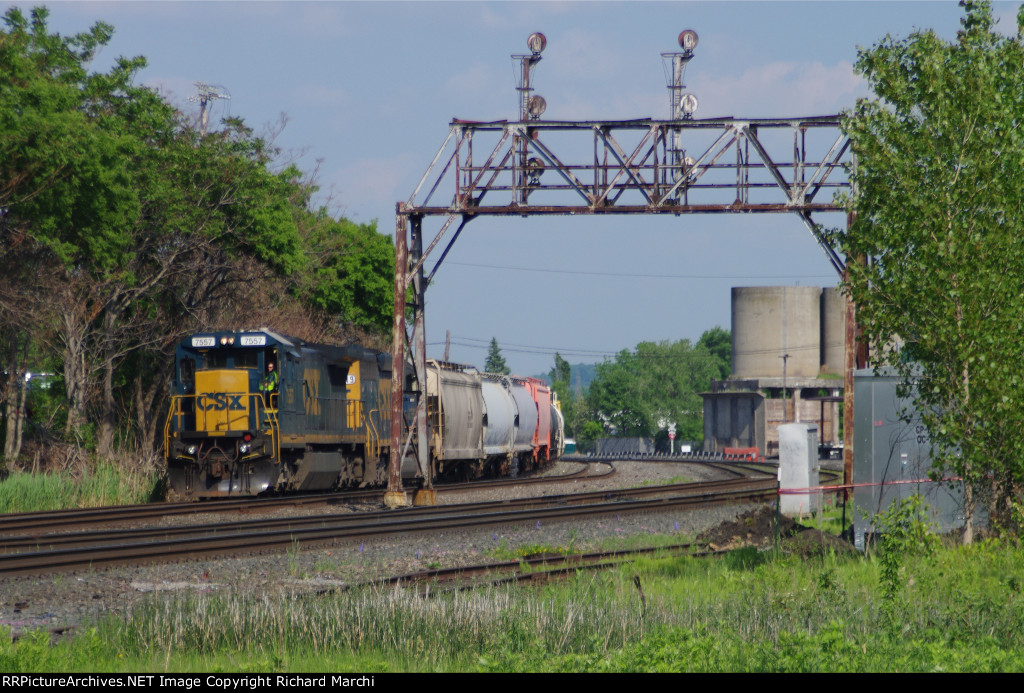
The small target searchlights are coming down at CP-287 near Syracuse on the Chicago Line.  I assume this is part of a larger re-signaling project.  The larger question will be what happens to the "new" Conrail signaled CP-290.


http://www.rrpicturearchives.net/showPicture.aspx?id=3836797

The new signals on the CSX Philly sub have been cut in through the Ankin siding.


 Moving over to Ohio the C&O signals on the Northern Sub in the Richmondale, OH area have also finally been removed.


 Saving the worst for last it appears that for some reason the Kansas City Terminal is replacing some of its searchlights in the Union Station area.  I was hoping that KCT's independence would insulate it from the resignaling mania sweeping the nation.  The real danger is replacement of SANTA FE JCT and its pneumatic point machines.


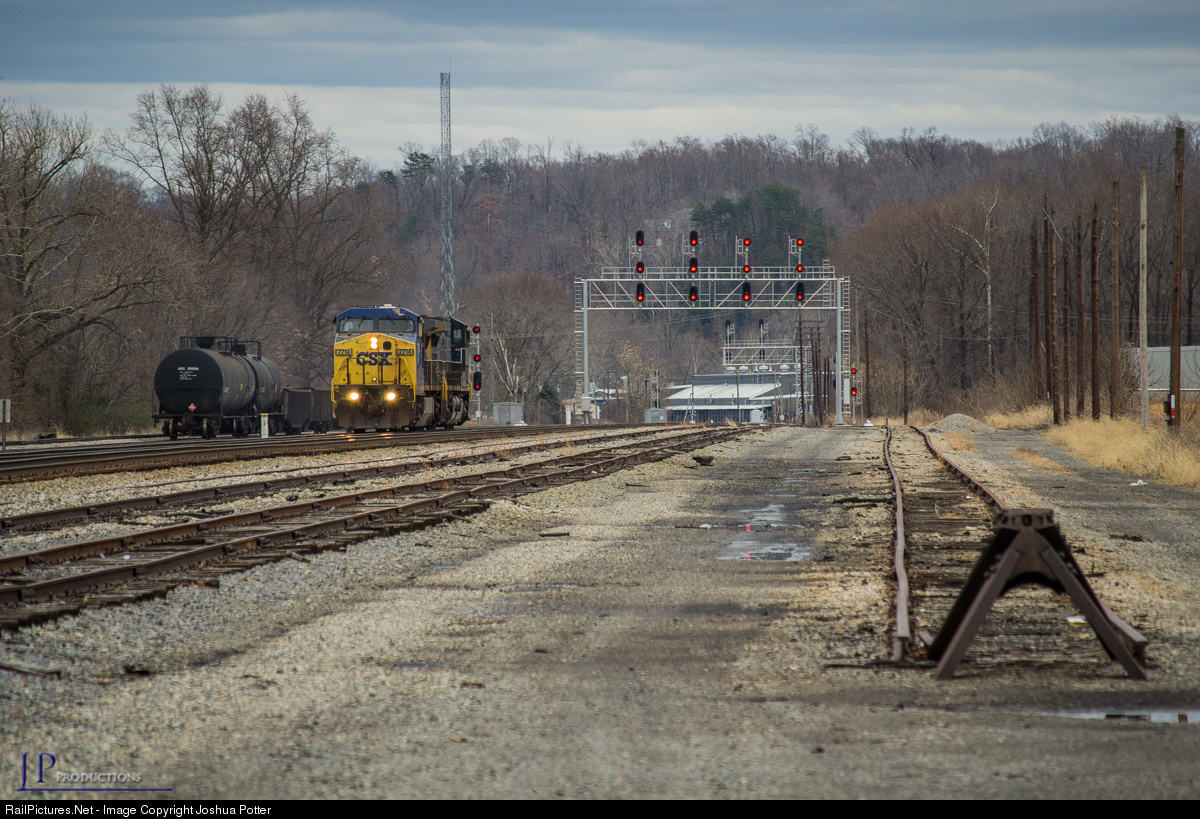
In an update to a previous news item I noticed a photo of the famous 4-track "modern" PRR PL signal bridge at CP-ROCKVILLE.  The bridge is now down to 3 PLs as one of the yard tracks was lengthened by installing a new Vader mast a few hundred feet to the west.


Tuesday, September 23, 2014

Wrong Railing Across the Pond

How many Full Time Employees does it take to run a train against the flow of traffic on a section of double track manual block signaled track? Well the answer depends on which side of the Atlantic Ocean one finds themselves on.  In North America the answer is between three and one.  You can have a dispatcher transmit train orders to block operators on either end of the segment or simply use a radio to transmit the orders directly to the train.  However in the United Kingdom the answer starts at 3 and increases from there. 

In mechanically signaled manual block territory you first need to employ signalmen at either end of the track segment.  Then all wrong direction movements need a pilotman to chaperone all trains through the section of single track operation.  Back in the day when stationmasters were still in existence both of them had to be informed so that is a total of five workers.  Then because most block stations were only equipped with non-locked trailing point crossovers you needed another two men to spike and wedge the points prior to a train movement.  Finally where main line spring worked catch points were employed you needed another person to spike and wedge those as well. The total number comes out to between 5 and 9 depending on the circumstances.  Of course the one thing they don't have is a dispatcher.  All authority is worked out between the signalmen and the pilotman.

If this sounds confusing not to worry...British Rail put together an easy to understand training film on how single line working is to be carried out.  Just about the only sensible thing they do us to use both block instruments for the single track...shame they couldn't dream up a procedure to eliminate the 5 or so extra people involved.


If your eyes are spinning here is a bit of North American practice to take the edge off.  Here is video from Viaduct Junction in Cumberland, MD with Amtrak T30 getting some train orders hooped up followed by the operator copying down some train orders.


Ahhhh, modern efficiency.

Saturday, September 13, 2014

PHOTOS: Port Road Trips - CRESS to HARBOR

It's no secret that the PRR was never a huge fan of CTC thanks to their abundance of multi-track main lines and manned interlocking towers.  So far we have seen an example of the PRR's use of CTC without traffic control, ie remote control interlockings, but a predominance of Rule 251 operation.  However due to its rather constrained geography that favored single track lines with passing sidings, the Susquehanna River valley also featured two genuine Rule 261 signaled CTC lines.  One of these is the Buffalo Line running north of Harrisburg and, of course, the other is the Port Road Branch running from PORT to PERRY.  So while the remaining segments of our Port Road Trip may seem a bit less interesting than those that came before, it actually represents an opportunity to examine a method of operation common to the rest of the rail system that the PRR tended to avoid.

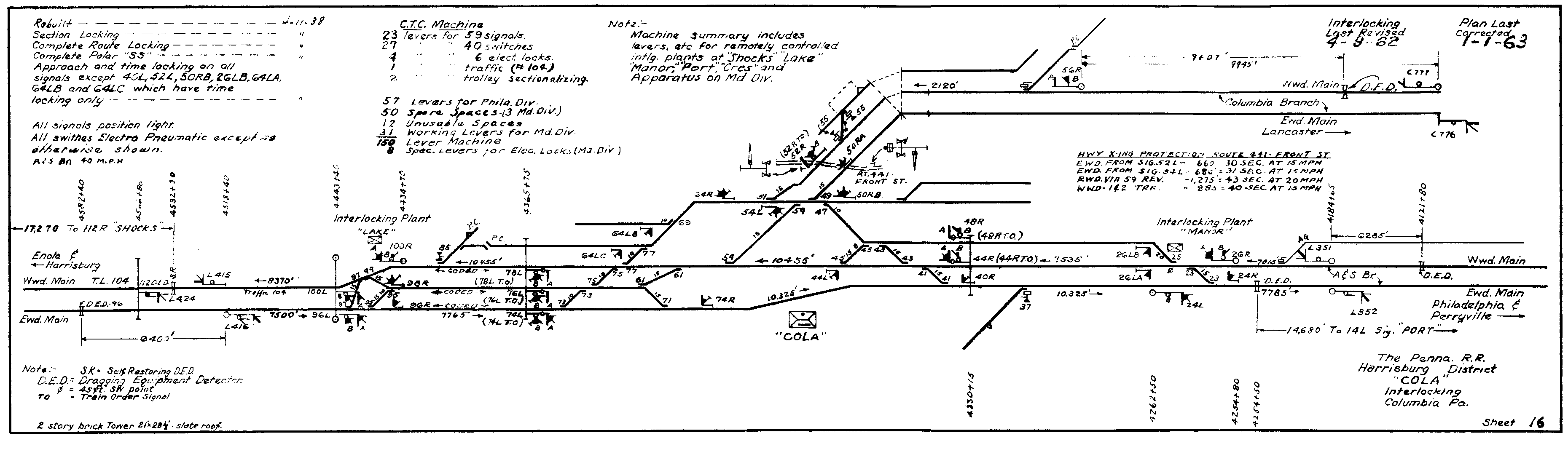
So passing CRESS we finally leave the COLA CTC zone...or at least the Harrisburg Division CTC zone.  Below CRESS the Port Road entered the Maryland Division and if you recall the COLA interlocking sheet there are 50 levers on the 150 lever CTC machine used by the Maryland Division. These 50 levers control the 9 interlockings south of CRESS and north of QUARRY.  Today we will be looking at the intermediate signal south of CRESS, the HARBOR siding and a little bit of the Safe Harbor substation complex.


Between CP-CRESS and CP-WEST HARBOR are the MP 35 automatic signals C357 and C356.  Remember the mileage is now counting down towards Perryville instead of Parkesburg.   Here we see the two signals looking westward with the Fisherman's Run flume (aka shoefly) far in the background.  At this point the A&S is running parallel to the Port Road about 20 or 30 feet up the rocky slope.  The signals are arranged in the typical fashion for a single pole catenary structure with one PL being mounted on the catenary mast and the other on its own mast.


The C357 signal is displaying an Approach indication for the  stop signal at CP-CRESS.  Although CRESS features a medium speed turnout, because it is the entrance to double track ABS territory there is only a straight and a restricted speed route available and therefore C357 does not need to display Approach Medium.


Here in this rather backlit reverse view  we see the C356 mast signal.  The layout of this intermediate is a bit counter intuitive because the signal that is unable to display Approach Medium is the distant for an interlocking with only restricted speed routes while the signal that can't display Approach Medium faces an interlocking that could have a Medium speed route if not for the Rule 251. Note the lack of pole line power tap.  Here the 6000 volt, 100hz power supply was running up on the A&S alignment and feeding both it and the Port Road.


The reason for the lower head | on C356 is not because the Harbor siding was ever downgraded in the Conrail era, but instead because of the short (5000 foot) distance between  CP-HARBOR and CP-WEST HARBOR.  Trains diverging at CP-WEST HARBOR would get an Approach.  Trains stopping at CP-HARBOR (perhaps for a meet) would get an Approach Medium.


This rather long shot of C357 shows the signal displaying Approach in the time before the dispatcher lined a route at CP-CRESS for an eastbound NS freight train.  Around 2010 all the catenary poles were chopped down by NS.


After the re-signaling project a new bi-directional mast was installed with Darth Vader signals.  The odd layout has been replaced by Approach Medium signals in both directions.  Not sure I agree with the placement of the signal and the relay box on the lake side of the tracks.  This part of the river is a well known flood risk.


CP-WEST HARBOR, at MP 33.2, is the west end of a 5000 foot long restricted speed ending.  It was located in the shadow of the impressive Safe Harbor viaduct and adjacent to the Safe Harbor Dam.  The single \ on the lower head is all you get in this situation.  If the siding were signaled this signal would also come with a lower head \ for Slow Approach.

Monday, September 8, 2014

TWC/ABS on the California Coast Line

So here is a little video example of how signaling works on a North American line with both Automatic Block and Track Warrant control.  Out west this is simply called TWC / ABS although in some parts of the east it is known as Rule 271.  Basically this is where block signals keep trains from colliding, but track warrants keep them from conflicting.  Previously trains would rely on the timetable and train order system to sort out who had priority on a single track main line, but since the advent of radio the dispatcher can just tell trains what he would like them to do directly.

Number plate? Check.  Hand throw switch? Check. Semaphore? Optional.

This line is the coastal route between San Francisco and Los Angeles comprising parts of the Coast and Santa Barbars subdivisions.  Because of the lack of through freight traffic the line has seen minimal investment from Union Pacific.  When recently the old pole line and searchlight signals were removed, UP declined to pony up for a CTC upgrade with its attendant interlockings and traffic control.  So while the signals are the typical type of LED Darth Vader with PTC antennas, crews must still copy down train orders and get out to hand throw switches for meets.

In this case upon leaving San Luis Obispo our train was issued a Track Warrant to a point called DEVON (which the crew insists on pronouncing incorrectly in the video).  Later we got another Track Warrant to proceed from DEVON to Santa Barbara, however the later would not enter into effect until we met a northbound UP freight train at DEVON and he took the siding (GCOR rulebook Box 5). 

The meeting point was well chosen as we arrived just as the opposing train was passing the automatic signal directly to the south which was indicating Approach.  Our train's conductor climbed down to the right of way and lined the hand throw switch for the freight train to save a little time, then returned it to the normal position so that we could proceed.  The fact that the freight train had more engines than cars indicates one of the reasons there has not been much investment in the line. 


Here's the thing.  While this is still all quaint and manual and worth filming as a quasi-historic railroad operating practice...without the pole line an searchlights this is basically just delaying my train with little value added. 

If you want to travel this line and check out the new old signaling there is a daily Coast Starlight round trip covering the TWC/ABS segments on both subdivisions as well as a Pacific Surfliner day trip option from Los Angeles to San Luis Obispo.

Sunday, August 31, 2014

News from Coast to Coast

Well I have just completed two Amtrak trips on both coasts and I have a few news items from both as well as the standard fare I have gleaned from various photos and whatnot.  Most of the big news seems to be coming from NS which is busy re-signaling its former Nickle Plate main out in Ohio.  Ugh, those combo-boxes just ooze cheapness.


It's worth noting that at interlockings the signals will be seeing a few additional lamps including a Restricting indication and a Red light on each head.


On the Southern main line NS has deposited new signaling equipment all the way up into VA indicating that no part of the line will be spared :-(, even where one Safetran clamshell will replace another.  Eliminating the right hand requirement was probably one of the worse FRA rule changes that could have happened to signals.


More Chicago Line re-signaling as seen here at CP 307.  Again, at least NS takes Restricting seriously.


On the N&W H Line in Virginia NS is extending the southern end of the siding between Shenandoah Jct and Daniels by constructing a "new" Daniels interlocking.  I think the old one already used color light signals however.


On to CSX the former C&O main re-signaling project is progressing.  Here is the new signal gantry in service at Kenova.


New signals going up on the SCL line near Savanna.


Not even the signals facing shortlines are safe as can be seen on the I&O crossing at Leipsic, OH. 


  And the TPW crossing in Reynolds, IN.


Over on the East Coast the new color light signals in the F Interlocking complex near Sunnyside Yard have been completely cut over, ruining one of the better concentrations of all amber PL signaling.  The nearby HAROLD interlocking is likely to be next.  This is all due to the East Side Access project, which is wasting billions of dollars so that LIRR riders don't have to walk a few blocks after arriving at Penn Station. 


Finally on the BNSF Coast Starlight Route the remaining bits of classic signaling between Tacoma and Portland are slated for removal, while on the UP side of things nearly all the SP and NP searchlights have already been removed.  The exception are a number of searchlit interlockings on the mountain pass between Paso Robles and San Luis Obispo and any former SP style color light signals that were already in place.  All these appear to be safe for some time as the PTC antennas are in place.  Likewise a few searchlight interlockings north of Salinis similarly appear to be safe.  The long segments of TWC-ABS operation on the Coast and Santa Barbara Subs have also been left alone, although all signaling is now LED Darth Vaders.  If you like manual passing maneuvers and TWC action on your scanner I guess that is still a step above full on CTC.  The latter part can be viewed via a day trip on Amtrak's Pacific Surfliner to San Luis Obispo.

Saturday, August 16, 2014

Metro North Resignaling Project Progress

The Port Jervis Line  has been the bastard stepchild of the Metro-North Commuter Railroad since it was formed in 1983.  Formerly part of the Erie railroad, the PJL terminated in Jersey City and was therefore a rather imposing river removed from the rest of the MNRR operations into Grand Central.  In fact, unlike the East of Hudson services which all operated on tracks owned by the State of NY, at first under contract as Penn Central/Conrail's "Metropolitan Division" and later under the MTA owned Metro North, the PJL's track was owned by Erie successor Conrail (and later Norfolk Southern) as its Southern Tier Line, with the actual passenger service being operated a New Jersey Transit.

While through the 1990's the Southern Tier saw significant traffic as Conrail's only doublestack cleared line out of the New York region, once other routes opened up traffic fell off dramatically with all through traffic ending at the beginning of the Norfolk Southern era.  This left NS to maintain a line it really didn't want which is one of the conditions that leads to preserved signaling.  Around 2005 NS finally sold the line to MNRR which promised to improve service on the line as a way to keep Rockland and Orange counties paying taxes to the MTA.  Of course nothing came of these promises until about 2010 when $300 was allocated for track and signal improvements.  Then Hurricane Sandy hit and caused numerous washouts which of course delayed the planned improvements even further.

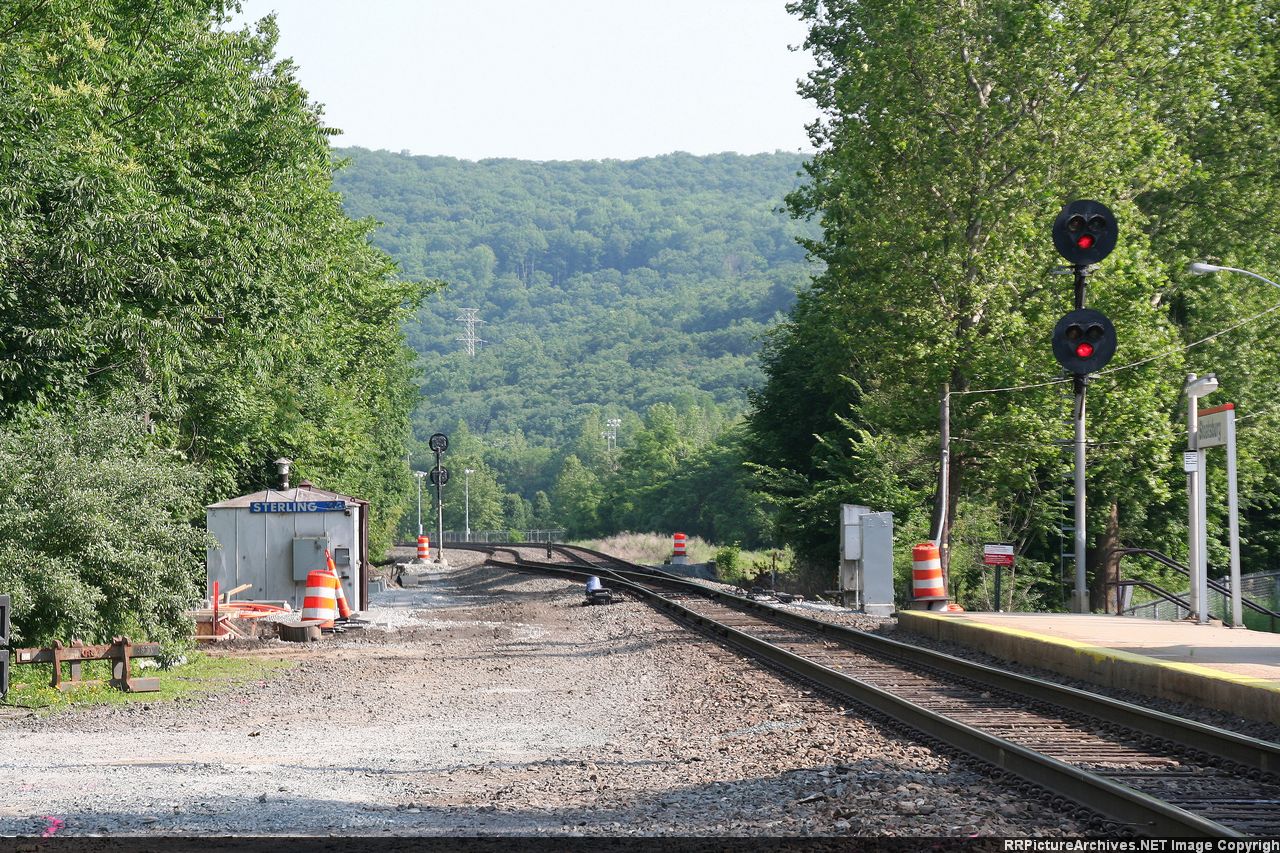
Foundations for new signals and relay huts are going in at CP-STERLING in Sloatsburg, NY, which is the west end of Rule 251 ABS  operation.

Anyway, it is now 2014 and for good or for ill the long planned signaling improvements are finally being installed to replace the Erie/Conrail pole line based CTC and ABS signaling.  I have heard that the pole line had become so problematic that it could often take 20 minutes or more for an NJT dispatcher to have his requested route actually display so it is no surprise that a big part of the upgrade was a fiber optic CTC line (which of course got washed out in many places by the Hurricane).  NJT's current state of the art is NORAC standard Rule 562 operation (cab signals without wayside signals except at interlockings) and this is what they installed on the other partly "MNRR West of Hudson" Pascack Valley Line.  However on the PVL MNRR is putting a bit more of its stamp on the hardware with non-darth traffic light signals instead of NJT's target type signals.

Here are some of the new signals, equipped with the 562 'C' boards behind the Erie/Conrail searchlights at CP-OV in Ottisville, NY where two tracks shrink down to 1 through the Ottisville Tunnel.


The project extends all the way to CP-BC in Port Jervis, NY where currently the single 261 track starting at CP-OV once again becomes two Rule 251 tracks. 

 
At CP-BC 562 will end as evidenced by the lack of 'C' board for westbound movements.  Hopefully the Erie vintage ABS bracket mast in the little of the Port Jervis Yard will be spared.  Note the "lowest yellow" type Restricting indication at CP-BC which was employed by the Erie signal rules.


This is the oldest signaling still remaining on both the NJT and Metro North systems.  It is a shame to see it go, but thanks to all sorts of factors it probably lasted a good 10 years beyond when it really should have been replaced.


Tuesday, August 12, 2014

When is an ABS Signal not an ABS Signal?

With railroad signaling I really do learn new things every day especially when I get off the beaten path and what's less beaten than the Kansas City Southern.  Track circuits and the principles of automatic block signaling are well over 100 years old.  With metal wheels on metal rails, running an electric current through the rails is an easy way to provide continuous train detection with side benefits such as detecting improperly lined switches and broken rails.  ABS is railroad signaling at its most basic with red, yellow and green lights how could this concept ever be ambiguous?


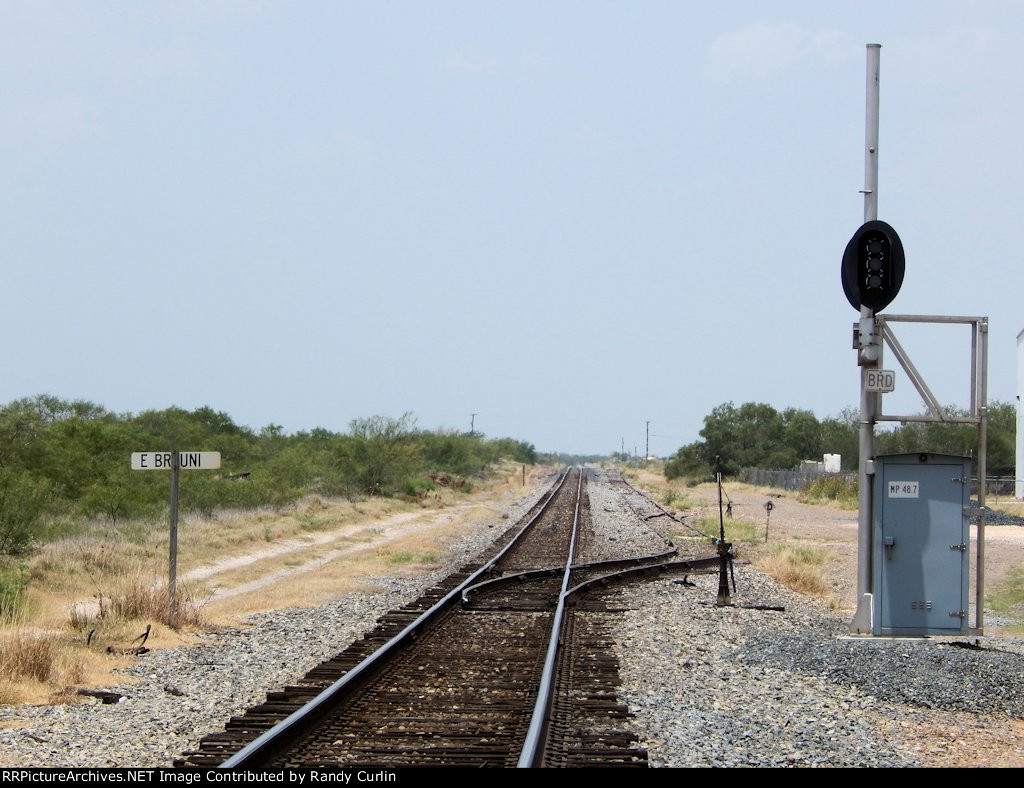
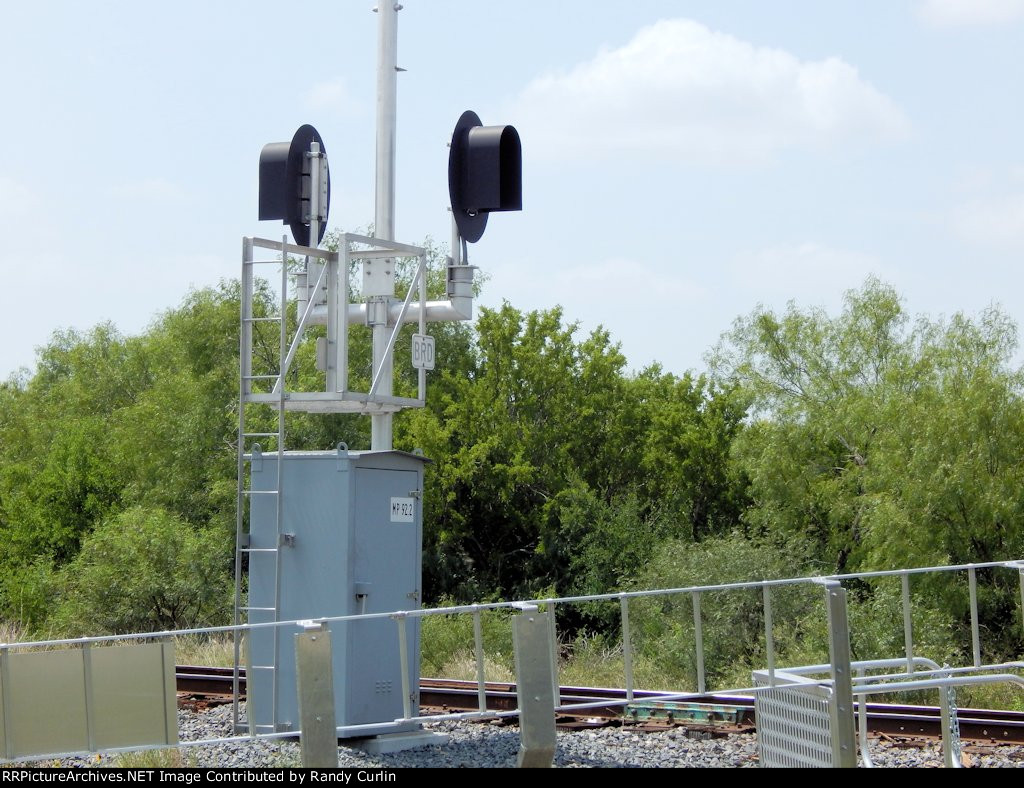
At first glance this rather ungainly signal looks like a fairly typical North American bi-directional automatic signal, however the football shaped targets and cheap, small LED lamp units combined with a hand throw switch and station sign should make more signal fans instantly think of some sort of point detection/switch position signal.  These non-interlocked and lightly regulated faux signals are used in non-signaled territory where remote controlled switches have been installed or a an extra measure of safety was desired for hand operated sidings or industrial tracks. 

While you would be correct in that these signals are of that type they do not however serve that function.


This is in actuality a broken rail detection signal, which was kinda given away by the big BRD plate under the head.  So instead of being connected to a set of points, as is seen in yards and other trackage without train detection, this signal is actually hooked into a track circuit and carries out all the functions typically ascribed to track circuits.  In addition to broken rails I assume it might also detect open switches or even rolling stock within the block.  The caption on the photo reads that flashing green is used for a "no defects" indication so avoid confusion with a genuine Clear signal, but the question remains why would anyone install such a monstrosity?


The answer is that Automatic Block Signals are a regulated railroad safety system and BRD signals are not, even if they basically do the same thing on a technical level.  Despite being track circuited this main line track is still considered non-signaled, with track warrants providing the vital safety protections.  BRD are frosting on the cake that provide assurance above and beyond what the FRA requires.  I suspect that they do not need the same types of inspections or maintenance or even have to meet the same hardware standards.  The equipment used for the BRD system probably cost a fraction of what a full on CTC signal would with non-vital relays and wiring and shit ass signal heads that don't need to meet visibility requirements etc.  The advantages is that the trains get increased assurance that the line ahead is clear and the company does not need to worry about running long, heavy trains up to the 60mph limit for non-signaled track.

The KCS is actually upgrading the line to full on CTC and as you can see in the foreground all the budget faux signals are going to need to be replaced with the fully kosher kind.  However do not think this is the end of BRD's.  With the PTC regulations the FRA maintained a 60mph speed limit on all track that lacks broken rail detection.  We might eventually see lines with fully wireless signaling and wayside BRD signals to allow speeds even in excess of 80mph.