Search This Blog

Thursday, January 31, 2019

Railroad Dispatcher Web Game

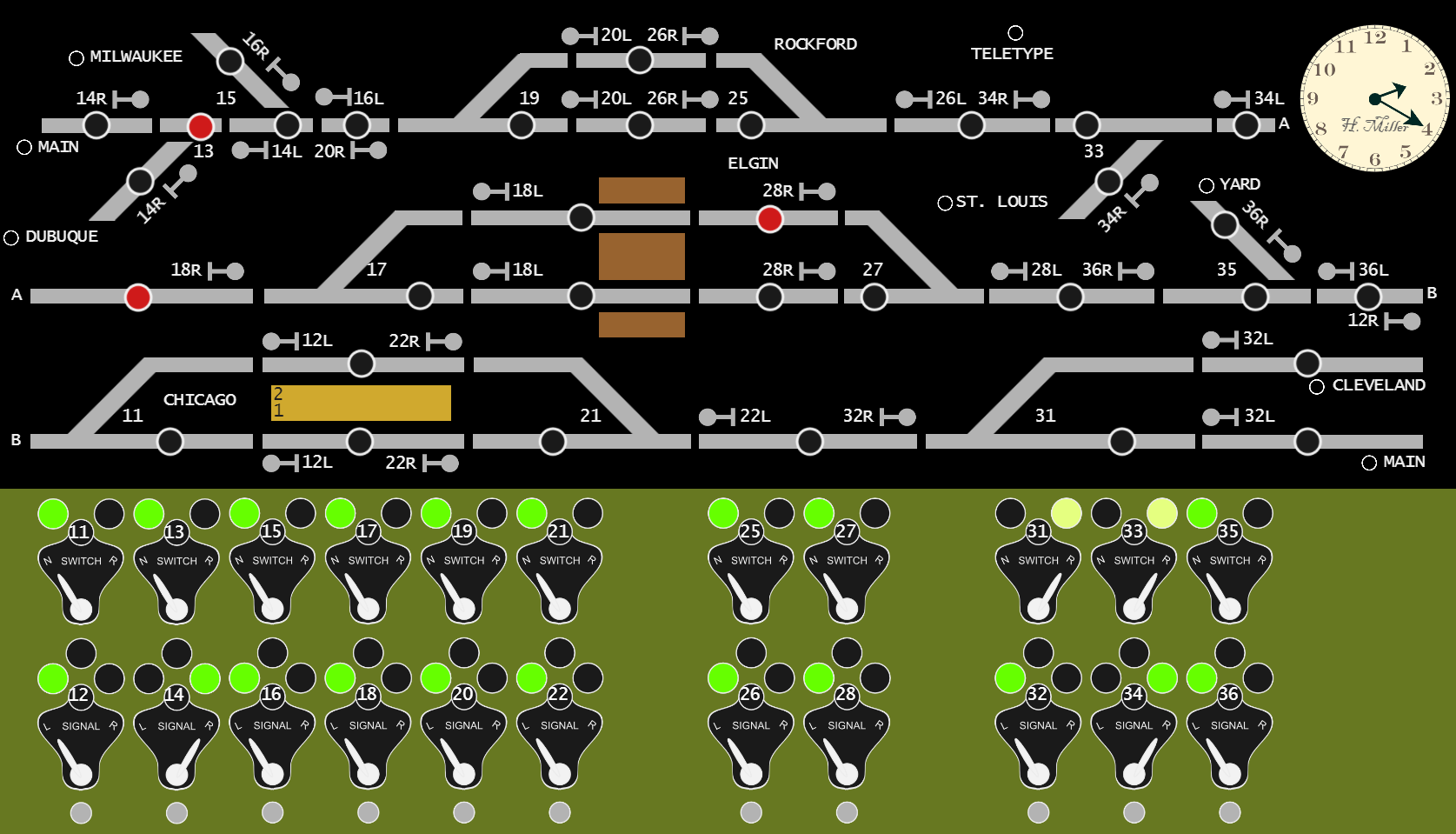
I wanted to call attention to a new web-based North American style CTC simulation game.  It's still in beta and pretty much limited to a single layout, but it is a long overdue addition to the dispatching simulator market that pretty much consists of the increasingly long in the tooth Train Dispatcher 3 and the UK focused SimSig. You can find and play the game at http://randallhook.com/games/railroad-dispatcher/


As someone who has operated a real US&S style CTC machine, the simulation isn't perfect, but it's a lot better than nothing.  Currently the largest deficiency is the lack of delay between toggling a unit lever and coding the action to the field.  On a direct wire machine the switches will take a second or two to throw and of course over a code line the machine will click and clunk for quite some time before confirmation of the state change is received. 

It will be interesting to see if things like blocking devices are added or if additional styles of panel are supported as various railroads could use their own conventions for indication lamp colors and such.  Anyway, I'd advice everybody to give the game a play through and give the developer, randy Hook, some constructive feedback.

Monday, January 21, 2019

2019 Empire Corridor Trip Report

I have once again completed my annual trek to the heart of New York Central territory via Amtrak's Empire service.  The good news is that between the division post at CP-75 and the start of Rule 562 at the new CP-138 south of Albany, no additional re-signaling has taken place.  The double track project is complete to Schenectady and the new station there ha been completed along with the re-signaling of CP-159 and CP-160 which I reported in 2018.


While non-Darth Vader target signals with 'C' boards are a positive, the whole setup still feels a bit off with blinding LED signals and OSHA approved aluminum masts.  One addition is the brand new CP-149 that provides a mid-point crossover between CP-157 and CP-145.  ACSES transponders are also in place.


I also noticed that the CPO-1 on the old D&H Colonie Sub had been removed which is about time seeing as according to Google Street View that happened sometime around 2016.  For those of you who don't know this was the interlocking in the middle of I-787 in downtown Albany.  It was replaced by a new CPO-2 about a mile to the north.

Even the gantry was cut down.
I visited CP-SK at the east end of Selkirk yard and was able to confirm that it was still in it's late Conrail configuration with no signs of any impending re-signaling.  Some Conrail target masts have been replaced by CSX Darth Vader signals, but a slim majority are still of the classic touch.  A new CP-12 had been constructed immediately to the west of CP-SK since my last visit a good 10 years ago, but in an interesting twist Conrail signal rules appeared to still be in effect throughout with Seaboard rules starting at the west end of the yard complex.

R/R/Y is still Restricting at CP-SK
I might have issues getting back to the Capitol Region in the future, but I'm pretty satisfied with the coverage I was able to get over the last 14 or so years with the multiple re-signaling efforts.

Monday, January 14, 2019

Signal Videos from the 70's, 80's and Beyond

I don't tend to seek out railroad compilation videos, even historic.  They typically consist of about 10-20 cuts of some freight train passing with various "heritage" units on grainy VHS.  Any signal or interlocking content is fleeting and involves sorting through a lot of cruft.  Well after a recent content drop in the later two months of 2018, the Railroad Media Archive has become a major exception to the rule. I first noticed it earlier in the year when it posted 17 minutes of color 8 or 16mm film from a PRR cab ride between Columbus and Cincinnati on a route that is now mostly a rail train.  Signals and interlockings are definitely the focus and one can really see how properly focused PRR Amber Position Lights really pop.  At Cincinatti the person even got some footage in the still active Tower A.


There is also posted two explicit interlocking tower videos that have all sorts of interior video demonstrations of interlocking machines including one off-brand pistol grip machine from the B&O/EL Sterling tower that I had even never seen before.  The operation of the machine even comes with sync sound!  A real feat in the age of film. There are a whole bunch of other towers covered with demonstrations of CTC machines, table interlockers, mechanical lever plants and even the GRS N-X machine at F Tower in Fostoria.


There is another video that exclusively deals with the old NS tower in Lima Ohio, including a demo of the US&S Style S machine there.


Finally this guy seemed to be in the right place at the right time, even up into the 1990's with video of SO interlocking in South Fork PA just before the tower was closed and a ride in a Capitol Limited dome car as is traversed the Conrail raceway into Chicago between HICK tower and ENGLEWOOD with all of the old school PRR and NYC signaling still in place.


Like I said, you won't be disappointed. Check out all this guy's stuff. Be warned, it might make you a little sad to see how much amazing retro technology has been lost since just the 1990's :-(

Sunday, January 6, 2019

Great Resource on Chicago Area Rail Junctions

From the title you might think I am here to plug the Chicago Rail Junctions website, but surprisingly I am not! The prolific Industrial Scenery blog has a "minor" section devoted to Chicago area rail junctions with all sorts of historic background and photos with maps, diagrams, Google Earth views and tower interiors. All you have to do is hit up the "towerJunction" label to get pretty much an unending supply of junction histories. 


Some of the photos are old, some of the photos are new, but a lot of them seem to be from Facebook groups that the Googable web has very little insight into.  I highly recommend this site and although Junctions are only a small part I still haven't reached the end of the archive xD

Monday, December 31, 2018

Winter 2018 Reading and Northern Update

So once again Bill Tarantino has sent me another year end Reading and Northern signaling update.  After signaling much of the line north of their operating base at Port Clinton, the R&N is making a real push to open up tourist passenger service to Reading and therefore is looking to extend the CTC along the Reading Division Main Line between North Reading MP 62 and Port Clinton MP 78.

Bill has made several exploratory and documentary trips to the area over the course of the last 3 months in conjunction with their fall and winter steam excursions.  New signal infrastructure and track work has popped up rapidly like mushrooms overnight.  It appears from the accumulated on-site evidence that more work still remains to be done per the final overall design.

  1. MP 62.0 (NORTH READING) 
  • Evidence indicates probable site of a new interlocking here.
  • New yard track and switch re-alignments completed.
  • Two new sidings under construction on the opposite station platform side for engine holding and run around.
  • Switch circuit controllers on all switches are in place.
  • Old Green & Yellow MBS Station Sign (“N. READING”) has been taken up and moved across the main to the opposite track side across from where it was originally placed.  And, now just leans up against a new double door relay box.  Probably in advance of new Cabin prep work.
  • No new cabin or signal equipment or up powered switches yet, probably waiting on finalization of new track work here.
MP 62 NORTH READING – Looking south towards CP BELT
 
  1. MP 63.8 (RICK)
  • New single switch Interlocking here.
  • Will control movements into and out of the north side NORTH READING yard.
  • No name plate on the new cabin.  Likely called RICK because the old MBS YL Sign at MP 64 says RICK.  And, this new interlocking just 0.2 miles to the south will supplant it.
  • Triple head tri-light 3-3-3 absolute  home signal for southbound main. 
  • Dual head tri-light 3-2 absolute  home signal for northbound main. 
  • Yard lead siding northbound has conventional 3 light dwarf.

MP 63.8  RICK - Ground Level.  Looking north towards Port Clinton.

MP 63.8 RICK – Overhead shot.  Looking north towards Leesport and Port Clinton. 

  1. MP 65.6 (DUAL MAST ABS)
  • Southbound dual head tri-light 3-3 serves as distant approach signal for RICK.
  • Northbound dual head tri-light 3-3 serves as distant approach signal to MOHRSVILLE for now, perhaps DAUBERVILLE later.
  • This emplacement is equi distant between RICK and DAUBERVILLE.  And, could be a telling key indicator of what ultimately happens at DAUBERVILLE.  But, presently, there is no new signal equipment at DAUBERVILLE while there is at MOHRSVILLE which is 1.2 miles further to the north.  But, MOHRSVILLE is a strange animal now.
MP 65.6 DUAL MAST ABS - Looking North, Leesport Grade Crossing is visible in the far distance.

  1. MP 67.4 (DAUBERVILLE)
  • Presently, no new signal equipment in place.  However, recent white paint lines with arrows and numbers now run across the grade crossing blacktop foretelling  future cabling activity.
  • Logical site for a new interlocking connecting the other end of the MOHRSVILLE sidings.
  • Track work on the 1.1 mile new siding from MOHRSVILLE was stopped cold here quite some time ago right before the creek bridge about 100 yards north of the grade crossing.   Suspect creek bridge fixes or replacement is the impediment issue here which may take some time to resolve.
  • Additional new track work would be needed here including a 75 yard long track siding extension over the bridge to or beyond the grade crossing, integration of a powered interfacing switch to the main and  grade crossing equipment clearance modifications.
  • It’s wait and see for now.  
MP 67.4 DAUBERVILLE – Probable passing siding Integration from MOHRSVILLE 1.2 miles to the north is pending.  Likely MOW bridge issue then new track work needed before switch and signaling work.

Sunday, December 23, 2018

W 4th St Tower - Closed But Not Yet Forgotten

I previously reported that the NYC Transit Authority was closing most of the classic towers on the 6th Avenue trunk line in Manhattan.  Chief among these  these were 34th St tower and West 4th St tower.  The latter was notable for its "fishbowl" status with little in the way to prevent the average rider from observing how the GRS Model 5 machine functioned. Previously, when the NYCTA resignaled lines the former "tower"rooms were quickly stripped of the old signaling equipment and then often re-purposed into some other space, usually with the windows being walled or otherwise covered over.  For example the Queens Boulevard towers  were completely devoid of any heritage equipment mere weeks after their closure.

Therefore you can imagine my surprise when I found the legacy W 4th St tower to have been pretty much untouched, months after it had been closed back in August/September 2018.


Although devoid of personnel, the interlocking machine was still in place with all of the levers tagged out of service.  The desks and other tower accoutrements were also still present. 


I am not sure if there are some sort of plans to preserve the tower, potentially maxing it a Transit Museum annex, but I wouldn't count such a thing out given the strong support for the historic subway trips and the need for the NYC Subway to put on a better face for the public after completely melting down.  It could also be due to the fact that resources have been all diverted to more pressing needs. 


In any event, go get some photos while you still can and before this piece of history vanishes from view.

Sunday, December 16, 2018

IC / CNW Two Aspect Cab Signaling


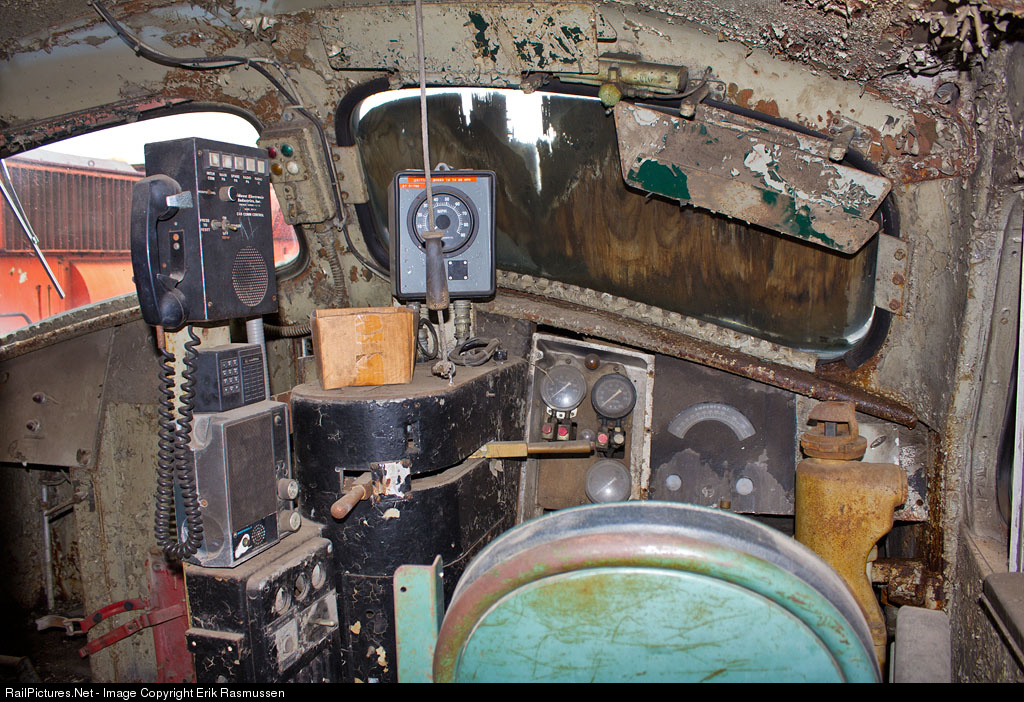
In the past I have made reference to various "two aspect" cab signaling systems, specifically those used on the Illinois Central (since retired) and the former Chicago & North Western east-west main line, now operated by Union Pacific.  Aside from the cab signal display of current Union Pacific locomotives this two aspect system can be seen in the cabs of old METRA locomotives and Illinois Central signal rule charts.


If a two aspect signaling system sounds bizarre you would be correct.  It's a pretty fundamental principle that trains cannot stop on a dime and need some warning before encountering an occupied block.  Well the two aspect cab signaling system (Clear and Restricting) adopted by both the IC and CNW worked a lot better than you might think.  A somewhat recent article on Carsten S. Lundsten's US signaling website goes into detail about how the system functioned on an IC single track Automatic Permissive Block segment in Iowa, but it is probably best summed up in this single .gif image.


The cab signal "code" (pretty much the presence of an AC current frequency or even a DC voltage), is transmitted from any signal point displaying an approach indication or better.  Passing a yellow signals will cause the cab signal to drop to Restricting and the train will continue on at Restricted speed until the cab signal returns to Clear.  Both the CNW and IC also used this system in installations without fixed wayside signals except at distants and interlockings.

Alright, now I'll bet you are just thinking this system is horribly inefficient as trains will be crawling at Restricted speed instead of a less odious 30mph Approach.  The key consideration here is to remember the braking time and for most freight trains, getting slowed down from MAS to Restricting will take a good chunk of the Approach block. Let's see what the GCOR Rulebook has to say on this issue.
17.5.1: Over 40 MPH
The high speed whistle will sound when the speed is more than 40 MPH when the cab signal changes to a Restricting aspect.
  1. Move the brake valve handle to SUPPRESSION within 6 seconds to prevent a penalty brake application.
  2.  When speed is reduced to less than 40 MPH, the high speed whistle will stop and the acknowledging horn will sound.
  3.  Acknowledge this horn. If the cab signal continues to display Restricting, speed must immediately be reduced to restricted speed,
If restricted speed is not reached within 70 seconds after the acknowledging horn was acknowledged, a penalty brake application will occur unless the brake valve handle is in SUPPRESSION

17.5.2: Under 40 MPH
The acknowledging horn will sound if the cab signal changes from Clear to Restricting when the speed is under 40 MPH.
  1. Acknowledge the horn within 6 seconds to prevent a penalty brake application.,
  2.  If the cab signal continues to display Restricting, train speed must immediately be reduced to restricted speed.
If restricted speed is not reached within 70 seconds after the acknowledging horn was acknowledged, a penalty brake application will occur unless the brake valve handle is in SUPPRESSION.
Basically if you are traveling over 40mph, reduce to 40mph and then you have 70 seconds to reduce speed to Restricting (20mph) or at least be making a sufficient brake pipe application to reach that speed after 70 seconds. It's not as efficient as a traditional 3 aspect system, but it likely won't penalize a typical train more than a couple of minutes.  The situation is a bit dicier approaching diverging routes and, especially where no waysides are present, the engineer has to pretty much be prepared to advance on the slowest route unless the home signal can be otherwise made out.

Ultimately the system works, and although it is not as advanced as the PRR version, it did save a lot of expense equipping locomotives with code following relays.  The IC eventually removed it's installation on the Champlain District sometime in the late 80's or early 90's as Canadian National came on the scene. It also goes to show that the engineer doesn't need to know he's approaching an occupied block, just sufficient time to show down before entering the occupied block.