Search This Blog

Saturday, October 30, 2021

PHOTOS: NORTH PHILADELPHIA Interlocking

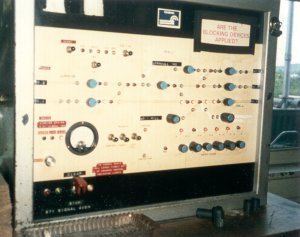
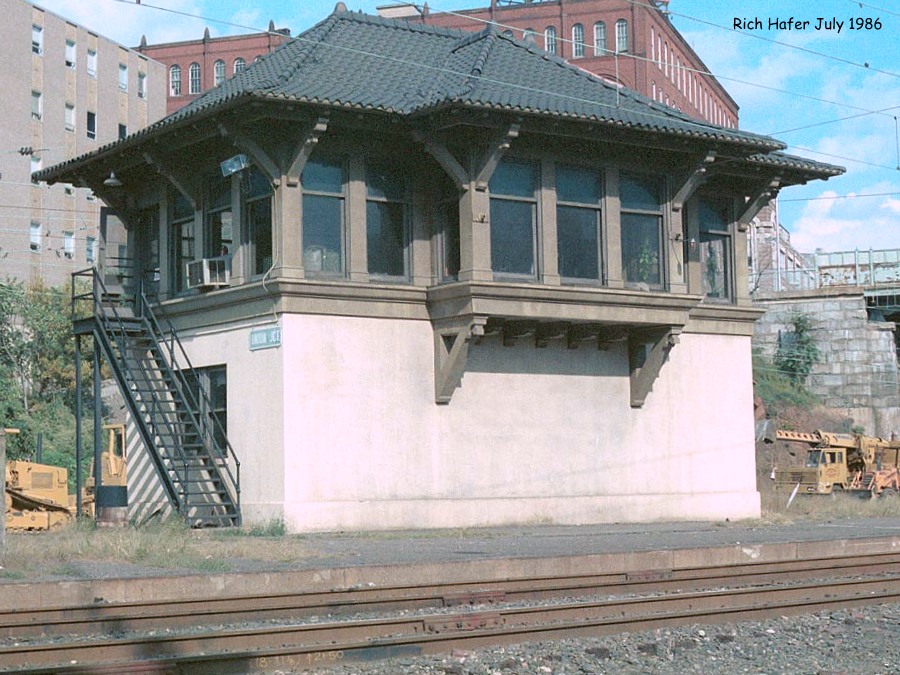
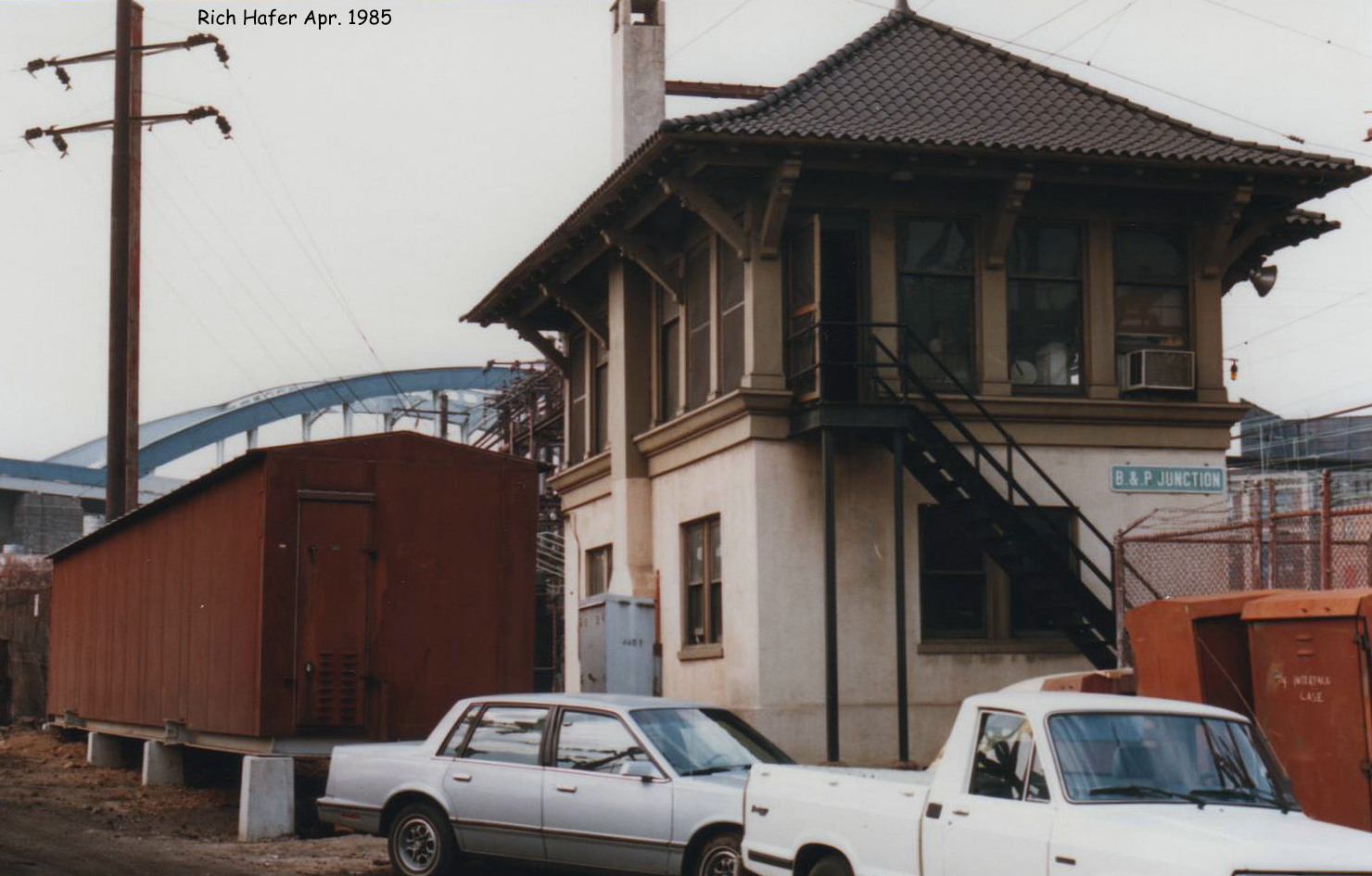
NORTH PHILADELPHIA is an interlocking emblematic of Philadelphia's industrial strength and the Pennsylvania Railroad's wealth and technical leadership. NORTH PHILADELPHIA is an interlocking emblematic of Philadelphia's industrial decline and Amtrak's chronic lack of funds. NORTH PHILADELPHIA is not an interlocking, and is barely a station. All of these statements were at one point true and thus track the up and down fortunes of the PRR's third great tower in the Philadelphia terminal area. Constructed in 1914 on the Connecting Railway that linked the PRR's East-West Main Line at Zoo Junction to the Philadelphia and Trenton railroad at Frankford Jct, NORTH PHILADELPHIA was a direct sibling to FAIR tower in Trenton and similar in style to UNION JCT and B&P JCT towers in Baltimore and was built to control the important North Philadelphia station complex along with the junction with the lucrative Chestnut Hill suburban branch. In this the first part of a two part series we will look at the layout and history of NORTH PHILADELPHIA interlocking before moving inside the tower in part 2.

As built in 1914, the North Philadelphia interlocking complex comprised a laundry list of "thoroughly modern" and "high tech" transportation concepts. The station featured 12-car 48" high level platforms designed to seamless transfer for passengers on long distance through trains to access downtown Philadelphia without those premier trains needing to make a costly stop at the stub end Broad Street Station. All of this was controlled by a 47-lever Union Switch and Signal Model F all-electric interlocking machine with a lighted diagram and multiple clockwork rundown timers to prevent delays. The entire 1915 rebuild project also coincided with the suburban electrification project that would bring 11kv 25hz overhead wires to Chestnut Hill. 

The interlocking consisted of a trailing point ladder on the east end and a facing point ladder on the west end that doubled as a two-track into six-track flat junction for Chestnut Hill suburban trains. Between these two ladders were crossovers that allowed access to the additional station platform tracks. The tracks were arranged such that through freight trains would use center main tracks 2 and 3 unencumbered by the high level platforms, the outer passenger tracks 1 and 4 would split in to at each high level island allowing express trains to pass platformed locals and a pair of yard tracks, 0 and 5, running on each edge of the right of way to service local industry. Lever numbers ran from east to west and the facing point ladder on the west also featured a pair of double slip switches across tracks 2 and 3 as well as a diamond where the #5 freight track crossed the outbound Chestnut Hill track. Due to a tight curve on the Chestnut Hill suburban tracks, slow speed (15mph) routes for those movements was seen as acceptable. 


Main Line electrification to Trenton arrived in 1930 and with it North Philadelphia saw a number of significant upgrades. Chief among these was the application of Pennsylvania Railroad position light signaling and with it the iconic 10-track signal bridge at the western end of the island platforms (although due to the use of single direction signaling only four signals were actually mounted on said gantry) along with older style dwarfs.


Switches were changed from electric to pneumatic operation and two additional crossovers were added (using spare levers #1 and #2) at the eastern end of the platforms to allow trains their choice of center or edge tracks as express passenger trains made increasing use of the center "freight" tracks. On the interlocking machine electric switch amp-meters were removed and additional rundown timers were added since this era of interlocking did not support zoned timers. On the Chestnut Hill branch a trailing point crossover was added just north of the platforms protected by a pair of signals on each track. Without room on the large Type F frame, the new crossover was accommodated on an adjacent 4-lever US&S table interlocker. Finally, some #20 (45mph) turnouts were added, but no Limited speed routes were provided for.

The post war period could likely be considered peak North Philadelphia as in the following decades industrial retreat combined with white flight turned a vibrant middle and working class community into a marquee example of urban decay on par with the Bronx and South Central. Not only did the East-West long distance trains that made North Philadelphia a vital transfer point evaporate, but the local ridership also plummeted due to the aforementioned neighborhood collapse. The freight services were also in disarray with the Penn Central imploding into Conrail and Amtrak taking charge of the Northeast Corridor route that was still configured in the manner of the combined passenger-freight operations of the PRR era. With funding from Regan's Washington in short supply the 1992 edition of NORTH PHILADELPHIA looked surprisingly like the 1972 version with only the #1, #2 and #29 station track access switches removed and the two double slips re-aligned into coventional turnouts.


Regardless it was hard to deny that NORTH PHILADELPHIA was over-built and many of the freight tracks and sidings were falling into weedy decay.

The early 1990's would see a huge push by Conrail and Amtrak to disentangle their operations on the former PRR. Via a new connection at the Reading's old Park Jct, the Conrail Trenton Line would take the place of the old #5 track through NORTH PHILADELPHIA interlocking with the deletion of the #45 and #5 switches and associated signals. Around 2000 Amtrak finally scrapped together enough funding to begin their NORTH PHILADELPHIA modernization effort.

The over the course of a couple years the entire east end of the interlocking save for the #11 and #17 crossovers was removed and reestablished as a new interlocking named CLEARFIELD, remote to the CTEC dispatching office effective 2003.

Amtrak CLEARFIELD interlocking crossovers looking westbound.

Moreover the antiquated station track system was remedied via a wholesale track re-alignment with "Eastward Station" being through routed as Track #1, Track #2 being cut between the #47 and #17 switches, and a new Track #2 being routed along the eastbound platform. This left a rusting portion of concrete tied NEC track on the old track #2 alignment for a number of years after. 

Former track #2, removed and relocated.

Finally both the Westbound Station and 0 tracks north of the westbound platform were removed at the 32R and 34R signals. 


At this point NORTH PHILADELPHIA entered its most awkward phase of existence as a black hole on the dispatch board generally only able to participate in moving R8 SEPTA trains on and off the Chestnut Hill West line and trying not to delay through trains on the NEC. Perhaps the most inconvenient part from an operations point of view was NORTH PHILADELPHIA's continued configuration for single direction Rule 251 ABS operation when the NEC on either side of it had long since been upgraded to bi-directional CTC. Trains arriving on wrong-direction tracks would need to take a slow speed indication from a dwarf signal and stay at 15mph through most of the long interlocking.

Eastbound 40L and 42L home signals.

As 2005 approached Amtrak began to make the final push towards eliminating NORTH PHILADELPHIA. The pneumatic point machines were replaced by electrics, new high position light signals appeared on the westbound super-gantry and a brand new eastbound signal gantry was erected.


The track layout was predictably simplified with the 31 and 33 switches being removed along with the associated diamond and north side stub tracks. The #25 crossover was also removed limiting westbound parallel Chestnut movements to track #4. On the main ladder all the crossovers were aligned for Medium Speed (30mph) operation and the new signals were able to reflect this.

Finally the trailing crossover on the Chestnut Hill branch itself was removed shifting the division point with SEPTA to the 10-track signal bridge. However the former 50L and 52R signals remained for another decade as automatics.

Former NORTH PHILADELPHIA 50L turned automatic signal 50CH

In the summer of 2005 NORTH PHILADELPHIA tower was closed after 91 years in service with the new Chestnut Hill Branch junction being named LEHIGH after the nearby street. It's single facing point ladder complimenting the trailing point ladder at SHORE interlocking 2.6 miles to the east.


With this context in mind, join me next time as we head into NORTH PHILADELPHIA tower before its closure for a look at the interlocking machine and related equipment.


Tuesday, October 26, 2021

Caught on Camera: Phantom Indication @ DAVIS?

 Was processing photos from a visit to DAVIS interlocking at Newark, Delaware on Amtrak's NEC and I caught what looked like a phantom or improperly displayed signal indication on the 2N position light signal.  The upper head is displaying Clear in the normal manner, but the lower head appears to have the 12 o'clock (green) lamp lit.  Normally this is used as part of the lower | Medium Clear indications, but today is making up half of an NY Central style double green clear. 

I can't tell if this is a trick of the light or indication of stray current in the signaling hardware. 🤔 Argue in the comments ;-)

Sunday, October 17, 2021

Nelson Searchlights Doomed by UP Geneva Sub Re-Signaling

 I can confirm that the Union Pacific Geneva Sub (ex-Chicago Northwestern) re-signaling project that I previously reported on is looking ready to doom the the iconic searchlight complex at Nelson, IL.

 Known for its 4-track CNW main line coaling tower and signal bridges, the Nelson searchlight complex had a chance to escape the 2010's signal replacement ax due to late model age (80's/90's) of the CNW signaling.  While some of the signal bridges are vintage, others are tubular aluminum. 

Unfortunately this is well beyond my territory, but hopefully there is someone local able to perform a through documentation including some video of the searchlight wobble. In an additional bummer, Nelson is likely the best example of CNW oval backed US&S searchlights with at least one 4-track signal bridge entirely comprised of 3 headed signals.


Friday, October 8, 2021

PHOTOS: Inside LEBANON VALLEY JCT Tower

The Reading Railroad was small in size, but rich in revenue due to its dominant positions in the anthracite coal fields of eastern Pennsylvania. As such it was able to punch far above its weight in the area of technical investment be it electrification, locomotive manufacture or signaling technology. A very early adopter of automatic signaling in the late 19th century with the Hall disc signal, when the Reading was confronted with plummeting demand for their premium coal product, their response was technical innovation to cut costs and increase competitiveness. 

Once again the Reading turned to signaling and was an early adopter of the area interlocking concept that allowed for the closure of many manned interlocking stations, even in areas of high traffic density. Covered previously in my piece on North American Panel Towers, VALLEY JCT (officially LEBANON VALLEY JCT) tower was part of this technical overhaul that still stand to this day. Since I managed to come into possession of some interior photos I figured I might as well cover it in its own article. 


The VALLEY JCT we all know today appears in the form of a squat, 1 story brick cabin adjacent to the Lebanon Valley bridge over the Schuylkill River that today carries part of the NS Harrisburg Line between Philadelphia and Harrisburg. However if you look at it from another angle, it is actually a multi-story tower facing the Reading Belt Line that passes under the Lebanon Valley Branch at that point. In fact there is no interlocking on the Lebanon Valley Branch at Valley Junction. The interlocking is actually on the Belt Line, hence the name Lebanon Valley Jct (as the Lebanon Valley Branch doesn't junction with itself). The reason for this misconception is that the operator's floor is more accessible to rail photographers.


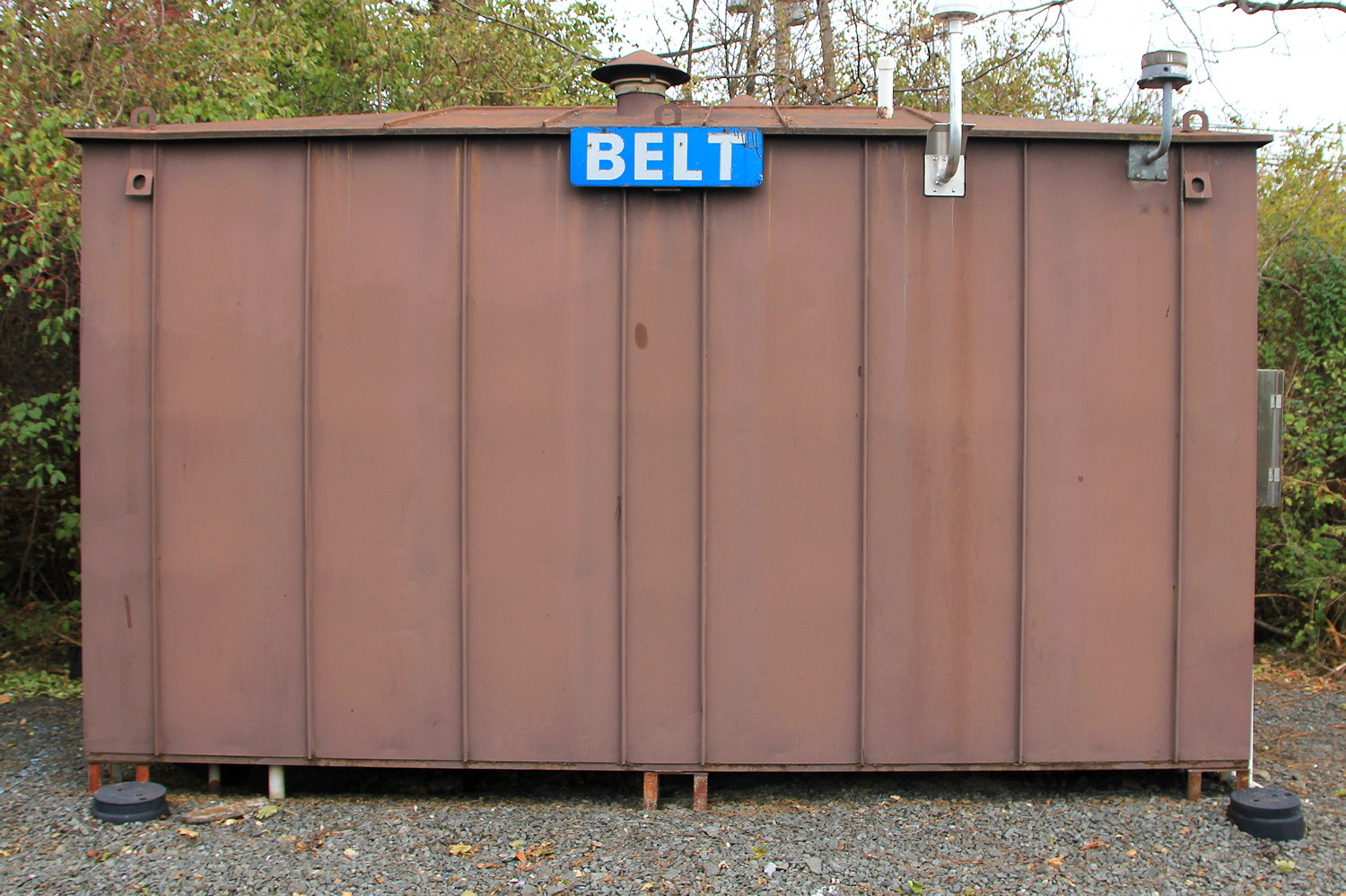
VALLEY JCT was built in 1951, towards the end of the standalone interlocking tower era in North America. It had direct wire control of the aforementioned VALLEY JCT on the Reading Belt Line as well as the nearby Wyomissing Jct and less nearby Klapperthal Jct (CP-TITUS) , Cumru, Tuplehocken Bridge (CP-TULP) and Belt Line Jct (CP-BELT). As CTC projects went this was not exactly pioneering, but was still a good 5-10 years ahead of the curve.


It's local interlocking under direct wire control consists of a simple crossover that allows Belt Line trains to choose a ramp to the Valley Branch at Wyomissing Jct or continue on to coal country and/or Allentown via Belt Jct.


VALLEY JCT was built with a General Railway Signal Style K unit lever machine with sequential numbering starting at CP-TITUS and increasing to CP-BELT. It eventually gained an independent panel to control WALL interlocking in Lebanon, PA in 1968.


VALLEY JCT's CTC territory was in service up until the late 90's/early 2000's when a combined Conrail/Norfolk Southern re-signaling project updated CP-BELT, CP-TULP, CP-WALL and CP-WYOMISSING JCT. CP-CUMRU would be re-signaled around 2010 with CP-TITUS surviving until 2018 as it was targeted for removal and replacement instead of reconstruction. The original 1951 relay hut is still in place at CP-WYOMISSING JCT, complete with its Reading Company herald. 


Wednesday, September 29, 2021

The NTSB's Sound of Silence

 From about 2005 until 2018 every time there was a serious passenger train or freight derailment, the NTSB would always make some remark about how the trains involved lacked PTC and/or how PTC could prevent accidents like the ones in question.  It was almost like such remarks were included in their press release template.  Well here we are in 2021, billions of dollars have been spent, average trains speeds and capacities have come down and yet trains are still derailing in pretty much the same ways they did before. 

BNSF Hi-Line Near Joplin, MT

After Amtrak Train 8 derailed near Joplin, MT, killing three, the revised NTSB press release simply notes that PTC was installed and the train was operating below (of course) the same 79mph speed limit.  I guess it would be inconvenient for them to point out that 97% of accidents are not PTC preventable.  Or maybe credit the robust build quality of the Amtrak Superliner equipment for saving lives in a more cost effective manner than a fancy new technology. 

We are now in the PTC era, trains are still derailing, speeds are the same or slower and the best defense in an accident is equipment that won't rip open or turn into confetti when your train rams into a low bow trailer carrying an excavator.

Monday, September 20, 2021

Vermonter Route Signaling Report

I recently completed a trip on Amtrak's Vermonter all the way to White River Junction, which covers all of the signaling on the route.  The Vermonter passes through three signaling regions each with their own unique features, the Amtrak Springfield Line, the Boston and Maine CT River Line and the New Englande Central main line.


HAYDEN interlocking northbound.  Start of Rule 261 territory.

The Amtrak Springfield Line has made headlines with a recent 110mph upgrade programme and support of the Hartford Commuter Rail line.  This involved restoration of the double track south of Hartford and Rule 562 signaling (cab signals w/o wayside signals).  However one might not know that the Rule 562 only extends to HAYDEN interlocking about 6 miles north of Hartford where beyond that trains still run under Rule 261/CSS.

New Unilens signals at CP-98

At the Springfield the signaling is much the same since I was last there, but I can confirm that the US&S 3 lamp modular and N-2 dwarfs are still in place at SPRING interlocking.  On the former Conrail Boston Line, CSX has indeed replaced all of the SA searchlight dwarfs at CP-98 with Unilens dwarfs.  CP-97 was previously re-signaled with 3 and 4 stack Safetran modular dwarfs.

New and classic signals at CPF-385

On the CT River Main Line, which was rebuilt and re-signaled around 2014, standard modern Guilford signaling applies with 3-head home signals and offset heads on two head intermediate signals.  Single Green clear is in use as opposed to double green.  The one exception is at the junction with the east-west freight main line at CPF-385 where the Freight Main Line signals remain B&M searchlights.

Budget bracket mast at Putney.

On the New Englande Central part of the line things get a bit odd. Leaving the CT River Main and its CTC at East Northfield, the line is run under TWC through Brattleboro to the siding at Putney where CTC begins. North of Putney all controlled siding and diamond crossing interlockings are equipped with searchlight signals except for the south end of the Putney siding that has Vader type color lights and a strange budget southbound bracket bast. Much of the block signaling south of Windsor is still searchlight, but the blocks seem very long with some stretching the entire distance between sidings with a single direction distant mast.  North of Windsor the CTC was a recent TWC upgrade with color light masts and what felt like 3 mile blocks.

TLDR the important thing is the searchlight interlockings on the NECR.  Safe from the Guilford sale to CSX, but still targets for potential infrastructure spending.  If you are in the area, check them out and take photos.


Sunday, September 12, 2021

NS Withdraws Most Signal Abandonments

While I don't have specific details, NS has reportedly withdrawn most of its recently planned signal abandonments, including the former D&H main line to Sunbury.  Not sure if there was regulatory pushback or the recent supply chain crisis made NS thing twice about permanent capacity reductions. Unfortunately NS can't let us have nice things and an eagle eyed viewer spotted new NS masts all lined up by the Reading and Northern yard in Pittston on the former D&H at the 6:50 mark in the Youtube video below. Looks like I won't be canceling my Scranton trip after all.