Search This Blog

Tuesday, March 20, 2012

I Can't believe It... Chicago Line CP-175

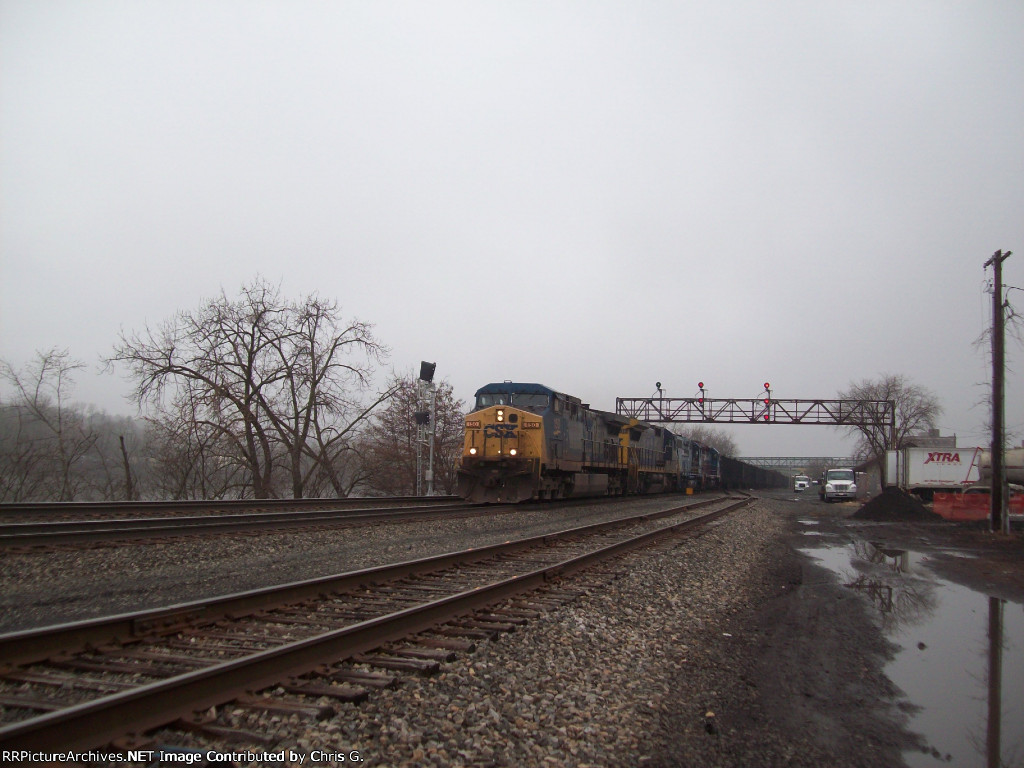
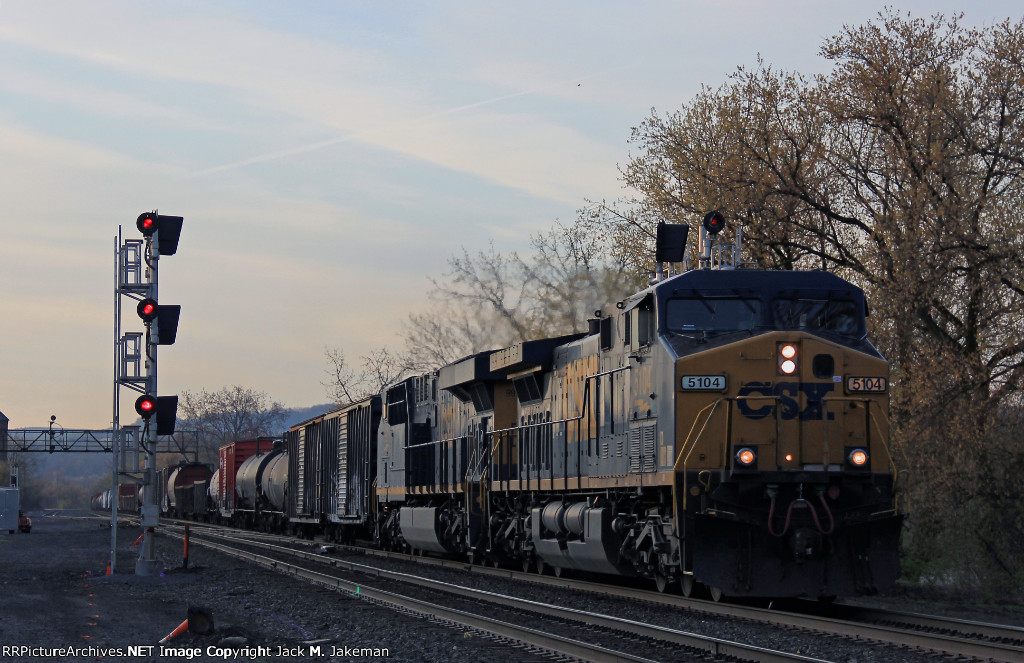
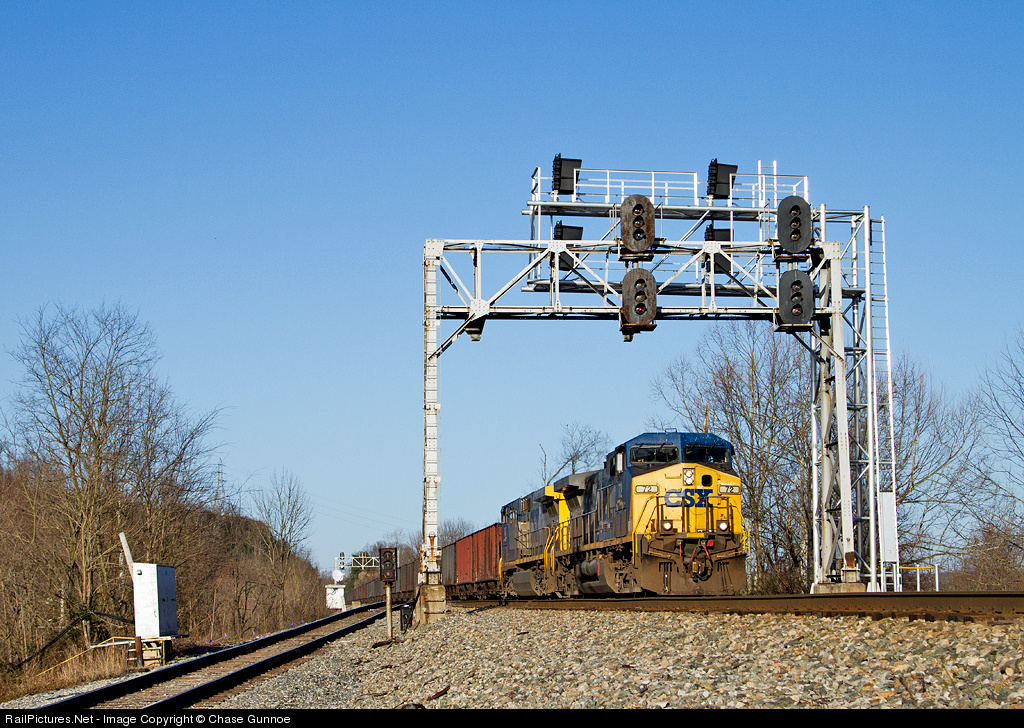
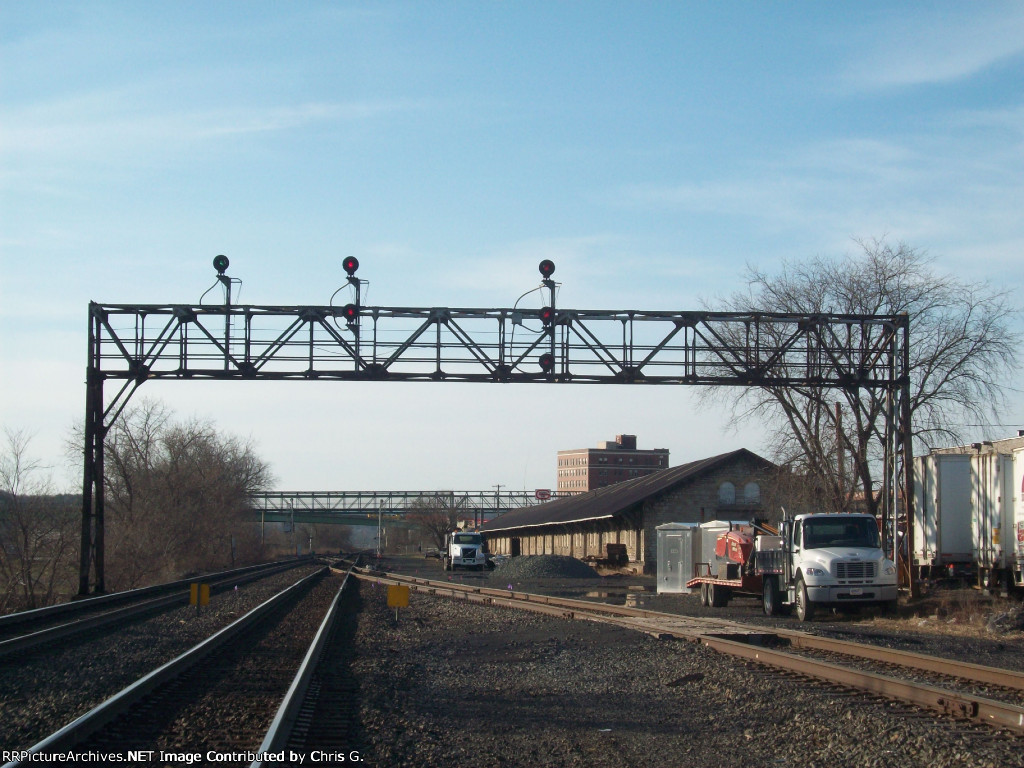
The greatest tragedy is when recently installed classic signals are replaced...putting a premature end to what could have been a valuable item of living history for decades to come.  The Chicago Line is no stranger to this odd bit of decision making with NS replacing the 1980's vintage tubular cantilevers with the small target Michigan Central style searchlights.  It this time it's CSX's turn in a more heartbreaking decision to replace the same type of small target searchlights at CP-175 in Amsterdam, NY  which was re-signaled by CSX itself only a few short years ago.  Back when CSX actually cared about saving money they installed brand new three-head small target semaphore masts for eastbound movements and re-wired the signals on the 3-track westbound New York Central signal gantry.  Well the construction crews are out with new relay huts and Darth Vader masts going up.  I suspect they are spending stimulus funds earmarked for the Empire High Speed Rail corridor.  Anyway, if you live in the area get your pictures while you can, especially of those brand new eastbound masts.


And of course the real shame....the brand new small target searchlight masts being replaced by Darth Vader heads.  Is it really cheaper to just splice the new interlocking wires into the existing equipment??


Saturday, March 10, 2012

CSX's Darth Vader's Near and Far

Just noticed two portends of oncoming evil yesterday,  Looks like Darth Vader signals are going up both on the Northern Sub near the junction with recently converted Cincinnati Sub and then again in Jessup Georgia on the S-Line to Flordia.  If you happened to live near those areas get your cameras out and take as make photos as you can.

Sciotoville, Ohio:


Jessup, GA:


Tuesday, March 6, 2012

PRR Main Line Survey 2010 Part 12 (CORK to PAOLI)

We continue on our Eastbound trip over the former Pennsylvania Railroad Main Line between Philadelphia and Harrisburg and how its 1930's era signaling is gradually being upgraded to modern standards. In this section we will travel between HOLLAND interlocking near Lancaster, PA and PAOLI interlocking in Paoli, PA. The section between Harrisburg and Lancaster has been completely re-signaled, while the Main Line section has been left almost entirely intact. This middle section is actually in transition between old and new and I will show that in the pictures.

You can follow along on Blockstation.net starting at page C-12 and of course on my master list of photos.

I will begin back with the photo I left off with taken at HOLLAND interlocking, which used to be the Conestoga section of CORK interlocking on the old Model 14 machine. The Conestoga section was where, until 1948, the 4-track line reduced to 2 tracks to travel over the stone arch bridge over the Conestoga Creek. In 1948 the PRR halved the number of tracks on the "passenger" main line as freight trains were shifted onto the Atglen and Susquehanna low grade line. A single trailing crossover remained until CORK was re-signaled at which point it was removed. Anyway, at the time this was taken this section of line was still running under Rule 251, single direction ABS, with single direction Cab Signals. A temporary auto mast was erected at Holland after the 6L CORK signal was removed. The signal maintainers are out on this weekend day trying to get the next section of Rule 562 operation cut in between here and what will soon be LEAMAN interlocking.


About 1500 feet east and around the bend we find another maintainer working at the cab signal cut point for HOLLAND interlocking on #4 track, previously for CORK on both tracks. As HOLLAND is only in service on #4 track I am unsure what purpose maintaining the cut point would serve on #1 track unless it has been removed w/ the old insulated joint bridged over in the relay box. I guess it could serve as an extra block for the waysideless CSS.


As was common practice under Rule 251, industrial sidings were built to join the main line with safer trailing point switches. In fact there was only a single facing point siding track along the entire 107 mile Harrisburg Line. Protection was provided via a simple time lock which would shunt the cab signal coded track circuit and then run a short 5 minute timer before the hand throw point/derail combination was allowed to be thrown. Rule 562 operation will mean bi-directional running and increased attention to any issues with these potentially facing turnouts, although they always had to be ready for wrong direction movements even under Rule 251. Note the turnout was replaced when the line was upgraded for 110mph operation with concrete times and a spring frog. 


The new defect detectors are of the Radio type (replacing the Servograph units in CORK tower) and, unlike previous Amtrak detectors, readout the milepost only, not the detector name (which in this case is Conestoga). Two detector's on Amtrak's Springfield Line still read out locations (Windsor and Berlin) as does one on the NEC near Boston (Hawk).


The 645 wayside distant to HOLLAND interlocking on track #4 is still bagged and waiting to go into service while a maintainer works in the relay hut.


The 635 automatic is the first classic PRR amber type automatic signal east of HOLLAND and is serving out its last few months in service. The use of the wide overhead gantry is a function of the 4-track RoW. It appears that this will remain an active block boundary / CSS code change point as evidenced by the new relay hut and maintainer.


The 615 automatic is next. Note these all have the Stop and Proceed marker lamps as well as the number plate.


The gates at the Irishtown grade crossing are beginning to rise as two rail enthusiasts scramble out to get their tripod repositioned. This is one of three remaining grade crossings on the line and the one seeing the fastest trains (90-100mph). The crossing is protected by AHBs and due to the significant Amish population in the area one is very likely to catch a horse drawn buggy waiting for a passing high speed electric train. The crossing is scheduled to be replaced with some sort of overpass due to $26 million of stimulus money. Unfortunately I see this as little better as a wasteful mark work project that will do little to increase safety at these low use crossings and will not only destroy a popular railfan location, but also impact horses that will have to work up and down steep overpass ramps.

For those of you who are fans of the British motoring show Top Gear, this crossing is located about 1.7 miles from the town of Intercourse, Pennsylvania which the presenters stopped at for the sole reason of a sight gag at the town's welcome flag. Really? You went miles out of you way for a stupid sex joke? That was the best idea you could come up with on your US East Coast road trip?

Sunday, February 19, 2012

Signaling Flickr Photo Sets

Found a couple of interesting photo sets on Flickr.  The first are signal surveys of some N&W districts and the former C&O Buckingham Branch owned line from Gordon to Clifton Force. 

http://www.flickr.com/photos/slip_plane_heart/sets/

The second is a signal and interlocking enthusiast's collection of Tower photos and I'll be damned if he doesn't have a photo of just about every currently and recently standing interlocking tower in the United Stated.  Really worth a look.

http://www.flickr.com/photos/p3subhunter/sets/72157621068569864/with/5830899881/

Friday, February 17, 2012

PHOTOS: THORN Interlocking

Before you think this is a duplicate post I should explain the previous post on THORN tower concerned the interlocking tower itself and the contents within. This post will focus on the THORN interlocking plant outside the tower. I had a lot of photos and some videos of the interlocking plant itself so I decided to split that off into a separate post. Also for those of you who care there are pictures of actual trains in this post instead of just interlocking equipment.

So once again I will be referring to this track diagram dating from 1992. Despite being almost 20 years old it is still an accurate reflection of the state of THORN interlocking.

https://www.redoveryellow.com/position-light/Amt_Diagrams/C-7.GIF

As I mentioned before in my previous post THORN interlocking proper was a 6-track full crossover located at MP 35.0 on the old PRR Main Line that originally consisted of 4 main line through tracks, 2 tracks of the Philadelphia and Trenton low grade freight line to the east and two tracks into Thorndale yard to the west. The last major change to the plant occurred when the P&T was reduced to a single track which changed the 53 switch from a crossover to a turnout. Since that time as the P&T and thorn yard were further abandoned the disused tracks were simply stubbed out to avoid costly changes to the interlocking plant.

In 2010 track #3 is a stub on both sides of the interlocking along with track 5 to the east. Track 6 to the west still has space to store MoW vehicles and #5 Running is also still in place. Track #2 to the east is out of service past the old P&T flyover, but the tracks are still in place.

To set the stage I will start us off with some video. Here is a rear facing view from an Eastbound Amtrak train traveling on track 1 through THORN interlocking. The video starts in the middle of thorn yard and continues through the interlocking, under the P&T flyover and then through the overhead power phase break that divided the Harrisburg power dispatch zone from the Philadelphia zone. Track #2 through between CALN and THORN through Thorn yard is active and is sometimes used as a pocket to hold SEPTA commuter trains or the odd local freight clear of the main. The train is traveling at about 90 mph and you can see the fairly new Thorndale station with its full length high level platform, the three track eastbound high signal gantry, the full 6-track crossover, MoW equipment stored on the #6 track stub, THORN tower itself, the silver painted air line for the 43 switch, the reverse direction position light "pot" signals, the P&T flyover and finally the Thorndale substation and phase break.


In the next video we have the opposite rear view from a westbound train traveling on Track #4. Here we see the removed #3 track, the abandoned P&T ramp to the flyover, the two track high signal gantry on #3 and #4 tracks, the mast mounted signal for the P&T, THORN tower and the air line, the reverse direction position light pot signals, the low level Thorndale platform, thorn yard ad finally what used to be CALN interlocking which is no longer in service on #4 track.


Tuesday, February 14, 2012

Active Tower Lost Then Found Then Lost For Good

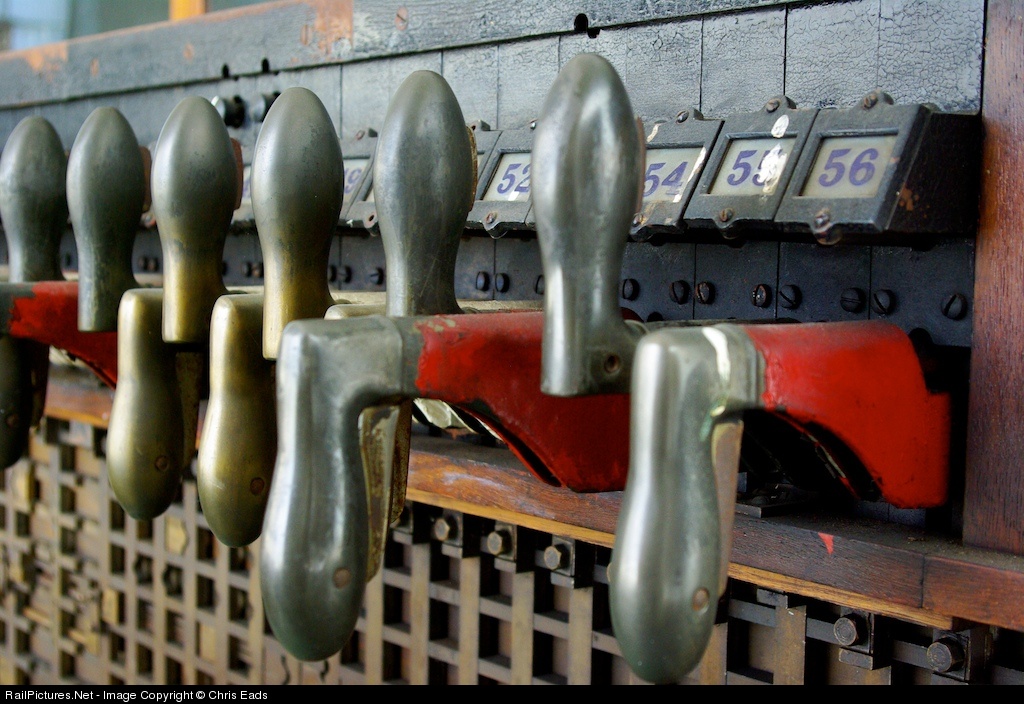
I just discovered an active tower previously unknown to the signaling community that has the glorious distinction of being active despite having closed over 20 years ago...and then after adding it to the active list, had to take it right back off again as it was closed for good in 2010 and DEMOLISHED in 2011.  The tower in question is 'CA' tower in Terra Alta, WV on the famous CSX Mountain Sub, a all brick B&O design that is a sister to the famous SA tower at Sand Patch, PA (also demolished) and HX tower in Halethorpe, MD.  Apparently, when the tower was first closed sometime in the 1980's due to a track rationalization, the line was still not put up for a re-signaling.  As happened to a select few other towers, the maintainer chose to leave the interlocking machine in place, in this case a 56-lever GRS Model 2, and leave one lever wired up and active to run a single remaining B&O CPL automatic signal (previously a controlled signal in the interlocking plant).  After, after 20 years in zombie service CSX finally got around to re-signaling that portion of the line, but also decided that as long as they had their backhoes in place they might as well demolished the secure and structurally sound tower.  Way to preserve your heritage CSX, make sure that nobody might ever be in a position to preserve it.  Let's hope that someone in the know was able to make off with the interlocking machine in some form.

Anyway, I was alerted to the ups and downs of CA tower by a pair of photos posted on railpictures.net.

Here we see the GRS pistol grip machine.


The single active lever equipped with a blocking device so nobody accidently causes a service disruption.


Monday, February 13, 2012

Vintage Japanese Signalling Film

Now here is a little gem that proves the rule that sometimes the best way to learn about domestic history is to go abroad.  This two part YouTube scan of a 1950's Japanese public information film on railway signaling starts off like you would expect, lots of lower quadrant semaphores and block instruments.  However you will soon notice a US&S Style-S electro-mechanical lever frame...and then the entire second half of the film is dedicated to the operation of an electro-pneumatic plant operated by a rather impressive US&S Model 14 machine.

Now the entire film is in Japanese with no subtitles, but it really doesn't matter.  The film is spot on showing action on the Model 14 and the corresponding action in the field.  They get it all right, signal levers display signals and switch levers display switches.  You can see in detail the exact way one goes about throwing a lever.  Also on display is the Japanese system of Say-Point-Do (and sometime point again).  Where the train director issues a command, the leverman repeated it, points at the lever to be operated, operates the lever, points at the change in indication then states the action is complete.  The Japanese put American operators to shame (and its not the first time).  Anyway, here are the videos and if you get bored the Model 14 machine stuff picks up immediately in the second part.