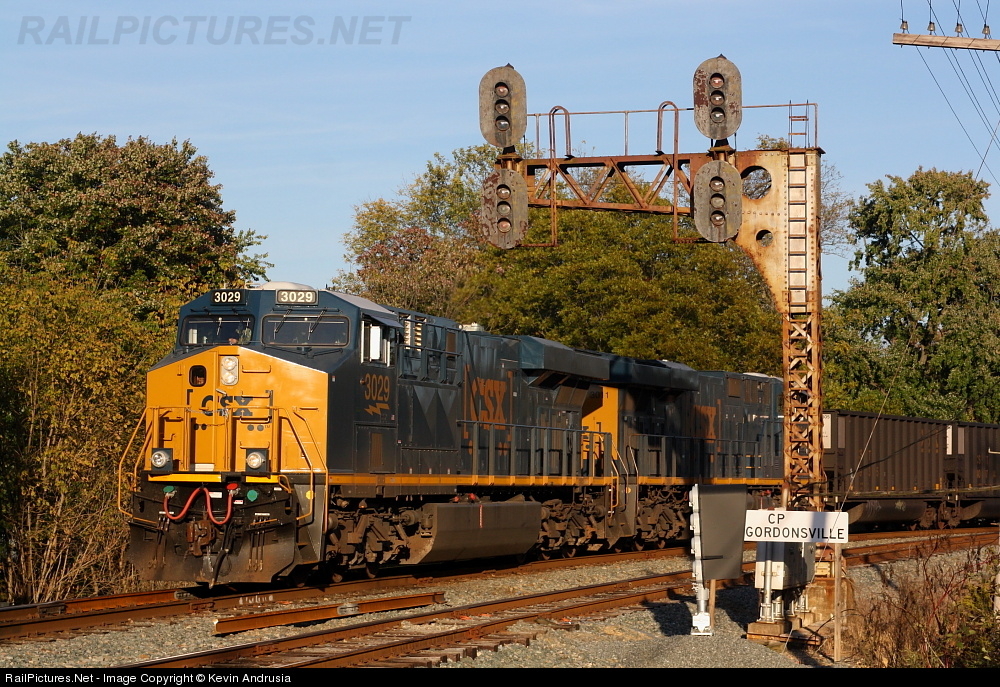
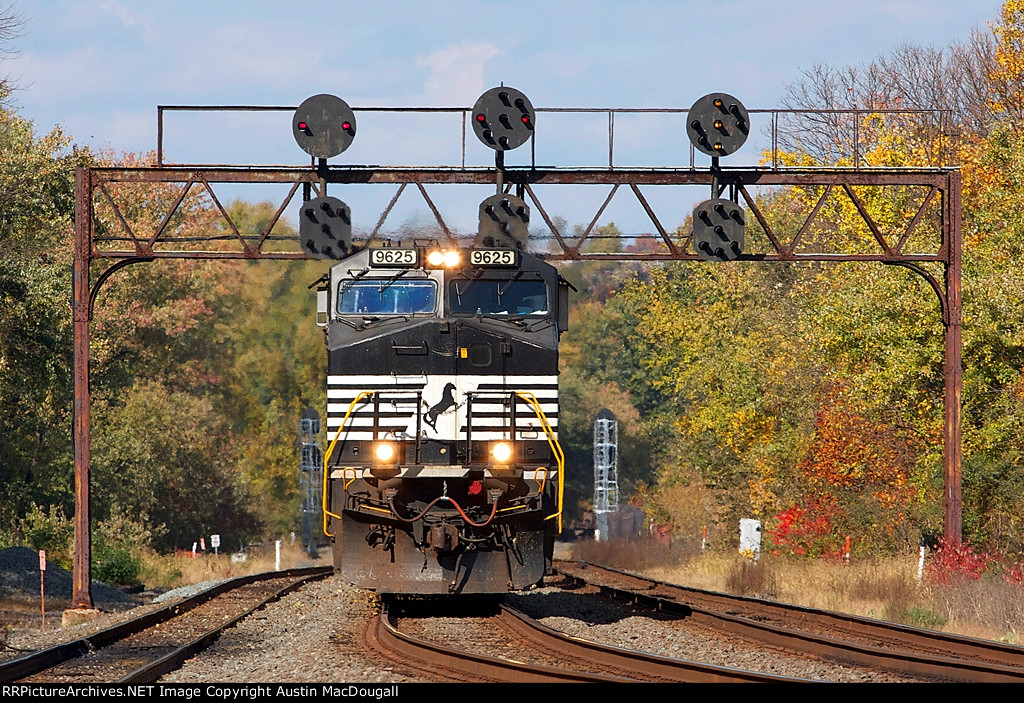
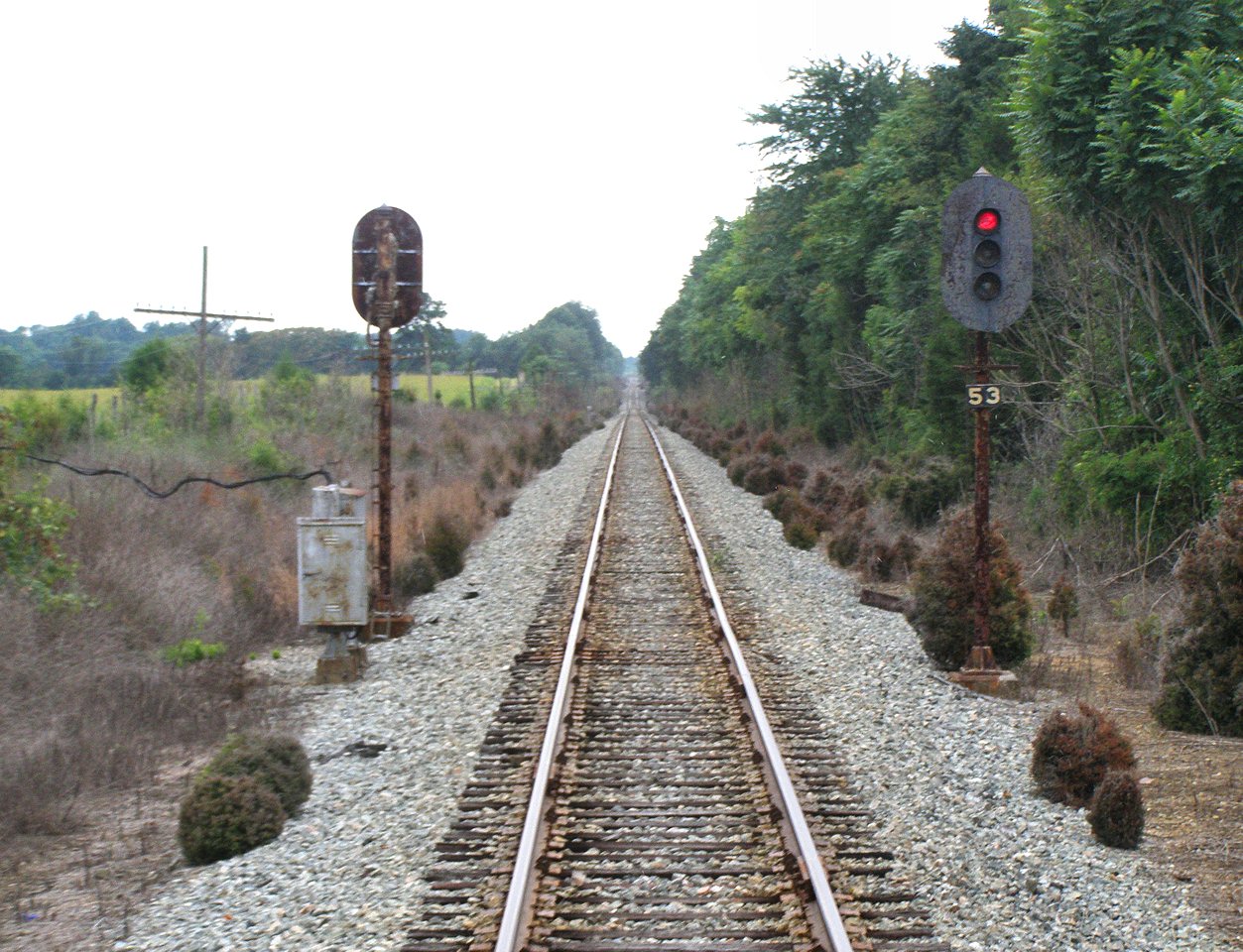
I have two new CSX re-signaling alerts and the first has some potentially unfortunate implications for the River Line, but that remains to be seen. First up on the hit list is CP-90 in Kingston, NY which is the north end of a non-signaled controlled siding on the former Conrail River Line.
Now I am not sure if this is technically a full on re-signaling as the vital hardware went in in the late 80's or 90's and is probably some solid state system like Microlock and does not to be up for replacement at this time, but to convert the siding from restricted speed to signaled the Michigan Central style small target searchlights are getting the toss.
However all of you who prefer to have the South keep their culture on
the other side of the Mason Dixon line are going to be in for some
disappointment. Yup, you see that Lunar White lamp? That's the hallmark of the Seaboard style of signal aspects. No more R/Y Restricting because why use three lamps when you can you four instead! Does this mark a full conversion of the River Line to Seaboard signal rules as has happened on the Selkirk branch and parks of the Chicago Line instead of the 'CR' prefix rules? I don't know, but the CP-90 will certainly be ready for them. The Lunar lamp is a valid in NORAC for Restricting and the new three head signal would need a bottom head green to support R/Y/G Medium Approach Medium Even on the 4-lamp unit off the siding isn't indicative of a conversion to Seaboard rules as the Yellow could still be set to flash for Medium Approach.
This could just be a simple upgrade of a controlled siding to a signaled siding, or it could be more evidence of that creating southern culture into the North. It will only
be possible to tell if CSX is going Seaboard on the River Line if we
start seeing that lower green on the tri head flash or crews start
calling Limited Approach off the siding. Until now CSX had been good
about keeping the River Line in the NORAC sphere, but thee might be a
total changeover in the works.
Anyway the second bit of news comes to us from Cleveland where the former location of Quaker (QD) Tower is now about to get the kill of banality from CSX. Quaker is a massive interlocking complex at the west end of the former NYC Collingwood Yard where the Cleveland Short Line jioned the straight through Chicago Line. Today with CSX and NS handing off ownership of the Chicago Line at Cleveland almost nothing uses the section between Quaker and Drawbridge except the daily Amtrak Train 48/49, QD was an active tower well into the 1990's, but despite looking like the nearby BEREA (BE) tower, it was fitted with a modern NX panel, instead of its original GRS Model 5 pistol grip machine. From the generally non-modern layout of the interlocking plant I have to assume that the interlocking was remote controlled instead of being re-signaled. Well, it looks like CSX is out to remedy that little oversight as you can pick up on here.
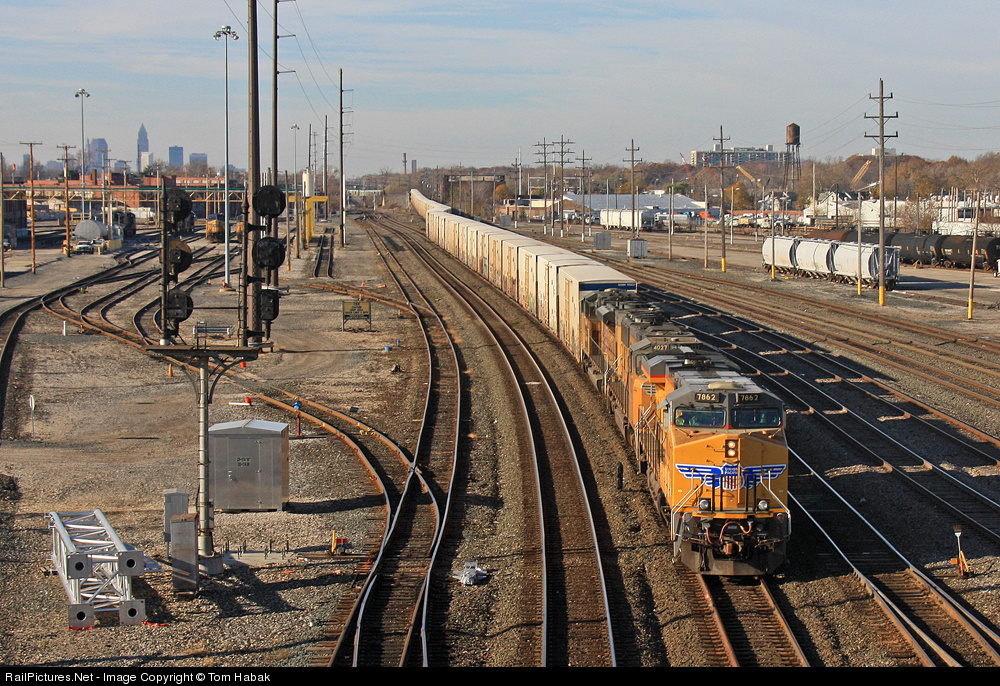
Yup, new relay huts, new signal masts and cantilevers. Just about the only interesting part left will be the use of Unilens dwarfs in place of the searchlight dwarfs. Once again the real question is if we will continue to see NORAC signal indications, especially with all those dwarfs, or is it time to get ready for Lunar restricting and Approach Slow that needs three signal heads.
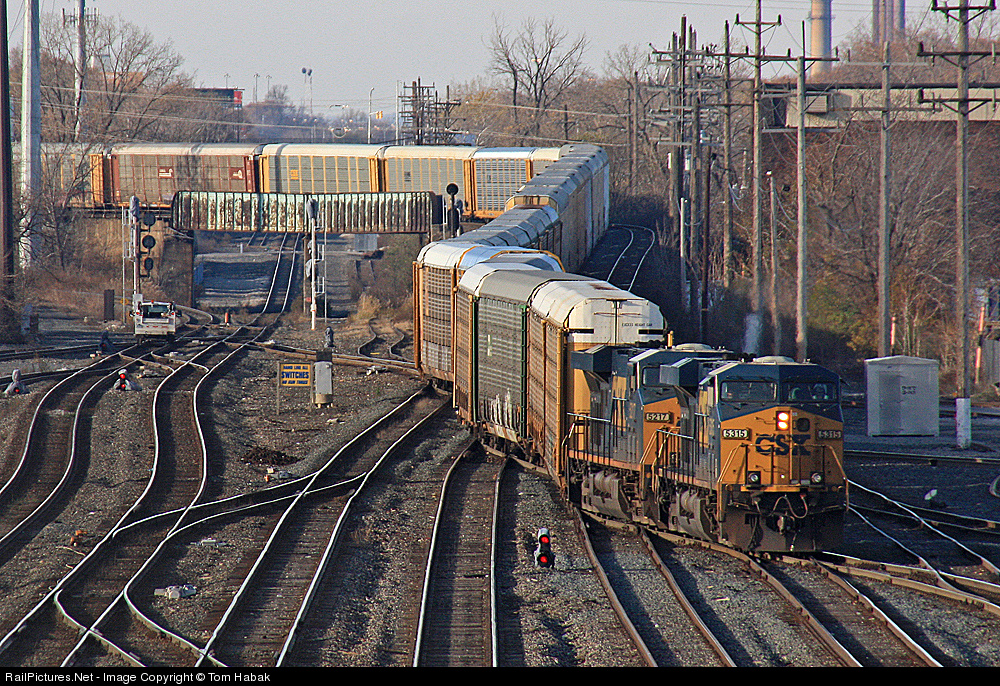
Oh yeah, they're dicking around elsewhere on the Chicago Line as well. It's times like these when I really wish I could get pictures out the back of the Lakeshore.
A blog devoted to explaining the ins and outs of North American railroad signaling, past, present and future. This blog seeks to preserve through photo documentation the great diversity and technical ingenuity of 20th century signaling and interlocking hardware and technology. Related topics cover interlocking towers and railroad communications infrastructure.
Note, due to a web hosting failure some of the photos and links may be unavailable.
Search This Blog
Thursday, November 15, 2012
Wednesday, November 14, 2012
The Life and Life and Death of G Cabin
The former C&O Railroad's G Cabin Gordonsville, VA has been a well known railroad attraction for years. Constructed in the 1930's at the Y junction of the C&O's single track line between Richmond and Clifton Forge via Doswell and the short Washington Branch to Orange. The tower stood at the west leg of the wye and for decades controlled the all US&S interlocking plant from its upper floor. Of course, after many years of service, G Cabin, like most small towers like it, closed and the interlocking plant was put under remote control using US&S 504 code equipment with the vital hardware stored in the lower floor of the old interlocking tower.
Over time the C&O was merged into the Chessie System, then CSX and finally leased to the Buckingham Branch ShortLine. Under the BB, the former G Cabin territory was split into three separate logical interlockings. These were CP-YOWELL at the south end of the wye, CP-NORTH GORDONSVILLE at the north end of the wye and CP-EAST GORDONSVILLE (formerly CP-G TOWER) at the east leg of the wye. Each of these interlockings were fairly simple, basically consisting of one or two switches and some classic C&O signals. Anyway, over the last year or so some money was made available to "improve" the BB route for the 3-a-week Amtrak Cardinal service and slowly the deadly pall of re-signaling is falling over what had been a pristine route. The most recent victim of this slowly moving resignaling effort was unfortunately G CABIN with the new signals being cut in over the first weekend in November, 2012.
Now this actually went beyond just ripping out some relays and putting up a bunch of new signals. While CP-EAST GORDONSVILLE was treated to the extra generic brand of cheap LED lit 4-stack Darth Vader heads, the cost savings didn't end there. As the Piedmont Sub from Gordonsville to Richmond via Doswell is run under TWC rules starting just a mile past CP-YOWELL, CP-YOWELL itself was completely ripped out. So was CP-NORTH GORDONSVILLE and the line between there and the NS connection at Orange (which probably sees the Cardinal as its only traffic) lost two intermediate signals and two controlled points at ANNE and SOUTH ORANGE to be replaced by a pair of single headed block signals with 3+ mile long blocks. The entrance signal at Orange was also replaced as was CP-GORDONSVILLE about a mile west of G CABIN.
So here a short line bucks the trend of unecessary signal spending, by instead ripping out most of the signaling plant it inherited. I guess I should be glad that it took them do long to get around to it. Hopefully further austerity budgets will prevent any more of these "upgrades which have also included the removal of one siding, the downgrade of the IVY siding from signaled to controlled and the removal of the holdout signals around the Charlottesville yard limits. The only bits of good news is that the BB seems to be committed to the C&O signal rules (not so you'd notice with the lack of signaled sidings), the C&O signal into NS's ORANGE interlocking has been left unmodified and I was able to fully document both the G Cabin wye and the signals around Orange. I hope to write a full essay on the G Cabin signaling at some point, but if you want to view images of things now gone you can find the full set here.
Over time the C&O was merged into the Chessie System, then CSX and finally leased to the Buckingham Branch ShortLine. Under the BB, the former G Cabin territory was split into three separate logical interlockings. These were CP-YOWELL at the south end of the wye, CP-NORTH GORDONSVILLE at the north end of the wye and CP-EAST GORDONSVILLE (formerly CP-G TOWER) at the east leg of the wye. Each of these interlockings were fairly simple, basically consisting of one or two switches and some classic C&O signals. Anyway, over the last year or so some money was made available to "improve" the BB route for the 3-a-week Amtrak Cardinal service and slowly the deadly pall of re-signaling is falling over what had been a pristine route. The most recent victim of this slowly moving resignaling effort was unfortunately G CABIN with the new signals being cut in over the first weekend in November, 2012.
Now this actually went beyond just ripping out some relays and putting up a bunch of new signals. While CP-EAST GORDONSVILLE was treated to the extra generic brand of cheap LED lit 4-stack Darth Vader heads, the cost savings didn't end there. As the Piedmont Sub from Gordonsville to Richmond via Doswell is run under TWC rules starting just a mile past CP-YOWELL, CP-YOWELL itself was completely ripped out. So was CP-NORTH GORDONSVILLE and the line between there and the NS connection at Orange (which probably sees the Cardinal as its only traffic) lost two intermediate signals and two controlled points at ANNE and SOUTH ORANGE to be replaced by a pair of single headed block signals with 3+ mile long blocks. The entrance signal at Orange was also replaced as was CP-GORDONSVILLE about a mile west of G CABIN.
So here a short line bucks the trend of unecessary signal spending, by instead ripping out most of the signaling plant it inherited. I guess I should be glad that it took them do long to get around to it. Hopefully further austerity budgets will prevent any more of these "upgrades which have also included the removal of one siding, the downgrade of the IVY siding from signaled to controlled and the removal of the holdout signals around the Charlottesville yard limits. The only bits of good news is that the BB seems to be committed to the C&O signal rules (not so you'd notice with the lack of signaled sidings), the C&O signal into NS's ORANGE interlocking has been left unmodified and I was able to fully document both the G Cabin wye and the signals around Orange. I hope to write a full essay on the G Cabin signaling at some point, but if you want to view images of things now gone you can find the full set here.
Friday, November 9, 2012
NS Wasting Money Again
There are many reasons to replace signal equipment. They can use complex or conflicting aspect systems like position lights or those wacky C&O signals. They can have failing structural elements. They could have insufficient protections for maintainers. These are all valid reasons to go out and replace the signal equipment with one of those aluminum Darth Vaders, but when we see with this example on the former Conrail Southern Tier Line that some railroads just don't care about money or care about whatever consultants are planning their signal upgrades.
Here at CP-ATTICA the old color light masts are being replaced by new color light masts. Same aspects, same aluminum masts, same caged maintainer ladder. The only difference is that one ones are Conrail era target signals and the new the dreaded Darth Vaders. How deep does a recession have to be before a company stops doing this kind of thing?
Thursday, November 1, 2012
NS CP-CANNON Railfan Hotspot Elimination
In a move that I can only rationalize as an attempt by NS to eliminate railfan hotspots, the eastbound position light masts at CP-CANNON on the former Conrail Pittsburgh Line just west of the Rockville Bridge, have been replaced by two head Darth Vader masts. That's right, the position light masts. Now for some time NS has been replacing position lights on the PRR Main Line, but they have almost all been of the gantry mounted variety and the replacement has been due to structural issues with the aging steel signal bridges. In this case the two well painted mast signals were removed and a rusty three track PL gantry was left standing with no immediate plans for its replacement.
Like I said the only reason I can think of is that NS was getting tired of railfans driving up to CP-CANNON and framing westbound trains with the position lights. I'm only half joking here because there are many instances where lost of people can end up ruining a good thing. Anyway here is the video that alerted me to this sad event. Shame I never managed to go there myself for an up close tour.
Photo taken from the east end of the interlocking showing the PL gantry and new color light masts.
Like I said the only reason I can think of is that NS was getting tired of railfans driving up to CP-CANNON and framing westbound trains with the position lights. I'm only half joking here because there are many instances where lost of people can end up ruining a good thing. Anyway here is the video that alerted me to this sad event. Shame I never managed to go there myself for an up close tour.
Photo taken from the east end of the interlocking showing the PL gantry and new color light masts.
Monday, October 22, 2012
Extinct: The US&S MT Switch Machine
Over a year ago when I posted about the demise of E 180TH ST interlocking and tower on the New York City Subway system I was unaware that we were not only losing the last main line single interlocking on the IRT or the last section of IRT signaling (including those three headed monsters). It appears that the E 180TH ST interlocking had one more surprise, a surprise that I had noticed, but never fully comprehended.
This mystery object was brought to my attention be a superb, yet rather invisible, signaling blog called The Has Been that took note of my E180TH report and quickly flagged the item of interest. If you had ever viewed my photos you may have seen something that looked a bit out of place...a bit like it should belong in the London Underground instead of the NYCS. I'll make it easy for you and just show you what I am talking about.
Well I have confirmation that yes indeed that is a Mid-Track mounted point machine produced by USTS as the model, what else, MT and according to this post on the Has Been blog it dates from the original construction of the interlocking and was manufactured sometime between 1904 and 1912, surviving about 2 or 3 re-signaling efforts...but unfortunately not 4.
The MT machine at E180TH ST was attached to a split point derail and what probably kept it in service in addition to its compact mounting, was that it is probably the only model of point machine that support staggered point blades, which were called for in this specific power derail.
Anyway, the 100+ year old point machine had been giving the NYCTA some real headaches as of late as all repairs had to be carried out from scratch, still, it is always a same when the last of something disappears from the wild, if not the entire world. While the three headed monsters were clearly unique, they were made from standard hardware that still exists in droves. The MT was truly unique and something the likes of which will never be seen again.
This mystery object was brought to my attention be a superb, yet rather invisible, signaling blog called The Has Been that took note of my E180TH report and quickly flagged the item of interest. If you had ever viewed my photos you may have seen something that looked a bit out of place...a bit like it should belong in the London Underground instead of the NYCS. I'll make it easy for you and just show you what I am talking about.
Well I have confirmation that yes indeed that is a Mid-Track mounted point machine produced by USTS as the model, what else, MT and according to this post on the Has Been blog it dates from the original construction of the interlocking and was manufactured sometime between 1904 and 1912, surviving about 2 or 3 re-signaling efforts...but unfortunately not 4.
The MT machine at E180TH ST was attached to a split point derail and what probably kept it in service in addition to its compact mounting, was that it is probably the only model of point machine that support staggered point blades, which were called for in this specific power derail.
Anyway, the 100+ year old point machine had been giving the NYCTA some real headaches as of late as all repairs had to be carried out from scratch, still, it is always a same when the last of something disappears from the wild, if not the entire world. While the three headed monsters were clearly unique, they were made from standard hardware that still exists in droves. The MT was truly unique and something the likes of which will never be seen again.
Monday, October 8, 2012
PHOTOS: METRA TOWER A-2 (Western Ave) Part 2 - Inside
So back in Part 1 we explored the history behind TOWER A-2 and the layout of the interlocking plant. Here in Part 2 we will venture inside the tower to see how it functions as a critical part of the Chicago area commuter rail network. Just for a quick reference I am going to throw up the link to the original interlocking diagram again so you can open it in a second tab or window for reference.
So we will begin with another quick look outside the tower at the entry stairway which was clearly updated at some point after construction. The PRR tended to prefer internal stairways for its late model interlocking towers, but in this case Milwaukee practice seems to have prevailed with an external stairway and door. As is typical the relay room has been provided with its own entryway. The upper story of the tower has been retrofitted with new siding and new replacement windows, but fortunately seems to have avoided the worst aspects of Tower Window Syndrome with none of them being boarded up.
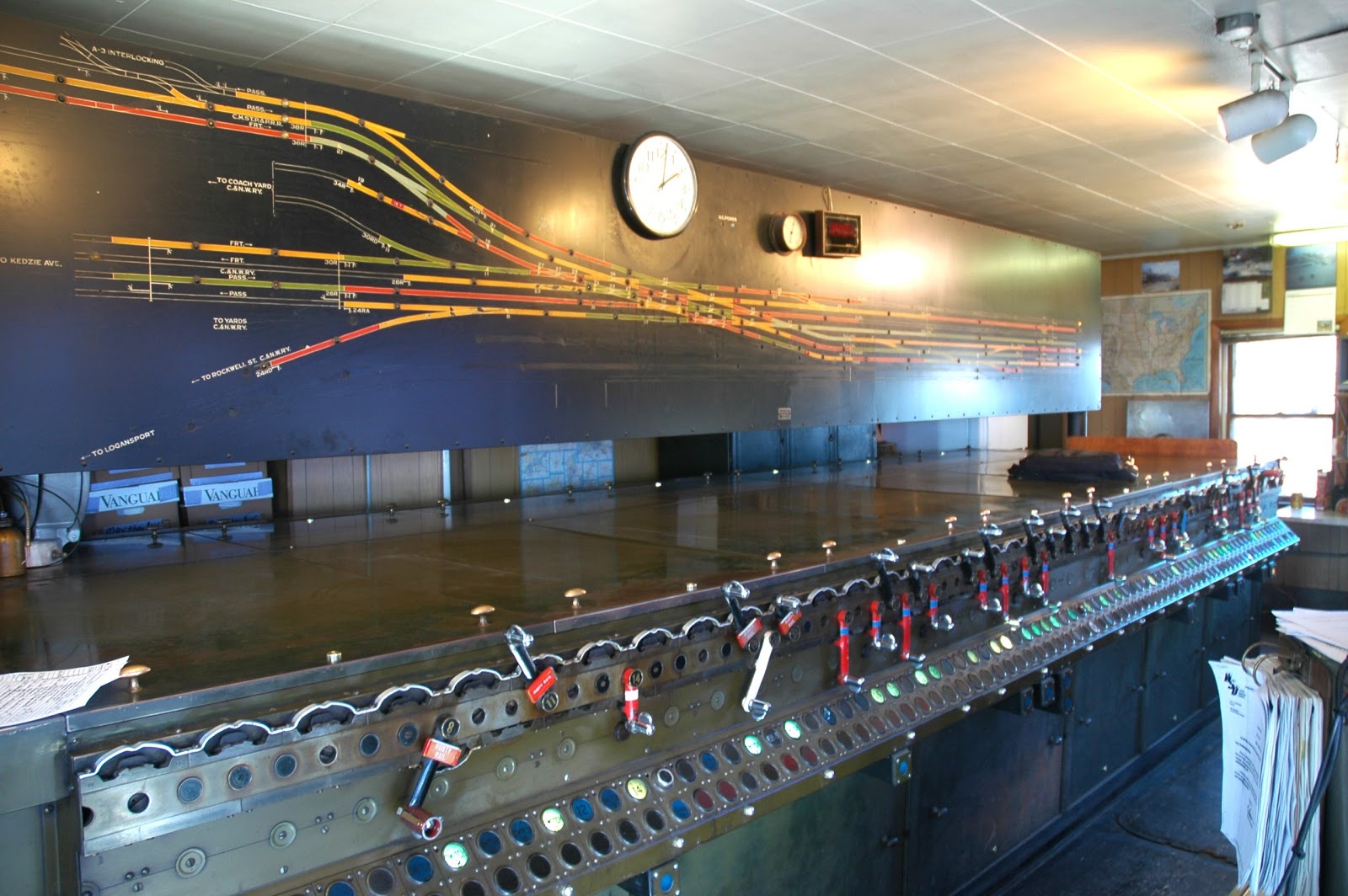
Here we see the venerable US&S Model 14 electro-pneumatic interlocking machine. This is an 83 lever frame that contained 69 active levers in its original configuration with 45 for switches, derails and movable point diamonds, 22 for signals and two release levers that I believe set traffic direction over the crossing. As this tower is following Milwaukee practice the model board is of the more colourful variety with color coded track circuits whereas PRR practice used a white on black scheme with diagram symbols to indicate circuit boundaries. The other Chicago Union Station towers, LAKE and JACKSON streets, also used this multi-colored style. Due to the four color theorem US&S only needed pastel versions of red, green, yellow and blue to represent all the circuits without having any one color touch another of the same type.
While the model board has had all of the removed trackage blacked out, those altering it did a good job blacking out what was gone and re-painting what could not be simply blacked out. Moreover all of the original text labels like C.&N.W. RY and C.M.S.P.&P. RY are still present along with the control city of Logansport on the since removed PRR Panhandle track. BTW, I believe that the model board is in fact fitted with three clocks, one old analogue, one new analogue and one digital.
Builder's plate on the Model 14 machine. Constructed in 1938 this is a fairly late model frame, although production would continue up until the 1950's.
Wider view of the Model 14 machine. You can see that when the tower was renovated it was fitted with a drop ceiling and track lights to illuminate the model board.
Opposite side angle view of the Model 14 power frame. You can see that the lever 83 position is still occupied to control a switch. Of the 69 original active levers about 45 are still in service. Those switches that do not see frequent movements are affixed with Rusty Rail tags which remind the operator that trains working over those switches may not shunt and therefore the operator should verify that the route is clear before making any conflicting actions. Probably due to a noddle incident there is now a sign on the interlocking machine advising people not to put food or drink on top of it.
As would be expected the levers at the far right of the machine handle the position light signals and crossovers in the east end of the interlocking plant. The 77 turnout is set reverse with a blocking device applied which would imply that track #2 east is out of service at that time.
Here in a closeup of levers 29 through 49 we see the standard US&S setup with switch levers pointed upwards and signal levers pointed downwards. Unlike PRR practice, the levers here have also been painted in the normal style with switched black, signals red and lock levers blue. The PRR tended to leave all of its power frame levers painted black.
So we will begin with another quick look outside the tower at the entry stairway which was clearly updated at some point after construction. The PRR tended to prefer internal stairways for its late model interlocking towers, but in this case Milwaukee practice seems to have prevailed with an external stairway and door. As is typical the relay room has been provided with its own entryway. The upper story of the tower has been retrofitted with new siding and new replacement windows, but fortunately seems to have avoided the worst aspects of Tower Window Syndrome with none of them being boarded up.
Here we see the venerable US&S Model 14 electro-pneumatic interlocking machine. This is an 83 lever frame that contained 69 active levers in its original configuration with 45 for switches, derails and movable point diamonds, 22 for signals and two release levers that I believe set traffic direction over the crossing. As this tower is following Milwaukee practice the model board is of the more colourful variety with color coded track circuits whereas PRR practice used a white on black scheme with diagram symbols to indicate circuit boundaries. The other Chicago Union Station towers, LAKE and JACKSON streets, also used this multi-colored style. Due to the four color theorem US&S only needed pastel versions of red, green, yellow and blue to represent all the circuits without having any one color touch another of the same type.
While the model board has had all of the removed trackage blacked out, those altering it did a good job blacking out what was gone and re-painting what could not be simply blacked out. Moreover all of the original text labels like C.&N.W. RY and C.M.S.P.&P. RY are still present along with the control city of Logansport on the since removed PRR Panhandle track. BTW, I believe that the model board is in fact fitted with three clocks, one old analogue, one new analogue and one digital.
Builder's plate on the Model 14 machine. Constructed in 1938 this is a fairly late model frame, although production would continue up until the 1950's.
Wider view of the Model 14 machine. You can see that when the tower was renovated it was fitted with a drop ceiling and track lights to illuminate the model board.
Opposite side angle view of the Model 14 power frame. You can see that the lever 83 position is still occupied to control a switch. Of the 69 original active levers about 45 are still in service. Those switches that do not see frequent movements are affixed with Rusty Rail tags which remind the operator that trains working over those switches may not shunt and therefore the operator should verify that the route is clear before making any conflicting actions. Probably due to a noddle incident there is now a sign on the interlocking machine advising people not to put food or drink on top of it.
As would be expected the levers at the far right of the machine handle the position light signals and crossovers in the east end of the interlocking plant. The 77 turnout is set reverse with a blocking device applied which would imply that track #2 east is out of service at that time.
Here in a closeup of levers 29 through 49 we see the standard US&S setup with switch levers pointed upwards and signal levers pointed downwards. Unlike PRR practice, the levers here have also been painted in the normal style with switched black, signals red and lock levers blue. The PRR tended to leave all of its power frame levers painted black.
Saturday, October 6, 2012
Trading the Uncommon for the Rare
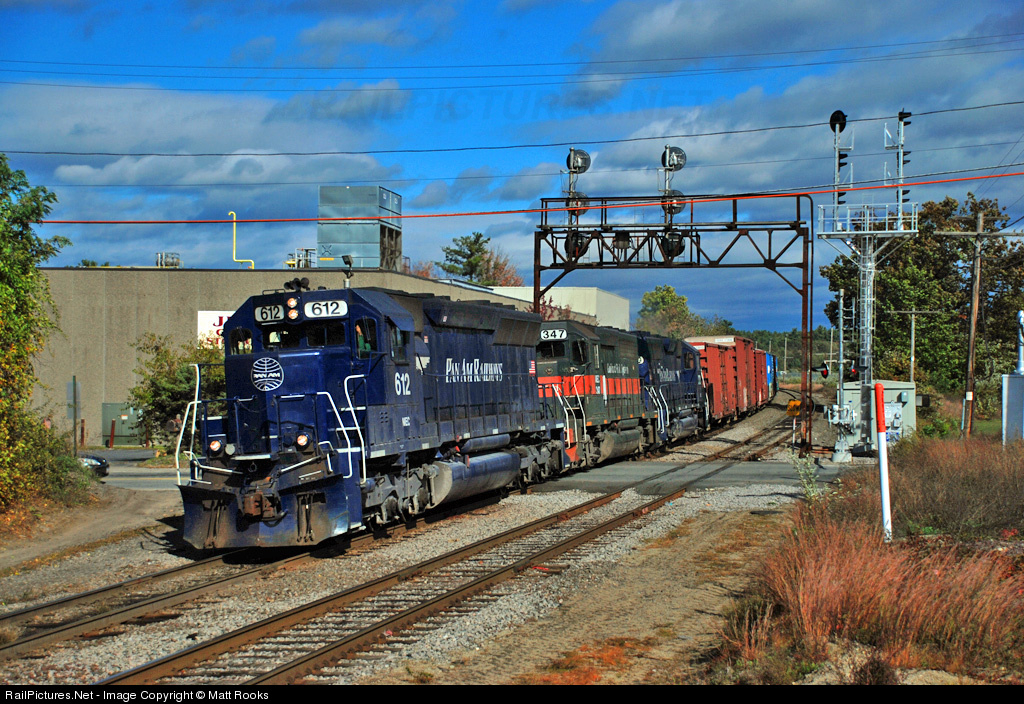
The MTBA owned portion of the Fitchburg Line is being re-signaled and while this will ultimately lead to the closure of Waltham Tower and its increasingly rare US&S Model 14 machine, it has created a rather interesting conundrum for the committed signal fan. The junction of the Fitchburg Line with the Guilford Rail System's freight main line is being reconstructed to accommodate the second track being added to the MTBA portion of the line and of course the relay based interlocking plant with its Boston and Maine era signaling hardware is going to be replaced because what good is Federal money if it can't be used to help out a private for profit corporation. The silver lining is that a pair of rather spartan B&M two track signal bridges equipped with three head US&S searchlight signal masts are being replaced by brand new target type bracket signals, similar to ones installed previously on the Haverhill Line resignaling project.
While the loss of searchlights, especially US&S H-2 units is always tragic, the truth is that the bracket mast is far more endangered on the North American rail network than the searchlight signal is, especially if Unilens and new LED searchlights are included. Today the MBTA is the only outfit that still regularly installed bracket masts after NJT generally dumped them in favor of standard signal bridges. So I guess I'm have to be contented with the silver lining of getting a brand new instance of something that has become increasingly rare.
Subscribe to:
Posts (Atom)