
Monday, January 26, 2015
Exactly What It Says on the Tin
Here is one resignaled interlocking I really can't complain about. Truth in advertising.


Sunday, January 18, 2015
PHOTOS: Port Road Trips - MIDWAY to PILOT
Well it's been a while since my last installment of Port Road Trips, but I was holding off in order to grab one last set of updated photos for the MIDWAY to PILOT section of the board road. We last left off at the end of the long signaled siding between CP-McCALLS and CP-MIDWAY and this time we will cover both CP-MIDWAY itself and the two intermediate signals between there and the west end of the Pilot siding. For a bit of reference check out the applicable 1997 Conrail interlocking chart.

Now the 2009/2010 NS re-signaling project had marched down to cover both the harbor and Holtwood sidings, but while both CP-McCALLS and CP-HOLTWOOD had been re-signaled, for some reason CP-MIDWAY at the extreme south end of the signaled siding was given a minor refurbishment with the PRR PL signals being left intact.
The interlocking is located in an extremely remote area with no road access. It can only be reached via a hike from Susquehanna State park or by boat. Here we see the eastbound signal gantry at CP-MIDWAY built out of a two track catenary support. Both signals were controlled from Lever 234 in COLA tower.

The signals have both been repainted, although one can tell the underlying surface was not properly treated and the new paint is already starting to flake. One interesting feature is the Stop and Proceed marker on the main track 234L signal, which NS had removed at a number of similar interlockings during the refurbishment drive. The 234LA siding signal features an economy style lower head lacking a Restricting \, instead relying on the Stop and Proceed lamp in the center.

The old power supply is located between the eastbound signal gantry and the relay hut. As I have mentioned before the 6.6kv 100Hz signal power supply was replaced in favor of low voltage taps to the nearest utility pole. Below the power supply platform (still holding its original transformer) are the decommissioned CTC/telecom pole line and the bundle of signal cables running to the eastbound gantry.

The CP-MIDWAY relay hut has also gotten a nice new coat of cooling silver paint in addition to a satellite dish to replace the dying pole line.

The 504B code line that was replaced during the latest refurbishment was of the PVC wrapped telecom variety that has been in use since the 1960's. The 2011 catenary pole removal process saw much of this cable get scrapped as well, but a segment survives between HOLDWOOD and MIDWAY, for slide fence and block state transmission. In addition to CTC codes the line also carries telecom circuits for the signal post telephones that were common before the use of radio relay networks. Here we can also see the still used cloth wrapped interlocking cable bundle originating from the relay hut for its run to the eastbound gantry.
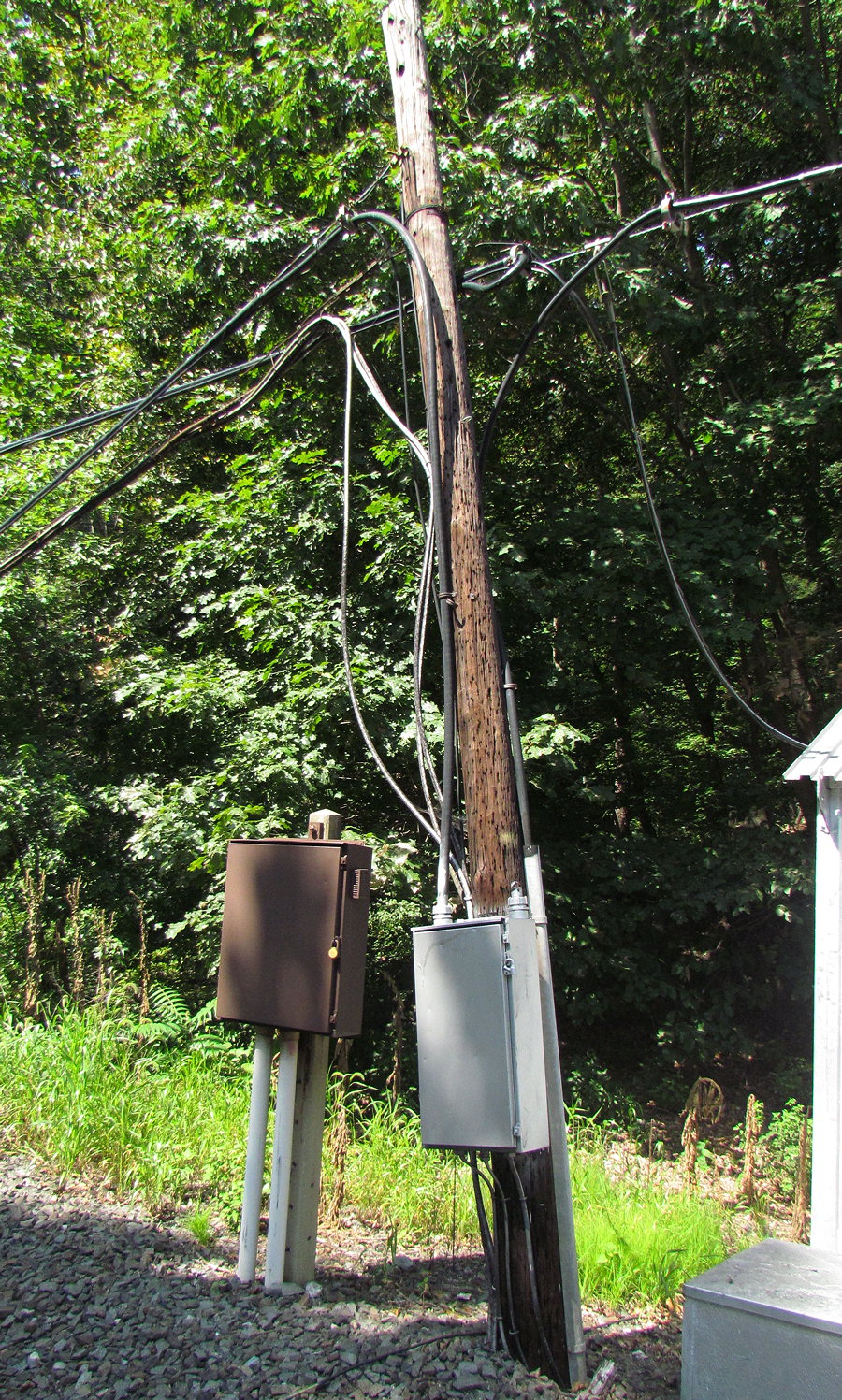
The relay hut is directly adjacent to the lever 233 switch.

The M23 electric point machine and the switch itself was also refurbished. Turnout speed is Medium (30mph).

Opposite side of the MIDWAY relay hut showing the service door, battery box and auxiliary relay cabinets.


The interlocking is located in an extremely remote area with no road access. It can only be reached via a hike from Susquehanna State park or by boat. Here we see the eastbound signal gantry at CP-MIDWAY built out of a two track catenary support. Both signals were controlled from Lever 234 in COLA tower.
The signals have both been repainted, although one can tell the underlying surface was not properly treated and the new paint is already starting to flake. One interesting feature is the Stop and Proceed marker on the main track 234L signal, which NS had removed at a number of similar interlockings during the refurbishment drive. The 234LA siding signal features an economy style lower head lacking a Restricting \, instead relying on the Stop and Proceed lamp in the center.


The old power supply is located between the eastbound signal gantry and the relay hut. As I have mentioned before the 6.6kv 100Hz signal power supply was replaced in favor of low voltage taps to the nearest utility pole. Below the power supply platform (still holding its original transformer) are the decommissioned CTC/telecom pole line and the bundle of signal cables running to the eastbound gantry.


The CP-MIDWAY relay hut has also gotten a nice new coat of cooling silver paint in addition to a satellite dish to replace the dying pole line.

The 504B code line that was replaced during the latest refurbishment was of the PVC wrapped telecom variety that has been in use since the 1960's. The 2011 catenary pole removal process saw much of this cable get scrapped as well, but a segment survives between HOLDWOOD and MIDWAY, for slide fence and block state transmission. In addition to CTC codes the line also carries telecom circuits for the signal post telephones that were common before the use of radio relay networks. Here we can also see the still used cloth wrapped interlocking cable bundle originating from the relay hut for its run to the eastbound gantry.


The relay hut is directly adjacent to the lever 233 switch.
The M23 electric point machine and the switch itself was also refurbished. Turnout speed is Medium (30mph).
Opposite side of the MIDWAY relay hut showing the service door, battery box and auxiliary relay cabinets.
Sunday, January 11, 2015
Bonus PHOTOS: Amtrak HARRISON ST Tower
So a few weeks ago I talked about Amtrak LAKE ST tower at Chicago Union Station and how it served as the control center for almost the entire CUS complex (excluding 21ST ST). Well before the large US&S NX panel was moved in, control of the South Side was handled at HARRISON ST tower. The tower was located on a pedestal above the terminal fan adjacent to the mail and express terminal just before the Post Office overbuild began. While located near the station end of the interlocking, the big Model 14 machine controlled everything from Roosevelt Ave to the bumper blocks. In the mid-1990's the old Lumber Street hand operated switching plant near the CBQ wye was interlocked with control being placed at HARRISON ST.

Hemmed in by buildings, the best view of HARRISON ST could be obtained from the Polk Street bridge as seen below.

In the mid-1990's the old post office building was replaced by the new Cardiss Collins Processing & Distribution Center located one block to the south. Here we can see the new USPS center seen from Roosevelt Ave. It's the thing that looks like a parking deck. The old post office can be seen behind it.

If you look at the first image you night notice the lower the tower is located adjacent to the terminal ladder tracks, but here that part of the interlocking has been covered over by the new post office.

Oh well, towers get demolished all the time when something needs to be built over. After all, that is the same fate that befell LAKE ST after it had closed. But wait, the new post office was opened around 1995 and the tower was closed in 1999. Those dates don't seem to add up.
Actually, what happened was that the Cardiss Collins Processing & Distribution Center was built arround HARRISON ST interlocking tower. In fact even though it is trying hard not to be seen, HARRISON ST was right where it always has been and I have some photos taken inside of it!
First up we see the original model board, as seen above in the black and white photo. It is painted in the same style as the model board in LAKE ST. As you can see both the terminal fan and the quad ladders north of Roosevelt are controlled from the interlocking machine. Tracks are numbered zero through...whatever, from west to east.
 Which is a sister to the machine in LAKE ST tower. Evidence from the 1999 interlocking cutover can still be seen as the colored levers were spray painted white as they were taken out of service. The final active levers appear to have been spared this treatment. The whole setup is reminiscent of what happened with Tower A in New York Penn Station after it was closed in 1994. Note how all the lever status lamps have been cannibalized for their bulbs.

In this final pic we see the interlocking machine and model board together. At this end of the machine some care was taken not to paint over the lever numbers and we can see that the machine contained at least 114. I have never found an interlocking diagram of either this or LAKE ST in their "tower" days so you'll have to go by what can be gathered from the model board. Note one of the 1927 vintage lamp diffusers laying on the interlocking machine.

It is interesting to think that just outside those white painted windows on all four sides are the exterrior walls of the new Post Office building. Because of its location tucked all away above busy CUS tracks and below the Post Office I expect the zombie remains of HARRISON ST to linger on for years to come. It's a shame the same think couldn't have been done with LAKE ST.

Hemmed in by buildings, the best view of HARRISON ST could be obtained from the Polk Street bridge as seen below.
In the mid-1990's the old post office building was replaced by the new Cardiss Collins Processing & Distribution Center located one block to the south. Here we can see the new USPS center seen from Roosevelt Ave. It's the thing that looks like a parking deck. The old post office can be seen behind it.
If you look at the first image you night notice the lower the tower is located adjacent to the terminal ladder tracks, but here that part of the interlocking has been covered over by the new post office.
Oh well, towers get demolished all the time when something needs to be built over. After all, that is the same fate that befell LAKE ST after it had closed. But wait, the new post office was opened around 1995 and the tower was closed in 1999. Those dates don't seem to add up.
Actually, what happened was that the Cardiss Collins Processing & Distribution Center was built arround HARRISON ST interlocking tower. In fact even though it is trying hard not to be seen, HARRISON ST was right where it always has been and I have some photos taken inside of it!
First up we see the original model board, as seen above in the black and white photo. It is painted in the same style as the model board in LAKE ST. As you can see both the terminal fan and the quad ladders north of Roosevelt are controlled from the interlocking machine. Tracks are numbered zero through...whatever, from west to east.
In this final pic we see the interlocking machine and model board together. At this end of the machine some care was taken not to paint over the lever numbers and we can see that the machine contained at least 114. I have never found an interlocking diagram of either this or LAKE ST in their "tower" days so you'll have to go by what can be gathered from the model board. Note one of the 1927 vintage lamp diffusers laying on the interlocking machine.
It is interesting to think that just outside those white painted windows on all four sides are the exterrior walls of the new Post Office building. Because of its location tucked all away above busy CUS tracks and below the Post Office I expect the zombie remains of HARRISON ST to linger on for years to come. It's a shame the same think couldn't have been done with LAKE ST.
Wednesday, January 7, 2015
Updates!
I made some minor updates to two articles. First I added a pair of new photos to the page on Conrail's Virtual Headed Dwarfs, one of which featuring a 5-lamp virtual headed high mast signal on the MILW main line in Wisconsin and the second a unique 2.5-lamp dwarf in Canada.
Second I added a cab photo of a new Denver Silverliner V car showing its ACSES capable cab signal display to the Know Your Cab Signal Displays page.
Enjoy!
Second I added a cab photo of a new Denver Silverliner V car showing its ACSES capable cab signal display to the Know Your Cab Signal Displays page.
Enjoy!
Wednesday, December 31, 2014
Year End News
Well 2014 has come to an end so let's stuff in one last news update with things I became aware of over the holiday break.
First up in another case of "thank god I got out there" NS did indeed replace the classic and easily accessible N&W CPLs at Shenandoah Junction. The opposite end of the siding had seen a new interlocking installed in a lengthening project, but for a while it seemed as if the Junction would be safe. Well no dice and another railfan hot spot bites the dust. Thank God I got out there for a full survey in March 2014. The new Shenandoah Junction has been moved slightly to exclude the grade crossing from interlocking limits.

The Indiana and Ohio regional line has been a bastion of old PRR PL signaling when the Class 1's have been ripping out everything under the sun. Well if one assumes that such lines do indeed lack the money for new signals you are correct. However they also lack the money for any signals what so ever and apparently the I&O is abandoning its CTC signaling in 2015. Click the image for more info.

Sticking with NS it appears that their Southern re-signaling project has reached Atlanta. Why would you give Southern caltilevers OSHA upgrades if you are just going to scrap it?

Keeping with the theme of railroad wastefulness, we return to Kennesaw, Georgia where new Darth Vaders have replaced some SCL elephant ears on a modern type cantilever. The signaling has not been completely cut over as the new heads are still turned. Would it really have been harder to retrofit the old hardware?

Anyway, that's it for now. Sorry to end 2014 on a down note, but I'm expecting more bad news in 2015 as well. Oh well, Happy New Year!
First up in another case of "thank god I got out there" NS did indeed replace the classic and easily accessible N&W CPLs at Shenandoah Junction. The opposite end of the siding had seen a new interlocking installed in a lengthening project, but for a while it seemed as if the Junction would be safe. Well no dice and another railfan hot spot bites the dust. Thank God I got out there for a full survey in March 2014. The new Shenandoah Junction has been moved slightly to exclude the grade crossing from interlocking limits.
The Indiana and Ohio regional line has been a bastion of old PRR PL signaling when the Class 1's have been ripping out everything under the sun. Well if one assumes that such lines do indeed lack the money for new signals you are correct. However they also lack the money for any signals what so ever and apparently the I&O is abandoning its CTC signaling in 2015. Click the image for more info.
Sticking with NS it appears that their Southern re-signaling project has reached Atlanta. Why would you give Southern caltilevers OSHA upgrades if you are just going to scrap it?
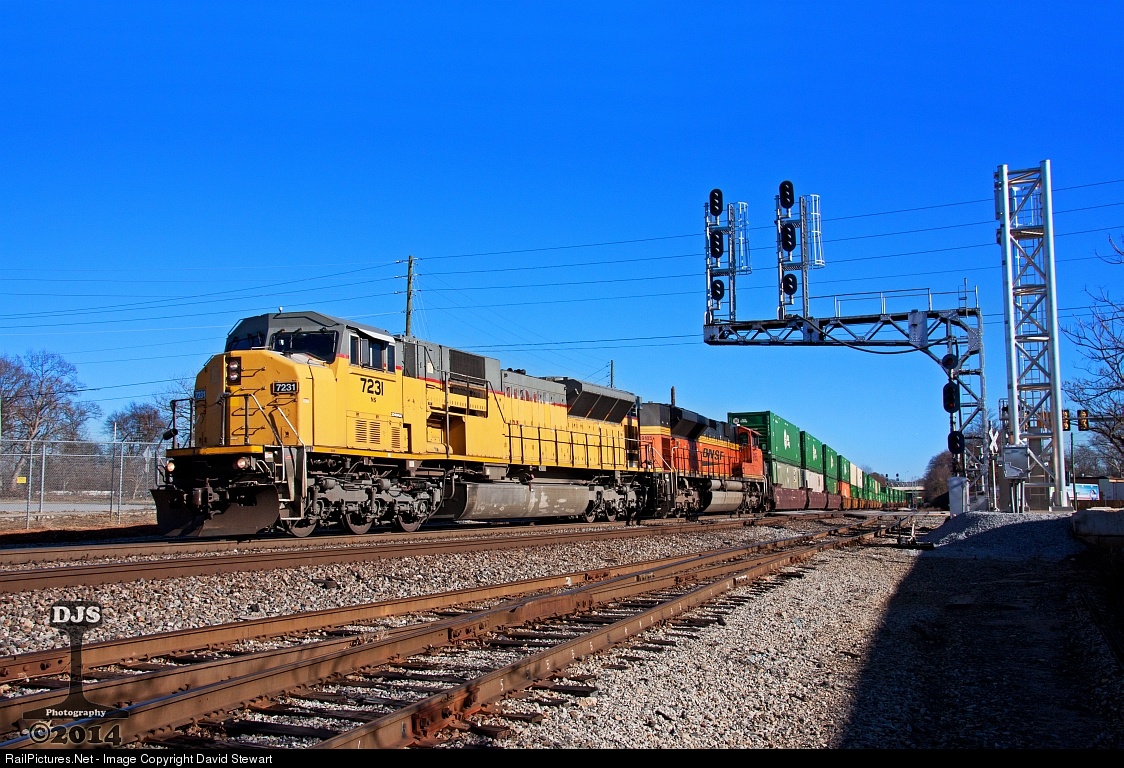
Keeping with the theme of railroad wastefulness, we return to Kennesaw, Georgia where new Darth Vaders have replaced some SCL elephant ears on a modern type cantilever. The signaling has not been completely cut over as the new heads are still turned. Would it really have been harder to retrofit the old hardware?
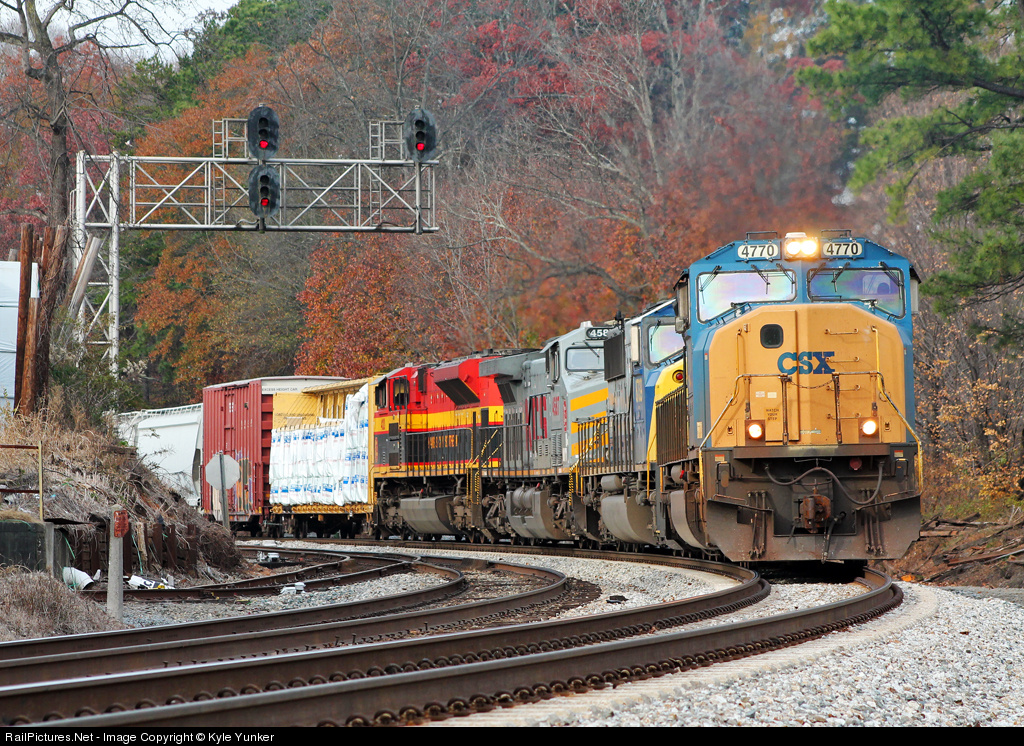
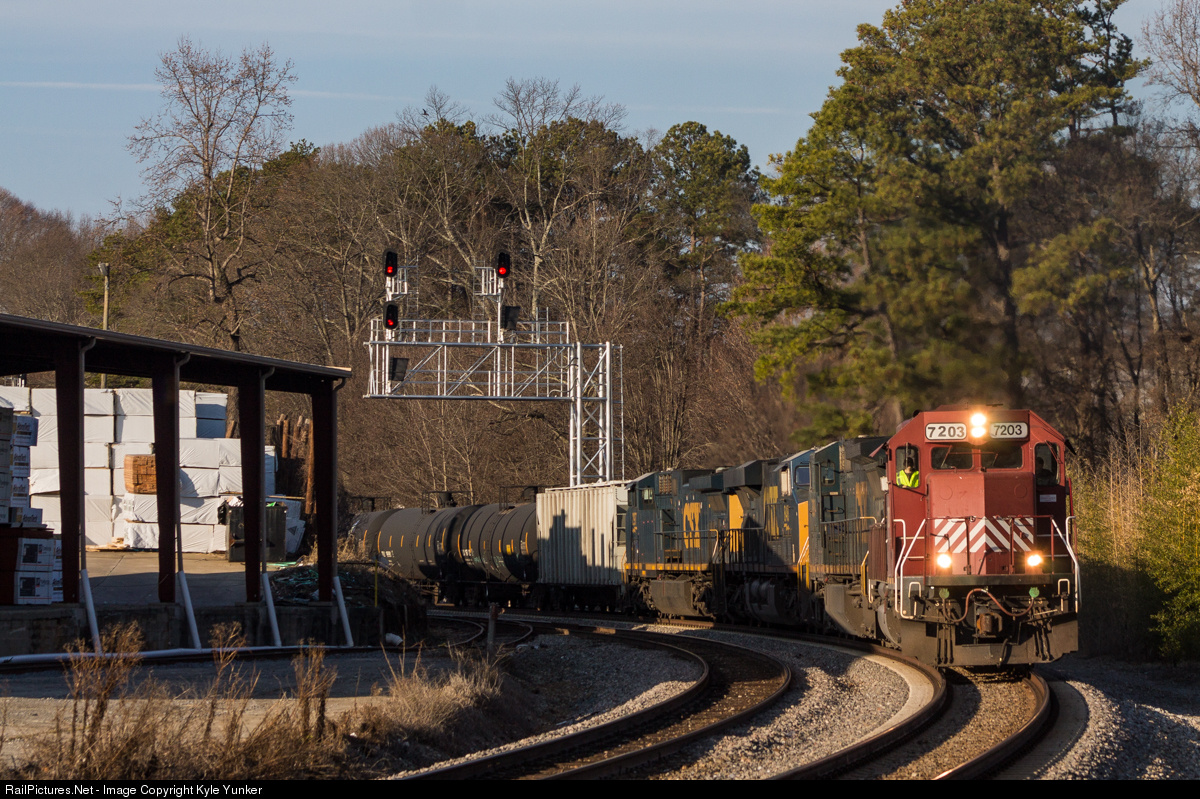
Anyway, that's it for now. Sorry to end 2014 on a down note, but I'm expecting more bad news in 2015 as well. Oh well, Happy New Year!
Tuesday, December 30, 2014
North American Signaling Jargon
Over the years I have come across many interesting terms and expressions related to railroad signaling and railroad signaling control and I thought it might be nice to share a few of them with all of you. Now of course the North American rail scene is large and varied so many of these terms might only see use only in certain areas or with certain railroads. The PRR is one such road with a lot of its own unique terminology and since I spent a lot of time in PRR towers more than a few of the terms will come from there, however this isn't to say that other terms of either incorrect are aren't used elsewhere.
Hanger - This an alternate term of a Call On signal on the PRR. The Call On condition would be represented by either a Restricting \ on the lower head or a single Stop and Proceed marker below the main head. In both cases the displayed signal appeared to hang below the --- on the upper head.
The Goat - The "Assistant to the Train Director" was known as "The Goat" in those PRR towers large enough to have that position. Note that an Assistant to the Train Director was not the same as an "Assistant Train Director". I found this time in a 1948 book on PRR operations and later heard an Amtrak operator mention that the third man in ZOO tower who was in charge of all NEC movements (before those parts of ZOO were spun off ~1999) was called "The Goat", but he didn't know why. Well now you do.
Pot - PRR position light dwarf signal.

On the Light - A train is inside the approach block as shown on the tower model board. In PRR cab signal territory most interlockings had approach locking which required time to be run only when a train was actually approaching the interlocking.
Stick and Non-Stick Signals - These are alternate terms of controlled and semi-automatic signals. "Stick" signals were those which would drop and stay at Stop after a train movement and stay that way even if the lever was not reversed. Non-Stick, aka "semi-automatic" signals would have the signal act automatically as long as the lever was left reversed. I have encountered this term a few places, but it was standard in New Haven railroad operations.
Vertical - Slang term for a PRR position light Clear signal indication used by Long Island Rail Road crews,

Stacking - A feature of modern CTC dispatch systems that allow dispatchers to queue up routes at interlockings in an ad-hoc fashion.
Double Barreling - Running two parallel movements in the same direction on a double track main line.
Giving 241 - Reference to NORAC Rule 241 for giving permission past a stop signal.
Paperwork - Train orders, track authority and mandatory directives of all types that have to be copied down or received on paper.
Dark Territory - Anything that doesn't show up on the dispatchers screen, signaled or otherwise.
The Railroad - A point running from one controlled signal to the next. is "given" to the engineer when it is time to get to work.

That's all I can think of right now. I might occasionally return to this post to add more. Feel free to make your own suggestions in the comments.
Hanger - This an alternate term of a Call On signal on the PRR. The Call On condition would be represented by either a Restricting \ on the lower head or a single Stop and Proceed marker below the main head. In both cases the displayed signal appeared to hang below the --- on the upper head.
 |
| The literal implementation |
Pot - PRR position light dwarf signal.
On the Light - A train is inside the approach block as shown on the tower model board. In PRR cab signal territory most interlockings had approach locking which required time to be run only when a train was actually approaching the interlocking.
Stick and Non-Stick Signals - These are alternate terms of controlled and semi-automatic signals. "Stick" signals were those which would drop and stay at Stop after a train movement and stay that way even if the lever was not reversed. Non-Stick, aka "semi-automatic" signals would have the signal act automatically as long as the lever was left reversed. I have encountered this term a few places, but it was standard in New Haven railroad operations.
Vertical - Slang term for a PRR position light Clear signal indication used by Long Island Rail Road crews,
Stacking - A feature of modern CTC dispatch systems that allow dispatchers to queue up routes at interlockings in an ad-hoc fashion.
Double Barreling - Running two parallel movements in the same direction on a double track main line.
Giving 241 - Reference to NORAC Rule 241 for giving permission past a stop signal.
Paperwork - Train orders, track authority and mandatory directives of all types that have to be copied down or received on paper.
Dark Territory - Anything that doesn't show up on the dispatchers screen, signaled or otherwise.
The Railroad - A point running from one controlled signal to the next. is "given" to the engineer when it is time to get to work.
That's all I can think of right now. I might occasionally return to this post to add more. Feel free to make your own suggestions in the comments.
Wednesday, December 24, 2014
PHOTOS: Amtrak LAKE ST Tower
It's been a while, but it is finally time to conclude my METRA Tower series by looking at a tower that wasn't METRA's at all, but played a large role in METRA operations. This would be Amtrak's LAKE ST tower, situated (until recently) at the north end of Chicago's Union Station. The tower was built by the same PRR/MILW/CBQ consortium that built the entire Chicago Union Station complex in the mid-1920's. Despite its prominence I have not yet been able to locate any period interlocking diagrams or other information that could better inform my talk, but since when has that stopped me before ;-)

Built during the roaring 20's, LAKE ST exhibited all the opulence of the era with a tile roof, copper gutters and all brick construction. During the Amtrak era is was actually upgraded with modern picture windows and ample exterior lighting. LAKE ST was closed in 2005 after 80 years of service and then demolished in 2013 due to an overbuild project to cover the tracks with either condos or a park. Until then it was a fixture of the north side railfan scene, viewable from the adjacent Lake Street bridge and easy to work into all sorts of photo angles. This may seem like the typical story of a classic big city tower, but LAKE ST was something special and one tip off is the windows.
The south side of Chicago Union Station is far more complex and sees far more traffic. With road bridges providing an unobstructed view of the action it is what people think of when they think about long distance passenger rail in Chicago. That part of Chicago Union Station was controlled by HARRISON ST tower, an elevated affair that was eventually surrounded by the new post office building in the mid-1990s. At the time Amtrak also embarked on a large scale re-signaling project on the south side replacing the old Model 14 machine in Harrison Street with modern relay logic and the PRR position light signals with B&O style CPL dwarfs and high color lights.
What main people failed to realize was that the north side interlocking controlled by LAKE ST was left completely untouched and moreover, control of the south side plant was moved to a large NX panel in LAKE ST tower. Thus LAKE ST wasn't just a tower, but was the control facility for the entire Chicago Union Station complex. Thus, nice new lighting and big picture windows.

In 2005 time finally caught up with LAKE ST as a $45 million, 2-year project to re-signal the north end finally came to fruition. This saw the replacement of the PRR PL dwarfs with LED searchlights, the implementation of a new CANAL ST interlocking to replace what had been a number of hand throw crossovers north of LAKE ST interlocking proper and the consolidation of all Chicago signaling control into the CUS office complex. This included the closure of Amtrak's 21ST interlocking at the southern gateway to the CUS complex as well. The interior photos I have of LAKE ST were taken just before and then a few years after its closure.

Here we see a post closure photo the 95-lever US&S Model 14 interlocking machine originally installed in 1925. The large number of white painted spare" levers is due to the rolling closure where successive parts of the interlocking plans were cut into the new vital logic. At the time of its closure the LAKE ST Model 14 was down to 9 signal levers, 4 switch levers and one traffic lever.

The model board shows the layout as it originally was with 11 station tracks that fanned out from a three track main line. 9 of the tracks are stub end with 2 additional through station tracks and 1 bypass track. Station tracks are given odd numbers as even numbered tracks are on the south side of the station. The model board is 4-colored in accordance with Milwaukee Road practice and uses green lamps for track occupancy. Displayed signals are not shown on the model board. Alterations have been made with a combination of black tape and hand painted lines. On the through tracks a number of signals that are controlled from the NX panel are indicated with the N/S suffix opposed to L/R. A quick count indicates 7 doubleslip switches, 11 single turnouts and 5 crossovers.

In this opposite view of the model board we can see the entrance to the interlocking at the grade crossing with Canal St. Most of LAKE ST interlocking is located underground a block or two north of the tower itself. The tower only had direct sight of a few hand throw crossovers near Canal St and the outer crossovers between Lake St and Randolph St. One of the reasons for the rolling cutover was because the interlocking was not only resignaled, but also reconfigured. Compare the model board above with a facing point ladder track, stub end track 5 and a non-circuited track passing close to the tower to the current layout below.

Here we see a parallel trailing point ladders, one of which employs a doubleslip, the other a scissors crossover between the two center tracks. The non-circuited track has been removed leaving the single station bypass track.For a more complete view of the current interlocking layout please refer to this computerized model board of the Chicago Union Station area.

Back inside the tower we see an odd blank patch on the interlocking machine where lever spaces 1 through 32 had been removed. This does not appear to have been part of the re-signaling effort given the age and condition of the metal. Looking at the model board I suspect there was some spare capacity at the lower end of the machine in addition to some of the northern part of the plant being made redundant through hand operated switches. Without lever positions on the frame I am unsure how the 16L, 18L, 20L, 24R, 26R and 28R holdout signals at Canal street were controlled.


Built during the roaring 20's, LAKE ST exhibited all the opulence of the era with a tile roof, copper gutters and all brick construction. During the Amtrak era is was actually upgraded with modern picture windows and ample exterior lighting. LAKE ST was closed in 2005 after 80 years of service and then demolished in 2013 due to an overbuild project to cover the tracks with either condos or a park. Until then it was a fixture of the north side railfan scene, viewable from the adjacent Lake Street bridge and easy to work into all sorts of photo angles. This may seem like the typical story of a classic big city tower, but LAKE ST was something special and one tip off is the windows.
 |
| Like many Chicago area towers, LAKE ST was equipped with an emergency exit. |
What main people failed to realize was that the north side interlocking controlled by LAKE ST was left completely untouched and moreover, control of the south side plant was moved to a large NX panel in LAKE ST tower. Thus LAKE ST wasn't just a tower, but was the control facility for the entire Chicago Union Station complex. Thus, nice new lighting and big picture windows.
In 2005 time finally caught up with LAKE ST as a $45 million, 2-year project to re-signal the north end finally came to fruition. This saw the replacement of the PRR PL dwarfs with LED searchlights, the implementation of a new CANAL ST interlocking to replace what had been a number of hand throw crossovers north of LAKE ST interlocking proper and the consolidation of all Chicago signaling control into the CUS office complex. This included the closure of Amtrak's 21ST interlocking at the southern gateway to the CUS complex as well. The interior photos I have of LAKE ST were taken just before and then a few years after its closure.
Here we see a post closure photo the 95-lever US&S Model 14 interlocking machine originally installed in 1925. The large number of white painted spare" levers is due to the rolling closure where successive parts of the interlocking plans were cut into the new vital logic. At the time of its closure the LAKE ST Model 14 was down to 9 signal levers, 4 switch levers and one traffic lever.
The model board shows the layout as it originally was with 11 station tracks that fanned out from a three track main line. 9 of the tracks are stub end with 2 additional through station tracks and 1 bypass track. Station tracks are given odd numbers as even numbered tracks are on the south side of the station. The model board is 4-colored in accordance with Milwaukee Road practice and uses green lamps for track occupancy. Displayed signals are not shown on the model board. Alterations have been made with a combination of black tape and hand painted lines. On the through tracks a number of signals that are controlled from the NX panel are indicated with the N/S suffix opposed to L/R. A quick count indicates 7 doubleslip switches, 11 single turnouts and 5 crossovers.
In this opposite view of the model board we can see the entrance to the interlocking at the grade crossing with Canal St. Most of LAKE ST interlocking is located underground a block or two north of the tower itself. The tower only had direct sight of a few hand throw crossovers near Canal St and the outer crossovers between Lake St and Randolph St. One of the reasons for the rolling cutover was because the interlocking was not only resignaled, but also reconfigured. Compare the model board above with a facing point ladder track, stub end track 5 and a non-circuited track passing close to the tower to the current layout below.
Here we see a parallel trailing point ladders, one of which employs a doubleslip, the other a scissors crossover between the two center tracks. The non-circuited track has been removed leaving the single station bypass track.For a more complete view of the current interlocking layout please refer to this computerized model board of the Chicago Union Station area.

Back inside the tower we see an odd blank patch on the interlocking machine where lever spaces 1 through 32 had been removed. This does not appear to have been part of the re-signaling effort given the age and condition of the metal. Looking at the model board I suspect there was some spare capacity at the lower end of the machine in addition to some of the northern part of the plant being made redundant through hand operated switches. Without lever positions on the frame I am unsure how the 16L, 18L, 20L, 24R, 26R and 28R holdout signals at Canal street were controlled.
Closeup view of the levers looking down the frame towards the emergency exit door. The bay window is to the left of the photo. Last active lever is 94, but the frame has space for 95.
Another view of the levers this time showing the mix of 1920's and modern track lighting fixtures.
Moving back in time to 2004 we see the tower towards the end of the re-signaling project. The Model 14 machine is still in service, but most functions have been transferred to a pair of NX panels sitting over the blank section of the frame. The remaining part of the interlocking still controlled by the Model 14 is covered over on the panels.
Subscribe to:
Posts (Atom)