Search This Blog

Wednesday, July 13, 2016

CSX Philly Sub Re-Signaling Reaches Its End

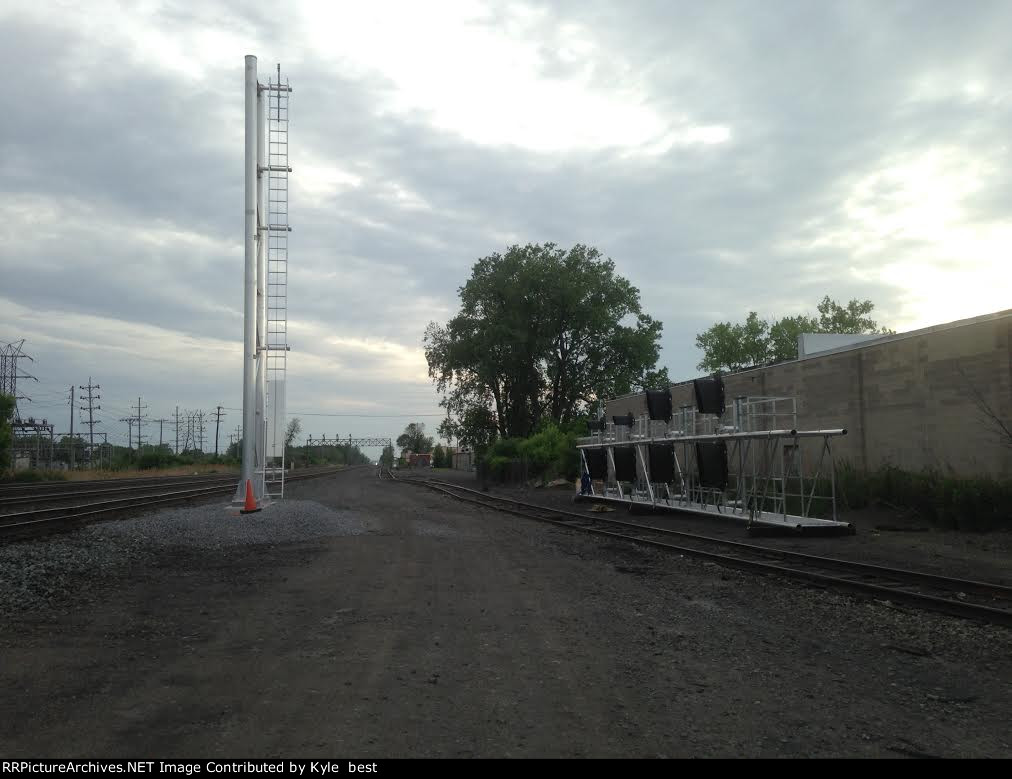
Since 2012, CSX has been slowly re-re-signaling the Philly Sub because it was...different?  You see much of the line between Baltimore and Philadelphia had already been re-signaled around 2000, replacing the pole line and the logic at more than a few of the interlockings.  Starting at the west end, by 2014 the project had reached Wilmington and in 2015 it ploughed through the Darby siding and all the way to the 58TH ST crossover.  Well in 2016 it looks like they are tackling the final obstacle, RG tower and the Philadelphia terminal area from the movable bridge through VINE and LOCUST interlockings opposite 30th St Station.


Now I guess we should be thankful for the time we got because back around 2010 I got a bit of a scare as new signal mast footings appeared around both VINE and LOCUST, but fortunately they were for a crossing quiet zone project in conjunction with a river-walk bike path project.

Fortunately in 2010 this turned out to be a mast for grade crossing indicators.
Because of the scare I actually did a survey run of VINE and LOCUST back in 2010 and later wrote it up for this blog.  However that was before I got my super-zoom camera so I might give it another go later on in the year to capture some of the fine detail I might have missed. 


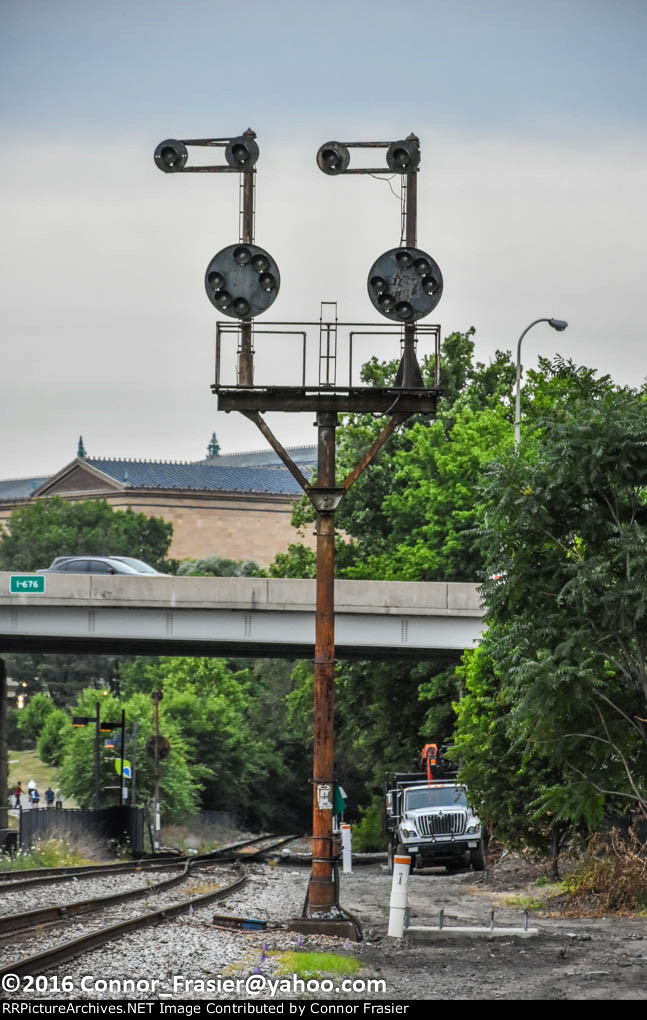
I know one thing for sure.  That bracket mast at VINE caught my attention driving across the nearby expressway bridge before I even knew what a B&O CPL was.  Without a reference to the orbital system, I had no idea what those wacky lights above the signal were for! 

Tuesday, July 5, 2016

Reading and Northern News

Wow, I sure don't get to pose a positive news piece very often.  For some time now I have noticed that the Reading and Northern seemed to have been rather wildly bucking the Darth Vader trend and instead opted to purchase vintage signals on the used market.  The first of these were searchlights that appeared at a restored Mahanoy Jct interlocking.  Next I noticed that they had restored an old LVRR (or CNJ) cantilever at the new CP-COAL interlocking north of Mach Chunk. This was clearly part of a pattern and I just had my suspicions confirmed by one of my followers who spotted some additional R&N vintage signal work on an RDC head end video shot in spring 2016.


North of Tamaqua, Pa.  New Westbound Searchlight ABS located adjacent to the Tuscarora Park Road (Route 1015) Grade Crossing.  This approach lit signal governs westbound movements thru Tamaqua Tunnel about a mile in rear .  Note the 2 opposite side brackets for future signal heads.   I assume this will grow to include a 2 headed distant for eastbound movements thru to a new Tamaqua controlled siding that is in the works.  Sort of odd having ABS territory just sort of start like this, but hey, I'm not complaining.


Near the Orchard Road Grade Crossing in Barnesville, PA we see a pair of split ABS searchlight masts standing between the Tamaqua Tunnel and Mahanoy Jct.  This shows the extent of the current Mahanoy Jct signaling island. 


Further up the line the old Catawissa branch, the R&N is restoring HAUCKS interlocking.  Signals will be of the GRS G-head tri-light variety.


Here you can see the new eastbound distant signal going in  near Greenwood Lake along former CNJ trackage close to Lake Drive Underpass.


Finally on the former Reading Main Line south of Port Clinton, PA grant money is paying for a new controlled siding between Mohrsville and Dauberville.  The ends are non-interlocked now, but vintage signals may appear in the near future :-)


Well that's the news from Reading Country.  Thanks to Bill Tarantino for the update!

Tuesday, June 28, 2016

The Trackside Photographer

Just wanted to plug a new website/blog that's posting weekly railroad photo essays on the stuff that one typically finds on and around the tracks.  This includes stuff like stations, signs, tunnels, towers and signals.  I was invited to contribute and my first essay, "The Ghosts of Winslow Junction" will be appearing in a few days.  The content is shorter form than what I typically post here so look for me to circle back at some point to give the Winslow Jct essay the full Position Light treatment.  There was a lot of neat stuff abandoned in place when the State closed down the old P-RSL passenger trains to the shore.   Anyway check out The Trackside Photographer and stick it in your feeds or favorites.  It looks to be a real treat.


Monday, June 20, 2016

Sunset Limited Trip Report - Take II

Sorry for th repetition, but as I explained in my 2015 Amtrak Cross-Country trip report, Dan Akroyd's private car was attached to the back of Amtrak's Sunset Limited ruining my efforts at surveying the route.  This year I found significantly better luck and was even treated to a rare mileage detour outside of Houston.  Also included in this report are various things I found in San Diego and the Pacific Surfliner route. 


So I covered the San Diego Trolley's Green and Orange lines and to my delight I confirmed that the original Orange Line trunk was populated by US&S N3 Elephant Ear ABS signals


On the Surfliner route the ATS is still in service, but more and more of the target signals are being replaced with traffic lights as improvements are made to the line (new sidings, crossovers, etc).


At LAUPT, the Safetrain UniLens signals have been phased out.  The two-head variety have been replaced with LED searchlights of the type seen at Chicago and Albany and most single head ones being retrofitted with a single red LED light that can display Stop and *R* Restricting.


On the Sunset route SP target color lights are still in place on areas that have not been upgraded, so that means the new double track main line in New Mexico is largely devoid of them.  Also, there is a surviving SP cantilever mast with modern signals located just east of Tuscon.


I was looking forward to taking some better photos of TOWER 169 in El Paso, but to my dismay I discovered that it had been demolished :-( 


The detour involved traveling down the BNSF Galveston Sub to Alvin and unfortunately the 80's vintage searchlights were undergoing replacement.  Heading back into Houston on the Houston West Belt Sub there were a number of NYC style G-heads north of the yard complexes.


The searchlights and oddball signals were still in service in the Beaumont area.


And the searchlights were still in place at the Drawbridge and diamond in Lake St. Charles.


Finally East and West Bridge Jct towers are still hard at work talking trains over the Huey C. Long Bridge,


Monday, June 13, 2016

Waste, Waste, Waste

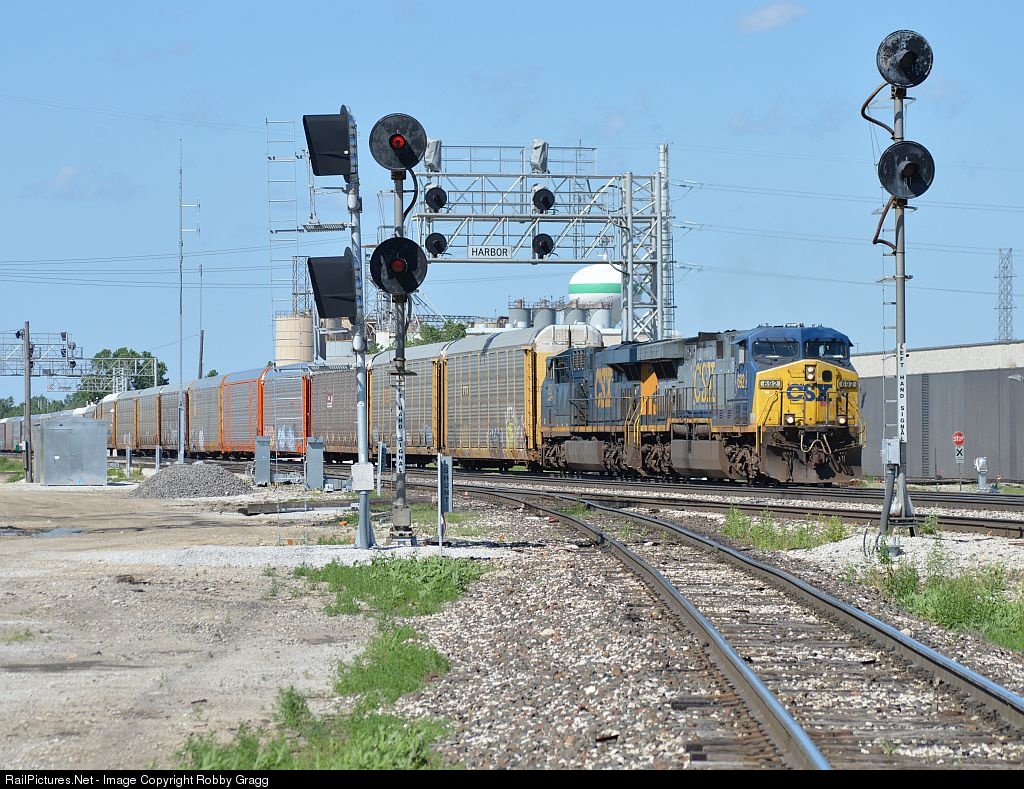
Quick news segment here today.  As always most of it is bad.  First up is the fate of the former ATSF HARBOR interlocking on the outskirts of Chicago.  Similar to the San Bernardino Sub, this interlocking was re-signaled in the late 1980's or early 90's with modern style cantilevers combined with searchlight signals.  Unfortunately BNSF is on a tear and the one interlocking I figured would survive into the future has replacement signals in place.


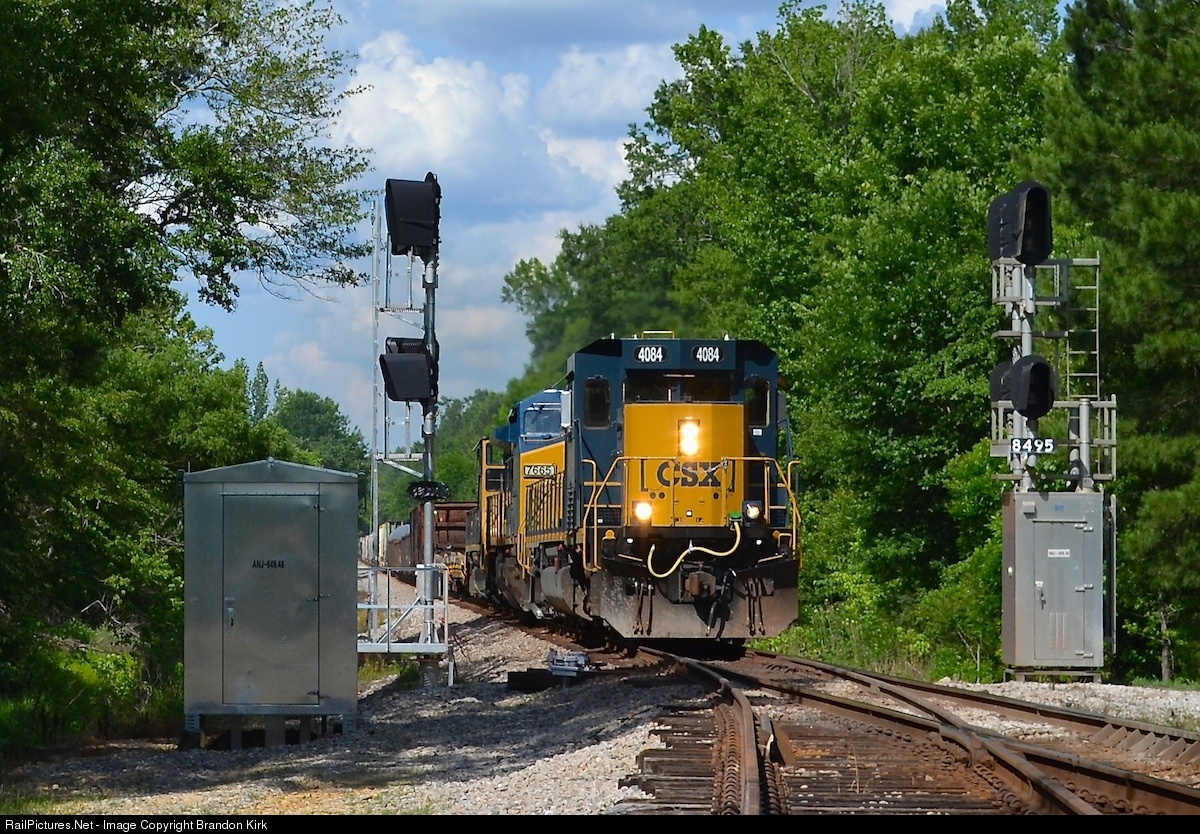
If anything highlights the prevailing throwaway culture it is this pic on the CSX Lineville Sub where a new casr-in-base Darth Vader is being replaced by a pure mast Darth Vader.  While I consider that a step up just more evidence that someone is forgetting the old Reduce, Reuse, Recycle.


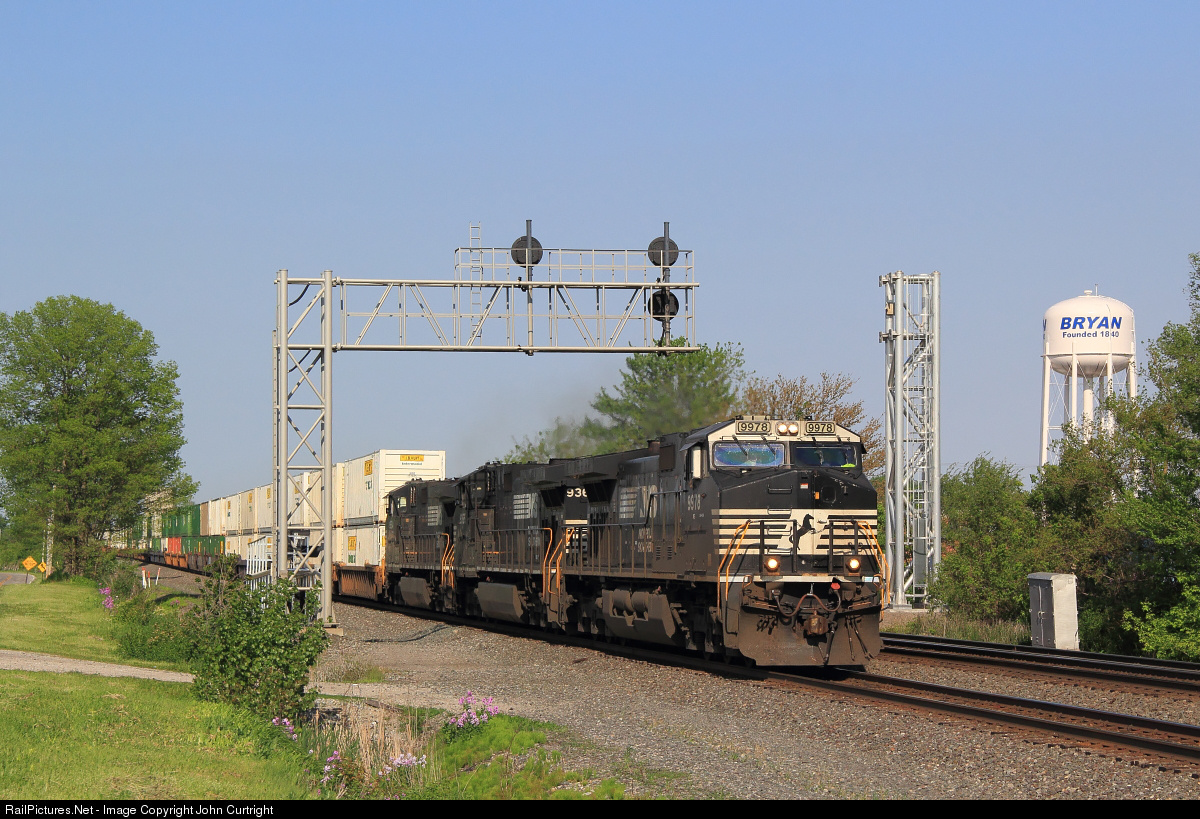
NS is getting in on the party be replacing some 90's vintage Conrail signals on the Chicago near Bryan, OH.


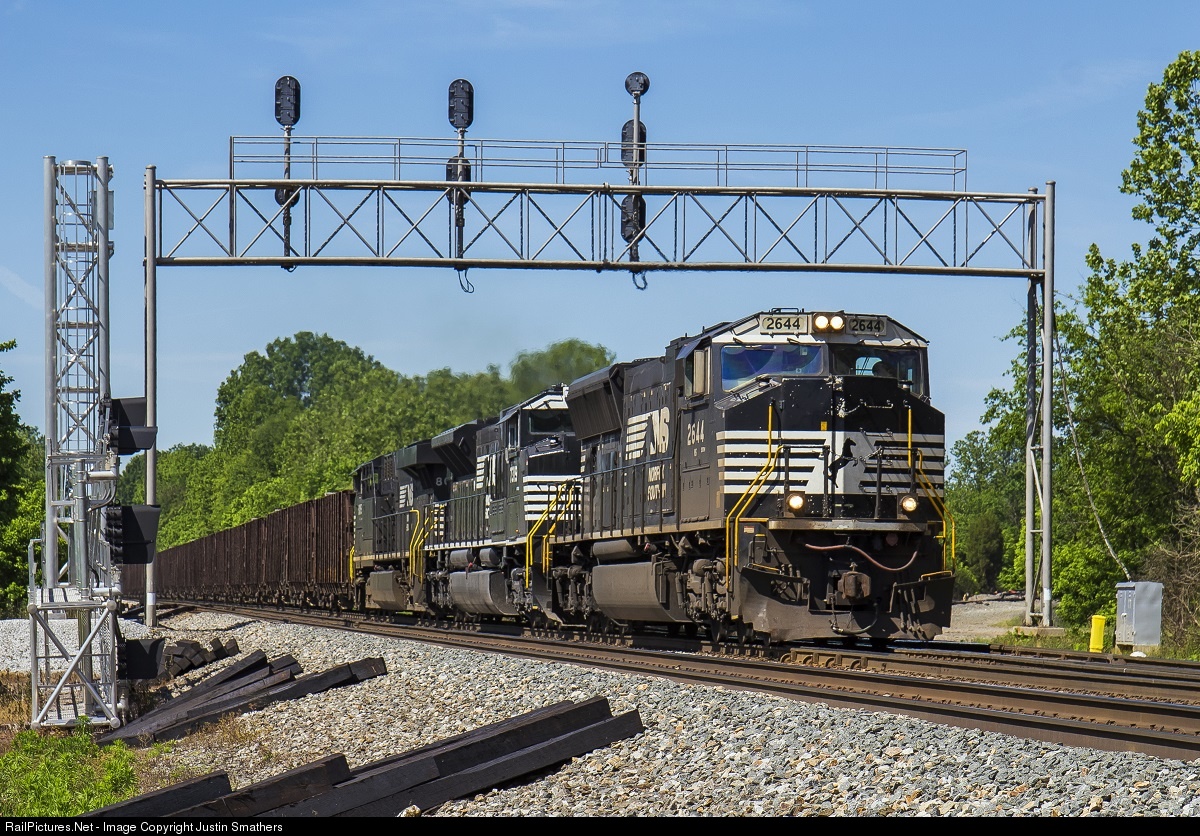
And these modern style ex-Southern signals in NC.  They aren't even re-using the as-new aluminum gantry.


Modern Conrail signals are also biting the dust on the CSX Indy Line in Marion, OH.


Not to worry...there are still a few classic items that can still be replaced like the old NYC searchlights at CP-429 in Depew, NY.


Going on a cross country Amtrak this week.  Worried about PV blocking the rear window, but even if there is I won't miss much as nearly the entire sunset route has been scrubbed clean.

Tuesday, June 7, 2016

Better Know a Signaling System: B&O Color Position Lights

Ah, here's the one I know you've been waiting for.  What is arguably the most unique and most advanced signal indication system in the united states and arguably one of the best in the world.  Why is this the case?  First, it was designed from scratch in the 1920's, after the advent of high intensity electric lighting and also after most other railroads had adopted some sort of color light or position light system, allowing the B&O to learn from their example.  Second, it had the strongest theoretical underpinnings of any other signaling system.  Another misconception is that the B&O CPL is in the same family as Amtrak's or N&W's colorized position lights.  In fact the B&O is a class by itself as in those other systems position has a one to one mapping to color while the B&O uses the position of marker lights called "orbitals" to modify the central color-position target.


There are so many neat features about the B&O system that I hardly know where to begin so I might as well just list those that come to mind.
  • B&O CPLs use the same signal aspects on dwarf and high signals.
  • A B&O CPL will only display the color red when the block ahead is potentially obstructed.
  • The B&O CPL system is fail safe in terms of bulb out conditions.
  • B&O CPL high signals use larger lamps than other position light systems.
In addition to those "nice to have" features, the B&O CPL system follows an algorithm that is both elegant and simple so this time you won't be seeing me going through all sorts of deviations from the norm and musing on how they happened. 

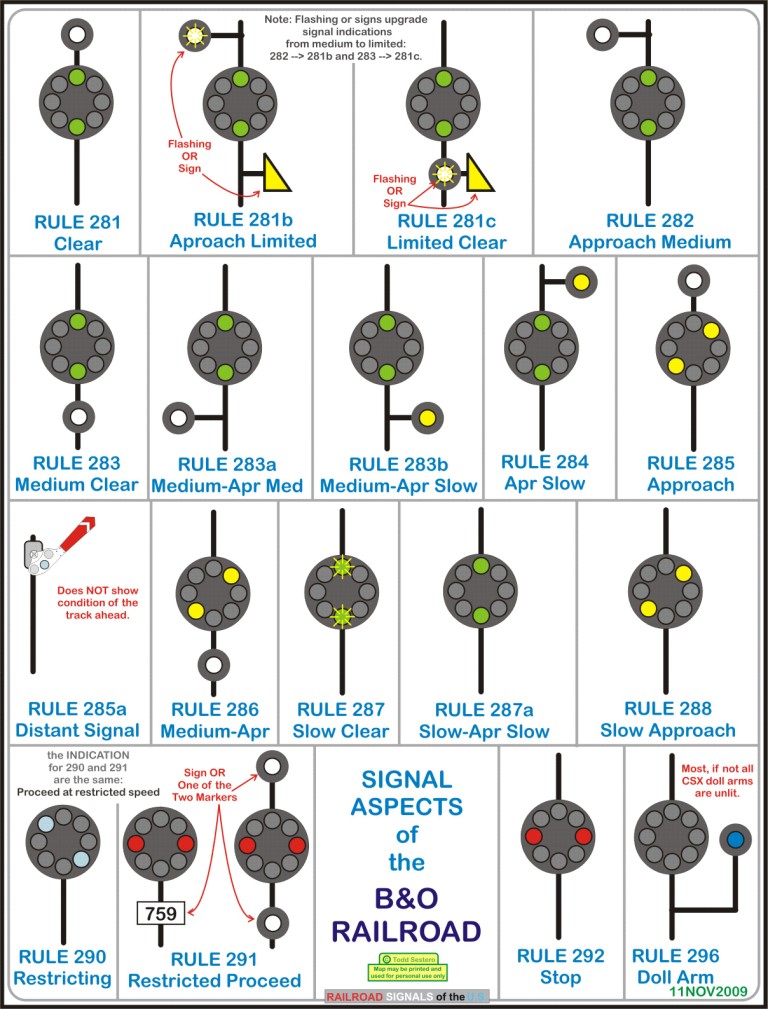
We start with the central target.  This is divided into 4 possible color-positions, Red ---, Yellow /, Green  | and Lunar \.  If there are two signals to a stop, Green is displayed.  


If there is one signal to a stop, Yellow is displayed 


And if the block ahead is obstructed then Red is displayed. 


Lunar is the same as Red, but is used for yards and non-signaled track.  That's all there is to the central target, no exceptions.


Next come the marker lights, also known as orbitals, located around the central target and displaying a plain white or amber color.  The six possible orbitals are referred to in their clockface position, 2 o'clock, 4 o'clock, 6 o'clock, 8 o'clock, 10 o'clock and 12 o'clock.  You can also use 12, 1, 5, 6, 7, and 11.  These modify the central target that provides block information with speed information.  Again, I am going to throw out another list here.
  • 12 o'clock - Normal to Normal
  • 2 o'clock - Normal to Slow
  • 10 o'clock - Normal to Medium
  • 4 o'clock - Medium to Slow
  • 6 o'clock - Medium to Normal
  • 8 o'clock - Medium to Medium
  • None - Slow to Slow

Even here there are regular patterns with the upper orbitals indicating Normal speed  at the signal and the lower ones indicating Medium speed.  Slow speed at the signal lacked any lit orbital.
Approach Slow at HB Tower

Medium Approach Slow at BAILEY

Of course nothing starts out perfect and the B&O CPL system did have two minor tweaks.  The first is that the "to slow" 2 and 4 o'clock orbitals were changed from a white lamp to an amber lamp for increased salience as a crew could easily forget which side meant which speed instruction.

Slow Approach Slow actually serving as such at BAILEY

The other rules patch was to cover up perhaps the only flaw that was built into the system.  Initially, Green | without any orbitals indicated Slow Clear, but in the 1960's this was changed to Slow Approach Slow since a bulb out on either the 10 or 2 o'clock could accidentally upgrade an Approach Medium or Approach Slow to Slow Clear.  The role of Slow Clear was then replaced by a flashing Green | with no orbitals lit.

Lit orbital with the direction of traffic

Dark orbital against the flow of traffic

Like the PRR and Amtrak, the B&O had an on again/off again relationship with using marker lights for Stop and Proceed indications.  Most times the 12 o'clock orbital would be lit, but the presence of a number plate made it technically unnecessary.  The one time this distinction had a difference was on CTC territory where signals set against the flow of traffic would not illuminate the orbital, despite the fact a number plate still authorized movement.  This makes me wonder if at some point the orbitals were indeed required to be lit for Stop and Proceed reducing reverse direction automatics to absolute Stop.

Just pretend its flashing

 The final change to the B&O CPL system was the addition of limited speed triangles / flashing 10 and 6 o'clock orbitals for limited speed turnouts in a manner similar to the PRR.


If the ICC had ever mandated railroads adopt a national signaling system I suspect it would have been this one simply because it solves some many of the "problems" pointed out with North American pattern signal rules such as using Red as a placeholder and using different signals on dwarfs and masts.  The B&O CPL was installed new as a matter of policy on CSX up through the early 1990's on former B&O territory, but alas the signal bulb maintainer's union was broken and the dreaded Darth Vaders have been spreading ever since. If you happen to be in a position to catch one of these signals in action make sure you do because they are disappearing quickly.
Tuesday, May 31, 2016

PTC Updates

Because Amtrak had enabled the ACSES PTC system for all of its trains operating on the NEC and Harrisburg line and SEPTA is running its ACSES implementation on the Warminster I figured I'd provide some updates.  I was also spurred on by getting some good photos of the new cab display units for both Amtrak and SEPTA and a conversation I had with a member of the PTC implementation team for LIRR and MNRR.

Now this was sort of covered in my post on knowing your cab signal displays, but this image has a bit more detail.  First thing I notice is that this very similar in appearance to the ITCS CDU used out on the Michigan Line, except there is the upper portion displaying the cab signal indication.  Below that is a single Max Authorized Speed readout, which I assume displays whatever is lower between the cab signal and ACSES, but I can't be sure about that.  Below that is a time to penalty countdown display.  There is a bit of debate about how the PTC displays should warm the engineer that a penalty is about to occur and it appears that Amtrak has opted for TTP both with ITCS and ACSES.  Again, not sure if it also counts down to a cab signal related penalty.  Next to the TTP display there is an indication for the ACSES enforced Clear to Next Interlocking signal that is still needed in case of cab signal failure and there is also a warning about invalid TSR data for when data radios are having problems. Next we see the various cut-in/cut-out and error lights and finally we see a message display that might not be used yet as the rulebook makes no mention of ACSES messages like it does ITCS messages.


The new SEPTA CDU again begins with a cab signal section with a pair of multi-color LED lamps to display the signal.  As we can see here SEPTA chose R/Y instead of R/L for Restricting.  Below that we see the same MAS display, which I have to assume switches between ATC and PTC (whichever is lower) as indicated by the adjacent lamps.  Below that is the cab speedometer showing the train's actual speed.  Instead of a TTP countdown, only an overspeed lamp is provided.  Not sure what the criteria for avoiding a penalty is.  Below that things become familiar again with cut-in/cut-out and error lights followed by a message display.  At the bottom is a key switch for conducting ATC and PTC tests.


Regarding performance issues I have learned that it is possible to set the PTC enforced speeds higher than what appears in the timetable if the timetable speeds are based on passenger comfort, wear and tear, etc.  This would allow the engineer additional wiggle room without risking any sort of derailment.  However since all the CDU's show MAS and not some enforcement speed it would be difficult to implement this without causing confusion.  The system would need to be changed to that the system was aware of both a timetable speed to display and an enforcement speed at which a penalty application would be initiated.

The biggest problem is the the lack of precision in the position stop function.  Currently a train may be stopped up to 100 feet + 10% of the distance since the last transponder.   This can extend up to 1000 feet from a stop signal and is most acutely felt when trains are attempting to make station stops where a stop signal is at the end of the platform.  Previously Amtrak allowed for use of the stop release button to allow trains to platform properly, but this is no longer the case.  commuter railroads will be most effected and although placement of additional transponders can help, the 100 foot buffer will still cause shortfalls.  Apparently the system has to allow for an engineer pegging the controller right up against a stop signal which could move the train past before the brakes could stop it.  Of course a proper risk assessment would label the risk of such an event as fanciful, but I don't think anyone is conducting proper risk assessments here.

The one silver lining is that the positive stop point does not have to be at the Stop signal, but at the fouling point of the first switch, which can restore some semblance of normalcy.   The best solution would be to allow some sort of virtual swinging overlap that can dynamically change the positive stop target based on other lined routes through the interlocking.

Anyway that's all I have for now.   Let's hope that if the operational impact is significant enough some more modifications will be added.  It will also be interesting to see how flexible the freight railroads are.