Search This Blog

Tuesday, April 18, 2017

The Many Signals of Penn Station

In the first decade of the 20th Central, a number of transit mega-projects were under way in the United States.  Two of the most well known are Grand Central Terminal and Pennsylvania Station in New York City.  In addition to being civil engineering marvels, they also employed the latest technology in railroad signaling, which included both power operated interlocking machines and, gasp, electric signals.

I've mentioned before  how surprisingly difficult it was to create the first 100% electric railroad signals.  This was because high intensity electric bulbs (necessary to be seen under daylight conditions) of the time would have an impractically short service life and also because electric power was in vary short supply in might of the country.  However the projects of Penn Station and CGT did not suffer from these two limitations because they were underground, where it was dark all the time and they had reliable supplied of electric power on a 24/7 basis.

Right: Old GCT signal.  Left: New GCT Signal

Fast forward 100 years, while Metro-North replaced all the original 1913 signals in Grand Central, across town at Penn Station, the thrifty stewardship of Amtrak had resulted in much of the 1911 not only seeing the 21st century, but doing so just above the heads of millions of dashing commuters.  Union Switch and Signal, naturally, supplied the signaling for the entire projectfrom the interlocking machines to the relays to the signals themselves.  The signals were a custom job that, as far as I can tell, weren't used anywhere else since the electric age kicked off a rapid period of innovation that saw both searchlights and position lights entering the market in just a few years.


The Penn Station Signals consisted of a tri-light patterned upper head with G+Y+R lamps and then a lower head with an additional two R+Y lamps in a vertical orientation. Since the station trackage was all run at what is today known as "Slow" speed (15mph), there was no need for any of the more complex aspects such as Medium Clear or Approach Medium.  Two lamps were illuminated at all times to provide R/R Stop, Y/R Approach, G/R Clear and R/Y Restricting.  In the tunnels approaching the station Y/G Approach Medium and Y/Y Approach Slow indication were employed.


The Penn Station signal was a single cast iron housing with lovely rounded corners.  Due to the close clearances the signal was designed to be suspended from above, this would result in some awkward "gooseneck" mast mountings as I will show later.


From behind we can see how the signal was divided into two lamphouses, each with its own cast iron cover plate.  Note the very very old style US&S logos and markings.  Remember, all these pictures were taken in 2017, 106 years after the signals were installed.


Here we see a trio of 1911's litterally hanging out next to the now closed 'C' interlocking tower at the east end of the LIRR tracks.  The colored glass lenses are still vivid even to this day, probably because they were made with all sorts of now banned compounds.


Now if you think it is time to move on to the modern signals, you would be wrong as there is a second pattern of 1911 signal scattered about the complex.  One such example is the famous 122W "gooseneck" signal at the west end of track 7 (remember, I said they can only be suspended from above).  If you look closely you'll also notice that the G and Y lamps on the upper head are spread farther apart than on the standard Penn Station signal.


Now these "googly eyed" signals could have been some experimental or pre-production batch, but if you want a more satisfying answer I might say that this pattern was intended for ABS use in the tunnels.  The spread upper bulbs designed to simulate the offset heads of automatic signals.


Moving into the modern period we catch this Amtrak experiment with Safetran Unilens signals hanging at the east end of track 14.  Because of the problems with the Unilens that I have previously discussed, JO signal 566E appears to be an isolated incident.  So what then is the modern replacement for the unique 1911 signals?  Well actually its a modernized version of the unique 1911 signals.


Amtrak had suspended a pair of Safetran modular dwarf units below what may or may not be a Safetran lamp housing for a target style tri-light signal. The result is a nearly perfect drop in replacement for the cast iron 1911's.


Here we have an even more compact arrangement that omits the space for the "not in conformity" number plate on an absolute signal.  Hey, you can't say it doesn't work.


Here we can see how new and old compare at JO interlocking with the modern 564W signal displaying Restricting right next to the vintage 566W displaying clear.  The modern lenses are clearly larger, but both get the job done well.  In general, the former outdoor portion of A interlocking has been modernized while one is more likely to find 1911 signals scattered around JO and C, however there are many exceptions to those "rules".  Of course I'm also omitting the smattering of PRR position light dwarf signals scattered around the yard areas, but you've seen those before.

Anyway, I hope you've enjoyed this little tour of Penn Station.  Most of these photos were brought to you by the magic of modern smart phone cameras that excel at taking photos in low light conditions and also won't attract swarms of police and security officials.  Next time you are in Penn Station I urge you to look up and if you see something interesting, document it.  After all, nothing lasts forever.

Wednesday, April 12, 2017

CP-BURN'd

So I have a brief news update here.  While riding the 2016 Amtrak Autumn Express I noticed that NS had advanced their Reading Line re-signaling effort to CP-ALBURTIS from the west.  It seemed that they would go and cut in the first half of the signaling and then work from CP-ALBURTIS to CP-BURN for the next season.  Well it not appears that they are going to do the whole conversion in one extended go as new signals have now appeared at CP-BURN.  Guess I'll have to schedule another field trip :-(


I am currently processing the photos from this trip and you can find the Lehigh Line portion here:  It's a real mixed bag od NS, Conrail and even a few surviving LVRR signals.

05/20/2017 UPDATE: I returned to the Allentown area to find that the re-signaling project has caught up CP-ALLEN and CP-HAM on the Lehigh Line. CP-JU and CP-CANAL so far appear to be unaffected.


Wednesday, April 5, 2017

Now For Something Completely The Same (#1AESS Retirement)

I just got word that on or about right now, the last active AT&T/Western Electric #1AESS telephone switches (generally confined to the former SBC territory) are being taken out of service.  This matters because the railroads are currently speeding towards the completely sterile, 100% digital environment that the telecoms have apparently just achieved.  Unlike railroads, which still have a few instances of electro-mechanical interlocking machines and hundreds of relay plants in service, the teleco's banished the last electro-mechanical switch from their network back in 2002, with the majority of the work taking place between 1970 and the 1990.  Back in the day, there was an entire scene of people who would go from place to place, listening to all the strange ways that the phone system functioned.  Today this sort of task would be a fools errand because everything is the same across the entirety of North America. 


Until recently, the #1ESS and #1AESS were the only exceptions.  Sort of like the 3400 series L cars or the NYCTA R68's and their cam-controlled DC propulsion systems, they were analog machines build in a digital world.  While the higher order functions were computer controlled, the actual switching was carried out using reed relays.  It's basically the N-X CTC panel of telephone switches with a computer bolted on to handle some of the route selection functions.  Even then, the attached were old school enough to fall into the "cool" category. 


Like with classic railroad signaling surviving on out of the way branch lines, the #1A aand #1 switches held on due to the recent wholesale divestment in copper wire / landline telephone services.  Still, the economics eventually because just too lopsided in favor of replacement and AT&T canceled its support contract with Western Electric successor Lucent in 2015, with an expected retirement date of 2017.  

This is why it's so important to get out and capture the classic technology before its just collecting dust in the corner of a museum.  In a few decades just about everything will be software running on some bog standard processor mounted on a raspberry pi.


Wednesday, March 29, 2017

Ditmars Tower (NYCS) Demolished

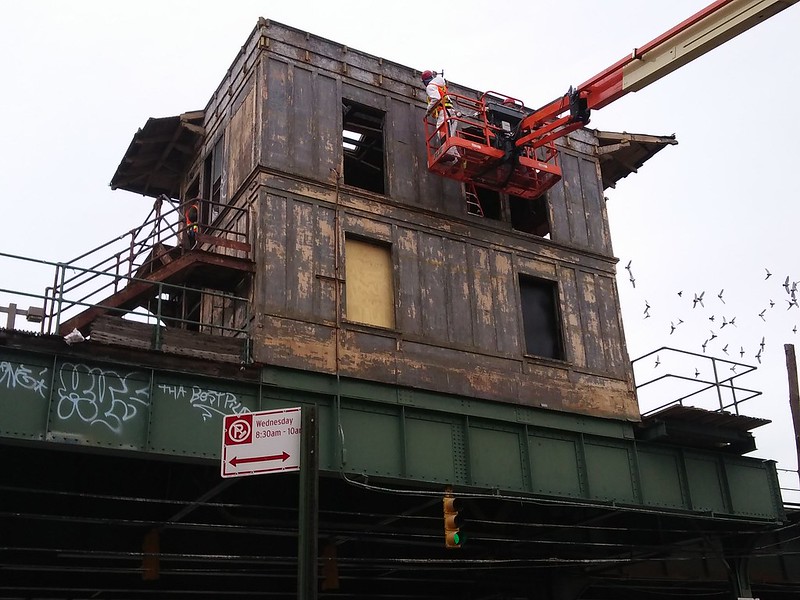
Interlocking towers serving old school rapid transit systems have surprising staying power.  In most cases they are often in underground spaces where any sort of demolition would literally bring down the roof.  Moreover, transit systems are often sealed, reducing the risk of vandalism, have limited windows for work to be done, making the cost higher and operated in a budget poor environment.  However, nothing is absolute and I just learned that a 100 year old IRT interlocking tower on the New York City Subway was demolished this past weekend.


DITMARS tower was located at the Ditmars Blvd terminal of the Astoria El in Queens, right in the shadow of the Hellgate Bridge.  It was originally built as an IRT tower, before eventually being transferred to the BMT division of the TA in 1948.   Although the tower appears to be the victim of fire damage, it is actually being removed for a switch replacement project that requires the use of an on-site crane. 


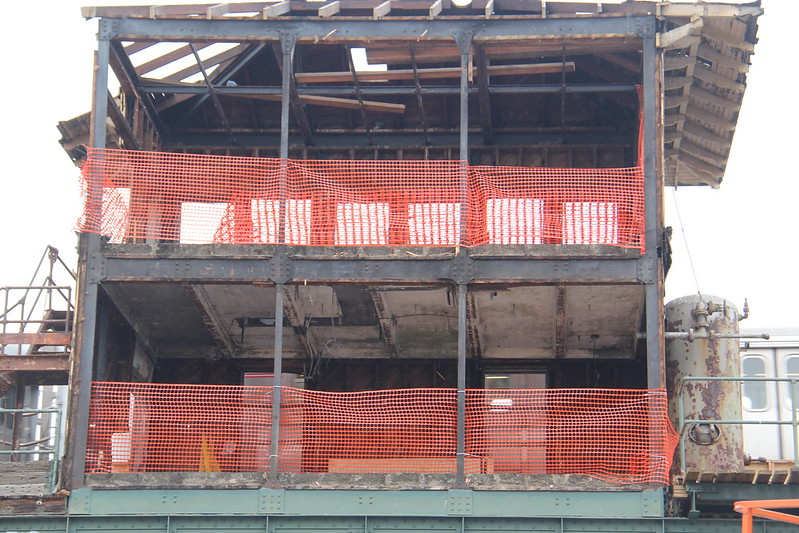
The demolition process actually provided a bit of an interior view showing that wooden appearance of the tower was a facade that surrounded a very robust steel and concrete frame.  The upper floor would have housed a US&S EP machine, the IRT being a strictly US&S operation.  The lower level would have housed relays wired to the machine above and the appliances out in the field.  Note the good condition of the roof structure, which is all the more remarkable given both its age and the amount of neglect the tower must have seen through NYC's lean years.

DITMARs tower in 2003
DITMARS tower controlled a 3-track full crossover leading into a 2-track terminal station.  Note the large air reservoir to power both the local point machines and the pneumatic trip stops all up and down the line. The tower was closed in 1989 as part of a full line re-signaling project, although the line was equipped with new US&S hardware, if that is any consolation.

Fortunately, DITMARS has many siblings up and down the former IRT elevated lines in the Bronx and Queens.  Almost all of them are out of service, but still hang on as relay rooms or CnS hangouts.  One old IRT elevated tower, 111th St, on the IRT Flushing, is still active, albeit with a fairly new master control NX panel installed.

Wednesday, March 22, 2017

Caught on Camera: Sun Glare

Sun glare is traditionally the enemy of color light signaling.  For years it has been the go to excuse for stop signal violations and one of the driving forces behind cab signaling (right up there with fog).  However catastrophic sun glare is good for bringing out the true colors of color light signals because it happens to illuminate the colored glass filters that gives each old school incandescent bulb its charm.


B&O CPLs are really the best when it comes to front-lighting.  Not only are their colorful, but their large lens diameter really gives one that Christmas Tree effect.  This photo was taken at NA tower, north of Cincinnati.  The sun glare is so bad that even the Darth Vader mast in the back is getting into the action.   Interestingly enough you can still tell what aspects are being displayed, even if you have to work at it. 


Now I like this Seaboard System shot because you have almost exactly one of every color, Green, Yellow, Lunar White and Red.  Most notable are the filter colors for green and lunar white.  Both clearly have a blue bias to them so that the warm white incandescent bulb light will show properly.  It's the difference between additive color and subtractive color. The glare also lets us tell, at a glance, that trains exit the siding at Restricted speed.  Something that will likely be remedied after the impending re-signaling.


The B&O CPLs and US&S N series are some of the best for sun glare shots because the shades are so small.   Both searchlights and PRR PL's lack a glare responce because of elaborate lensing systems.  To prevent even worse instances of phantom aspects, color lights have no internal reflection, however both PRR PLs and searchlights do, to increase the range of their low power bulbs.  That in turn requires anti-glare countermeasures that reduces the photographic effect.

Tuesday, March 14, 2017

Springtime for News

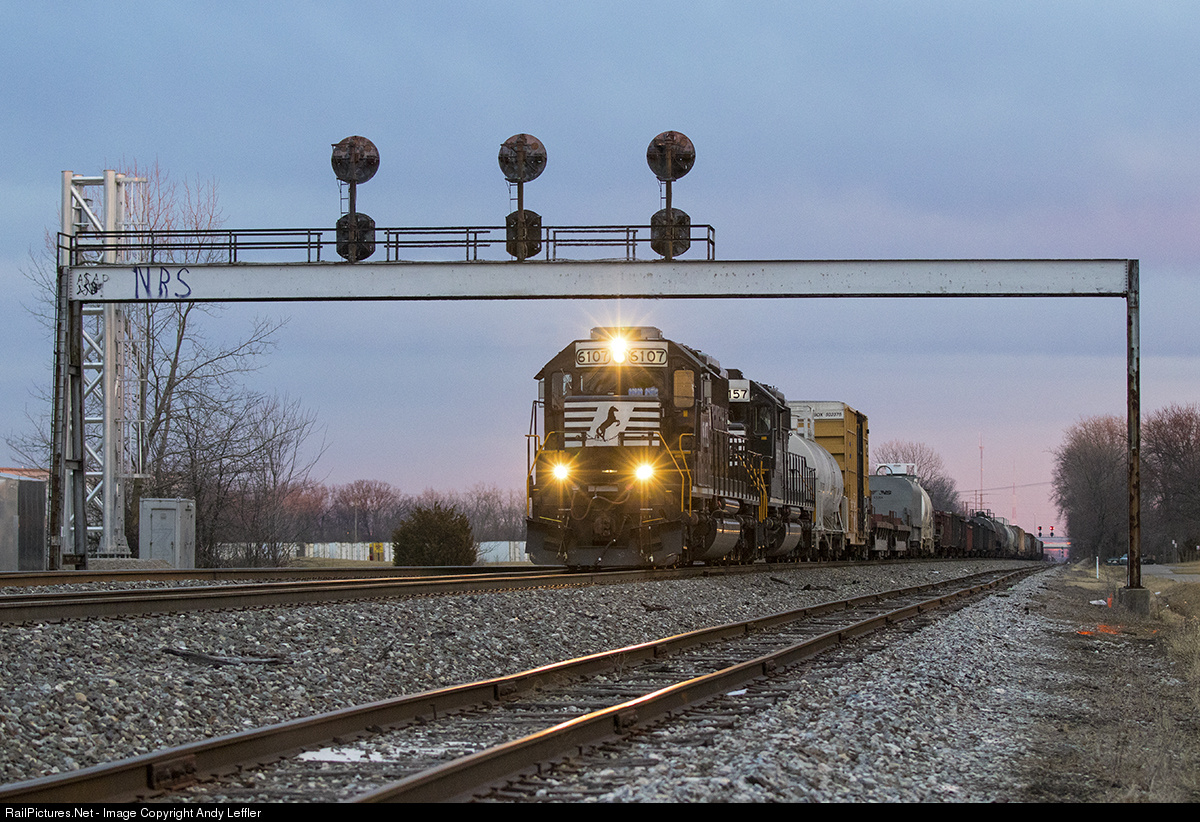
We start off this time with another gut punch to the signaling scene.  The NS re-signaling effort is not attacking the PC era position light signaling complex on the south end of Buckeye Yard.  Not only are these I-beam gantry mounts PL's still within their useful lives, Buckeye Yard has been pretty much shut down.  What better place to defer maintenance and capital investment!


 I can also confirm that re-signaling work has started on the far eastern end of the PRR Middle Division from CP-BANKS to CP-CANNON inclusive.  This segment had originally been spared from the project working its way westward from CP-CANNON.  Also, presence of 'C' boards eastbound at CP-CANNON mean that the new style 3-track signal bridge at MP 116 will also be removed in favor of cab signals.  Seems a lot more trouble than its worth just to remove one intermediate equipped with modern hardware :-\


 At least on the former Southern part of NS, the signaling is getting dumped for legitimate improvement projects involving the restoration of the double track removed during the Nadir of rail transportation.  Fun fact, the ICC allowed for the Southern to abandon its use of ATS in exchange for installing the CTC system now on its way out.


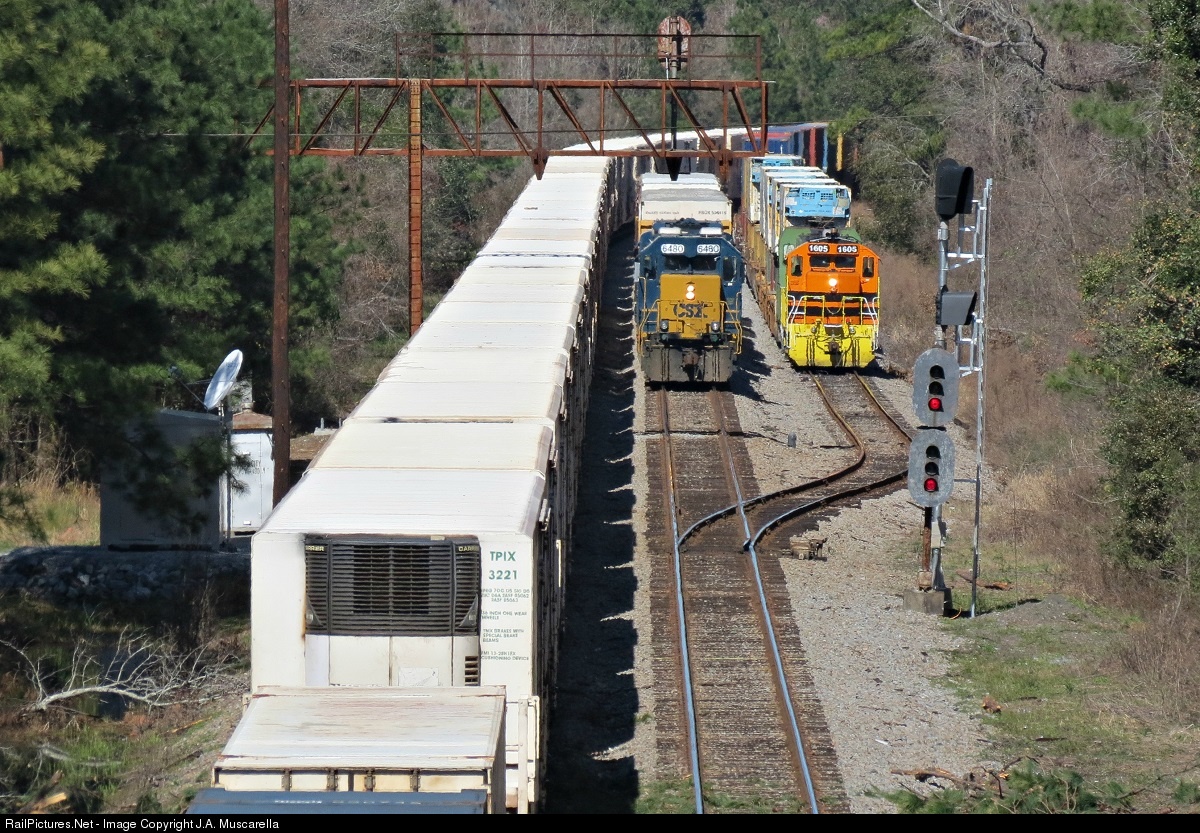
CSX continues to get it at both ends with signaling projects in both Georgia and in the Buffalo area.  There's still time to get out there and document stuff however.


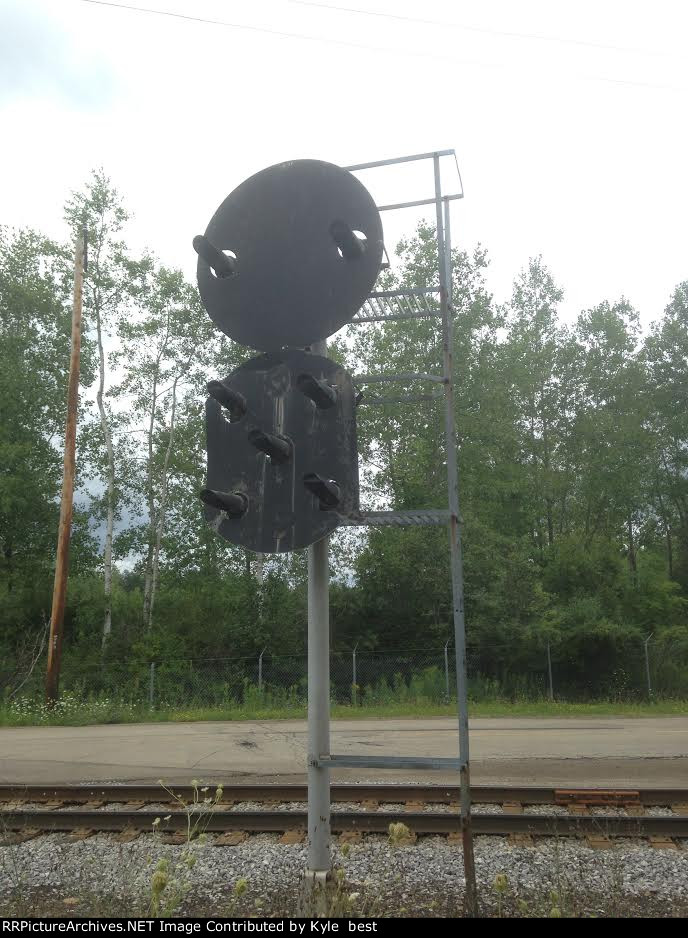
I also recently found some documentation of the discontinuation of 261 signaling on the former Conrail Buffalo now leased by the Buffalo and Pittsburgh Railroad north of Machias, NY.  At least because the line is under lease, the out of service signals have been turned and not removed.  It also doesn't seem to matter if the signals are old or new.


That's pretty much it aside from the news items covered in previous posts.  Remember, don't procrastinate about taking photos or you'll regret it.

Monday, March 6, 2017

LAB Cabin Closes, Ending Many Eras

While this may sound like a bit of a rehash of my recent post on the status of signaling in and around Amtrak's Empire Corridor, some additional news has come to light in the last week that confirms that the former Conrail LAB tower in Albany-Rensselare, NY has officially closed as of 02/07/2017.  Located on the former New York Central freight movable bridge across the Hudson River just north of downtown Albany, the tower controlled the Albany terminal area from CP-141 through CP-145 inclusive.  As part of a general re-signaling and capacity expansion effort, it was replaced by CTC control from New York City.


Short for "Livingston Avenue Bridge", LAB was the last active tower in Upstate New York.  Seeing service under the New York Central, Penn Central, Conrail, CSX and finally Amtrak, LAB wasn't special for some sort of classic interlocking machine, but because of the role it played.   LAB was one of a number of "island" towers that supported Amtrak operations deep in freight railroad territory.  Outside the NEC, Amtrak ran many of its operations from concentrated hubs.  Not wanting the second class service afforded by freight railroad dispatching and (previously) not large enough to be its own CTC territory, Amtrak would either operate its own tower or contract with the host freight railroad to staff one for them.  This gave Amtrak on site attention for its many passenger movements and helped keep the trains moving on time.  Other Amtrak island towers included those around Chicago Union Station, Drawbridge tower in Michigan City, IN, which controlled the Michigan Line and Clara St tower in New Orleans. 


While I never saw a picture inside LAB, it's a pretty good bet that it was equipped like many other Conrail 1970's/80's CTC towers, with a minimalist N-X panel.  Similar Conrail towers included HICK and SCOTIO, although I am sure there were more.  In addition to Amtrak not wanting to deal with a CSX dispatcher, having LAB in charge of a movable bridge also helped as there would be little savings replacing an operator with a bridge tender.  As implied by the term "cabin" the tower was located in the center portion of the drawbridge, the CTC pole line reaching it overhead.


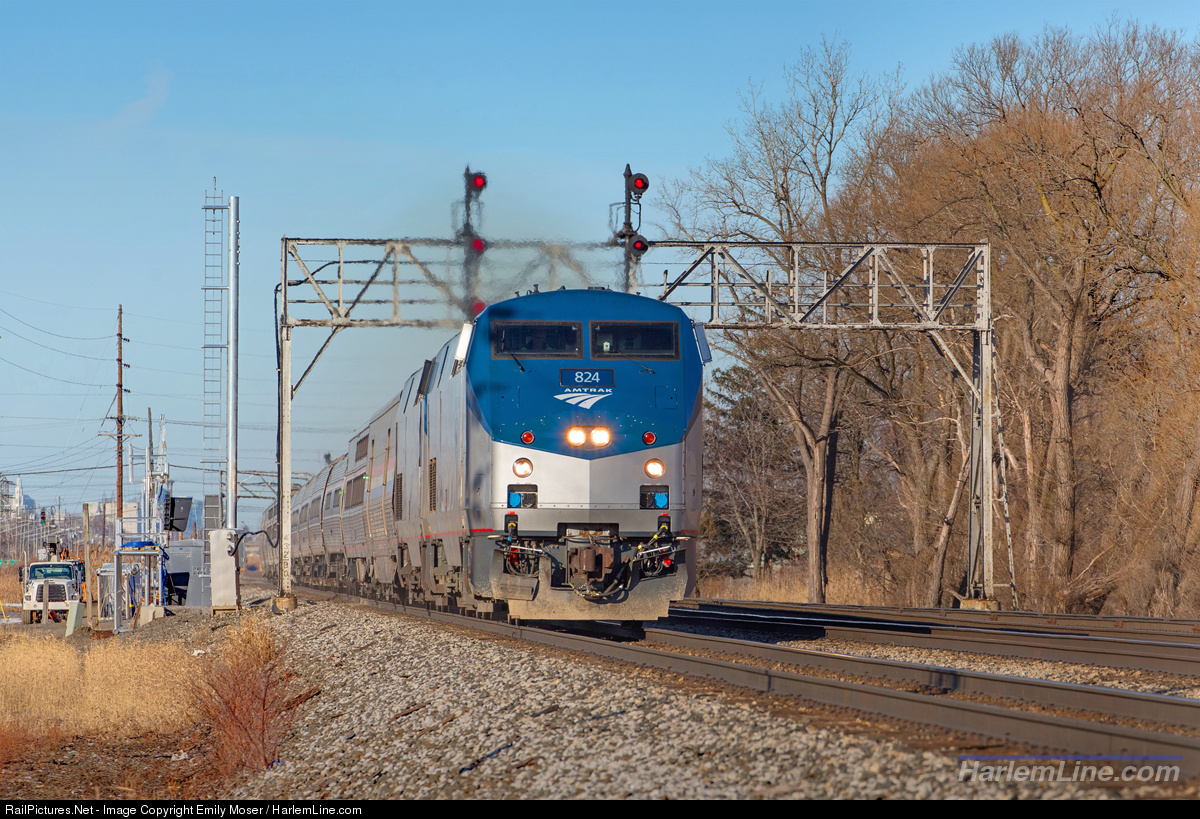
As I said before, the entire Albany complex has now been resignaled with not only new tracks, new doubleslip switches and LED searchlights, but also 562 operation running, so far, between CP-145 and a new CP-149 west of the city.  Eventually the double track will reach Schenectady.  The current (new) layout of the Albany terminal complex can be seen below.


 While it's always bad to see a tower close and classic signaling removed, the new layout is quite impressive and the modern LED searchlights and target signals are not too dissimilar from their GRS fore-bearers.  Also, Amtrak kept the NY Central track numbering scheme going in the station terminal area.  Now all we can do is wait and see at what point the state money runs out and how many Central signals are left standing.