In Part 11 we left off at PAOLI interlocking at the beginning of what is known as the
Philadelphia Main Line which is a string of extremely wealthy communities that follow the Pennsylvania Railroad Main Line from the Philadelphia city line to Paoli (or arguable Malvern today). The wealth of these communities was directly attributable to the railroad as the transportation link allowed those with means to escape the dirty, smelly, congested downtown and trade it all in for plush suburban estates. During the gilded age the Railroad itself took on the role of real estate developer buying up land along its tracks and establishing several of what became the Main Line communities. Traffic on the Main Line became so intense that it was chosen in 1915 for the PRR's first experiment with high voltage AC overhead electrification as well as some of the earliest installations of Position Light signals due to a combination of fog and smoke risk as well as overhead wires obstructing sight lines.
This final section of the Main Line as we progress towards Philadelphia is almost completely untouched by re-signaling and functions today in roughly the same fashion as it did back in 1948. As always you can check out the 1992 diagram located
here I have also included some photos taken in the fall of 2011 to replace any 2010 photos of inferior quality.
Now I have covered extensively in a
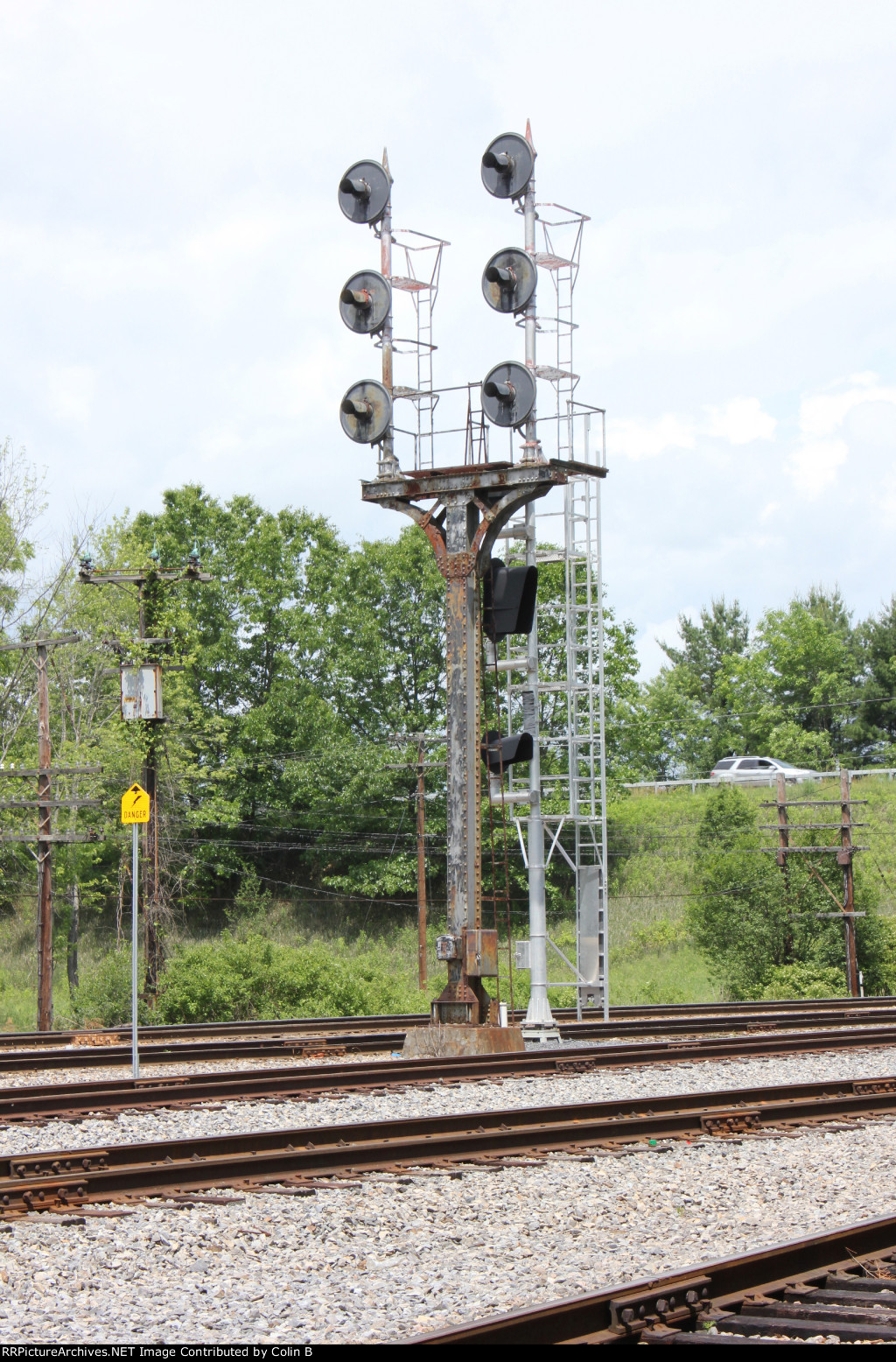
previous post, so I have absolutely no intention of repeating myself, however due to the length of the interlocking I was unable to cover much of PAOLI's East End except by setting my camera's zoom to max. The East End begins with a standard 1915 era signal gantry holding the 24R, 26R and 28R signals and the 22R dwarf on the ground under it. In a bit of a historic quirk the 28R and 26R signals have a separate backing plate for the lower position light head. This was how the original PLs on this part of the line were installed back around 1915 with the lamp units set in front of detached black backings.

The 24L and 22L signals for westbound movements are set on a 1930's style of beam gantry and were probably installed when the plant was re-interlocked in the early 30's and the original electro-mechanical frame replaced with a US&S Model 14. The introduction of fully powered signaling allowed the construction of the East End facilities. Also visible are the 25 and 27 switches. The 25 is a 30 mph turnout used by trains on the express track to reach the Paoli Station platform. The slow speed 27 switch is somewhat strange in its placement and as such is barely used (as evidenced by the rust on the rails). It allows access to #2 track in the reverse (non-signaled) direction. What makes this stranger is that #3 track is actually bi-directional so it would be more logical for a facing switch from #2 to #3 in the East End, but this does not exist

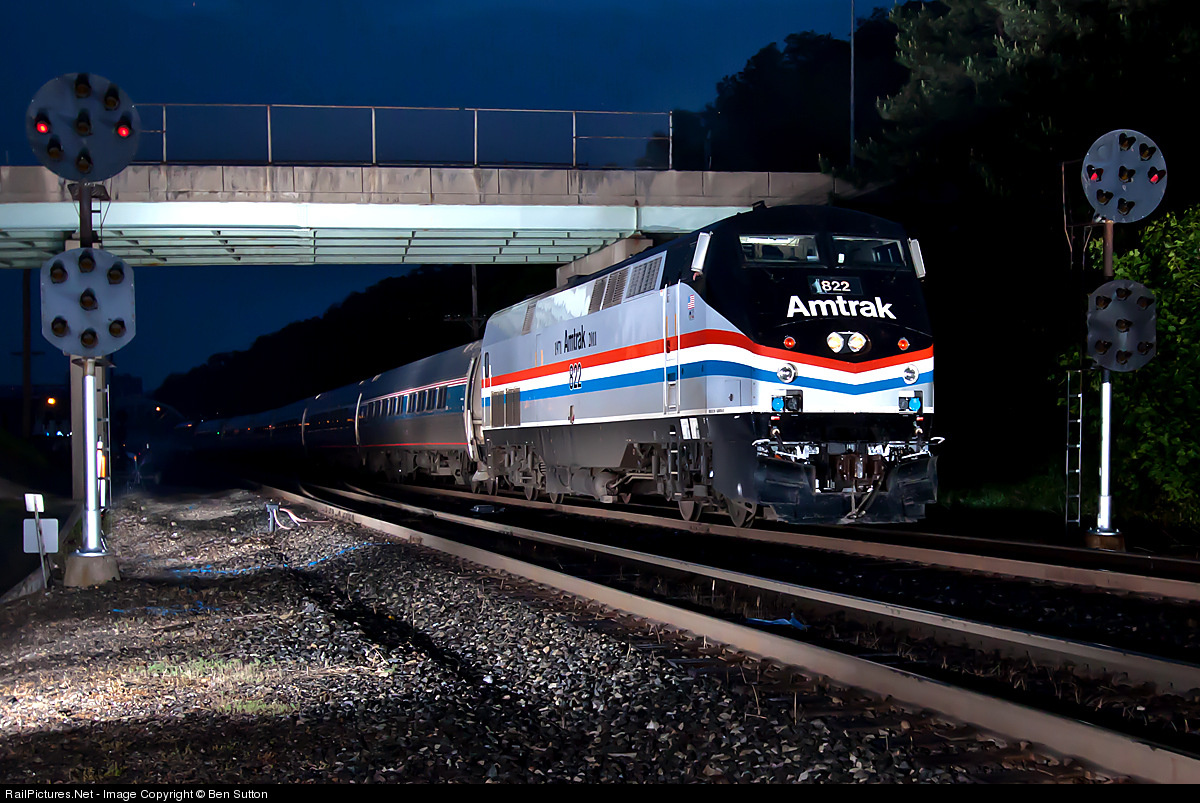
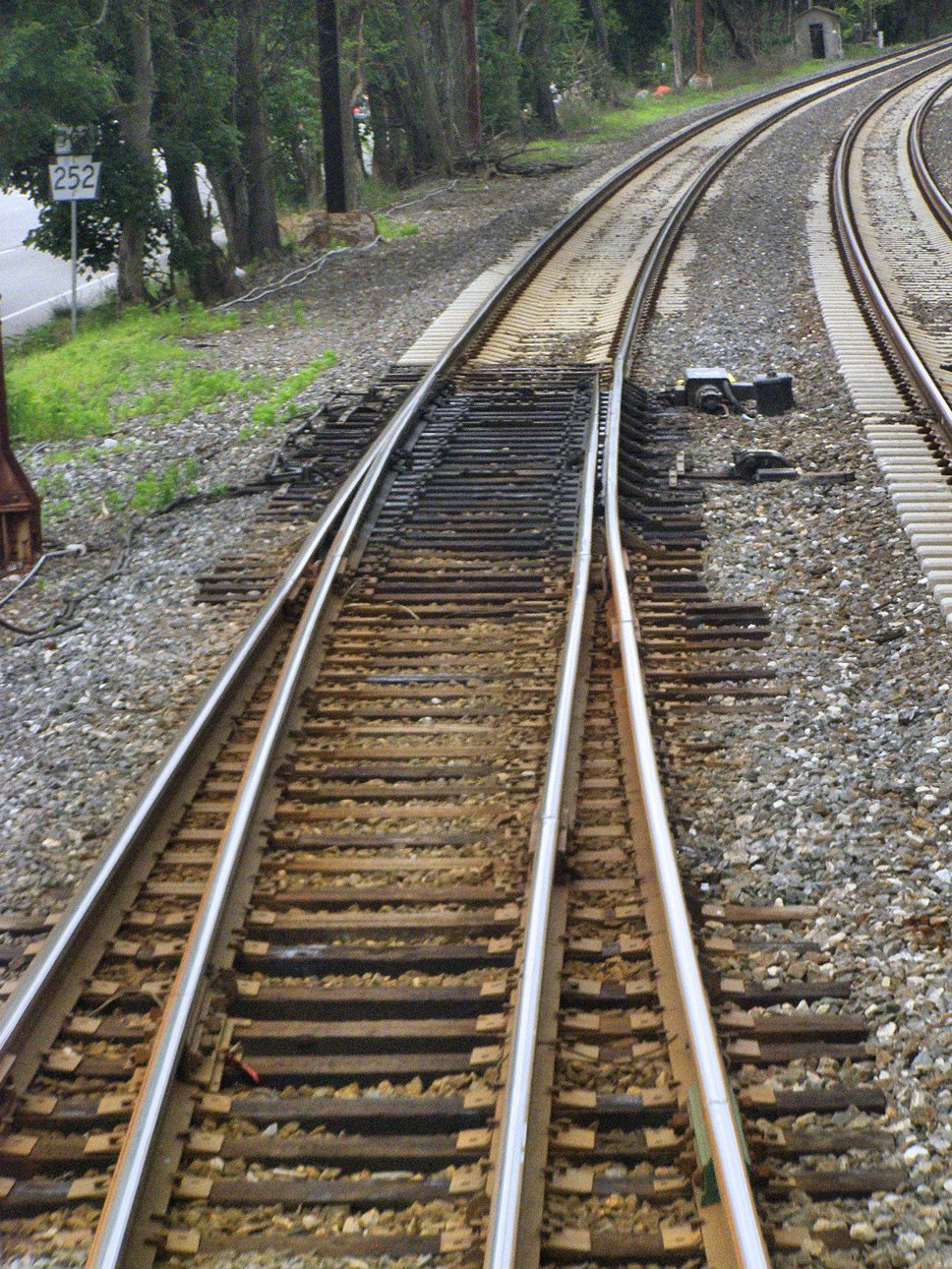
However the East End continues on past the 22L/24L gantry, around a bend and finally to the 29 switch which allows trains on track #1 to go express on track #2 as my Amtrak train is shown doing. Note the reverse points, pneumatic point machine and secondary point detector.
Here we see the entire 29 turnout in all its reverse glory again with the pneumatic point machine and a back drive with attached point detector. In the foreground are the 26L and 28L dwarf signals which are both capable of displaying Slow Clear as PAOLI interlocking is bi-directionaly signaled on all 4 stacks between the east and wet ends.
Wider view showing the displacement between the 29 and 25/27 switches. This was to accommodate very long, long distance passenger trains platforming at Paoli that used to run way back in the day.
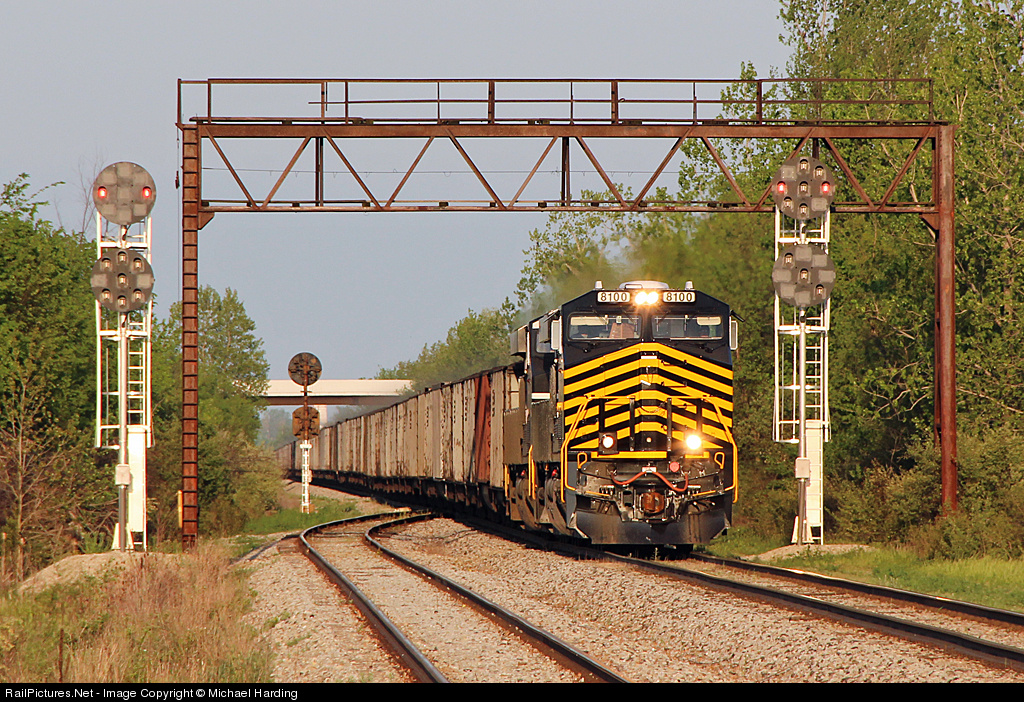
So just beyond the 29 switch we see an out of use signal gantry at about milepost 19. I mentioned that back in the day commuter traffic on this line was some of the most intense in the country. Both the steam hauled and later electrified trains weren't exactly sprightly by today's standards with speeds hovering between 30 and 50mph. As a result very close (about .5 mile) signaling was employed to minimize headways. Later block lengths were increased to 2 miles and speeds raised to 70 passenger, 50 freight.