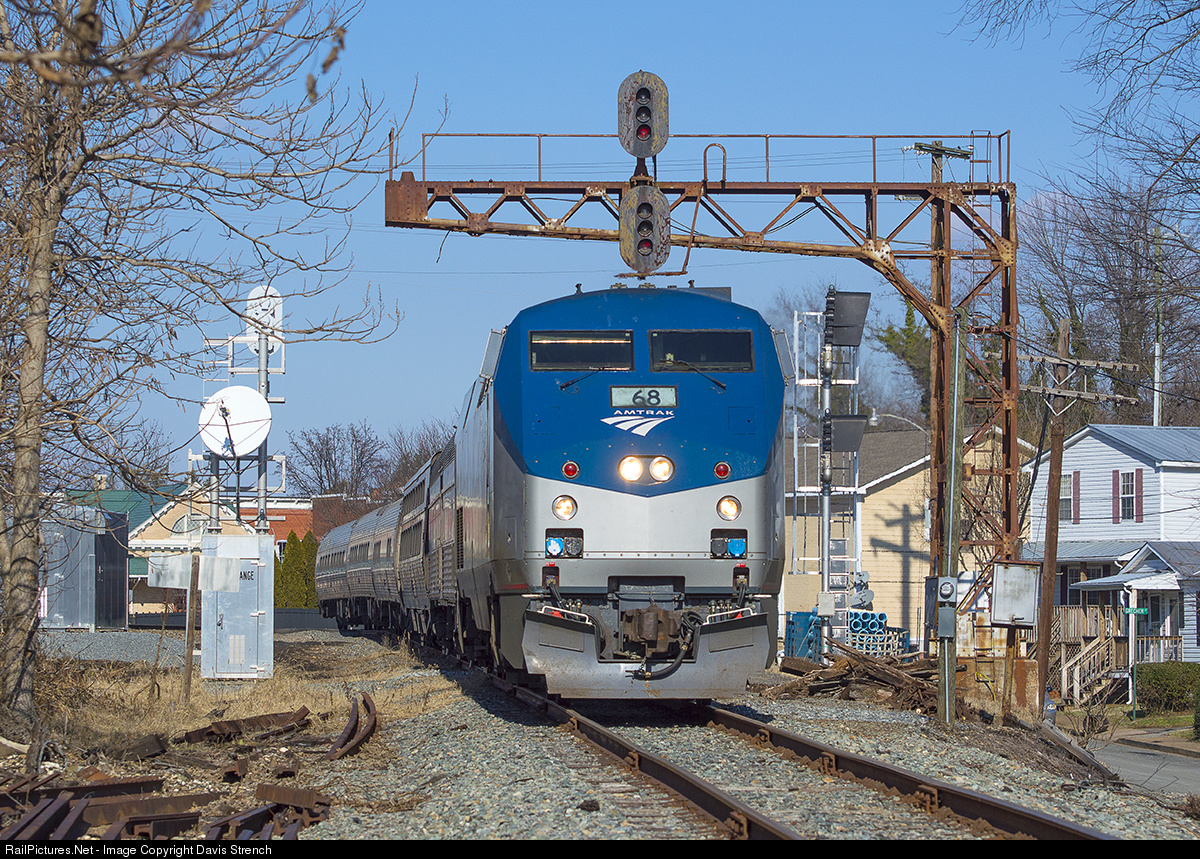
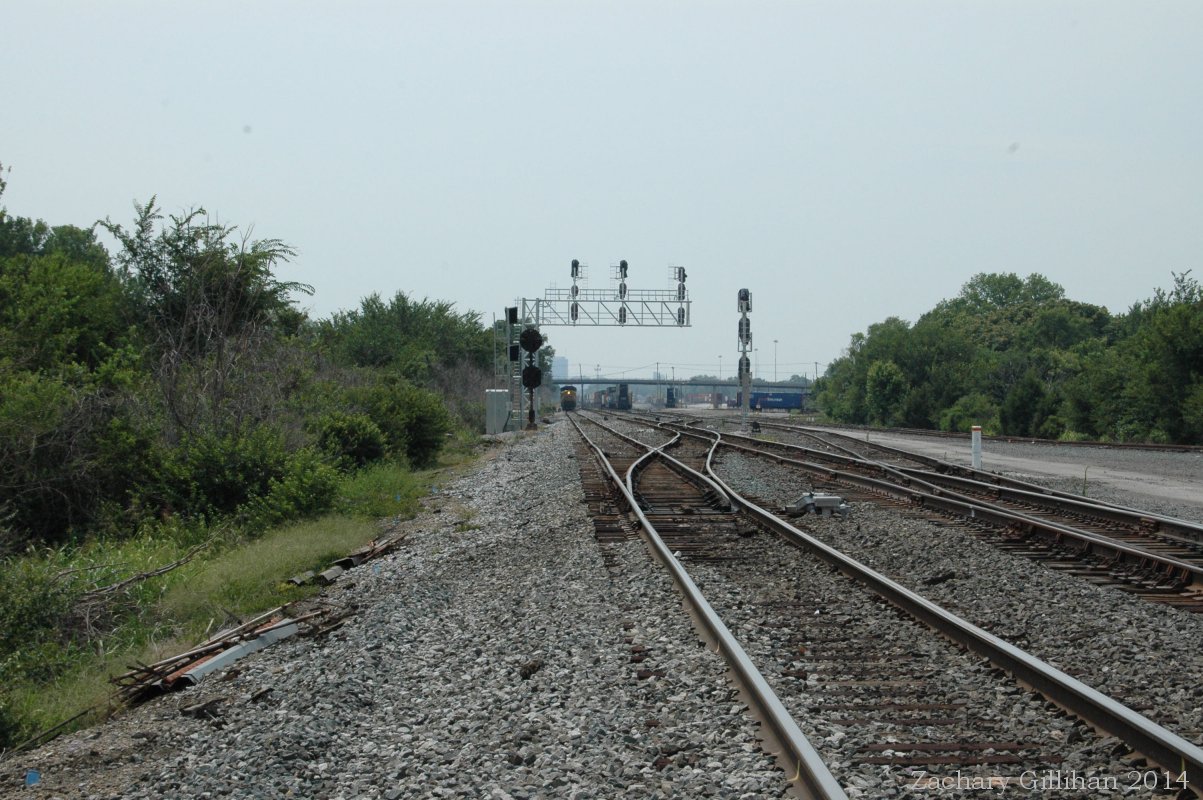
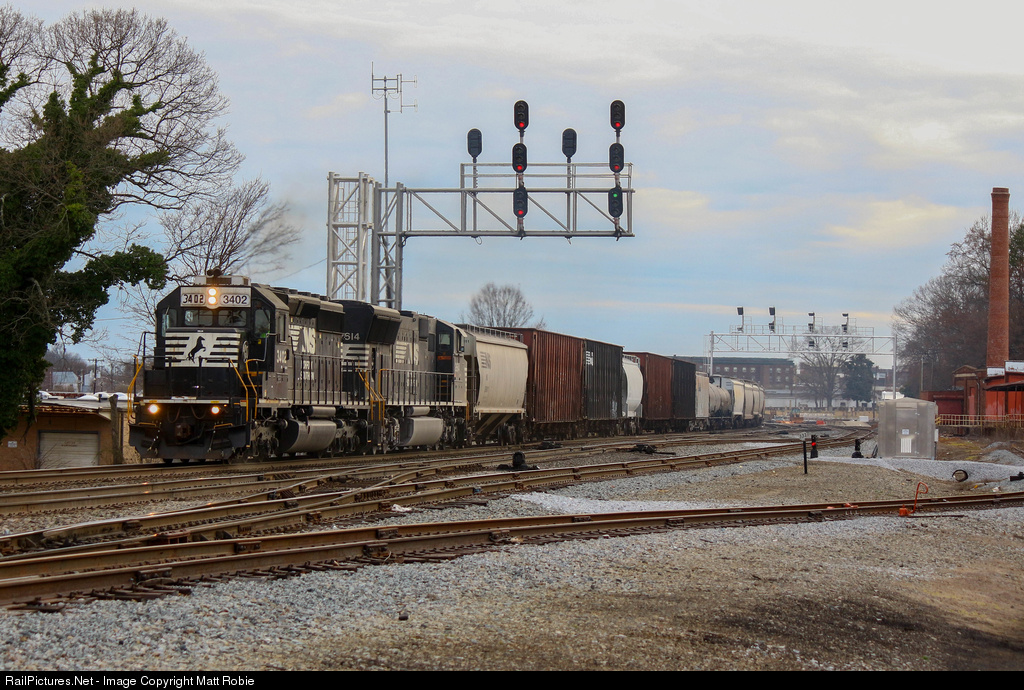
It is already challenging to catch interesting signal indications lit up in the wild, but indications featuring the third, or lowest head on North American three headed signal masts are especially uncommon. Catering to slow speed routes on main line track, the third head is already in a hole since because it is almost a truism that slow speeds are applied to those movements that don't happen very often. Moreover the lower head tends to be employed on oddball combination indications that again, are uncommon by definition. Over the last few months I have collected a sample of interesting indications that use the third head.
Here here we see a 1980's Southern style signal gantry in Chattanooga, TN. This one is notable because it features 4 great examples of the Southern's practice of "bottom yellow restricting". The two center heads are pretty straightforward with a yellow lamp on the bottom head that illuminates for Restricting movements into a yard. The two outer signals have a large gap representing a virtual middle signal head to save on costs. Here the UP #5480 is about to take a R/R/Y Restricting into the yard.
Here we see a modern Southern cantilever, but this time the bottom heads contain a full set of R-Y-G lights. The Southern uses a weak route form of signaling and while each head is not associated with any particular speed, the bottom head is typically associated with routes slower than those represented by the middle head.
Here at the busy junction in Folkston, GA we see a 3x3 CSX signal using the bottom head to indicate Medium Approach Medium as the 2-track branch to Waycross quickly shrinks to back to a single track one block length away from the junction. Don't let the photo fool you. That lower head is flashing green since under Seaboard rules R/Y/G is still Medium Approach Slow.
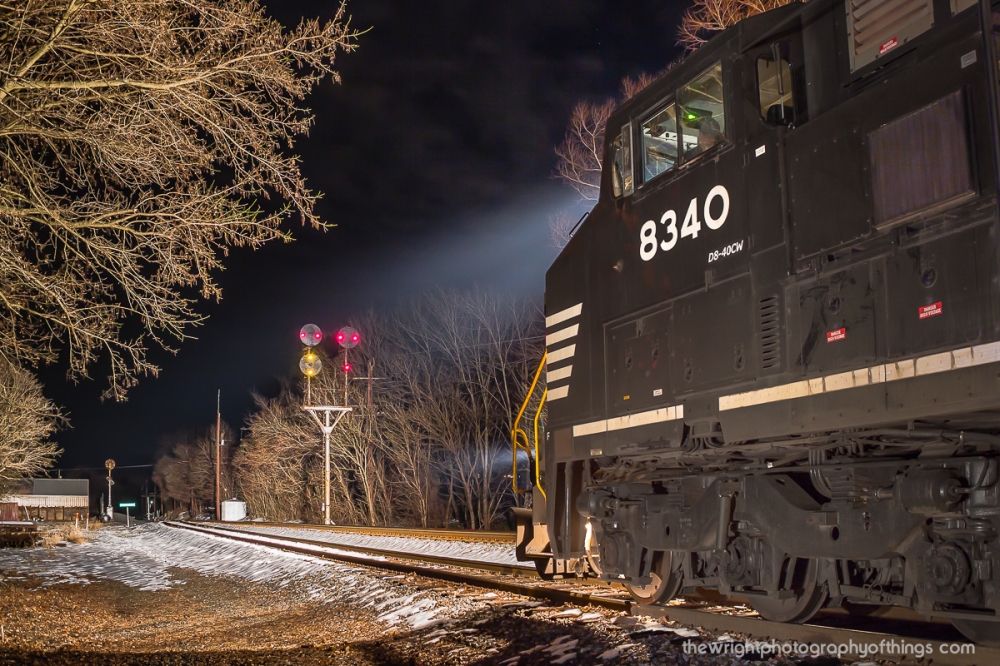
Switching slightly to one of CSX's throwback signaling systems we see a night shot of one of the surviving C&O signal bridges in the Russell, KY complex. Because of R/Y Restricting indications, Medium (or Diverging) Approach indications have often needed to be squeezed in to the aspect chart. Typically this is done with R/Y/R. There is also the less common NORAC approach with R/*Y*. The C&O however took a rather large leap off the reservation by using R/Y/Y for Medium Approach, as seen here.
A blog devoted to explaining the ins and outs of North American railroad signaling, past, present and future. This blog seeks to preserve through photo documentation the great diversity and technical ingenuity of 20th century signaling and interlocking hardware and technology. Related topics cover interlocking towers and railroad communications infrastructure.
Note, due to a web hosting failure some of the photos and links may be unavailable.
Search This Blog
Tuesday, March 31, 2015
Tuesday, March 24, 2015
F Tower to "Close", Times Square Tower to Move
So about a month ago I reported that CSX was studying closing the famed F Tower, in Fostoria, Ohio. Last week the word came down that the tower would be de-staffed at the end of the month (3/31/2015). Ironically the last straw may have been an incident where the operator got sick and needed a medical transport from the site. The IP dispatcher was able to take over F Tower's territory, but the resulting traffic jam took almost a day to clear. I say ironically because the result of the tower going down seemed to prove its worth.
Now I used the term "closed" in the opening because F Tower was resignaled years ago and as was demonstrated it can be controlled remotely at any time should the need arise. Until I hear that the tower has been torn down or gutted, I am going to assume that F has entered the same sort of zombie existence as HAROLD, still technically active, but only open on an as needed basis. I'm still somewhat optimistic as if the new arrangement proves unworkable CSX could always re-staff the position...or, more likely, NS could get so tied up that they kick in more money to fund the position. Either way this will show once and for all if local control provides any sort of value added in the 21st century.
Speaking of "as needed" towers, I got word that the NYC Subway has re-located the venerable Times Square Master Tower from its prominent position in the platform fishbowl to the new Times Square relay room. All of this is in conjunction with the <7> Line extension project which included a re-signaling of the old TSQ terminal. In its new location the TSQ operators will use the local control maintainers panel until this fall when the extension opens and they are moved to the 34th St interlocking relay room. At some point when the CTBC system goes on line primary control will pass to the Rail Control Center in midtown with auxiliary control at points TBD. 7>
The primary casualty of the relocation is TSQ Master Tower's 1953 vintage US&S 'UR' (Union Route) interlocking machine. The machine had remote control of crossovers at 1st Ave and Hunterspoint Ave. I am unsure how those will be controlled prior to the RCC takeover. The changeover was effective over the weekend of March 14th.
Now I used the term "closed" in the opening because F Tower was resignaled years ago and as was demonstrated it can be controlled remotely at any time should the need arise. Until I hear that the tower has been torn down or gutted, I am going to assume that F has entered the same sort of zombie existence as HAROLD, still technically active, but only open on an as needed basis. I'm still somewhat optimistic as if the new arrangement proves unworkable CSX could always re-staff the position...or, more likely, NS could get so tied up that they kick in more money to fund the position. Either way this will show once and for all if local control provides any sort of value added in the 21st century.
![]() |
| Like F, the tower is open, but nobody is home. |
The primary casualty of the relocation is TSQ Master Tower's 1953 vintage US&S 'UR' (Union Route) interlocking machine. The machine had remote control of crossovers at 1st Ave and Hunterspoint Ave. I am unsure how those will be controlled prior to the RCC takeover. The changeover was effective over the weekend of March 14th.
Wednesday, March 11, 2015
New Links!
Found a couple of signal related links I thought I'd share. The first is the website of a rail photographer you might recognize from railpictures.net, especially for his night shots of signals in the MD, VA, WV area. I think he has some print books out as well, but if you don't already have them you can enjoy a sample of his work here.
The second is more of an update since my old friend at www.redoveryellow.com has finally added some new content. Instead of more western fare the dedicated signal surveyor has posted photo sets from the Chicago area and from the PRR Main Line. Both sets date from the 2011 time frame so ALTO tower is still open.
Finally I am not sure how I forgot about this site. SimSig is a freemium model software application that simulates the Wescad type signaling software that has become standardized across the UK rail network. The simulation is top notch and it is the best way to learn about a rather different model of railway signaling then what is present in North America. The forums are also a good resource for UK signaling related information. While all of the "official" release simulations are for sale there are many free user contributed simulations as well so go and give it a try.
The second is more of an update since my old friend at www.redoveryellow.com has finally added some new content. Instead of more western fare the dedicated signal surveyor has posted photo sets from the Chicago area and from the PRR Main Line. Both sets date from the 2011 time frame so ALTO tower is still open.
Finally I am not sure how I forgot about this site. SimSig is a freemium model software application that simulates the Wescad type signaling software that has become standardized across the UK rail network. The simulation is top notch and it is the best way to learn about a rather different model of railway signaling then what is present in North America. The forums are also a good resource for UK signaling related information. While all of the "official" release simulations are for sale there are many free user contributed simulations as well so go and give it a try.
Tuesday, March 3, 2015
RONDOUT Tower Closing and Other News
Well I have the sad duty to report that RONDOUT Tower in Rondout, IL will be closing on March 7th, 2015. This tower was a former Milwaukee Road job, since taken over by Canadian Pacific and operated with the support of MERTA. It's claim to fame is a 2x1 diamond with the EJE and features a US&S style unit lever CTC machine with local control of the relay plant. The signals ans I suspect part of the interlocking logic itself have been updated with "modern" 1980 style searchlights and a recent search of the photo archive does not indicate that a re-signaling is in progress, only a transfer of the control to the CP dispatcher in Milwaukee. I guess the value added of having eyes on the crossing was no longer seen as necessary. Along with the re-signaling of Tower A-5 it appears that METRA is really trying to cut its cost on the Milwaukee division.
In other news some of the frozen-in-time ATSF semaphores are being replaced as the US&S T-2 mechanisms wear our beyond economical repair. With capitol funding for this line still scarce no wide-scale replacement is anticipated.
NJT completed the installation of Rule 562 operation between DOVER and Lake Hopatcong on the former DL&W main. This setup replaced a previous 261/251 arrangement that was in place to allow easy access to a spur track and crossover with the more lenient ABS rules on one track. Here at Hopatcong we see 'C' boards up for eastbound movements.
You know it's examples such as these that makes me realize that there probably isn't exactly any specific malice towards old signaling when CSX is ready to replace a Darth Vader cantilever at FB interlocking in Fredericksburg, VA with a new Darth Vader cantilever, just because they can't be bothered to test signals in situ. The real irony is that around 2005 the "old" canti replaced another modern type RF&P cantilever. I guess money does grow on trees.
It looks like the joint C&O/SOU cantilever at Orange, VA is not long for this world. In 2012 this canti lost the C&O facing entrance signal, but was given a reprieve due to the Southern RR entrance signal. Is it just me or does the replacement Darth Vader appear to use C&O indications like its elephant eared forebearer? I suspect it does!
Will the installation of a third track between CP-412 and CP-415 on the NS Chicago Line mean the demise of this classic NYC signal bridge? Probably.
Last, but definitely not least it appears that NS is finally making its move to eliminate the Rule 251 operation on the Enola Branch between STELL and I assume SHOCKS (or WAGO). NS caltilevers with Rule 562 'C' boards are up a STELL and the pneumatic point machines have already been replaced. At some point since my 2012 visit a trailing crosover was installed at WAGO to ready it for regular use in bi-directional operation.
In other news some of the frozen-in-time ATSF semaphores are being replaced as the US&S T-2 mechanisms wear our beyond economical repair. With capitol funding for this line still scarce no wide-scale replacement is anticipated.
NJT completed the installation of Rule 562 operation between DOVER and Lake Hopatcong on the former DL&W main. This setup replaced a previous 261/251 arrangement that was in place to allow easy access to a spur track and crossover with the more lenient ABS rules on one track. Here at Hopatcong we see 'C' boards up for eastbound movements.
You know it's examples such as these that makes me realize that there probably isn't exactly any specific malice towards old signaling when CSX is ready to replace a Darth Vader cantilever at FB interlocking in Fredericksburg, VA with a new Darth Vader cantilever, just because they can't be bothered to test signals in situ. The real irony is that around 2005 the "old" canti replaced another modern type RF&P cantilever. I guess money does grow on trees.
It looks like the joint C&O/SOU cantilever at Orange, VA is not long for this world. In 2012 this canti lost the C&O facing entrance signal, but was given a reprieve due to the Southern RR entrance signal. Is it just me or does the replacement Darth Vader appear to use C&O indications like its elephant eared forebearer? I suspect it does!
Will the installation of a third track between CP-412 and CP-415 on the NS Chicago Line mean the demise of this classic NYC signal bridge? Probably.
Last, but definitely not least it appears that NS is finally making its move to eliminate the Rule 251 operation on the Enola Branch between STELL and I assume SHOCKS (or WAGO). NS caltilevers with Rule 562 'C' boards are up a STELL and the pneumatic point machines have already been replaced. At some point since my 2012 visit a trailing crosover was installed at WAGO to ready it for regular use in bi-directional operation.
Labels:
cab signals,
CSX,
interlocking,
interlocking tower,
news,
NJT,
NS,
semaphore,
signals
Tuesday, February 24, 2015
PHOTOS: LEAMAN - The Place To Be
How much kit can a Temporary Block Station (TBS) have and still be considered temporary? I'll admit that's a bit of a bun question as the "temporary" in TBS refers to the fraction of time that it is typically in service, but where TBS's are typically defined by a pair of hand crossovers and a shack at what point does one cross the line into "interlocking?" Well leave it to one of the richest railroads in the world to test these boundaries for us as we travel back to 2007 in Leaman Place, PA to check out LEAMAN block station.
LEAMAN Block Station is located in the heart of Pennsylvania Dutch country midway between the regular interlockings of PARK and CORK. Necessary to fill in a 20 mile gap between interlockings on the famous Main Line, LEAMAN has most of what one expects from a TBS with a pair of hand throw crossovers. However LEAMAN is also equipped with a pair of optional extra semi-automatic signals, 4L and 2R, controlled from some sort of apparatus inside what is drawn on the diagram with the symbol of an interlocking station.
Up close and personal LEAMAN is in fact little more than a shack, although it looks to be of slightly stiffer construction than most plywood TBS shelters. The station sign is a Penn Central original, painted grey (blue?) to fit Amtrak's corporate identity.
Inside is a rather important looking cabinet and what looks like an intercom system. As you might guess the cabinet is in fact the...block machine (?), which consists of a small unit lever type panel with two levers, one each for the 2R and 4L signals. (I have seen a photo of the LEAMAN machine, but unfortunately I was unable to locate it for this article :-( ) Normally the signals are set to operate automatically, but when the TBS is in service they are set to Stop after the passage of train movements. Said movements are coordinated with the dispatcher and nearby towers using the block phone (intercom thing). The panel is not original as the interlocking sheet tells us the signals were originally controlled by a pair of "Model 6" controllers...whatever those are.
The signals are nothing special, each consisting of a single head PRR position light with Stop and Proceed marker. The main difference between these signals and automatic block signals is the lack of a number plate. If you are wondering why the right of way looks so wide that is because it was 4-track up until ~1948 before being reduced to two.
In this closer view of the signal it appears that it is composed of a mix of PL2 and PL3 lamp units with the PL3 being in the 9 o'clock position. Because LEAMAN is closed the signals were working automatically and displaying Clear in absence of any trains.
The 2R signal mast is a much more tidy affair, the mast sporting a fresh coat of silver paint. As the new white relay hut hints, fresh paint will not save this old equipment.
This single head PL is composed entirely of PL3 units. Trains diverging to run against the flow of traffic would get a Stop and Proceed signal when the points were set by hand and the lever thrown. If you are wondering how trains already moving against the flow of traffic would handle the lack of wrong direction signals, the rulebook already covers hand crossovers and block stations. The movement authority extends to the fouling point of the switches and trains are not to proceed until given a hand signal by the operator.
If the 2R mast wasn't a like-for-like replacement, the C&S men certainly did a fine job repainting it.
Between 2005 and 2007 the Amtrak installed concrete ties on the old Main Line for 110mph operation. This resulted in the replacement of the AWL and BWL switch locks with these standard US&S electrically locked units. Note, I am not sure if these actually provide any locking function as seen here. The original locks sat in the middle of the crossovers and would unlock both switches of the turnout at the same time.
Despite the concrete tie upgrade, the crossovers remained Slow (15mph) speed affairs. The one concession to modernity were a pair of spring frogs which eliminate the flangeway gap.
So when I say that LEAMAN was "the place to be", I'm not just riffing on its name. For the pool of block operators on Amtrak's Harrisburg Line, being qualified to operate LEAMAN was quite the feather in one's cap. Working LEAMAN was almost always extra work, and its distance from other tower assignments in the Philly area meant that the operator would earn travel pay as well. If that wasn't enough any time an operator came out to LEAMAN they were guarenteed a full 8 hours of pay, even if the service was only needed for a fraction of that time to say cross over one or two trains around a blockage.
To become qualified in a tower of block station, one must first train under the supervision of a qualified person. Because LEAMAN was open so infrequently, opportunities for the normal cast of block operators to get qualified were few and far between. Because only a small handful of individuals maintained a LEAMAN qualification, they were almost guarenteed to get the windfall, normal job duties and seniority rules aside. Usually a qualified operator would get called off his normal job (bonus), travel out to LEAMAN (another bonus), open it then only work 4 hours while getting paid for 8 (triple bonus!).
Before I sign off I should make it clear that this sort of glorified crossover was an anomaly even on the well to do PRR. West of CORK the next two TBS's, E-Town and Florin, were simple hand crossovers without protecting signals. LEAMAN was located nearby the junction with the now famous Strassburg railroad, but that probably didn't provide all the justification for it. No matter what spawned its initial creation, today LEAMAN interlocking is just another point and click target on the CTEC Section B dispatching monitor, but the little shack remains, an echo from a previous time.
LEAMAN Block Station is located in the heart of Pennsylvania Dutch country midway between the regular interlockings of PARK and CORK. Necessary to fill in a 20 mile gap between interlockings on the famous Main Line, LEAMAN has most of what one expects from a TBS with a pair of hand throw crossovers. However LEAMAN is also equipped with a pair of optional extra semi-automatic signals, 4L and 2R, controlled from some sort of apparatus inside what is drawn on the diagram with the symbol of an interlocking station.
Up close and personal LEAMAN is in fact little more than a shack, although it looks to be of slightly stiffer construction than most plywood TBS shelters. The station sign is a Penn Central original, painted grey (blue?) to fit Amtrak's corporate identity.
Inside is a rather important looking cabinet and what looks like an intercom system. As you might guess the cabinet is in fact the...block machine (?), which consists of a small unit lever type panel with two levers, one each for the 2R and 4L signals. (I have seen a photo of the LEAMAN machine, but unfortunately I was unable to locate it for this article :-( ) Normally the signals are set to operate automatically, but when the TBS is in service they are set to Stop after the passage of train movements. Said movements are coordinated with the dispatcher and nearby towers using the block phone (intercom thing). The panel is not original as the interlocking sheet tells us the signals were originally controlled by a pair of "Model 6" controllers...whatever those are.
The signals are nothing special, each consisting of a single head PRR position light with Stop and Proceed marker. The main difference between these signals and automatic block signals is the lack of a number plate. If you are wondering why the right of way looks so wide that is because it was 4-track up until ~1948 before being reduced to two.
In this closer view of the signal it appears that it is composed of a mix of PL2 and PL3 lamp units with the PL3 being in the 9 o'clock position. Because LEAMAN is closed the signals were working automatically and displaying Clear in absence of any trains.
The 2R signal mast is a much more tidy affair, the mast sporting a fresh coat of silver paint. As the new white relay hut hints, fresh paint will not save this old equipment.
This single head PL is composed entirely of PL3 units. Trains diverging to run against the flow of traffic would get a Stop and Proceed signal when the points were set by hand and the lever thrown. If you are wondering how trains already moving against the flow of traffic would handle the lack of wrong direction signals, the rulebook already covers hand crossovers and block stations. The movement authority extends to the fouling point of the switches and trains are not to proceed until given a hand signal by the operator.
If the 2R mast wasn't a like-for-like replacement, the C&S men certainly did a fine job repainting it.
Between 2005 and 2007 the Amtrak installed concrete ties on the old Main Line for 110mph operation. This resulted in the replacement of the AWL and BWL switch locks with these standard US&S electrically locked units. Note, I am not sure if these actually provide any locking function as seen here. The original locks sat in the middle of the crossovers and would unlock both switches of the turnout at the same time.
Despite the concrete tie upgrade, the crossovers remained Slow (15mph) speed affairs. The one concession to modernity were a pair of spring frogs which eliminate the flangeway gap.
So when I say that LEAMAN was "the place to be", I'm not just riffing on its name. For the pool of block operators on Amtrak's Harrisburg Line, being qualified to operate LEAMAN was quite the feather in one's cap. Working LEAMAN was almost always extra work, and its distance from other tower assignments in the Philly area meant that the operator would earn travel pay as well. If that wasn't enough any time an operator came out to LEAMAN they were guarenteed a full 8 hours of pay, even if the service was only needed for a fraction of that time to say cross over one or two trains around a blockage.
To become qualified in a tower of block station, one must first train under the supervision of a qualified person. Because LEAMAN was open so infrequently, opportunities for the normal cast of block operators to get qualified were few and far between. Because only a small handful of individuals maintained a LEAMAN qualification, they were almost guarenteed to get the windfall, normal job duties and seniority rules aside. Usually a qualified operator would get called off his normal job (bonus), travel out to LEAMAN (another bonus), open it then only work 4 hours while getting paid for 8 (triple bonus!).
Before I sign off I should make it clear that this sort of glorified crossover was an anomaly even on the well to do PRR. West of CORK the next two TBS's, E-Town and Florin, were simple hand crossovers without protecting signals. LEAMAN was located nearby the junction with the now famous Strassburg railroad, but that probably didn't provide all the justification for it. No matter what spawned its initial creation, today LEAMAN interlocking is just another point and click target on the CTEC Section B dispatching monitor, but the little shack remains, an echo from a previous time.
Labels:
Amtrak,
block station,
PC,
photos,
position light,
PRR,
PRR main line,
TBS
Tuesday, February 17, 2015
CSX Considers Closing F Tower?
Finally I get to report some news that isn't 6 months old. Someone linked me an actual print media article about a CSX plan to study if F Tower, in Fostoria, Ohio, should be closed. For those of you who don't know, F Tower is located at the three-way intersection between the former B&O main line to Chicago, the C&O Northern Branch to Toledo and Nickle Plate east-west main line to Fort Wayne. F Tower was actually re-signaled about 15 years ago when the B&O Main was rebuilt in the wake of the Conrail merger. Due to the complexity of the triple junction and its related wye tracks, CSX left the tower open and even gave it its own subdivision. Operators used the same computer aided dispatch system as the dispatchers back in Jacksonville (or wherever).
Anyway now CSX is making waves about closing the tower and handing off the duties to one or more of the dispatching desks that control the B&O and C&O routes. Does this mean the tower will close? It's hard to say. Just because the F-Tower Subdivision uses 5 Full Time Employees to control the rail traffic doesn't mean that 5 FTE's aren't actually needed. Thinking that the work of F Tower could simply be transferred to one of the existing desks without causing problems sounds naive, especially since traffic has if anything gone up since 2000. I'm wondering if this isn't the shot across the bow of NS, who has the most to lose if the F Tower operator job goes away and NKP trains are left to try and get the ear of an overworked CSX dispatcher for clearance through the Iron Triangle. I'm sure and offer to split the costs would not fall on deaf ears.
Tuesday, February 10, 2015
HN Tower - A Look Back
For those of you who have been here since the beginning, tower closing announcements have become a bit rarer. This is less because fewer towers are being closed and more because there are simply fewer towers to close. Anyway, call me unobservant, but it appears that I overlooked a rather significant tower closing that took place all the way back in August, 2014! If you didn't read the title of this post I have the sad duty to announce the closure of HN Tower in East-ish St Louis, IL. This was one of three towers that remained in the St. Louis area, WILLOWS and LENOX being the other two, and it had been on notice for some time as I had seen a few photos of new signals going up. However because HN is in a relatively isolated area, photos providing evidence of its impending closure did not appear in my usual sources. It was only on a visit to rrsignalpix.com for some unrelated research that I noticed that it's status had changed. Most of the following information comes from that site's page on HN tower so by all means go there if you prefer to skip my supplementary analysis.
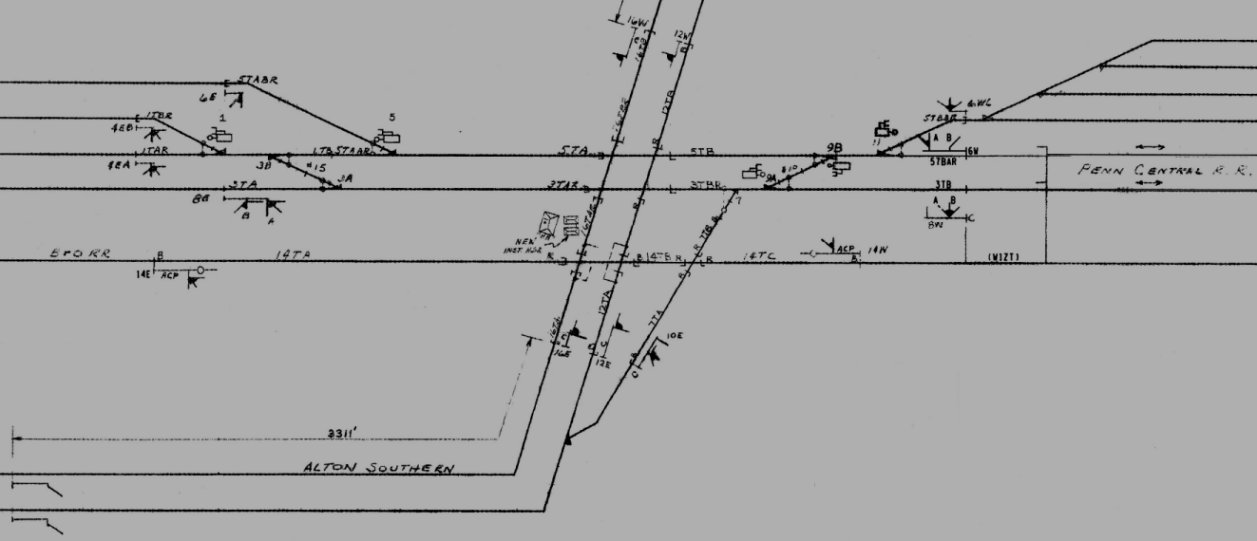
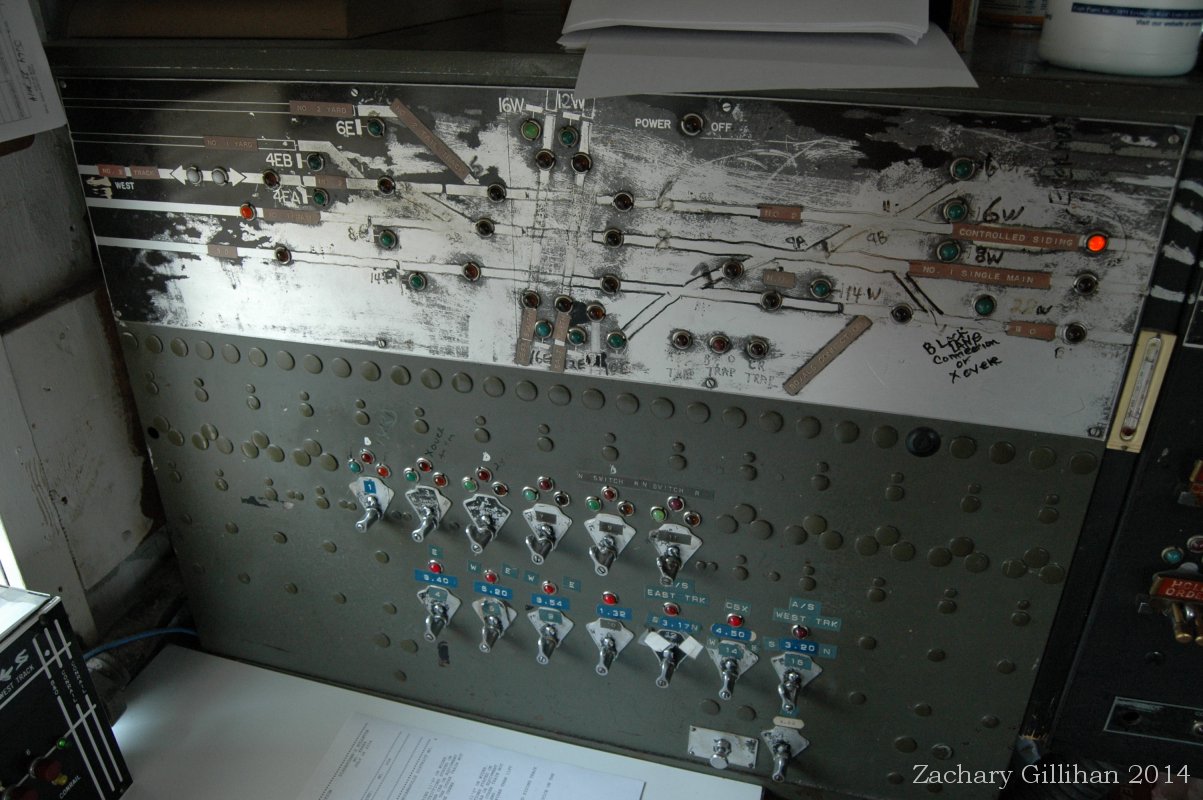
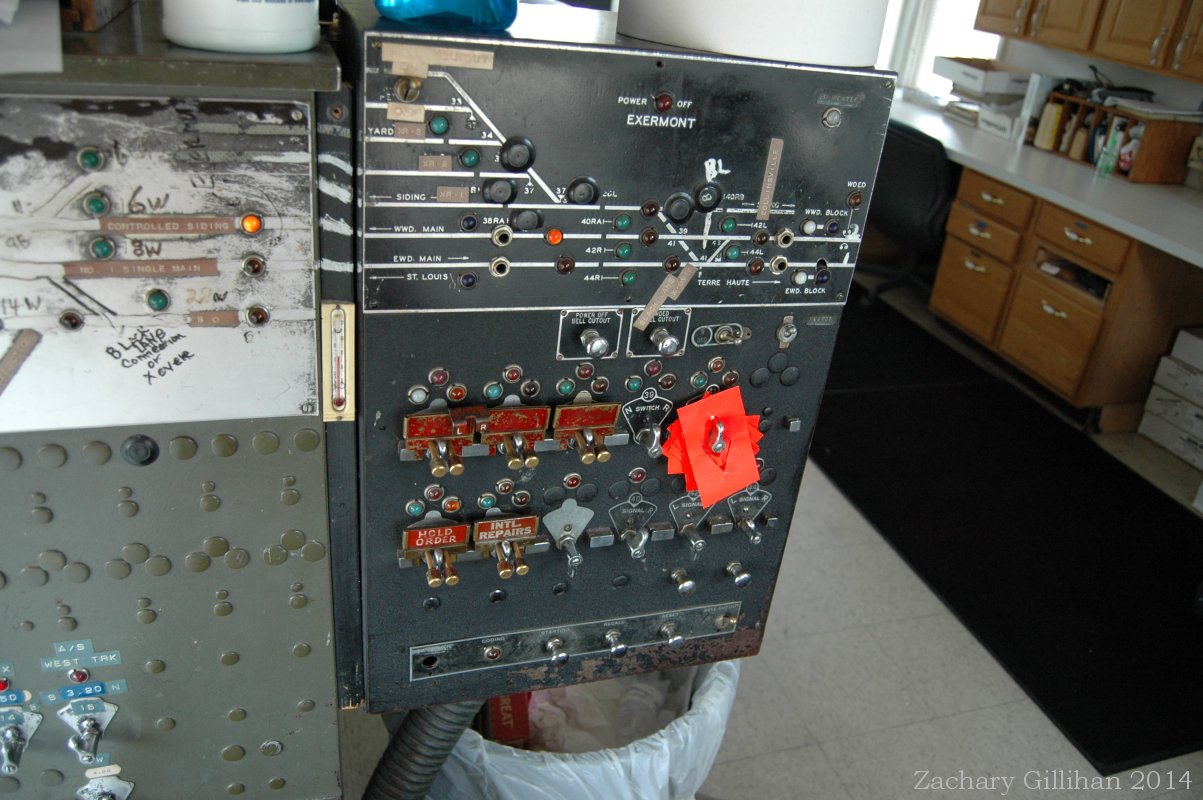
HN tower was built by the B&O in 1917 with a 48-lever S&F mechanical frame. HN was located the the triple crossing between the B&O, PRR St Louis Line and the Alton line to Chicago via LENOX (or WR). HN also controlled a connecting track from the PRR/Conrail line to the Alton giving it a total of 7 diamonds. Now I had always figured this was a Conrail tower since it also had control of the nearby EXERMONT interlocking on the St Louis Line, and while I am sure that costs were shared rrsignalpix says it was a B&O/CSX tower. The mechanical frame had long since been replaced by a pair of US&S unit lever panels. Here are some photos of the interlocking machines in their final days of service.
CSX had planned to close the tower all the way back in 2006 and some new signals went up in 2007, but other priorities intervened and it was only in 2012 that EXERMONT was turned over to the dispatcher heaving HN to stand alone. With a target closure date of July 1, 2014, new new signals went up and, after a bit of delay, the tower closed on Aug 12th, 2014.
The B&O style is similar in style to GLENMONT and the preserved UN in New Castle, PA. There are some rumors of re-use, but wooden towers such as these are almost always torn town (or burn down). It's a sad end after 93 years of service, but we should be thankful for the extra half-decade of service. This is also a big loss for surviving position lights in the St Louis area with both PRR and B&O style masts falling victim.
One additional note is that it appears that Seaboard style signals were installed at the new CP-HN whereas Conrail style signals have been the norm at for re-signaling projects on the St Louis Line so take that as you will.
HN tower was built by the B&O in 1917 with a 48-lever S&F mechanical frame. HN was located the the triple crossing between the B&O, PRR St Louis Line and the Alton line to Chicago via LENOX (or WR). HN also controlled a connecting track from the PRR/Conrail line to the Alton giving it a total of 7 diamonds. Now I had always figured this was a Conrail tower since it also had control of the nearby EXERMONT interlocking on the St Louis Line, and while I am sure that costs were shared rrsignalpix says it was a B&O/CSX tower. The mechanical frame had long since been replaced by a pair of US&S unit lever panels. Here are some photos of the interlocking machines in their final days of service.
CSX had planned to close the tower all the way back in 2006 and some new signals went up in 2007, but other priorities intervened and it was only in 2012 that EXERMONT was turned over to the dispatcher heaving HN to stand alone. With a target closure date of July 1, 2014, new new signals went up and, after a bit of delay, the tower closed on Aug 12th, 2014.
The B&O style is similar in style to GLENMONT and the preserved UN in New Castle, PA. There are some rumors of re-use, but wooden towers such as these are almost always torn town (or burn down). It's a sad end after 93 years of service, but we should be thankful for the extra half-decade of service. This is also a big loss for surviving position lights in the St Louis area with both PRR and B&O style masts falling victim.
One additional note is that it appears that Seaboard style signals were installed at the new CP-HN whereas Conrail style signals have been the norm at for re-signaling projects on the St Louis Line so take that as you will.
Subscribe to:
Posts (Atom)