Search This Blog

Monday, June 20, 2022

Beware the Three Headed Monster

 In North American railroad Signaling truly "universal" rules are pretty rare as in almost every situation one can usually find exceptions.  For having a high green reserved exclusively for Clear is pretty universal except the Bessemer and Lake Erie uses G/*Y* for Approach Limited and G/Y for Limited Clear.  Well another one of these rules is that intermediate signals either have one or two heads. By intermediate signals I am referring to signals with a number plate or signals with offset heads that cannot display an absolute Stop indication. Well there is one big exception to this and it is the Y/R/G Approach Slow indication used by a number of Conrail predecessors like the New York Central and Reading Systems and, more recently, CSX via the Seaboard System. 


This results in what I like to call a "three headed monster" in that you have an exceptionally tall intermediate signal that makes one question if they are at an interlocking or not.  Although potentially less of an issue due to PTC, salience is a huge human factors issue and when designing a signaling system from scratch like Caltrain did, making every absolute signal three heads, every automatic distant signals two heads and every basic block signal one head makes it harder for the engineer to become confused about what sort of signal is coming up. The Y/R/G three headed monster sort of blows this approach out of the water, but fortunately Approach Slow is one of the less commonly encountered indications. 


However if one is able to look past the signal policy issues and get into the fun world of rare signaling setups, CSX's three headed monster as a few additional tricks up its sleeve. If an interlocking has both slow and Medium/Limited Speed then you get a 7 lamp, 3 head intermediate signal (GYR-GR-GR) like the ones at Milepost 70 west of Point of Rocks.

 Alright, but I think we can do even better!  What if we had a situation with both Slow and Medium Speed routes AND short signal blocks between that next interlocking and one after.  Well, then we'd have an 8 lamp, 3 head intermediate signal (GYR-GYR-GR) and thanks to some recent capacity expansion and re-signaling work an example now exists in the Richmond area on the Belt Line just west of AY wye.

Don't forget, if CSX had simply adopted the NORAC style signal rules with Y/Y Approach Slow and *Y* Advance Approach they would have been able to do this with 6 lamps and 2 heads, but thanks to their Dixieland myopia we now have what is probably the ultimate intermediate signal. The fact that the masts are on both tracks is even better, 
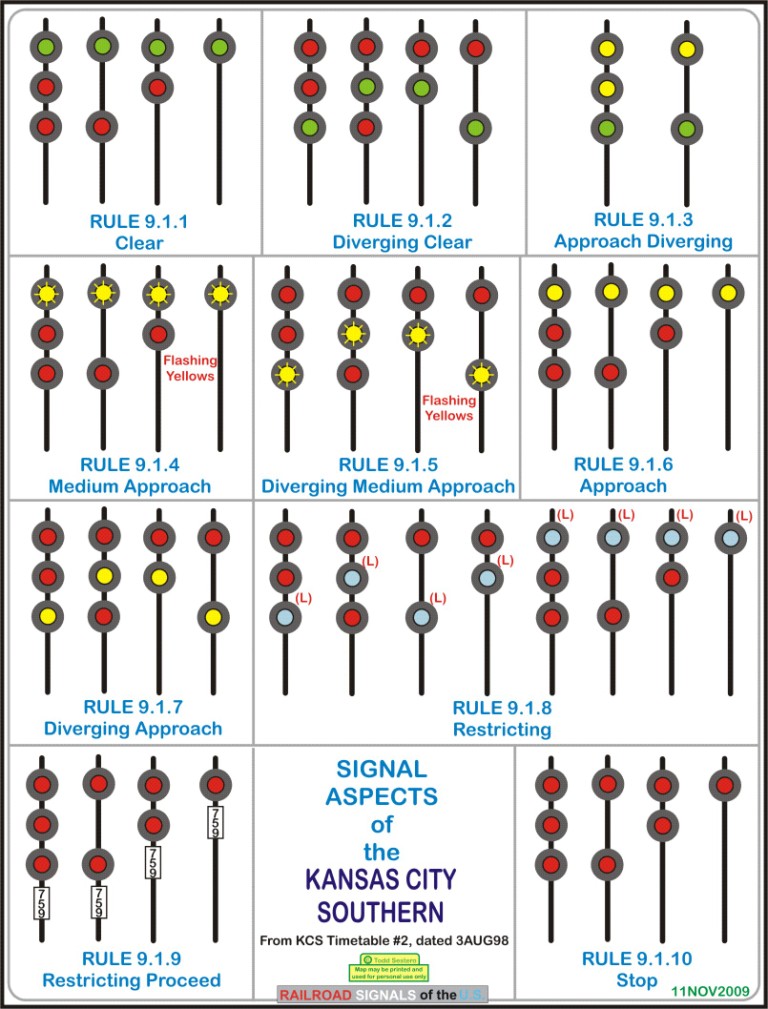
 
Before I go I would like to mention that there is another three headed intermediate signal still in use and that would be Y/Y/G Approach Diverging on Kansas City Southern. Some newer materials are showing the use of Y/Y and with all the recent re-signaling I am unsure if any Y/Y/G still survives, but it technically could exist. Also, in case anyone was wondering if Canada and its crazy quilt of signal indications has a three headed intermediate, they do not as the indication chart would show it with offset heads and all offset head indications have at most two heads. 

Anyway, if I missed anything or you know other examples of an ultimate intermediate signal location please let me know in the comments.

Sunday, June 12, 2022

PTC In Practice - A Passengers Perspective

 It was once again time for my annual round trip to Georgia via Amtrak Trains 79, 19 and 20 and I was actually able to experience some PTC related issues, one on CSX and one on NS, which can perhaps shed a bit of light on how PTC has been impacting passenger trains on the national network.  

SOUTH MILFORD, exact site of the positive stop event.

The first incident took place at SOUTH MILFORD interlocking on the CSX RF&P sub, which is equipped with both cab signals and ETMS PTC (for now). As my southbound Train 79 rounded the curve on Clear signals, the southbound track 3 signal dropped to Stop which tripped the PTC system and put the train into emergency. The train actually got stopped before passing the Stop signal, but the emergency brake application resulted in the crew having to stop and inspect the train. Total delay was about five minutes, but the interesting PTC takeaways were that it was able to trigger an emergency brake application instead of a full service penalty type application typically used with these types of safety system. Penalty applications don't require an inspection and, in the case of freight trains, are unlikely to cause a derailment.  Not sure if this is a passenger or Amtrak specific configuration. 

The other point of note was that the PTC was able to get a notification as to the change of block state after the train already had effective movement authority through the interlocking. This isn't surprising, but it is worth noting.  Not sure how long it took to get the update or if the concurrent cab signal system was involved. Under ACSES and potentially NS's implementation, approaching an absolute signal under restricting cab signals is what triggers the positive stop functionality. Without cabs the update would require wireless data reception. 

Approach Diverging on the Southern Main Line

The second event happened on the Norfolk Southern, Southern Main Line at the Milepost 564.8 automatic signal as it displayed an Approach Diverging (Y/G) signal indication for a diverging movement at BALDWIN interlocking.  For whatever reason the PTC system detected the block as occupied and enforced Restricting speed throughout its entire length. Because this took place at night, this meant a 10mph crawl for nearly 3 miles. The restriction lifted upon taking the Diverging Clear signal at BALDWIN. Engineer notified both the PTC trouble desk and the dispatcher. Total delay for this one issue was a whopping 19 minutes. My takeaway was perhaps a rules modification that allows for a train passing a proceed wayside indication to be relieved of the 1/2 vision stop requirement of Restricted speed being imposed by an erroneous PTC indication upon the permission of the dispatcher and/or PTC trouble desk.

Saturday, June 4, 2022

Harrisburg Power Dispatcher's Office to be Preserved!

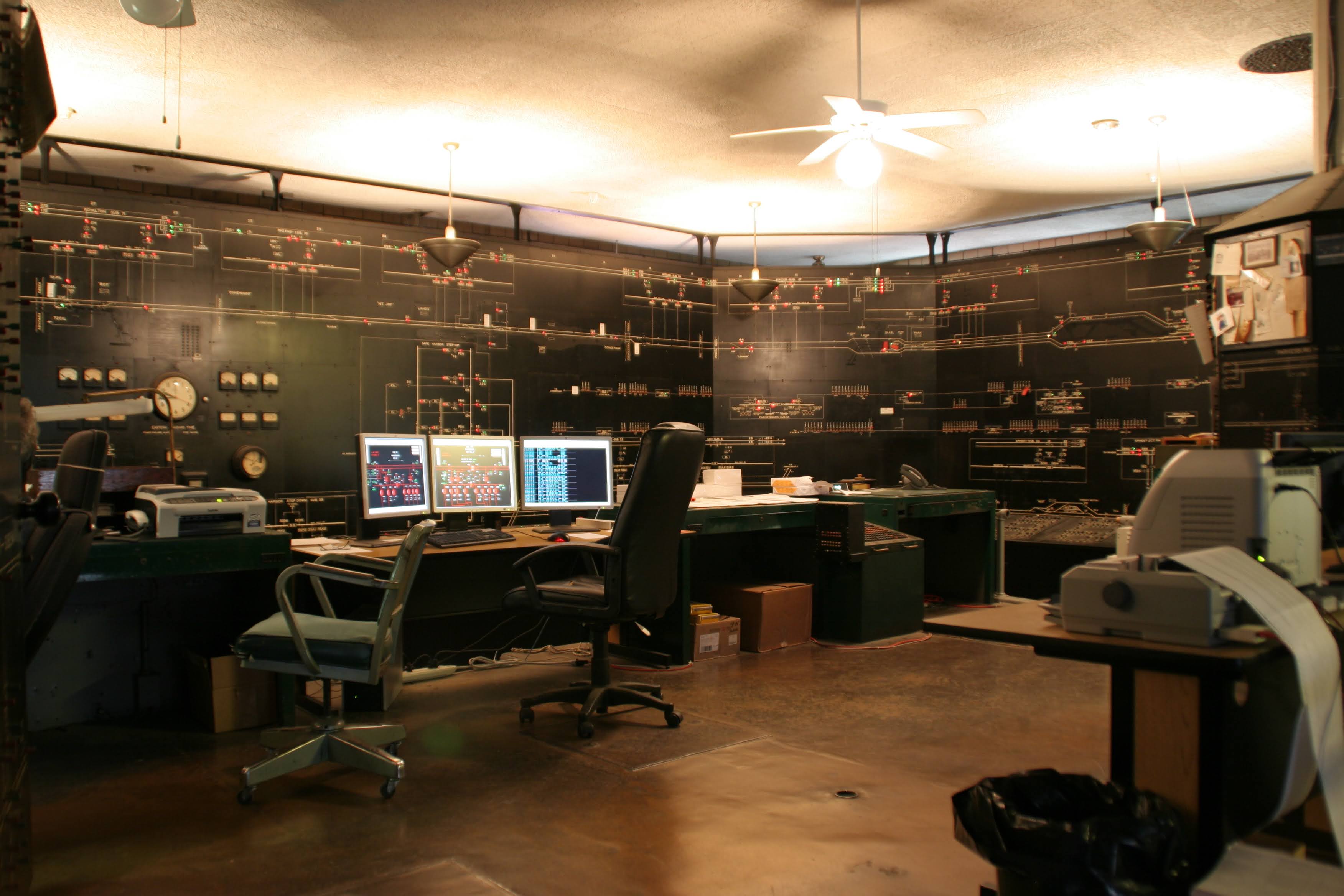
 Amtrak's Harrisburg terminal complex has not one but three signaling related landmarks of great historic value.  The first is HARRIS tower, closed in 1992 and completely restored by the Harrisburg Chapter NRHS to simulated working condition, it represents the absolute pinnacle of signaling preservation.  Th second is STATE tower, closed by Amtrak in 2016, it remains preserved, but not restored or open to the public and is likely to stay that way for the foreseeable future. Finally there is the Harrisburg Power Dispatcher's office. Constructed in 1937 to manage the PRR's great westward electrification expansion, it remained in operation until 2012. Not only is the preserved hardware remarkable due to its age, but it is also one of the first wide area electric power SCADA systems ever installed

Amtrak's Harrisburg Power Dispatchers Office in 2008

While a Power Dispatching office isn't exactly Railroad Signaling, it is certainly in the same wheelhouse seeing as it was both essential to railroad operations and made use of very similar relay and electro-mechanical age technology.  The same Harrisburg Chapter team that restored HARRIS is now currently working to restore the Power Office after having obtained a 10 year lease from Amtrak.  From what I have been told, the office is pretty much as it was when the door was locked in 2012.  Everything is there, but the equipment was worn out after 80 years of operation and quite a bit of modification.


Amtrak's Harrisburg Power Dispatchers Office in 2008

This is in contrast to recent developments at the Baltimore Power Dispatchers Office that handled NEC electrification between Perryville, MD and Potomac Yard in Alexandria, VA. Located in the offices above Baltimore Penn Station, the office was gutted except for the large display board and other interface equipment. Unfortunately some very long term plans to convert the old PRR office space into a hotel have finally come to fruition and instead of preserving the space as an attraction, all remaining equipment will be sent to likely the B&O Museum where it will sit out of view or as a static display, devoid of context. 

Telecom type SCADA relay bank at Harrisburg PDO

Hopefully the Harrisburg PDO will be restored to the same level as HARRIS tower with simulated events and a fully working display and interface. If anyone thinks they have the skills necessary to help out please contact the Harrisburg Chapter NRHS.

Tuesday, May 31, 2022

GRESHAM JCT's Sequence Switches Explained

 Years ago I wrote up a profile of METRA's GRESHAM JUNCTION tower on the Rock Island division south of Chicago.  Not only had GRESHAM JUNCTION managed to stay open into the 21st Century, it was a unique North American example of a sequence switch interlocking. Supplied by the Standard Telephone and Cables Company of London, the interlocking used telecom grade sequence switches to carry out the interlocking functions instead of relays.


In my original post I provide photos of the equipment as well as a general concept of how sequence switches work and some sequence switch interlocking circuit diagrams from the UK, but without time and access to the equipment or someone who was intimately knowledgeable about how it functions, my commentary had to remain at a very high level.  Fortunately, the gang from the Connections Museum in Seattle is on the case because sequence switches is pretty much how Bell Number 1 Panel central office machines functioned (again, as opposed to later relay based technologies). I could try to go into things, but fortunately the museum's YouTube channel has video that is specifically about how sequence switches work. 

Once you see them in action at the Connections Museum, their function in the photos from GRESHAM JCT will become obvious. Of particular note is the function of the magnetic clutch mechanism that rotates the switch spindle. Perhaps if I stare at things enough I can determine what each sequence switch corresponds to in the interlocking.  Is each a complete route? An entrance? An exit? An entrance-exit combination? Let me know in the comments if you figure it out.  BTW, if you like this video take some time to watch the rest of the Museum's content.  It's top notch and does a superb job of explaining some normally opaque topics in the realm of pre-modern telephone switching technology.


Friday, May 20, 2022

CSX Bags Guilford But When to Expect Change?

CSx is set to complete its purchase of the former Guilford Rail System (currently branded pan Am Railways) on June 1, 2022.  However does this mean to immediately expect the end of NORAC Rules, searchlight signals and bracket masts? Well according to some initial reports the community will enjoy at least a slight reprieve before CSX has the opportunity to go to town on the Boston and Maine's legacy.

Guilford searchlights and the Lowell Wye.

As of now CSX plans to make no changes to former Guilford operations until October, 2022 due to the existing collective bargaining agreements and delays to the sale of the Pan Am Southern joint venture to a G&W subsidiary.  This means NORAC Rules and signal indications will remain in service until that point and it is unlikely that CSX will embark in any large scale re-signaling investments. CSX will also need to improve/signal the line between Worcester and Ayre to actually connect the former Guilford Freight main Line with its former Conrail Boston Line.

Boston Line CP-45 at Worcester

In the longer term, use of Rule 562 cab signal without fixed wayside signals on both the former MBTA territory as well as the Boston Line will likely keep the former Guilford territory under firmly under CSX's legacy "Conrail" signal rules, even if the operating rules change. How PTC is integrated into the new territory remains to be seen as MBTA lines that share the former Guilford Freight Main Line route around Lowell, Ayre and Haverhill, will be ACSES and cab signal equipped. It is entirely possible that CSX will choose to complete the look and install 562 between Worcester and Ayre and as part of any re-signaling projects on the Freight Main Line, including the Downeaster corridor north of Haverhill. 

Boston Line CP-187 with Conrail Small Target Searchlights

 As has been observed on the Boston Line, Darth Vader type signals have been slowly supplanting those of Conrail vintage, however this process is not complete after 20 years due to the young age of the vintage Conrail signaling. Fortunately the former Pan Am Southern covers both the Freight Main Line to Mechanicville, NY and the CT Valley Line used by Amtrak. The latter was recently re-signaled in the Guilford style with the remainder getting a mix of Darth Vaders and Guilford signals in any re-signaling projects.  I suspect the orphan nature of this route will further stunt investment, hopefully prolonging the life of the remaining B&M vintage searchlight equipment and US&S pulse code CTC .

Friday, May 13, 2022

Montana Rail Link Loses Its Lease

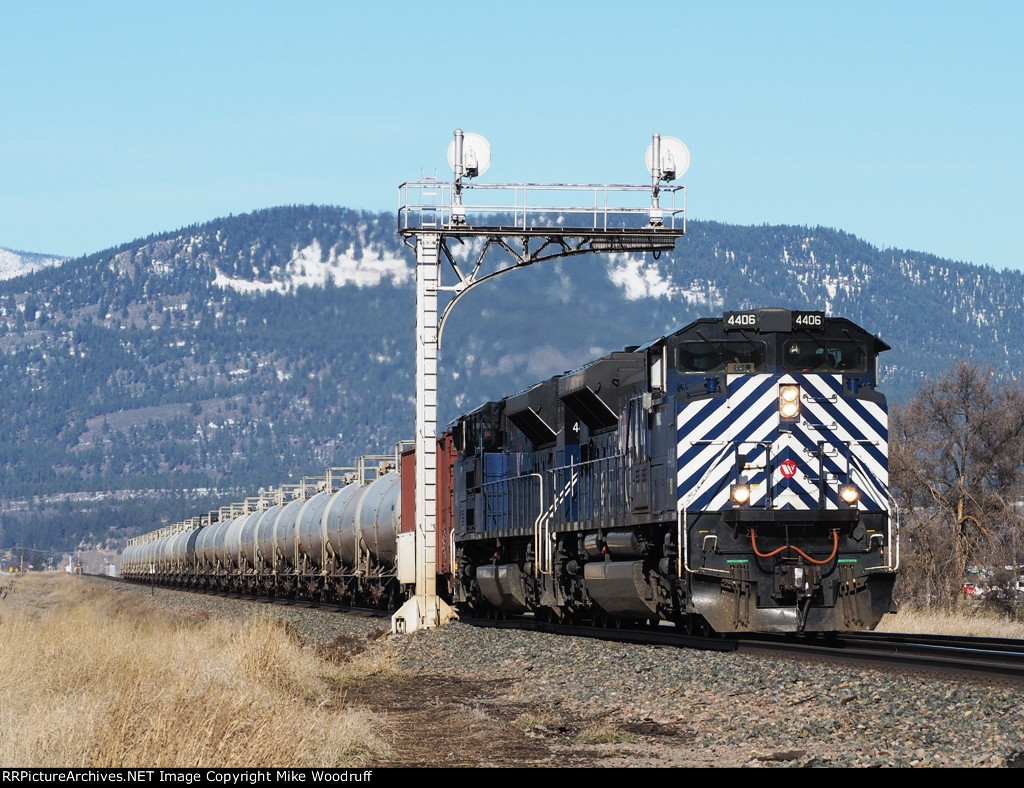
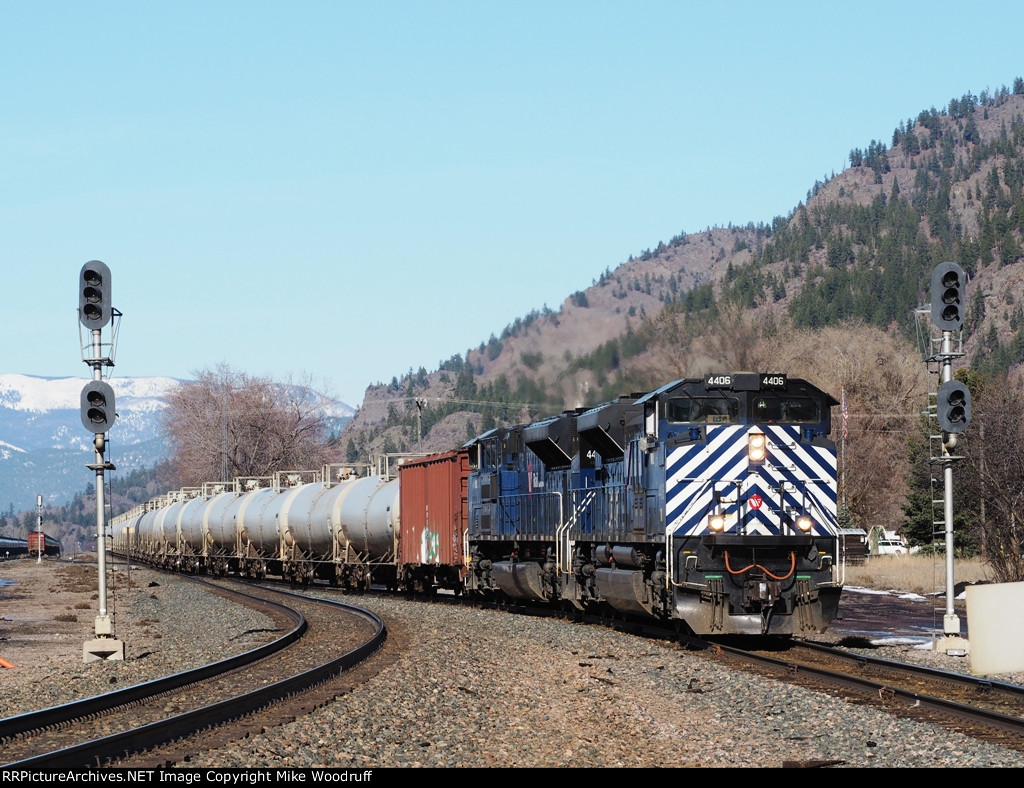
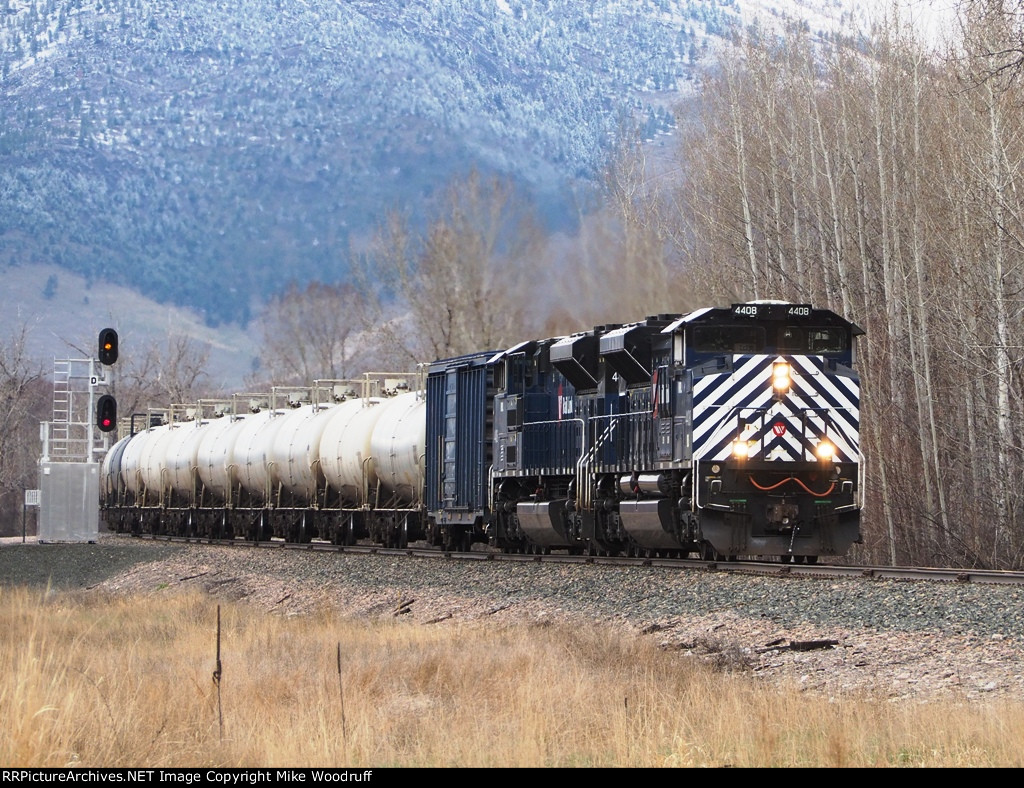
This news isn't exactly new, but I figured I should go over the signaling implications of the end of Montana Rail Link's lease of 400 miles of former BN Main Line in the state of Montana. 

Classic Northern Pacific Searchlit Cantilever Mast on MRL

MRL is fairly special in that it runs a high quality CTC main line with modern motive power such as SD70M-2's.  Like many regional railroads with signaling, changing out its legacy equipment was never a high priority, especially since it was PTC exempt and the the physical plant was leased not owned.  MRL's former Northern Pacific/Burlington Northern trackage is largely signaled with searchlights and GRS Type D color light signals with a mix of masts, small vintage gantries and cantilevers. 

BN vintage GRS Type D masts on MRL

MRL was in the process of having many of its legacy signals replaced by BNSF standard Darth Vader types with relay box mast combos being a popular replacement choice.  The reversion to BNSG is likely to accelerate the replacement process and although BNSF could in theory try and get a PTC exemption if it does not need to run TIH cargo on the line, provisions to make the route available for some potential passenger services make the prospect of government infrastructure money highly likely and with that comes a brand new bland signal system sooner rather than later.

Brand new BNSF type Darth Vader type signals newly installed on MRL.

As of this writing the lease termination appears to still be under review and if the limbo state accelerates and decelerates the existing re-signaling efforts remains to be seen. I recommend anyone in the area to get their photos now, the more the better.

Saturday, May 7, 2022

Union Pacific to Abandon ATC and ACS Effective June 1, 2022

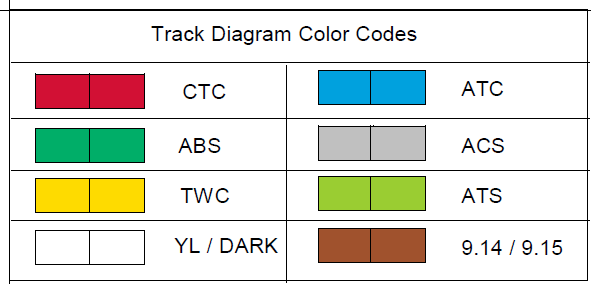
 Well after about 18 months of regulatory approval, Union Pacific is set to remove all mention of the CNW Automatic Train Control and more general Automatic Cab Signals from the rulebook effective June 1, 2022.  As explained before the legacy CNW ATC system was super clunky and was definitely not worth keeping in the face of PTC.  The ACS seems to be more of a cost cutting move as coded track circuit cab signals can compliment ETMS PTC as demonstrated by Norfolk Southern.  However Union Pacific's cab signal implementation had some shortcomings that would have likely required additional modifications to make a joint ACS/ETMS system work well. Anyway, the real loser are the Employee Timetables which are set to lose a substantial amount of their color palette.


It was mentioned that Union Pacific will still require ACS equipped lead locomotives in some areas, which I am assuming is the Hiawatha Sub as that served as Union Pacific's "Rule 562" experiment and lacks wayside signals. The Hiawatha has Aspect Change Points every 1.5 miles, in line with the PRR/Conrail/Norfolk Southern practice. It is also important to remember that in most cases the ACS codes will remain in the rails as they are used to transmit block state.  Engines will either just run over the territory with their ACS fully inoperative or simply not present. Anyway, if you want a copy of the current UP Rulebook with the ACS and ATC sections intact, download it from the official site now. If you're reading this in the future, I saved a copy of the final revision with the ACS/ATC material.